
Happy International Dance Day (29/04)! 💃

To celebrate, we are delighted to invite Ningning Liu, a PhD candidate from the School of Law, to share her unique and inspiring experience of dancing at a law conference, where the worlds of legal scholarship and movement came together in an unforgettable way.
Photo by Ningning
My Once-in-a-Lifetime Experience Dancing in a Moot Court
As a lawyer back in Shanghai, China, I kept my two identities – lawyer and dancer – strictly separate. I rarely let my colleagues or clients know that I danced hip-hop. I worried it would make me look unserious, or suggest that my work wasn’t keeping me busy enough. It was hard to imagine a lawyer spending their evenings in a dance studio while handling active cases.
For the longest time, I believed that law and dance had nothing to do with each other. In fact, they felt like opposites. Law is rational and disciplined, while hip-hop dance is physical and rebellious. That contrast was exactly why I loved it.
Then I came to the UK, and everything began to change.
A Session I Couldn’t Walk Away From
Not only are my supervisors incredibly supportive of my dancing, but my colleagues at the School of Law have also been genuinely excited to learn about this side of me. Some even cheered when I joined Queen’s street dance team.
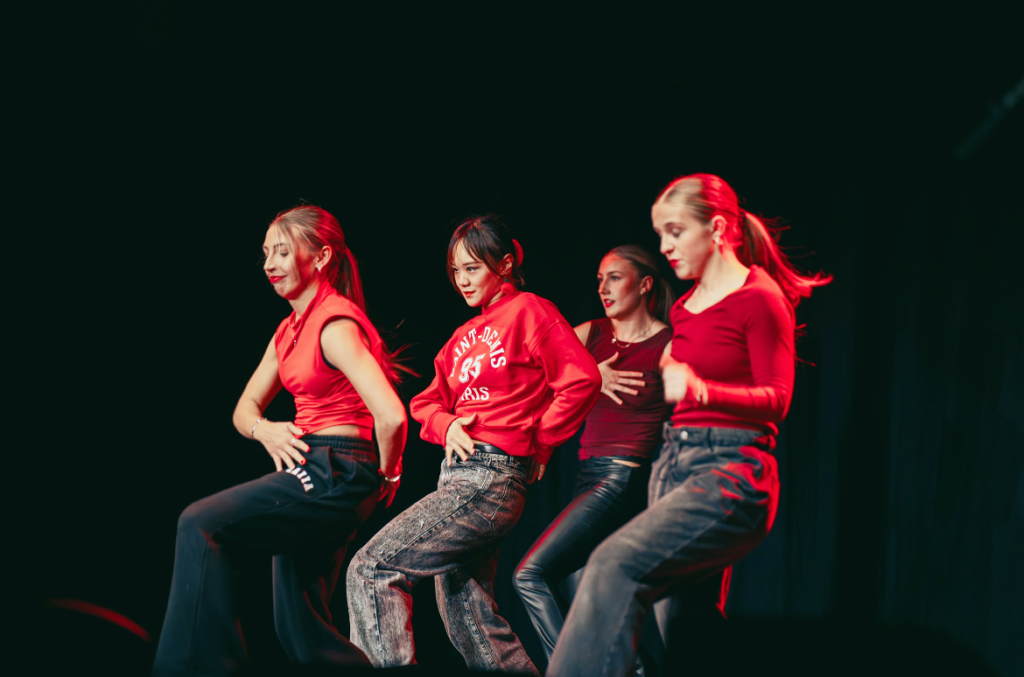
But the real turning point came when I attended the Socio-Legal Studies Association (SLSA) Annual Conference this year. As one of the key conferences in my field, I had originally planned to submit an abstract related to my doctoral research. Then I saw a session theme that stopped me in my tracks: Dance/Law.
The question it asked was simple but inspiring: What can law do for dance, and what can dance do for law?
These two things I had always kept in separate boxes were suddenly brought together. It felt absurd, yet my heart started racing. This was it – two of my deepest passions, finally meeting. I wrote and submitted my abstract right away. It was accepted just as quickly.
From Belfast to Brighton
That is how I found myself in Brighton – a seaside town on the south coast of England, at the University of Sussex – about to experience something I will never forget.
At the Dance/Law session, scholars and dancers from around the world shared widely different perspectives. Some explored dance as a metaphor for legal tensions – the push and pull of a duet mirroring legal negotiation. Others examined the unwritten rules within dance as a form of soft law, or the question of consent and bodily boundaries in social dancing.
I learned a story from southern Nigeria. In one tribal community, before formal legal language existed, how did people resolve disputes? By dancing.
Then the speaker paused and said, quietly: “Let me show you.”
What followed was not a performance. It was a conversation, a short Afro dance sequence unlike anything we would learn in a dance studio. The speaker interacted with a friend sitting in the audience, responding to her through movement. When it finished, she calmly explained that the sequence expressed criticism of a legal procedure. In fact, across many African societies, dance has historically functioned as a form of testimony, protest, and even judicial argument. It was a living archive of community justice before colonial legal systems were imposed.
We sat in stunned silence.
Dance, I realised, existed before every social institution, rule, or legal system we now take for granted. It is an older language of expression, communication, and meaning. We had simply forgotten.
Another story came from Scotland. The old Scottish Parliament building was a place where trials were held. During breaks, lawyers were not allowed to leave the building. Instead, they circled the parliament hall, negotiating while walking in step with one another, their matching pace making it difficult for others to overhear. This process resembled a social duet, requiring trust, coordination, and mutual responsiveness. The structure was unmistakably dance-like.
I also had the chance to present my own research, Law on the Dancefloor: Body, Gender, and the Boundaries of Freedom in China’s Hip-Hop Culture. Drawing on my experience as both a legal researcher and a hip-hop dancer, I explored how China’s dance scene is divided between feminised commercial studios and masculinised battle competitions, and how law and social norms silently choreograph who may move freely and how.
The battle floor, I argued, is like a courtroom: music acts as law, dancers as advocates, and judges as a jury. Dancers are told to break rules, yet victory depends on a convincing interpretation within that framework. To my surprise and gratitude, the presentation received warm attention and thoughtful feedback from fellow scholars, many of whom shared their own encounters with dance and the law.
The fascinating studies presented at the Dance/Law session, along with my own small contribution, demonstrate that law and movement have never been as separate as I once believed.
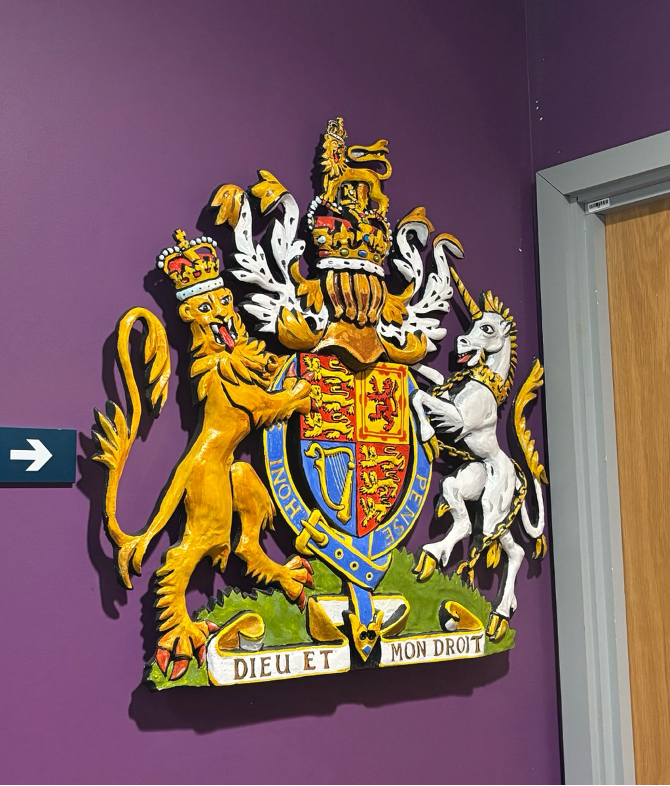
The Morning We Danced in a Moot Court
The next morning, we experienced something that may well be once in a lifetime.
At 9 a.m., in a law school moot court room, we danced.
A group of legal academics from across the world gathered – not to share their research, but to share their dance moves.
At the beginning, one scholar guided us to reconnect with our bodies. We touched our fingertips to our arms, felt our skin, and reached out to tables and chairs, simply noticing our physical presence in the world.
Then one of the organisers taught us basic ballet. I felt like a calm, proud, and elegant swan gliding across a lake. She ended the session by inviting us to freestyle using what we had learned.
Finally, my partner Joseph, a professional hip-hop dancer who had come with me to Brighton, taught a short routine he had choreographed the day before. The music started – the unmistakable beat of Still D.R.E.
The atmosphere changed instantly. Everyone moved joyfully. It did not matter what we wore or how we looked. When the organisers asked for reactions, we laughed: “Too short! Again!”
Everyone was simply happy.
As we left, the researchers (or should I call them dancers now?) stopped us to express their gratitude. “You both gave me so much energy. I am so happy today.”
But they were the ones who had given us energy, and a revelation.
Later, the organisers sent a follow-up email. At the end, they wrote:
Keep dancing!
Continue reading