Celebrating Duanwu Festival at Queen’s and beyond

This year Duanwu Festival (端午节 Duānwǔjié), also known as Dragon Boat Festival (龙舟节 Lóngzhōujié), falls on Friday 19th June.

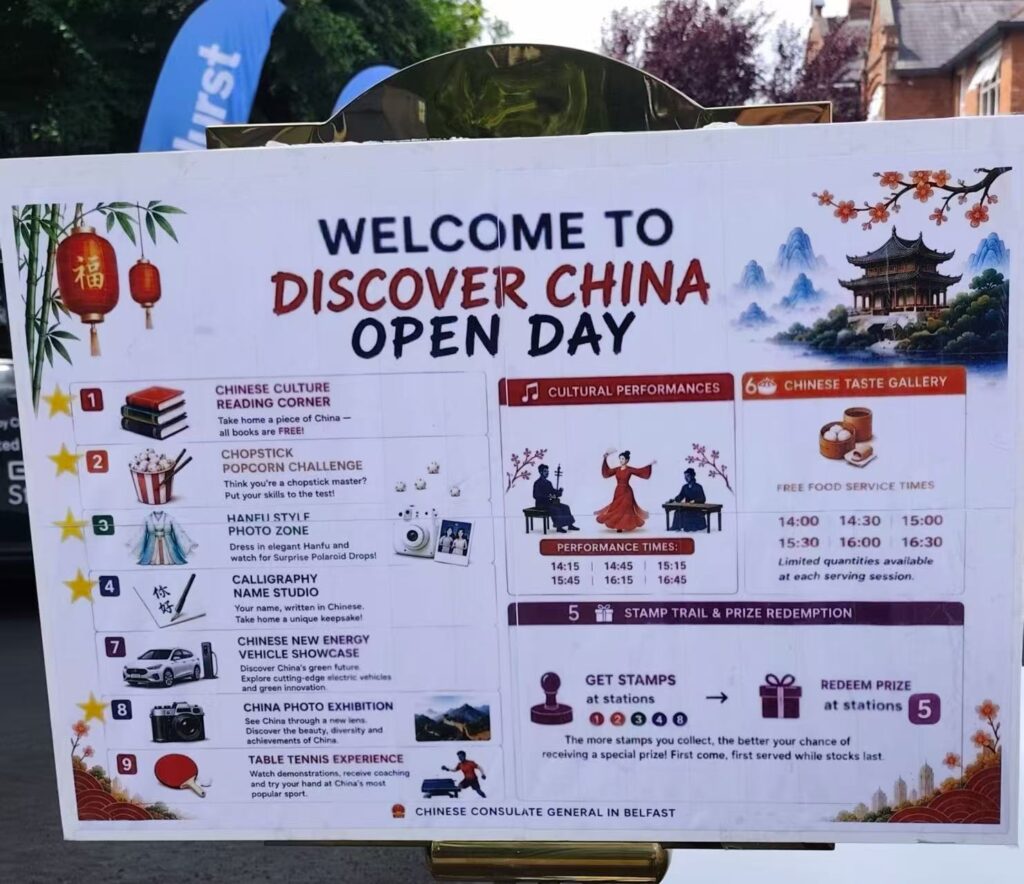
To mark the occasion, two celebratory events were organised prior to the festival: one on campus at Queen’s University Belfast and the other in the local community. Together, these events provided opportunities to explore the history, customs, and cultural significance of one of China’s traditional festivals.

Celebration 1: Two Festivals, One Celebration: Duanwu and Dano Mid-Summer Social

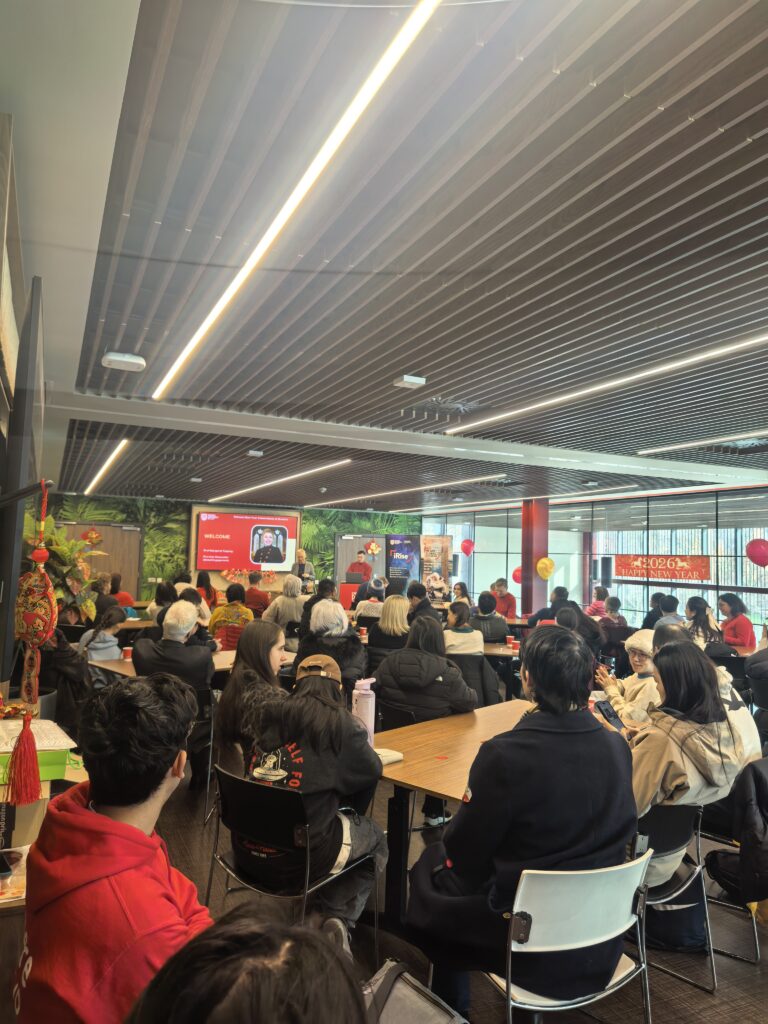
Jointly organised by QUB iRise Staff Network and The Language Centre, Queen’s staff enjoyed attending a mid-summer social event that successfully celebrated both the Chinese Duanwu Festival and the Korean Danoje Festival, two traditional East Asian festivals that occur around the same time of year. The event was organised as an opportunity to promote intercultural understanding, community building, and a sense of belonging among staff from a diverse cultural background.

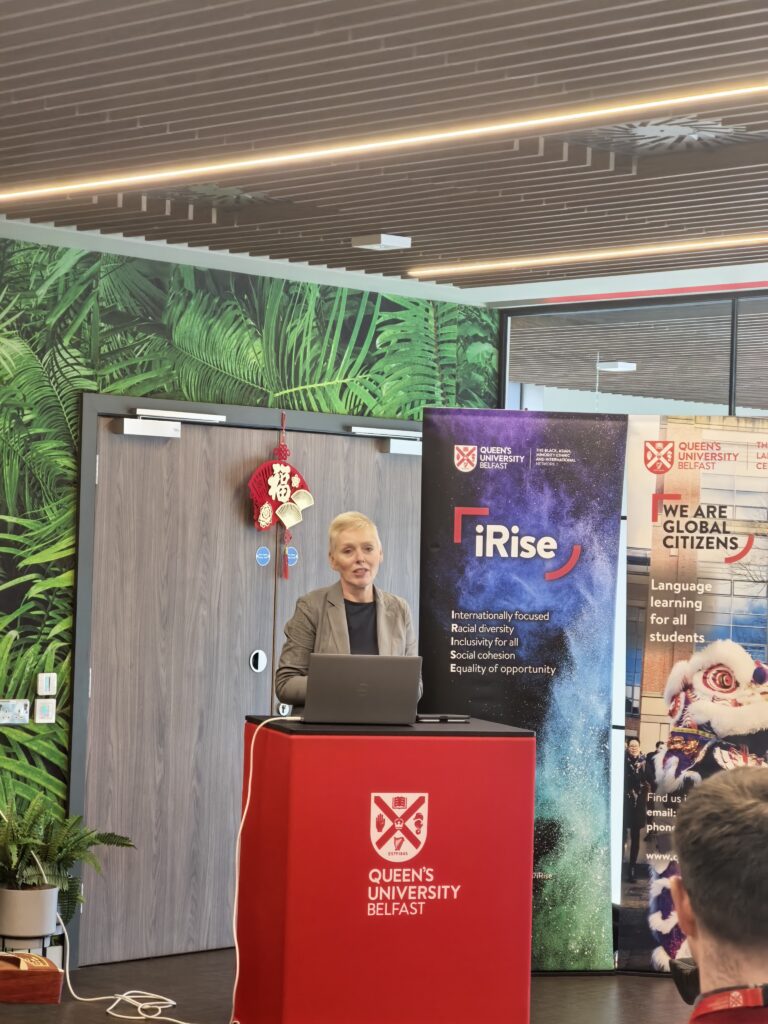
  • Dr Bee-Yen gave a welcome.
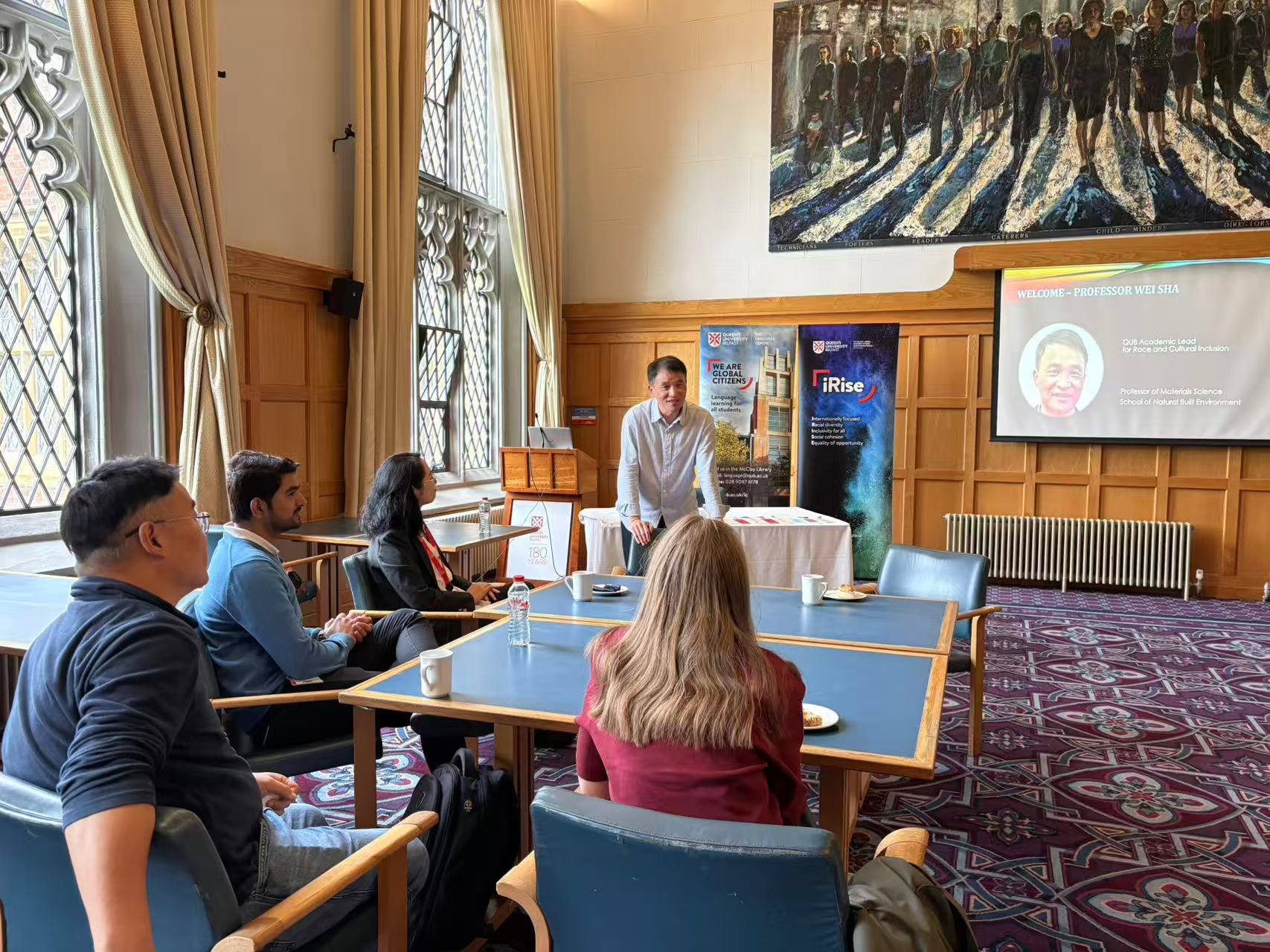
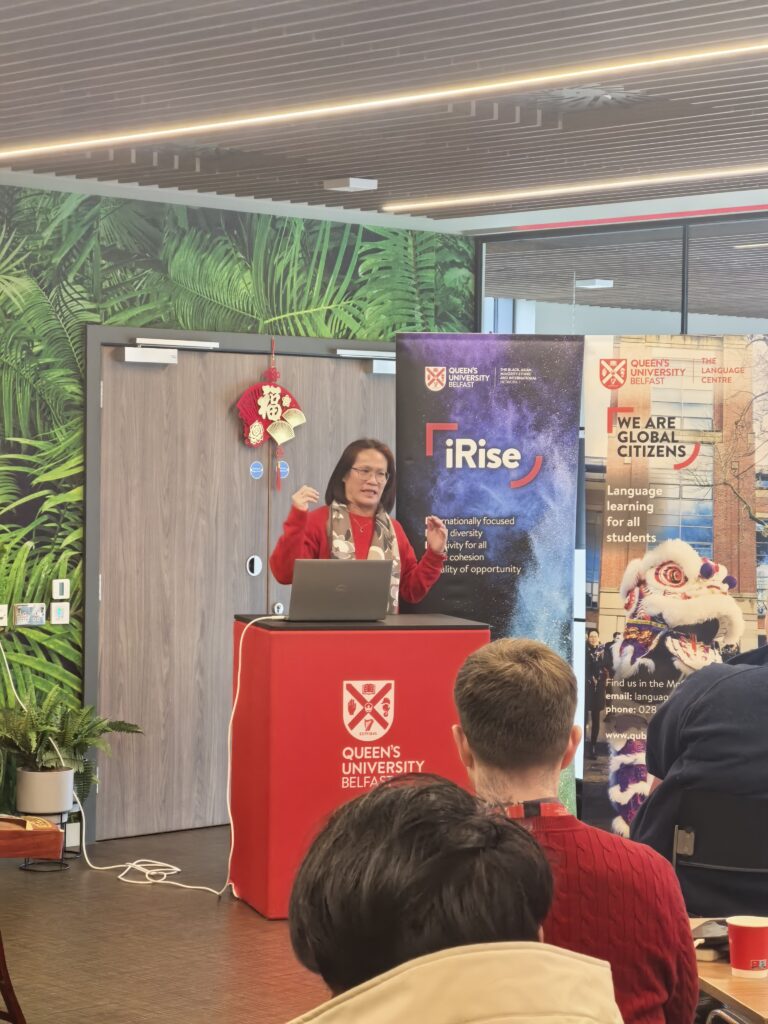
  • Prof Wei Sha gave a welcome.

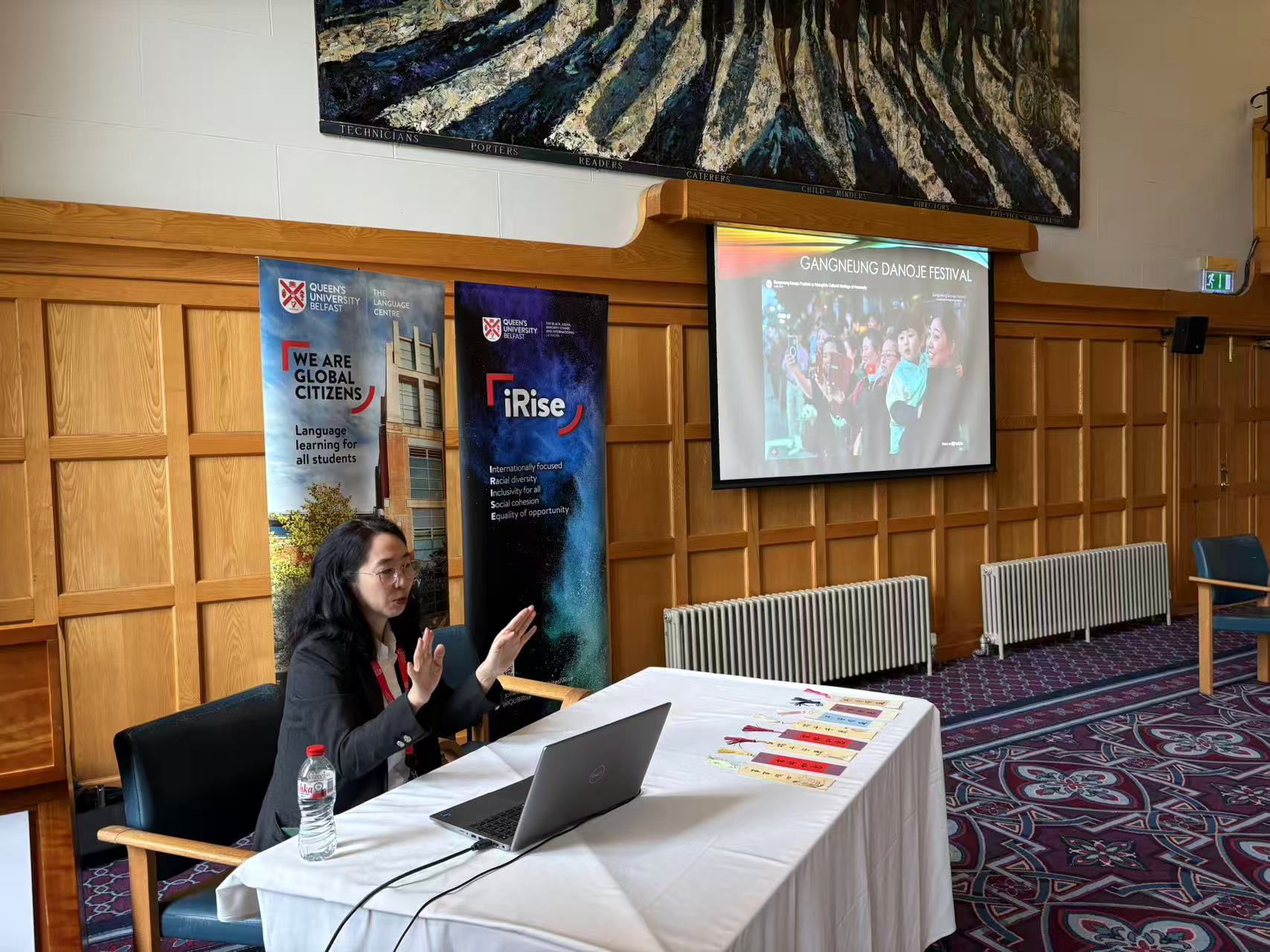
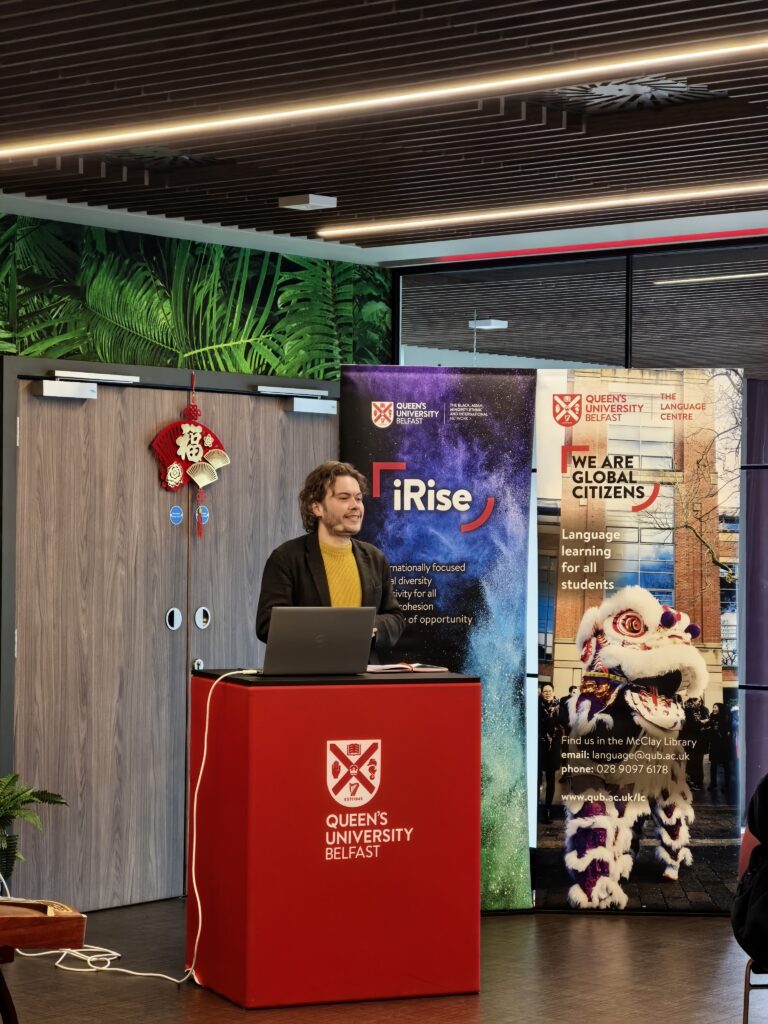
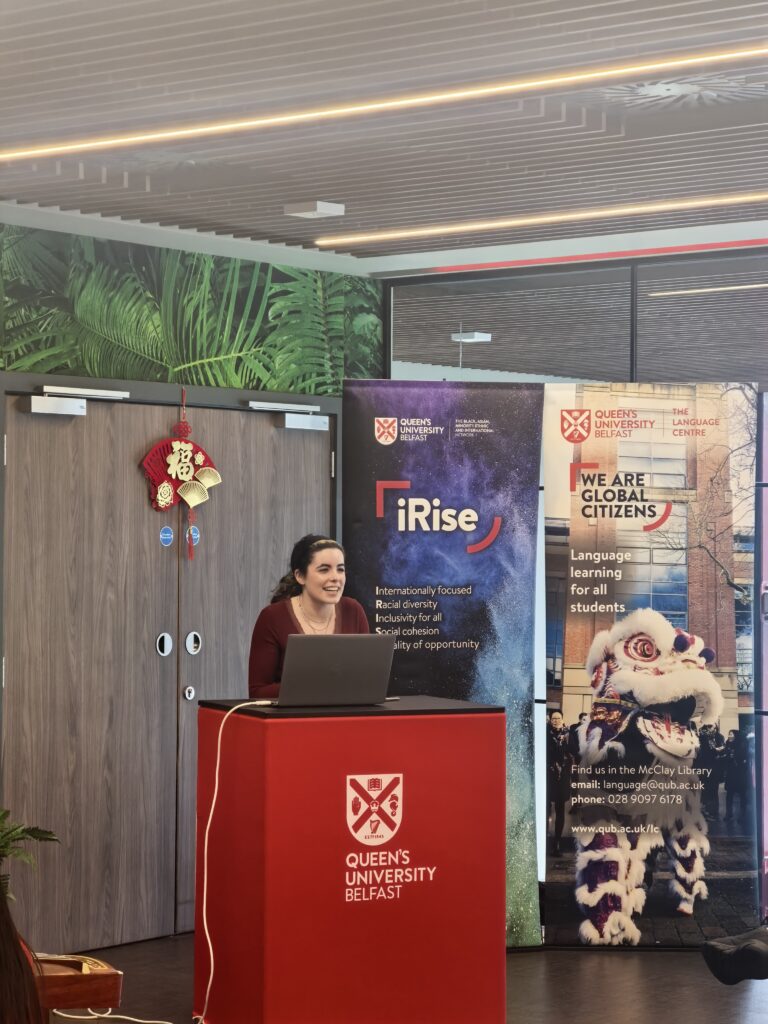
The morning began with opening remarks from the iRise Co-Chair, Dr. Bee-Yen Toh who introduced the work of iRise and reflected on the network’s growing programme of activities, encouraging more staff participantion and contribution to its Cultural Diversity Scheme. The REC Academic Lead Prof Wei Sha also offered welcoming remarks before the event moved into two cultural presentations: Dr. Liang Wang from China introduced Duanwujie, while Dr Suyhun Kim from Korea introduced Danoje.

  • Dr Liang Wang introduced Duanwu Festival.
  • Dr Shuyun Kim introduced Dano Festival.

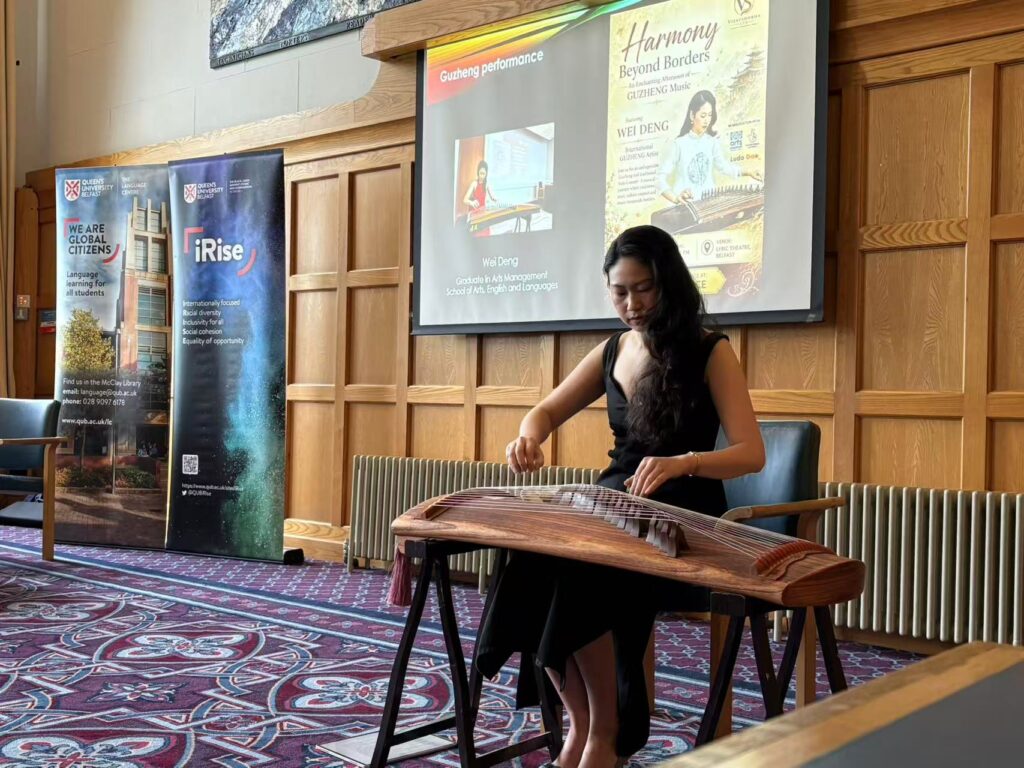
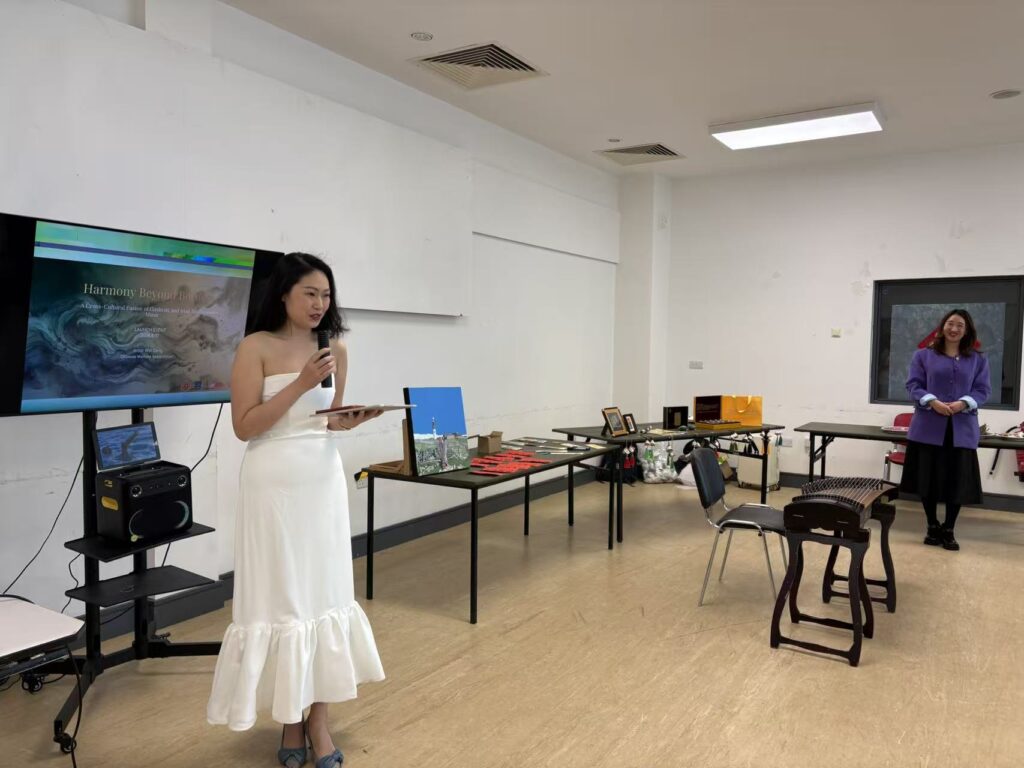
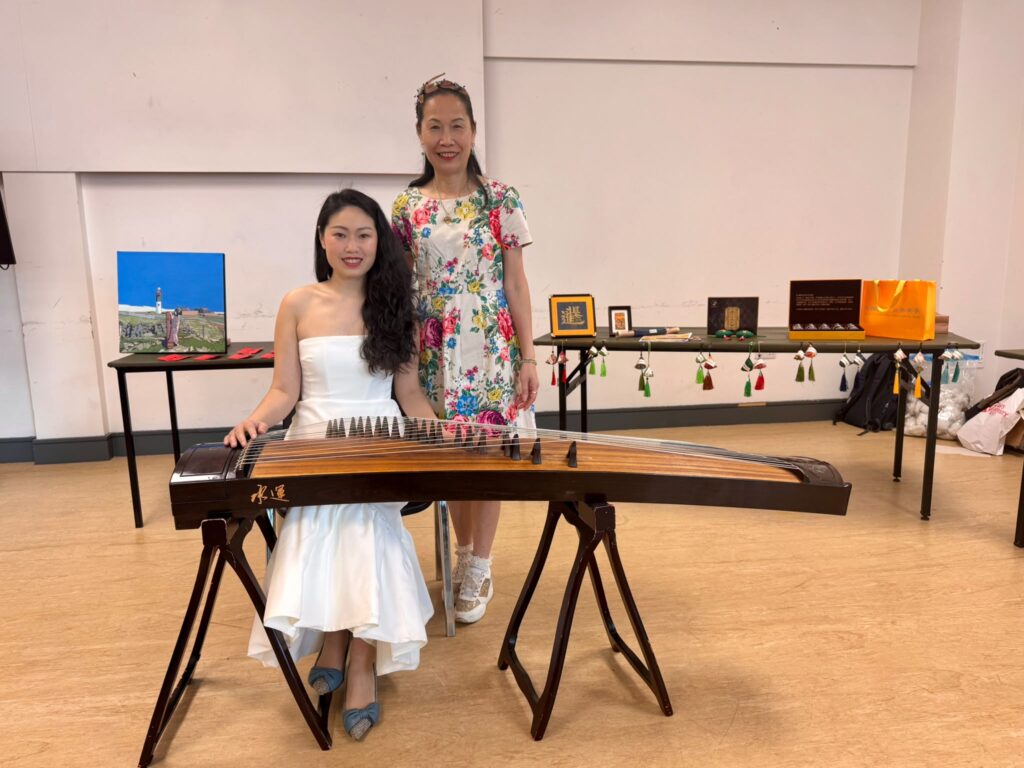
The event was further enriched by a guzheng performance from Wei Deng, a graduate in Arts Management from the School of Arts, English and Languages. Wei, holding a Global Talent Visa, has been committed to integrating guzheng techniques with Irish music elements, with which she is going to host her guzheng concert at the Fleadh Cheoil na hÉireann (the world’s largest celebration of Irish traditional music). Wei extended her invitation to QUB staff to attend her concert in coming August.

  • Wei Deng performed guzheng music at the event.
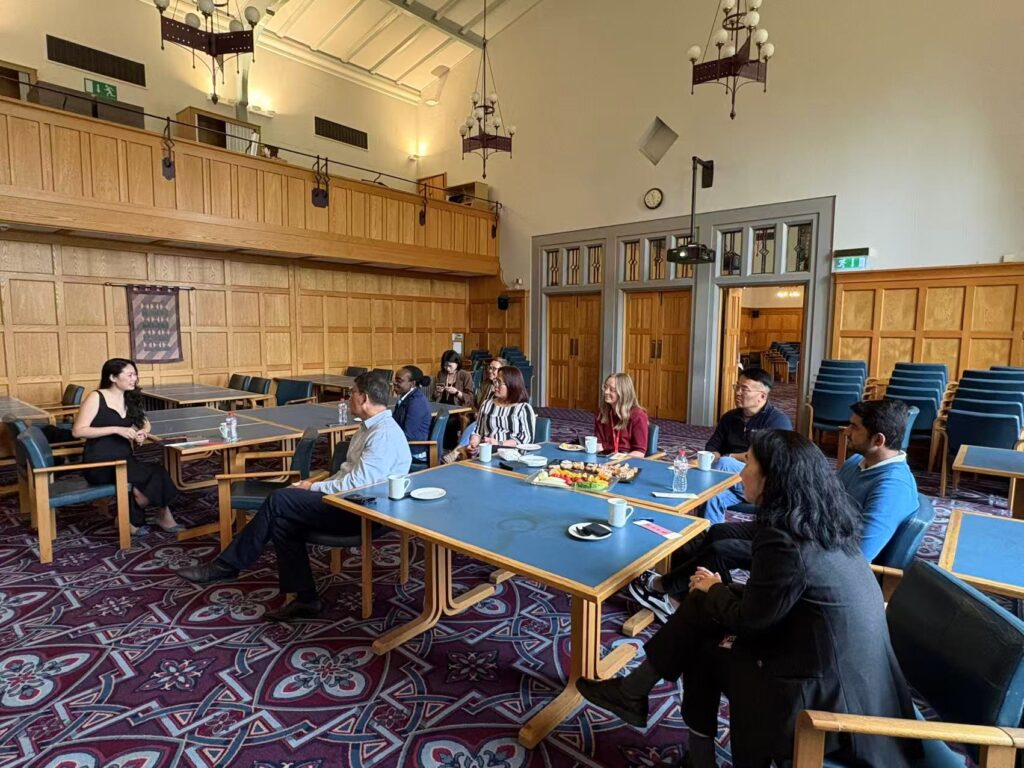
  • Wei Deng communicated with Queen's staff about her upcoming guzheng concert.

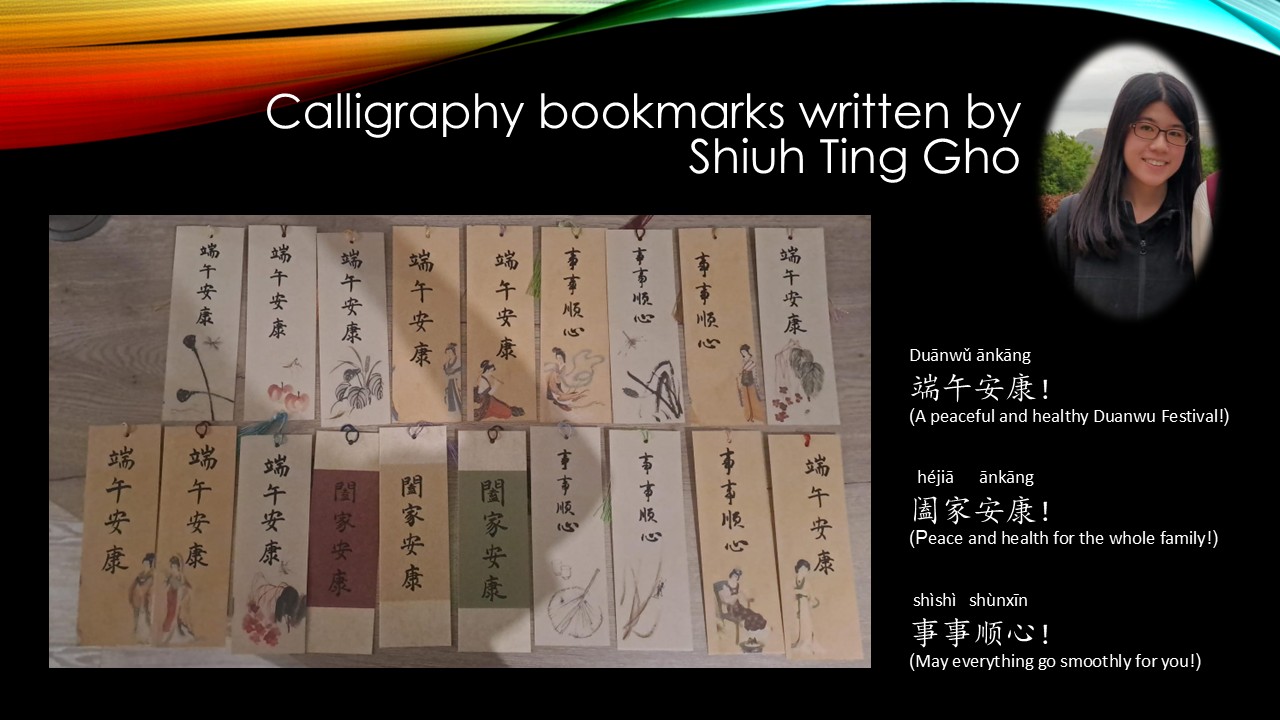
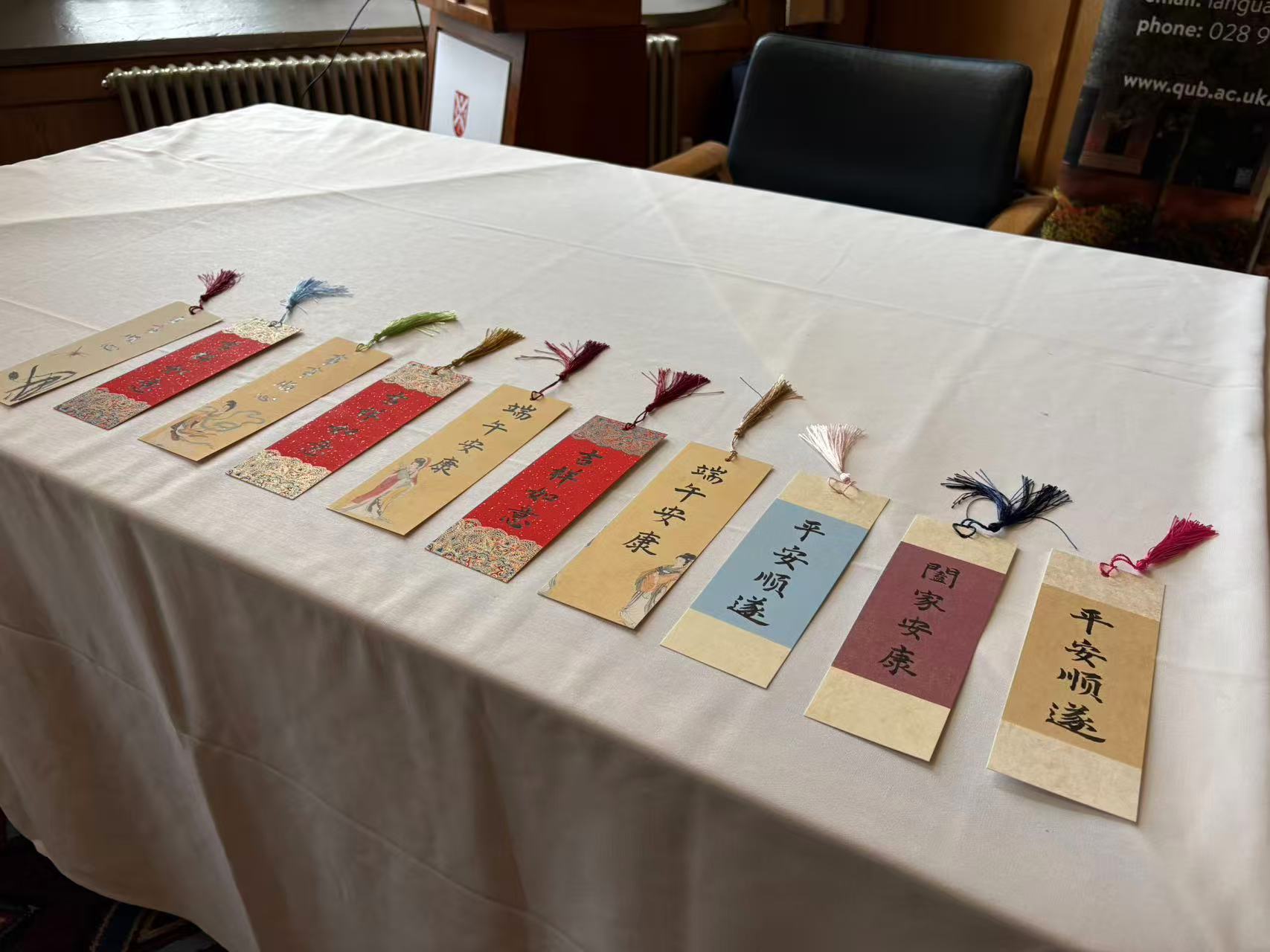
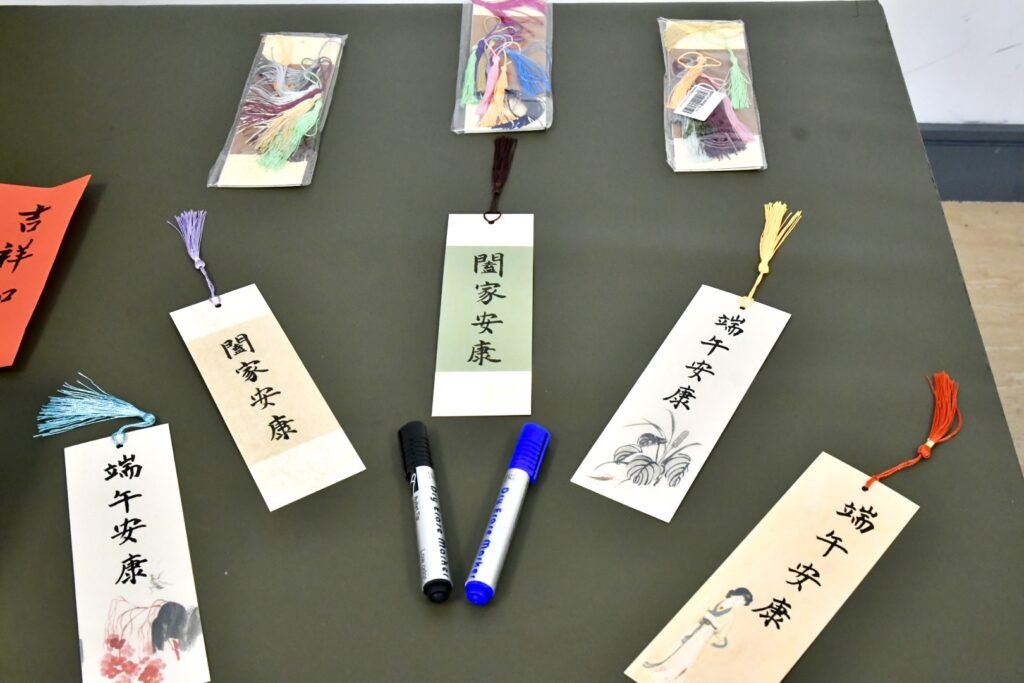
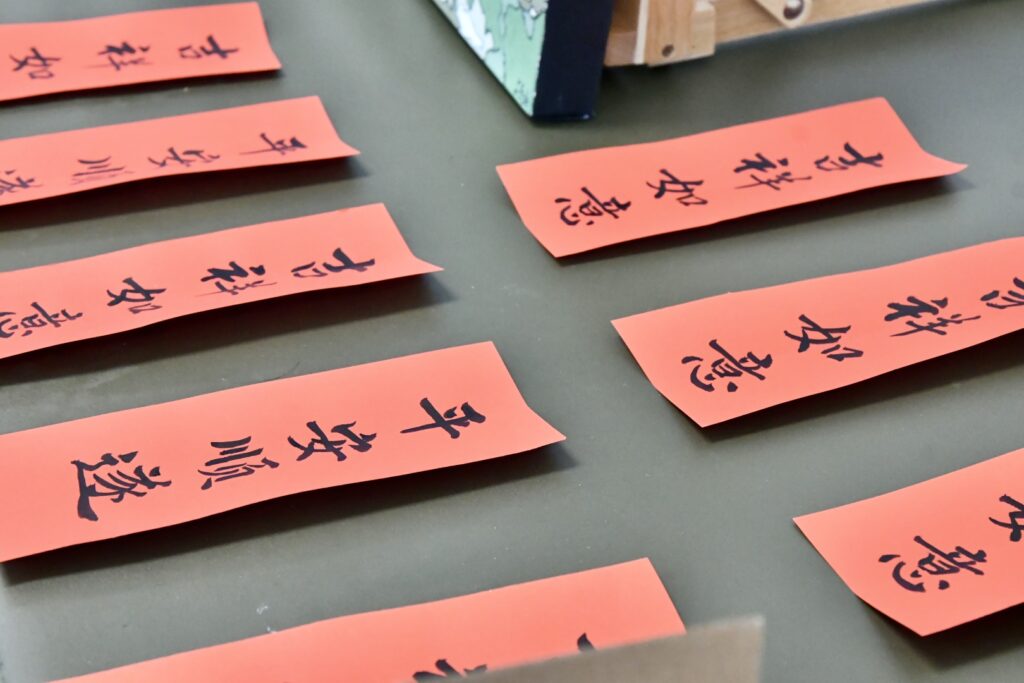
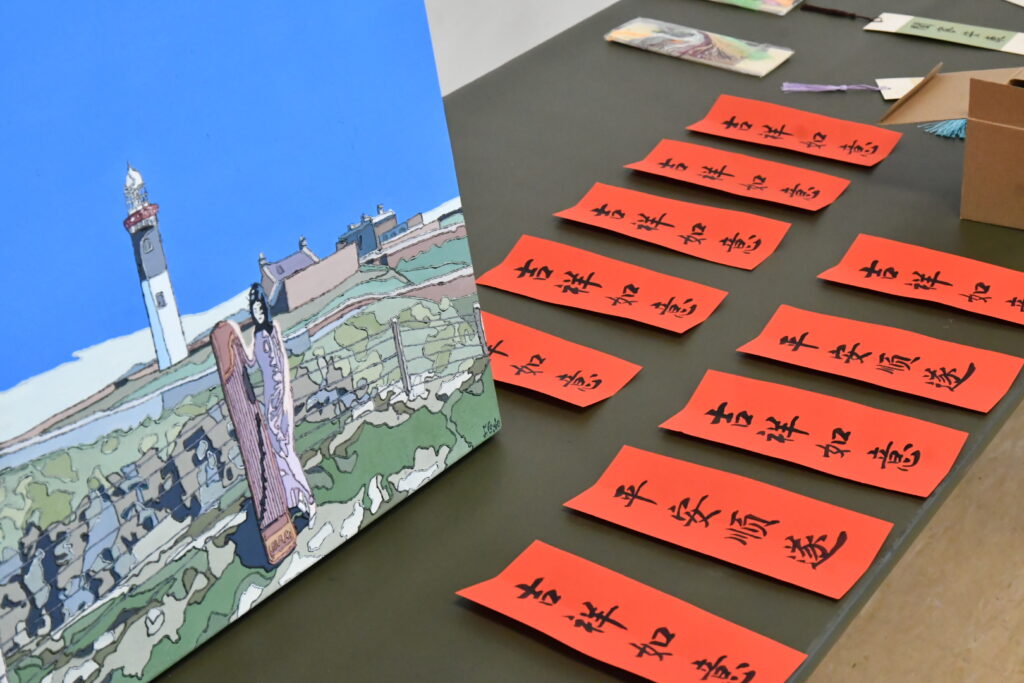
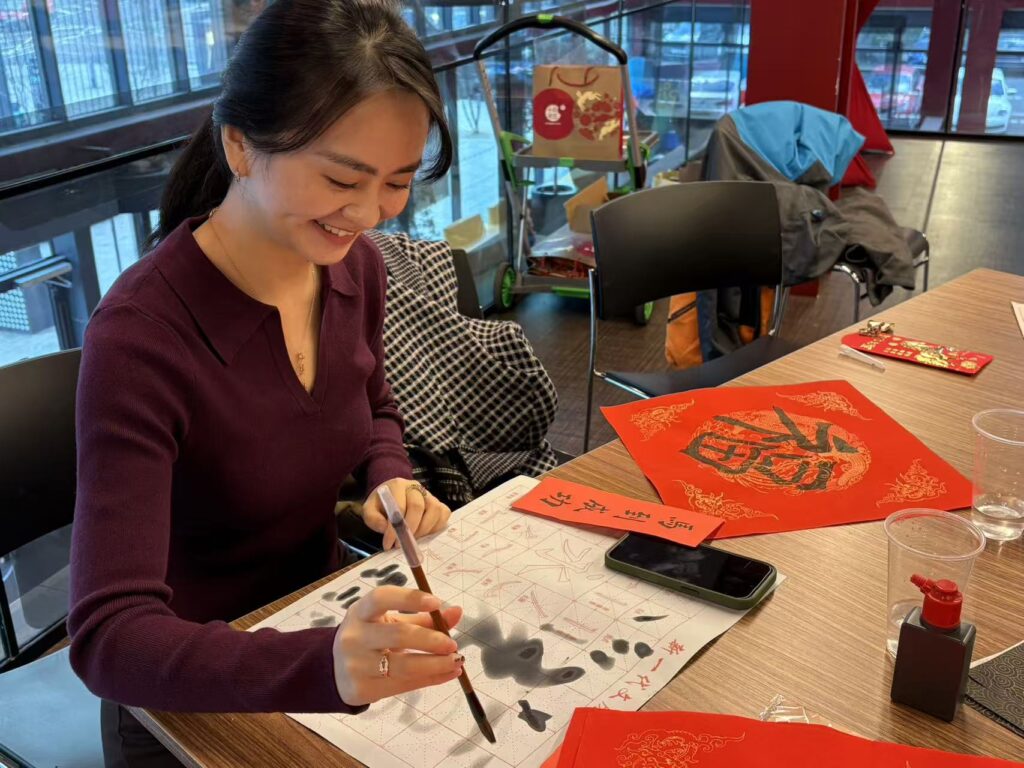
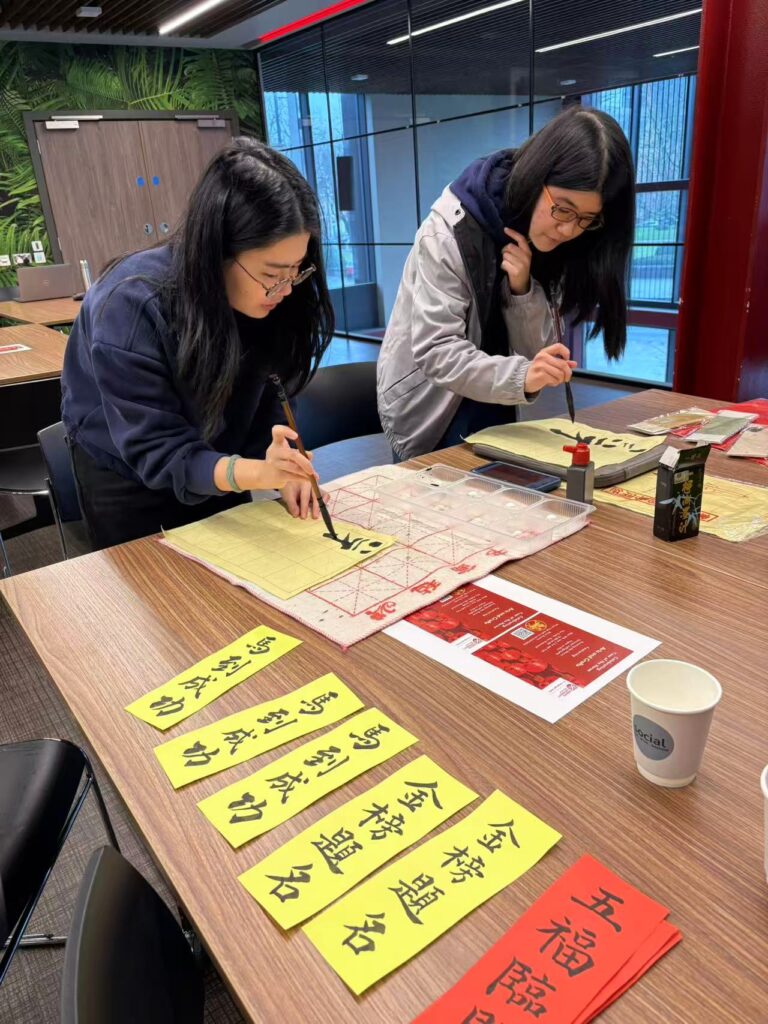
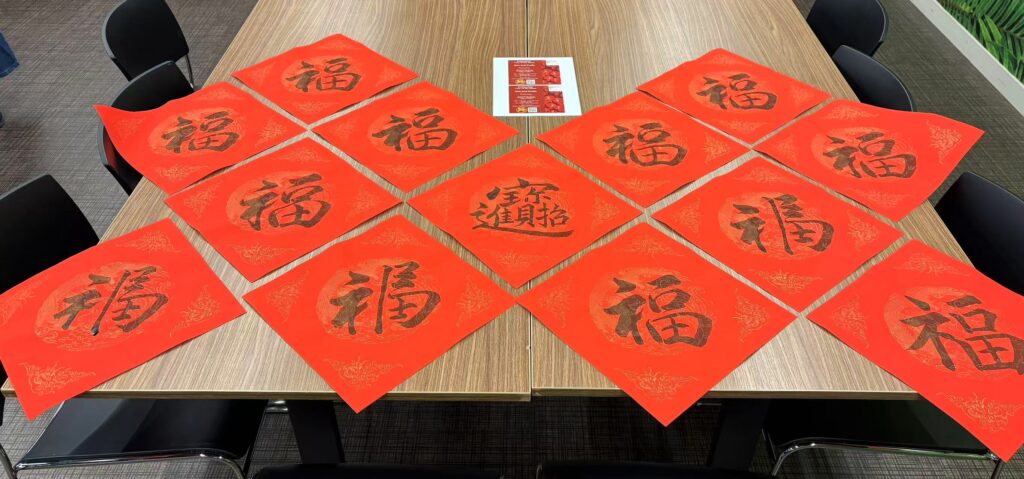
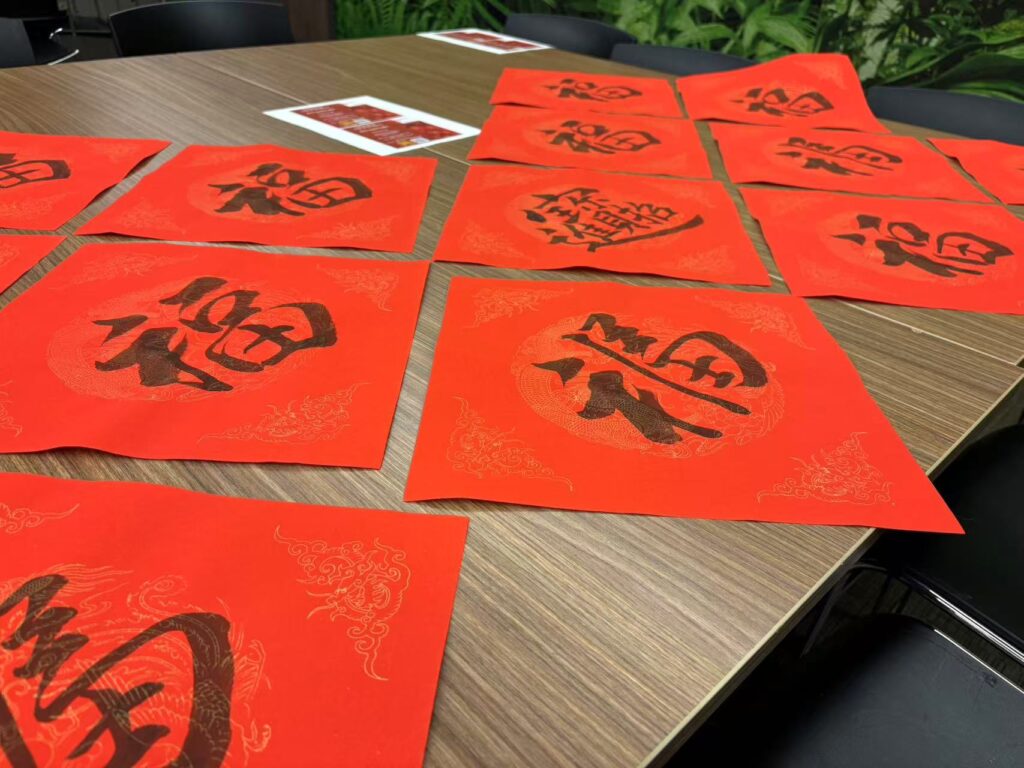
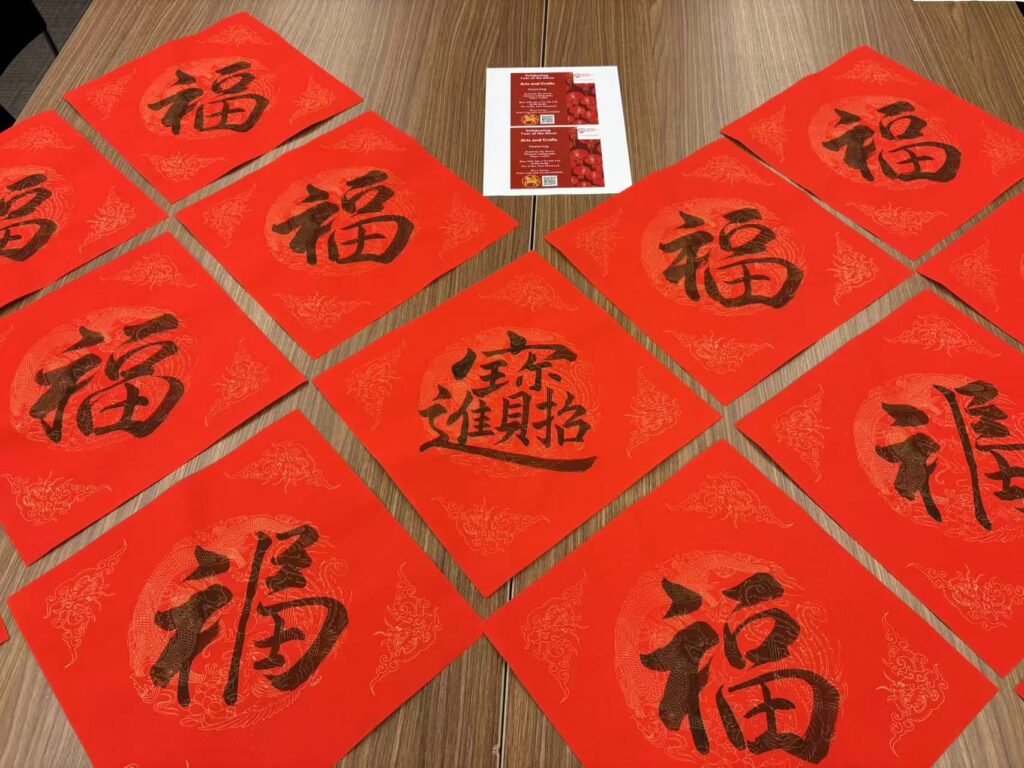
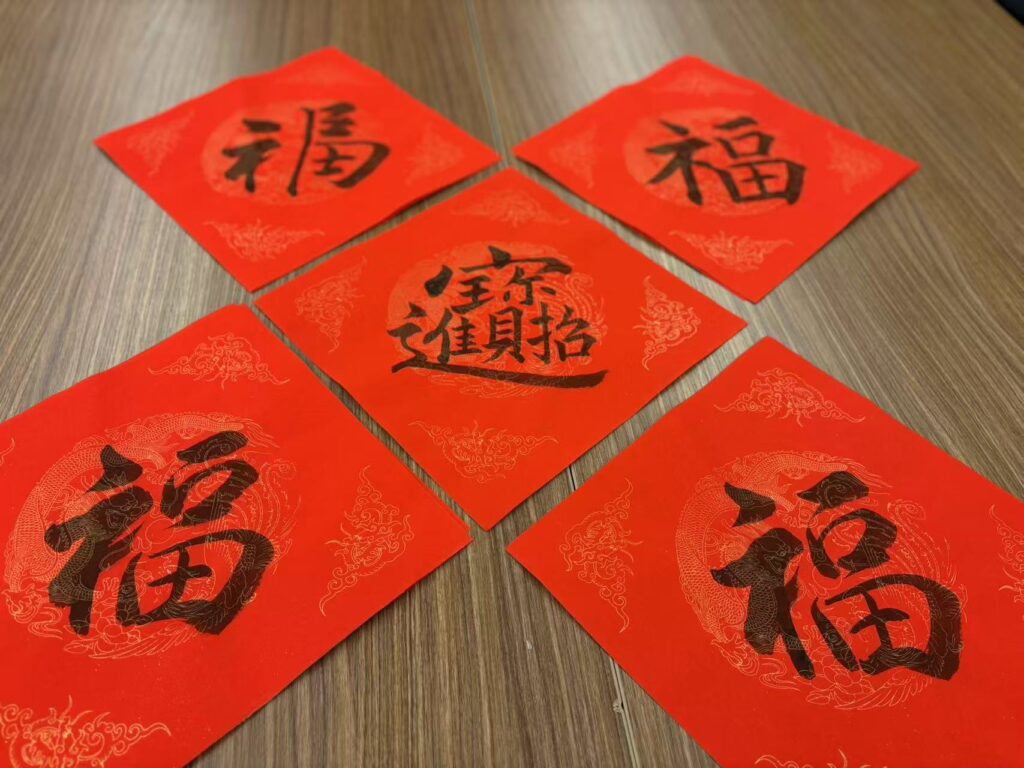
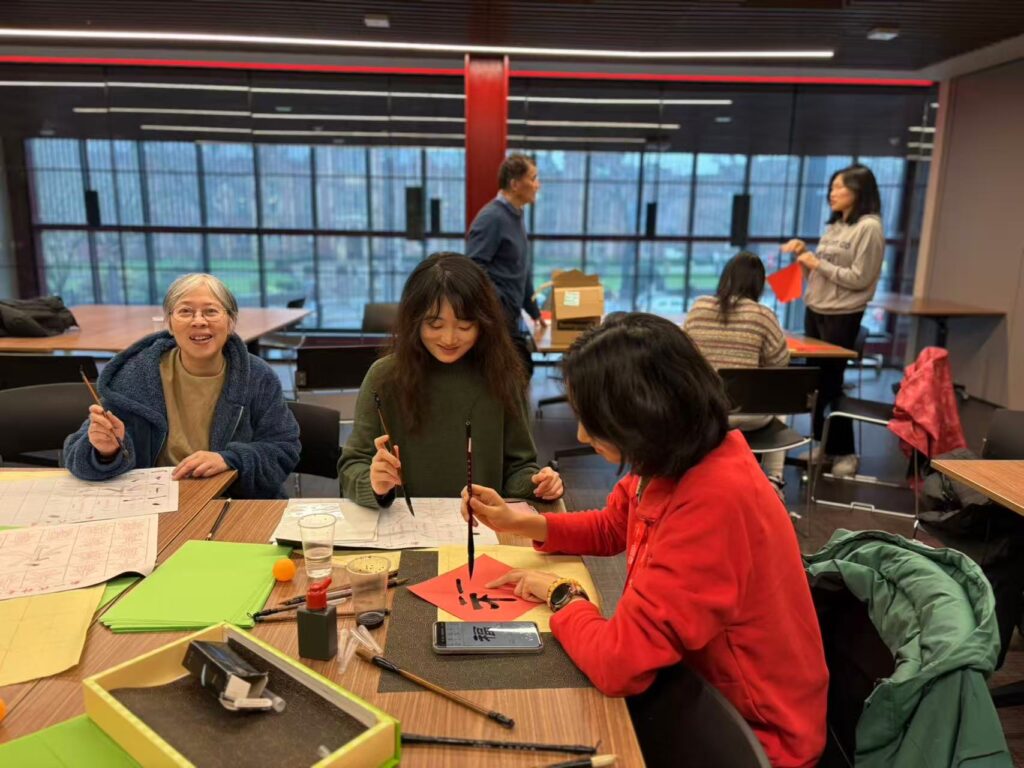
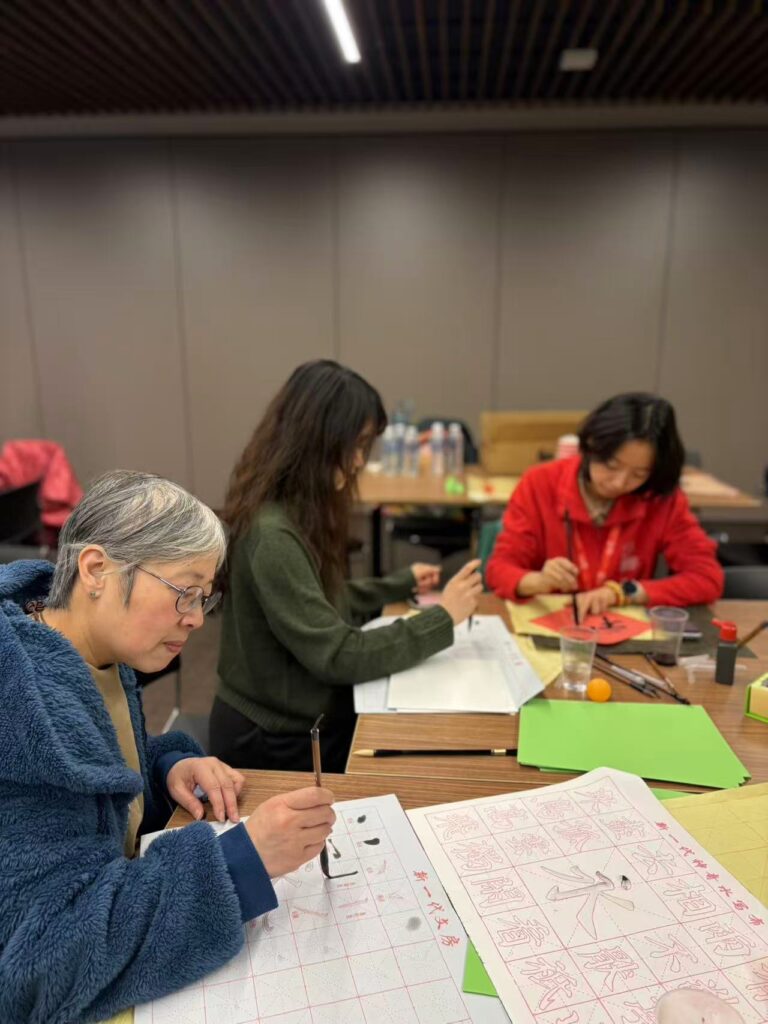
Colleagues also received calligraphy bookmarks featuring Chinese Duanwu Festival greetings and well-wishes, including messages of peace, health and good fortune. These small keepsakes, written by QUB Law student Shiuh Ting Gho, offered participants something personal to take away from the event, while also introducing the beauty of Chinese calligraphy and the meaning carried through written language.

  • Calligraphy bookmarks written by Shiuh Ting Gho.
  • Calligraphy bookmarks carrying festival greeting messages.

The Mid-Summer Social was a warm celebration of culture, language and shared learning. Through stories, music, food traditions, language and calligraphy, the event offered colleagues an opportunity to learn about Duanwujie and Danoje while strengthening a sense of connection across the University community.

Read the original text from QUB iRise webpage.

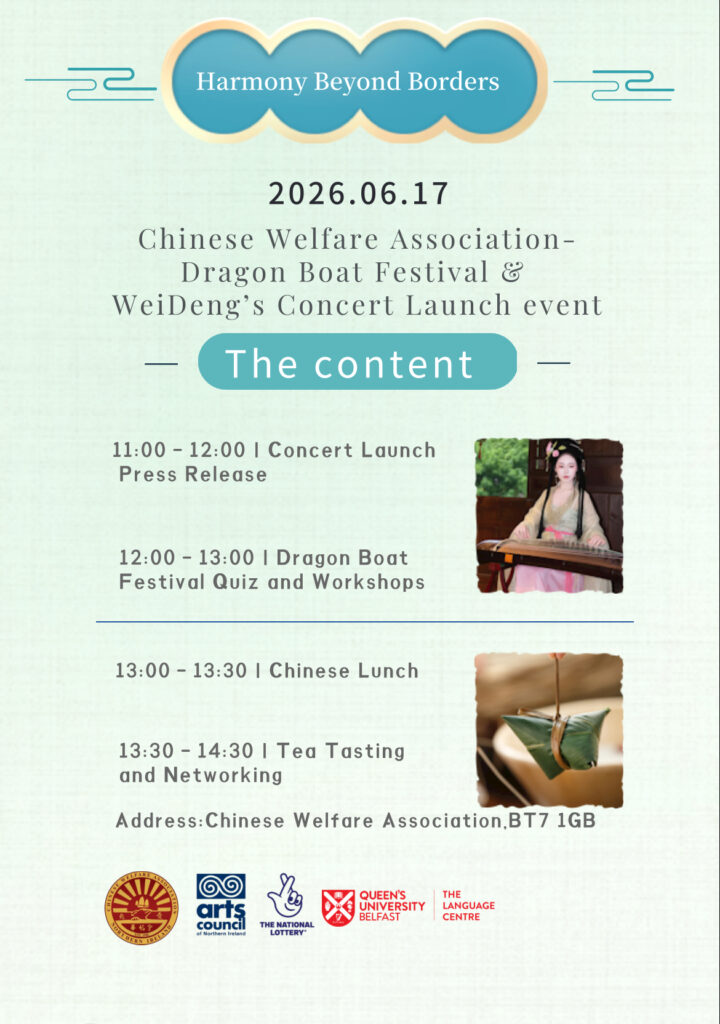
Celebration 2: CWA Dragon Boat Festival and Wei Deng’s Concert Launch

The second celebration was hosted by the Chinese Welfare Association Northern Ireland (CWA) to support the local community’s Dragon Boat Festival celebration and the launch of Wei Deng’s upcoming concert. Distinguished guests included representatives from organisations and associations such as the Consulate General of the People’s Republic of China in Belfast, Arts Council Northern Ireland, National Museums NI, as well as members of other ethnic communities.

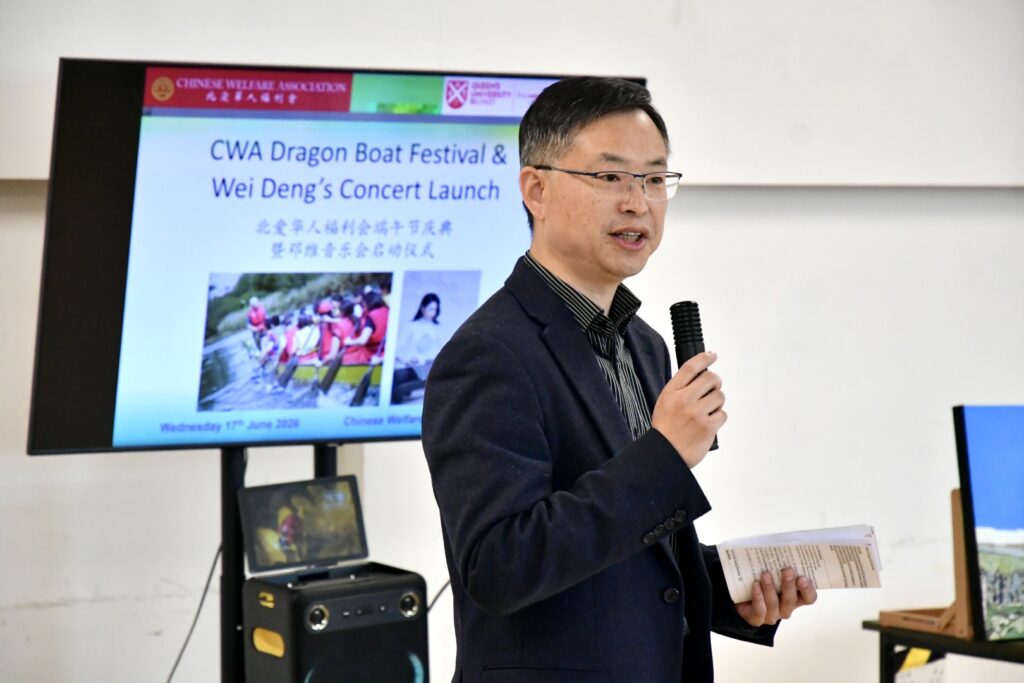
Ms Lili Wu, Directing Manager of CWA and Dr Liang Wang, Language Support Officer from Queen’s Language Centre, co-chaired the event.

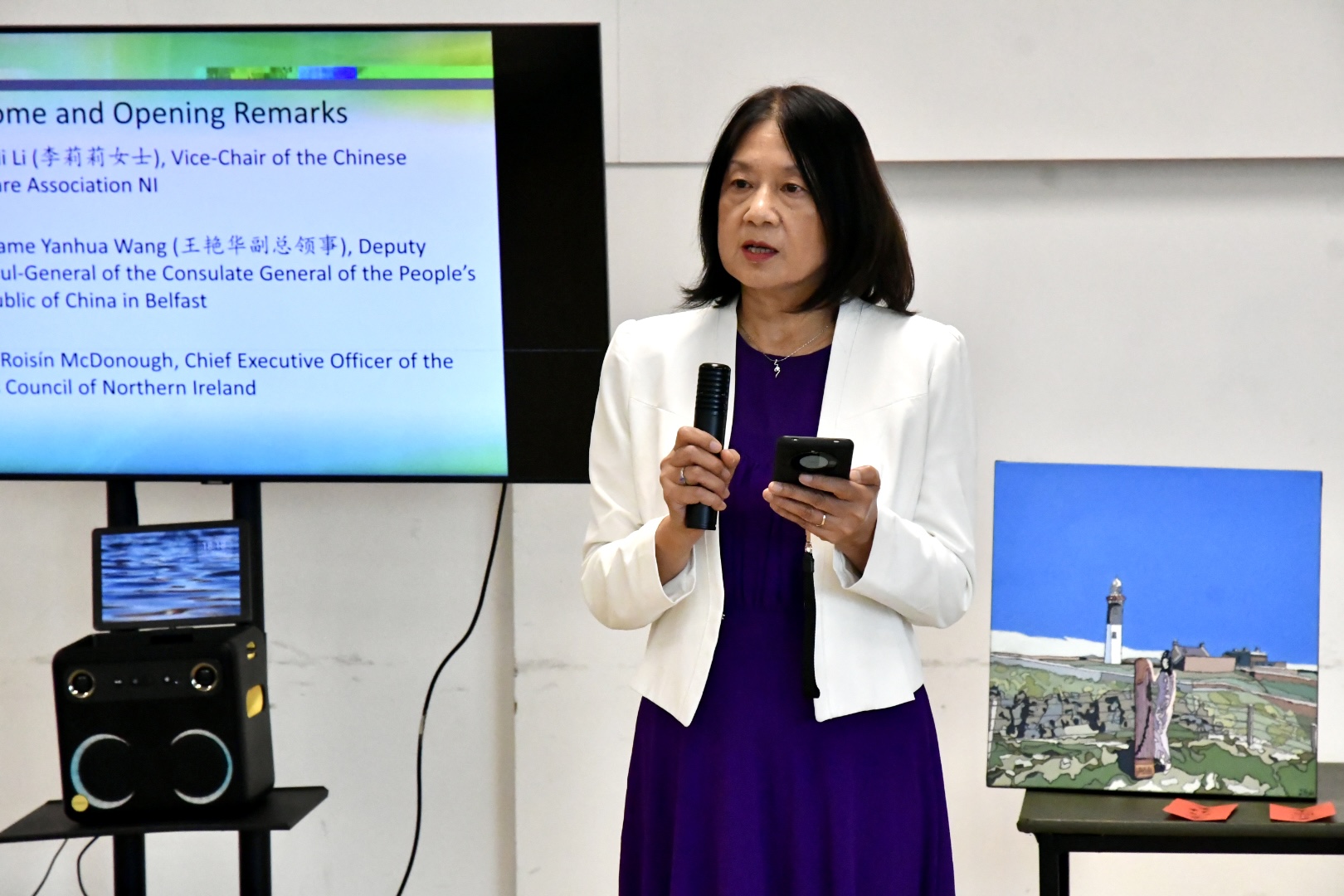
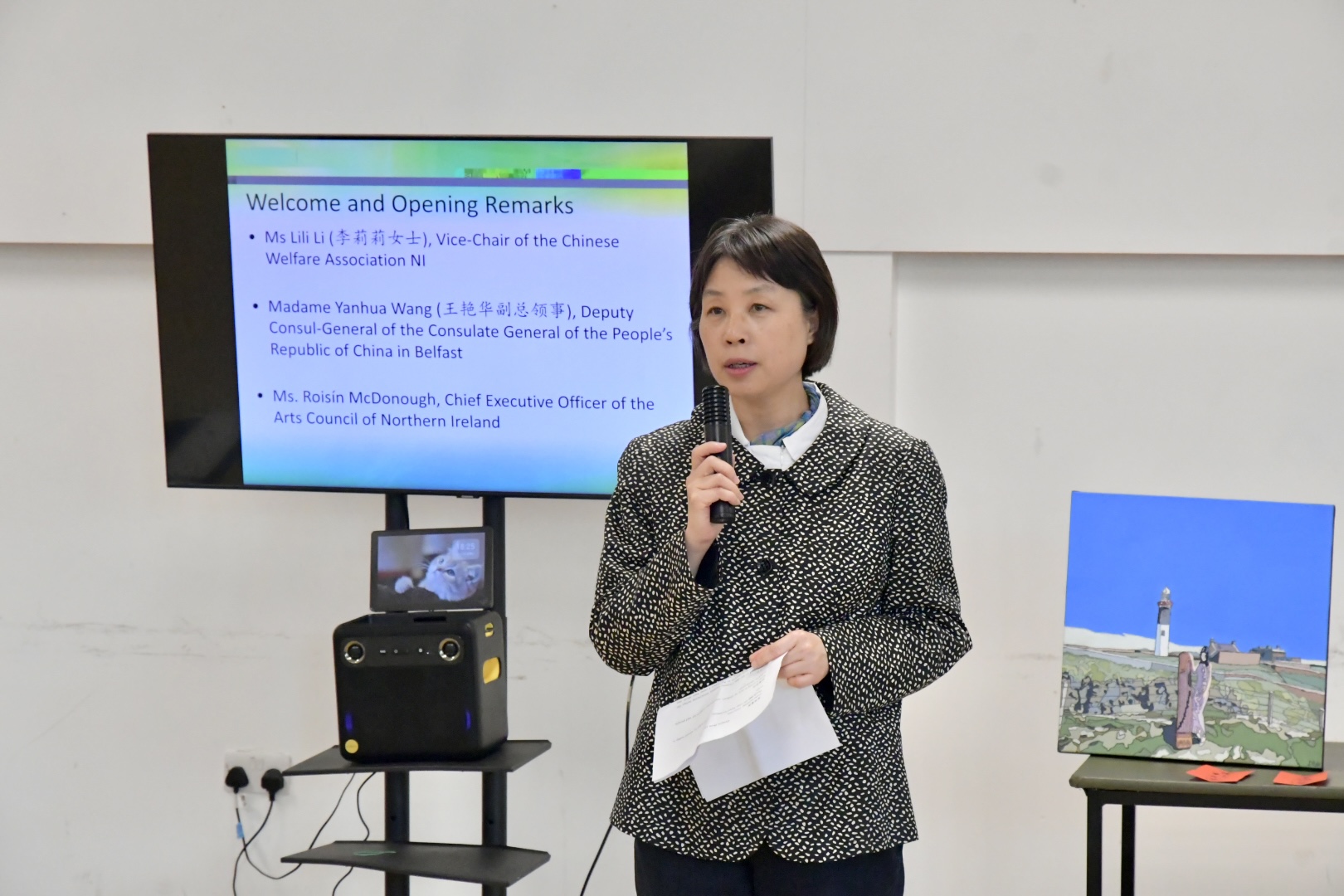
Ms Lili Li, Vice-Chair of CWA, expressed her gratitude for the support received from partner organisations and individuals, whose contributions have helped foster the continued development of the Chinese community and its growing role in Belfast’s civic engagement and social cohesion. Madame Yanhua Wang, Deputy Consul-General of the Consulate General of the People’s Republic of China in Belfast, highly commended CWA’s long-standing service to the Chinese community and its important role in promoting multiculturalism and community integration in Belfast.

  • Ms Lili Li gave a welcome speech.
  • Madame Yanhua Wang gave a welcome speech.

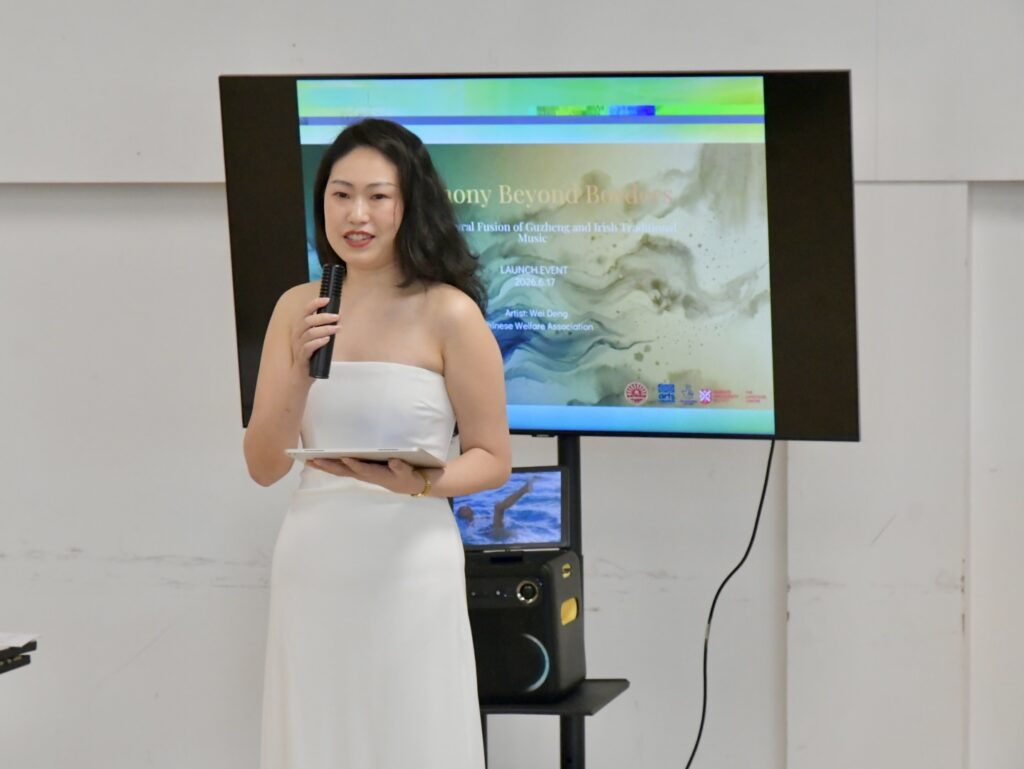
The first half of the celebration featured the launch of Wei Deng’s concert. Wei shared stories from her artistic journey and personal development through intercultural learning since arriving at Queen’s as a postgraduate student in Arts Management. She also spoke about her continued engagement in innovative guzheng practice following her studies, both in China and Northern Ireland.

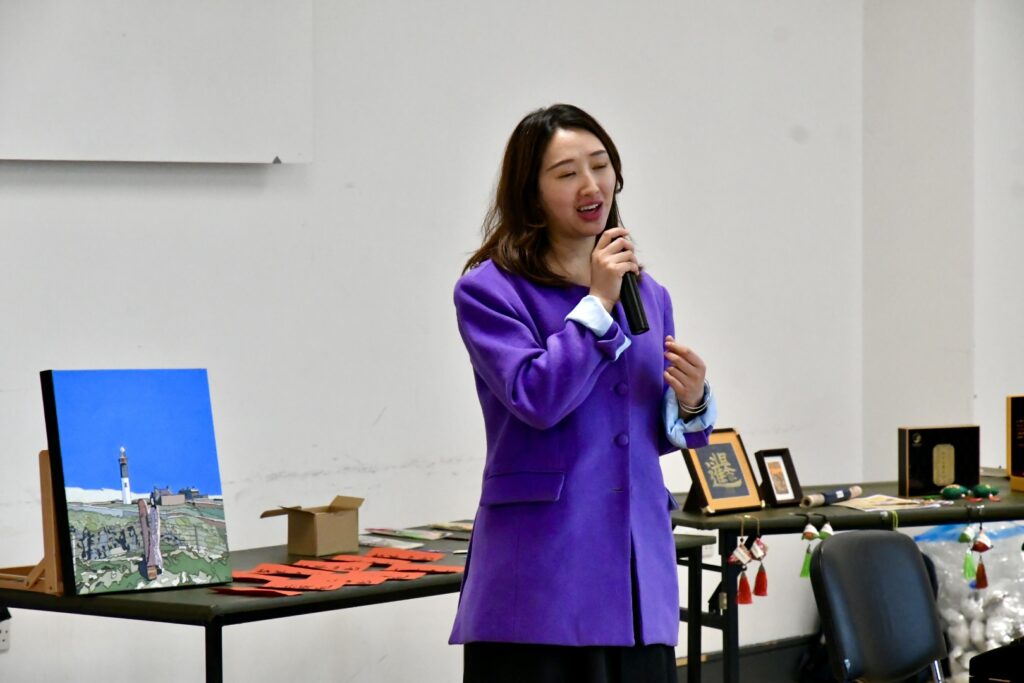
  • Wei Deng introduced her guzheng project and concert.
  • Wei Deng introduced her guzheng project and concert.
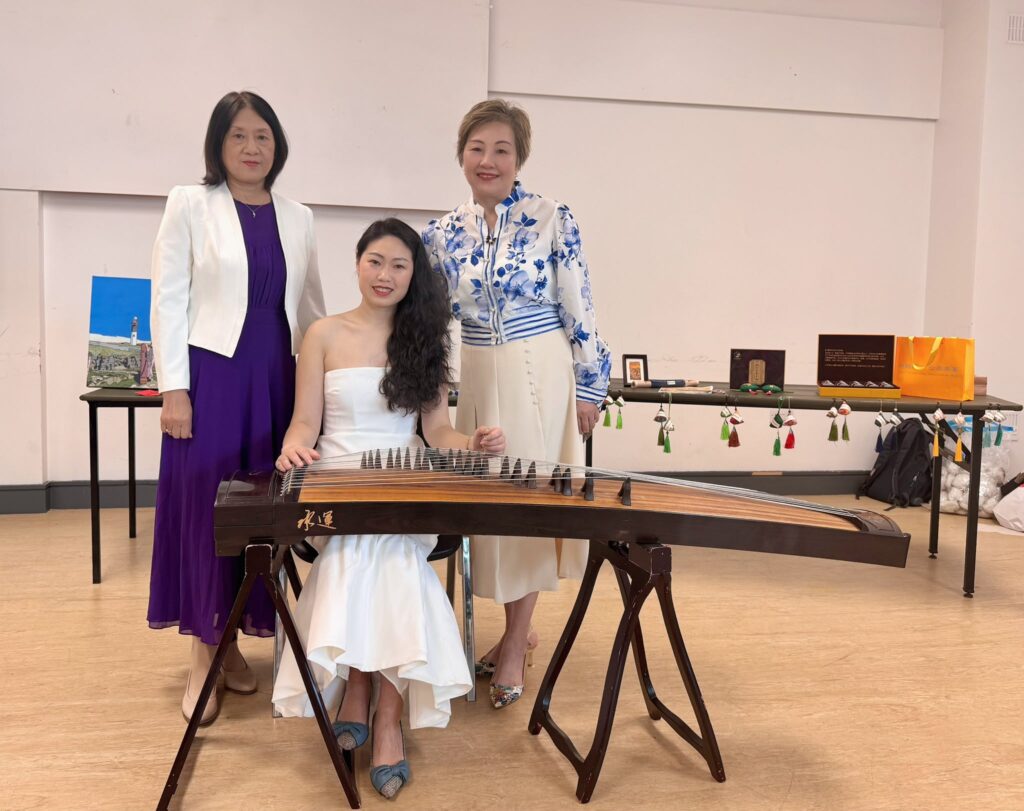
  • Wei Deng performed guzheng music.
  • Wei Deng performed guzheng music.
  • Wei Deng performed guzheng music.

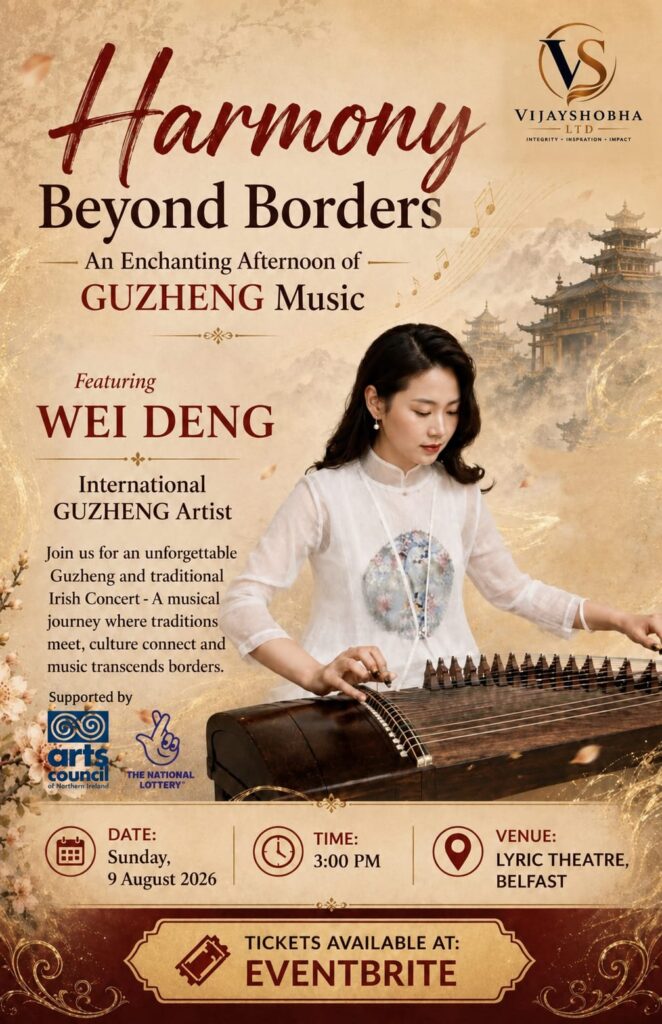
Emphasising the value of intercultural exchange, she highlighted the integration of Irish musical elements into traditional Chinese guzheng performance and warmly invited the audience to attend her concert in August.

  • Event: Harmony Beyond Borders – An Enchanting Afternoon of Guzheng Music
  • Date: Sunday 9th August 2026
  • Time: 3:00 pm
  • Venue: Lyric Theatre
  • Ticket: Eventbrite booking

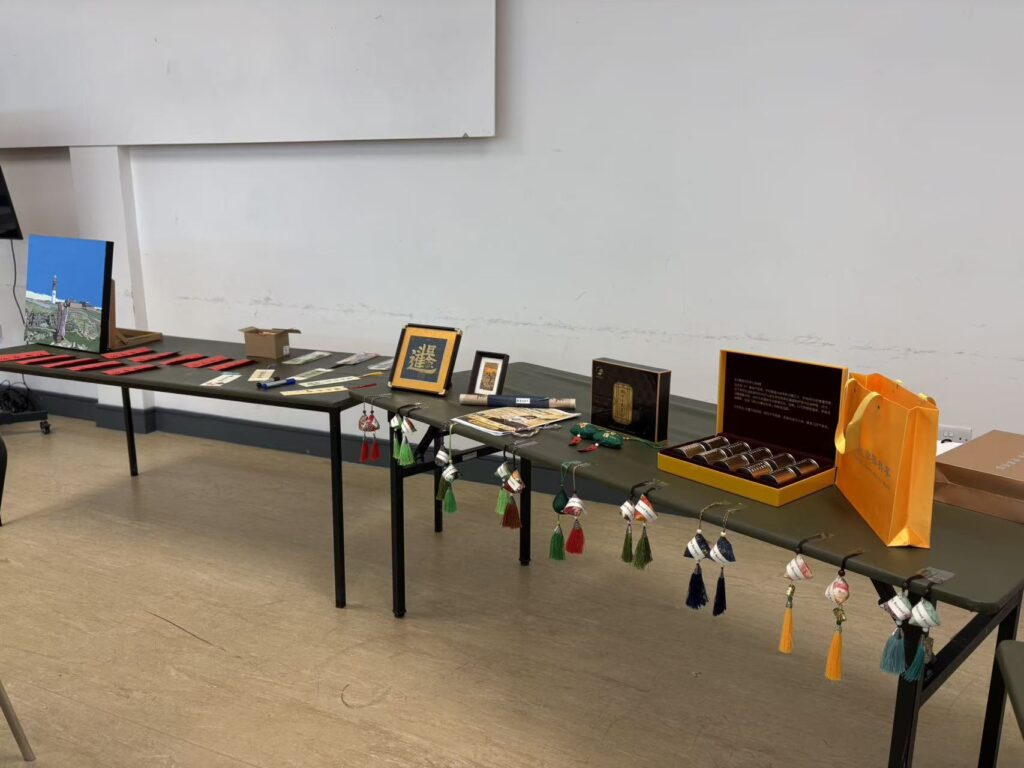
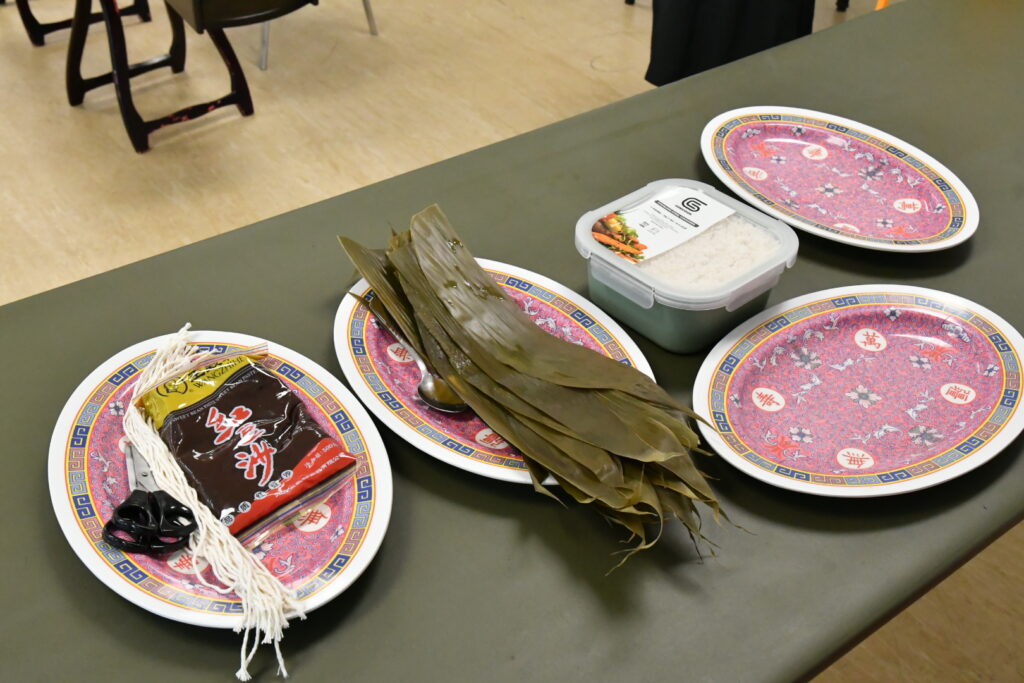
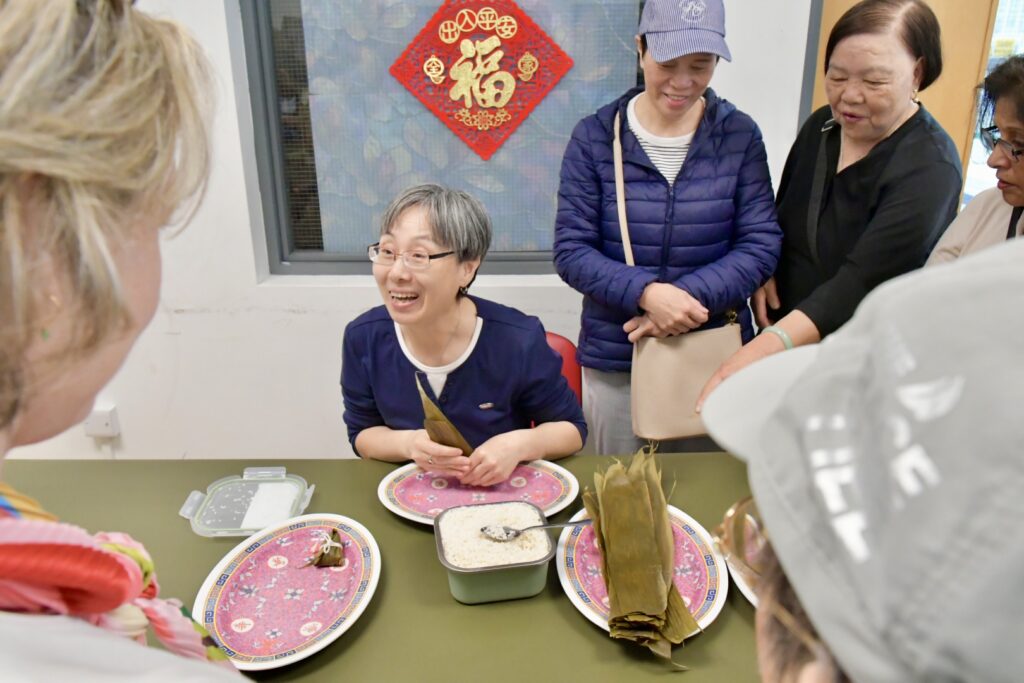
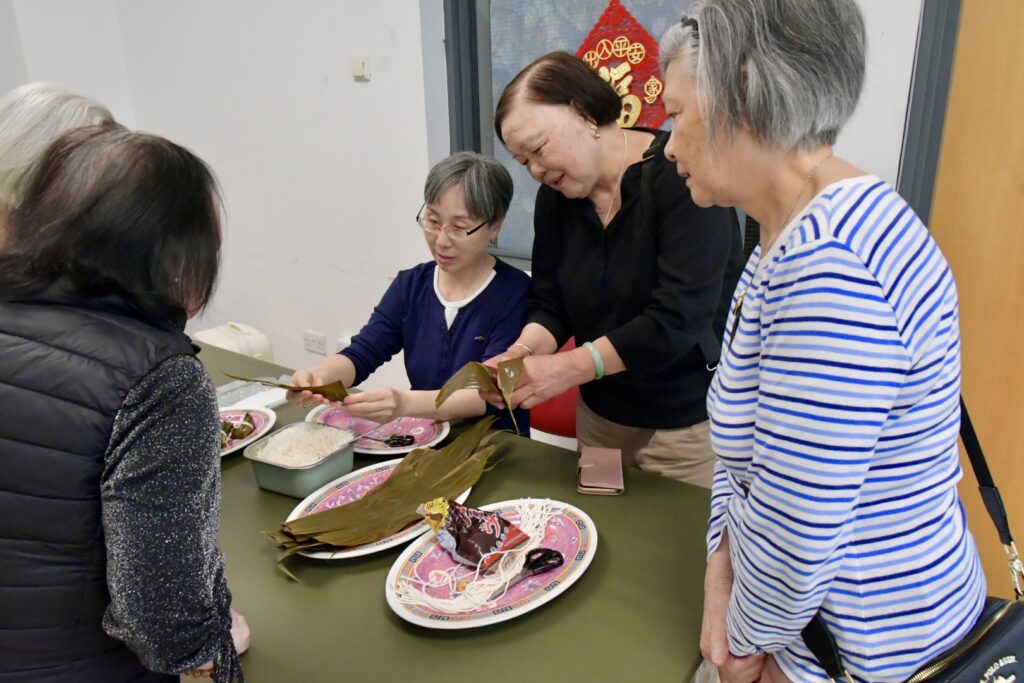
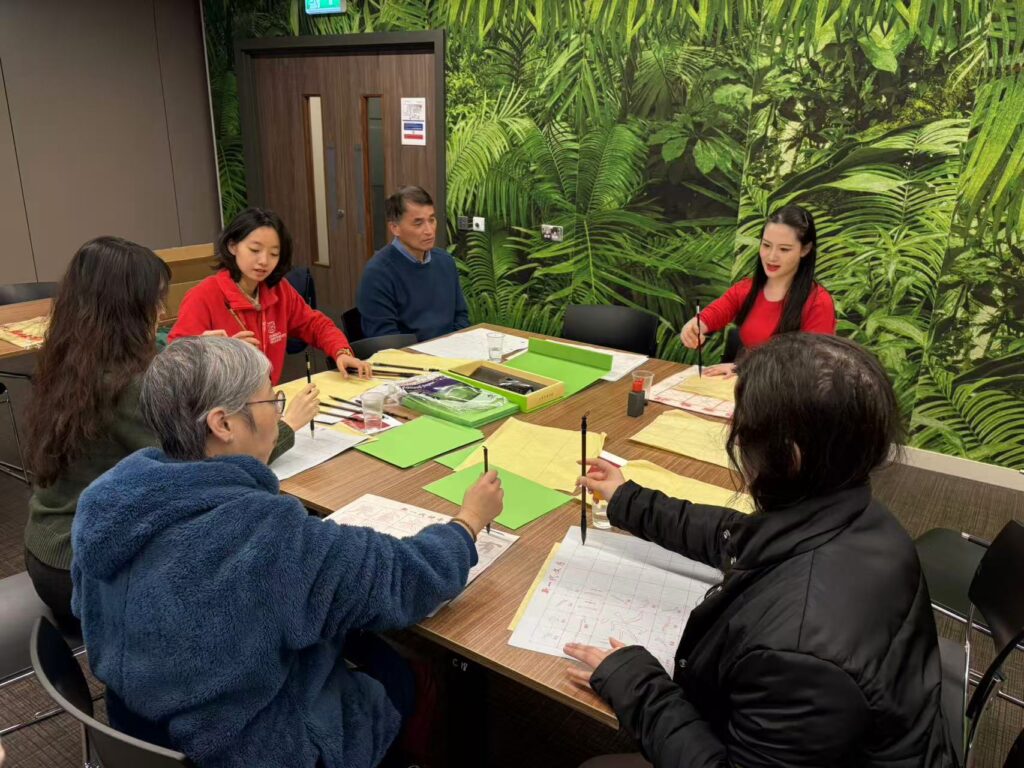
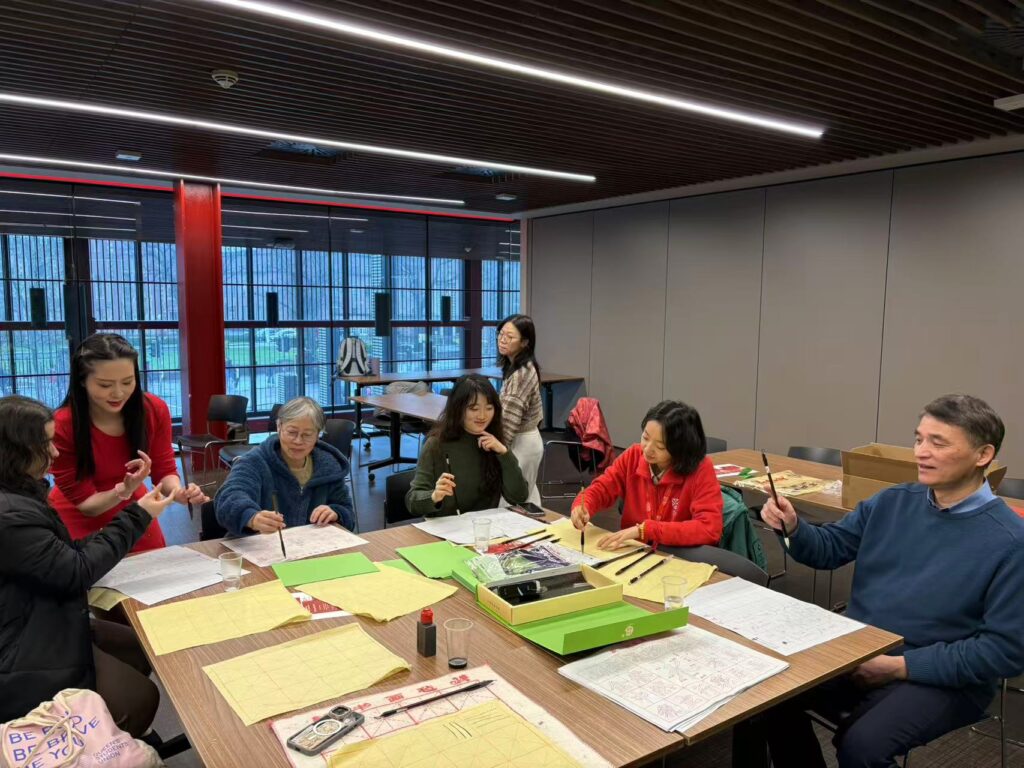
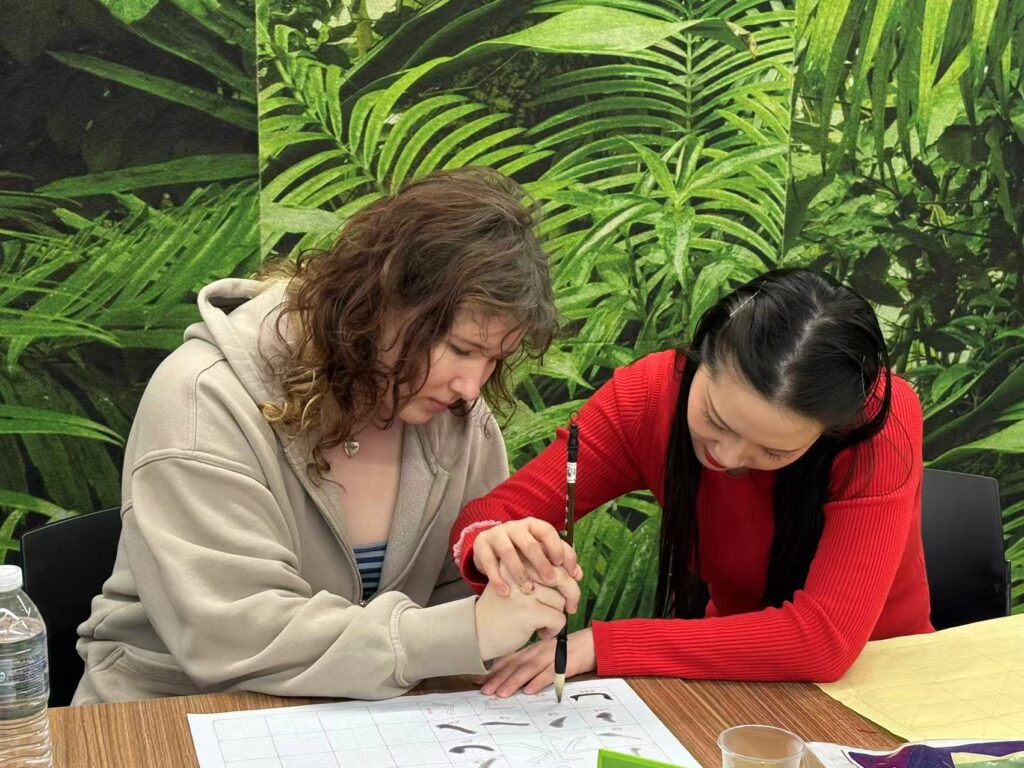
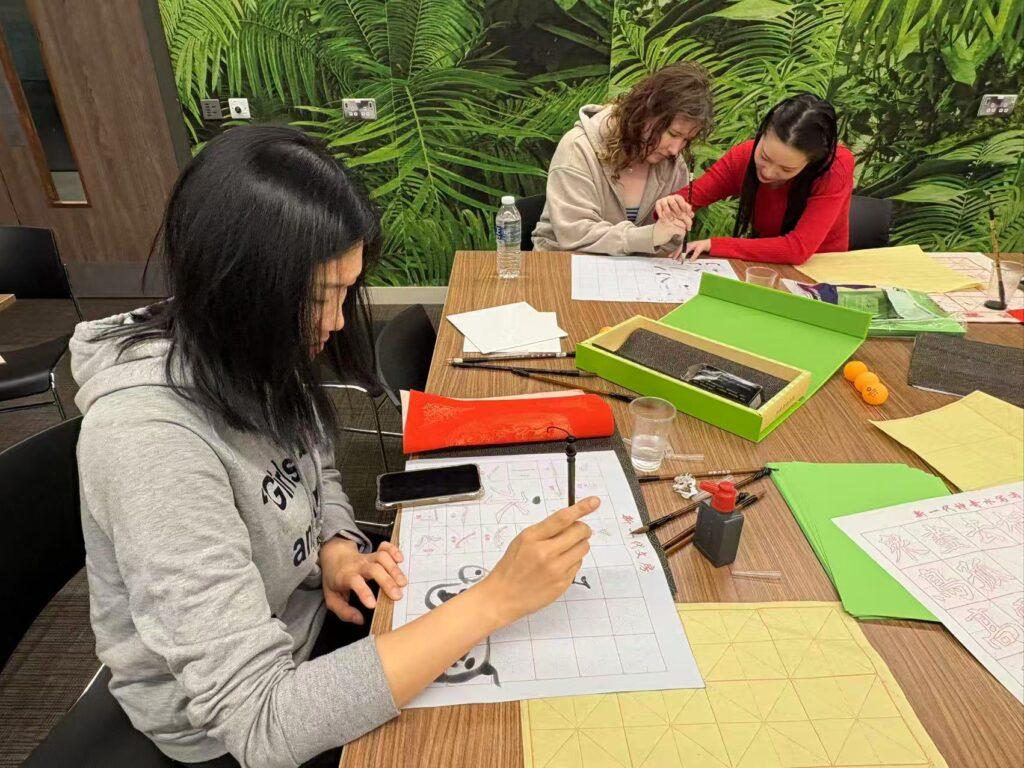
Following Wei’s wonderful live performance, the second half of the celebration began with three cultural workshops, including Chinese calligraphy bookmark writing, zongzi-shaped ornament making, and a demonstration of traditional zongzi wrapping techniques. Making and eating zongzi (粽子) – traditional Chinese sticky rice dumplings wrapped in bamboo or reed leaves and filled with a variety of sweet or savoury ingredients – has been a symbolic Dragon Boat Festival custom for thousands of years.

  • Workshop tables set with decorations.
  • Workshop tables set with calligraphy bookmarks.
  • Workshop tables set with calligraphy bookmarks.
  • Workshop tables set with calligraphy bookmarks.
  • Zongzi-shaped ornaments
  • Frame with an artisitc form of combined characters.
  • Calligraphy script and Wei's concert poster
  • Zongzi materials ready for wrapping
  • Zongzi master answering questions.
  • Zongzi master deomstrating zongzi wrapping up techniques.
  • Zongzi master deomstrating wrapped-up zongzi.

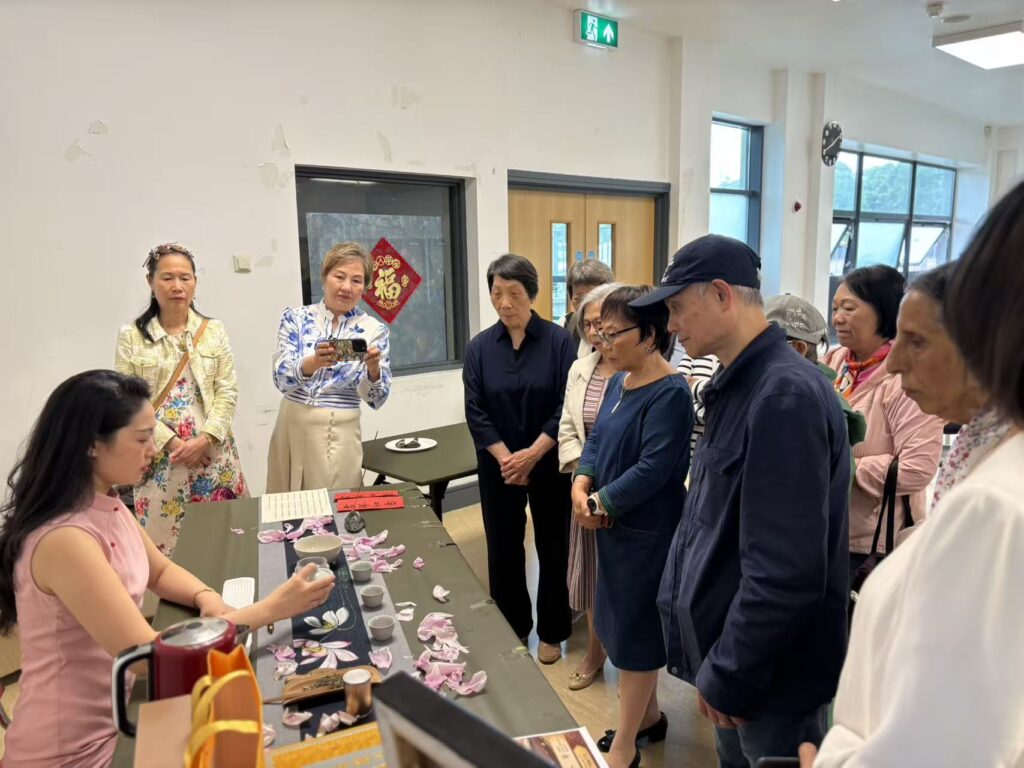
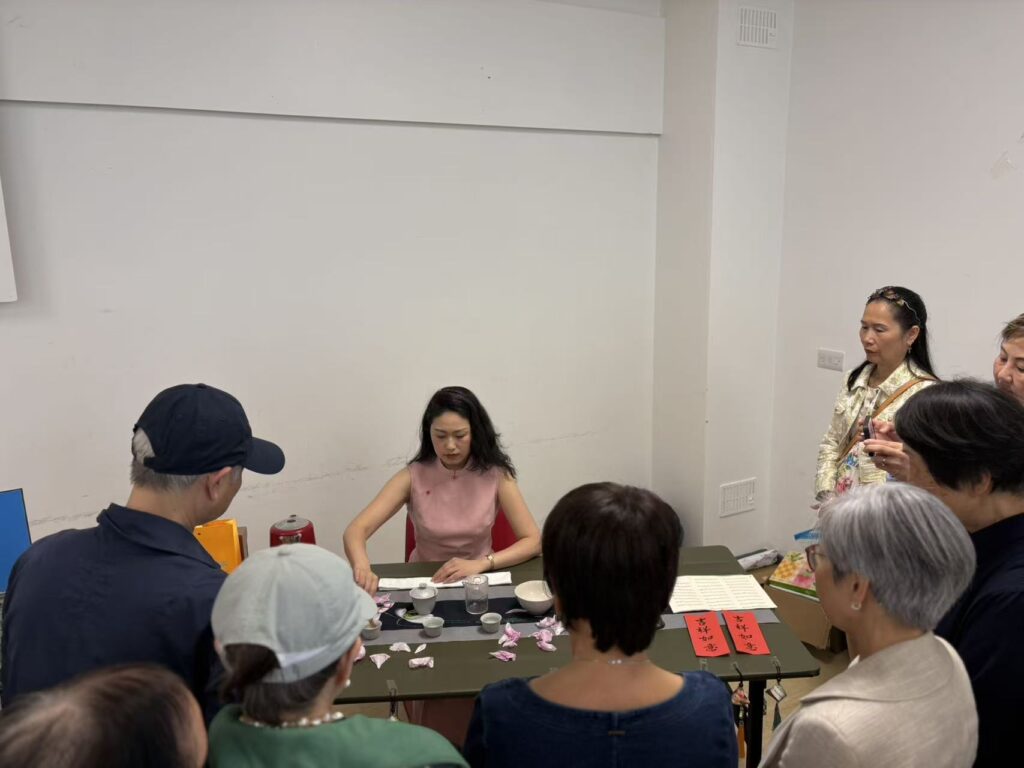
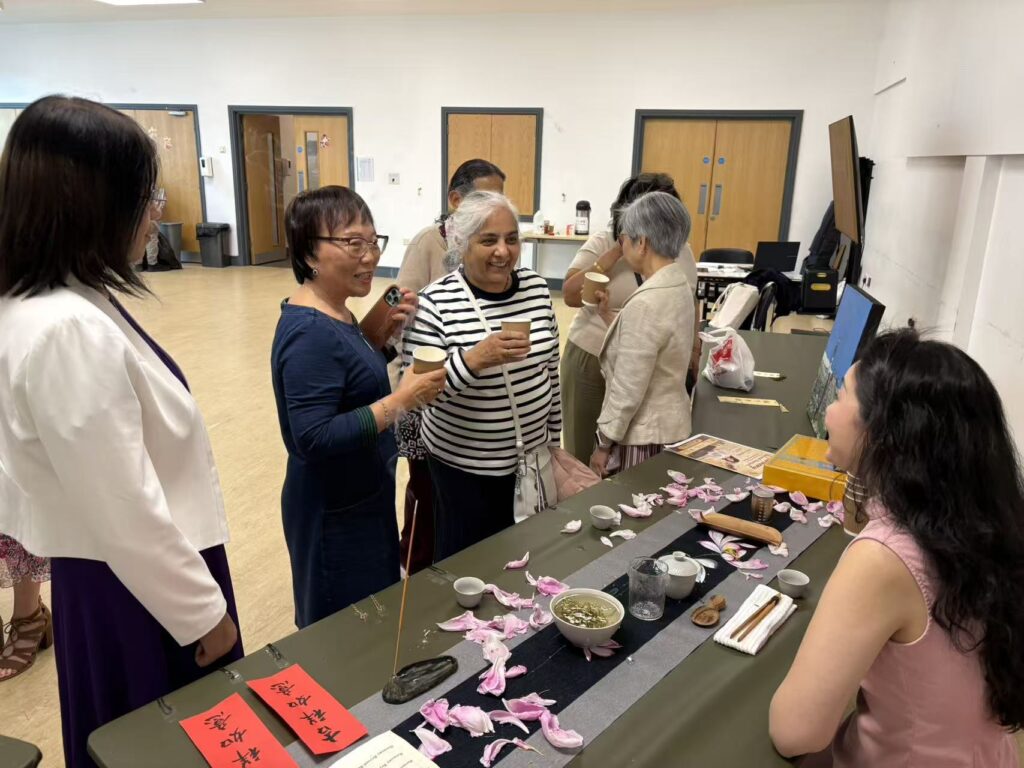
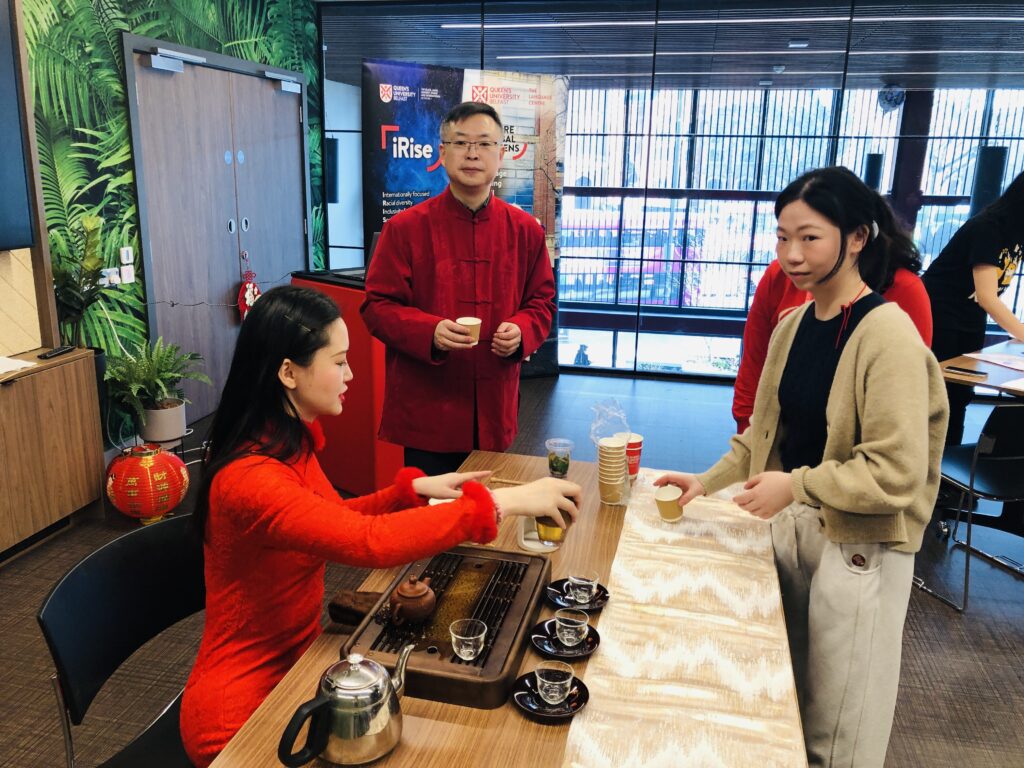
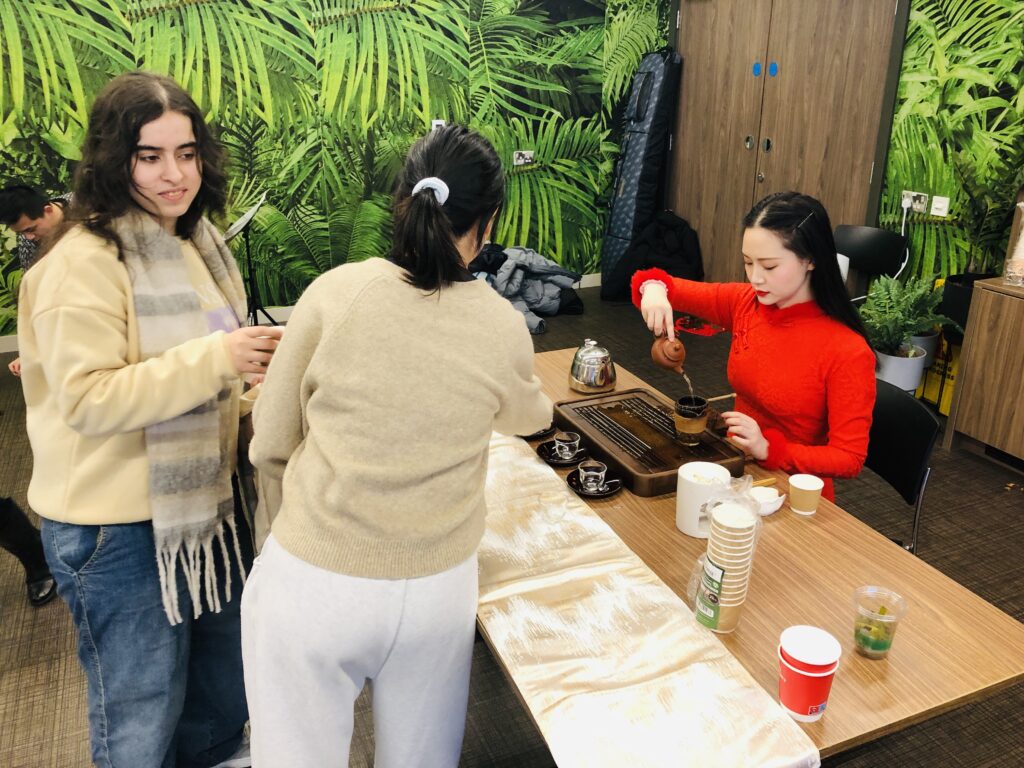
After a delicious lunch was served, featuring mini-sized zongzi as a tasting dish, Dr Liang Wang hosted a Duanwu (Dragon Boat Festival) Culture Quiz, helping non-Chinese participants gain a deeper understanding of the festival’s history, traditions, and customs. This was followed by a tea-tasting session facilitated by Wei, who demonstrated traditional tea preparation and serving practices using Yungong Tea (云宫茶), a renowned tea produced in Chongqing, her hometown.

  • Tea ceremony preparation
  • Wei Deng demoed tea making technique
  • Wei Deng demoed tea making technique
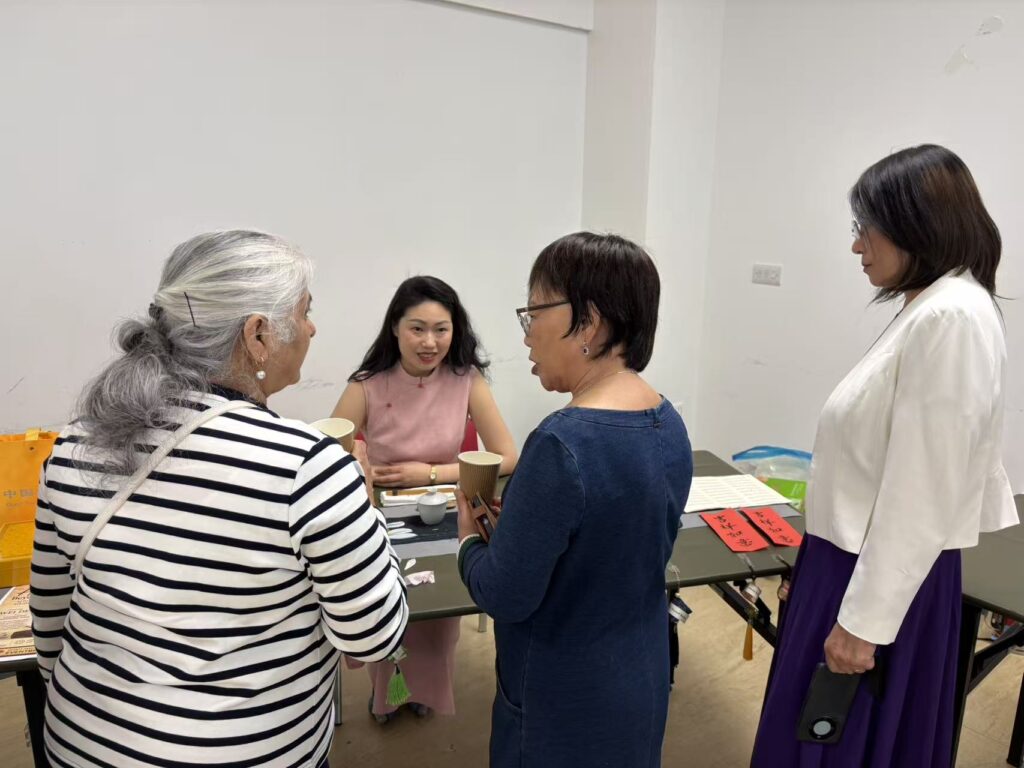
  • Wei chatted with the audience
  • Wei surrounded by participants
  • Wei surrounded by participants

Culture, language, music, food, and entertainment combined to provide participants with a fascinating experience of intercultural discovery, cultural demonstration, and artistic appreciation. The guzheng-enhanced Dragon Boat Festival celebration fostered meaningful cultural exchange and friendship not only within the Chinese community but also among a wide range of communities across Belfast.

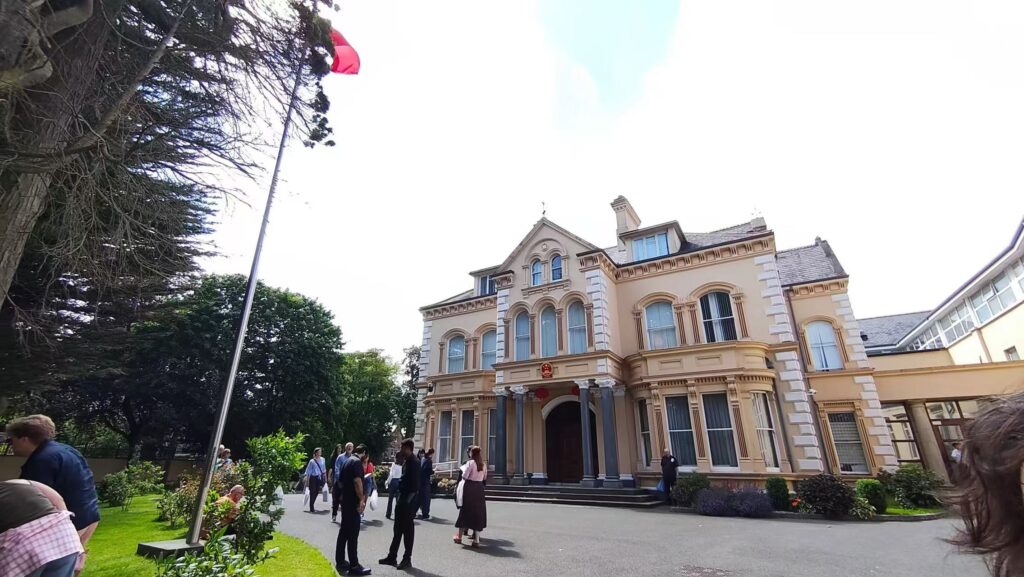
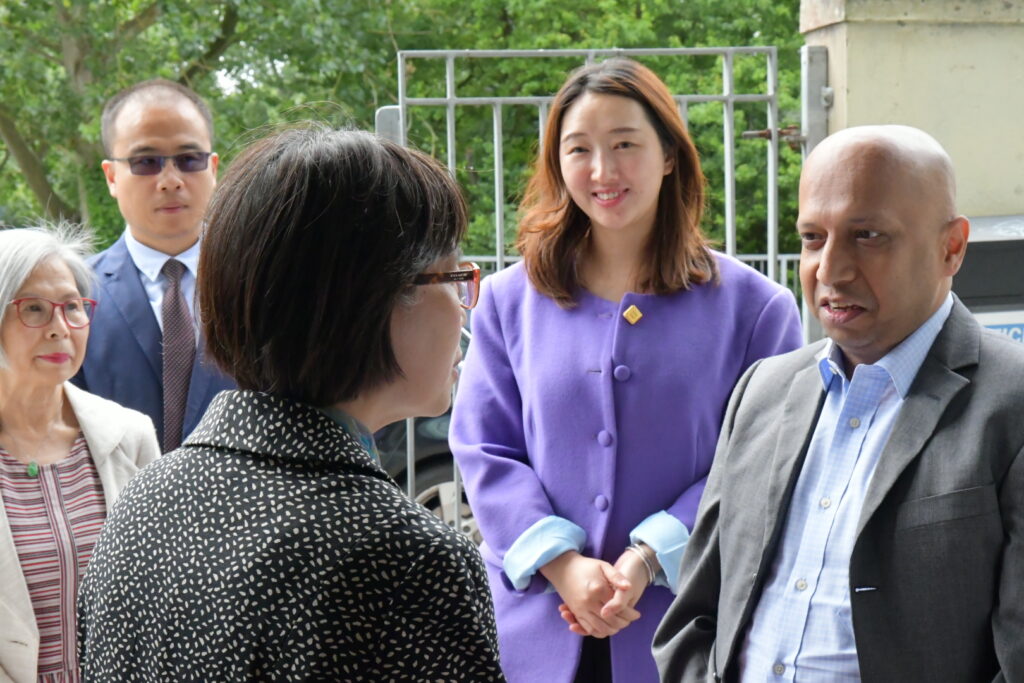
  • Welcome guests at the entrance
  • Dr Liang Wang co-chaired at the event.
  • Ms Lili Wu co-chaired at the event.
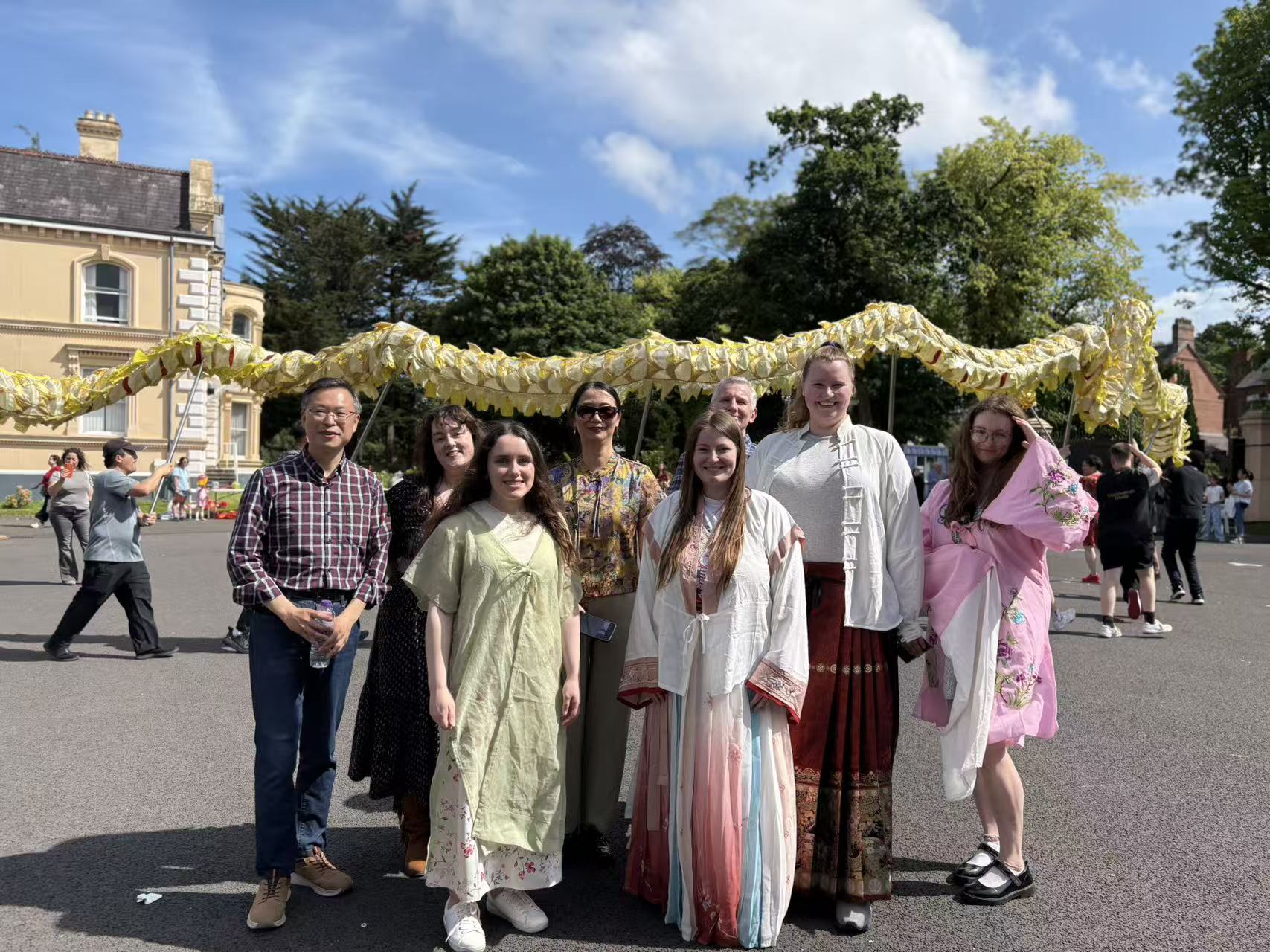
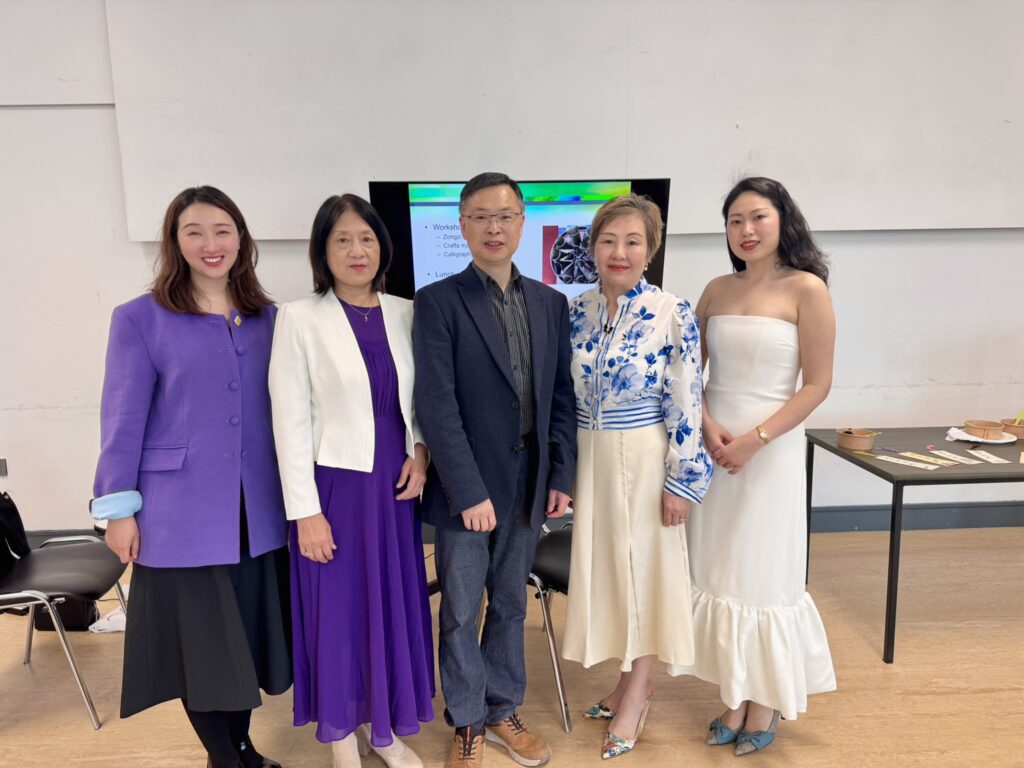
  • Group photo
  • Group photo
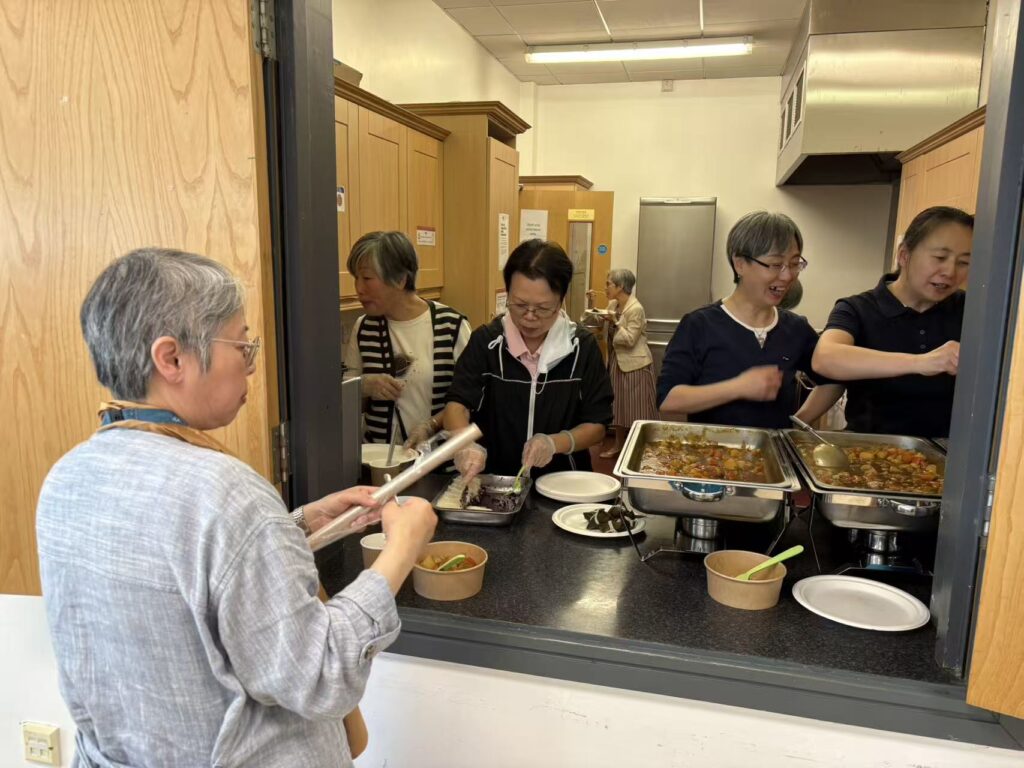
  • Volunteers busy preparing food.
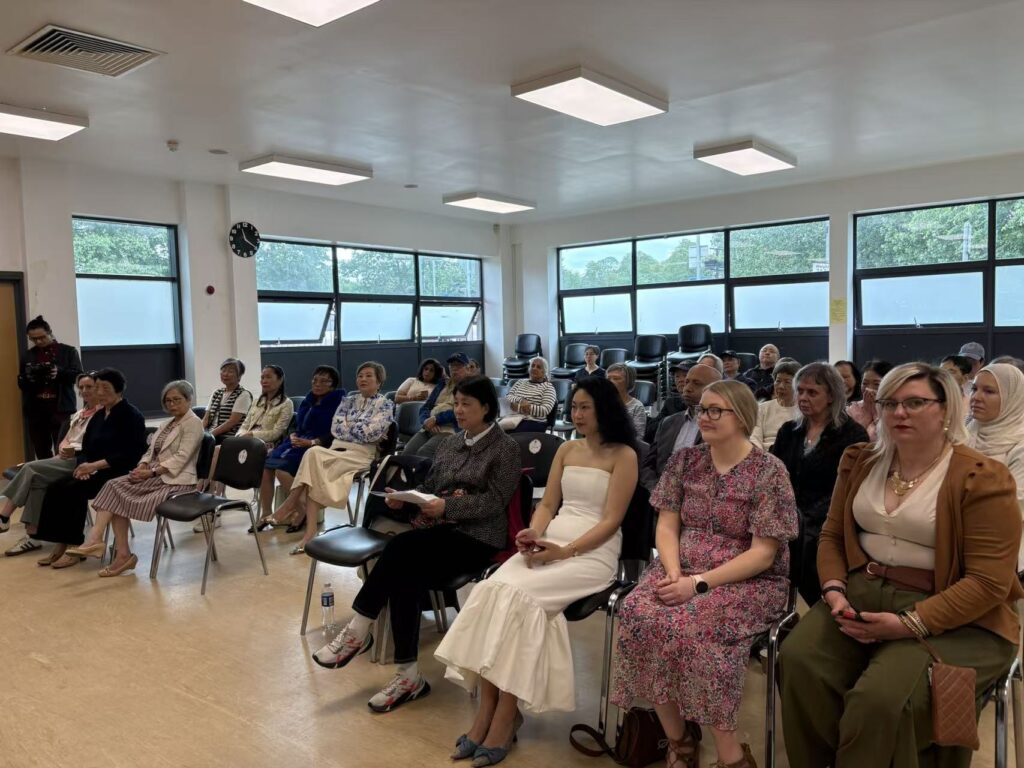
  • Audience waiting in the hall for the start.
  • Deng Wei with Lili and Sally
  • Deng Wei with Rebecca Zhang

The event also served as an excellent example of Queen’s University’s commitment to civic engagement and community partnership, demonstrating its continued support for local communities through language, cultural and festival celebrations.

Exploring Millennia of History at Shanxi Museum

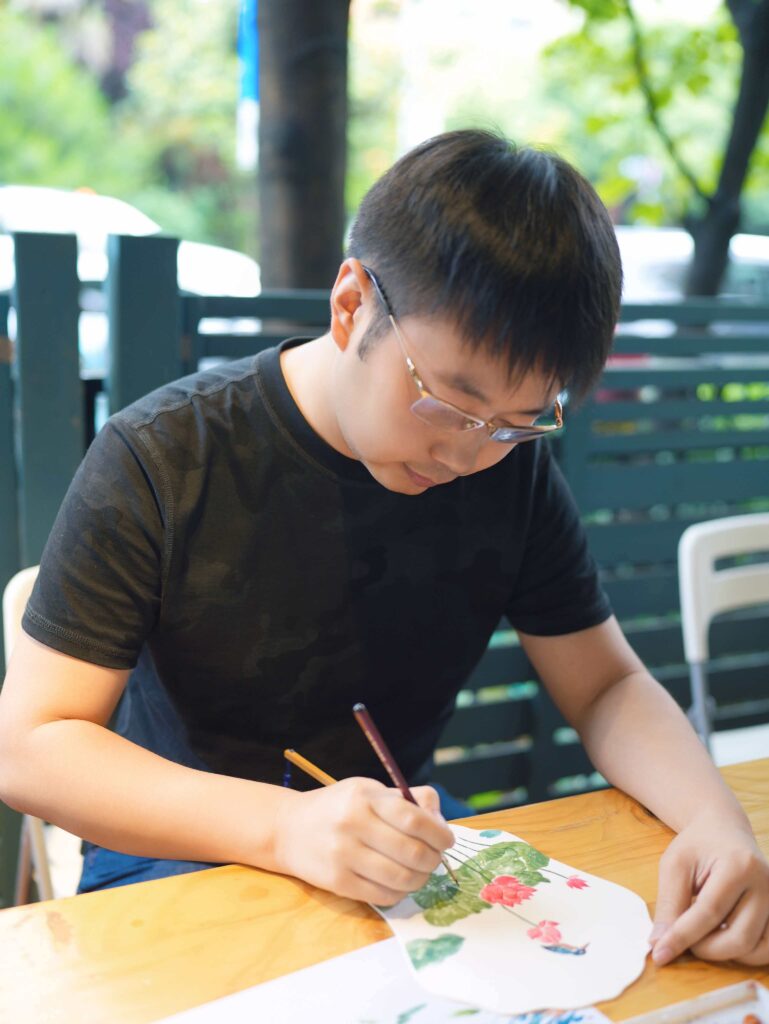
May is a month blessed with pleasant weather and festive holidays, making it an ideal time for outdoor activities, travel, and sightseeing. During the May Day holiday, Zhuo Wen visited the Shanxi Museum and is delighted to share his experience with us in celebration of International Museum Day (18/05).

Zhuo Wen (文卓) holds a Master’s degree in Electronic Engineering from Queen’s University Belfast. During his postgraduate studies, he actively participated in cross-cultural exchange events and campus society activities, including cave exploration programmes across Northern Ireland. In his free time, he enjoys hiking, travelling, skiing, and sketching.

He currently works as a Senior Software Engineer at Bank of China Software Center.

A Journey Through China’s Ancient Civilization in Shanxi Province

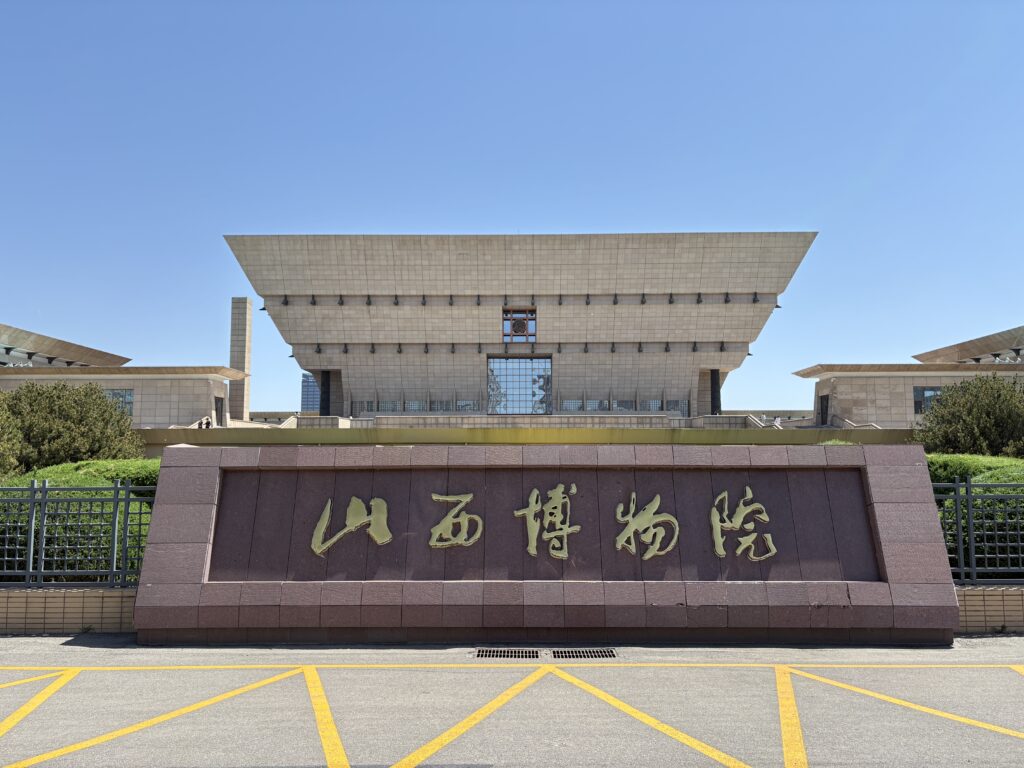
During this May Day holiday, I visited the Shanxi Museum (山西博物院 Shānxī Bówùyuàn), located on West Binhe Road in Taiyuan (太原 Tàiyuán), the capital city of Shanxi Province, and embarked on a fascinating journey through the thousands of years of civilization preserved in local area.

The museum itself is impressive even before stepping inside. Its grand and solid architectural design resembles ancient Chinese bronze ding (鼎 dǐng) and dou (豆 dòu) vessels, radiating the rustic charm and cultural depth of this historic land. After booking tickets in advance, my encounter with history officially began.

Following the exhibition route, I traveled chronologically from ancient civilizations to the Ming and Qing dynasties. The first artifacts that caught my attention were the magnificent bronze treasures.

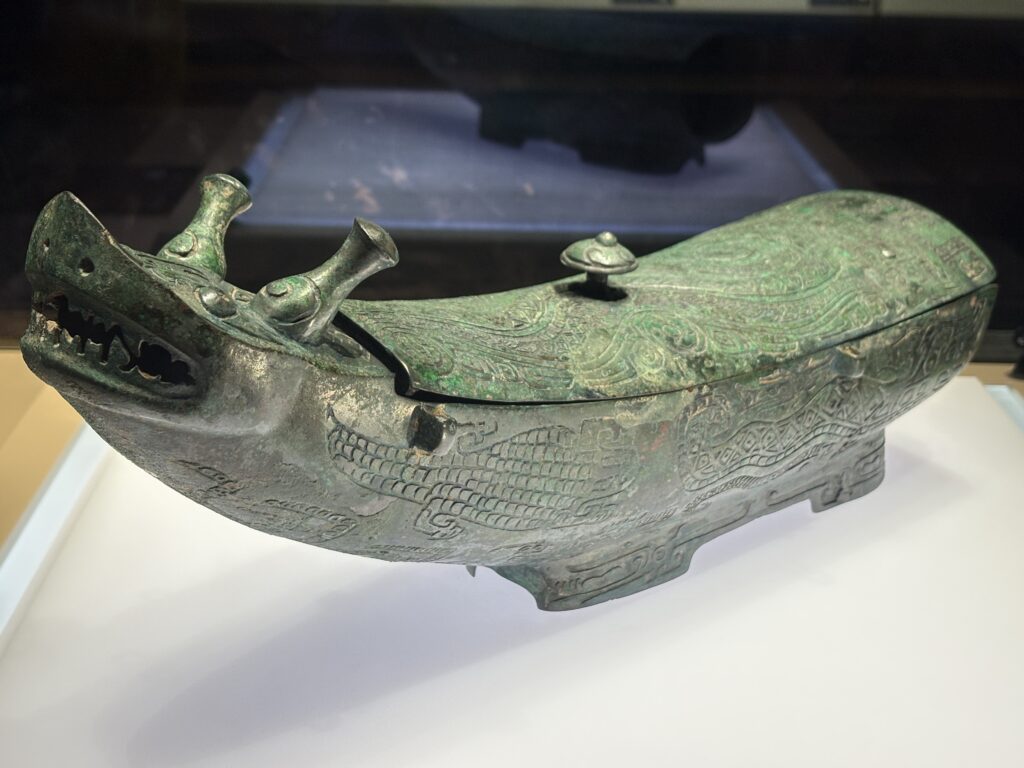
Among them, the Dragon-shaped Gong (觥 gōng) from the late Shang Dynasty (商朝 Shāngcháo) stood out immediately. Designed in the form of a towering mythical beast and covered with intricate decorative patterns, it fully demonstrates the grandeur and craftsmanship of Shang bronze ware (青铜器 qīngtóngqì).

Nearby was the beloved Bronze Owl, modelled as two owls standing back-to-back. With its round, plump shape and expressive face, it has been humorously nicknamed the “Shang Dynasty Angry Bird”. Despite its ancient origins, it feels unexpectedly adorable and approachable, drawing many visitors to stop for photos and admiration.

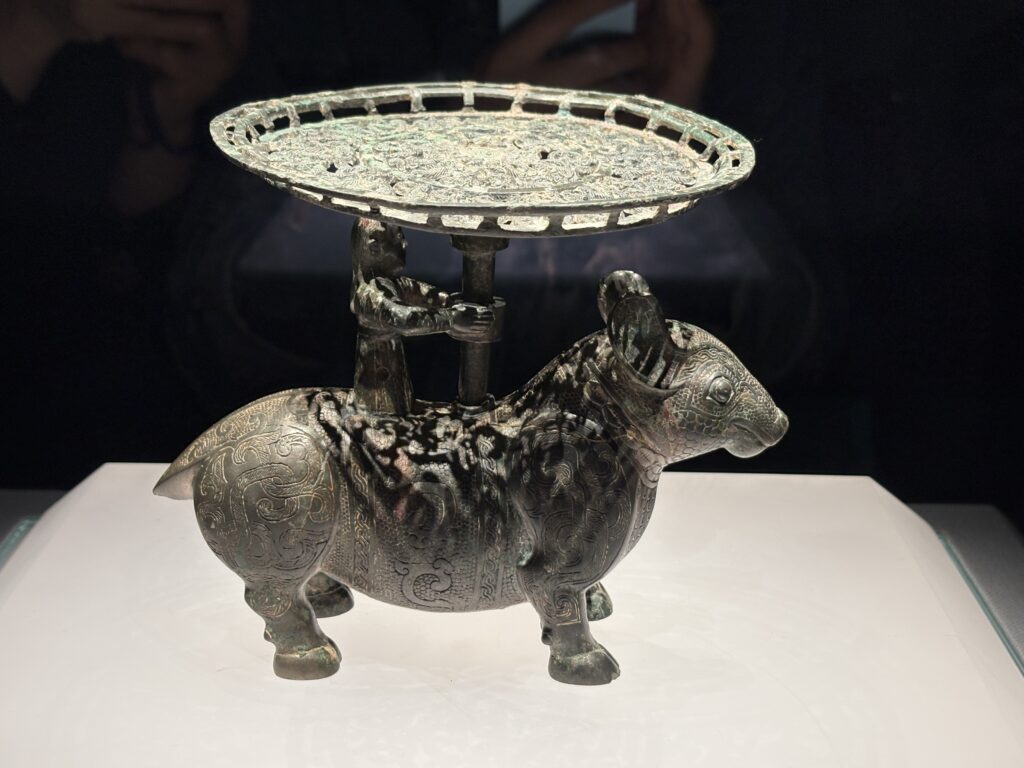
Another masterpiece is the Bronze Plate Held by a Human Figure atop a Divine Beast from the Warring States period. A small standing figure supports an exquisitely openworked plate while balanced atop a mythical creature, creating a lively and imaginative composition that reflects the creativity of ancient artisans.

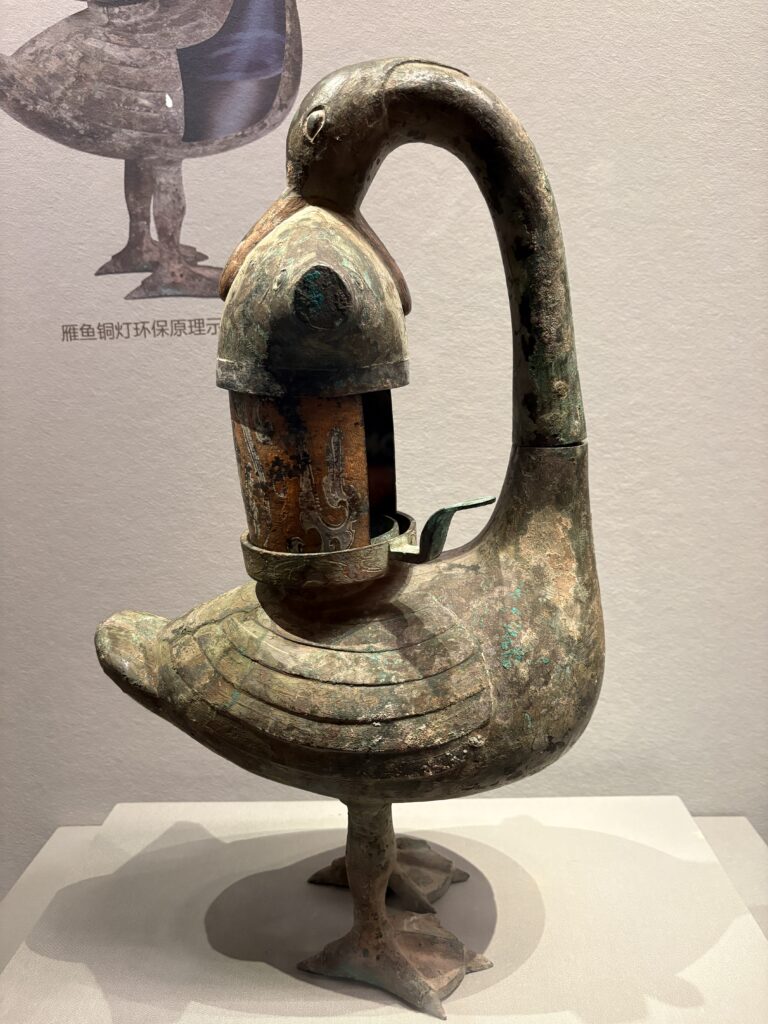
Even more fascinating is the Wild-Goose-and-Fish Bronze Lamp from the Western Han Dynasty. Shaped like a wild goose twisting its neck to hold a fish in its beak, the lamp contains an ingenious smoke-filtering structure inside, making it an astonishing example of environmental awareness and engineering wisdom from over two thousand years ago.

Art, Architecture, and Cultural Elegance

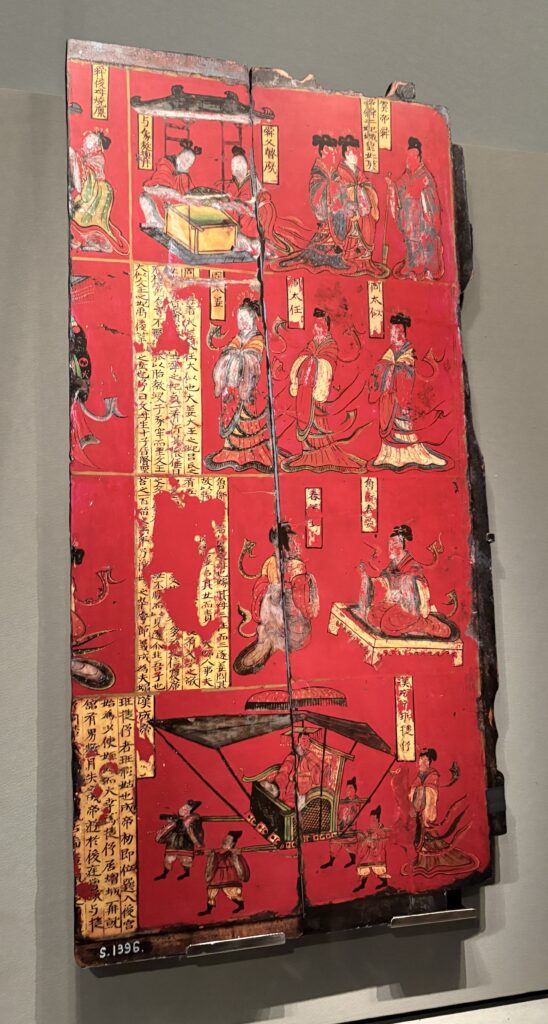
In the Northern Dynasties exhibition hall, I spent considerable time admiring the Painted Lacquer Screen with Stories of Historical Figures from Sima Jinlong’s Tomb (Northern Wei Dynasty).

Against a vivid vermilion (朱红色 zhūhóngsè) background, the screen illustrates stories of exemplary historical figures such as Emperor Shun, Lady Tai Ren of Zhou, and Ban Jieyu. Its remarkably preserved colours, elegant flowing lines, and refined Northern Wei calligraphy together showcase both artistic sophistication and the moral values promoted in ancient Chinese society.

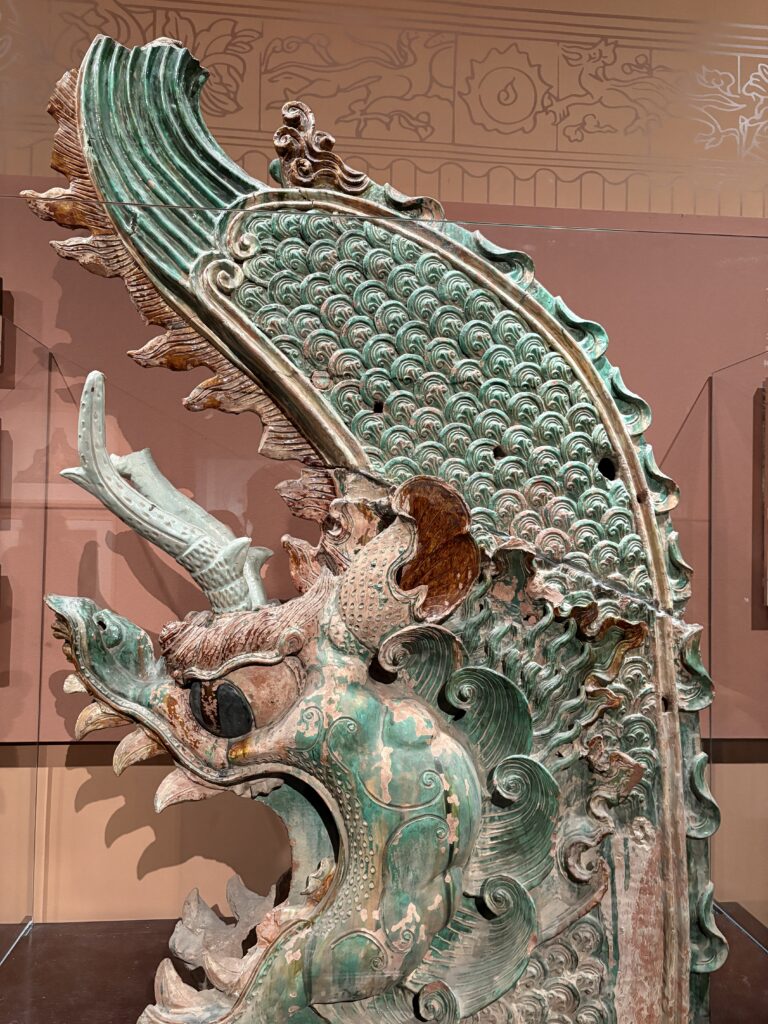
Further inside, the Yuan Dynasty Glazed Chi-wen (dragon-head roof ornament) impressed me with its striking presence. Covered in brilliant emerald-green glaze, the sculpture features layered scales and a dynamic dragon head, vividly reflecting the craftsmanship of ancient architectural decoration and evoking the grandeur of historical Chinese buildings.

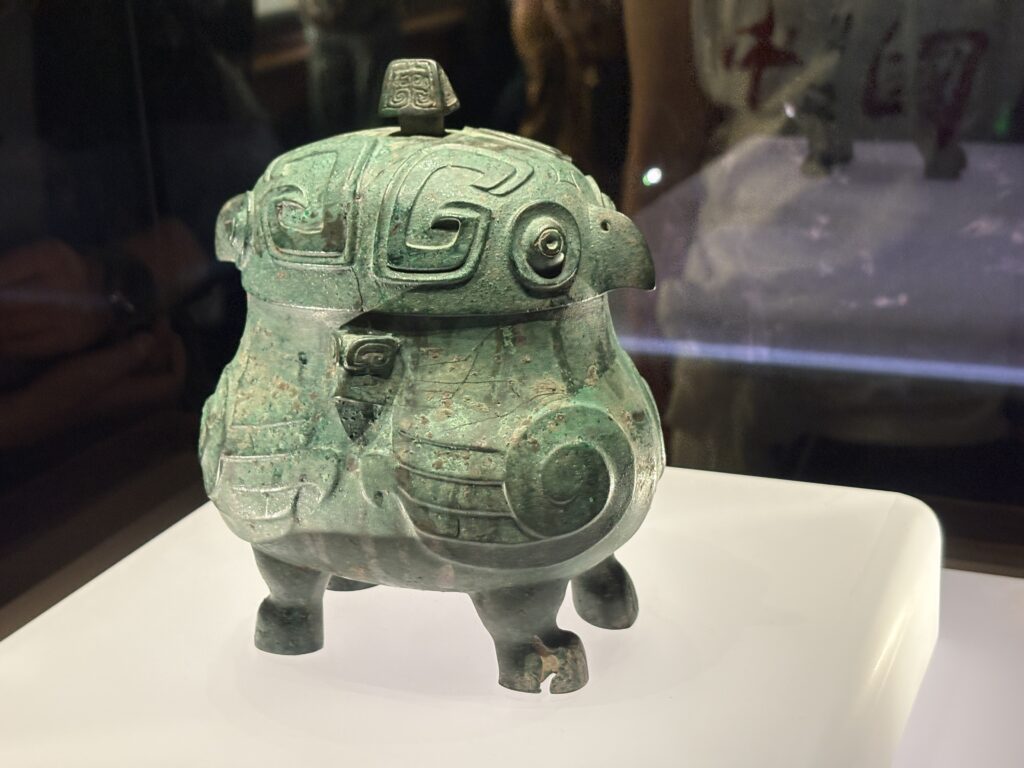
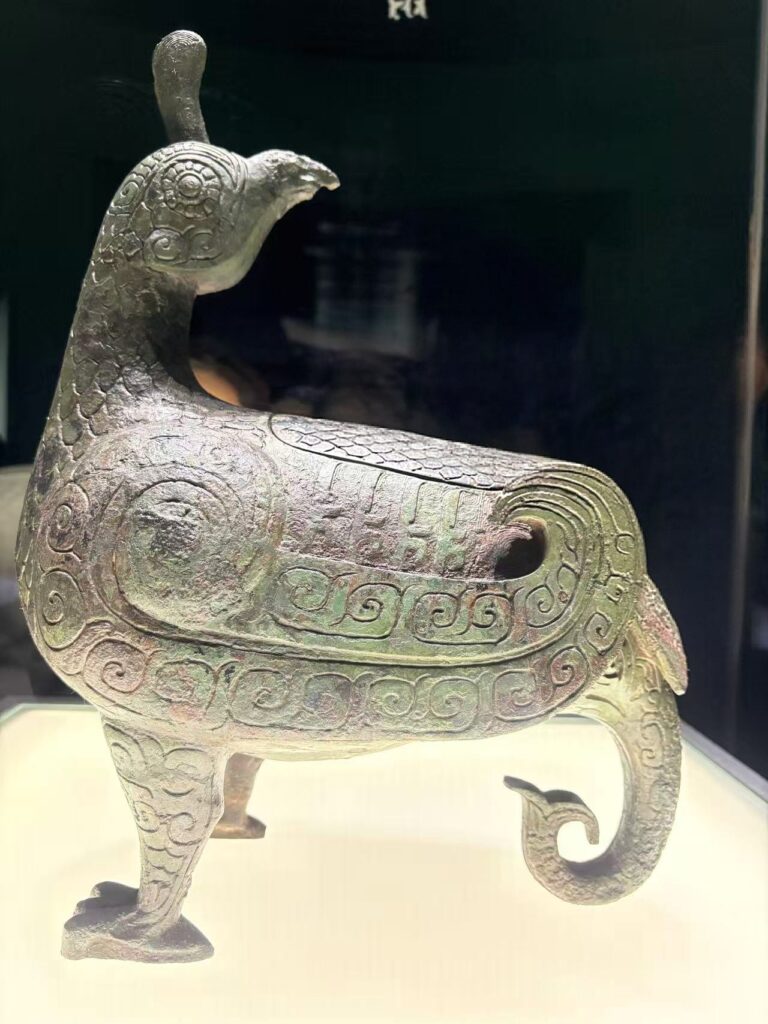
The Bird-shaped Zun of the Marquis of Jin, a highlight of the “Hegemony of the State of Jin” gallery, also left a deep impression. Decorated with phoenix motifs, it seems to retell the legends and political power of the Spring and Autumn Period.

Elsewhere, stone Buddha statues in the Buddhist gallery display graceful robes and serene expressions, while ancient architectural models demonstrate why Shanxi is often celebrated as a treasure house of traditional Chinese architecture.

Reflections at Sunset

As the sun gradually set, I slowly walked out of the museum, still immersed in the echoes of history.

In just one day, I had journeyed from majestic bronze ritual vessels and lacquer paintings to eco-friendly lamps and magnificent glazed mythical ornaments. Each artifact felt like a messenger from another era.

Standing silently behind glass, these relics weave together Shanxi’s thousand-year cultural heritage and allow visitors to experience the brilliance, wisdom, and profound depth of Chinese civilization.

This visit left me not only with admiration for ancient craftsmanship, but also with a renewed sense of awe toward the richness of China’s history.

Happy International Museum Day!

Editor: Liang WANG

Have you been to a museum and want to share your cultural experience or perspective? We look forward to hearing your stories. You are welcome to contact us by emailing at liang.wang[at]qub.ac.uk or write your comments and contact information in the box below. We will get in touch with you as soon as we can.

When the Bench Meets the Beat

Happy International Dance Day (29/04)! 💃
To celebrate, we are delighted to invite Ningning Liu, a PhD candidate from the School of Law, to share her unique and inspiring experience of dancing at a law conference, where the worlds of legal scholarship and movement came together in an unforgettable way.

Photo by Ningning

My Once-in-a-Lifetime Experience Dancing in a Moot Court

As a lawyer back in Shanghai, China, I kept my two identities – lawyer and dancer – strictly separate. I rarely let my colleagues or clients know that I danced hip-hop. I worried it would make me look unserious, or suggest that my work wasn’t keeping me busy enough. It was hard to imagine a lawyer spending their evenings in a dance studio while handling active cases.

For the longest time, I believed that law and dance had nothing to do with each other. In fact, they felt like opposites. Law is rational and disciplined, while hip-hop dance is physical and rebellious. That contrast was exactly why I loved it.

Then I came to the UK, and everything began to change.

A Session I Couldn’t Walk Away From

Not only are my supervisors incredibly supportive of my dancing, but my colleagues at the School of Law have also been genuinely excited to learn about this side of me. Some even cheered when I joined Queen’s street dance team.

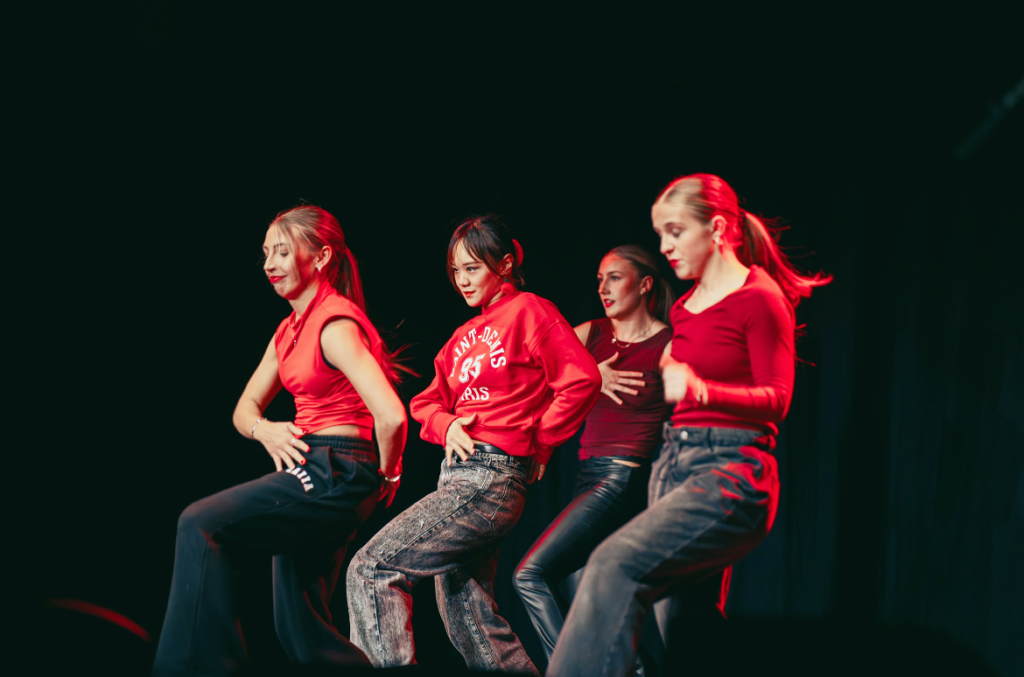
Ningning dancing with her Queen’s Dance Club members. Photo by Queen’s Dance Club.

But the real turning point came when I attended the Socio-Legal Studies Association (SLSA) Annual Conference this year. As one of the key conferences in my field, I had originally planned to submit an abstract related to my doctoral research. Then I saw a session theme that stopped me in my tracks: Dance/Law.

The question it asked was simple but inspiring: What can law do for dance, and what can dance do for law?

These two things I had always kept in separate boxes were suddenly brought together. It felt absurd, yet my heart started racing. This was it – two of my deepest passions, finally meeting. I wrote and submitted my abstract right away. It was accepted just as quickly.

From Belfast to Brighton

That is how I found myself in Brighton – a seaside town on the south coast of England, at the University of Sussex – about to experience something I will never forget.

At the Dance/Law session, scholars and dancers from around the world shared widely different perspectives. Some explored dance as a metaphor for legal tensions – the push and pull of a duet mirroring legal negotiation. Others examined the unwritten rules within dance as a form of soft law, or the question of consent and bodily boundaries in social dancing.

I learned a story from southern Nigeria. In one tribal community, before formal legal language existed, how did people resolve disputes? By dancing.

Then the speaker paused and said, quietly: “Let me show you.”

What followed was not a performance. It was a conversation, a short Afro dance sequence unlike anything we would learn in a dance studio. The speaker interacted with a friend sitting in the audience, responding to her through movement. When it finished, she calmly explained that the sequence expressed criticism of a legal procedure. In fact, across many African societies, dance has historically functioned as a form of testimony, protest, and even judicial argument. It was a living archive of community justice before colonial legal systems were imposed.

We sat in stunned silence.

Dance, I realised, existed before every social institution, rule, or legal system we now take for granted. It is an older language of expression, communication, and meaning. We had simply forgotten.

Another story came from Scotland. The old Scottish Parliament building was a place where trials were held. During breaks, lawyers were not allowed to leave the building. Instead, they circled the parliament hall, negotiating while walking in step with one another, their matching pace making it difficult for others to overhear. This process resembled a social duet, requiring trust, coordination, and mutual responsiveness. The structure was unmistakably dance-like.

I also had the chance to present my own research, Law on the Dancefloor: Body, Gender, and the Boundaries of Freedom in China’s Hip-Hop Culture. Drawing on my experience as both a legal researcher and a hip-hop dancer, I explored how China’s dance scene is divided between feminised commercial studios and masculinised battle competitions, and how law and social norms silently choreograph who may move freely and how.

The battle floor, I argued, is like a courtroom: music acts as law, dancers as advocates, and judges as a jury. Dancers are told to break rules, yet victory depends on a convincing interpretation within that framework. To my surprise and gratitude, the presentation received warm attention and thoughtful feedback from fellow scholars, many of whom shared their own encounters with dance and the law.

The fascinating studies presented at the Dance/Law session, along with my own small contribution, demonstrate that law and movement have never been as separate as I once believed.

Moot Court Room, University of Sussex (Photo by Ningning Liu)

The Morning We Danced in a Moot Court

The next morning, we experienced something that may well be once in a lifetime.

At 9 a.m., in a law school moot court room, we danced.

A group of legal academics from across the world gathered – not to share their research, but to share their dance moves.

At the beginning, one scholar guided us to reconnect with our bodies. We touched our fingertips to our arms, felt our skin, and reached out to tables and chairs, simply noticing our physical presence in the world.

Then one of the organisers taught us basic ballet. I felt like a calm, proud, and elegant swan gliding across a lake. She ended the session by inviting us to freestyle using what we had learned.

Finally, my partner Joseph, a professional hip-hop dancer who had come with me to Brighton, taught a short routine he had choreographed the day before. The music started – the unmistakable beat of Still D.R.E.

The atmosphere changed instantly. Everyone moved joyfully. It did not matter what we wore or how we looked. When the organisers asked for reactions, we laughed: “Too short! Again!”

Everyone was simply happy.

As we left, the researchers (or should I call them dancers now?) stopped us to express their gratitude. “You both gave me so much energy. I am so happy today.”

But they were the ones who had given us energy, and a revelation.

Later, the organisers sent a follow-up email. At the end, they wrote:

Keep dancing!

Continue reading

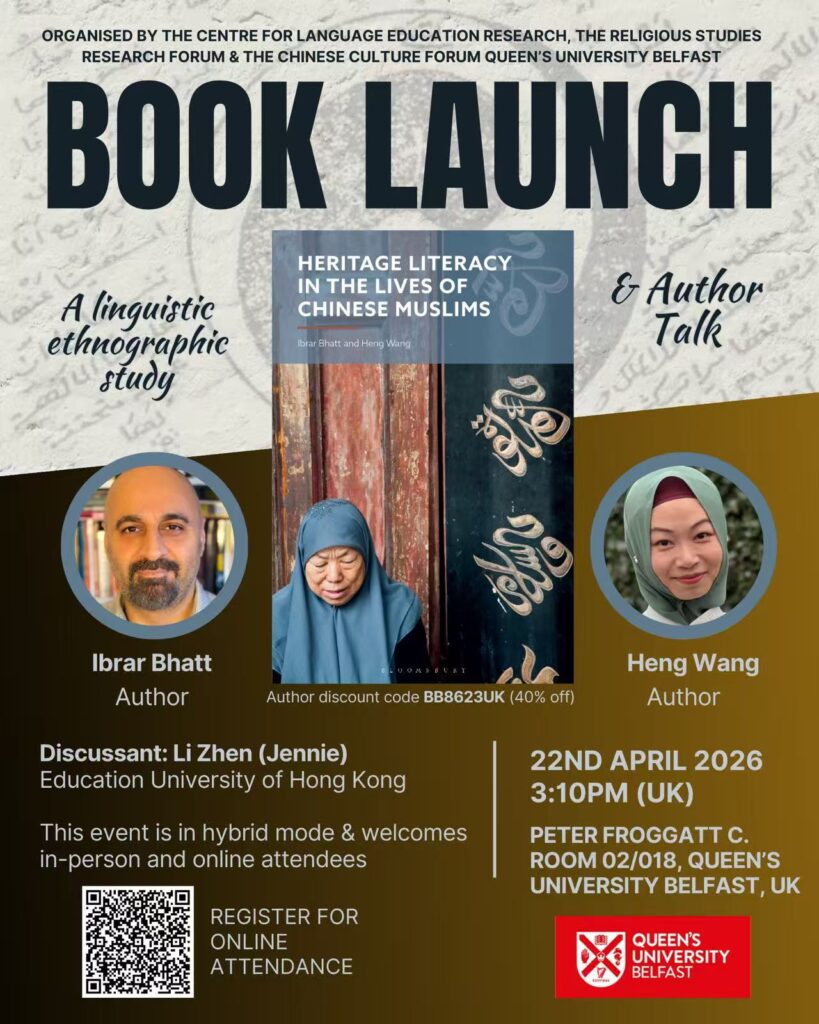
Book Launch

There will be a book launch at Queen’s University Belfast on Wednesday 22nd April. While it is an in-person event, there is an option to tune in via MS Teams. All welcome!

Date: Wednesday 22 April
Time: 3:10 – 4:10 pm
Venue: PFC-02-018

Book Title: Heritage Literacy in the Lives of Chinese Muslims: A Linguistic Ethnographic Study
Authors: Dr Ibrar Bhatt and Heng WANG (Queen’s University Belfast)
Discussant: Zhen (Jennie) LI (Education University of Hong Kong)
Organiser: Dr Aisling O’Boyle (Queen’s University Belfast)

Co-Organisers:

  • The Centre for Language Education Research, School of Social Sciences, Education and Social Work
  • The Religious Studies Research Forum
  • Chinese Culture Forum, The Language Centre

Click to view the original event page.

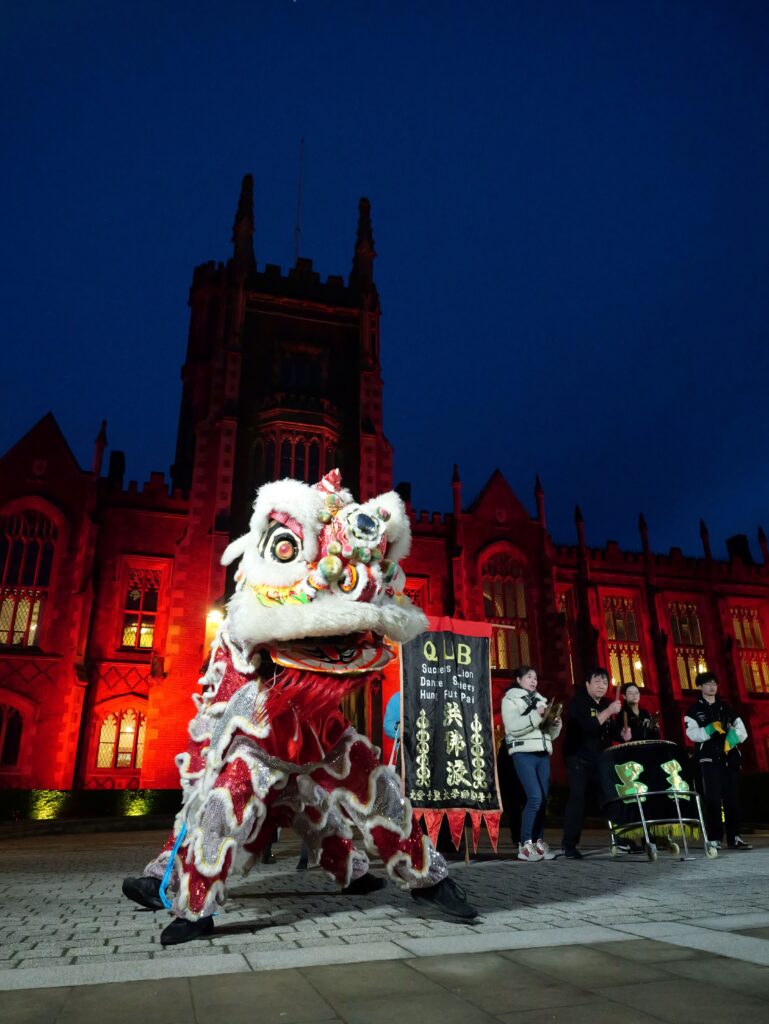
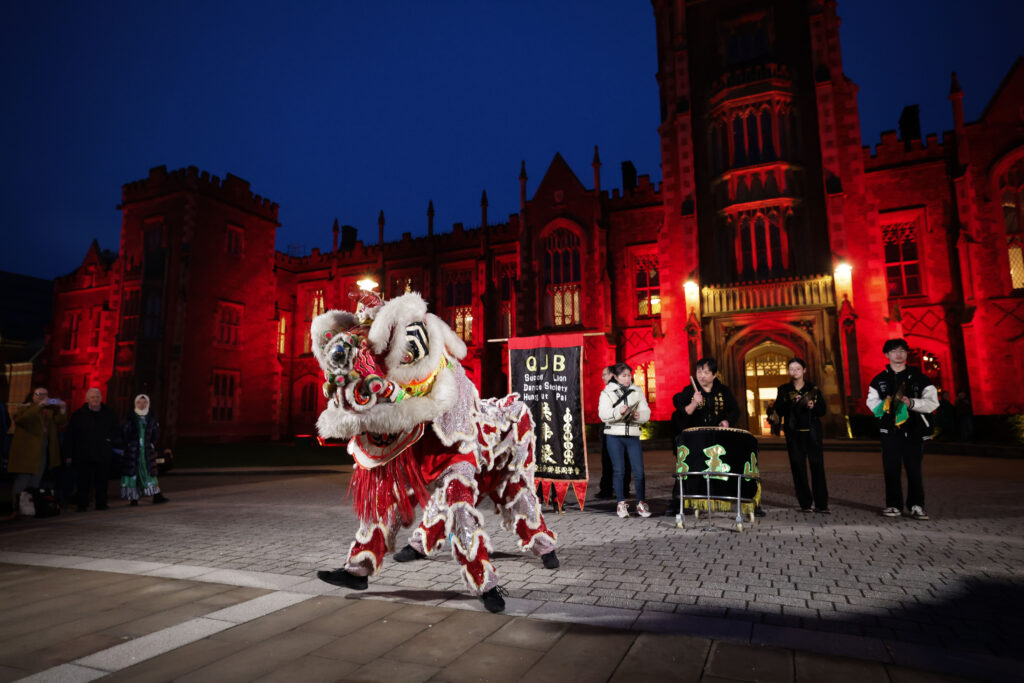
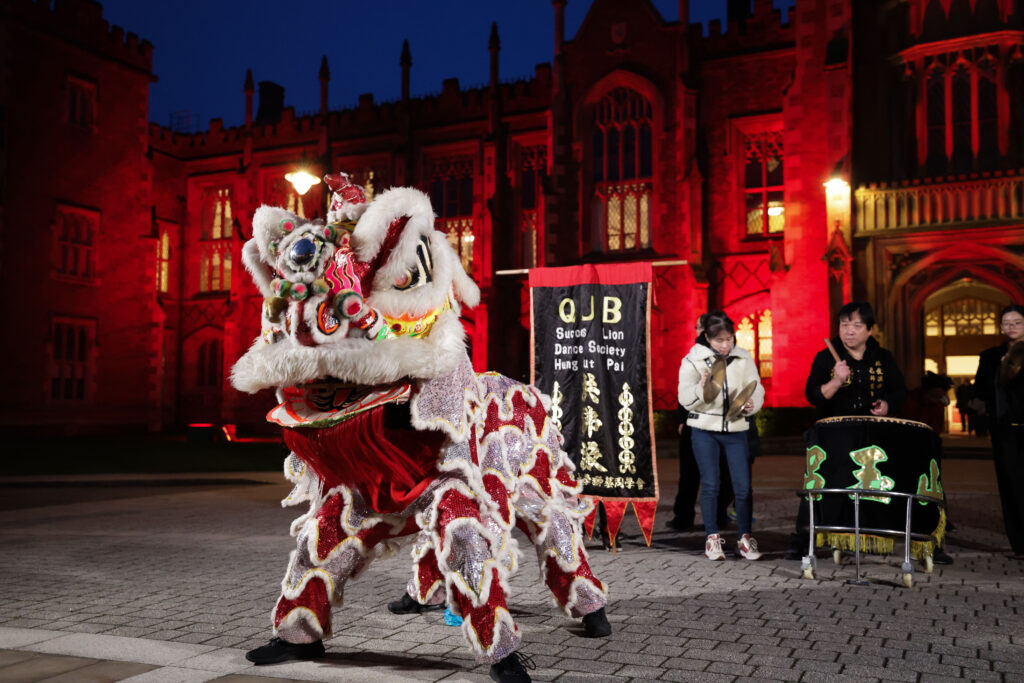
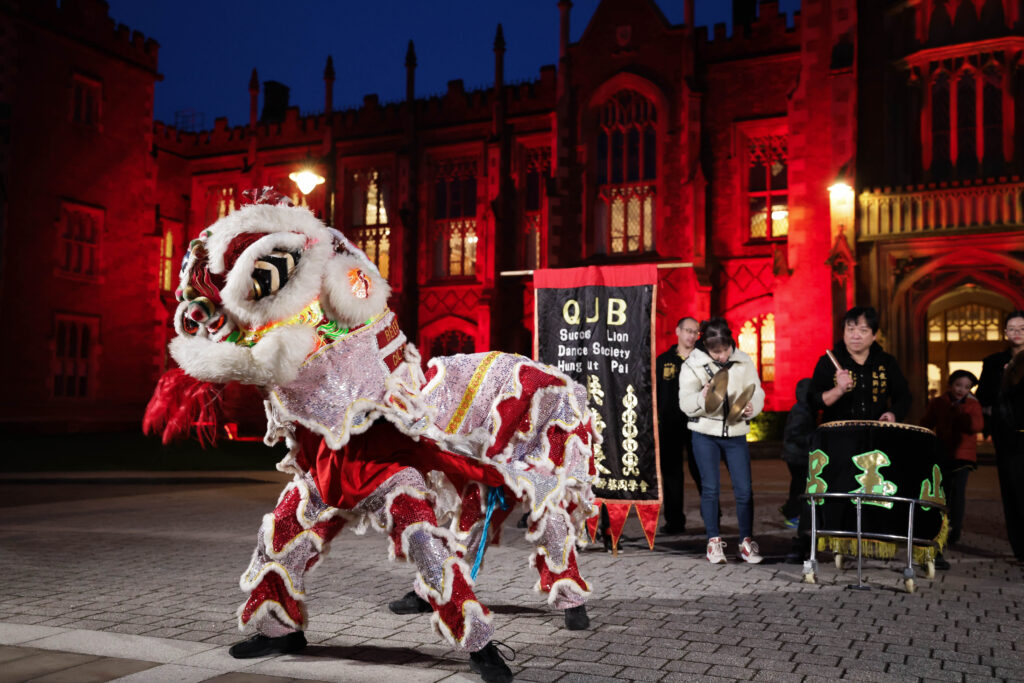
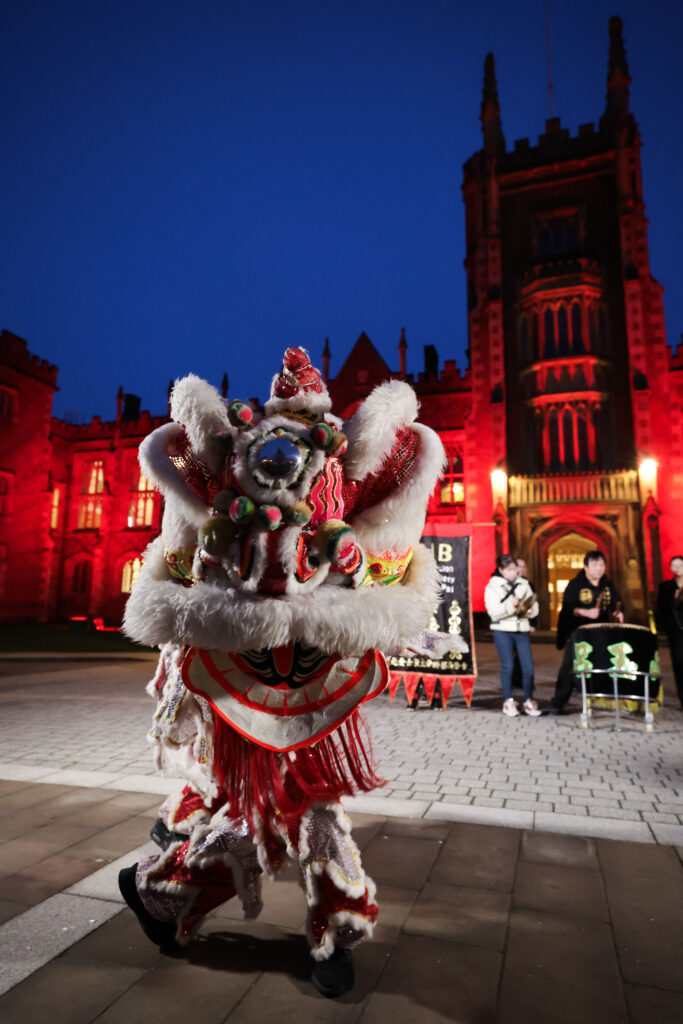
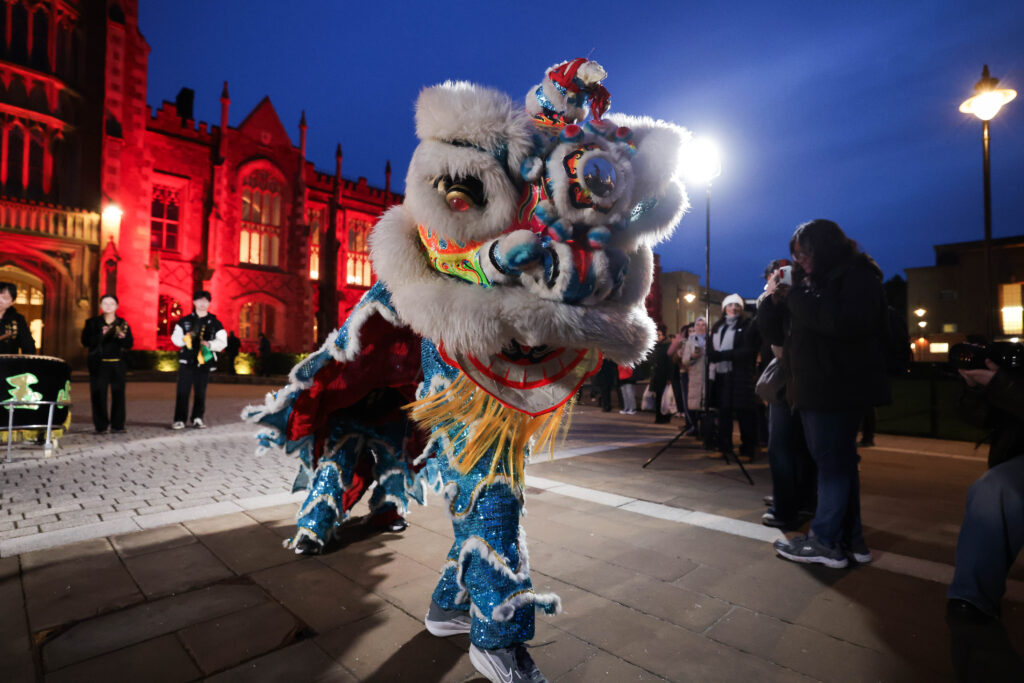
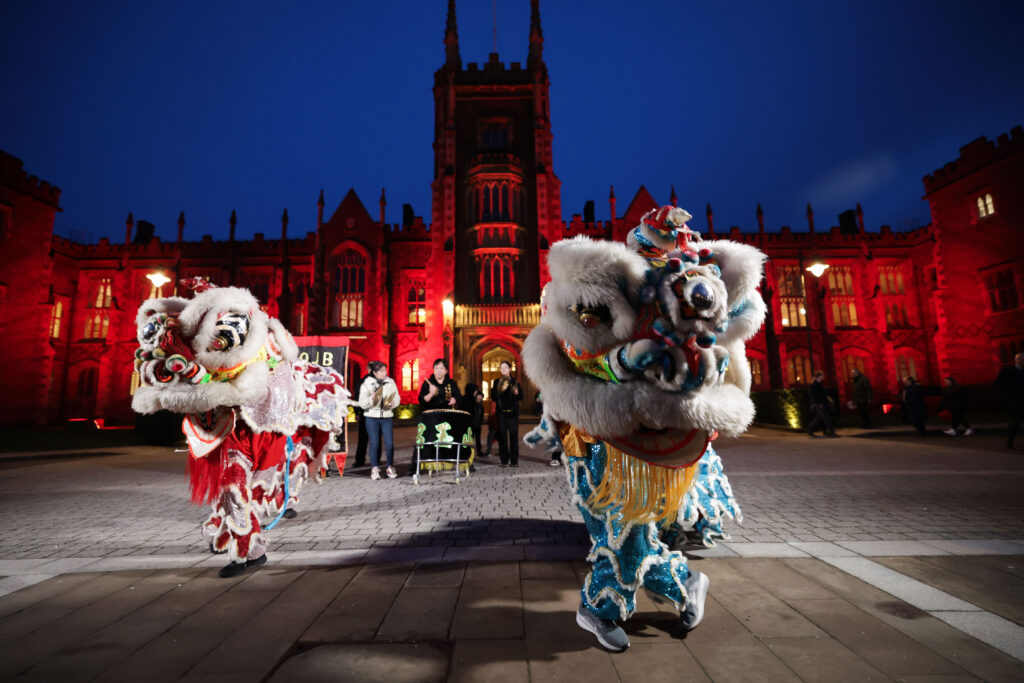
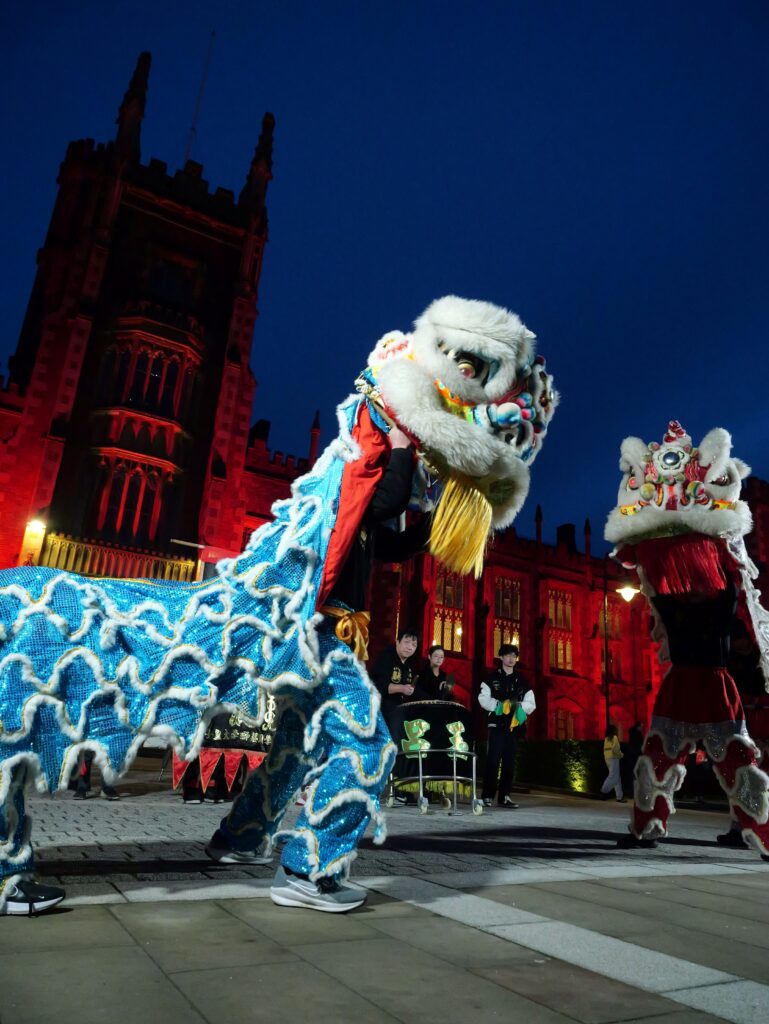
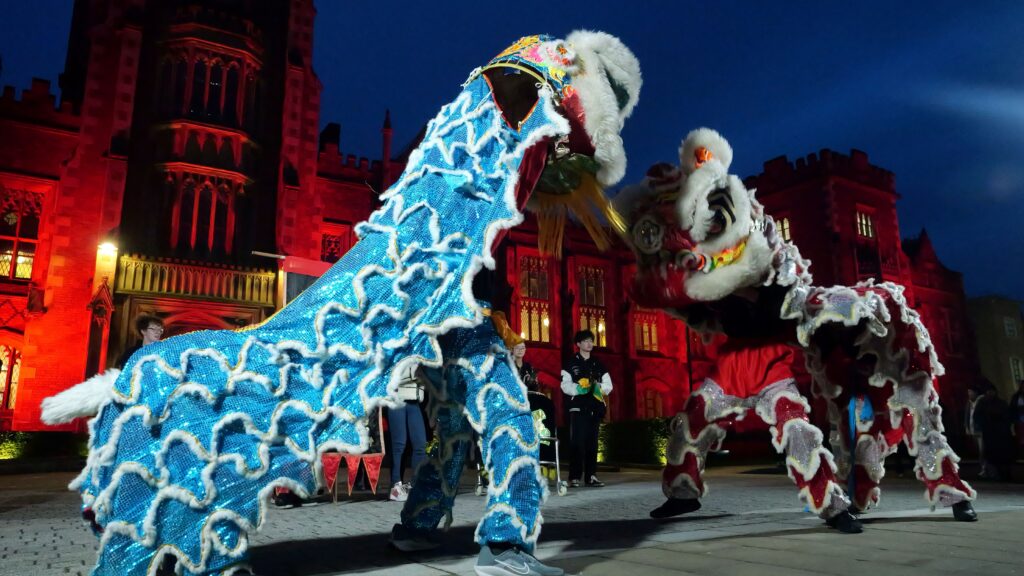
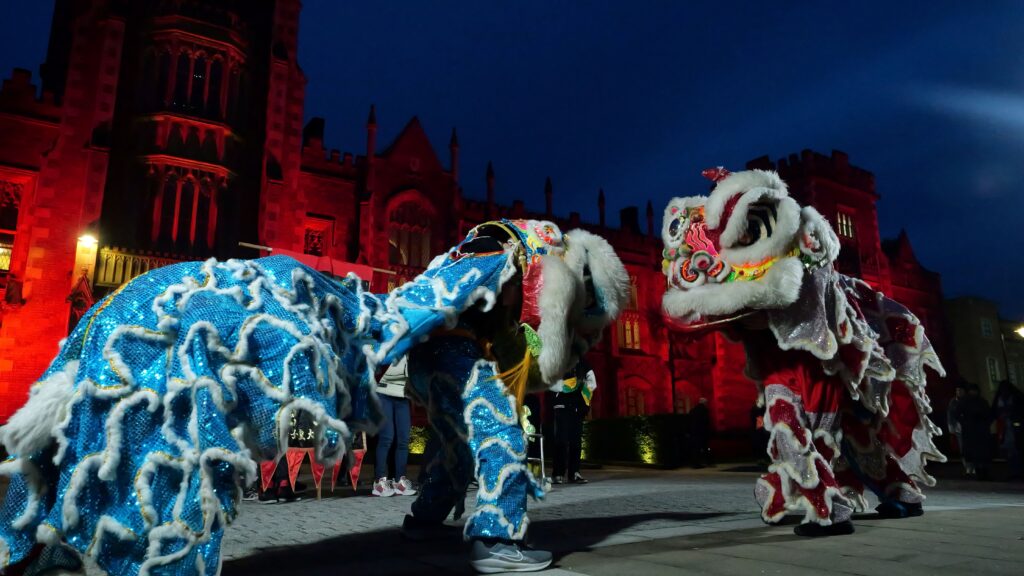
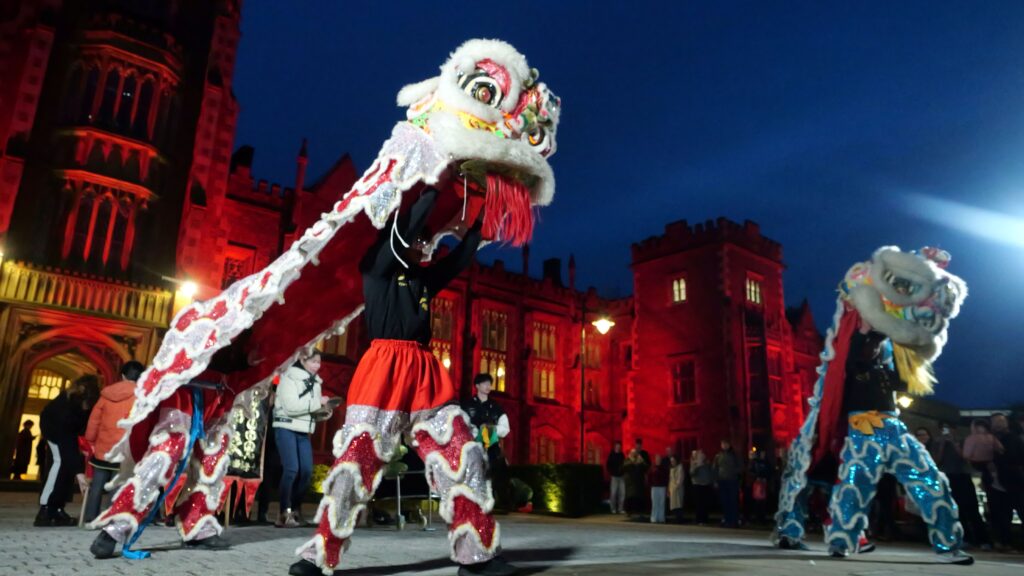
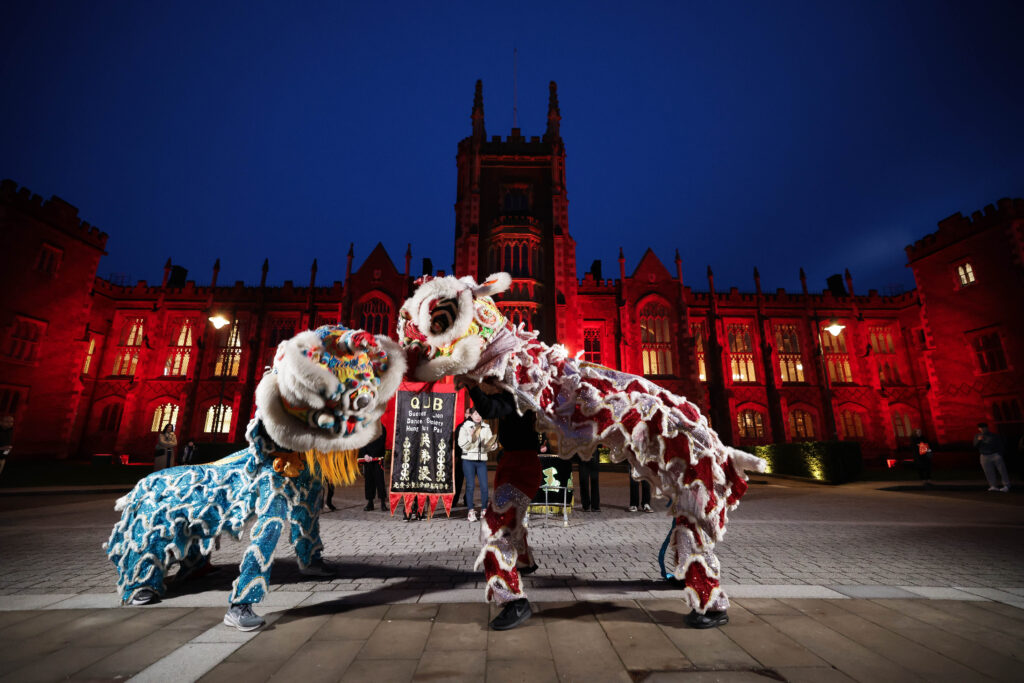
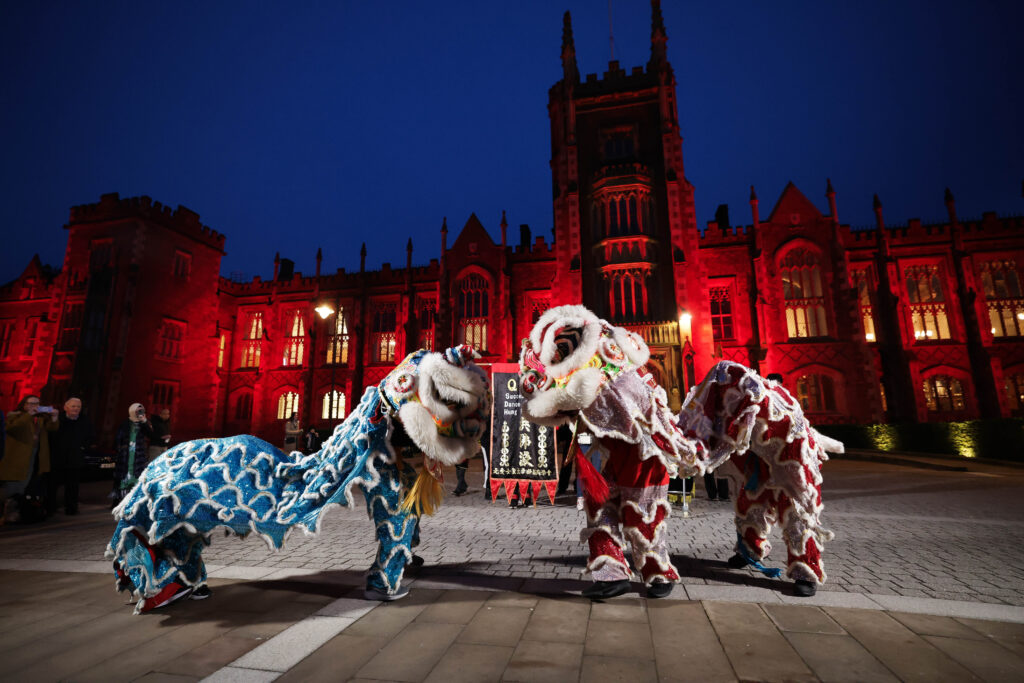
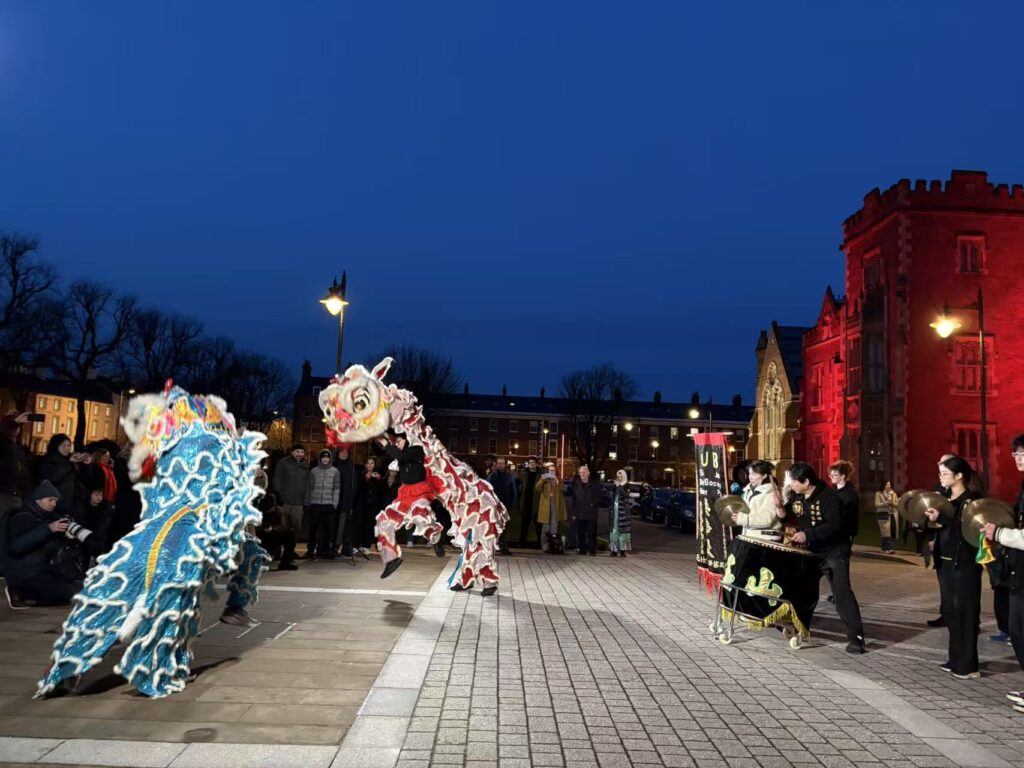
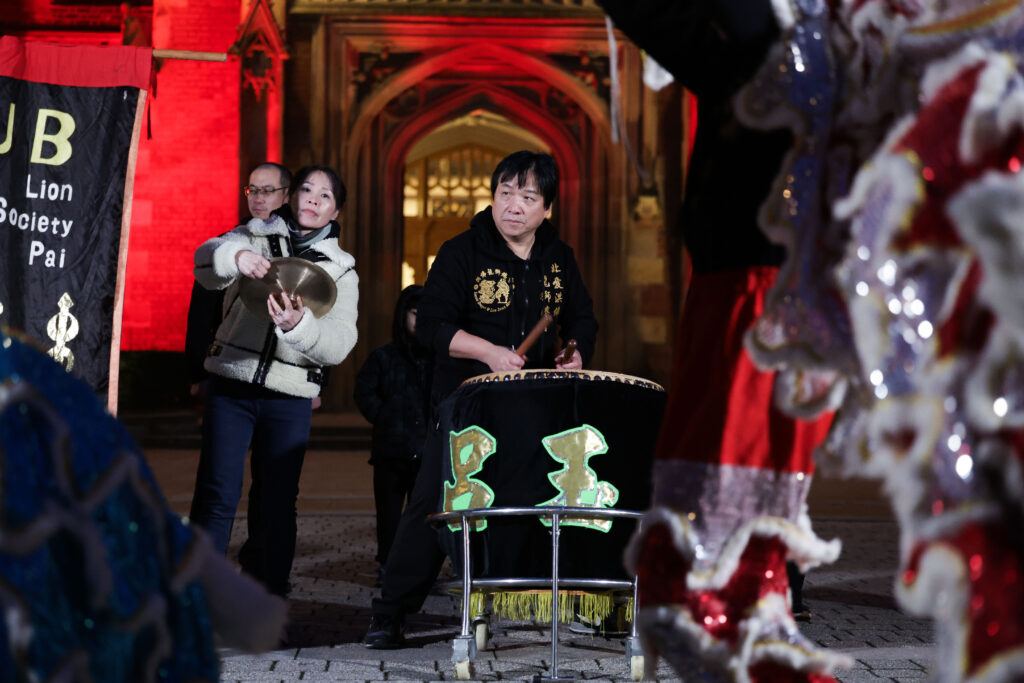
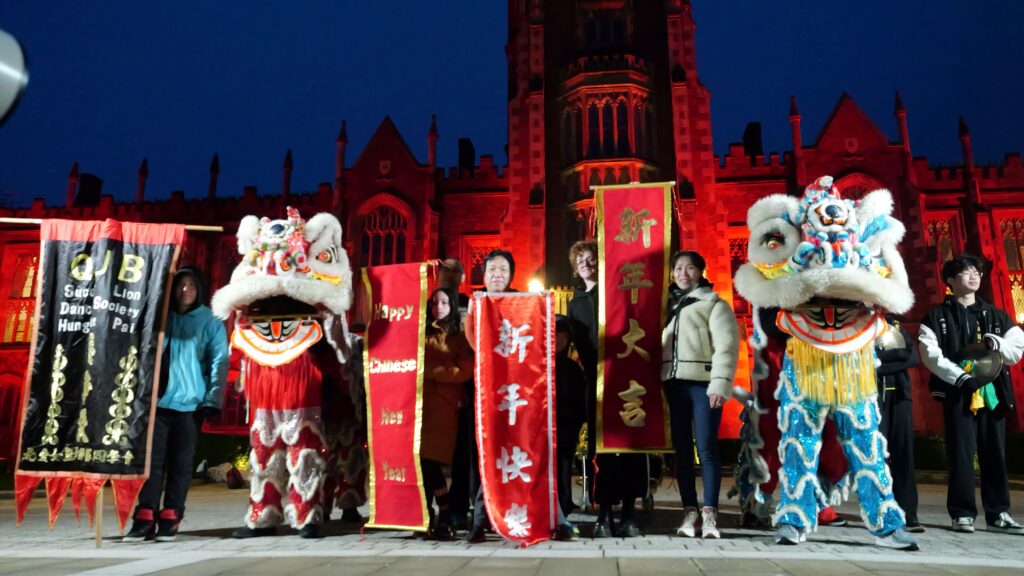
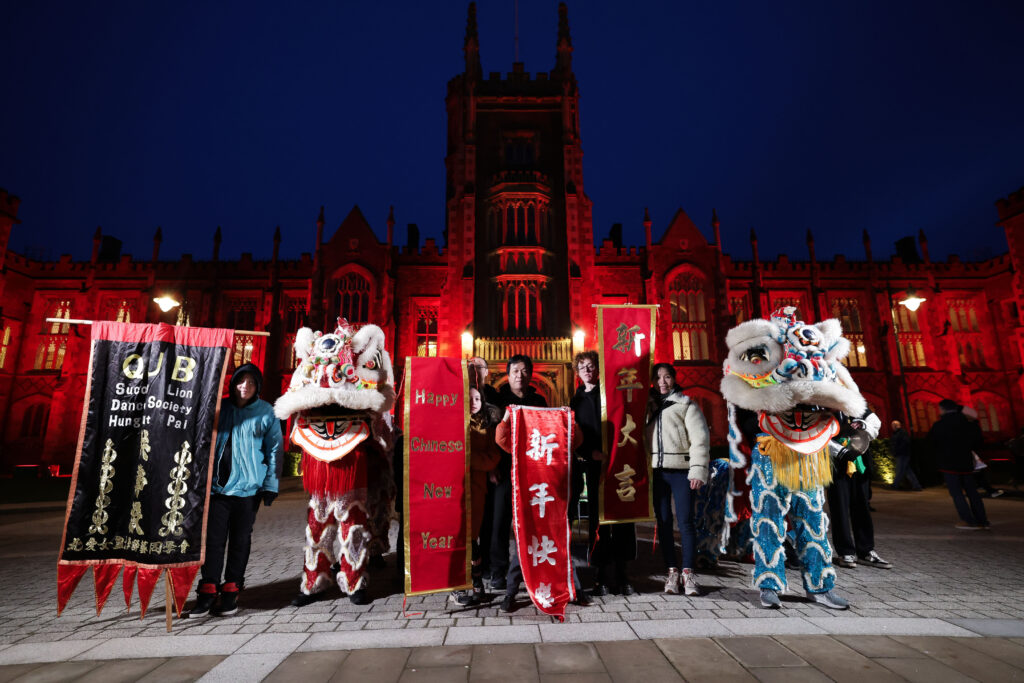
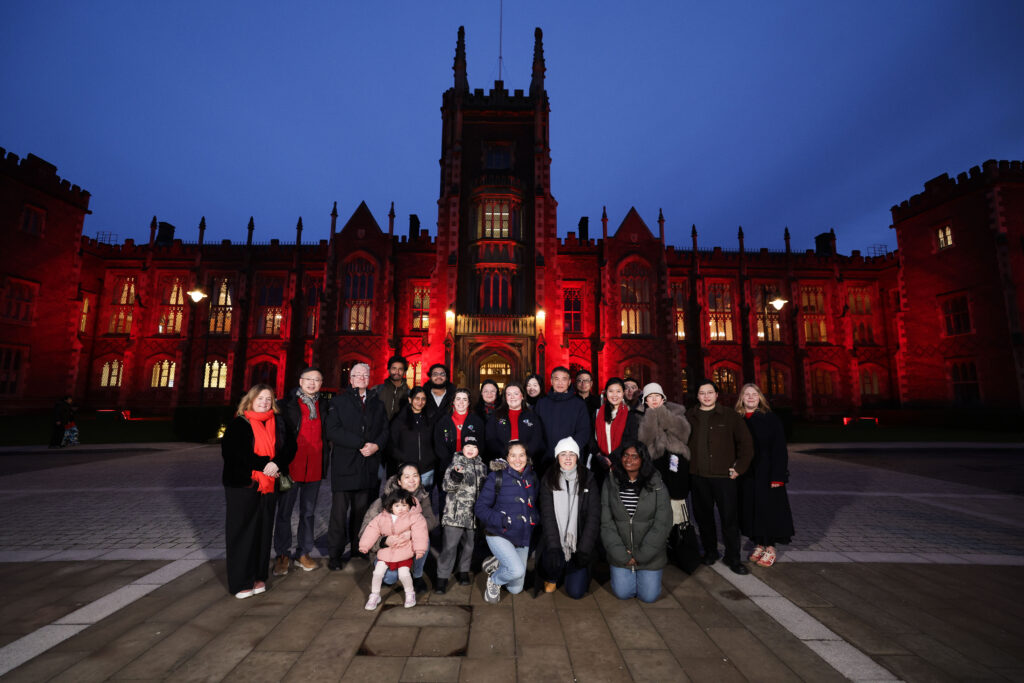
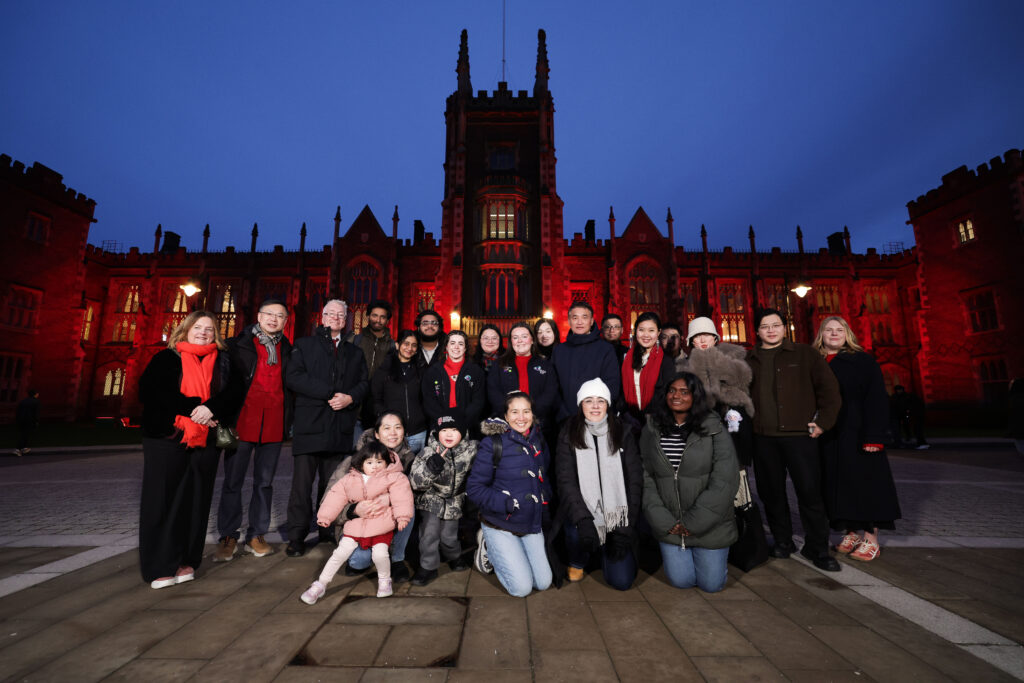
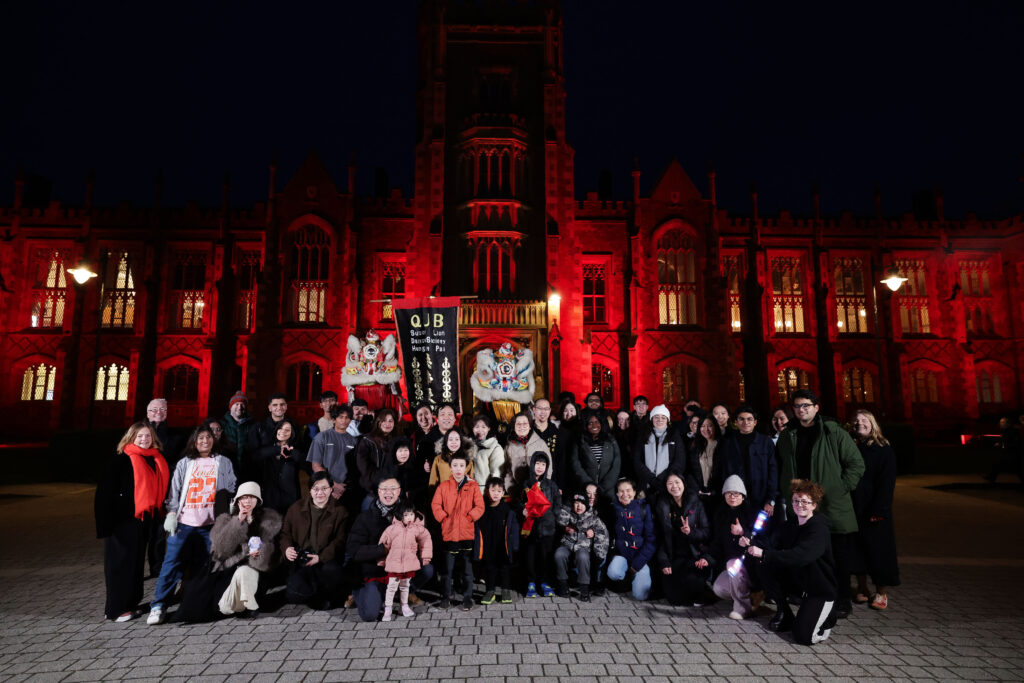
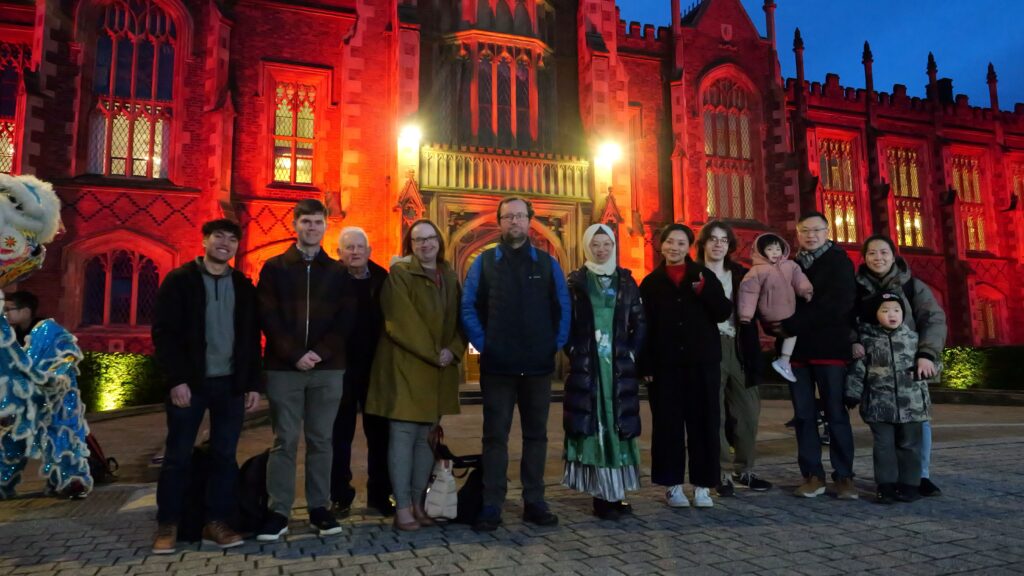
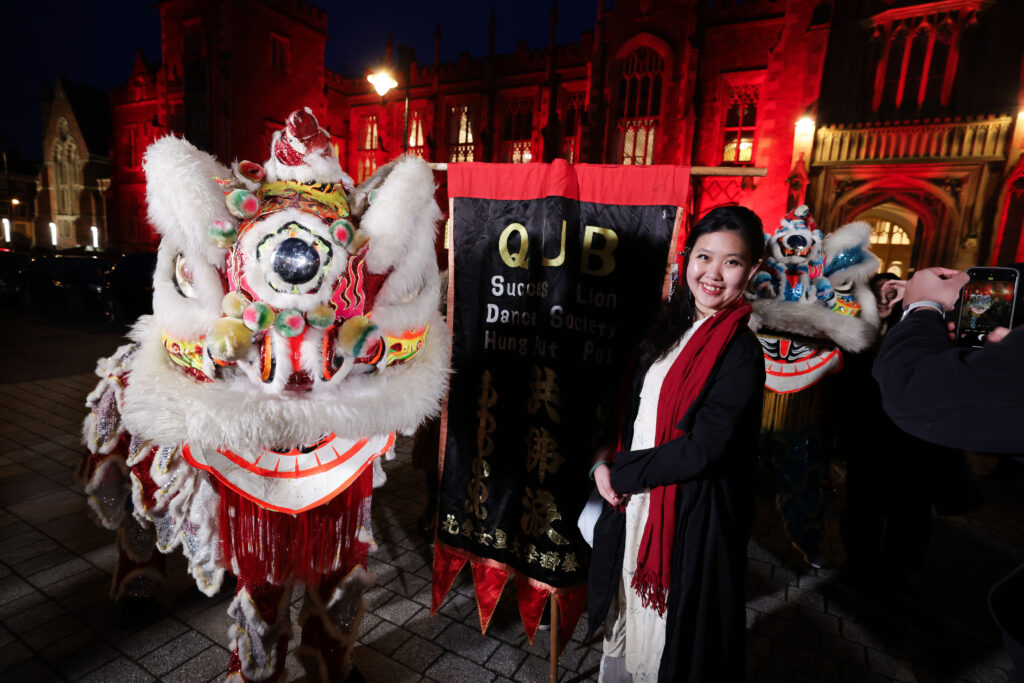
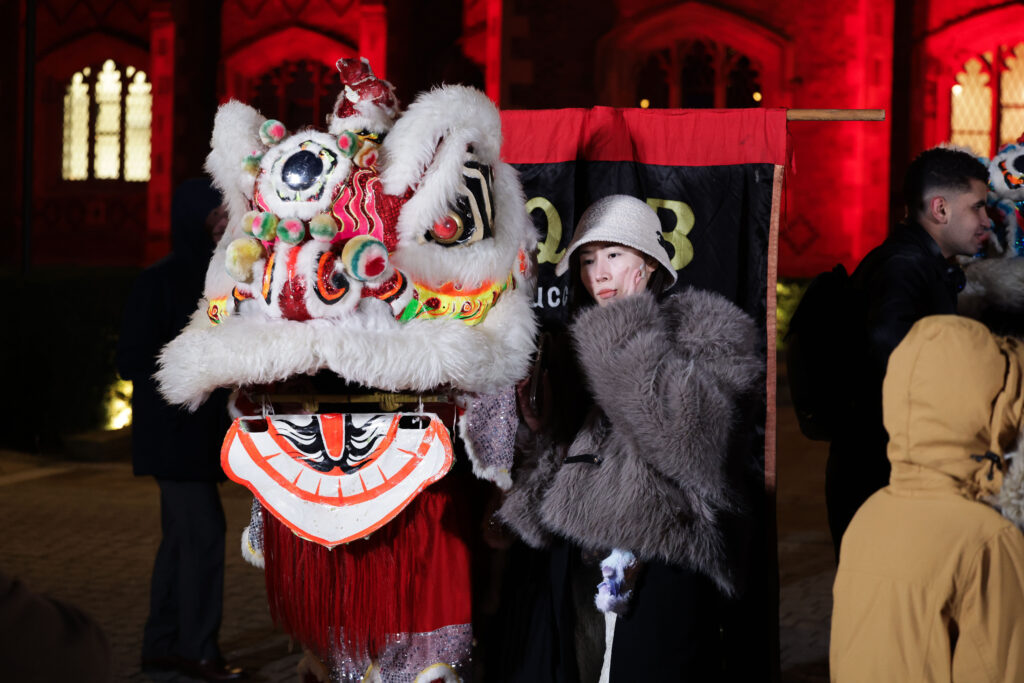
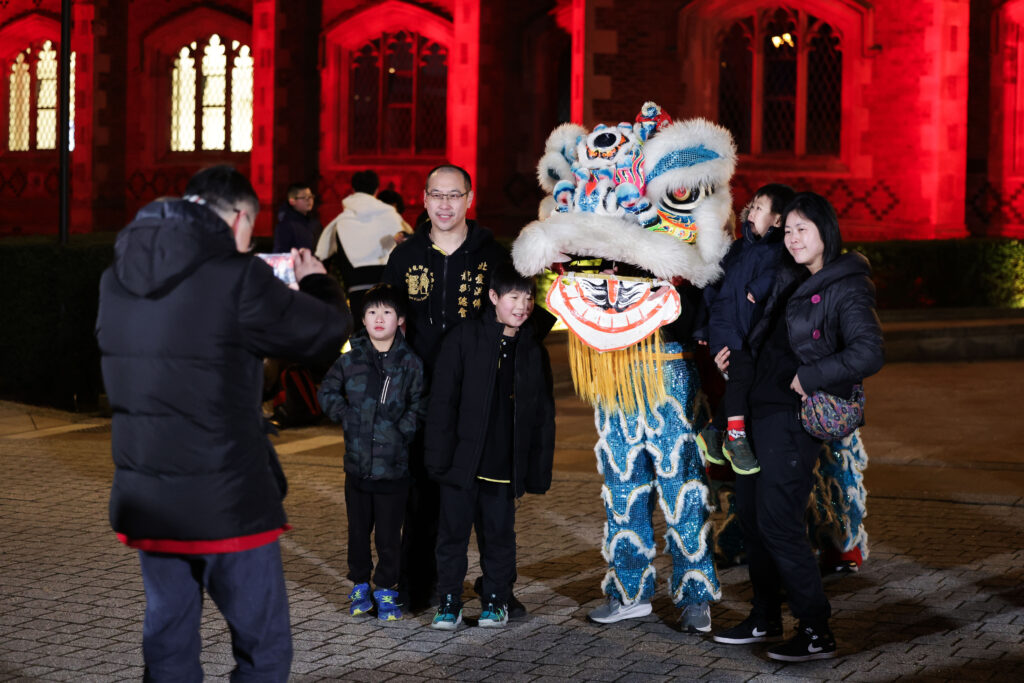
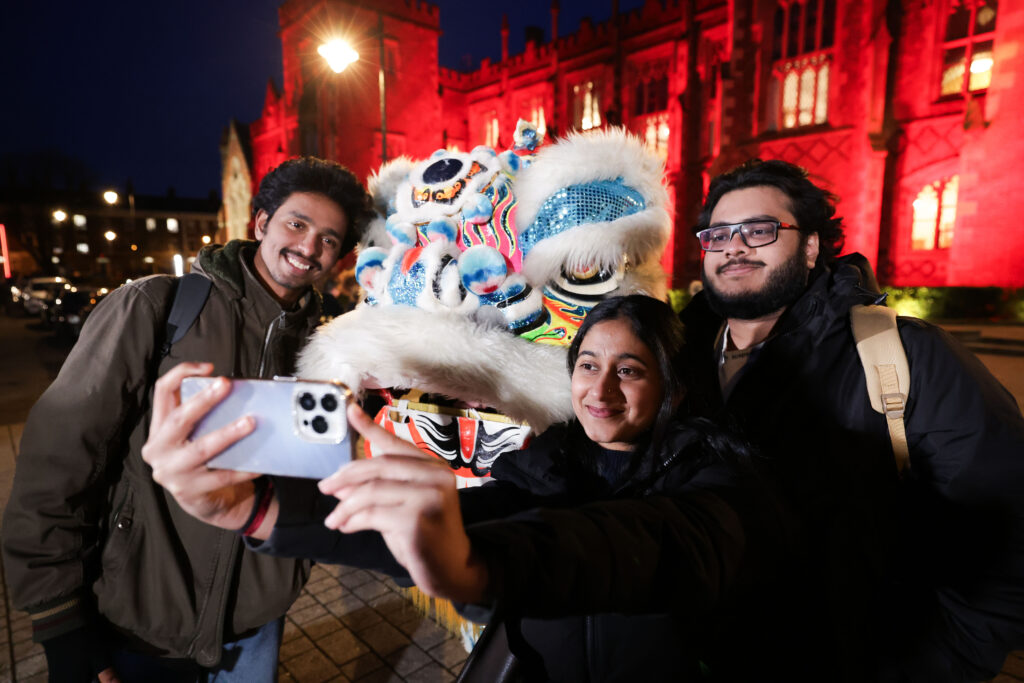
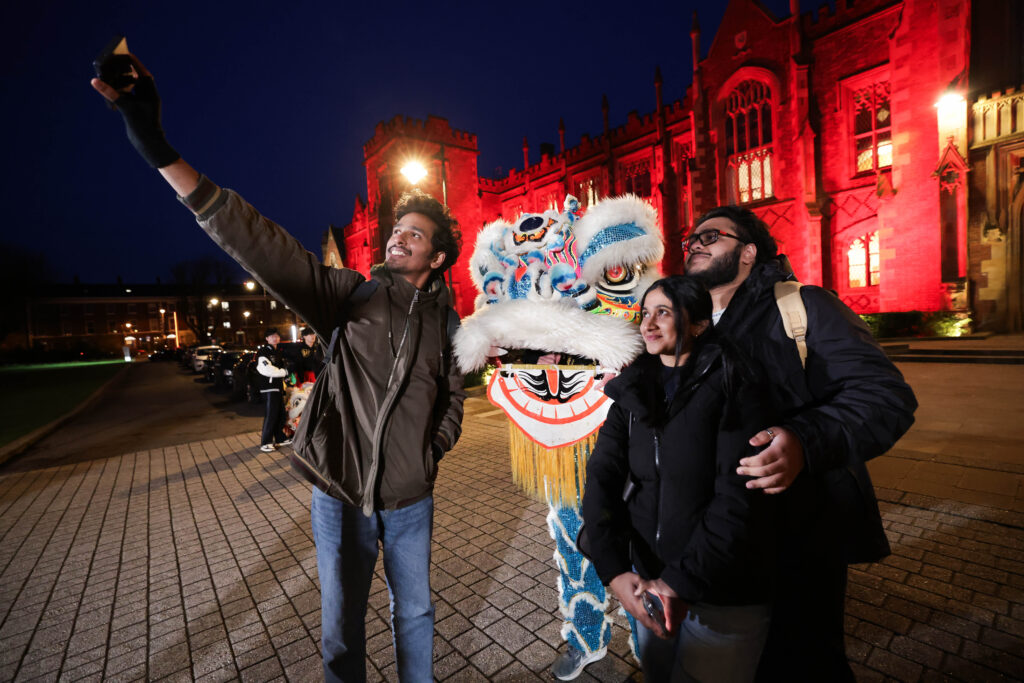
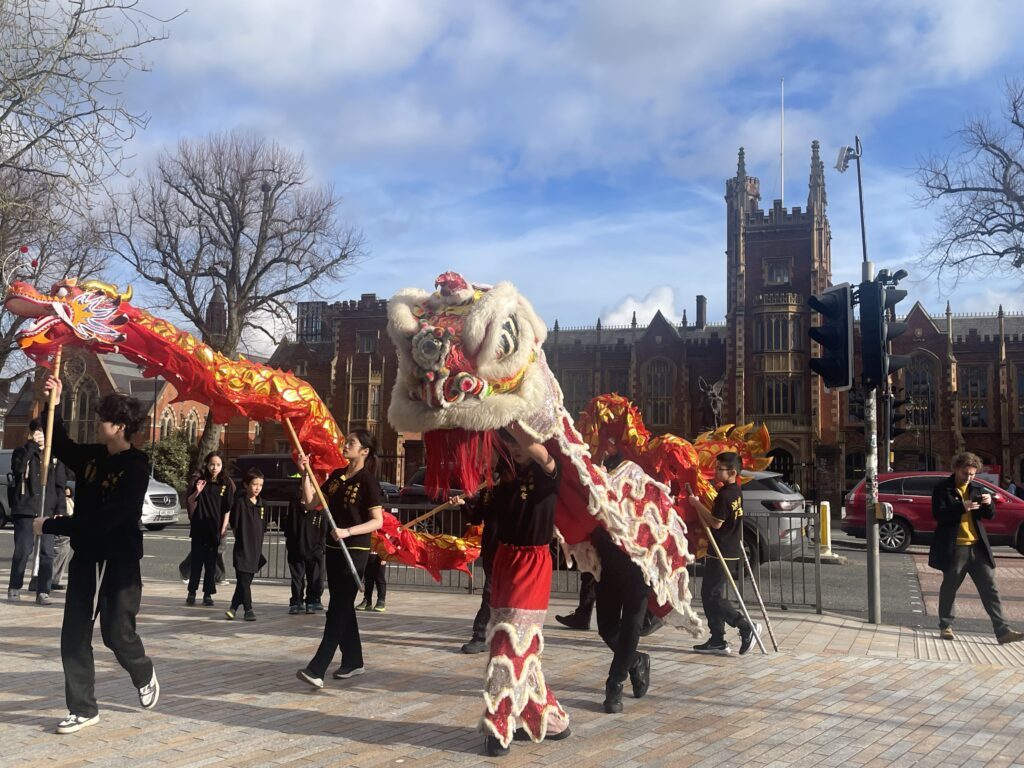
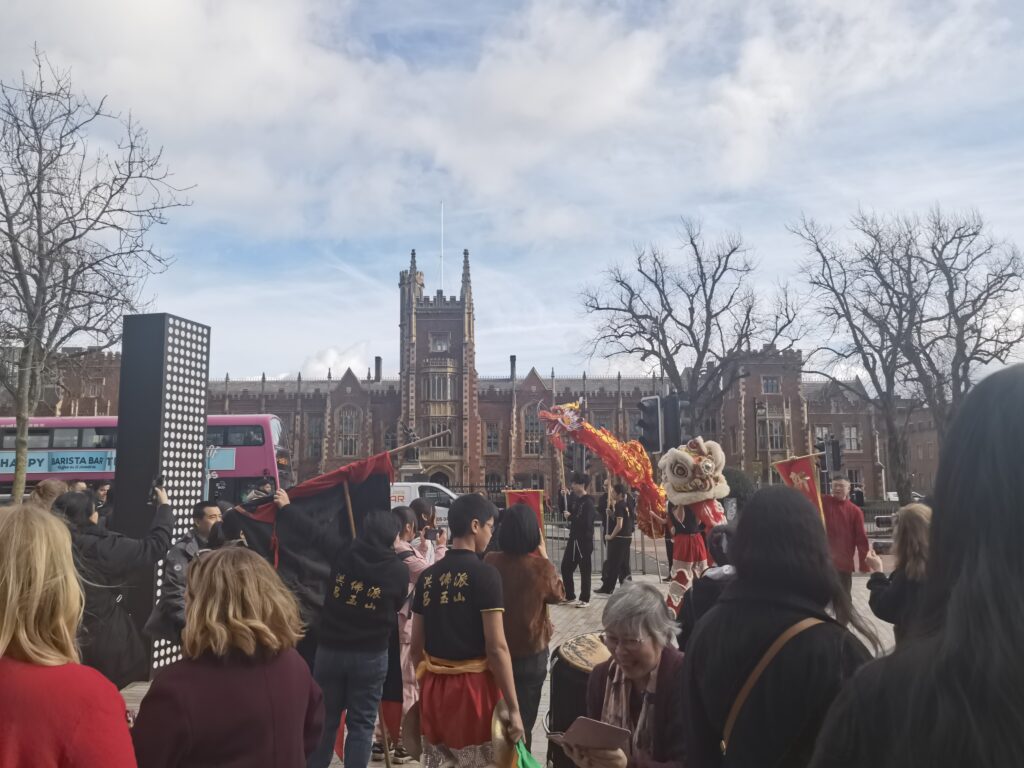
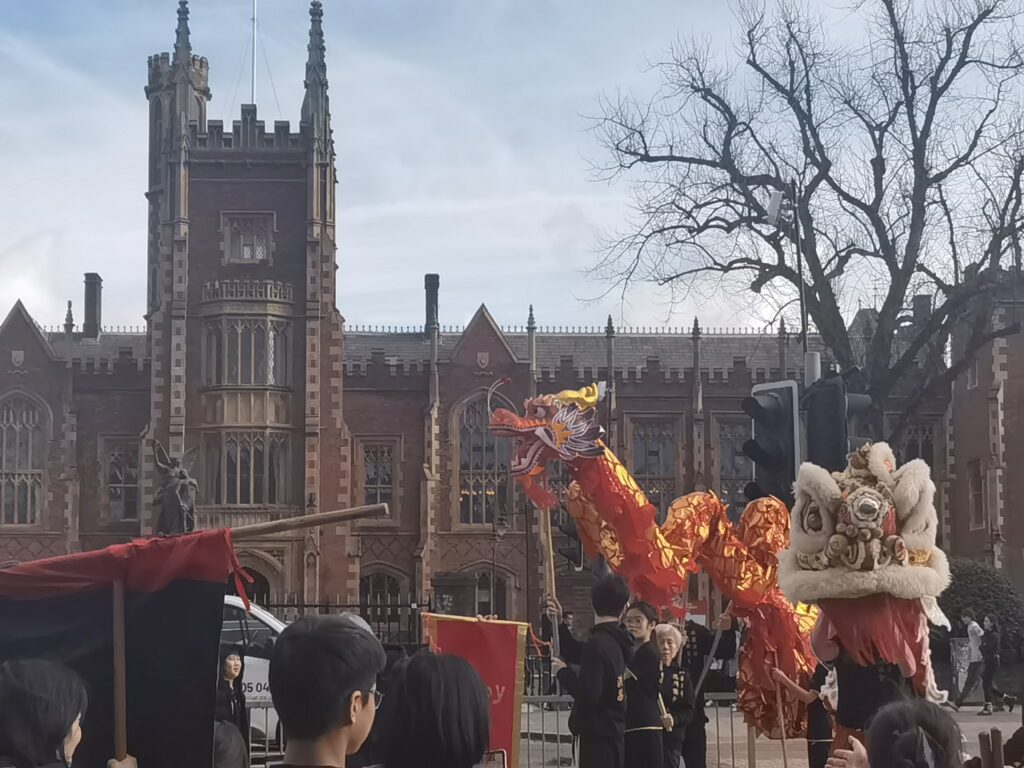
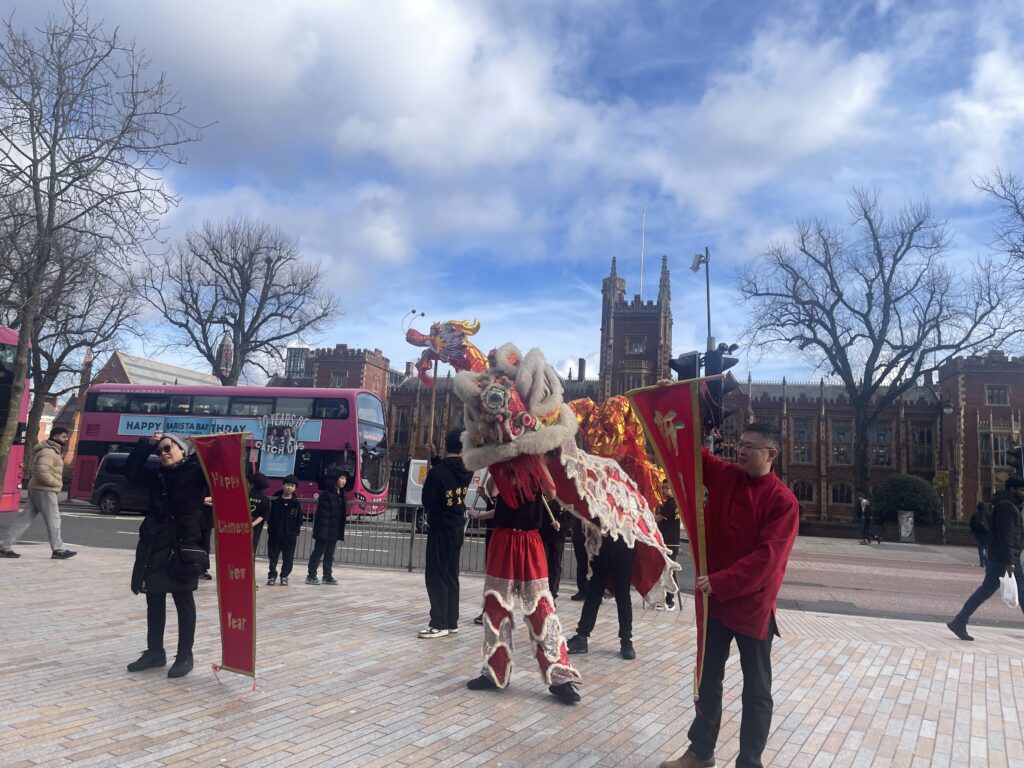
Lion Dance at Lanyon Building

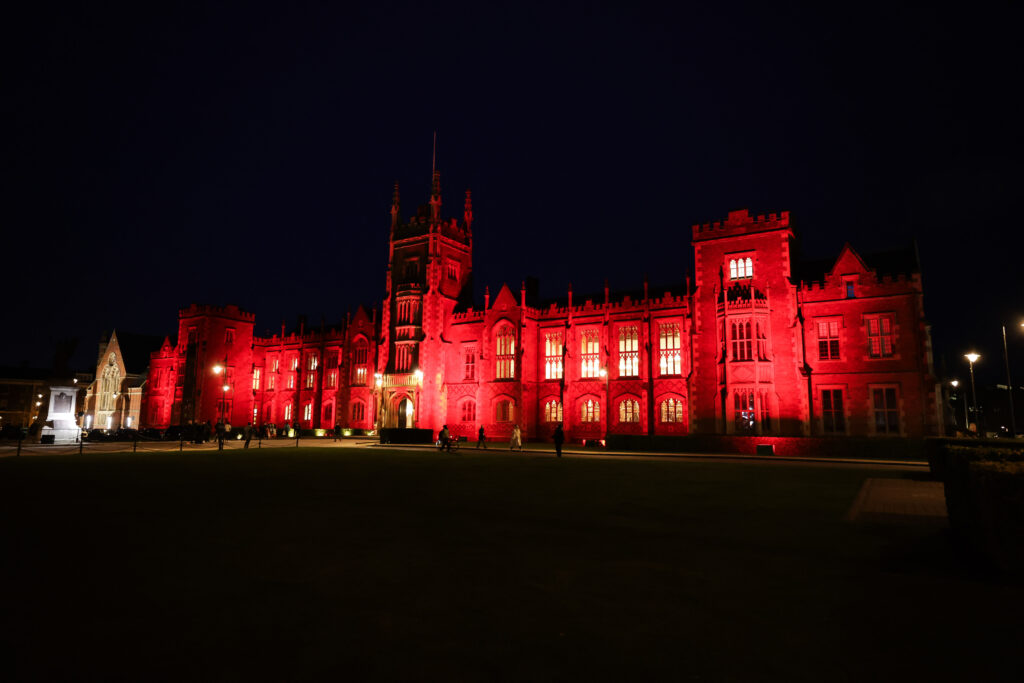
To mark us galloping towards another successful year, our beautiful Lanyon building was illuminated in red tonight. ❤️

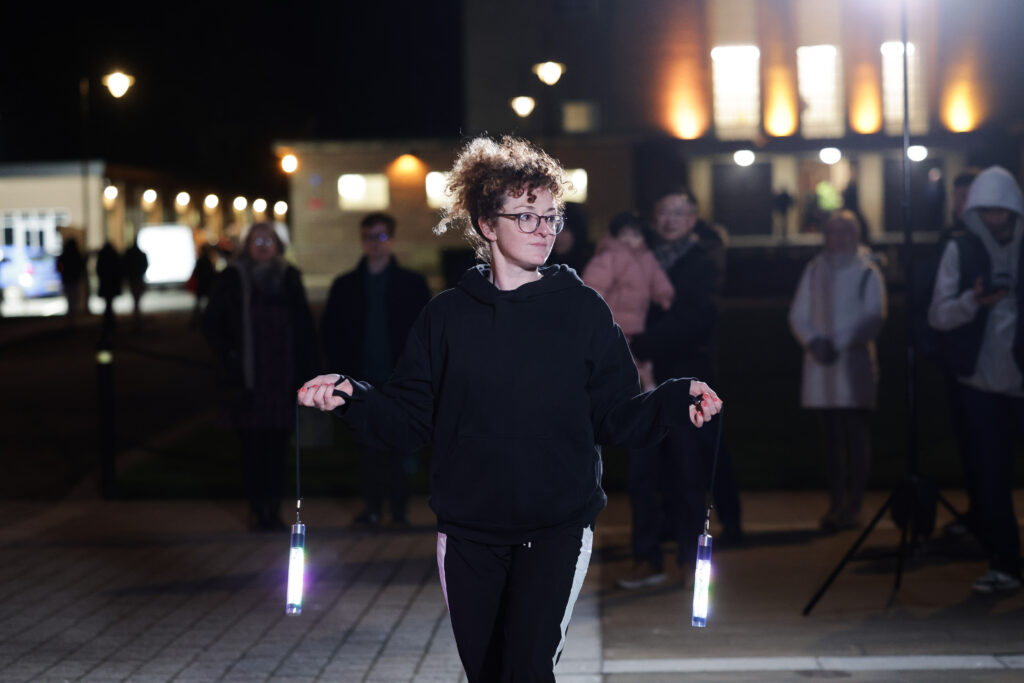
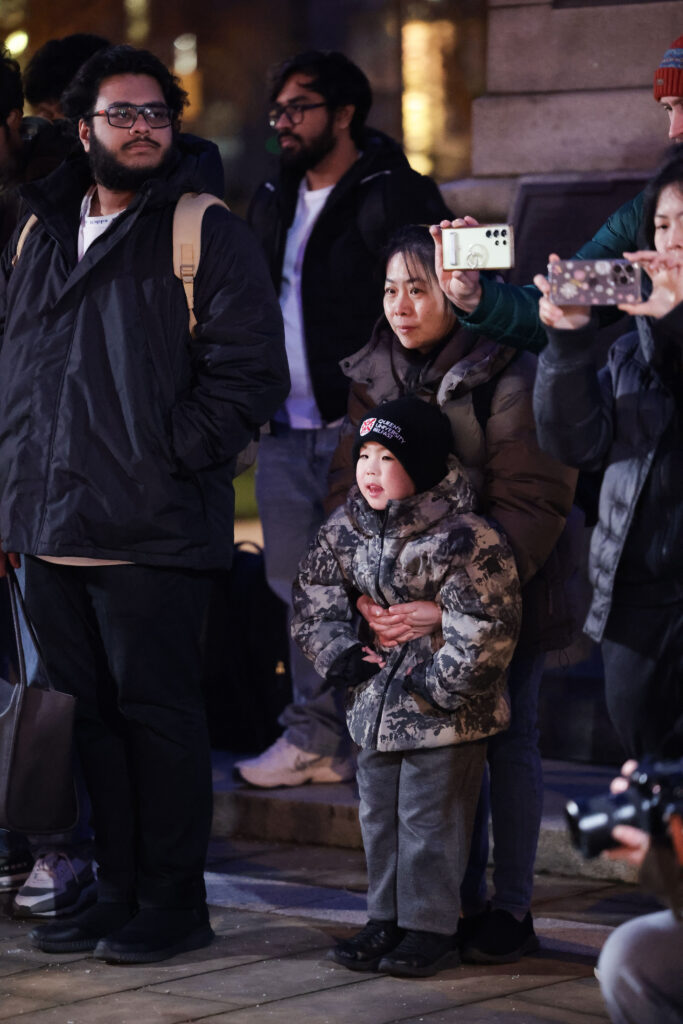
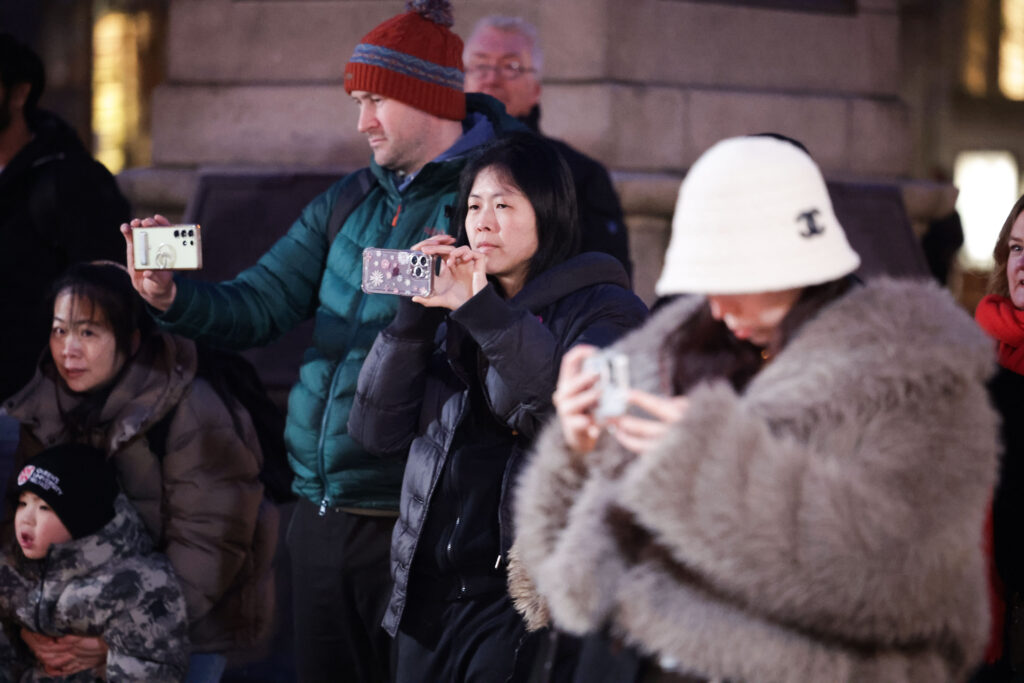
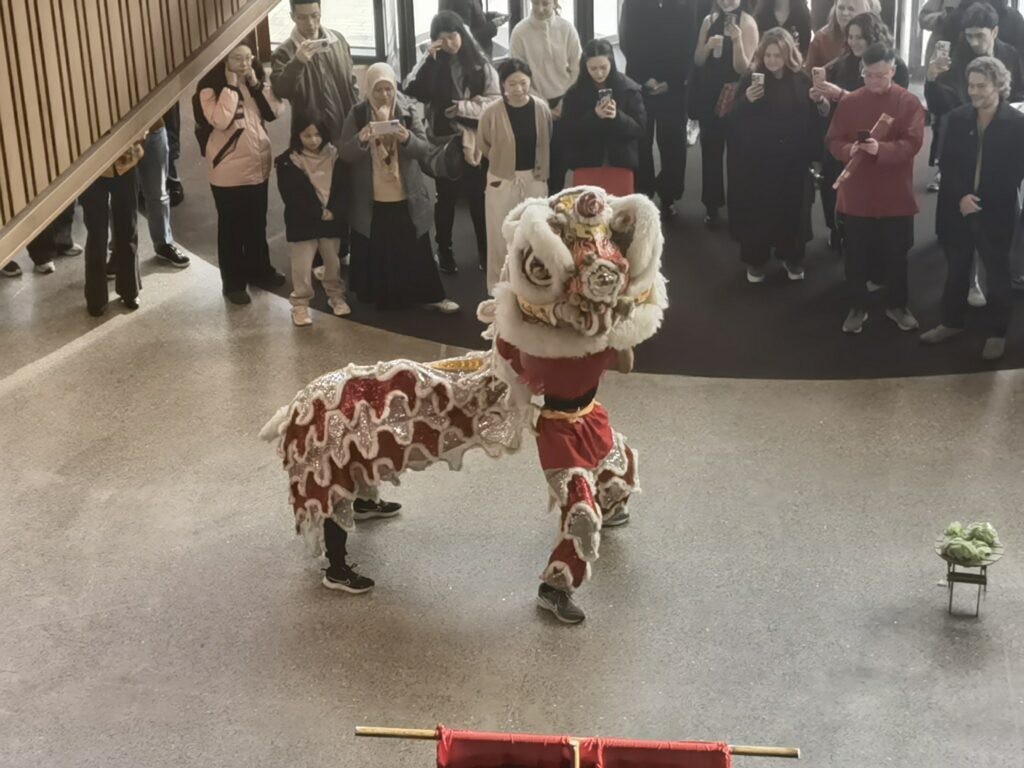
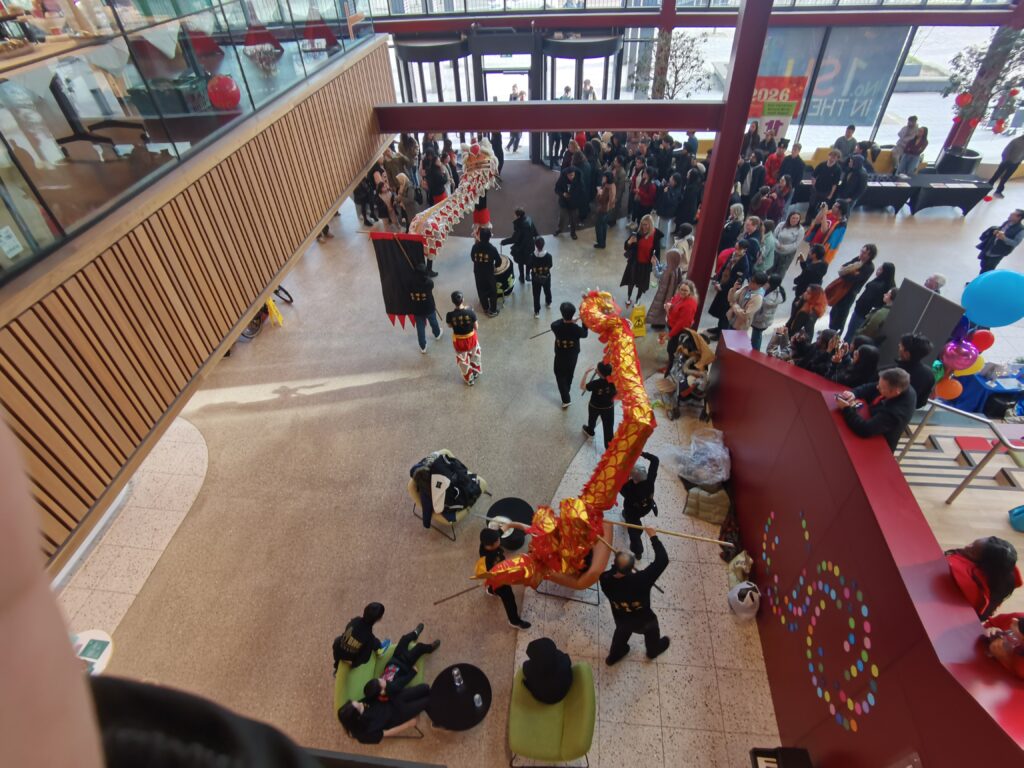
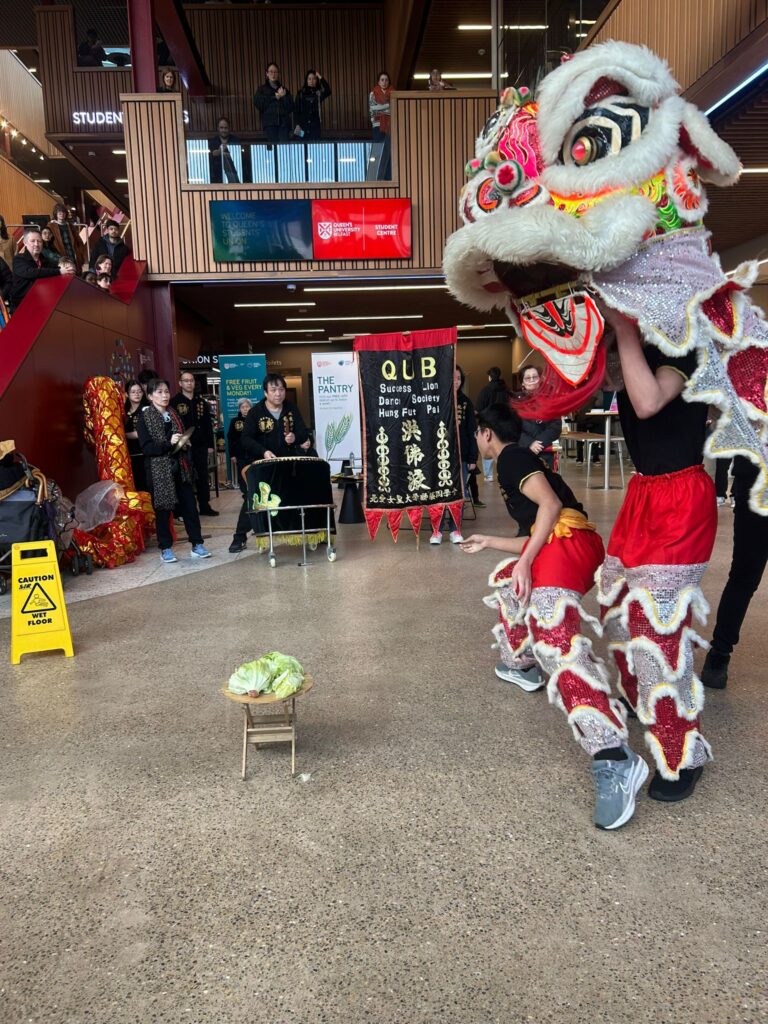
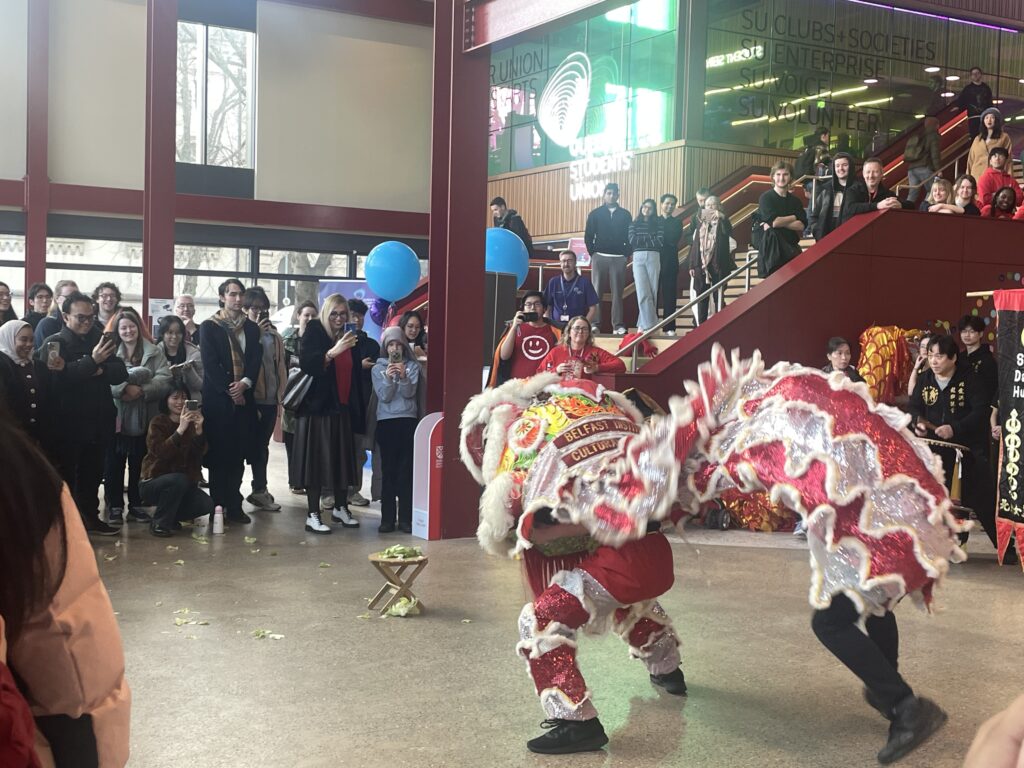
Meanwhile staff and students were treated to a magical lion dance performance, a tradition known to spread blessings and good fortune for the year ahead.

We thank you for joining us in this meaningful celebration and hope you have enjoyed yourselves with nice snapshots. If you would like to share yours to be added to the album, please send your photos to liang.wang.

We are also keen to invite you to attend many of our upcoming events:

  • Culture Forum Talks
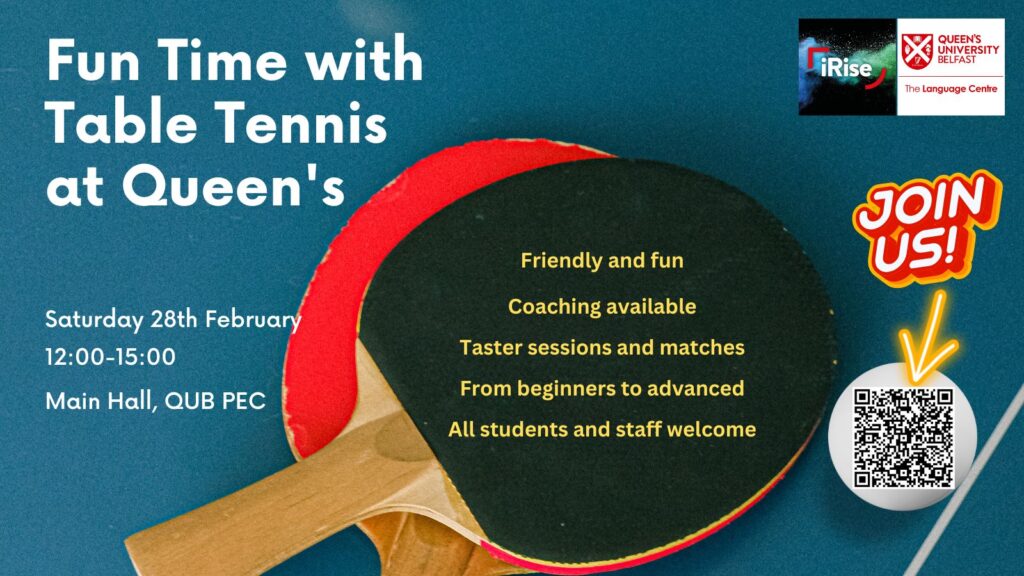
  • Fun Time with Table Tennis
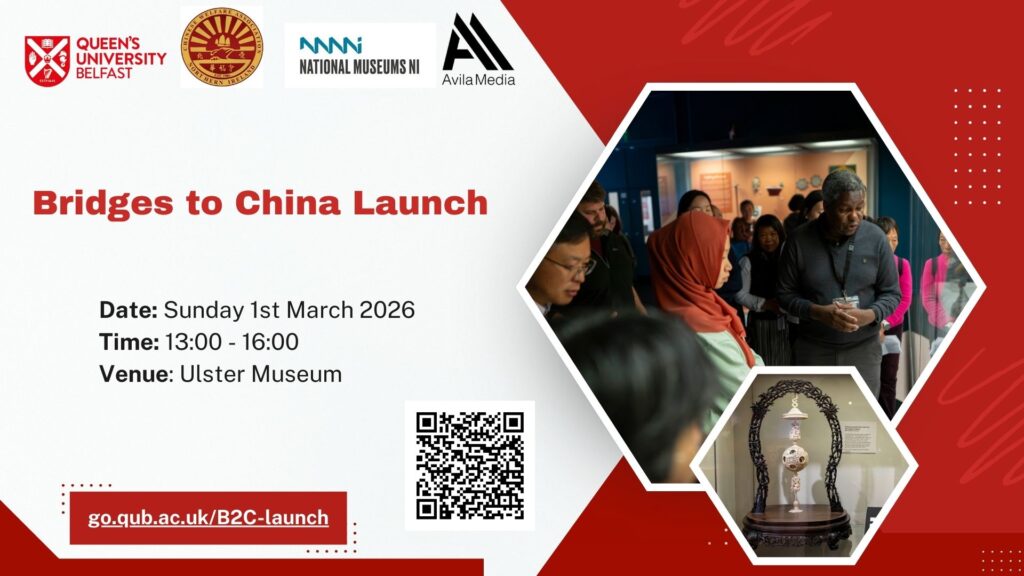
  • Bridges to China Launch (fully booked)

Check the Chinese Culture Programme 2026 Homepage for more upcoming events throughout the year.

QUB CNY2026 Successfully Launched

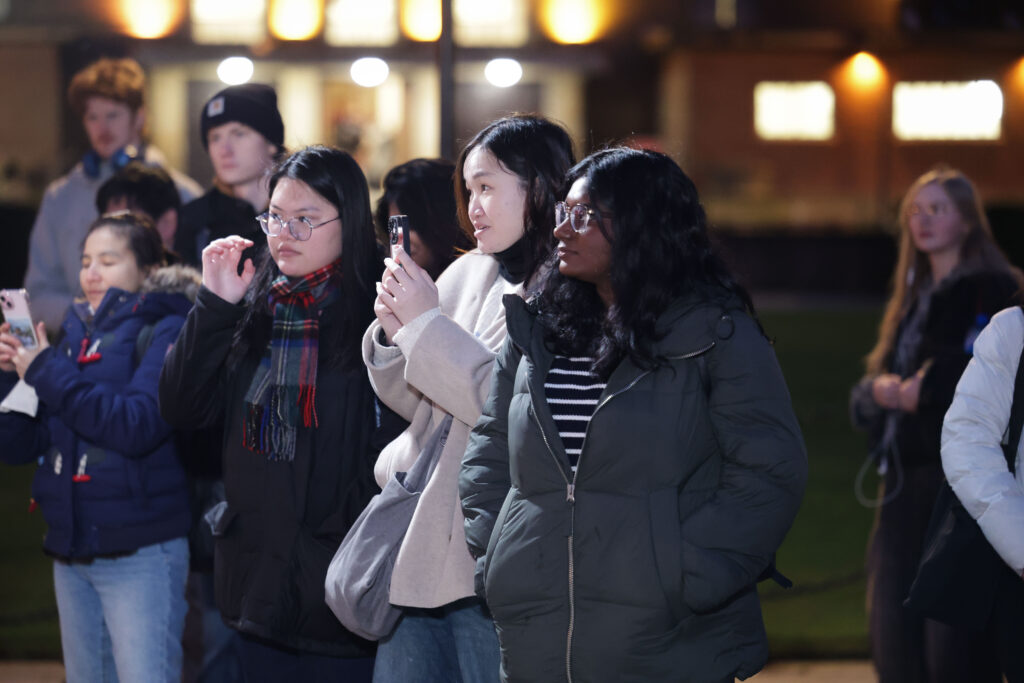
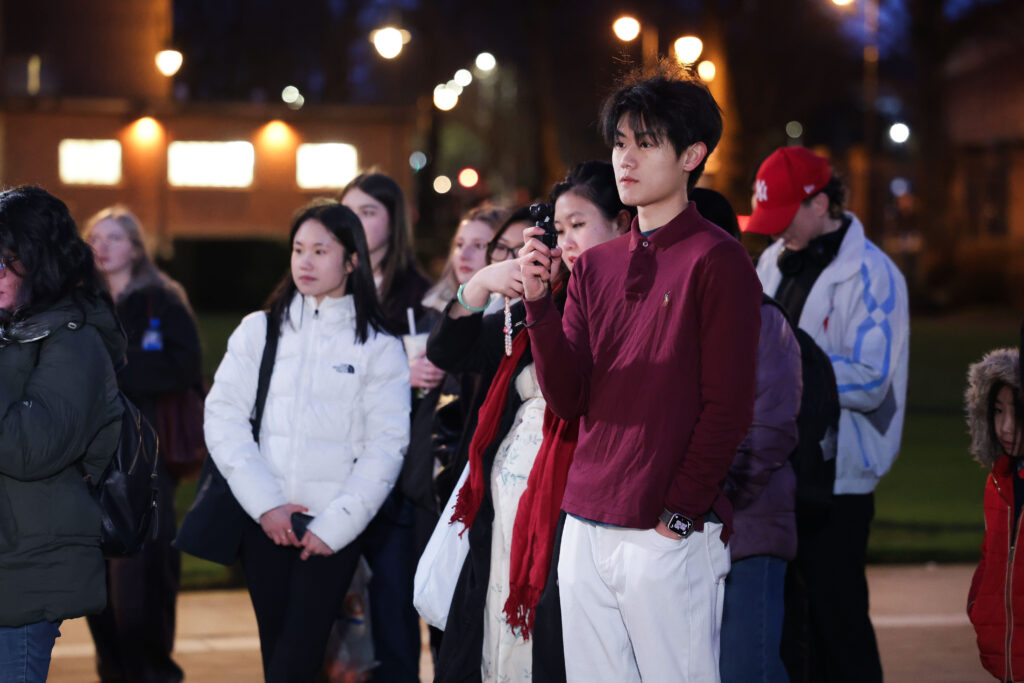
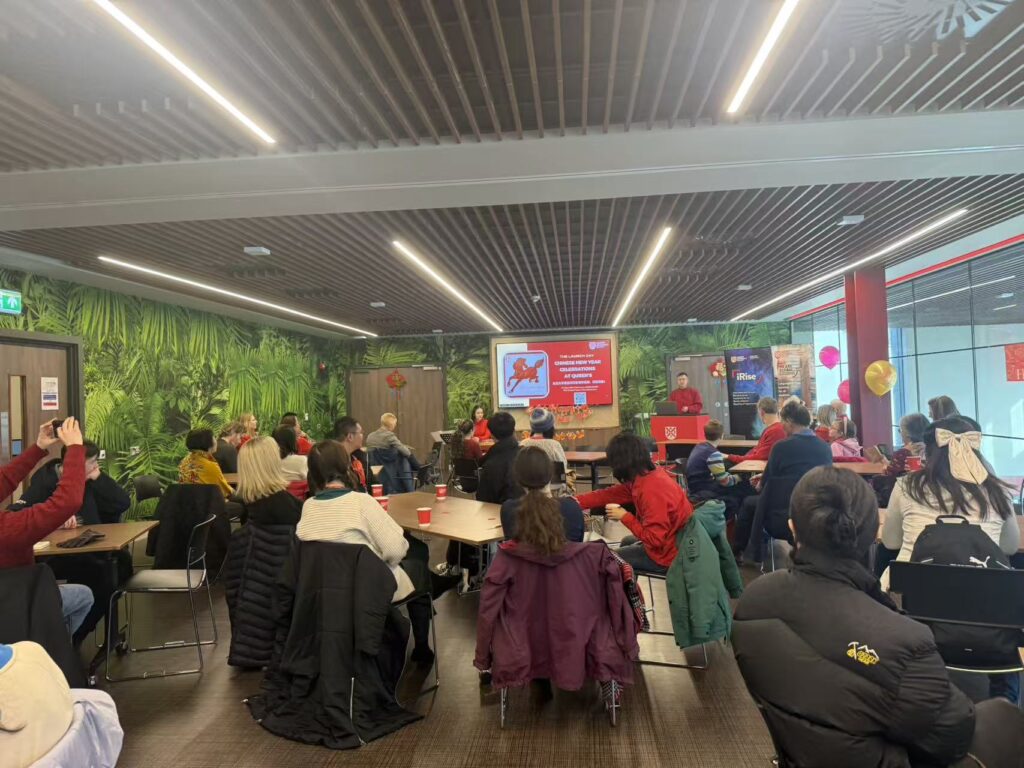
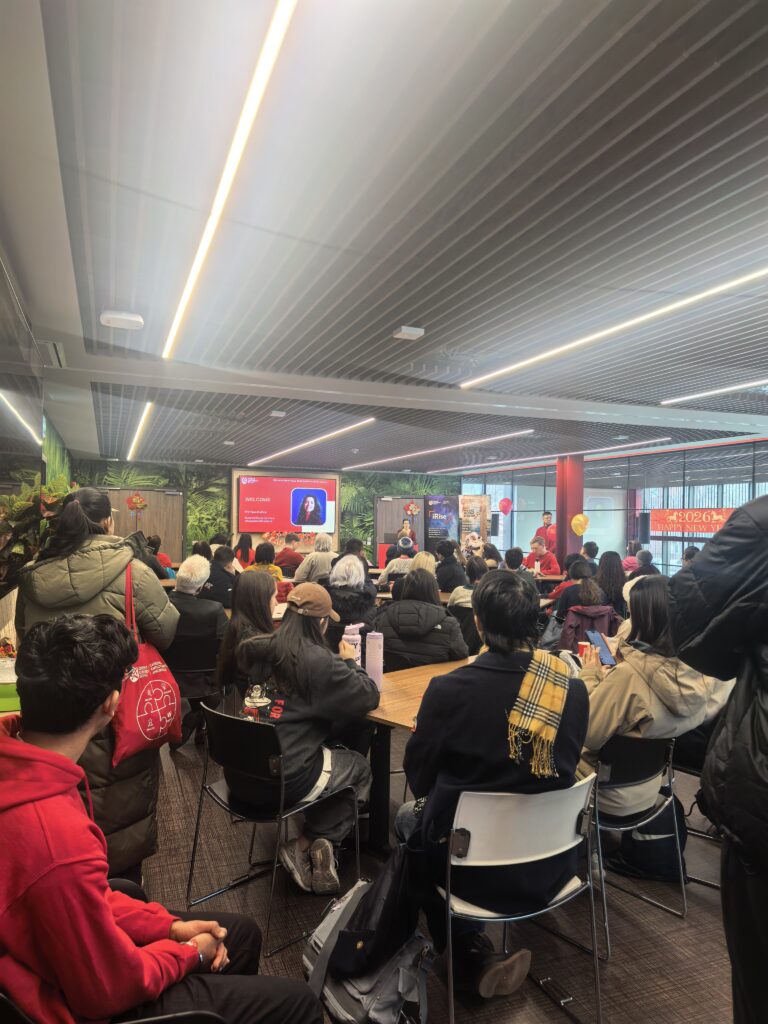
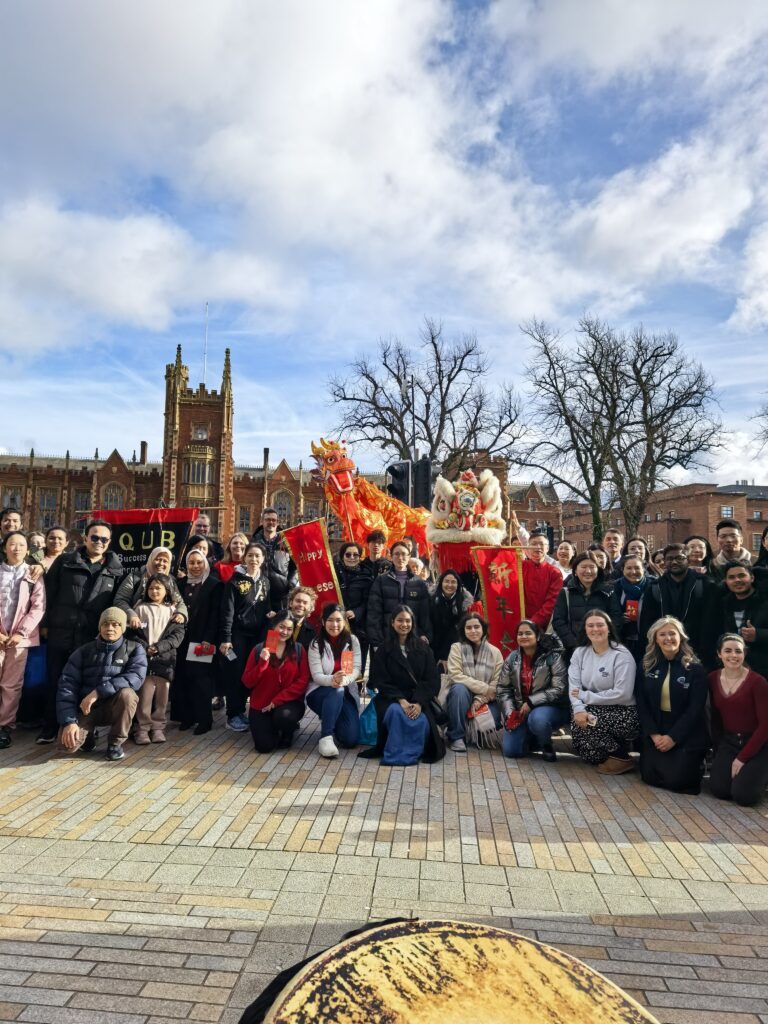
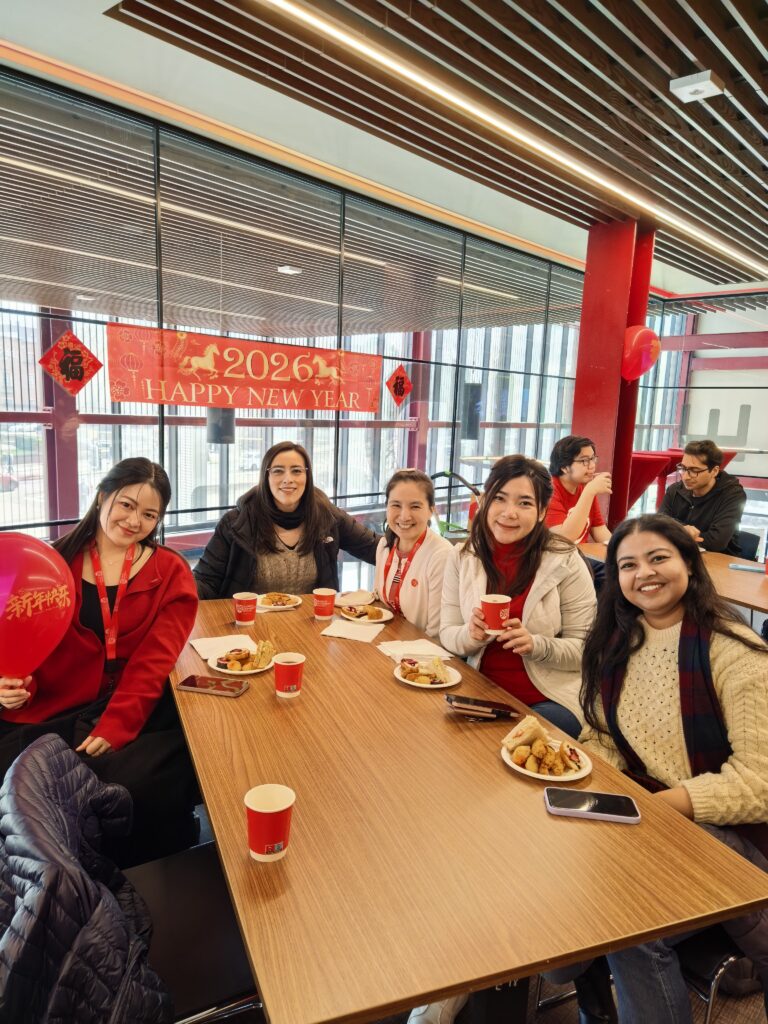
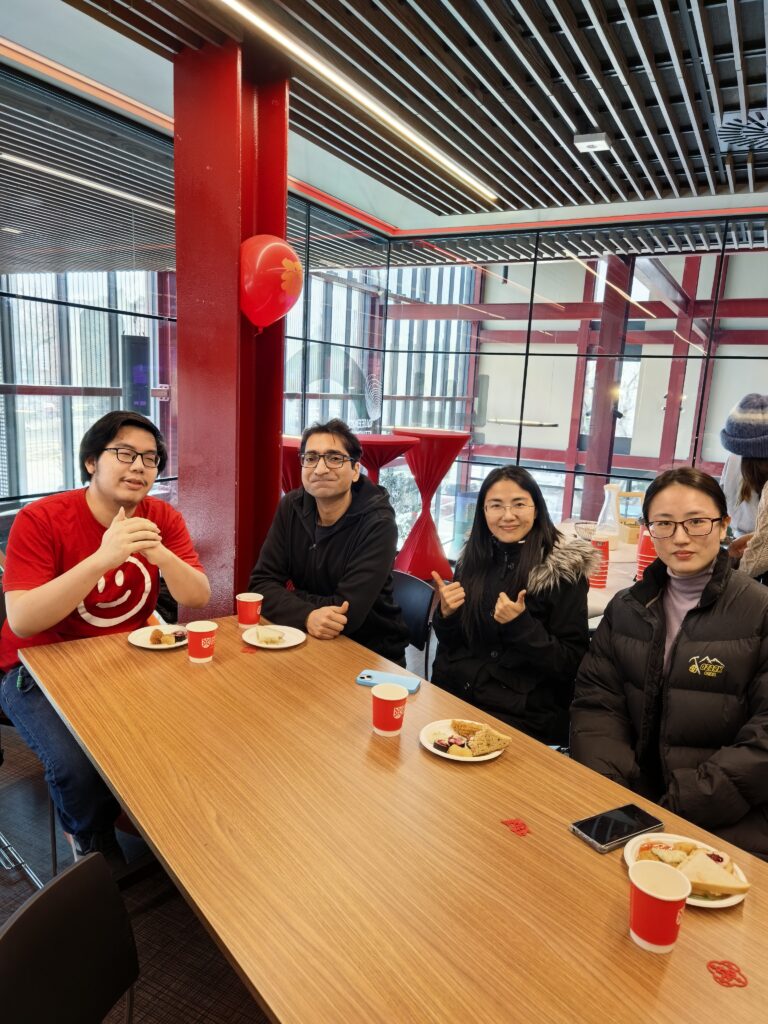
What could be better than a splendid day of sunshine on Friday 13 February, following such a long period of gloomy, rainy weather? On the day, over 60 Queen’s students, staff members, as well as civic partners and guests, joined the Chinese New Year celebration programme at One Elmwood, Queen’s – the hub for intercultural encounters and exchanges.

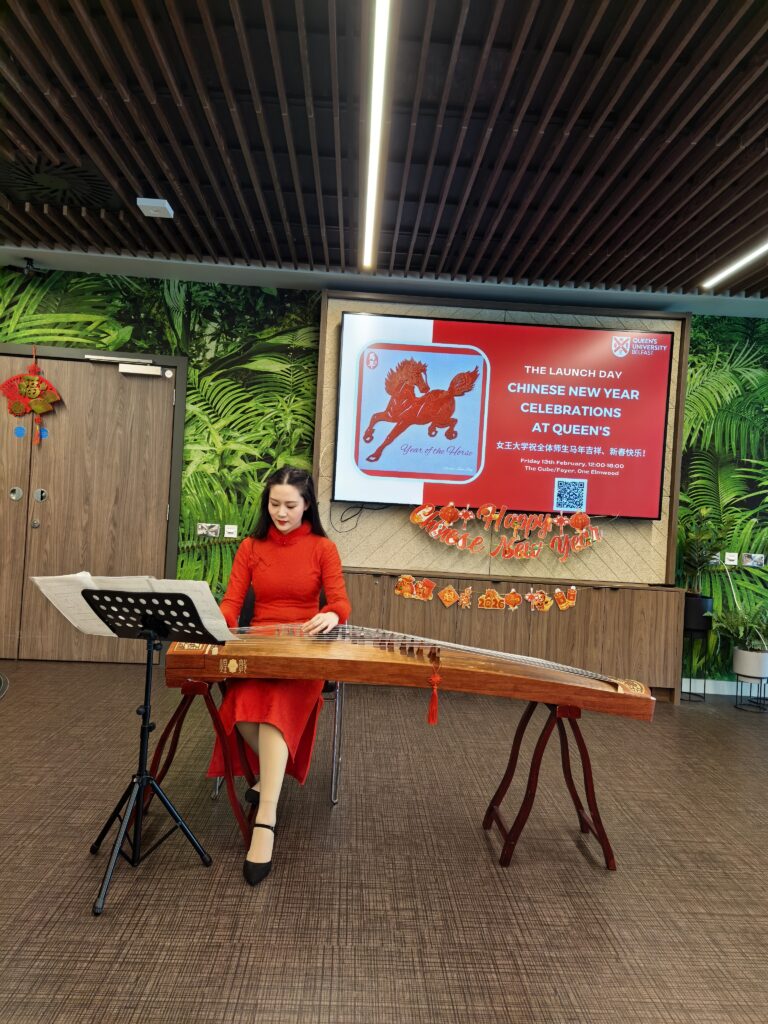
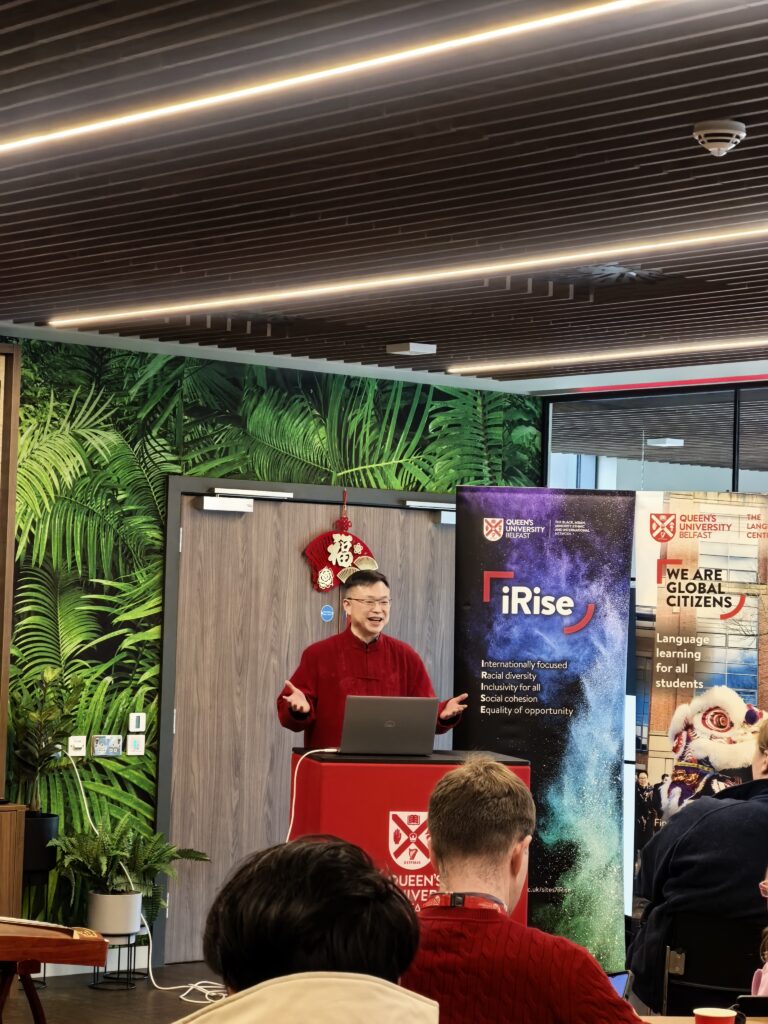
Chaired by Dr Liang Wang, the launch began with a captivating performance of traditional guzheng music by PhD candidate Fei Li from Queen’s Business School. Pro-Vice-Chancellor Professor Margaret Topping delivered the opening remarks on behalf of the University, highlighting Queen’s achievements in global engagement over the past year, particularly with Asian countries such as China and India. Dr Bee-Yen Toh, Co-Chair of the iRise Staff Network, and Thomas Smith, Language Centre Manager, also extended their welcomes to staff, students, and civic partners, emphasising the importance of intercultural understanding through language learning, dialogue and shared activities. Mórrigan McEvoy, Student Officer for Accessible Education, offered her greetings and encouraged students to actively participate in university events and contribute to building a multicultural campus.

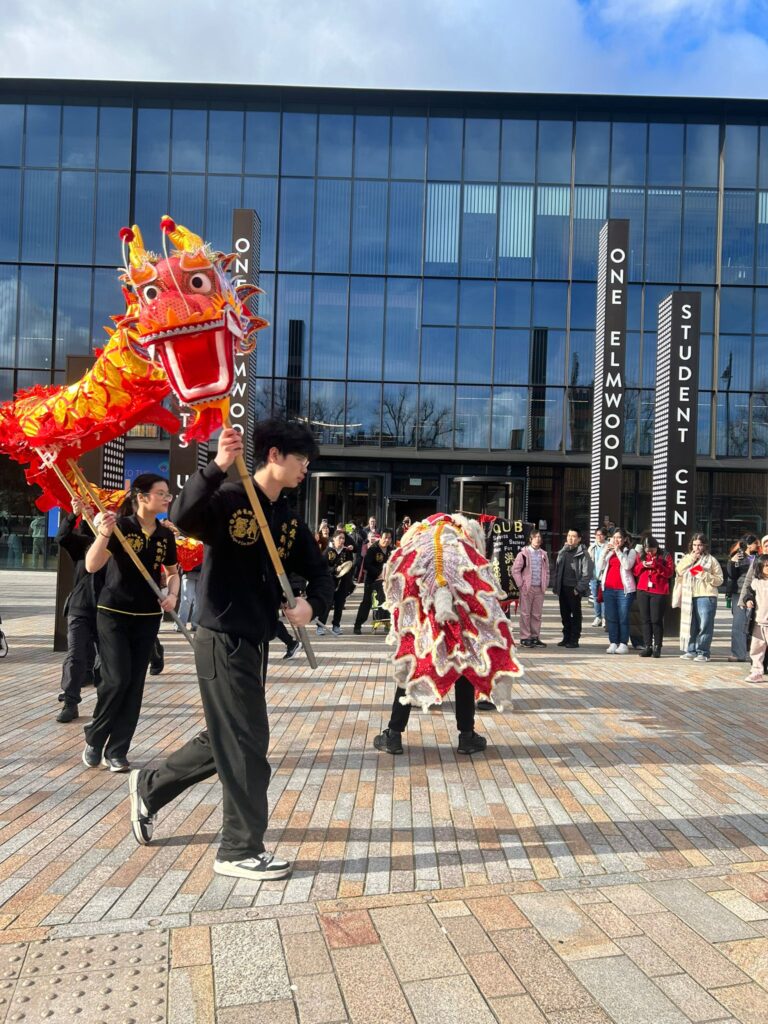
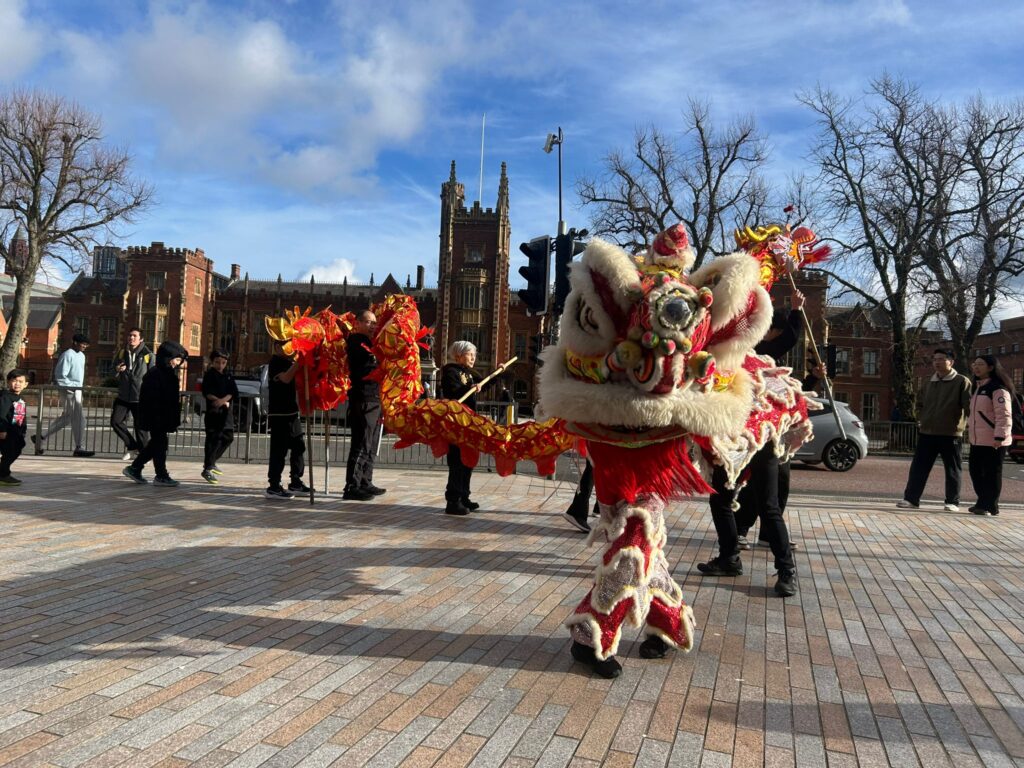
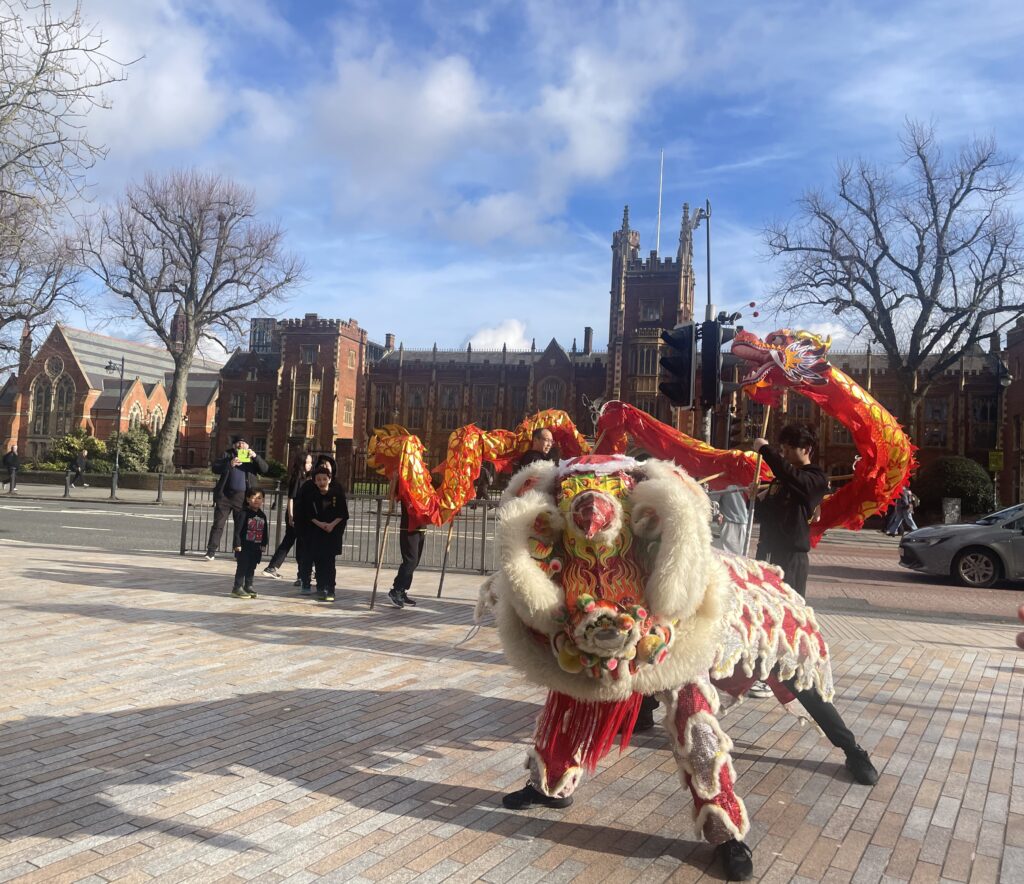
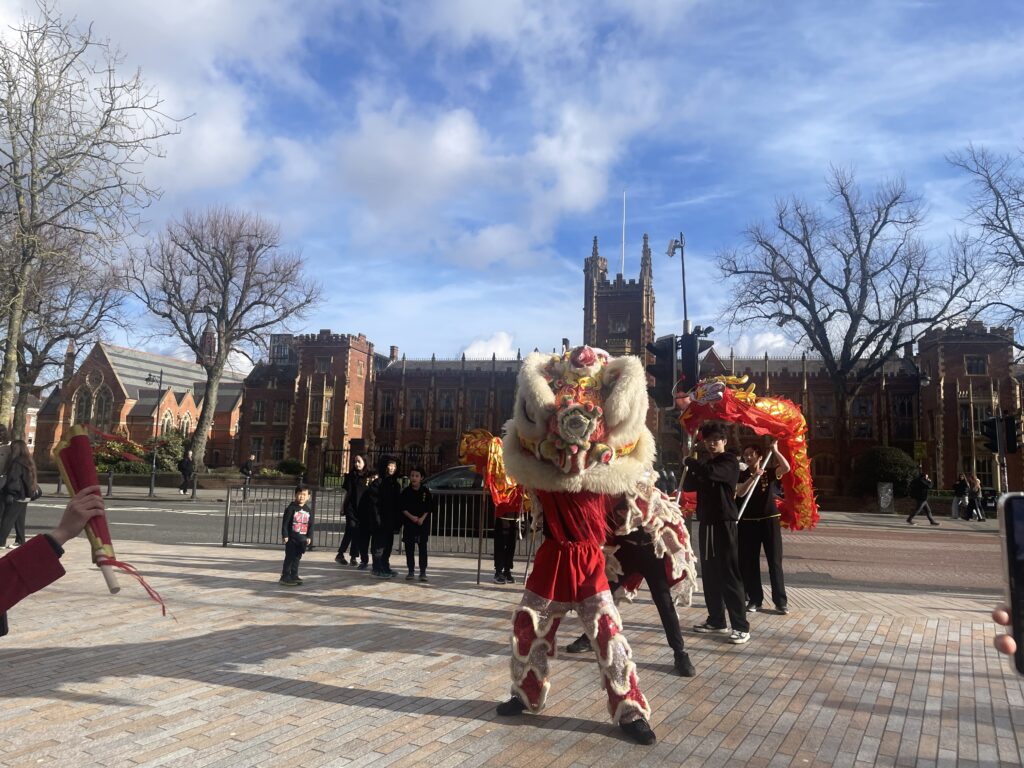
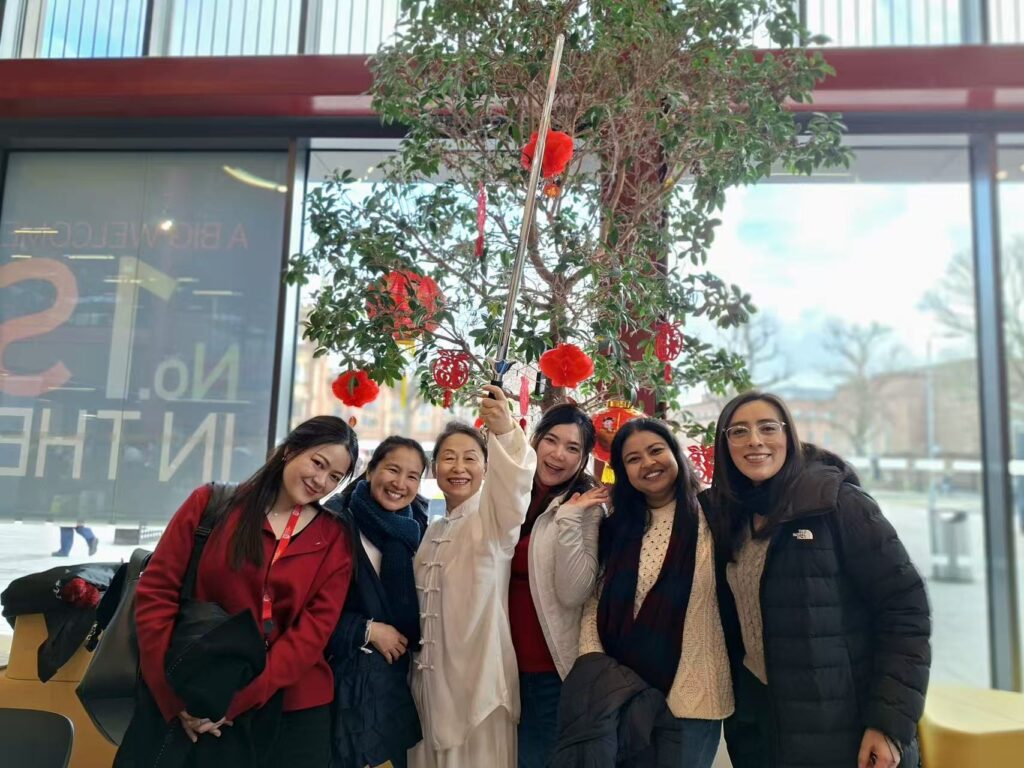
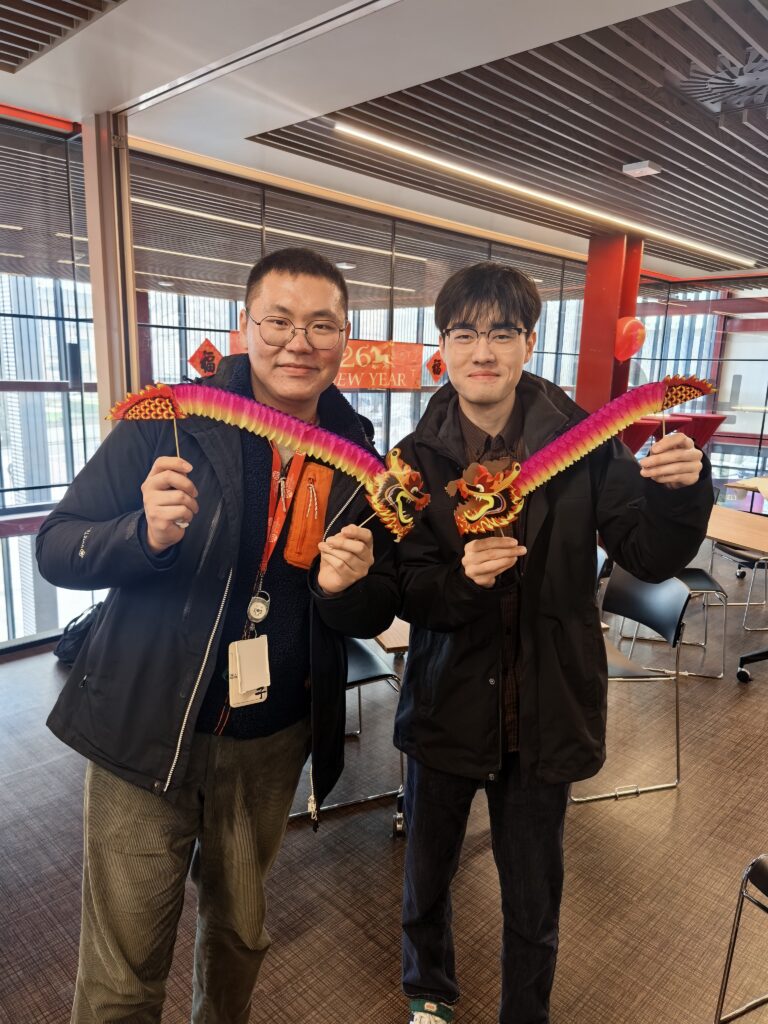
Following the launch, attendees were invited to the ground floor, where the traditional Dragon and Lion dance began in the foyer and continued outside the One Elmwood building. The celebration concluded with a group photo featuring all participants, symbolising the farewell to the Year of the Snake and the welcoming of the Year of the Horse.

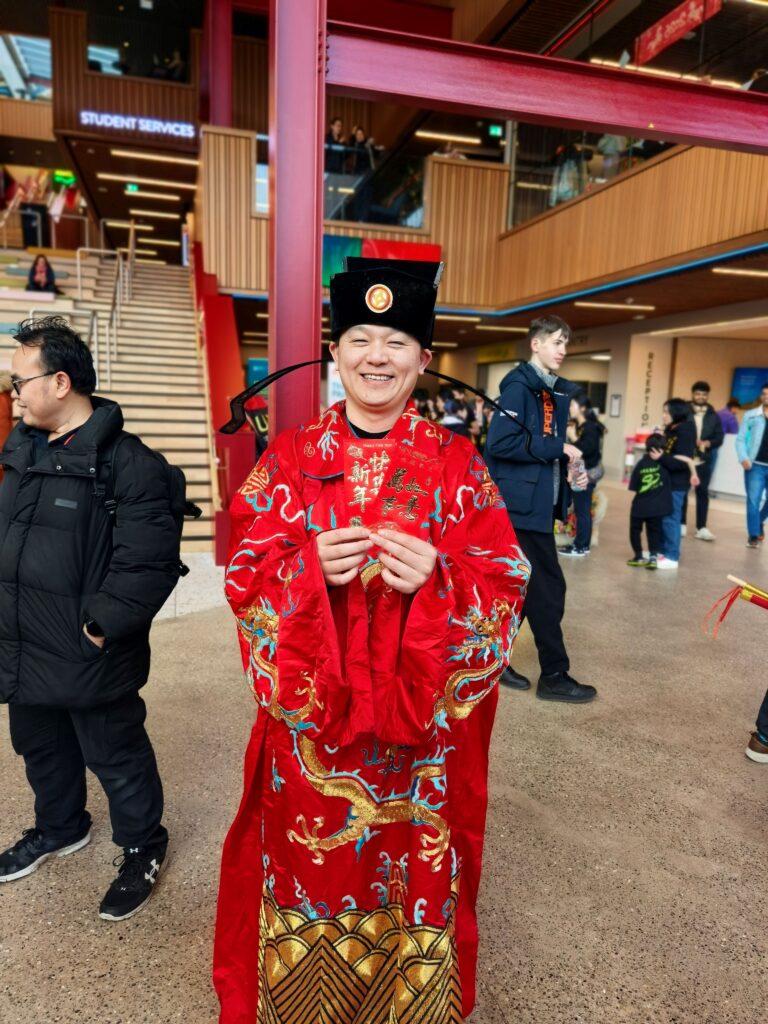
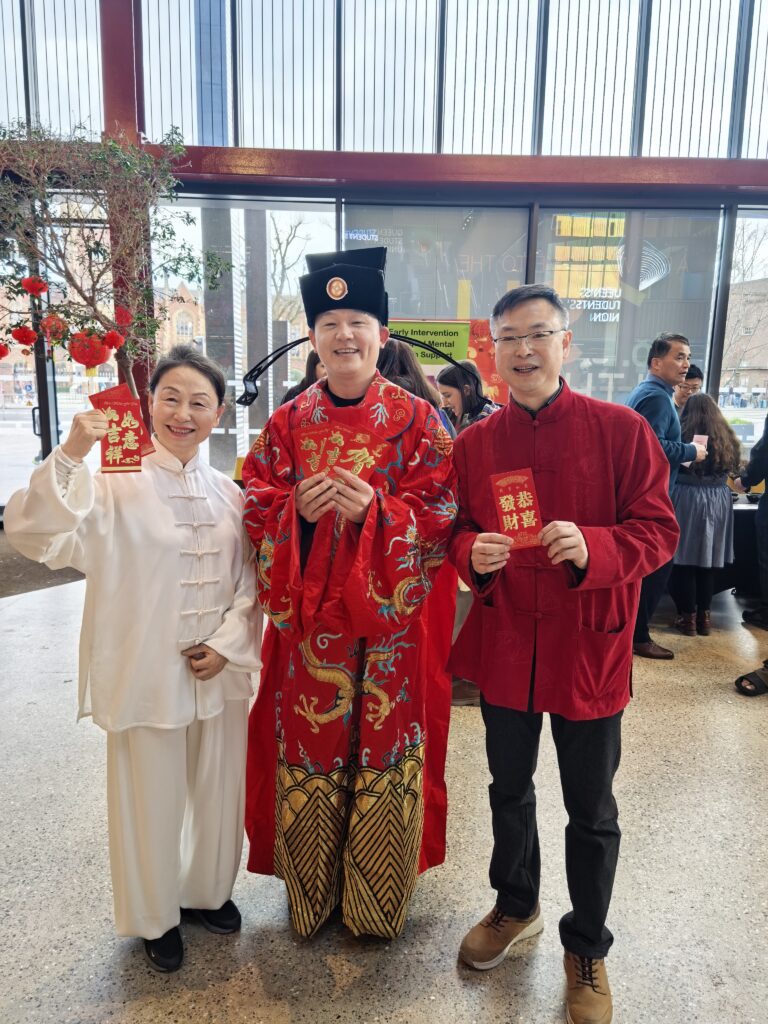
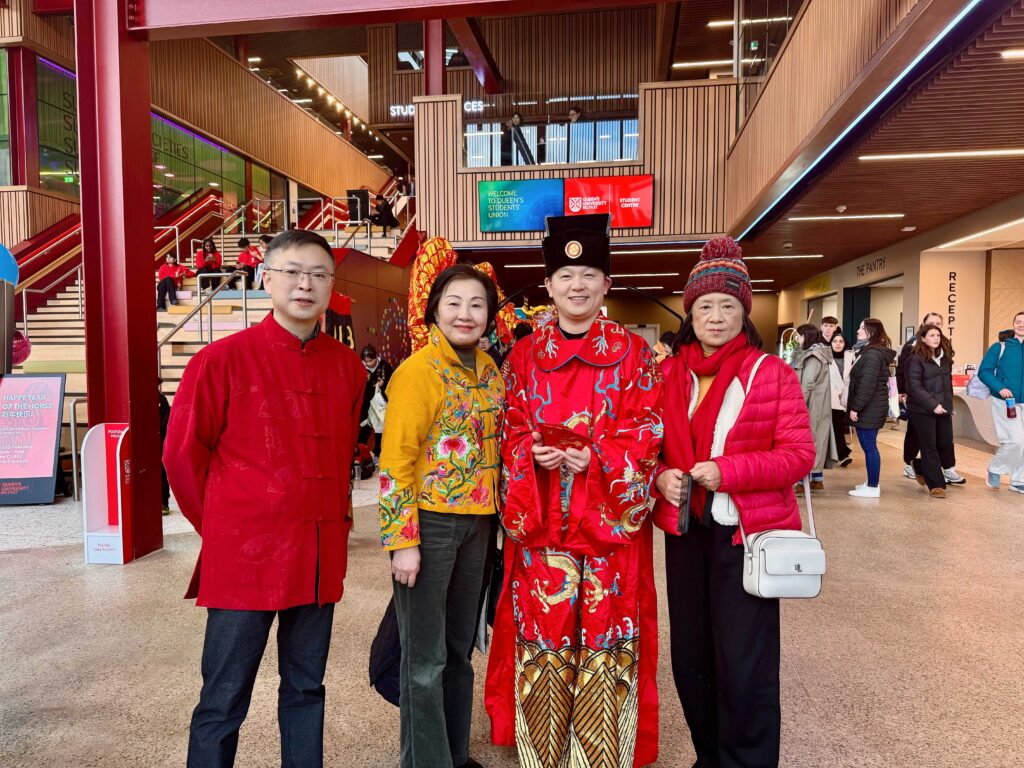
Another highlight of the celebration was the appearance of the God of Fortune, who generously distributed lucky “money” – chocolate coins and replica ancient Chinese coins – to those wishing to embrace good fortune in the year ahead.

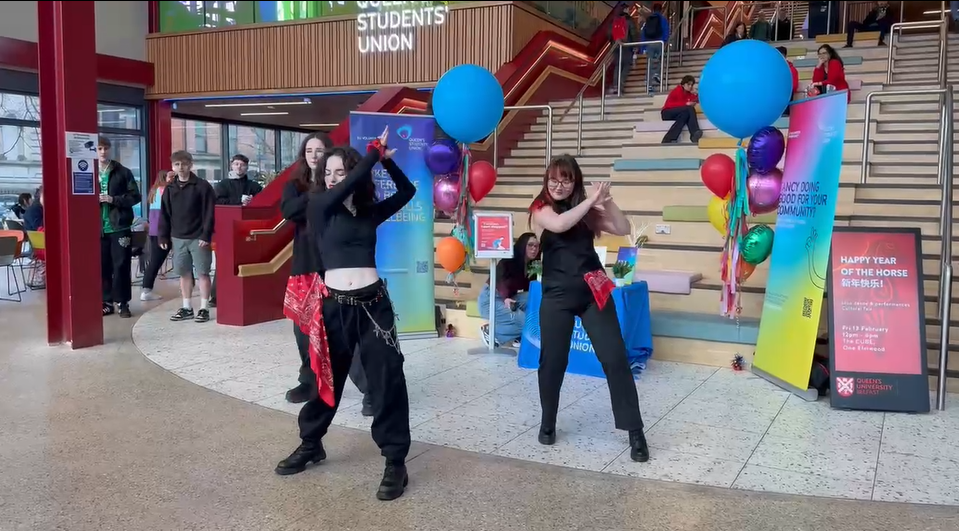
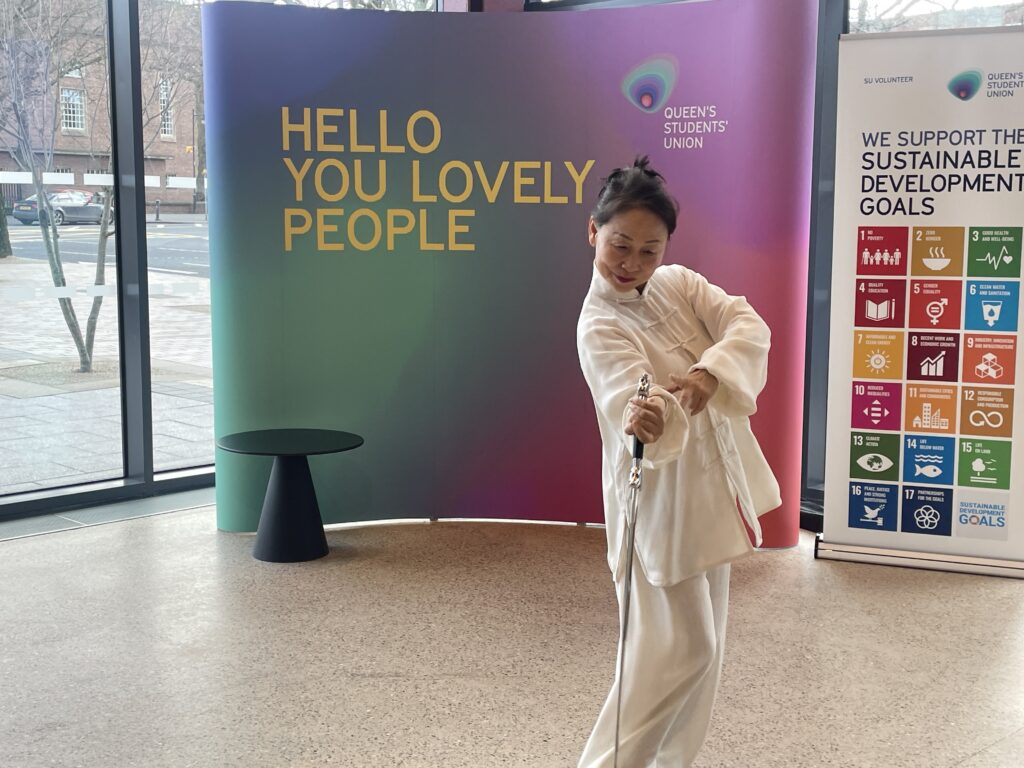
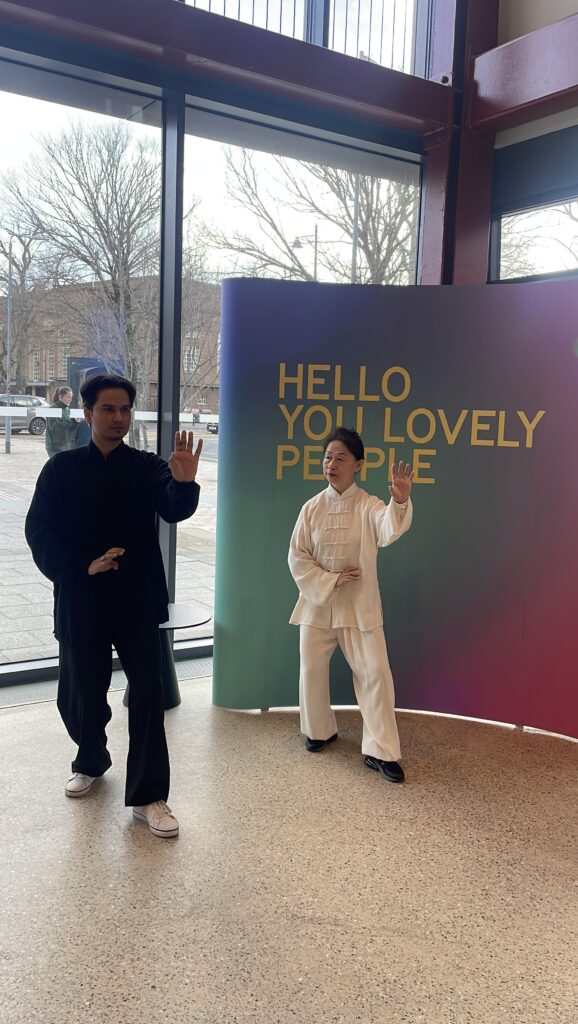
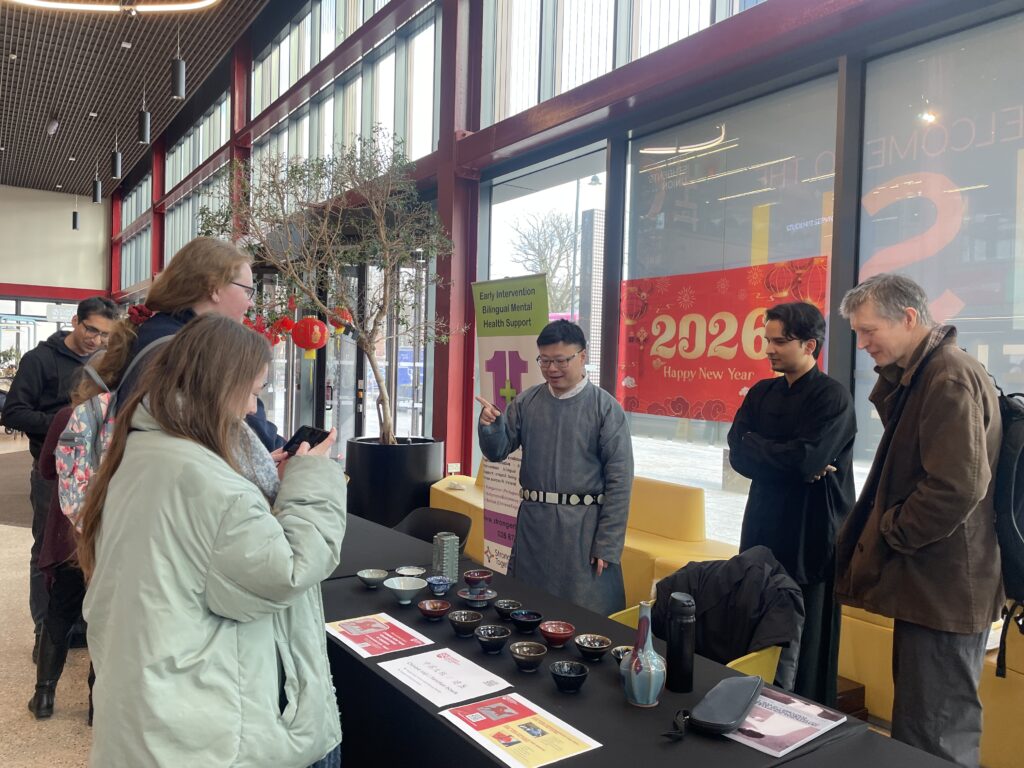
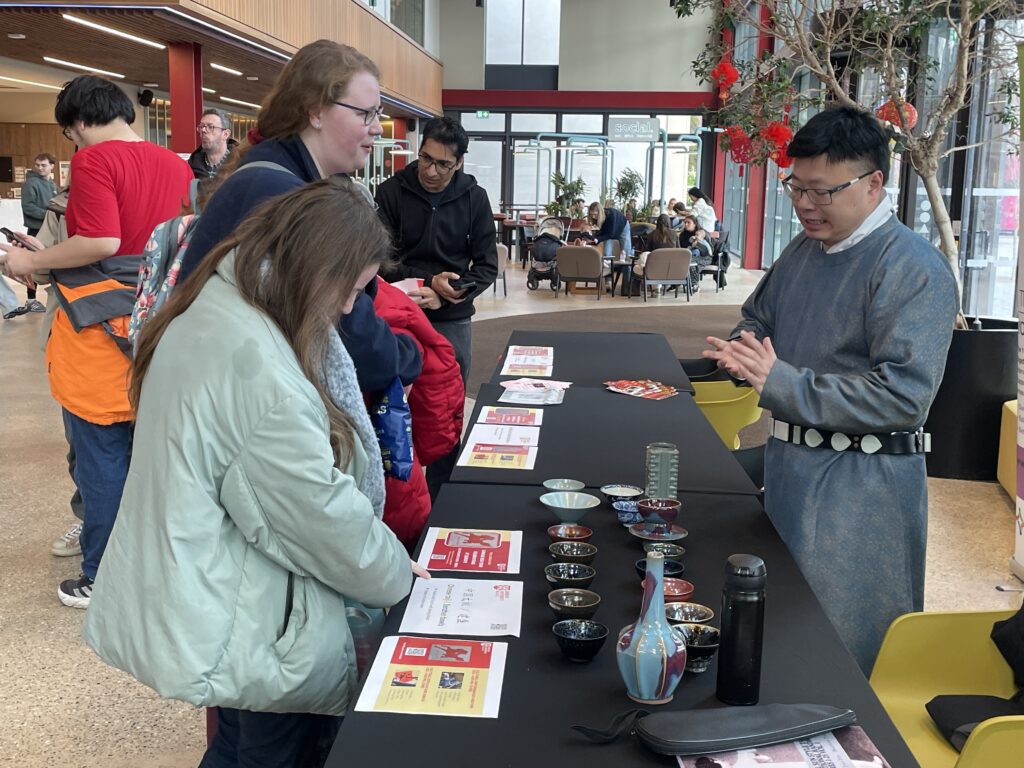
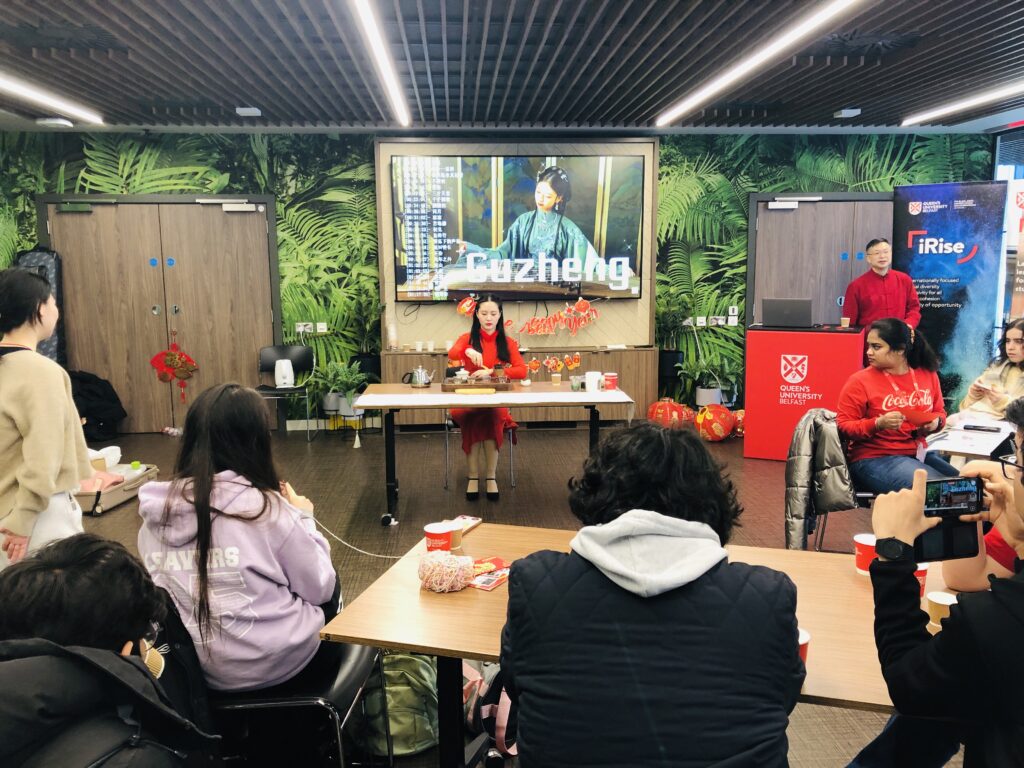
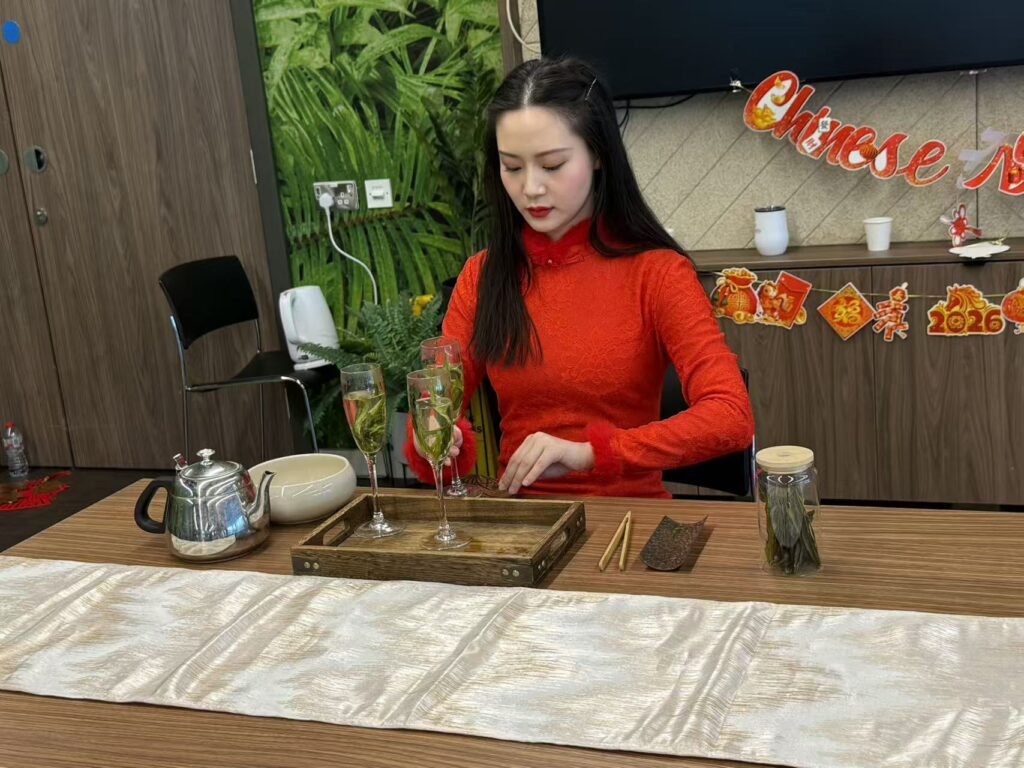
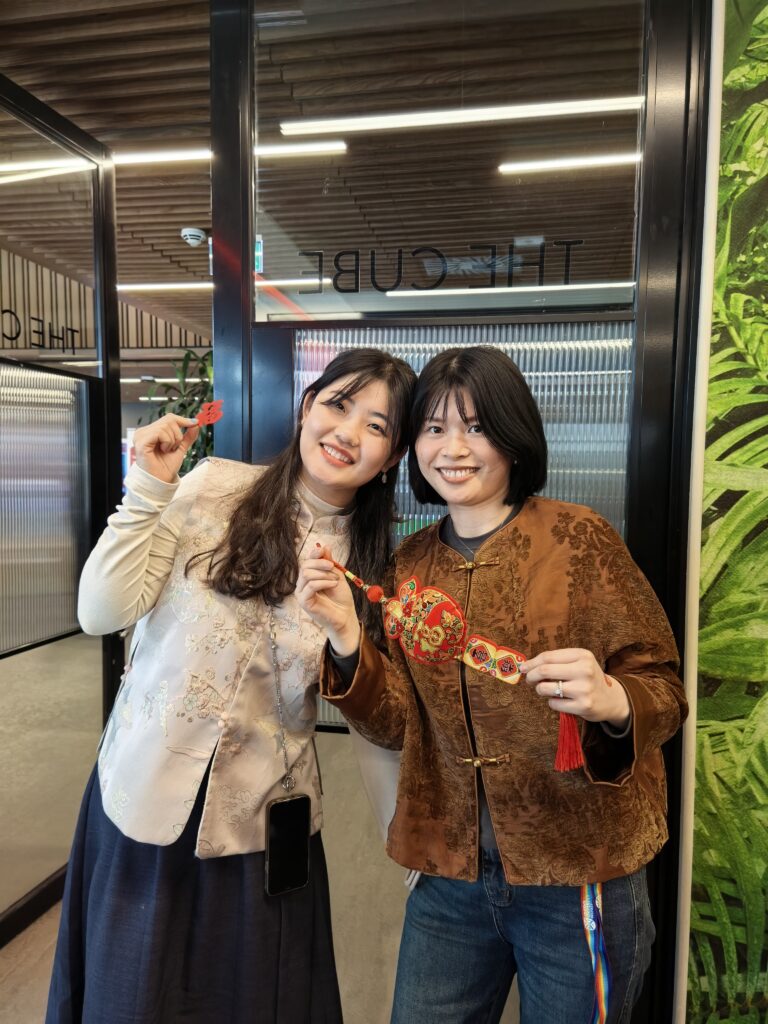
Additional performances included a vibrant K-pop dance, a graceful Tai Chi demonstration, and a Chinese Jianzhan tea cup display in the foyer. Meanwhile, cultural workshops such as calligraphy, paper crafts, tea and incense ceremonies, and guzheng appreciation sessions were held in the Cube, engaging and entertaining participants throughout the afternoon.

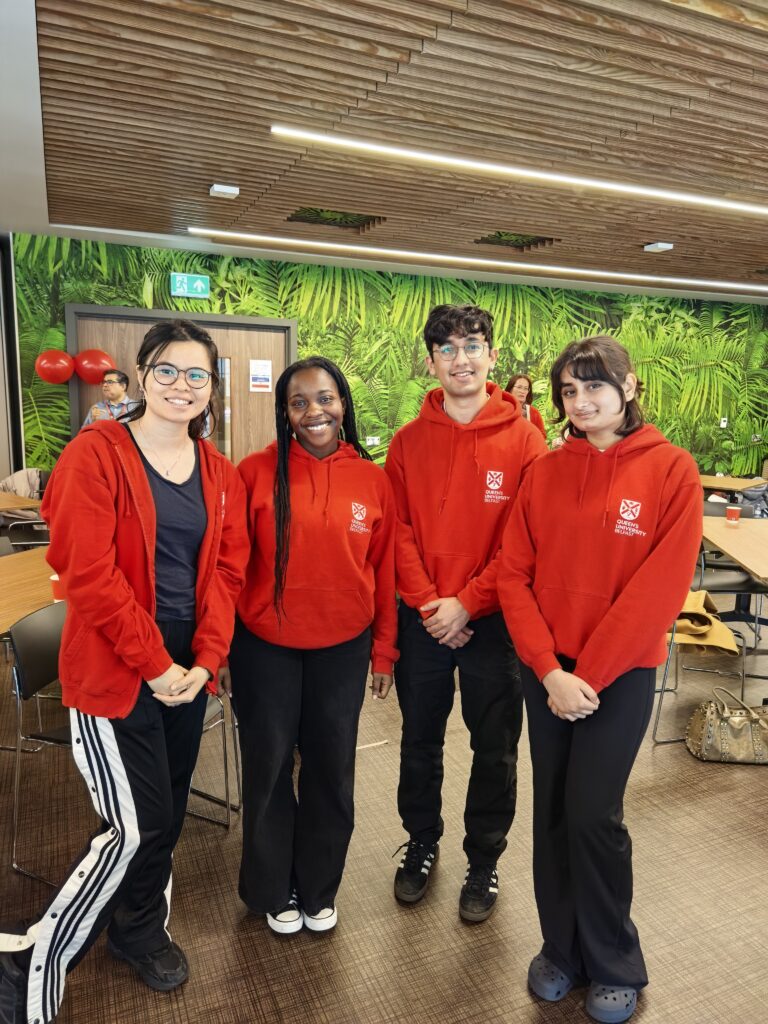
Blessed by the sunshine and strong support from One Elmwood Student Engagement Team, the event was a great success, with strong attendance and positive social impact. Queen’s is proud of its role as a civic university, promoting diversity, equality, inclusion, and belonging, supported by its vigorous academic and educational innovation.

In keeping with Chinese New Year traditions, the celebrations will continue over the next two weeks, featuring six culture talks, a table tennis event, and a QUB-supported collaborative “Bridges to China” launch. All are warmly welcome!

For more upcoming events, please visit Chinese Culture Programme 2026 Homepage.

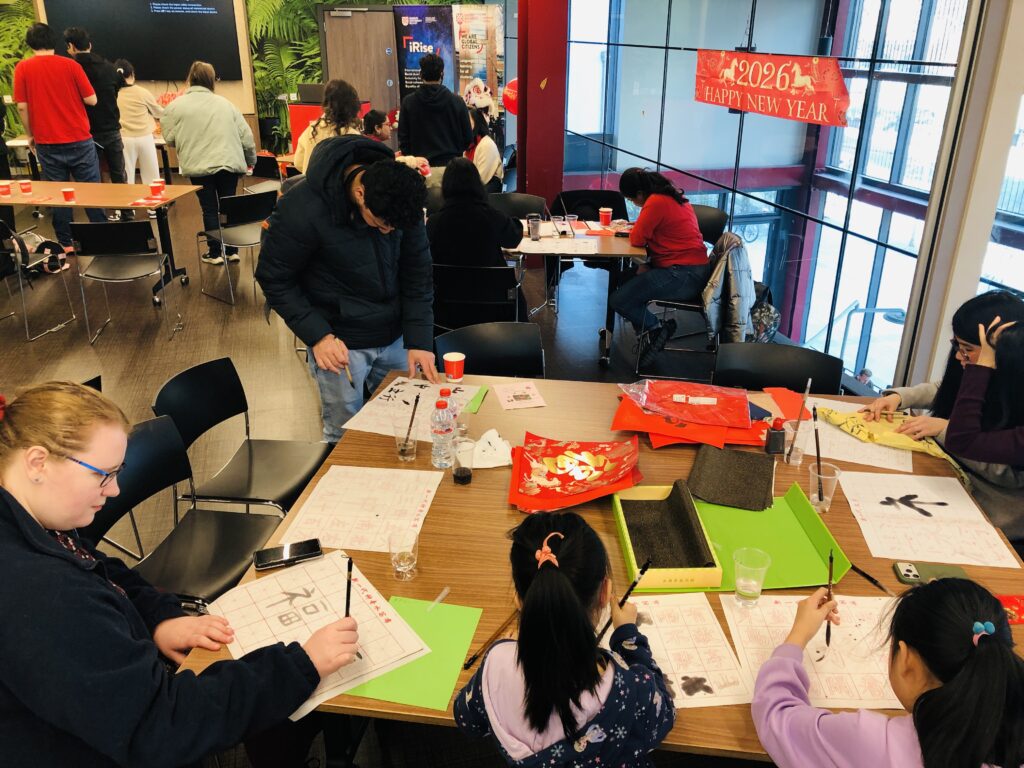
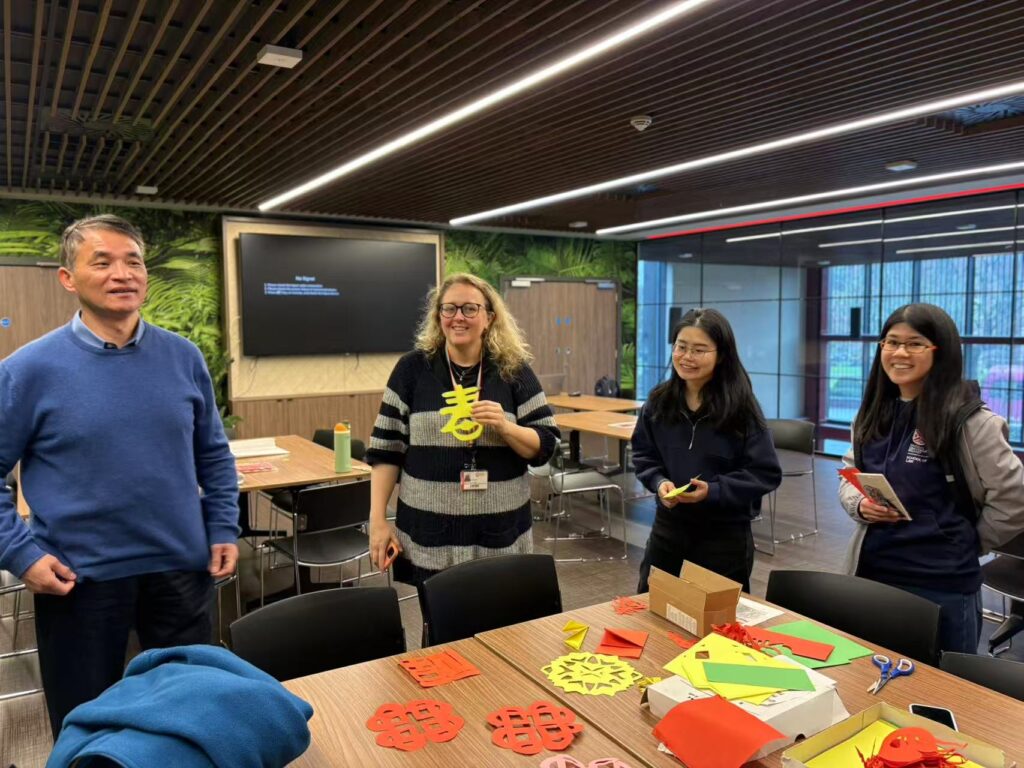
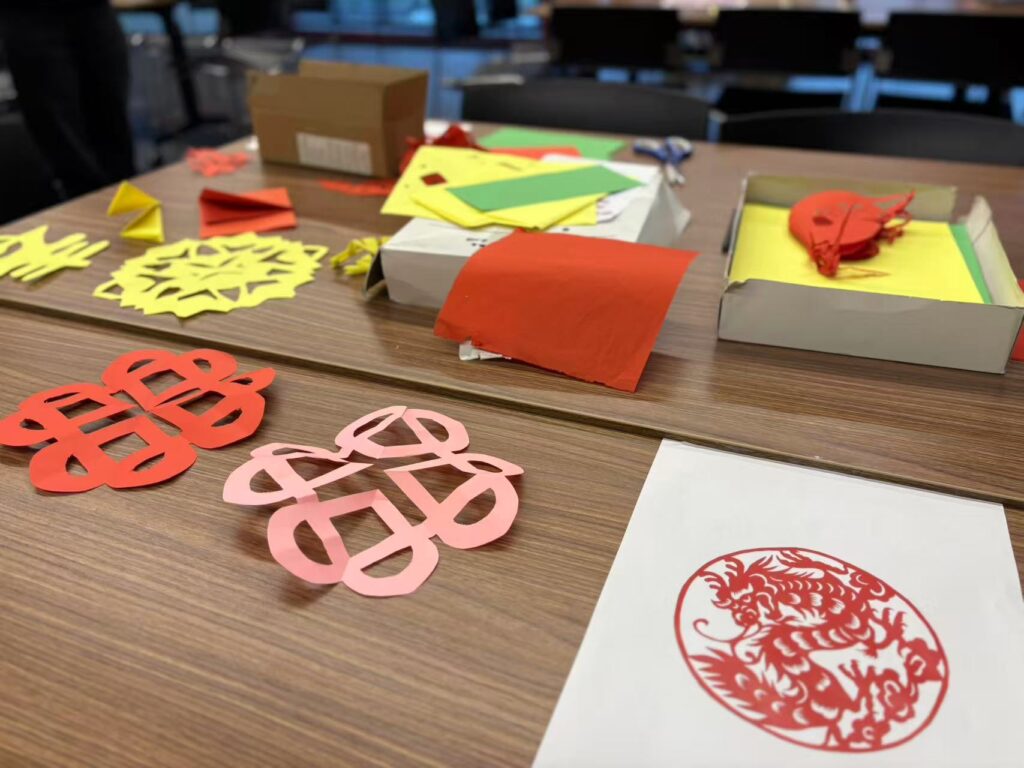
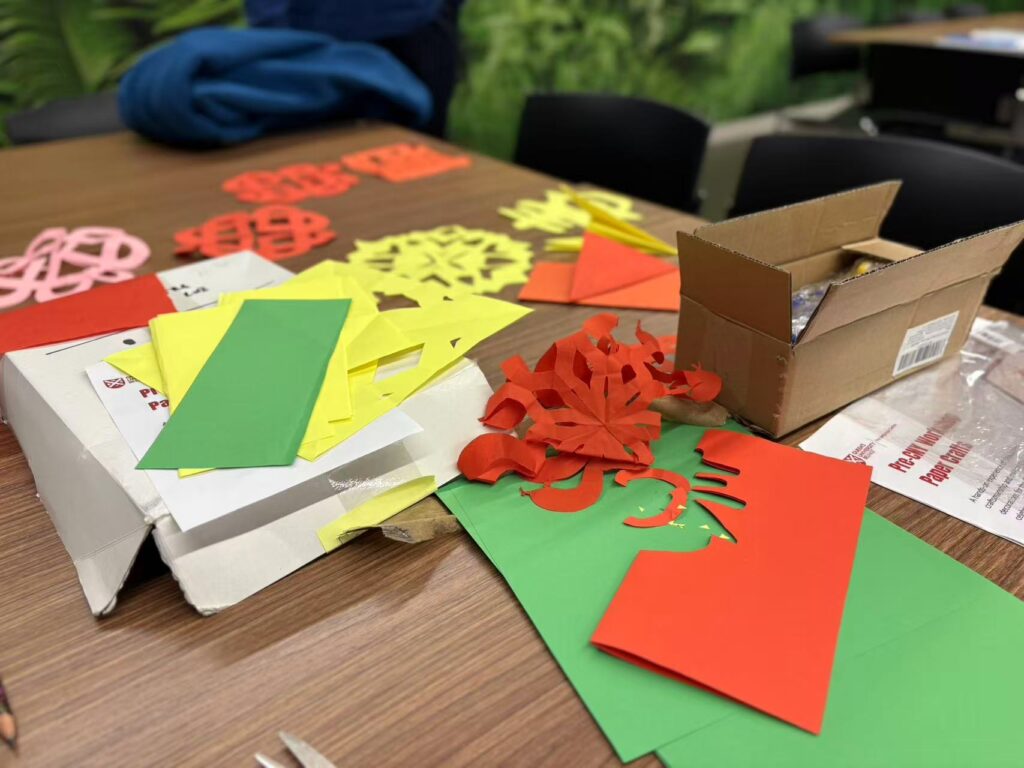
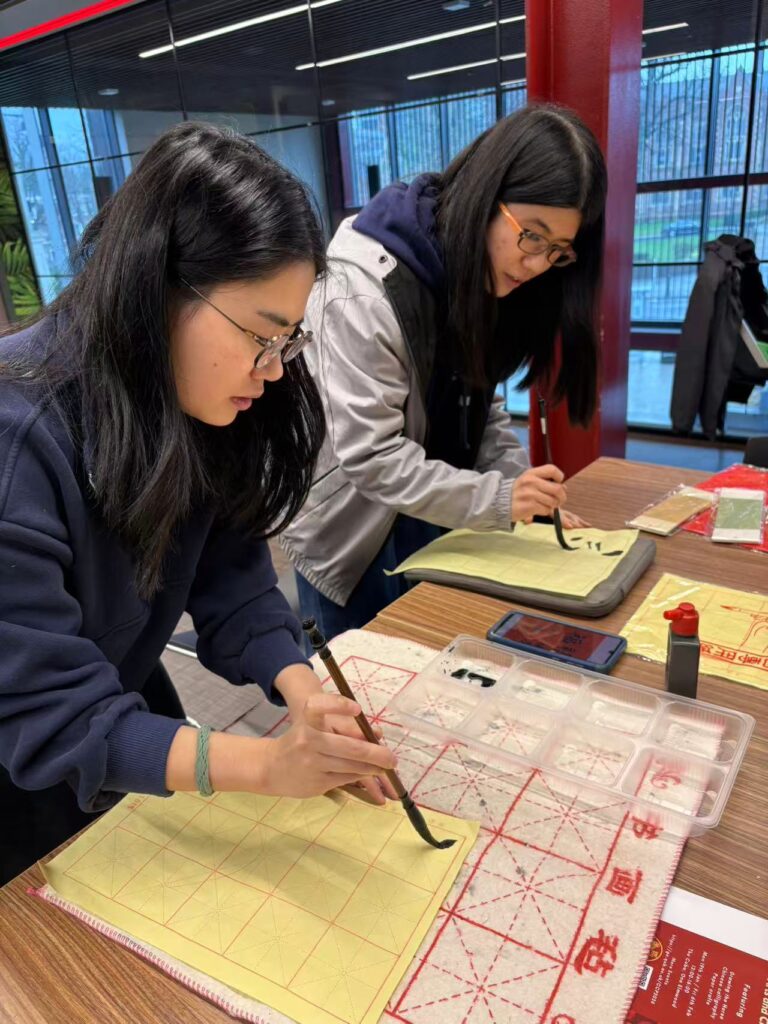
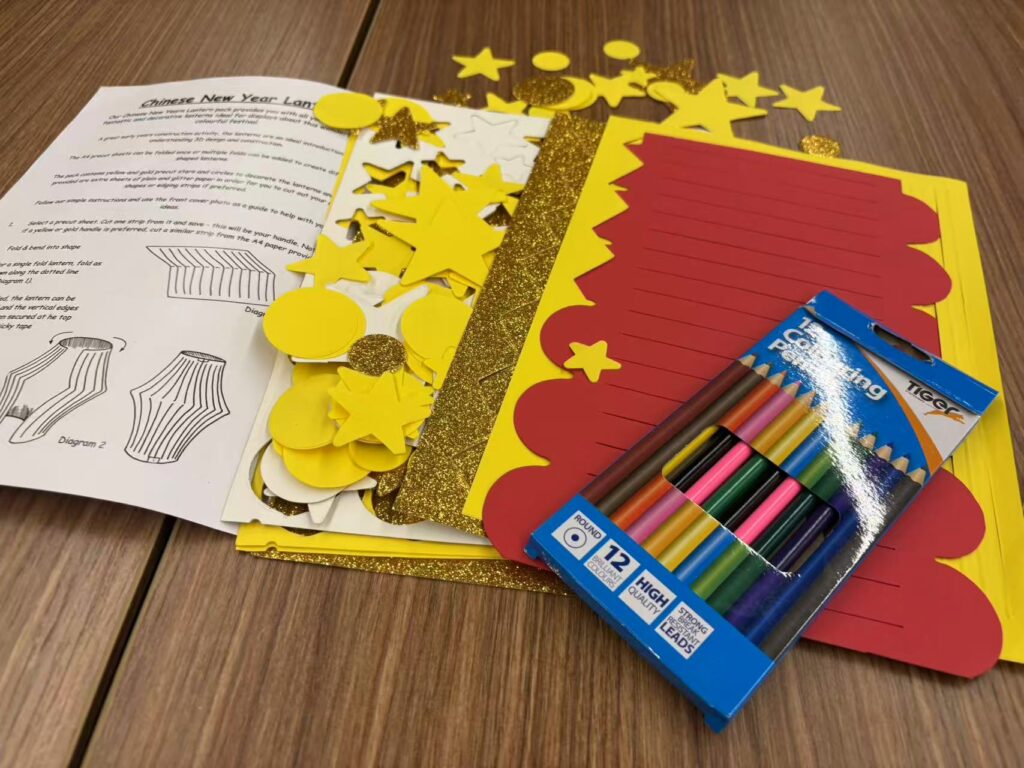
Arts and Crafts Workshops

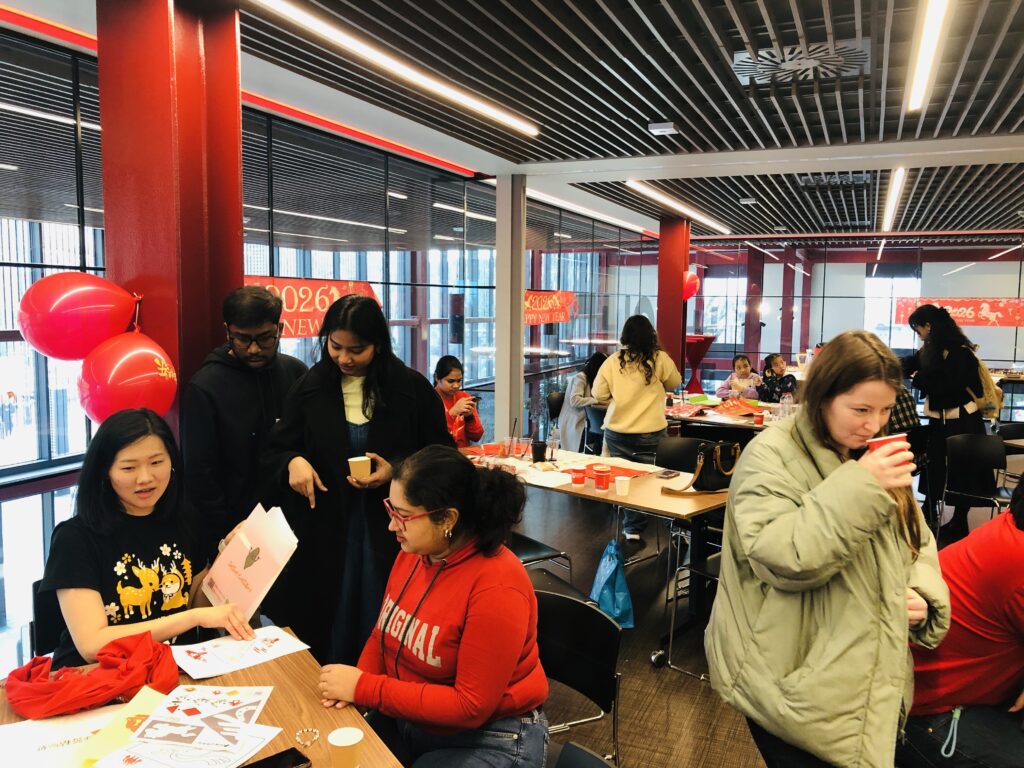
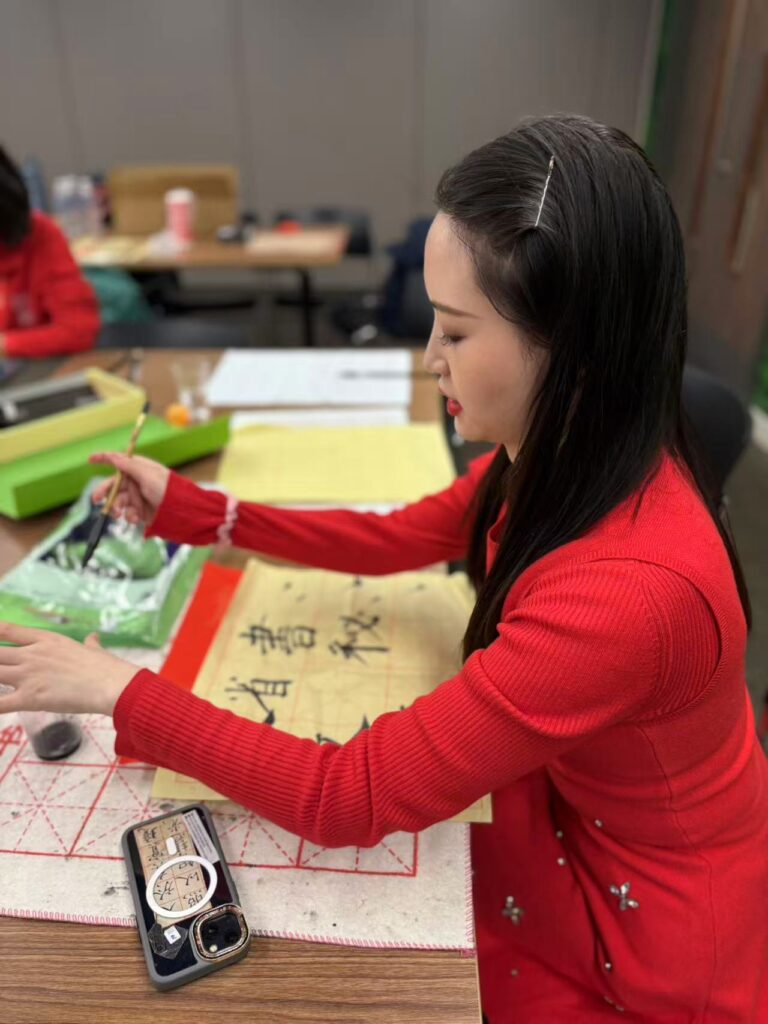
Thank you to our volunteers, facilitators, and participants for warming up the festive atmosphere for the upcoming Year of the Horse. While the workshops have concluded, the Drawing the Horse submission remains open until Tuesday, 10 February. Please read the post for submission requirements.

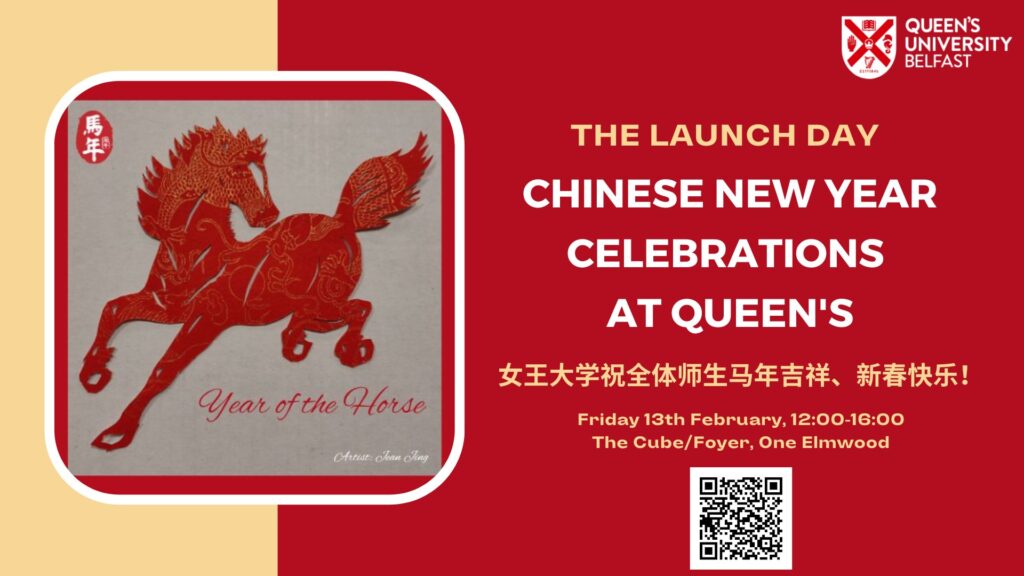
We hope you all enjoyed the workshops and looking forward to welcoming everyone to our CNY Launch Day on Friday 13th February in One Elmwood. For more information and registration, read the page below.

Workshop in Pictures

Celebrating CNY at Queen’s and in Belfast

Celebration CNY at Queen’s

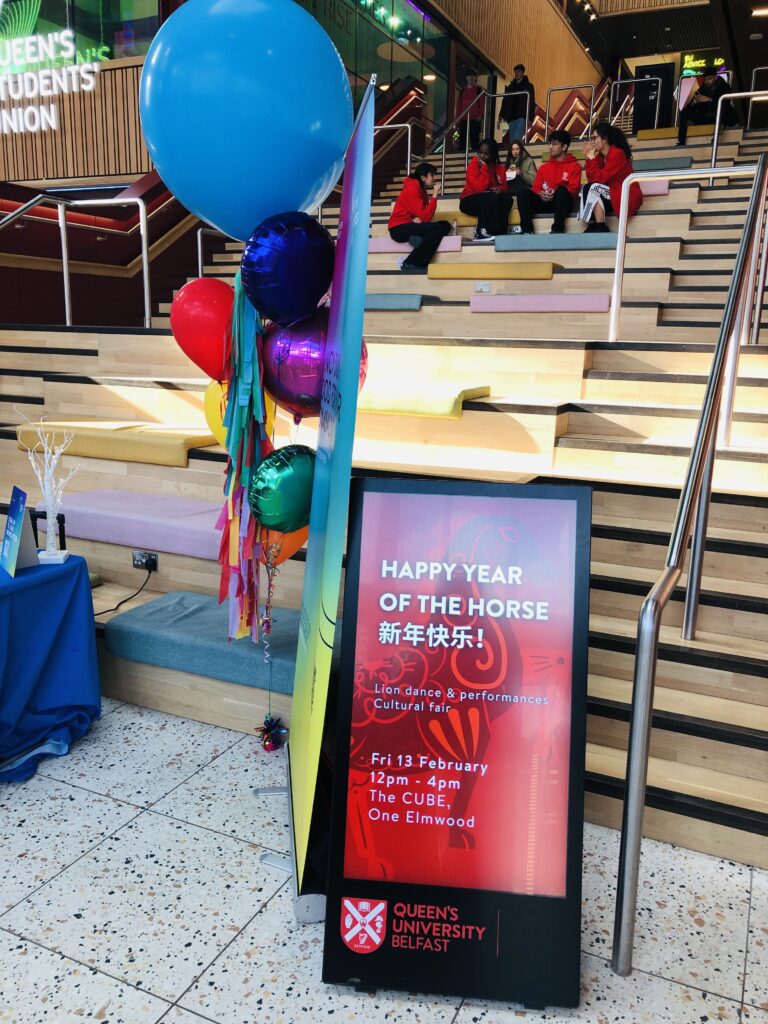
With the Year of the Horse fast approaching, Queen’s University Belfast has released its celebration programme, alongside a few civic Chinese New Year (CNY) celebrations. In this post, we would like to highlight the events and activities that may generate shared interest.

Queen’s colleagues are warmly invited to take part in a range of cultural activities celebrating the Year of the Horse. The celebrations will highlight a Launch Event on Friday 13 February, 12:00–1:00 pm, at One Elmwood Cube, followed by a Dragon Parade and Cultural Fair in the One Elmwood Foyer and Cube areas throughout the afternoon.

Online Exhibitions

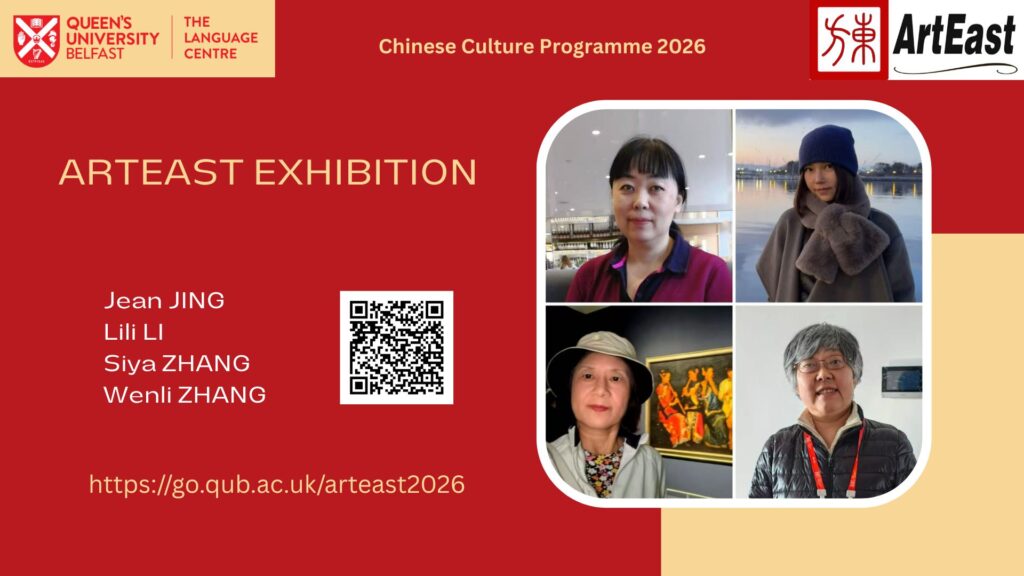
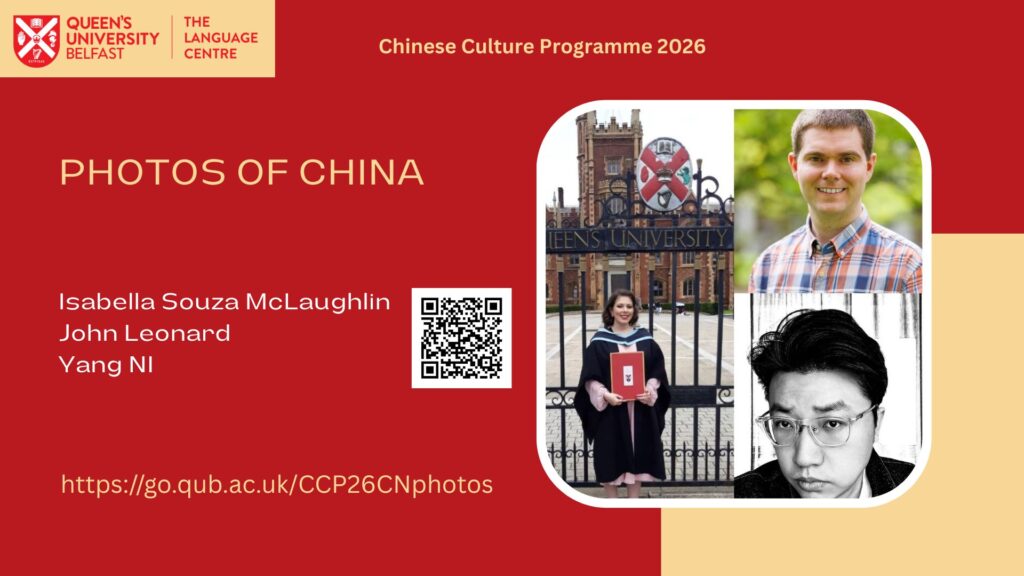
We are grateful to have collected paintings from ArtEast Club members in the 6th consecutive year and the photos of China with intercultrual reflections from three Queen’s photographers.

The coming weeks’ highlights are:

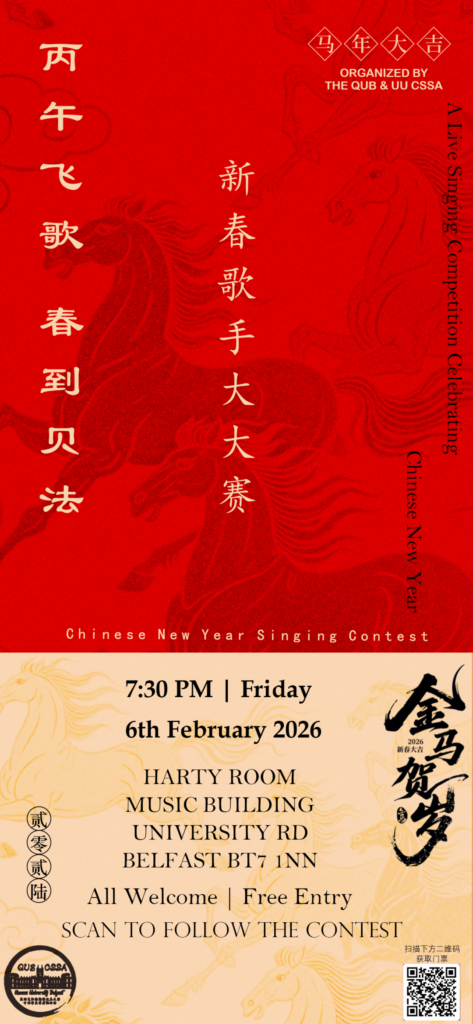
Student-led activities (Friday 06/02)

  • CNY Arts and Crafts Workshop & Drawing Competition
    1:00–4:00 pm, The Cube, One Elmwood
  • Chinese Singing Competition
    7:30 pm, Harty Room, Music Building

Culture Talks (Monday 16/02 – Thursday 26/02)

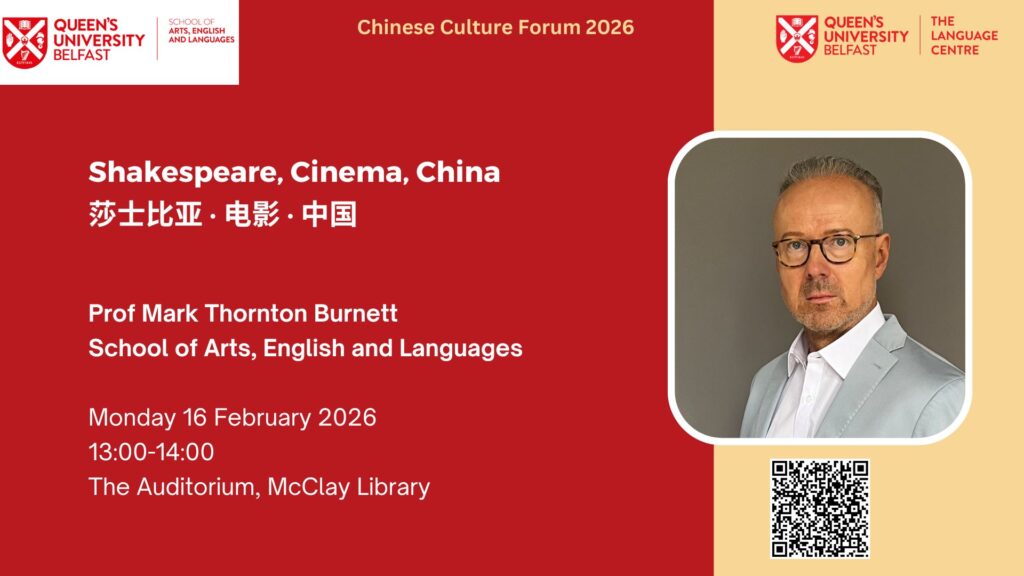
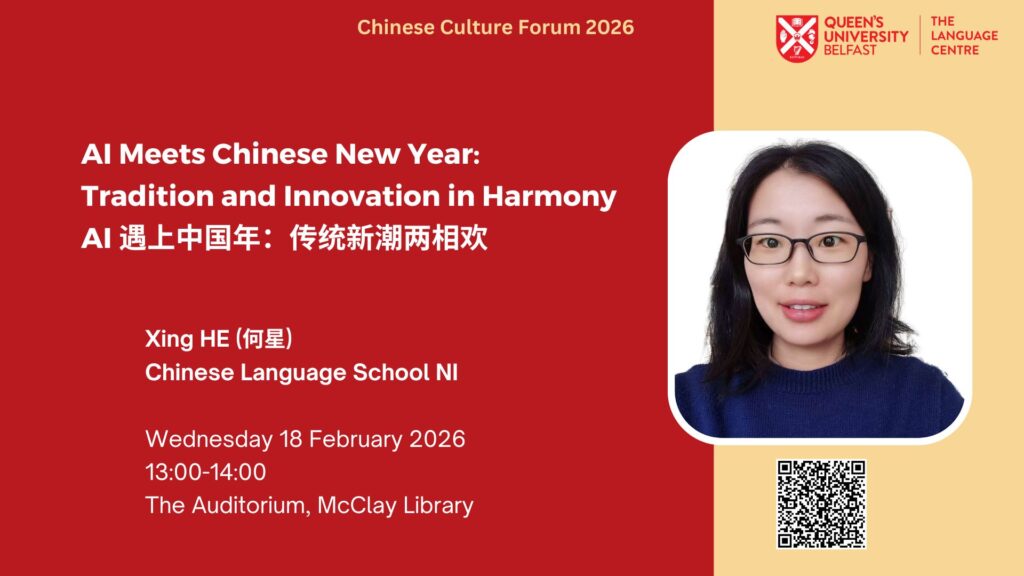
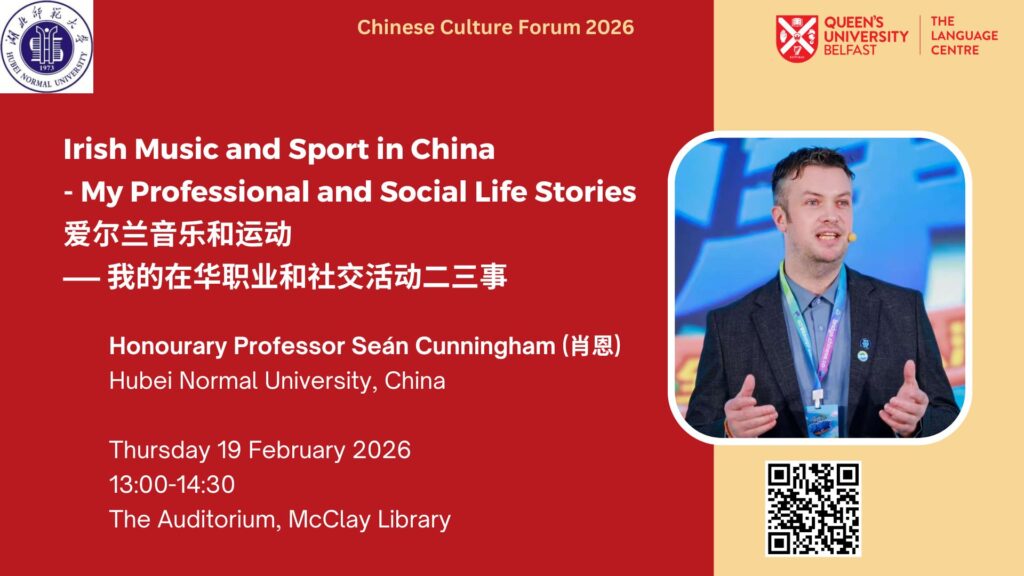
Beginning from Monday 16th, there will be a cluster of culture talks contributed by Queen’s academics, research students and guest speakers from a wide range of subject areas and professional backgrounds, as below:

Fun Time with Table Tennis (Saturday 28/02)

Sponsored by QUB iRise Staff Network and One Elmwood Student Engagement Team, we would like to invite all staff members and students, and their families as well, to join this fun and friendly event to engage with this popular sport among the Chinese communities, as well as providing an opportunity for enhancing student and staff wellbeing through sport. Both beginners and more advanced players are welcome to sign up for the fun event, with an appreciation of its unique culture, as well as developing some practical skills in body movements and mediation.

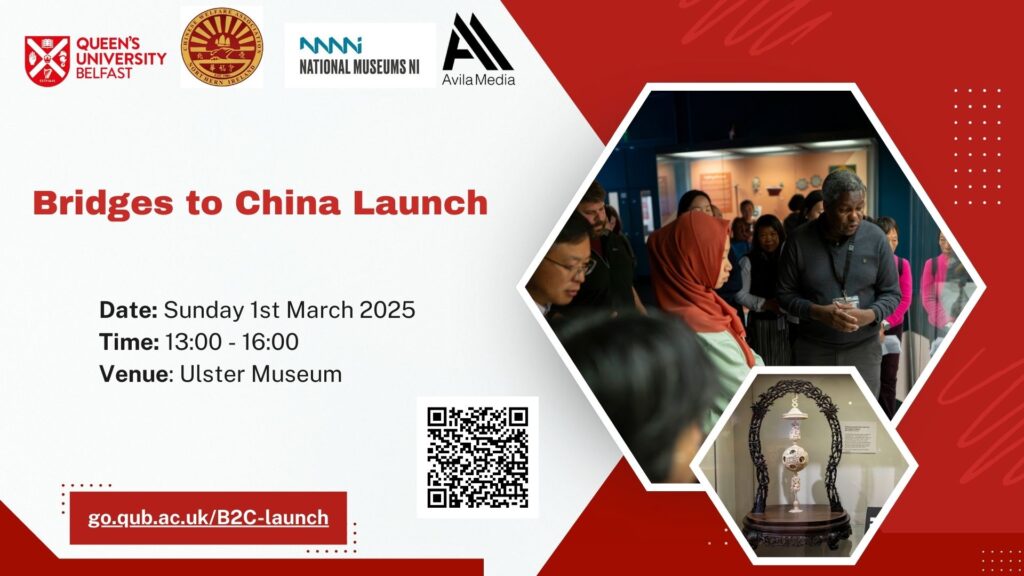
Launch of Bridges to China Project (Sunday 01/03)

Finally, it is worth recommending this launch of Bridges to China Project, which is a collaboration between Queen’s researchers and their civic partners including Chinese Welfare Association, National Museum NI and AvliaMedia on creating a repertoire to enhance public understanding of Chinese heritage and culture in Northern Ireland. It also aims to foster community partnerships leading to further collaboration and community engagement around the longstanding links between Northern Ireland and China.

For more information and registration, please visit the full programme below. You are all very welcome to join us and enjoy the cultural celebrations of the Year of the Horse. If you would like to help with us in any of the events and activities, you may consider filling in the volunterring form below.

Celebrating CNY in Belfast

If you would like to know more about CNY celebration events outside Queen’s, we hope you find the following information useful.

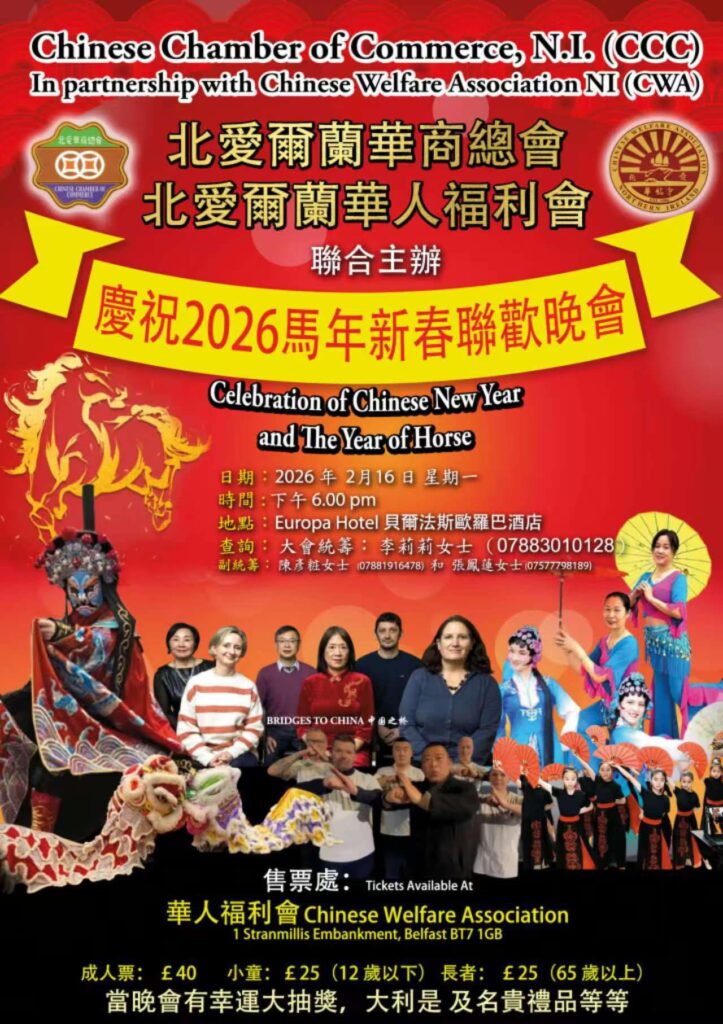
Monday 16/02 by CCC NI and CWA NI

The annual Spring Festival Gala, jointly organised by the Chinese Chamber of Commerce, N.I. and Chinese Welfare Association N.I., returns this year to the Europa Hotel. Save your date on Monday 16th February at 6pm.

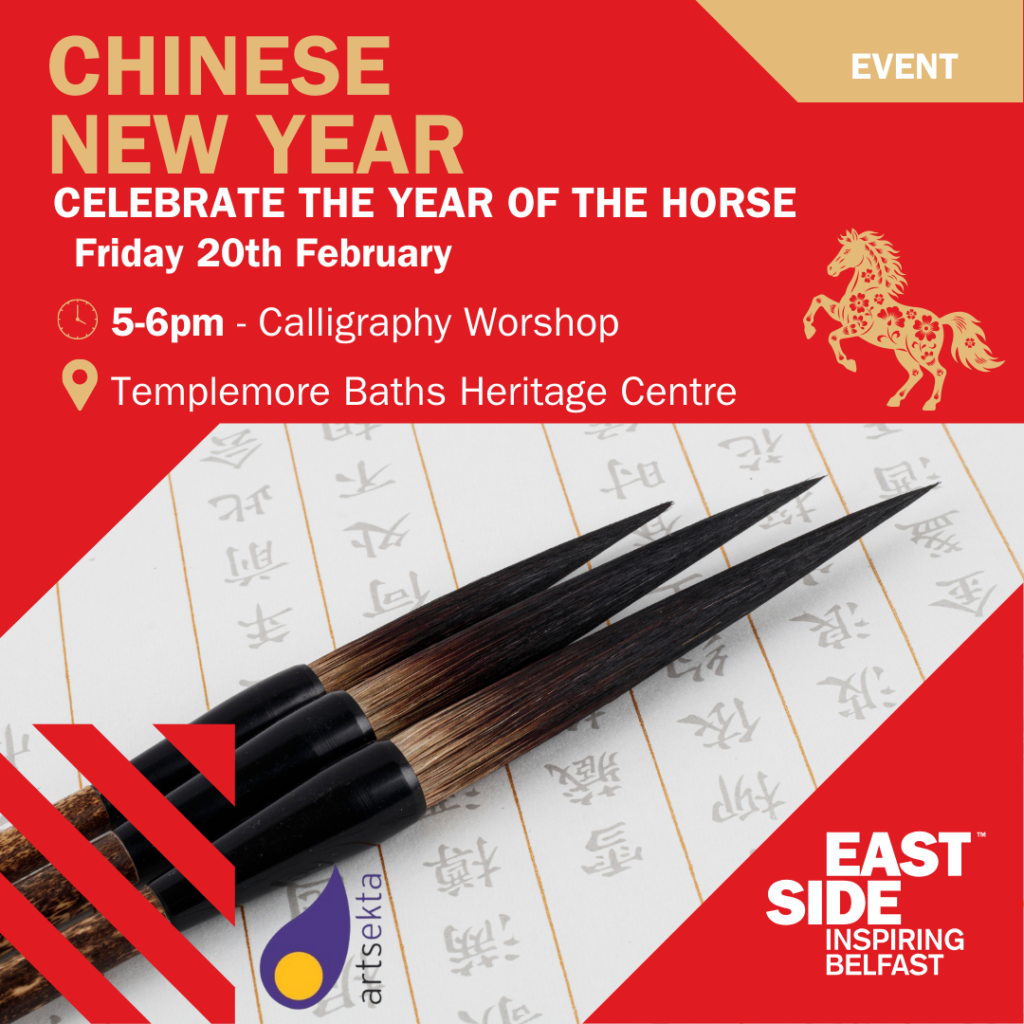
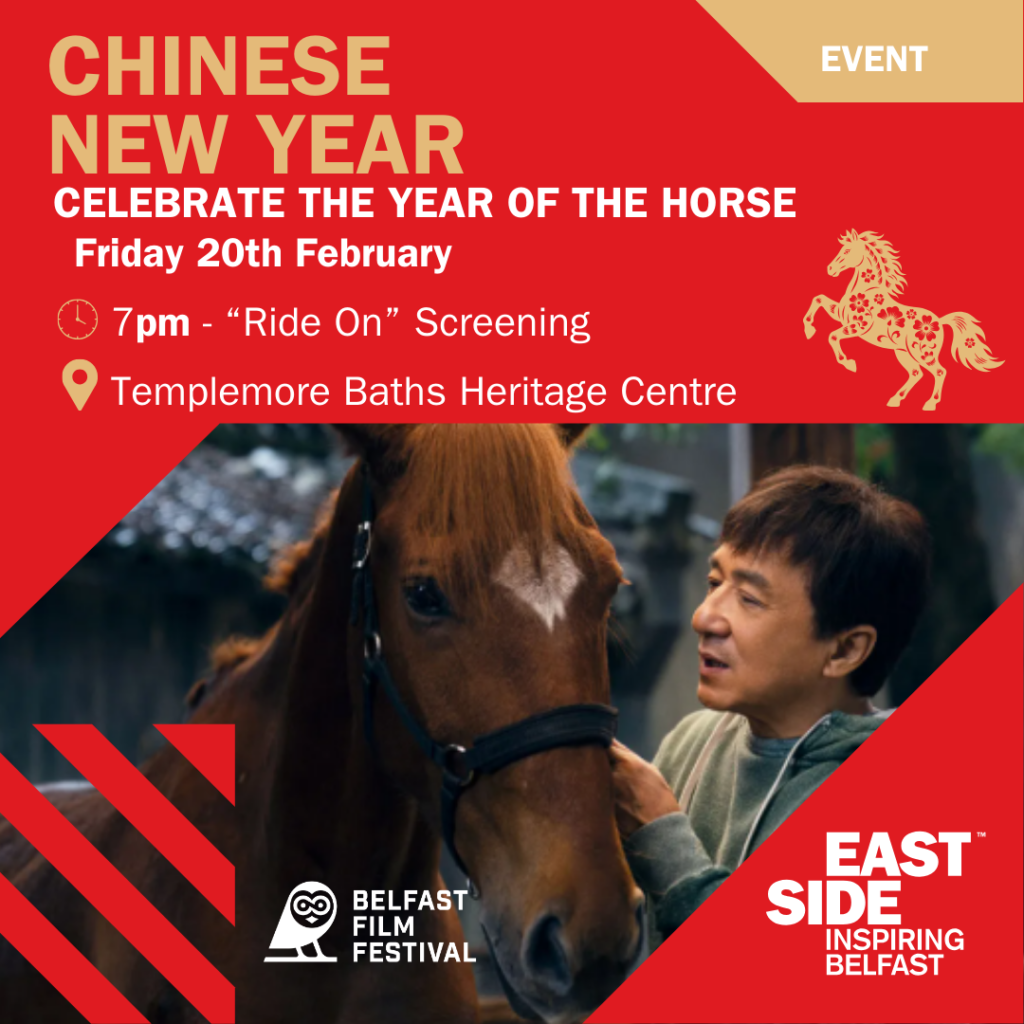
Friday 20/02 by East Side Arts (with Artsekta and Belfast Film Festival)

Celebrate the Year of the Horse at Templemore Baths Heritage Centre with a creative workshop and light hearted action packed film. 

Sunday 22/02 by Success Dragon and Lion Dance Association

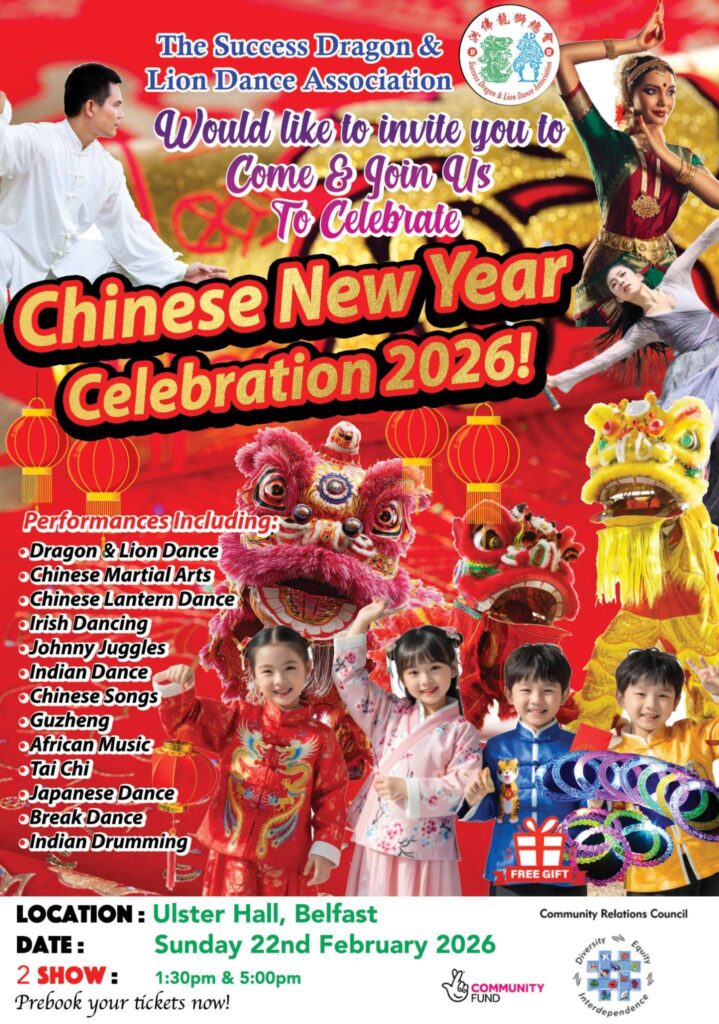
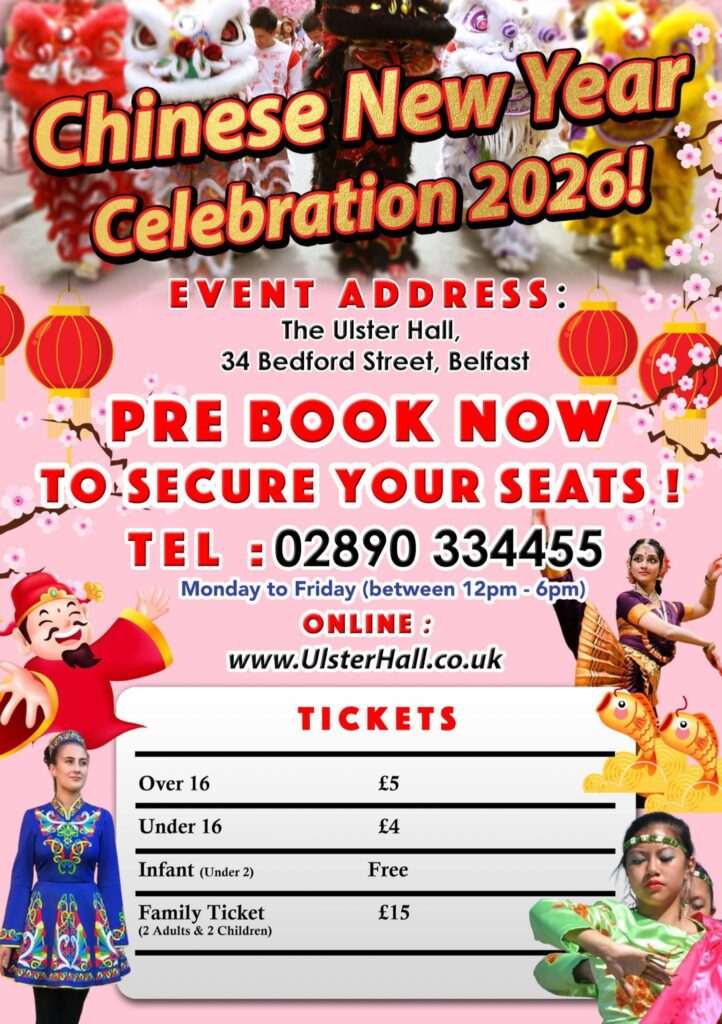
The Chinese New Year Celebration returns to the Ulster Hall Belfast on Sunday 22nd February 2026 celebrating the Year of Horse. Come to enjoy a day is full of fun and joy, rich in Colours and Culture. With over 12 global dances and music not to be missed.

Saturday 28/02 by ABCP NI

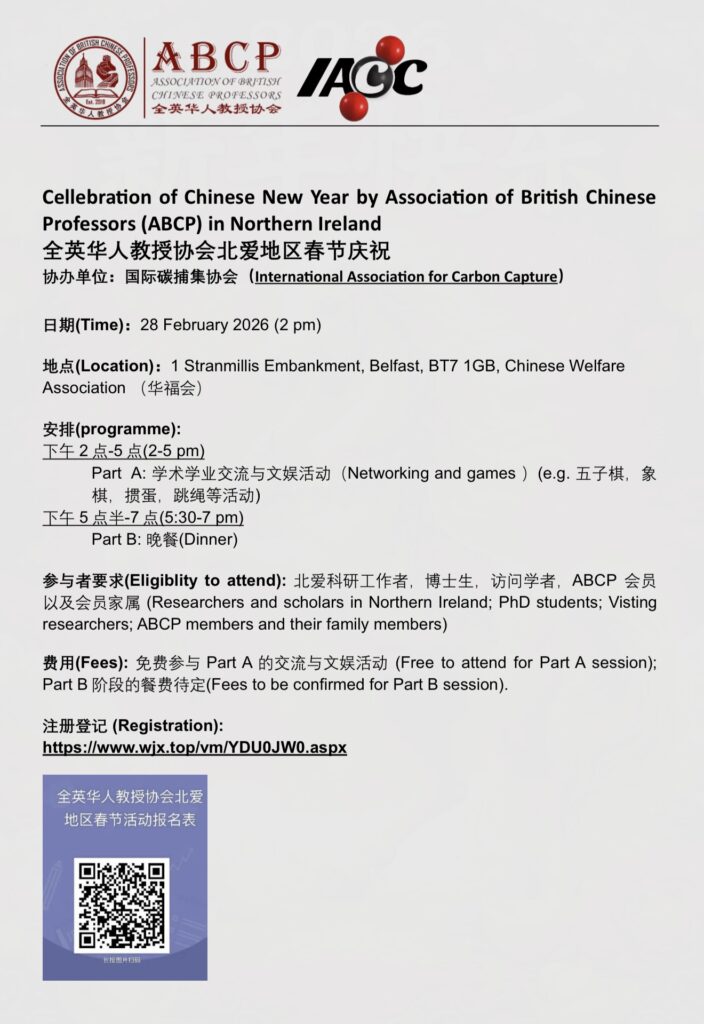
值此佳节来临之际,全英华人教授协会北爱尔兰地区诚挚邀请您参加2026年春节庆祝活动,共庆团圆,同贺新岁!本次活动旨在促进学术交流、增进友谊,并为在北爱工作学习的华人学者及家庭提供一个温馨团聚的平台。我们期待与您共度一个充满知识与欢笑的下午,并在晚宴中共叙情谊、喜迎新春。如您计划出席,请于 2026年2月14日(星期六) 前报名。参与对象: 北爱尔兰地区大学老师、学者、博士生、访问学者及家属。

Happy Year of the Horse! 马年快乐!

CCF-Cao&Yao

3rd EAFF Seminar and Screening: Embodied Practice – Martial Arts, Psychology, and Cross-Cultural Experience
理想国艺术电影节研讨放映会之以身为场——武术、心理与跨文化修行

Monday 26th January 2026
13:00-14:30 
The Cube, One Elmwood

Organisers:

This 2026 Eutopia Arthouse Film Festival is joint event organised by

  • Film, School of Arts, English and Languages
  • The Language Centre at Queen’s
  • China-Europe Youth Film Society

Speakers:

Tianpeng YAO (姚天鹏) is a PhD candidate in Film Studies at Queen’s University Belfast, with his research focus on the audio-visual representation of Eastern philosophical symbols.

He is the founder of the China-Europe Youth Film Society, through which he has been committed to promoting cultural exchanges between Chinese and European young filmmakers.

Before studying at Queen’s, Tianpeng had directed films such as “Searching for Zen” and “Bicycle,” which was accepted in the Official Selection for the 24th Shanghai International Film Festival and won the first prize at the 10th International University Student Microfilm Festival, as well as the official selection of the 22nd Independent Days International Film Festival (Germany). Recently, his documentary film “The Road to Kung Fu” was awarded The Best Long Video Award in 2023 United Nations Chinese Language Day & The Third Chinese Language Video Festival.  

Vikki Hanling Cao (曹瀚翎) is a member of the British Association of Film, Television and Screen Studies (BAFTSS) and holds a Master’s degree from Queen’s University Belfast. She is a filmmaker, artist, interpreter and translator. She serves as the core board of directors of the Eutopia Arthouse Film Festival since the very founding of the festival. Vikki is the official cinematographer of BCCMA (The British Council for Chinese Martial Arts), and had been the photographer of BSSS(British Society of Soil Science) and SSSI.

Vikki actively took part in the filming and recording of the BBC’s flagship television programme, Antiques Roadshow, with Fiona Bruce. In addition, she also has served as an official simultaneous interpreter for WHO global conferences, Castrol global conferences, some UN-related conferences etc and as a translator for Canterbury Cathedral, etc. And she had worked for Sonorities Festival, EAPRIL (European Association of Practitioner Research on Improving Learning) conferences, One Young World (OYW) Summit and other international summits related. Vikki’s film won the Best Video Award at the 2024 My China Story International Video Competition and another film was runner-up for the BAFTSS Practice Research Award.

Outline:

This Information Session will include the following elements: 

  • Welcome
  • Introduction to the Eutopia Arthouse Film Festival and a Review of Previous Editions
  • Launch of the Open Call for the 3rd Eutopia Arthouse Film Festival
  • Submission Guidelines and Key Information
  • Film Screening: Martial Arts, Psychology, and Cross-Cultural Practice
  • Group photo

Film Screening: Martial Arts, Psychology, and Cross-Cultural Practice

This part presents two films from previous editions of the Eutopia Arthouse Film Festival. Created by students and staff of Queen’s University Belfast, these works explore the convergence of Eastern and Western embodied practices through the disciplines of boxing and kungfu.

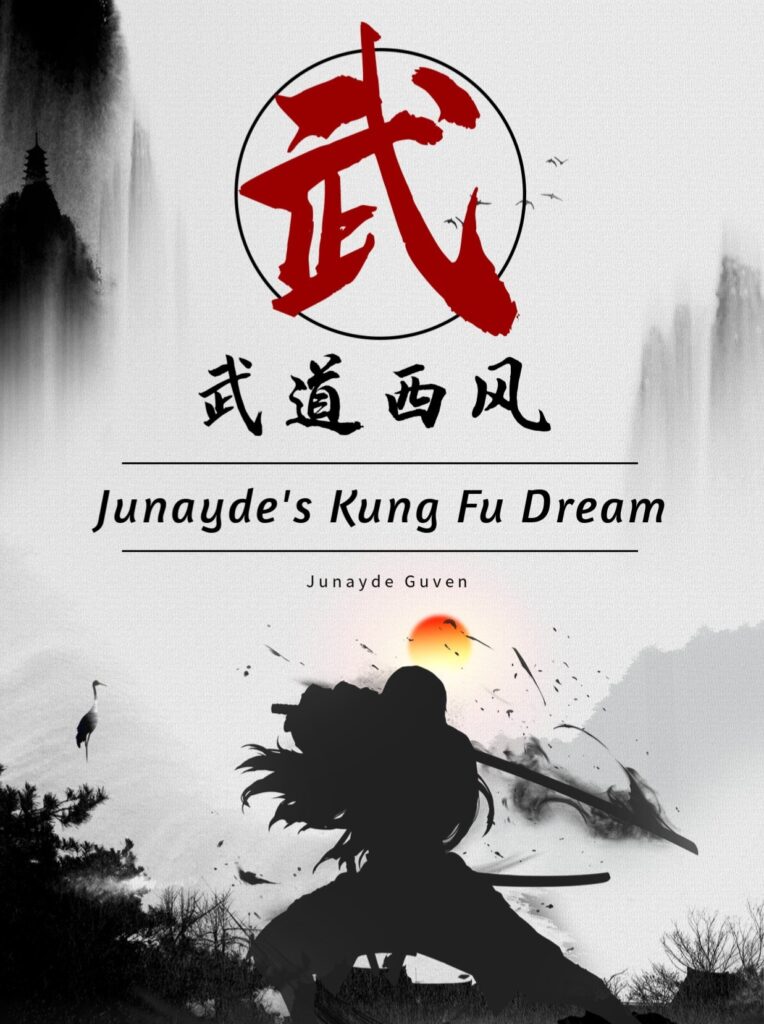
Screening 1: Junayde’s Kungfu Dream (2025)

Directors: Tianpeng Yao and Vikki Hanling Cao

From a young age, British youth Junayde Guven harbored a dream of mastering kung fu and held a deep fascination for Eastern martial arts. To pursue the martial path in his heart, he journeyed thousands of miles to China’s Shaolin Temple, apprenticing under renowned masters to study authentic Shaolin kung fu. Over five years of changing seasons, he honed his skills amidst the temple’s morning bells and evening drums, ultimately elevating his martial arts to a new realm.

Now, bearing the hopes of the British team, he embarks on the journey to the World Kung Fu Championships. What will be the outcome of the competition? How close is he to realizing his kung fu dream? This documentary delves deep into Junayde’s inner journey, revealing his remarkable voyage of cultural integration and self-transcendence.

Screening 2: Feint (2024)

Directors: Christopher Whiteside and Madeline Whiteside

Feint is a drama with psychological horror elements and tells the story of Zoe, a young boxing coach struggling with her mental health and the burden of running the family boxing gym whilst caring for her younger sister under the shadow of their terminally ill mother’s fate.

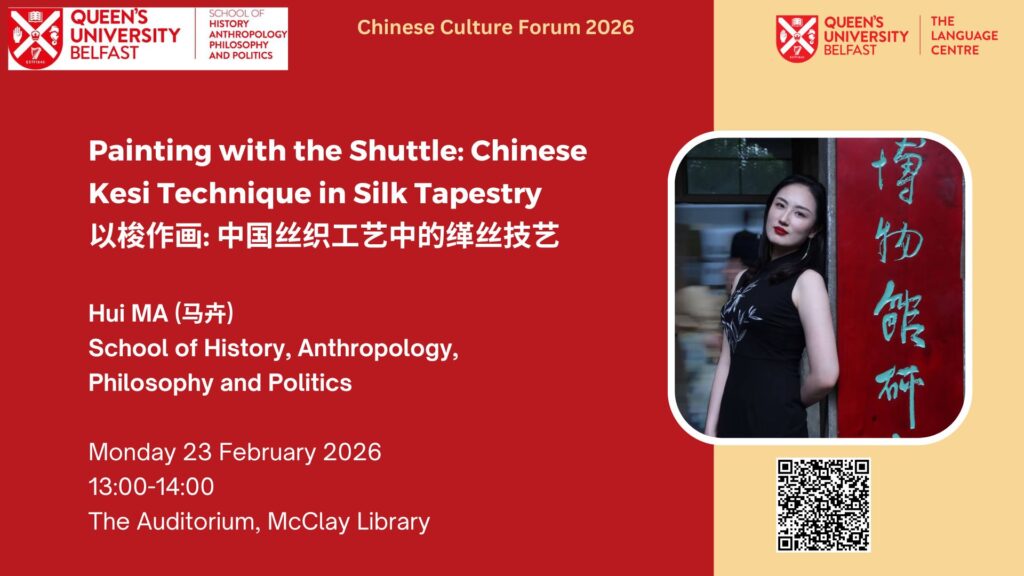
CCT-HuiMa

Painting with the Shuttle: Chinese Kesi Technique in Silk Tapestry
以梭作画: 中国丝织工艺中的缂丝技艺

Monday 23rd February 2026
13:00-14:00 
Auditorium, The McClay Library

Speaker:
Hui MA (马卉) is a PhD student in the School of History, Anthropology, Philosophy and Politics at Queen’s University Belfast, UK. Her research focuses on the global trade and cultural significance of Chinese silk exported to the West from the sixteenth to the nineteenth centuries. Her work examines the intersection of textile craftsmanship, maritime commerce, and the enduring material exchange between China and the European market during the early modern period.

Abstract:
In this talk, I explore the origins, intricate craftsmanship, and unique cultural status of Kesi (缂丝), which is a special type of silk tapestry. As a luxury textile that played a vital role in China’s artistic and trade history, Kesi is distinguished by its carved appearance and the sophisticated technique of using short shuttles to create painterly compositions. By looking at how it began and the careful steps used to weave it, I argue that Kesi is unique because it uses a special method of continuous warp and broken weft. This lecture provides an overview of how Kesi has remained an art form that cannot be copied by machines, even in the age of mechanical reproduction.