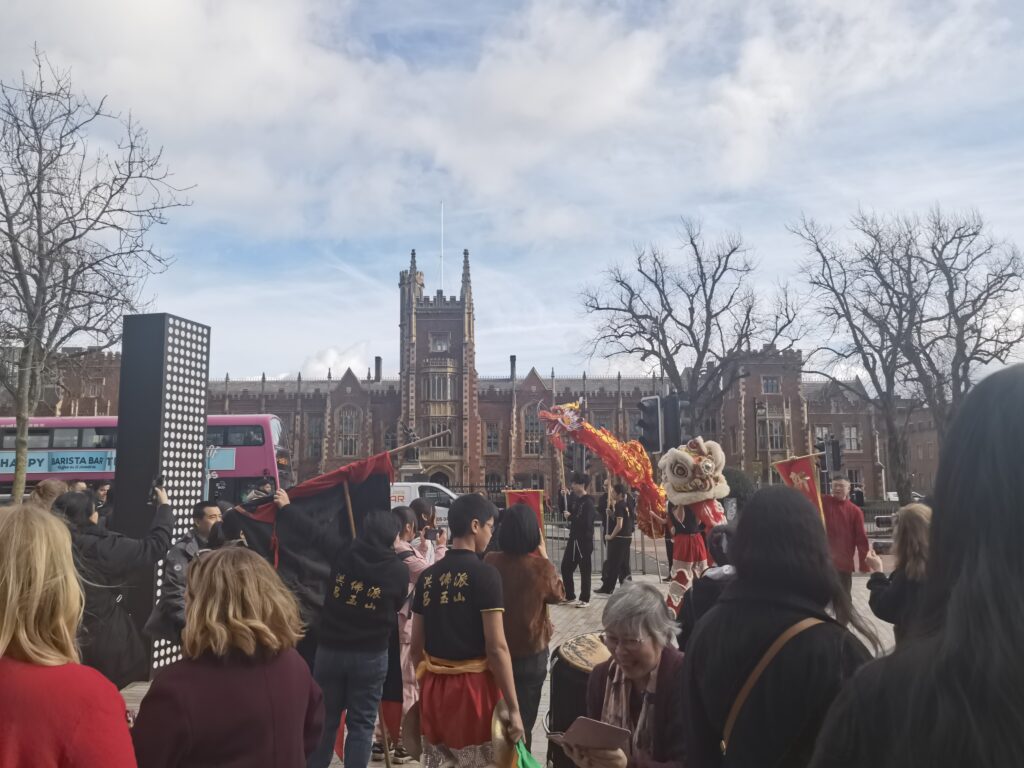
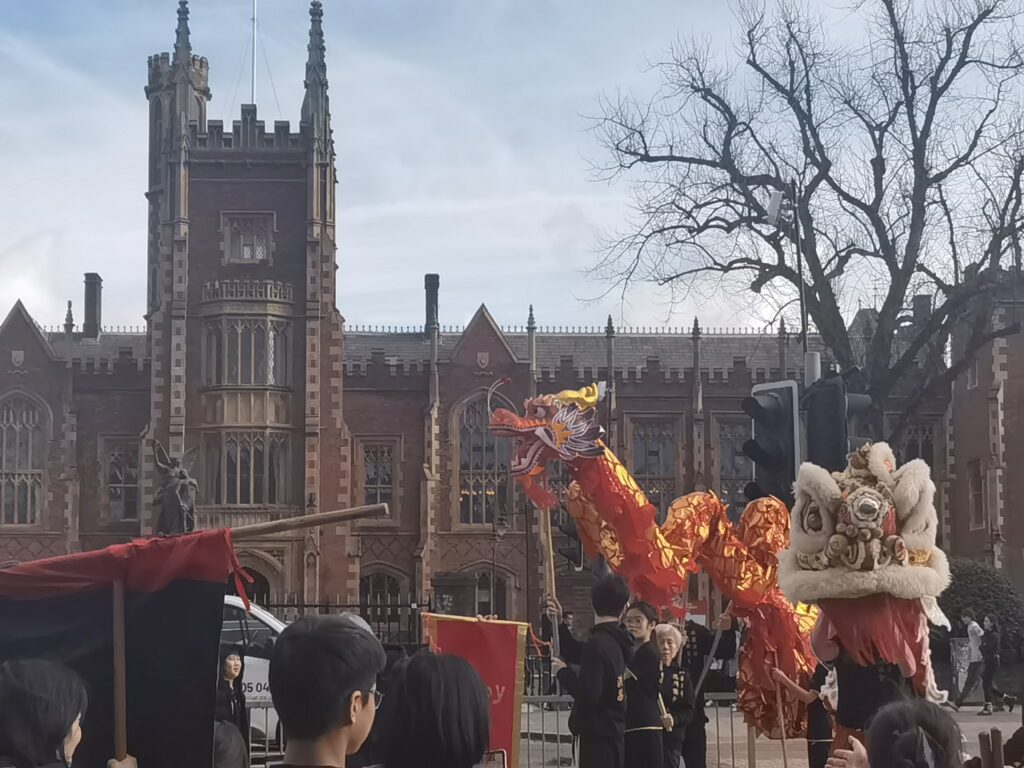
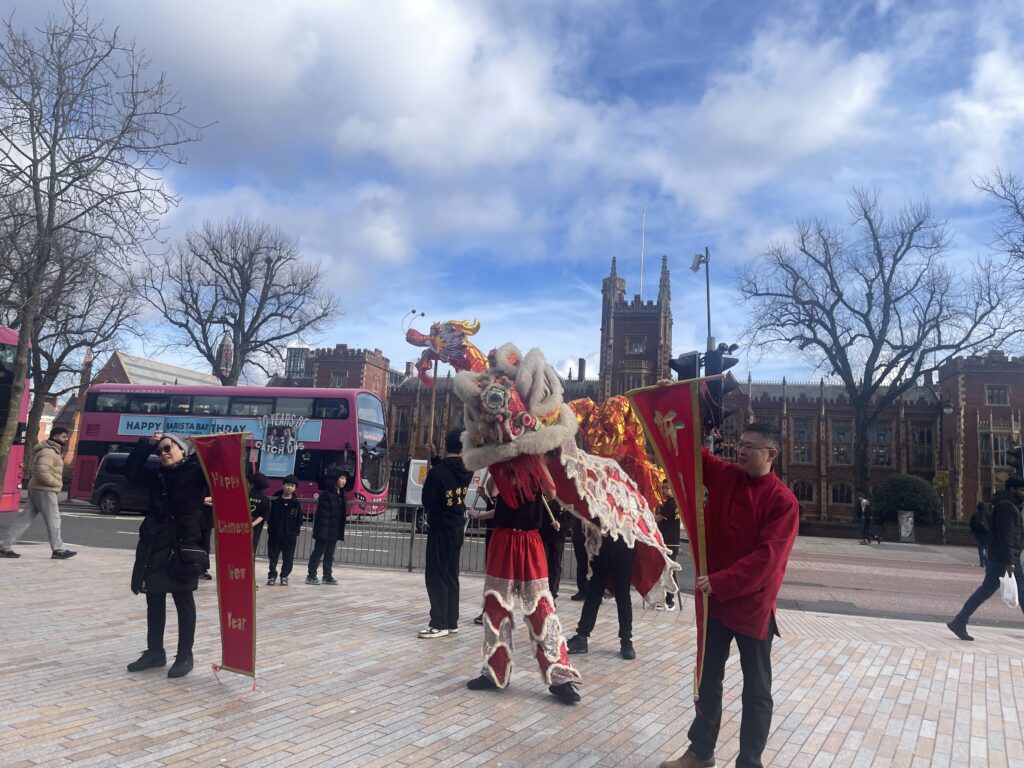
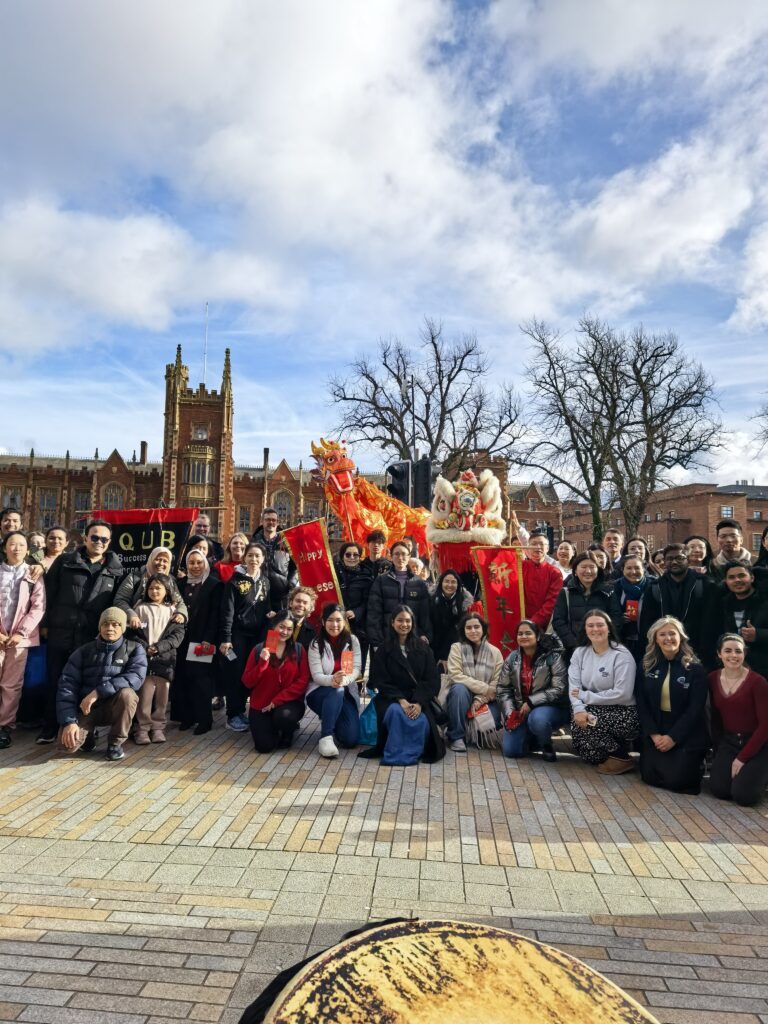
The “Discover China” Open Day, hosted by the Consulate General of the People’s Republic of China in Belfast, welcomed nearly 600 visitors – both Chinese and non-Chinese – to its first-ever outdoor public event on Saturday 27th June.
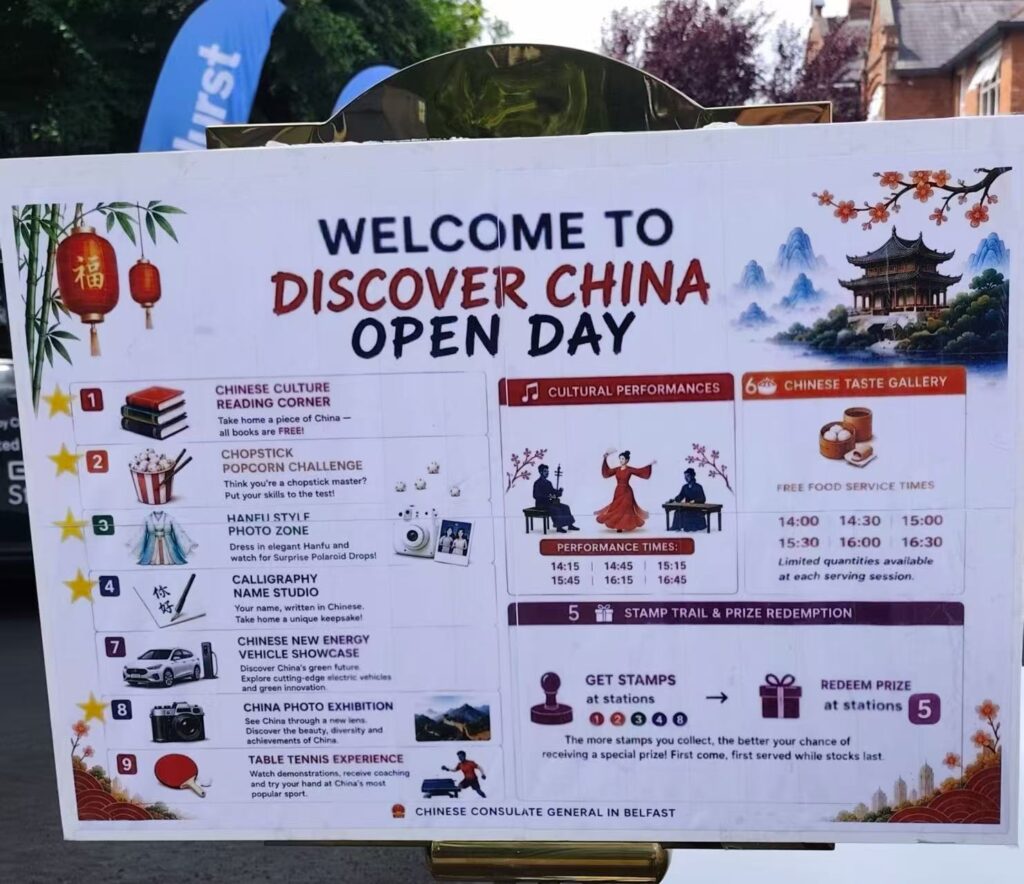
Open Day Programme. Photo credit: Chen Zhi
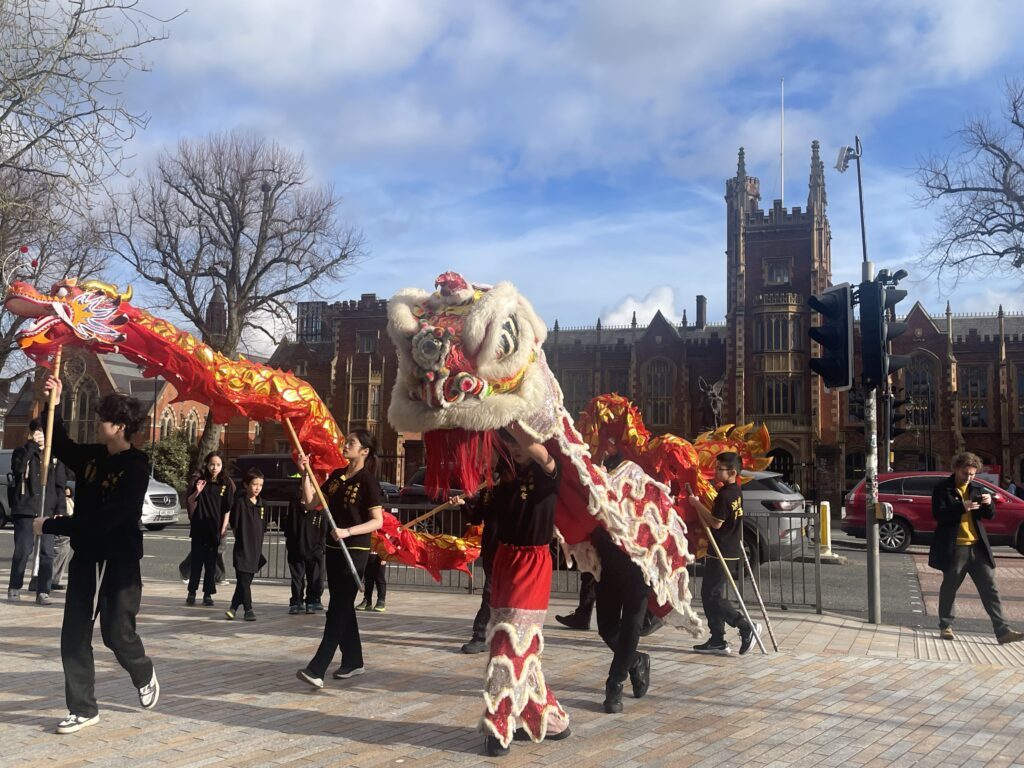
Celebrating both China’s rich cultural traditions and its modern development, the Open Day featured a wide range of interactive activities and exhibitions designed to engage visitors of all ages and backgrounds. Hands-on experiences included trying on traditional Chinese costumes, using chopsticks, tasting Chinese cuisine, writing Chinese calligraphy bookmarks, playing table tennis, and taking part in dragon dance and taiji demonstrations. Visitors also enjoyed traditional Chinese opera and the spectacular face-changing performance.
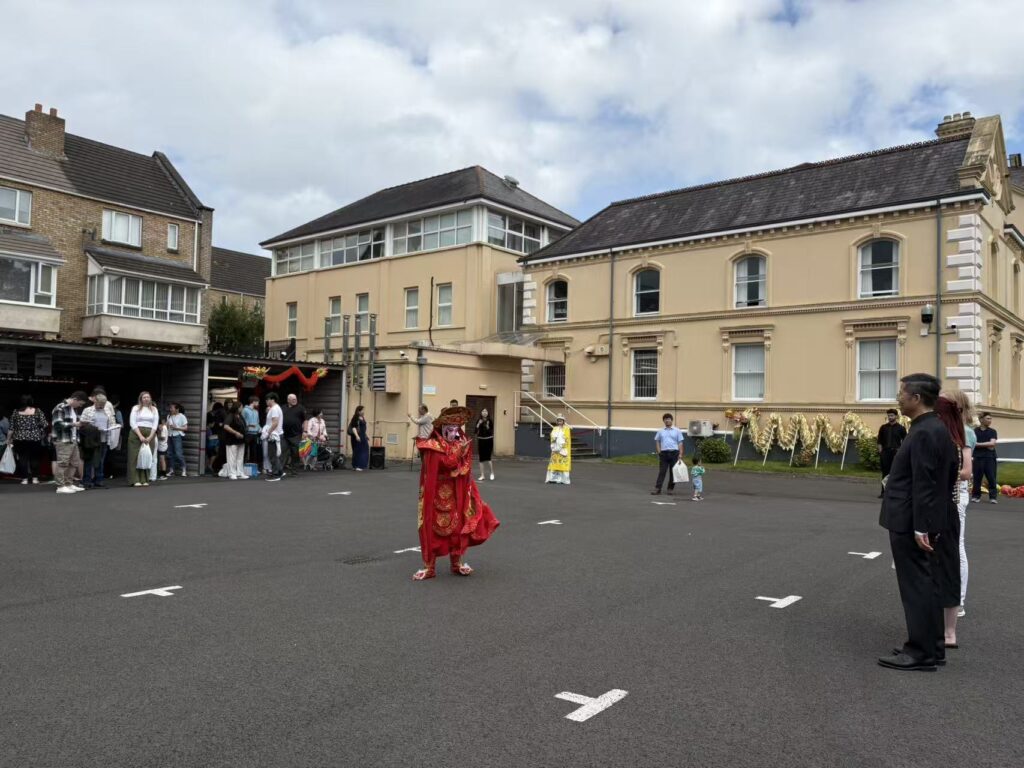
Cultural performance – Sichuan Opera face-changing. Photo credit: Liang Wang
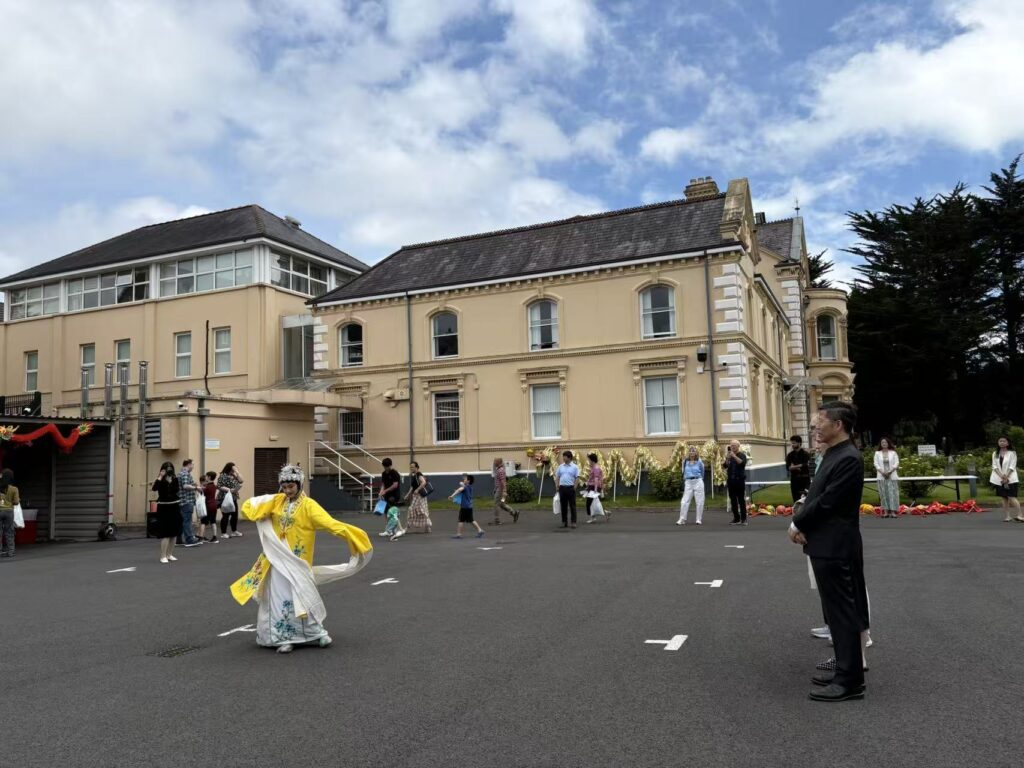
Cultural performance – opera with long-sleeve dance. Photo credit: Liang Wang
Alongside these activities, a series of exhibitions showcased Chinese books, the China Story Photography Exhibition, and new energy vehicles, offering visitors further opportunities to explore China’s cultural heritage, technological innovation, and contemporary development.
Exhibition – New energy vehicles with Chinese brands on display. Photo credit: Chen Zhi
With its family-friendly atmosphere and diverse programme, the event provided an enjoyable and engaging introduction to Chinese culture for people from a wide range of communities across Northern Ireland.
Led by their tutor, Sharon Fan, a group of learners from Queen’s Language Centre’s Chinese language programme also attended the Open Day, experiencing Chinese language and culture beyond the classroom.
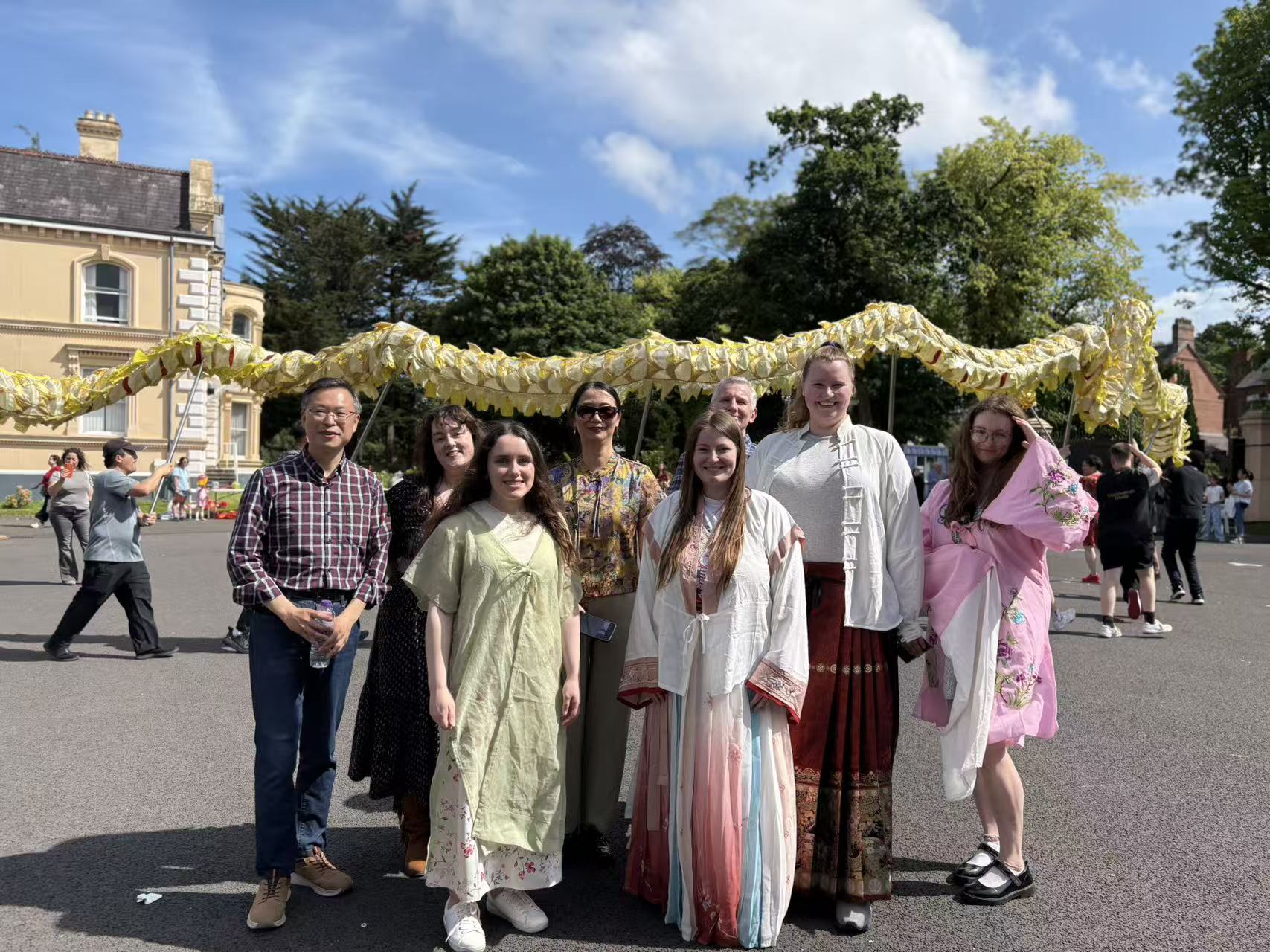
Group photo – LC staff with learners. Photo credit: Liang Wang
Group photo – LC staff with learners. Photo credit: Liang Wang
Hannah, a Queen’s graduate who completed her studies a couple of years ago but has continued learning with the Chinese programme ever since, described her exciting experience as follows:
There were many stalls set up with a different activity at each. We got free Chinese books (which are extremely useful as a learner of the language), got to participate in a chopsticks challenge, had our English names transcribed into Chinese characters, did the dragon dance together, watched cultural performances, and got to dress up in traditional Chinese Hanfu!
When you completed the cultural or traditional activity at each stall, you got a unique stamp. This was a fun addition to the day and you even got a small prize at the end for collecting them all.
Maeve particularly valued the opportunities for cultural exchange and personal engagement throughout the event. She reflected:
I feel like cultural exchange and language learning go hand in hand, so I was definitely excited to experience what was on offer. The many dancers and dragon performances were captivating to watch and I particularly loved seeing all the beautiful traditional Hanfu and how everyone, young and old, was enjoying dressing up! It felt like a little piece of China in Belfast…
A hands-on experience of Dragon Dance. Photo credit: Sharon Fan
Drawing on her travel experience in China last year, Hannah echoed Maeve’s observations about the value of authentic cultural engagement in a local setting:
Having travelled to China last year, I felt this was an excellent representation and showcase of Chinese culture and also a fantastic way for people new to it to experience and engage with it for the first time.
Leysley-Anne, also Queen’s graduate from School of Biological Sciences, also shared her thoughts:
I think my favourite thing about the day by far was the people’s encouragement, joy, and surprise when we attempted to speak to them in Mandarin. Even though our pronunciation and grammar were far from perfect, everyone we spoke to kindly encouraged us and were so patient, frequently having to repeat themselves when we didn’t quite understand. Experiences like this are truly encouraging when trying to learn a new language – especially one so difficult.
We left the day slightly sun burnt but very happy with a new sense of determination in learning Mandarin!
Hannah also echoed Leysley-Anne’s sentiments, paying tribute to the Consular staff:
All the staff were incredibly welcoming and friendly, and very receptive and supportive when I attempted to speak Chinese with them. This was extremely encouraging and motivating as a learner of the language.
An absolutely fantastic day, very well thought out and lots of fun! I’ll be keeping a keen eye out for any future events!
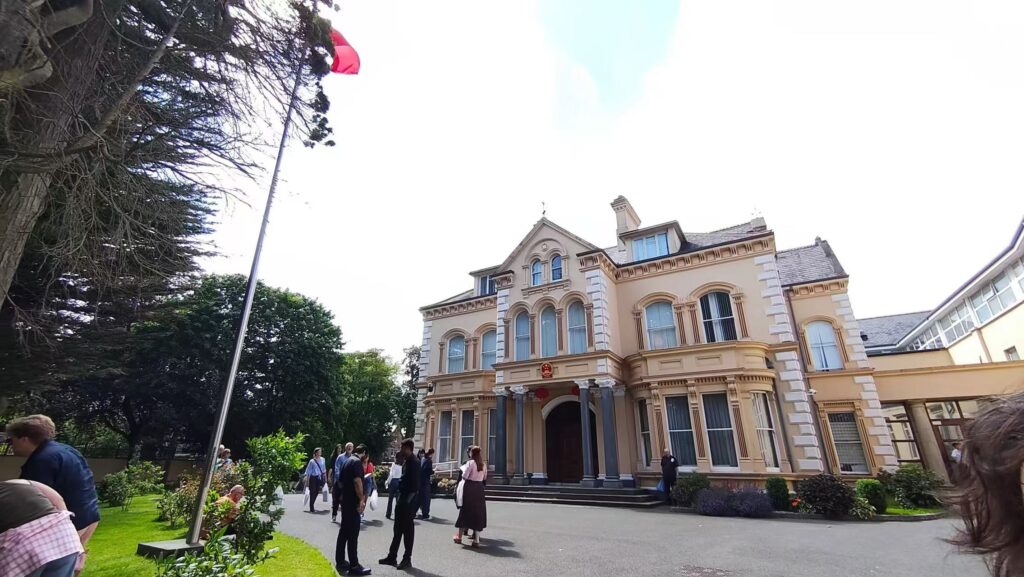
Consulate General of P.R.C. in Belfast. Photo credit: Chen Zhi
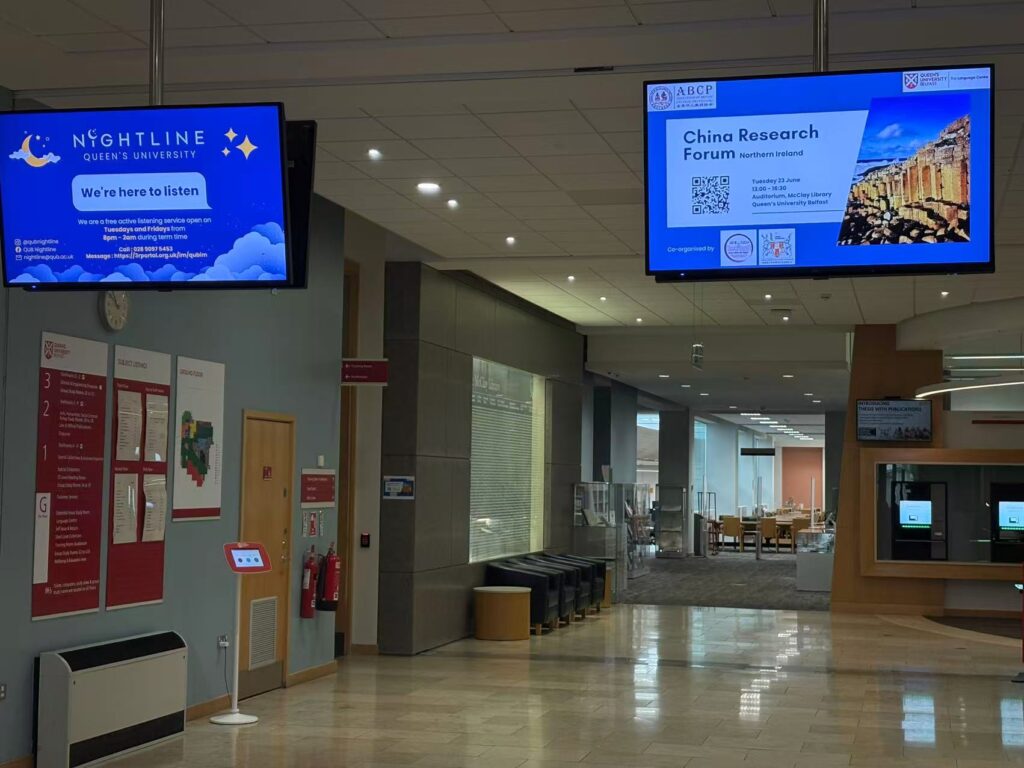
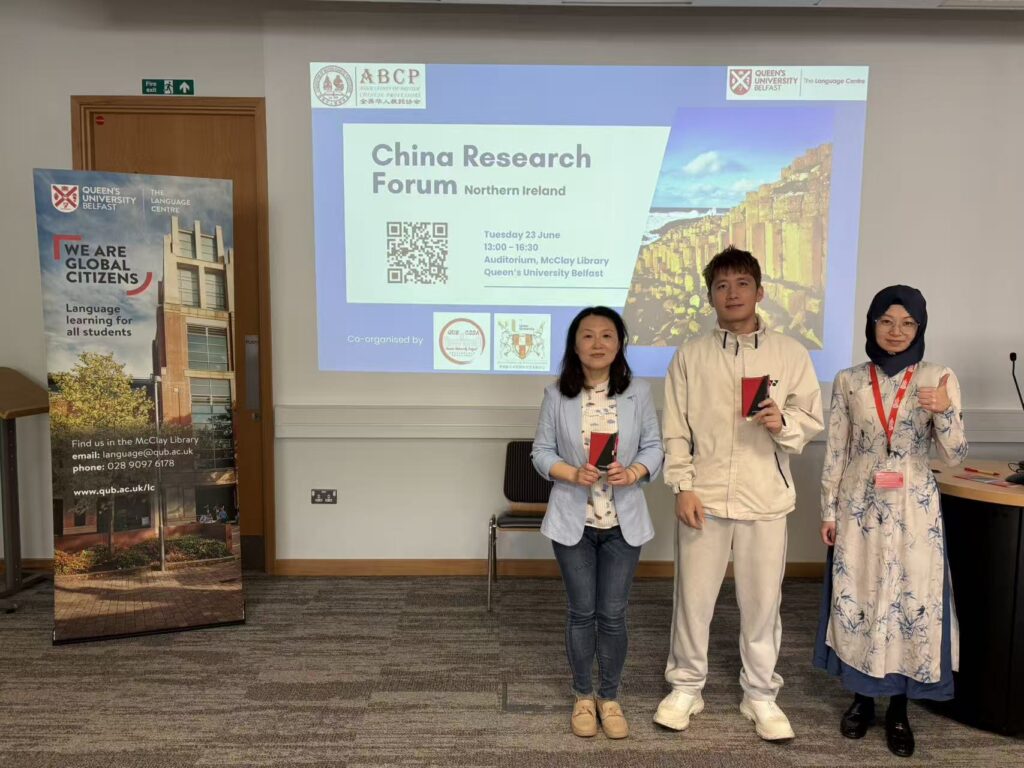
On 23 June, Northern Ireland (NI) experienced its hottest day of the year so far. The inaugural China Research Forum NI matched the heat with an equally energetic atmosphere, bringing together around 30 participants for lively discussions on a wide range of China-related topics at the McClay Library Auditorium, Queen’s University Belfast.
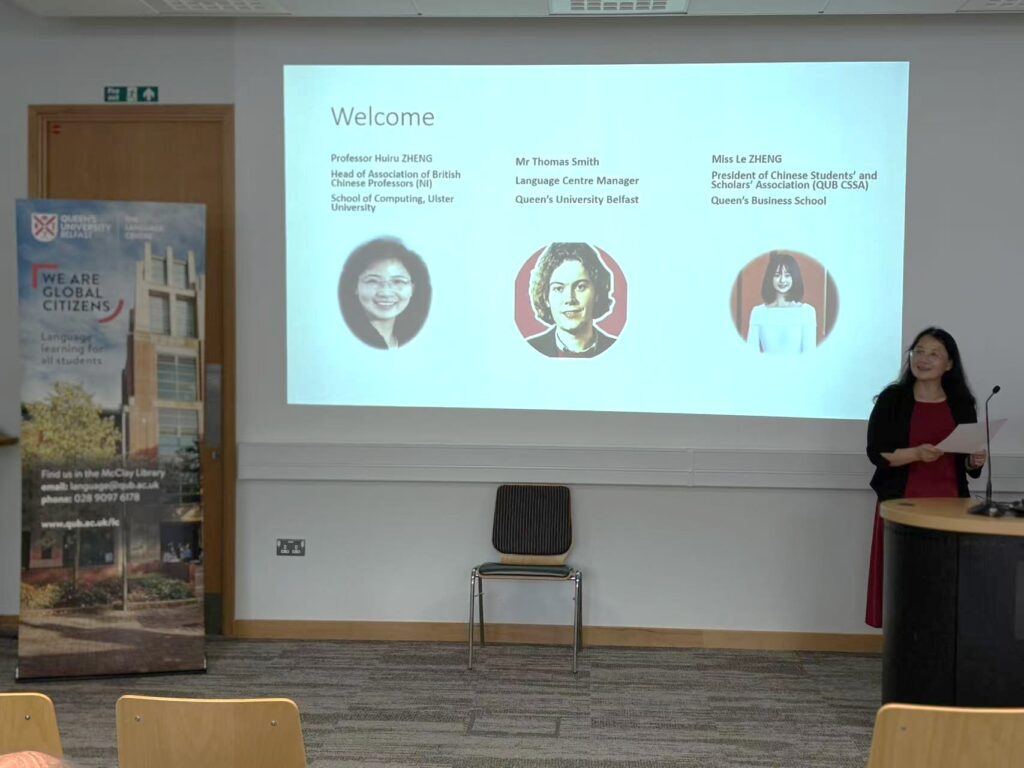
Jointly organised by the Chinese Students’ and Scholars’ Associations of Queen’s University Belfast and Ulster University, under the guidance of the Association of British Chinese Professors (ABCP) Northern Ireland Region and Queen’s Language Centre, the Forum provided a vibrant platform for academic exchange and interdisciplinary dialogue. Professor Huiru Zheng, coordinator of ABCP NI, in her welcome speech, emphasized that
“At a time when global challenges increasingly require international perspectives and cross-cultural understanding, initiatives such as this forum play an important role in promoting informed dialogue and constructive engagement. Beyond the academic programme, the forum’s commitment to public lectures, roundtable discussions, and community engagement reflects the broader goal of connecting scholarship with society and fostering mutual understanding.
ABCP is especially proud to support this student-led initiative. By encouraging research excellence, intercultural competence, and active community participation, the forum embodies values that are central to our mission. We hope it will not only showcase outstanding research but also inspire new partnerships, future collaborations, and lasting academic networks.”
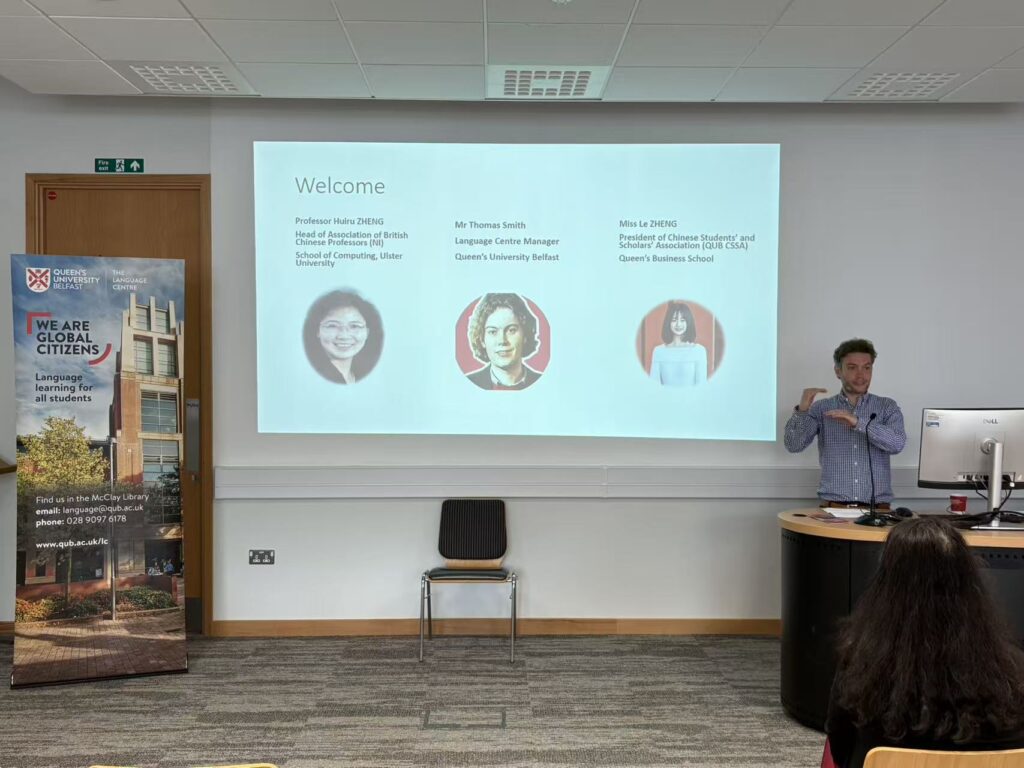
Mr Thomas Smith, Queen’s Language Centre Manager, welcomed participants from both universities and elsewhere, highlighting the value of forstering academic and professional skill sets through intercultural awareness, in which language and cultural understanding plays a pivotal role. The Language Centre at Queen’s does not merely provide foreign language courses, but also help promote a multicultural campus and society.
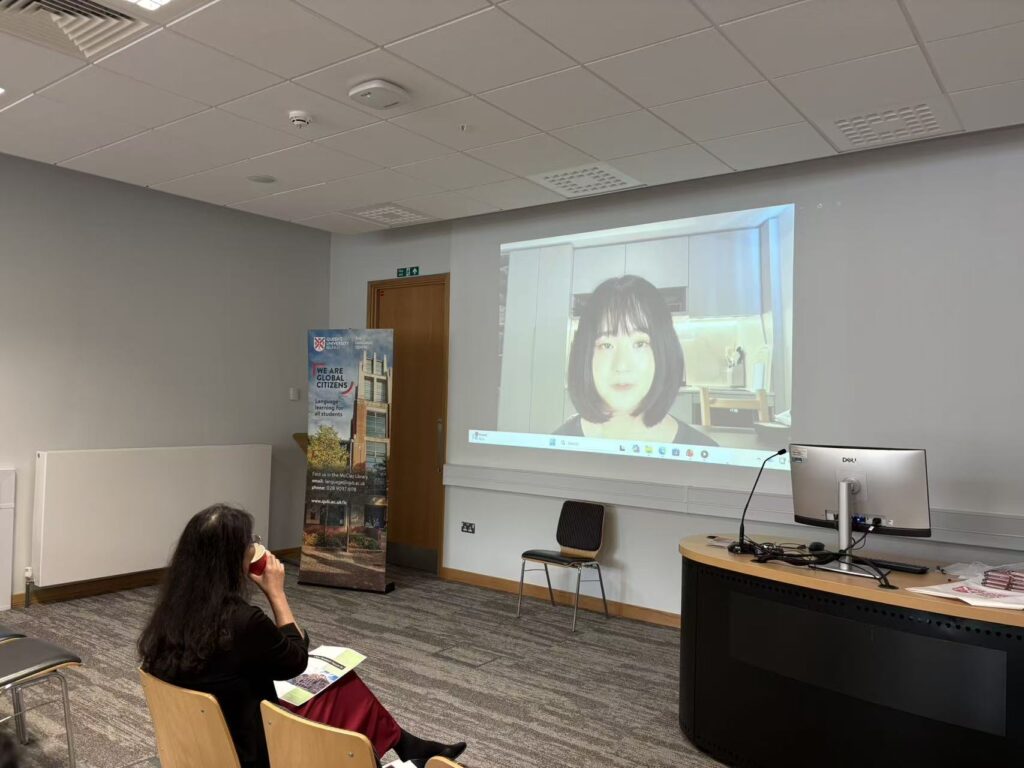
Miss Le Zheng, President of the Chinese Students’ and Scholars’ Association (CSSA) at Queen’s, although unable to attend the Forum due to a conference commitment outside Belfast, sent a recorded welcome message to participants, expressing her support for the initiative and encouraging attendees to make the most of this valuable opportunity for meaningful interdisciplinary dialogue and exchange. She wished everyone a productive and engaging forum, fostering new ideas, connections, and collaborations across disciplinary boundaries.
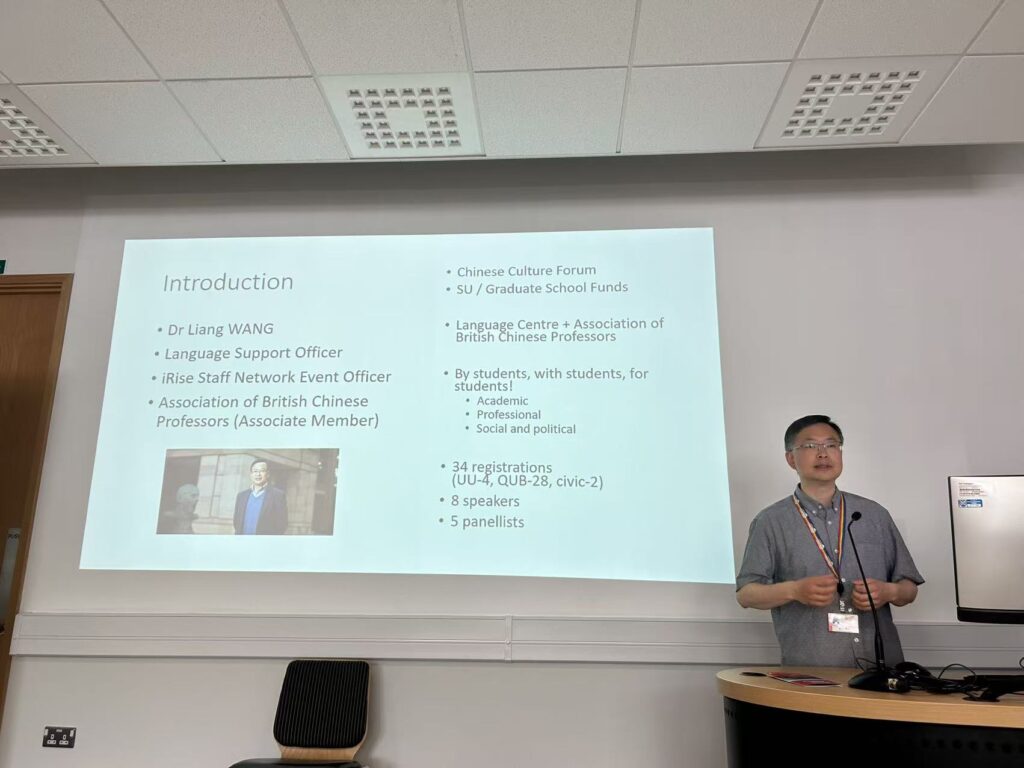
Dr Liang Wang, facilitator of this event, made a brief introduction to the foundation of the Forum and emphasized the goal of this initiative — a platform by students, for students and with students. He expressed his sincere gratitude to all speakers, volunteers, sponsors and participants’ support in making it happen within a relatively short period of preparation.
The presentations covered a rich variety of themes, including heritage literacy, religious practices, women and fashion, technology and healthcare, history and literature, language learning and the impact of artificial intelligence (AI), mothering and migrant motherhood, as well as student-led initiatives such as a film festival and an academic journal.
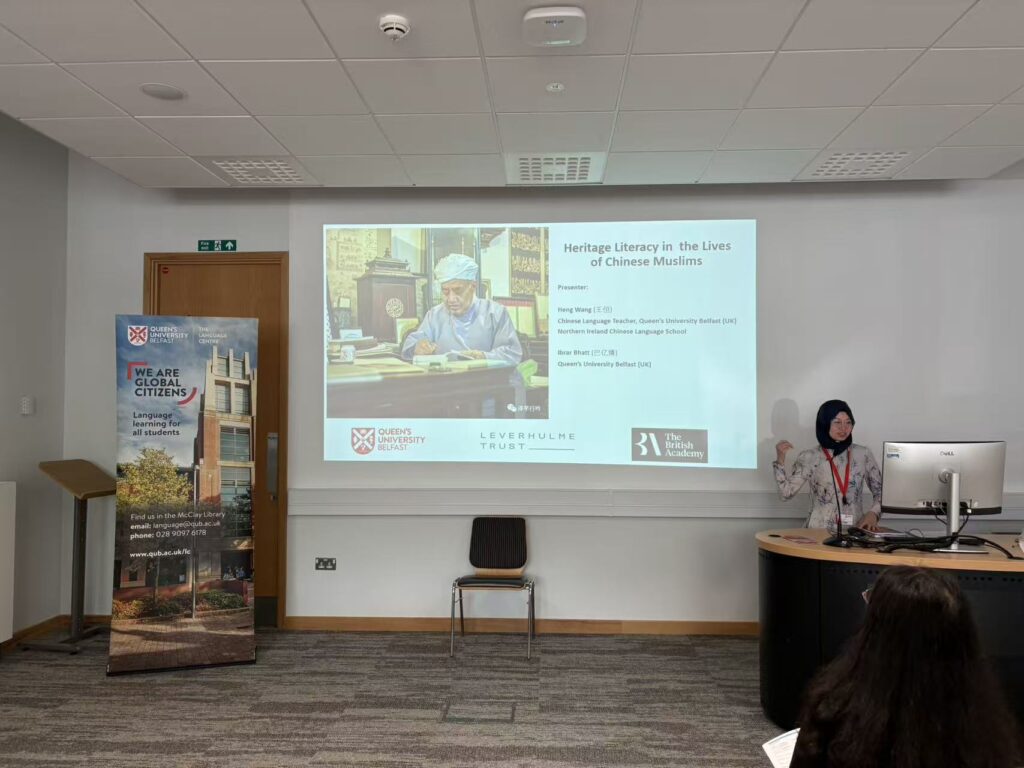
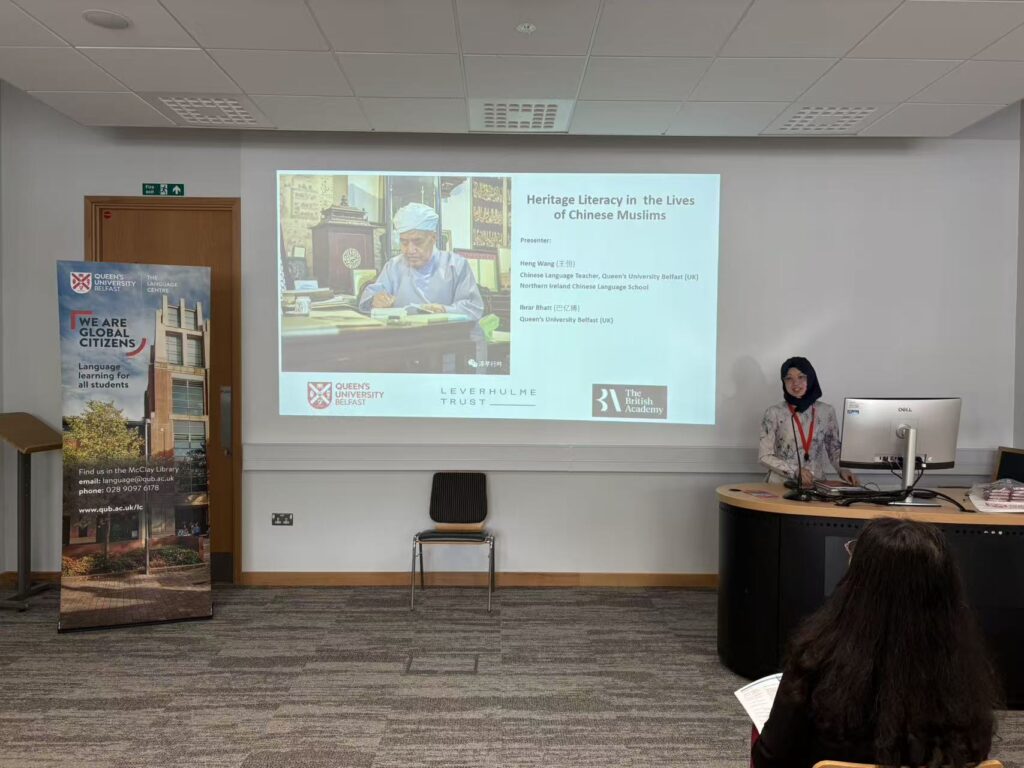
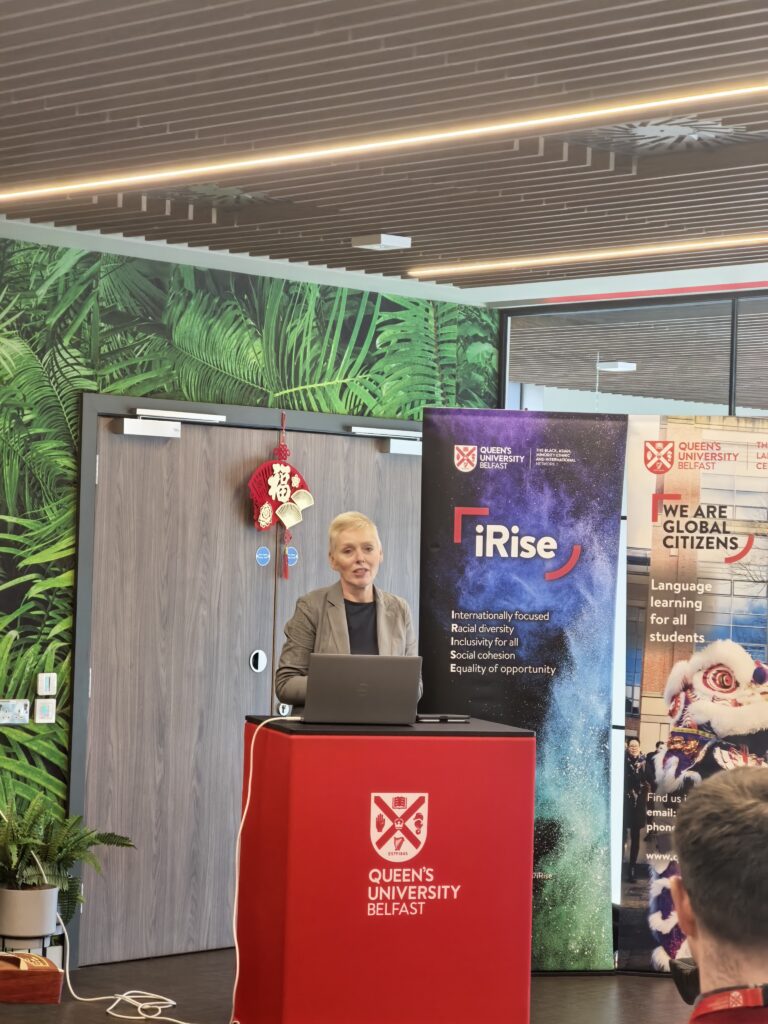
Speaker Heng WANG
Speaker Heng WANG
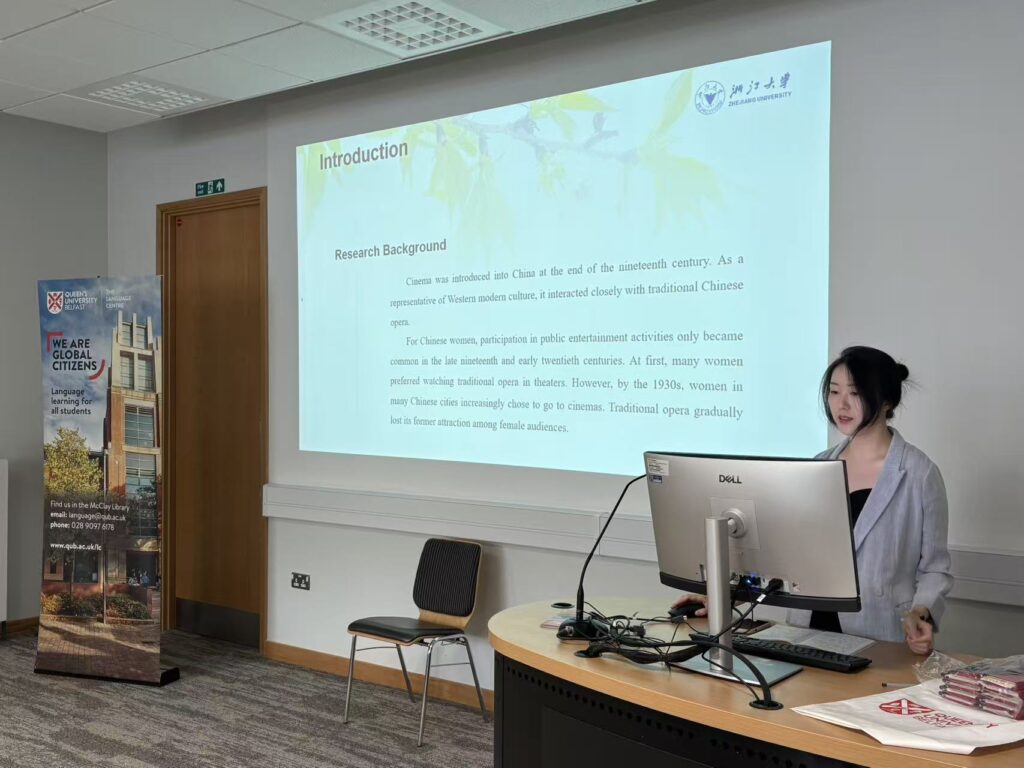
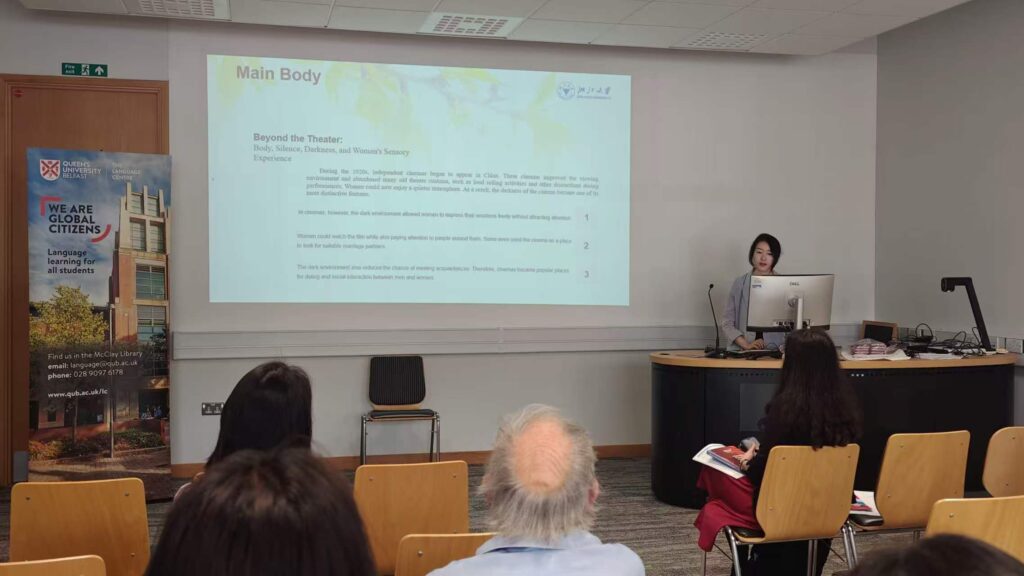
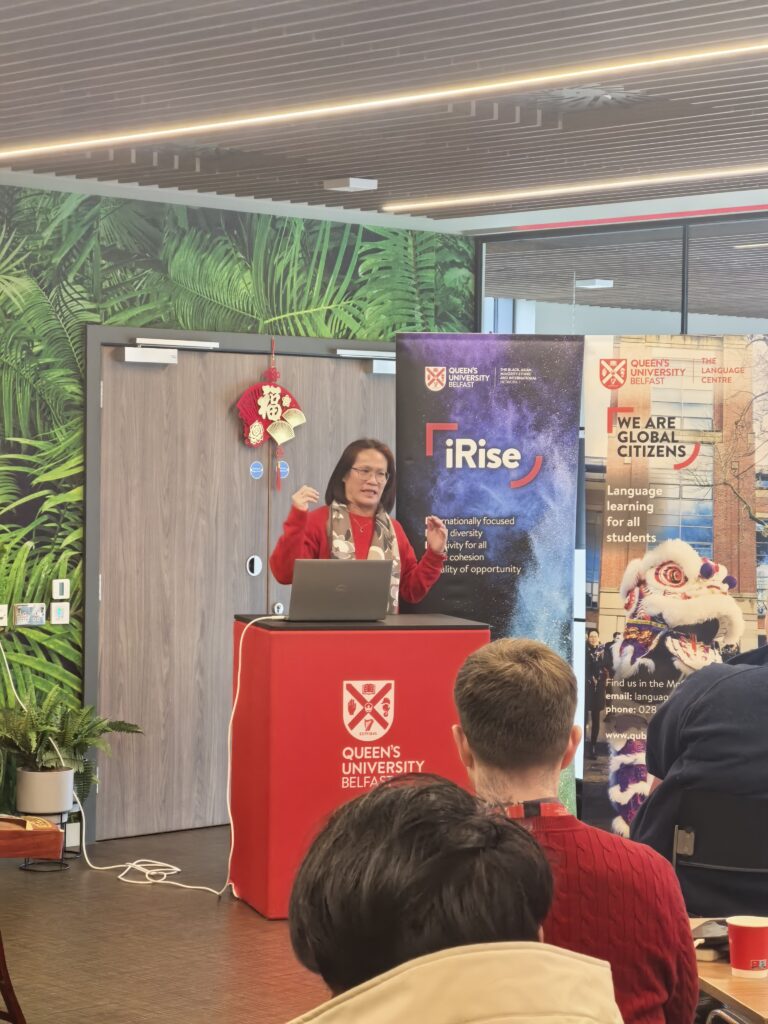
Speaker Wanyu LI
Speaker Wanyu LI
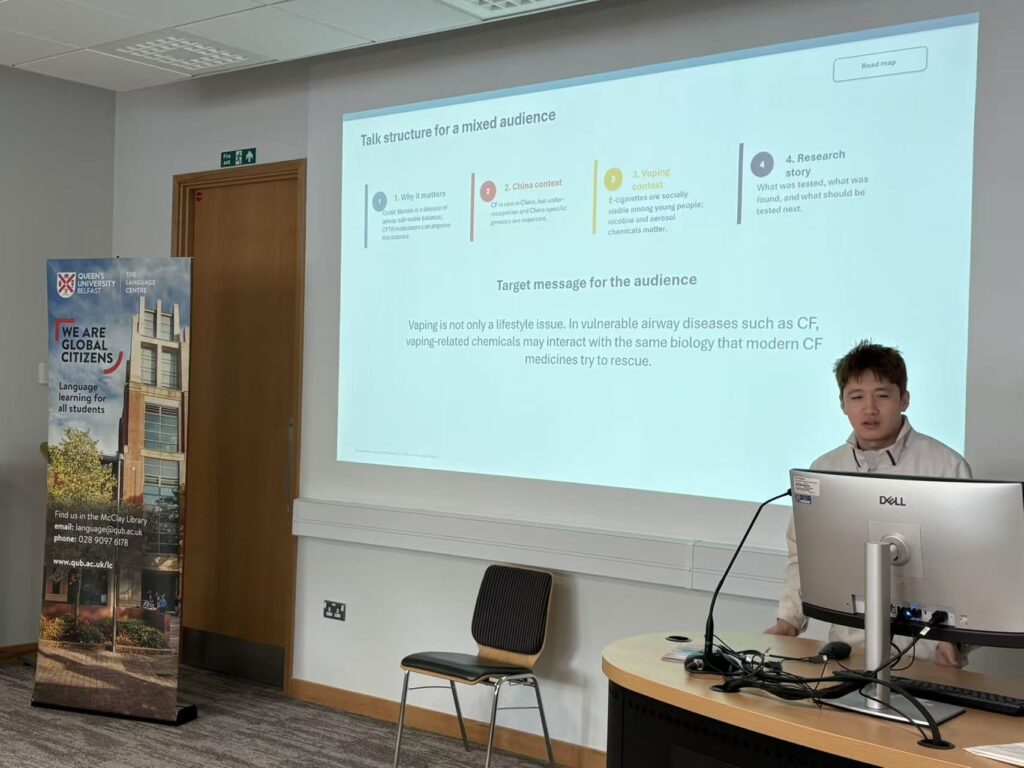
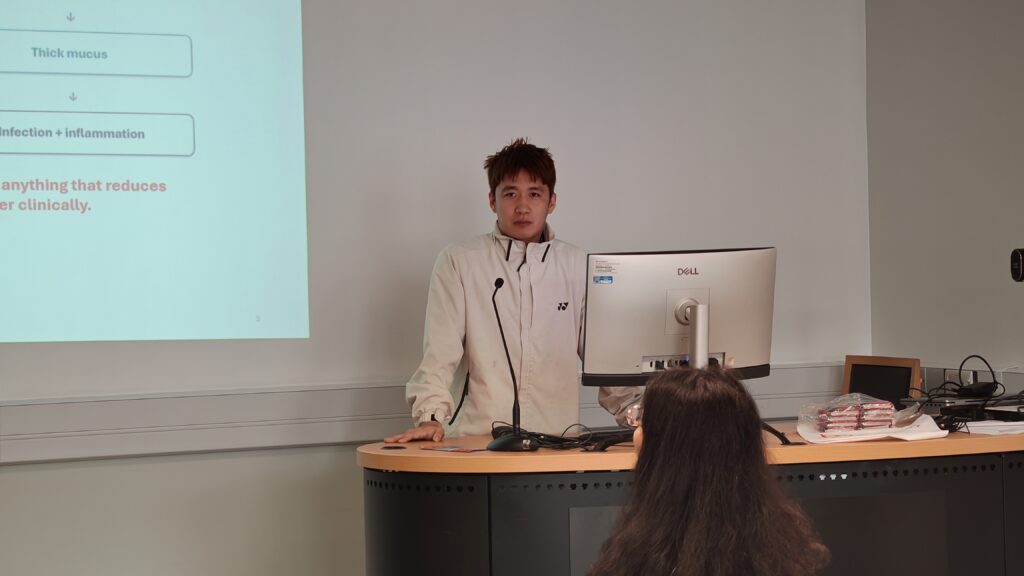
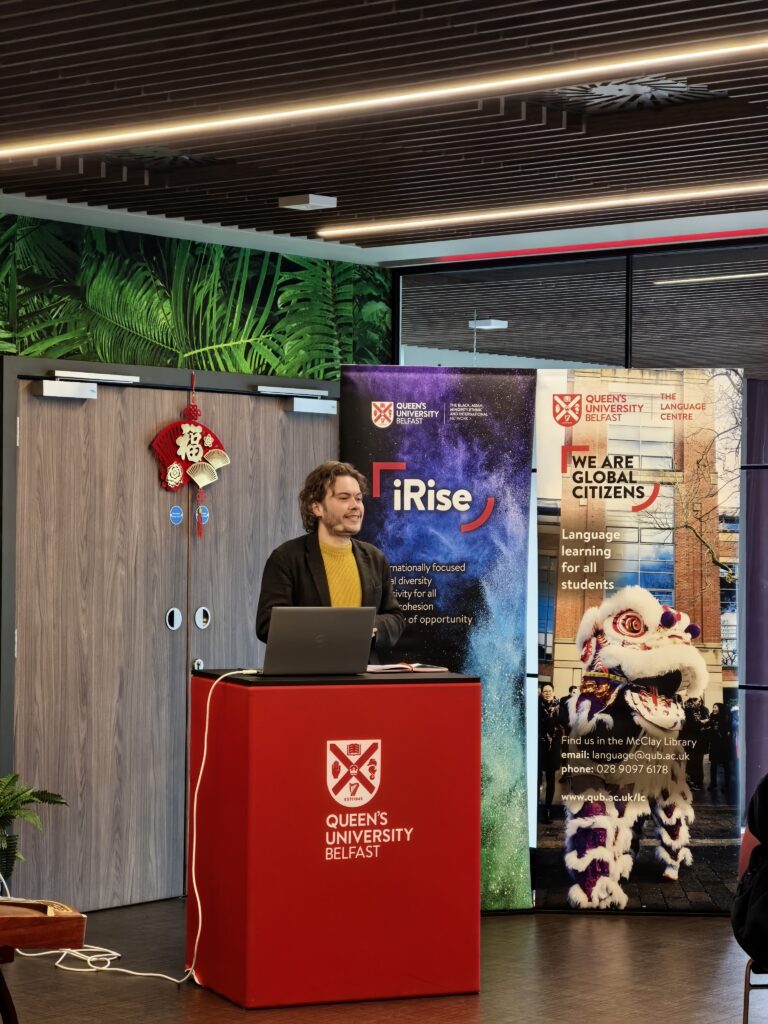
Speaker Caoyang SHI
Speaker Caoyang SHI
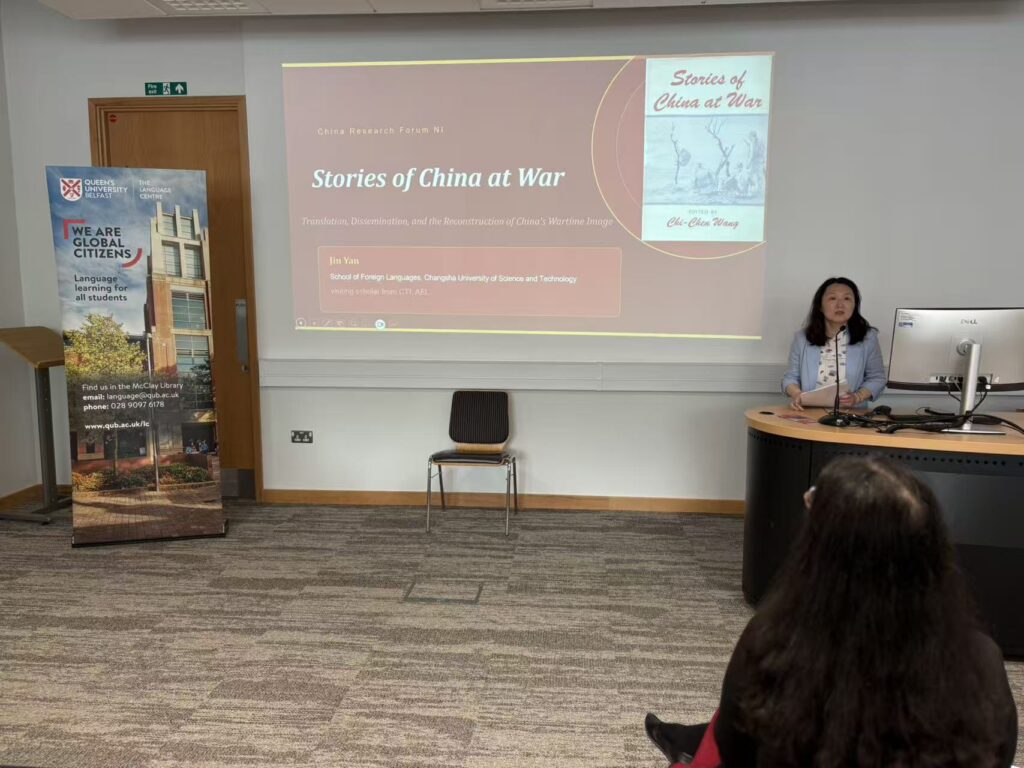
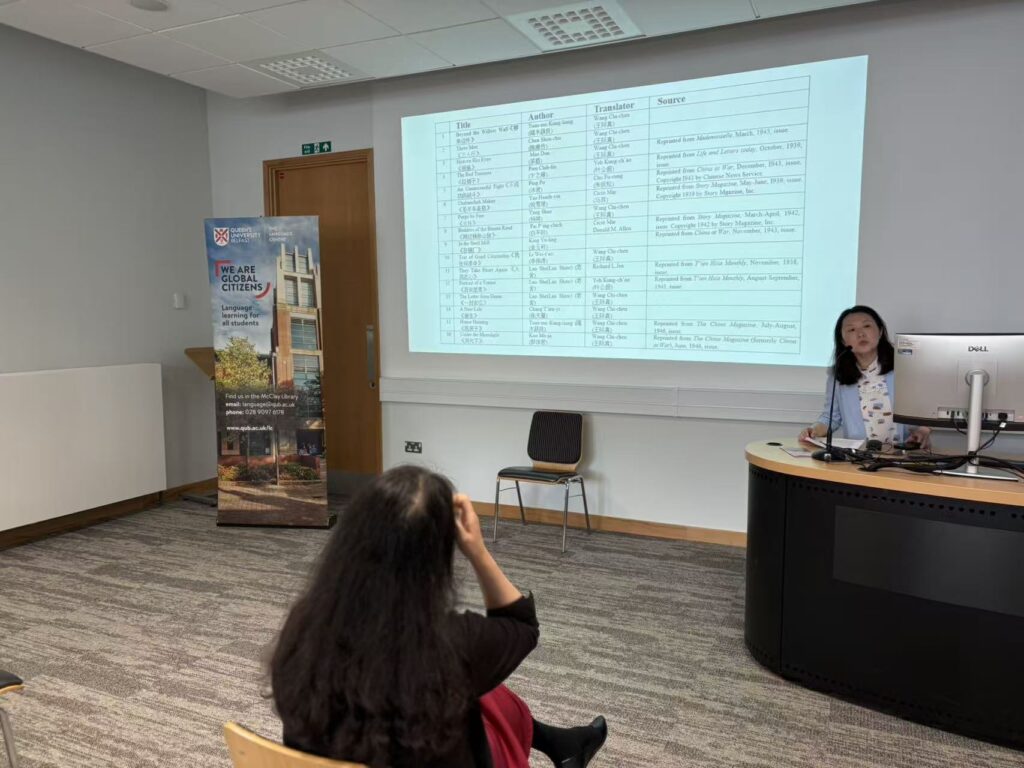
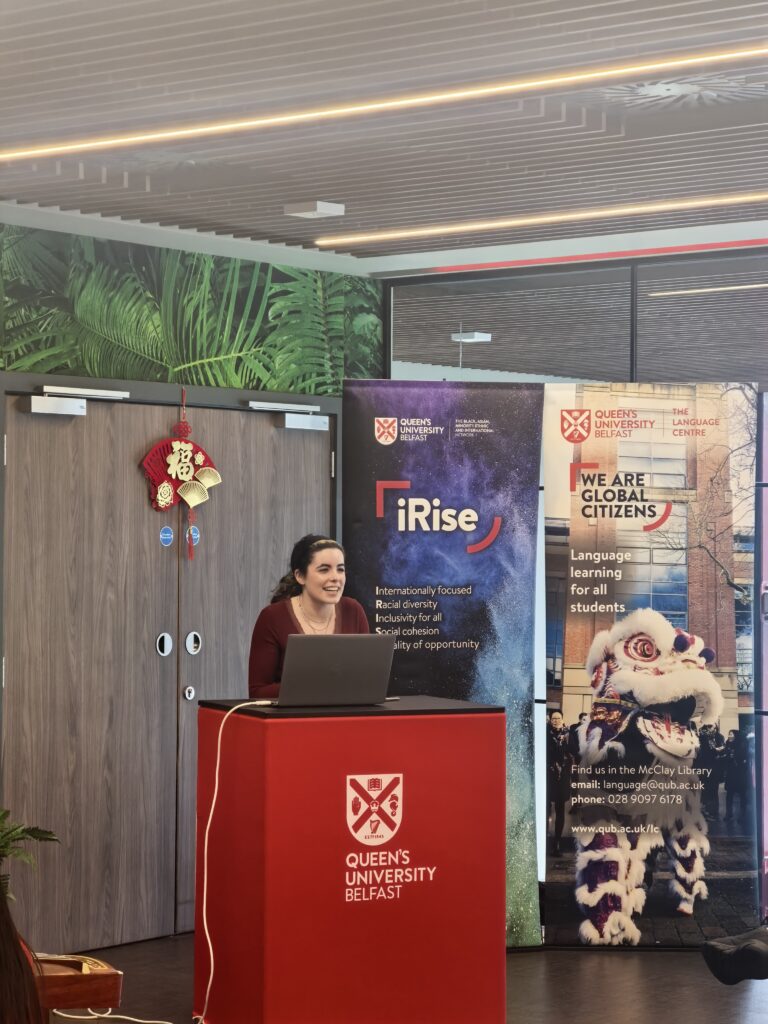
Speaker Jin YAN
Speaker Jin YAN
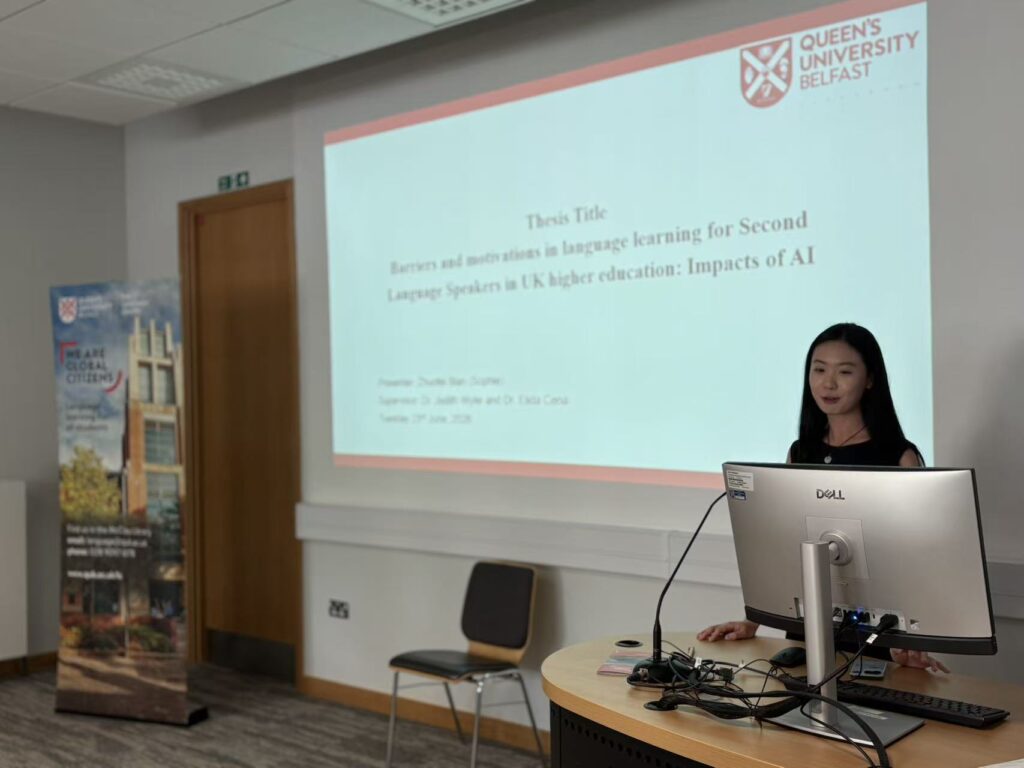
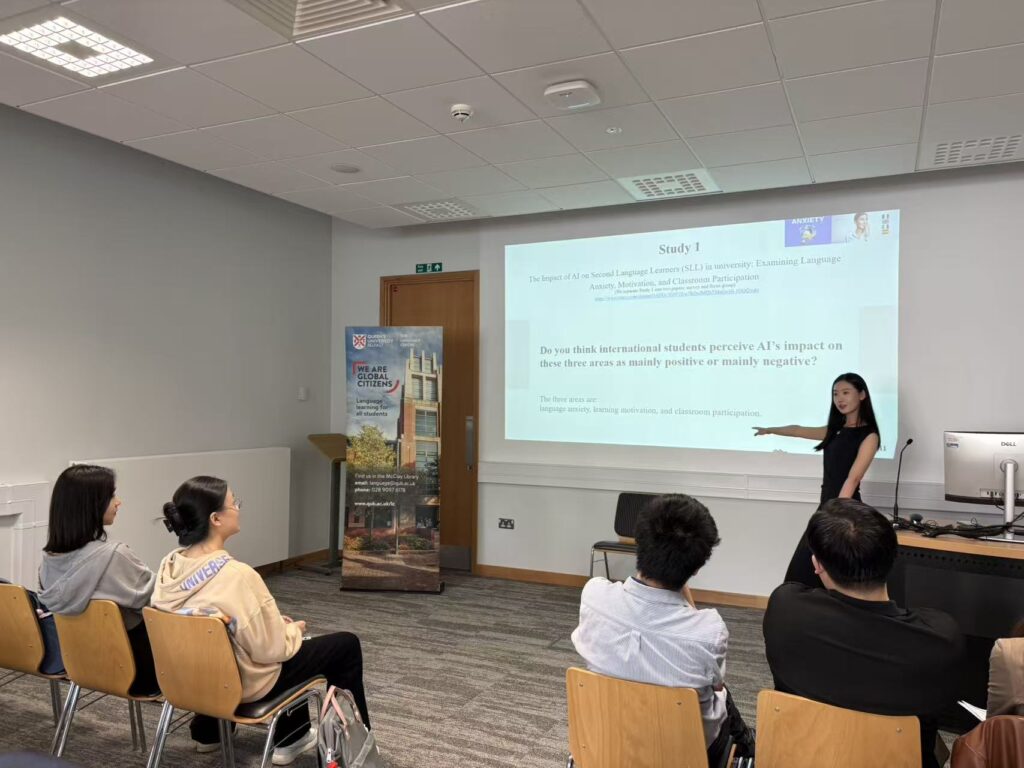
Speaker Zhuofei BIAN
Speaker Zhuofei BIAN
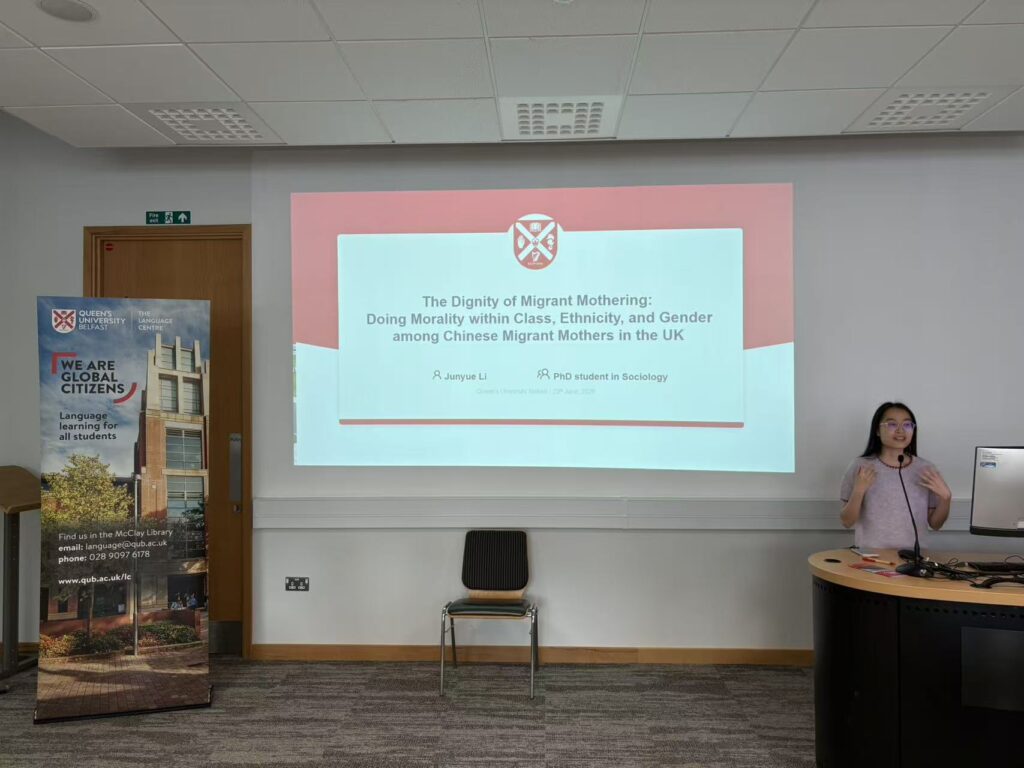
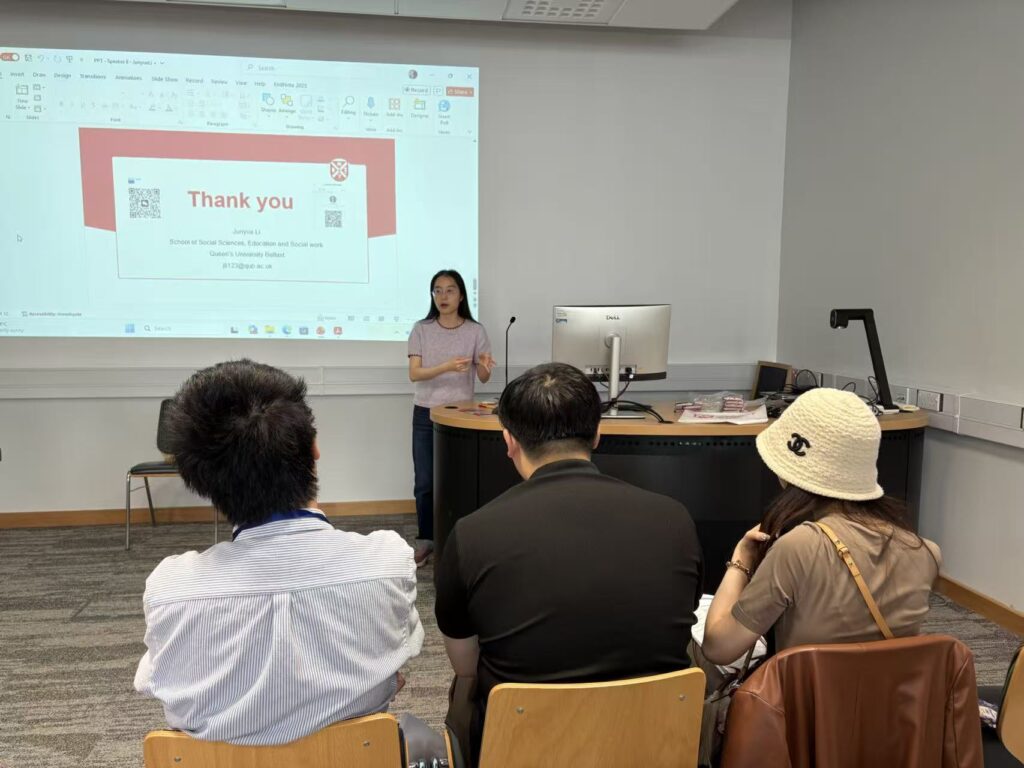
Speaker Junyue LI
Speaker Junyue LI
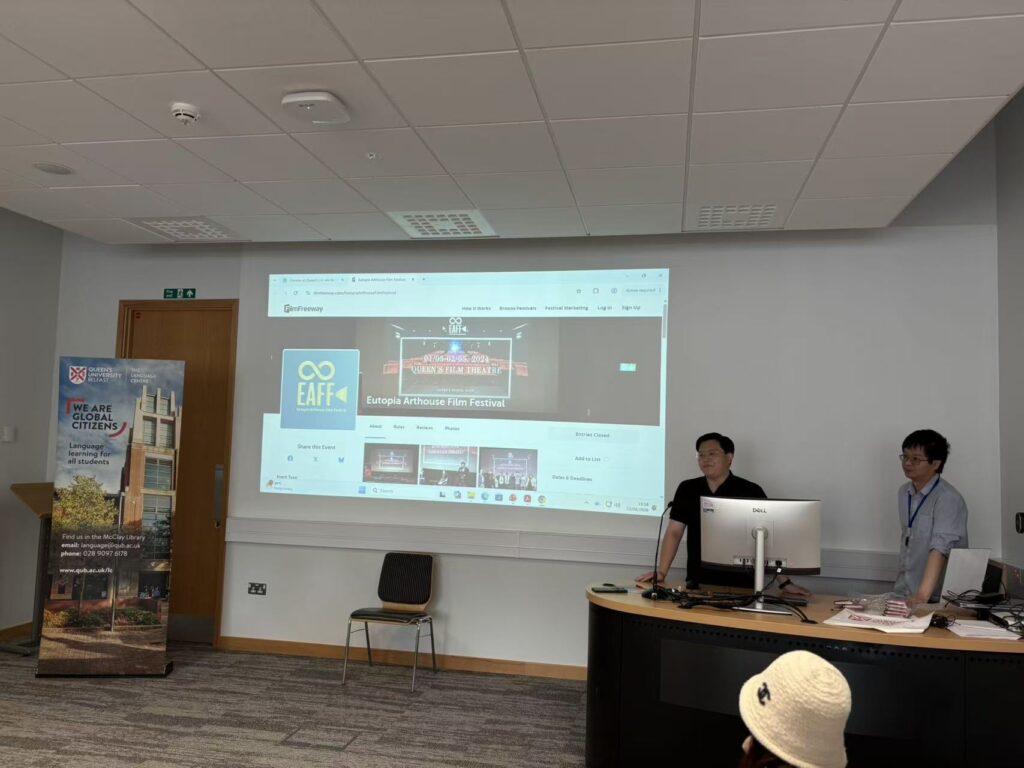
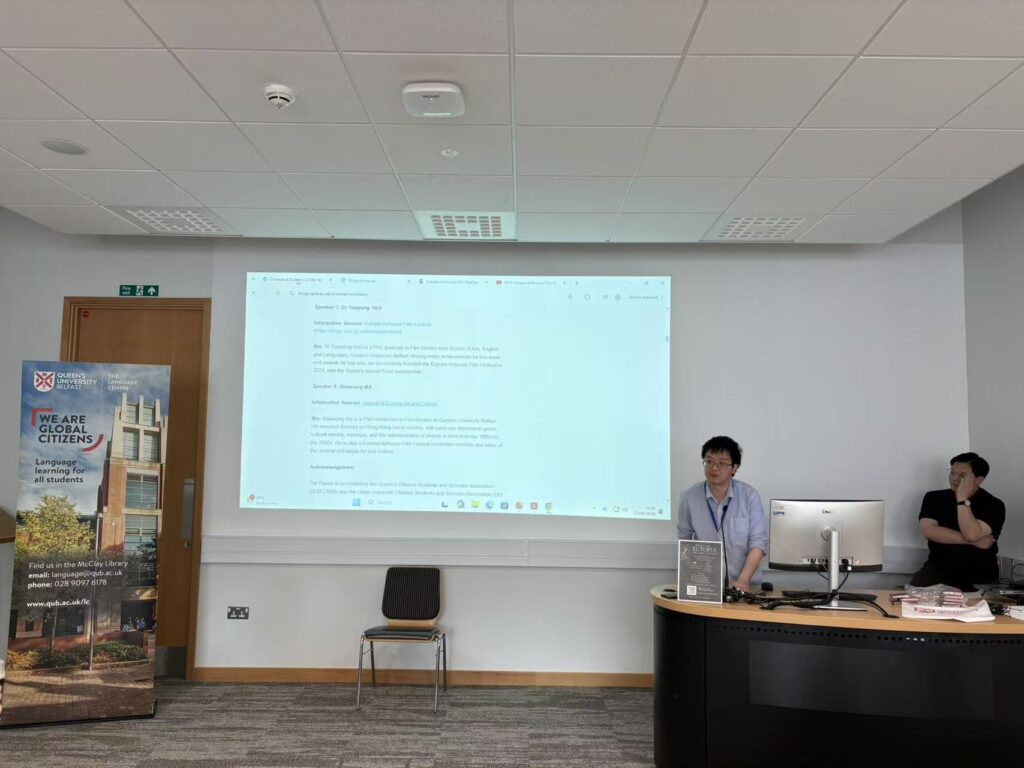
Speakers Tianpeng YAO and Xiaoxiang MA
Speakers Tianpeng YAO and Xiaoxiang MA
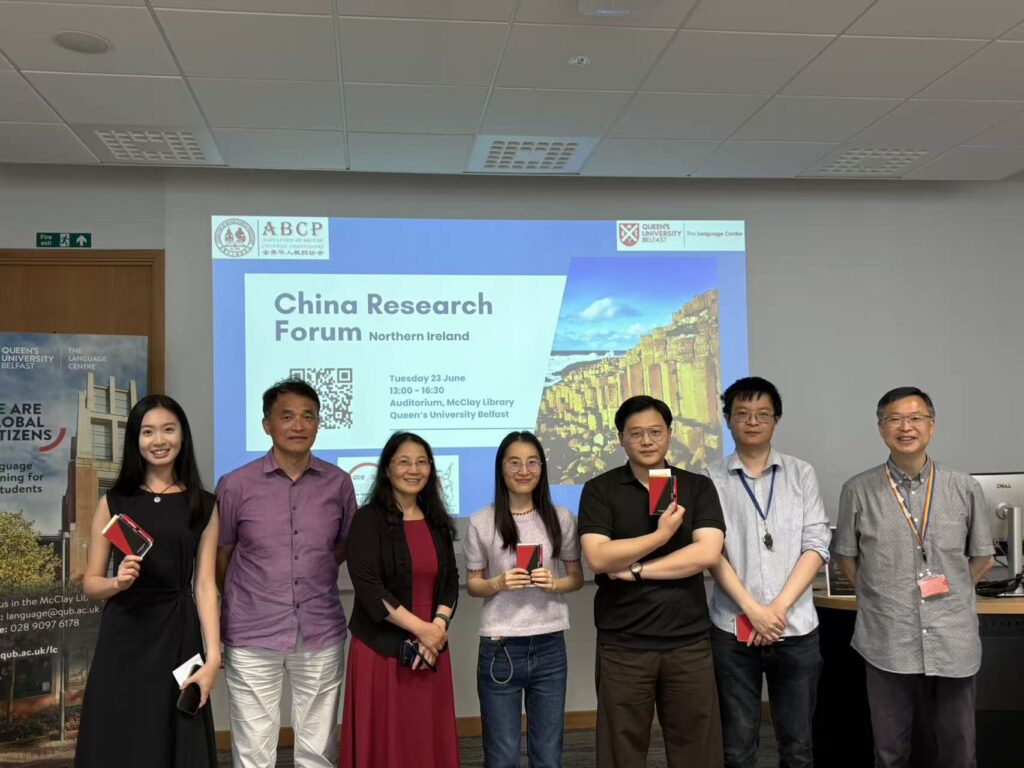
Group photo of speakers
Group photo of speakers
This breadth of topics fostered a highly interactive and intercultural environment, encouraging meaningful discussions and insightful exchanges between speakers and audience members from diverse disciplinary and cultural backgrounds. Thanks to the speakers, a collection of their presentations can be reviewed from the following link:
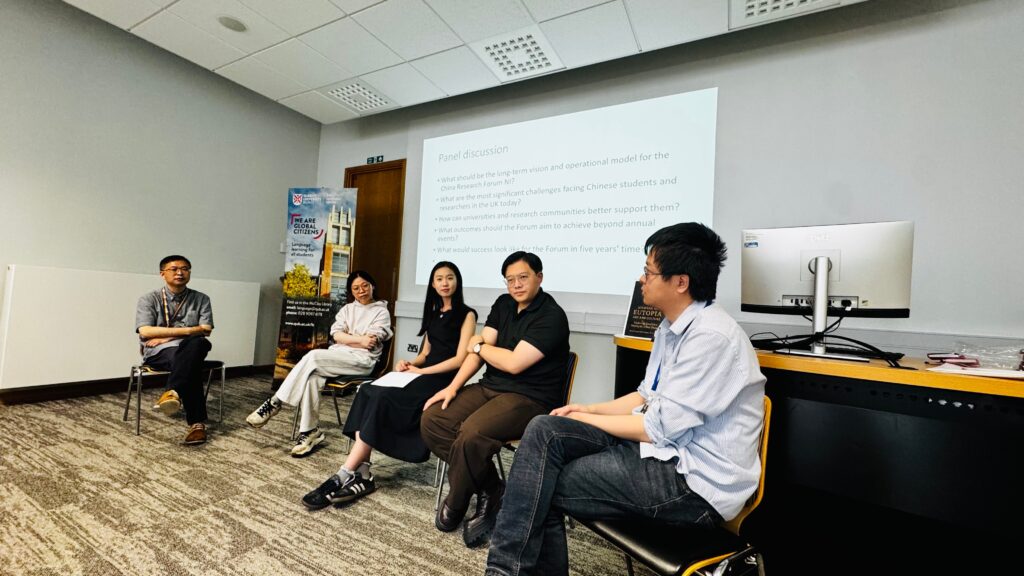
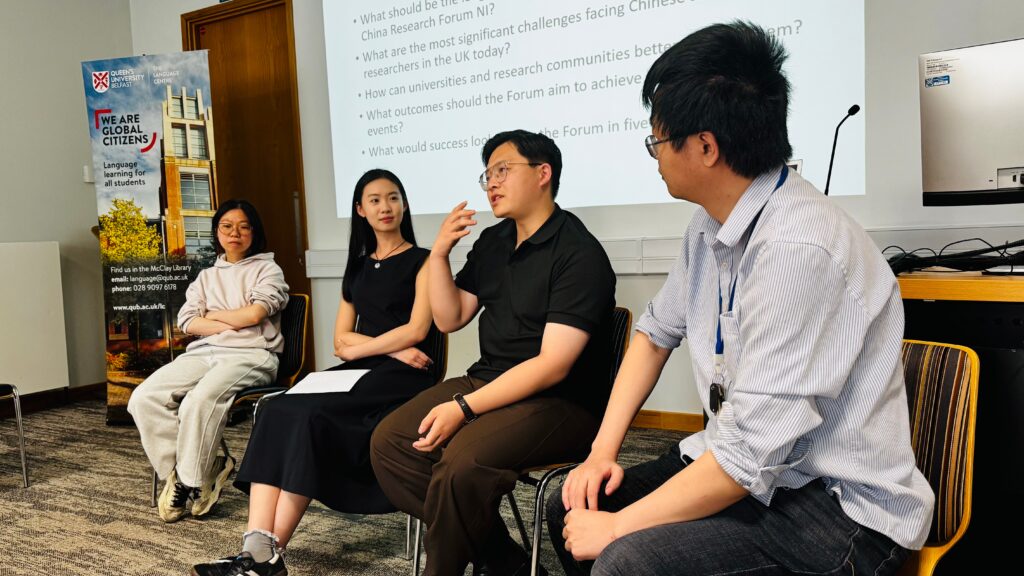
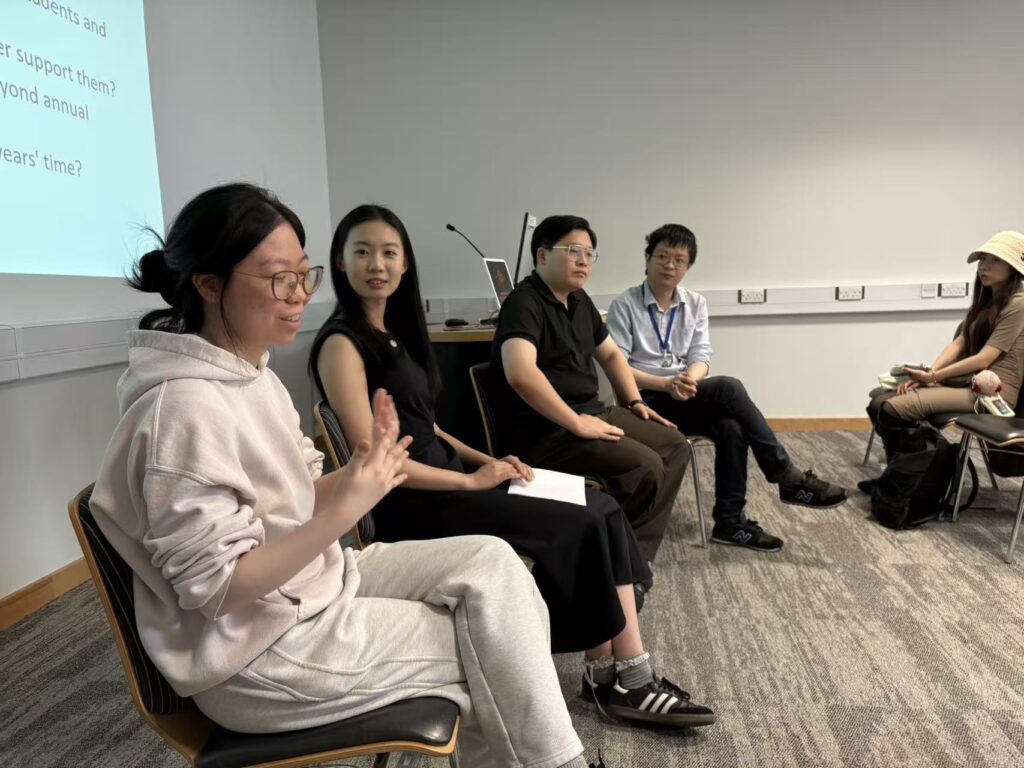
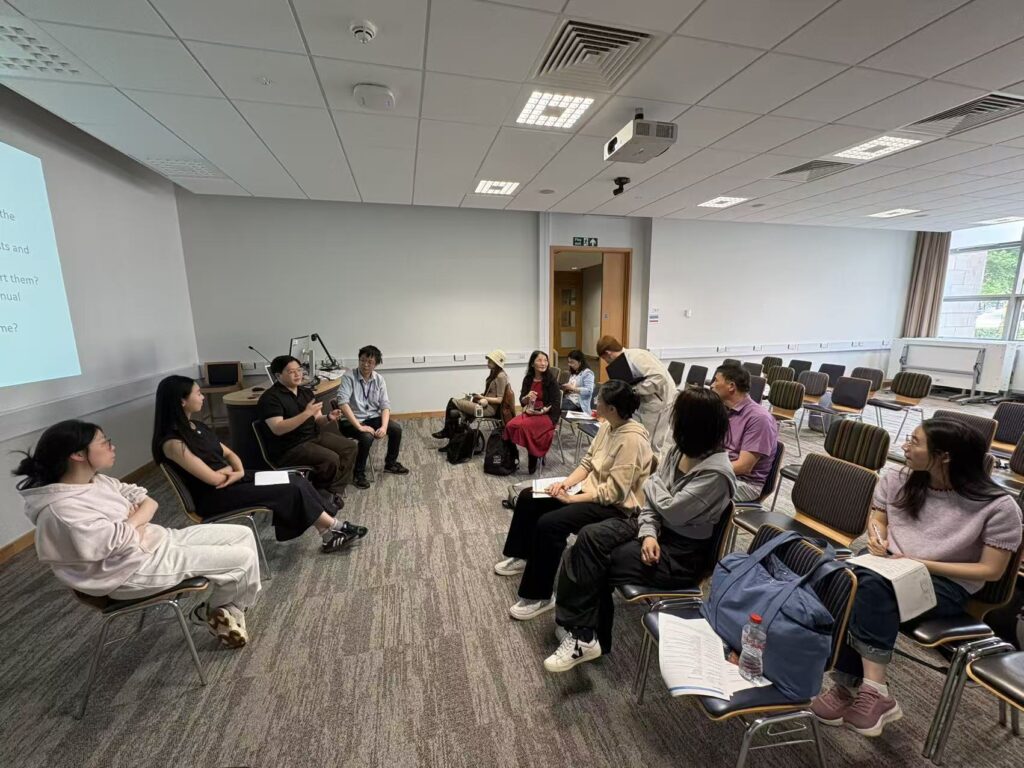
The Panel Discussion, chaired by Dr Liang Wang, welcomed student representatives Lijun Xue, Zhuofei Bian, Tianpeng Yao, and Xiaoxiang Ma as panellists. The discussion focused on the Forum’s vision, operational model, the challenges faced by Chinese students and early-career researchers, institutional support, potential outcomes, and future development. The panel was further enriched by contributions from Professor Sha Wei, Academic Lead for Race and Cultural Inclusion at Queen’s, and Professor Huiru Zheng, coordinator of ABCP NI.
A clear consensus emerged among both panellists and audience members that the Forum provides a valuable platform for researchers to meet, exchange ideas, and learn from one another across disciplinary boundaries. Participants agreed that this mutually beneficial spirit should remain central to future Forum activities, regardless of their format. Another key benefit identified was the opportunity for presenters to step outside their disciplinary comfort zones. Rather than presenting solely to supervisors and specialists within their own fields, participants were encouraged to communicate their research to a broader audience from diverse academic and professional backgrounds. This shift promoted the development of transferable communication and engagement skills, aligning closely with the objectives of the Vitae Researcher Development Framework.
Panellists also expressed a shared aspiration for the Forum to become more inclusive by attracting non-Chinese scholars and research students working on China-related topics or research involving local Chinese communities. Professor Zheng noted that comparative studies involving both China and other contexts, such as Northern Ireland, could be particularly effective in fostering dialogue and attracting wider participation. Drawing on their recent conference experiences in Dublin, both Lijun Xue and Dr Liang Wang suggested that expanding the Forum’s scope to include broader Asian or East Asian studies may be a worthwhile long-term goal.
Regarding the challenges faced by Chinese students in the UK, Zhuofei Bian observed, based on her own research, that many obstacles are shared by international students more generally, including language barriers and the development of professional and practical skills required for success in intercultural academic environments. While emphasising the importance of students proactively seeking support from supervisors and university services, she also argued that universities should provide more streamlined and accessible signposting to key resources, including academic English support, careers guidance, and skills development opportunities, especially in the age of AI.
In addition to academic challenges, participants discussed the impact of cultural adaptation, local living conditions, and wider political and economic developments on students’ wellbeing. Drawing on her own experiences, Lijun Xue highlighted how unfamiliar cultural norms and practical aspects of daily life can create uncertainty and anxiety for international students. She suggested that universities should strengthen orientation programmes and cultural awareness initiatives to help students better understand local contexts and engage confidently with surrounding communities. Professor Sha Wei echoed these concerns and reaffirmed the University’s responsibility to ensure that students experiencing difficulties receive appropriate support and guidance.
Another topic that generated considerable interest was the impact of technological advancement on research and professional development. Drawing on his recent job application experiences in China, Tianpeng Yao explained how AI is increasingly becoming a factor in recruitment processes and professional assessment. He suggested that AI is likely to have a profound influence on the future academic and employment landscape, creating both opportunities and challenges for emerging researchers.
When discussing the future dissemination of Forum outcomes, Xiaoxiang Ma, Chief Editor of the Journal of Eutopia Art and Culture, highlighted the importance of transforming suitable presentations into publications. Alongside more immediate forms of dissemination, such as blogs and online platforms, he suggested that publication opportunities could provide a strategic mechanism for sustaining the Forum’s academic impact and visibility.
Due to time constraints, the discussion could not explore all topics in depth. Participants were therefore invited to continue contributing their ideas and suggestions through the Forum evaluation form, enabling a broader collection of feedback to inform future development.
Written by Dr Liang Wang, with contributions from notes taken by Junyue Li during the panel discussion.
Tuesday 23 June 2026 1:00 – 4:30 pm The Auditorium, McClay Library, Queen’s University Belfast
Programme
1:00-1:10 Registration (Tea/Coffee)
1:10-1:30 Welcome and Introduction
1:30-1:50 Session 1 Heritage literacy in the lives of Chinese Muslims (Heng WANG)
1:50-2:10 Session 2 From Theatre Boxes to Cinemas: Chinese Women’s Entertainment Choices in the Cultural Contexts of East and West in the Early 20th Century (Wanyu LI)
2:10-2:30 Session 3 E-cigarette Exposure, CFTR Dysfunction and Airway Inflammation: A China-Focused Airway Epithelial Study (Caoyang SHI)
2:30-2:50 Session 4 Translation of Chinese Anti-Japanese War Literature and Reconstruction of China’s Wartime Image: A Case Study of Stories of China at War (Jin YAN)
2:50-3:00 Break and Poster Harmony Beyond Borders – A Cross-cultural Fusion of Guzheng and Irish Traditional Music(Wei DENG)
3:00-3:20 Session 5 Barriers and motivations in language learning for Second Language Speakers in UK higher education: Impacts of AI (Zhuofei BIAN)
3:20-3:40 Session 6 The Dignity of Migrant Mothering: Doing Morality within Class, Ethnicity, and Gender among Chinese Migrant Mothers in the UK (Junyue LI)
3:40-3:50 Session 7 Eutopia Arthouse Film Festival (Dr Tianpeng YAO)
3:50-4:00 Session 8 Journal of Eutopia Art and Culture (Xiaoxiang MA)
4:00-4:20 Panel discussion – The Future of China Research Forum NI (Liang WANG, Xiaoyi ZHANG, Lijun XUE, Zhuofei BIAN, Tianpeng YAO, Xiaoxiang MA)
4:20-4:30 Closing ceremony and group photo (Dr Liang WANG)
Speakers and Presentations
Speaker 1: Heng WANG
Title: Heritage literacy in the lives of Chinese Muslims
Abstract: With an ethnographic approach, the researchers observed key heritage literacy event, daily illustration, art demonstration and religious practices among Chinese Muslims. Rich research findings and output were carried out by several publications. Keywords: Chinese Muslim, religious practice, heritage literacy, ethnography
Bio: Heng Wang served as a research assistant of several research projects on heritage literacy of Chinese Muslims. She also is a language and Chinese classical dance teacher.
Speaker 2: Wanyu LI
Title: From Theatre Boxes to Cinemas: Chinese Women’s Entertainment Choices in the Cultural Contexts of East and West in the Early 20th Century
Abstract: In modern Chinese society, the influence of Western cultural imports extended beyond mere ideas or institutions. It quietly reshaped the daily lives of ordinary Chinese people through everyday practices—clothing, food, housing, transportation, entertainment, and consumption. Although cinema briefly aligned with traditional Chinese theatre upon its introduction, the medium’s inherent characteristics and the Western values of equality, openness, and freedom ultimately diverged its path from that of Chinese theatre. This divergence helped Chinese women more keenly discern differences between local theatre and Western cinema in spatial experience, textual interpretation, and modernity. The darkness of cinema screening environments facilitated female audiences in expressing emotions, satisfying curiosity, and even engaging with the opposite sex. The direct realism of film production enabled women to comprehend and utilize cinematic content. The “Western” attribute of cinema as an imported art form empowered women to achieve economic independence, embrace modern fashion, and foster social interaction. In this convergence of Chinese and Western cultures, cinema’s inclusivity toward female audiences stemmed both from Western society’s more relaxed gender norms and from film’s relatively recent introduction to China, where it had yet to be heavily shaped by local ideologies. Moreover, the prevailing reformist currents of the era provided significant public support for this cultural shift. By examining shifts in early 20th-century Chinese women’s entertainment choices, we gain a more nuanced, everyday perspective on modern China’s feminist movement. When women’s entry into public spaces became viewed as “anti-traditional,” their cultural consumption choices took on greater subjective meaning. Keywords: Modern China; Cinema; Theatre; Female Audience; Sino-Western Exchange
Bio: Wanyu LI is a PhD candidate in History at Zhejiang University, China, currently a visiting student at Queen’s University Belfast. Her research focuses on modern Chinese history, with a particular interest in the history of women in the Republican period. She has published several articles in Chinese academic journals, on topics including women’s film-going and social interactions, and the Nationalist government’s policies towards military families.
Speaker 3: Caoyang SHI
Title: E-cigarette Exposure, CFTR Dysfunction and Airway Inflammation: A China-Focused Airway Epithelial Study
Abstract: Electronic cigarette use has become an important respiratory health concern in China, where regulation has tightened but mechanistic evidence on airway epithelial toxicity remains limited. Cystic fibrosis (CF) is rare and often atypically diagnosed in Chinese populations; however, CFTR dysfunction is also relevant to broader airway diseases, including mucus dehydration, impaired epithelial defence and chronic inflammation. This project will investigate how key e-cigarette toxicants, particularly nicotine and acrolein, affect CFTR expression and inflammatory responses in airway epithelial cells. Human bronchial epithelial models, including 16HBE cells and, where available, CF-relevant cell models, will be exposed to defined concentrations of nicotine, acrolein or e-cigarette aerosol extract. Cell viability, CFTR mRNA/protein expression, epithelial barrier integrity, and inflammatory mediators such as IL-6 and IL-8 will be assessed. Protease-related responses, including MMPs and serine protease/SERPIN imbalance, may also be explored to link epithelial injury with airway remodelling. The study aims to clarify whether e-cigarette exposure can reduce CFTR abundance or function and thereby promote a CF-like airway inflammatory phenotype. By connecting molecular toxicology with China-relevant tobacco-control and rare-disease contexts, this proposal may provide evidence to support respiratory risk assessment, youth vaping prevention, and future research on CFTR-related airway disease in Chinese populations. Key words: E-cigarettes; CFTR; airway epithelium; acrolein; China
Bio: Caoyang SHI is a PhD candidate from School of Pharmacy.
Speaker 4: Jin YAN
Title: Translation of Chinese Anti-Japanese War Literature and Reconstruction of China’s Wartime Image: A Case Study of Stories of China at War
Abstract: Chinese Anti-Japanese War Literature is an important part of the world’s anti-fascist literature. Stories of China at War is the first collection of short stories about the Chinese Anti-Japanese War published simultaneously in the US and the UK. It includes sixteen English translations of stories set against the background of the Chinese Anti-Japanese War, which present a multidimensional picture of wartime China. Stories of China at War not only inherits the mainstream tradition of Chinese Anti-Japanese War literature but also echoes the core demands of external propaganda. It reflects how the Chinese Anti-Japanese War literature going global rediscovers and reshapes the national image. This paper explores how Stories of China at War reconstructs the image of wartime China in the process of translation and dissemination, summarizes the paths and characteristics of Chinese Anti-Japanese War literature’s translation and dissemination in the English world, and reveals the significance of the translation and dissemination of Chinese Anti-Japanese War literature for the reconstruction of China’s image in the world. Keywords: Stories of China at War; translation and dissemination; China’s wartime image
Bio: Jin YAN is an Associate Professor in Foreign Languages School at Changsha University of Science and Technology, China. Her research interests include translation sociology and national image construction. Currently she is a visiting scholar in Centre of Translation and Interpretation, Queen’s University Belfast.
Speaker 5: Zhuofei BIAN
Title: Barriers and motivations in language learning for Second Language Speakers in UK higher education: Impacts of AI
Abstract: International students from non-English-speaking backgrounds (including Chinese students) often face emotional and behavioural challenges in English-medium university classrooms, particularly in managing language anxiety and participating in oral discussions. Despite demonstrating adequate academic competence, many hesitate to speak in class due to fear of negative evaluation, unfamiliarity with classroom discourse norms, or concerns about accent bias. This study investigates how international students use AI tools (e.g., ChatGPT, Grammarly, ELSA Speak) to manage classroom-related language anxiety and support oral participation in UK higher education.
Preliminary analyses show three key themes: (1) AI tools – particularly ChatGPT – help reduce anxiety by offering private, low-stakes rehearsal spaces, especially for students with lower speaking confidence; (2) students who use AI to prepare for discussions report increased willingness to speak in class; and (3) excessive reliance on AI may inhibit spontaneous participation and self-initiated contributions.
Keywords: international student, language learning, SLA, language anxiety, motivation, classroom participation
Bio: Zhuofei BIAN is a PhD student in the School of Psychology at Queen’s University Belfast. Her research examines the role of artificial intelligence (AI) in international students’ second language acquisition and psychological experiences, including language anxiety, confidence, self-efficacy, and sense of belonging. I hold an MSc in TESOL from the University of Glasgow and have a strong interest in educational psychology, language learning, and AI-supported education.
Speaker 6: Junyue LI
Title: The Dignity of Migrant Mothering: Doing Morality within Class, Ethnicity, and Gender among Chinese Migrant Mothers in the UK
Abstract: As Chinese migrant women in the UK become increasingly diverse in class compositions and family ethnic compositions, existing literature often fails to capture the complex practices and implications of migrant mothering. This project focuses on mothering among Chinese migrant mothers in the UK, examining how these mothers construct “good mothering” and draw moral boundaries against other mothers within and beyond their ethnic group to build identity and seek dignity for themselves and their children. Addressing these questions can further illuminate how their boundary work reproduces or transforms social inequalities of class, ethnicity, and gender. This project develops a multi-layered theoretical framework that combines symbolic interactionism, lay normativity, boundary-making, and intersectionality to understand mothers’ moral meaning-making and moral justifications embedded in their social positions. It draws on semi-structured interviews, participant observations, and diary logs to collect data.
By highlighting the moral rationales of ideologies and practices, this project links external norms with internal reflections, and connects macro structures, meso social interactions, and micro moral emotions and justifications. It enriches motherhood studies by highlighting mothers’ agency, taking migrant mothers not merely as an interest-maximiser or culture follower, but also as a morality negotiant and a dignity defender. It contributes to migration studies by exploring diversity and divisions within ethnic groups and fluidity of ethnic boundaries. Keywords: Chinese mothers, migrant motherhood, boundary work, dignity, identity
Bio: Junyue LI is a first-year PhD student in Sociology at Queen’s University Belfast. Her research interests include family, motherhood, migration, morality, and intersectionality of ethnicity, class, and gender. Her PhD project, funded by a DfE scholarship, focuses on moral experiences of Chinese migrant mothers in the UK and the relationships between these experiences and the social hierarchies of ethnicity, class, and gender.
Bio: Dr Tianpeng YAO is a PhD graduate in Film Studies from School of Arts, English and Languages, Queen’s University Belfast. Among many achievements he has made and awards he has won, he successfully founded the Eutopia Arthouse Film Festival in 2024, with the Queen’s Annual Fund sponsorship.
Bio: Xiaoxiang Ma is a PhD researcher in Film Studies at Queen’s University Belfast. His research focuses on Hong Kong horror cinema, with particular attention to genre, cultural identity, nostalgia, and the representation of anxiety in films from the 1980s to the 2000s. He is also a Eutopia Arthouse Film Festival committee member and editor of the Journal of Eutopia Art and Culture.
Acknowledgement
The Forum is co-hosted by the Queen’s Chinese Students and Scholars Association (QUB CSSA) and the Ulster University Chinese Students and Scholars Association (UU CSSA), with support from the Queen’s Language Centre and the Association of British Chinese Professors Northern Ireland (ABCP-NI), and partial sponsorship from EKou Xian.
To celebrate, we are delighted to invite Ningning Liu, a PhD candidate from the School of Law, to share her unique and inspiring experience of dancing at a law conference, where the worlds of legal scholarship and movement came together in an unforgettable way.
Photo by Ningning
My Once-in-a-Lifetime Experience Dancing in a Moot Court
As a lawyer back in Shanghai, China, I kept my two identities – lawyer and dancer – strictly separate. I rarely let my colleagues or clients know that I danced hip-hop. I worried it would make me look unserious, or suggest that my work wasn’t keeping me busy enough. It was hard to imagine a lawyer spending their evenings in a dance studio while handling active cases.
For the longest time, I believed that law and dance had nothing to do with each other. In fact, they felt like opposites. Law is rational and disciplined, while hip-hop dance is physical and rebellious. That contrast was exactly why I loved it.
Then I came to the UK, and everything began to change.
A Session I Couldn’t Walk Away From
Not only are my supervisors incredibly supportive of my dancing, but my colleagues at the School of Law have also been genuinely excited to learn about this side of me. Some even cheered when I joined Queen’s street dance team.
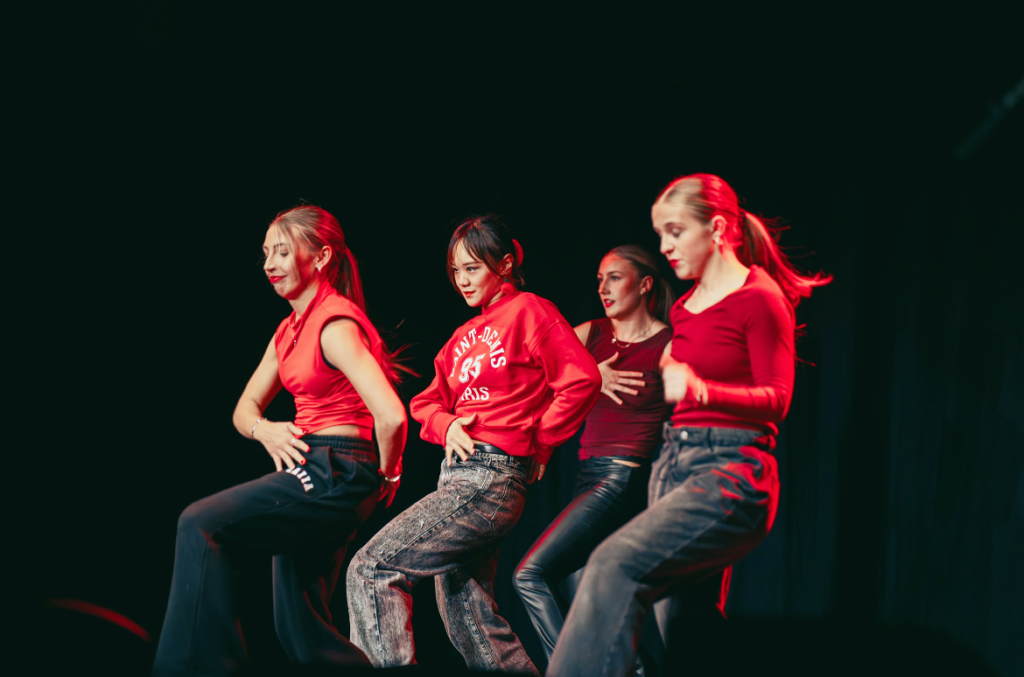
Ningning dancing with her Queen’s Dance Club members. Photo by Queen’s Dance Club.
But the real turning point came when I attended the Socio-Legal Studies Association (SLSA) Annual Conference this year. As one of the key conferences in my field, I had originally planned to submit an abstract related to my doctoral research. Then I saw a session theme that stopped me in my tracks: Dance/Law.
The question it asked was simple but inspiring: What can law do for dance, and what can dance do for law?
These two things I had always kept in separate boxes were suddenly brought together. It felt absurd, yet my heart started racing. This was it – two of my deepest passions, finally meeting. I wrote and submitted my abstract right away. It was accepted just as quickly.
From Belfast to Brighton
That is how I found myself in Brighton – a seaside town on the south coast of England, at the University of Sussex – about to experience something I will never forget.
At the Dance/Law session, scholars and dancers from around the world shared widely different perspectives. Some explored dance as a metaphor for legal tensions – the push and pull of a duet mirroring legal negotiation. Others examined the unwritten rules within dance as a form of soft law, or the question of consent and bodily boundaries in social dancing.
I learned a story from southern Nigeria. In one tribal community, before formal legal language existed, how did people resolve disputes? By dancing.
Then the speaker paused and said, quietly: “Let me show you.”
What followed was not a performance. It was a conversation, a short Afro dance sequence unlike anything we would learn in a dance studio. The speaker interacted with a friend sitting in the audience, responding to her through movement. When it finished, she calmly explained that the sequence expressed criticism of a legal procedure. In fact, across many African societies, dance has historically functioned as a form of testimony, protest, and even judicial argument. It was a living archive of community justice before colonial legal systems were imposed.
We sat in stunned silence.
Dance, I realised, existed before every social institution, rule, or legal system we now take for granted. It is an older language of expression, communication, and meaning. We had simply forgotten.
Another story came from Scotland. The old Scottish Parliament building was a place where trials were held. During breaks, lawyers were not allowed to leave the building. Instead, they circled the parliament hall, negotiating while walking in step with one another, their matching pace making it difficult for others to overhear. This process resembled a social duet, requiring trust, coordination, and mutual responsiveness. The structure was unmistakably dance-like.
I also had the chance to present my own research, Law on the Dancefloor: Body, Gender, and the Boundaries of Freedom in China’s Hip-Hop Culture. Drawing on my experience as both a legal researcher and a hip-hop dancer, I explored how China’s dance scene is divided between feminised commercial studios and masculinised battle competitions, and how law and social norms silently choreograph who may move freely and how.
The battle floor, I argued, is like a courtroom: music acts as law, dancers as advocates, and judges as a jury. Dancers are told to break rules, yet victory depends on a convincing interpretation within that framework. To my surprise and gratitude, the presentation received warm attention and thoughtful feedback from fellow scholars, many of whom shared their own encounters with dance and the law.
The fascinating studies presented at the Dance/Law session, along with my own small contribution, demonstrate that law and movement have never been as separate as I once believed.
Moot Court Room, University of Sussex (Photo by Ningning Liu)
The Morning We Danced in a Moot Court
The next morning, we experienced something that may well be once in a lifetime.
At 9 a.m., in a law school moot court room, we danced.
A group of legal academics from across the world gathered – not to share their research, but to share their dance moves.
At the beginning, one scholar guided us to reconnect with our bodies. We touched our fingertips to our arms, felt our skin, and reached out to tables and chairs, simply noticing our physical presence in the world.
Then one of the organisers taught us basic ballet. I felt like a calm, proud, and elegant swan gliding across a lake. She ended the session by inviting us to freestyle using what we had learned.
Finally, my partner Joseph, a professional hip-hop dancer who had come with me to Brighton, taught a short routine he had choreographed the day before. The music started – the unmistakable beat of Still D.R.E.
The atmosphere changed instantly. Everyone moved joyfully. It did not matter what we wore or how we looked. When the organisers asked for reactions, we laughed: “Too short! Again!”
Everyone was simply happy.
As we left, the researchers (or should I call them dancers now?) stopped us to express their gratitude. “You both gave me so much energy. I am so happy today.”
But they were the ones who had given us energy, and a revelation.
Later, the organisers sent a follow-up email. At the end, they wrote:
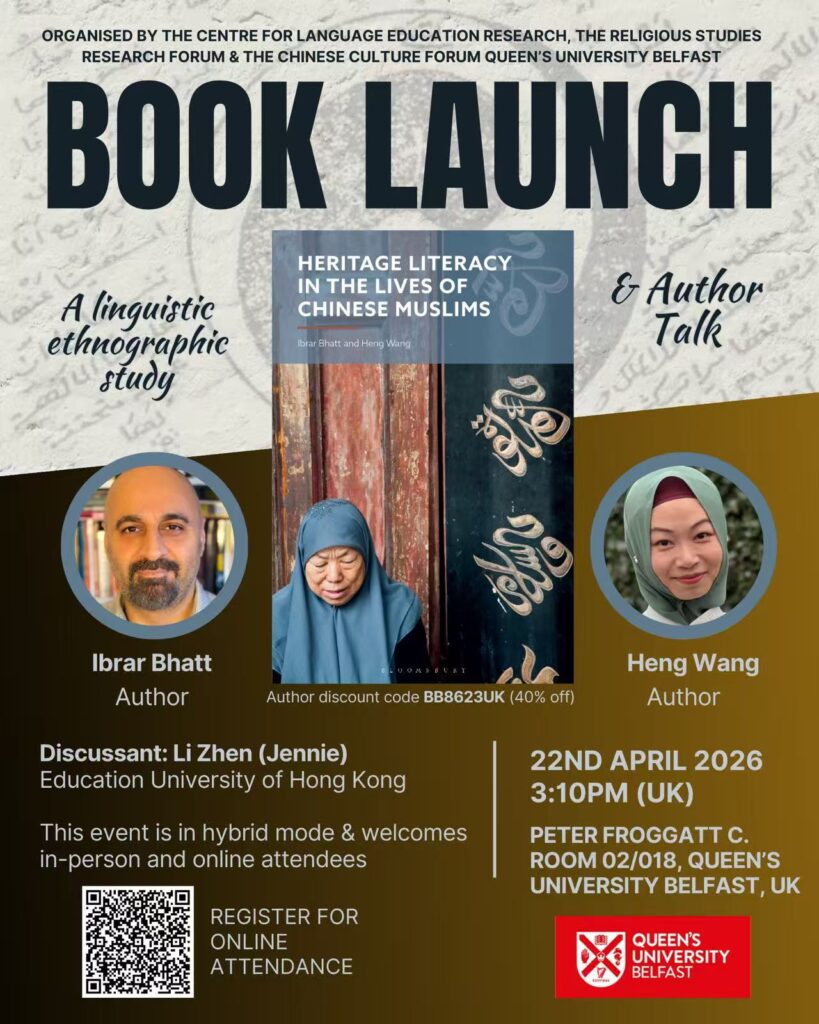
There will be a book launch at Queen’s University Belfast on Wednesday 22nd April. While it is an in-person event, there is an option to tune in via MS Teams. All welcome!
Book Title: Heritage Literacy in the Lives of Chinese Muslims: A Linguistic Ethnographic Study Authors: Dr Ibrar Bhatt and Heng WANG (Queen’s University Belfast) Discussant: Zhen (Jennie) LI (Education University of Hong Kong) Organiser: Dr Aisling O’Boyle (Queen’s University Belfast)
Co-Organisers:
The Centre for Language Education Research, School of Social Sciences, Education and Social Work
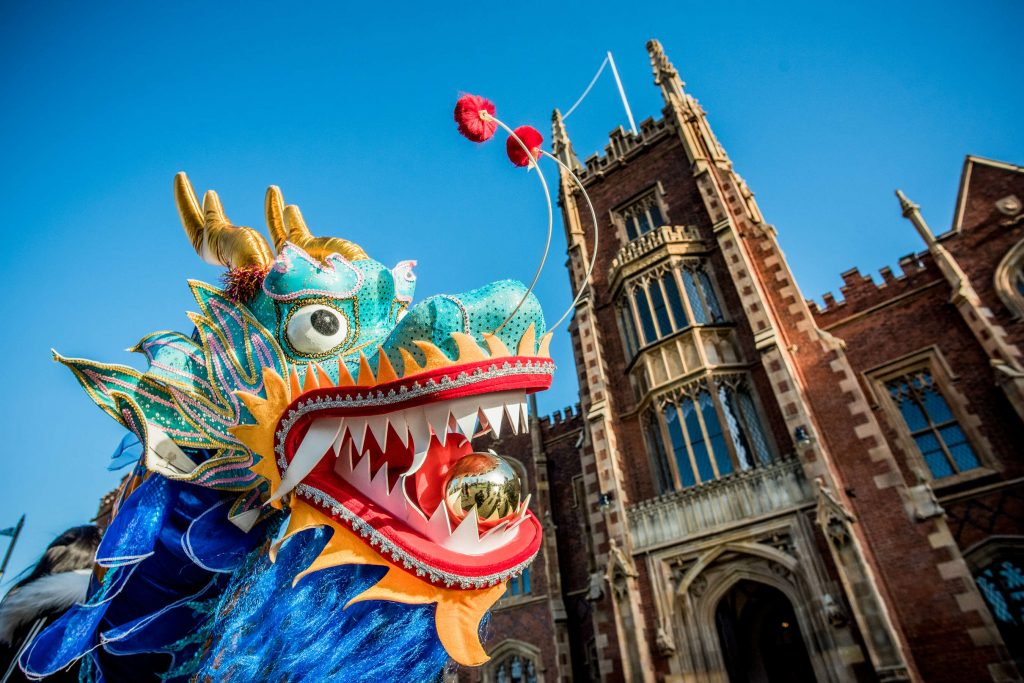
Longtaitou (龙抬头 Lóng tái tóu) Festival, also known as the Dragon-Head-Raising Festival, falls on the second day of the second lunar month each year and marks the traditional beginning of the spring farming season. This year, it falls on Friday 20 March.
Inspired by the symbolic “raising of the dragon’s head”, we are delighted to see a growing interest in Chinese language-related programmes and events. We warmly welcome more participants to join a variety of upcoming activities, as listed below.
Chinese Bridge Competition / Business Chinese Competition – Candidates
The “Chinese Bridge” Chinese Proficiency Competition is a large-scale international contest organised by the Centre for Language Education and Cooperation. Over the years, 24 UK national finals have been held, with outstanding winners invited to represent the UK at the global finals in China. Participants at this stage have the opportunity to compete for scholarships to further their Chinese-related studies at universities in China.
The Chinese Competition of Business Innovations & Charitable Projects for UK University Students (aka Business Chinese Competition), as a sister event to the Chinese Bridge Competition for UK University Students, is a well-known brand in Business Chinese education across the UK. It aims to promote the improvement and development of Business Chinese teaching in the UK universities, stimulate students’ potential for business innovation, and encourage awareness, participation, and responsibility in charitable projects initiatives. The competition also enables students studying Business Chinese to apply their knowledge in practice and achieve meaningful outcomes, nurturing talents who can contribute to China–UK trade exchange and cooperation.
The 2026 UK national finals will take place on Saturday 6 Friday 5 June in London, organised by the UK Organising Committee. Preliminary rounds will be held by each participating university in advance, with a deadline of Friday 24 April for completion.
Entry Requirements
Applicants must:
Be a university student, aged 18-30
Be of non-Chinese nationality
Have been born and raised outside China
Have a first language other than Chinese
Not have taken part in the semi-final or final competition in China in previous years
To know more details and to express your interest, please contact Liang.Wang[at]qub.ac.uk directly, with a brief self-introduction of your education background, including studying of Mandarin Chinese, by Thursday 2nd April.
Chinese School – Teachers/Teaching Assistants
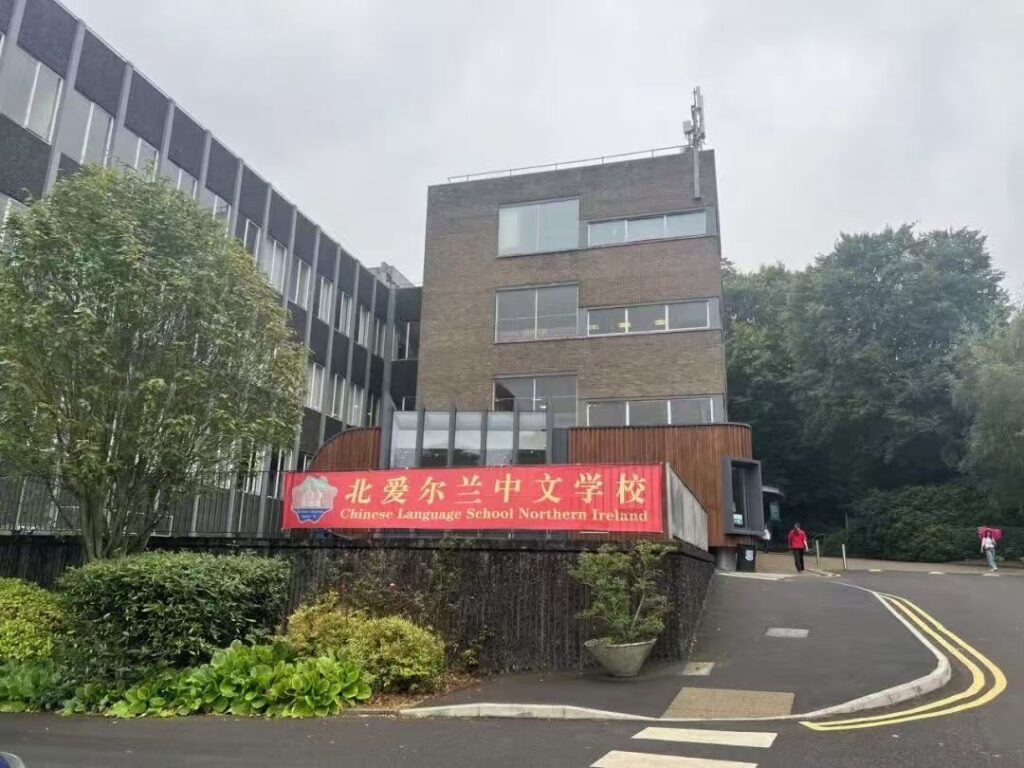
The Chinese Language School Northern Ireland is currently seeking volunteers to support teaching and classroom activities during term time throughout the academic year. Volunteers are expected to commit to the school’s timetable during term time; however, some flexibility can be accommodated with advance notice.
Classes are held weekly on Sundays from 1:00 pm to 3:00 pm. Suitable candidates are preferably those with a strong background in Chinese language proficiency, along with relevant teaching experience or pedagogical knowledge.
To express your interest, please contact Chinese Language School NI via their WeChat account (ID: beiaizhongwenxuexiao) or email (Chinese.school.ni[at]gmail.com).
Success Chinese Lion Dance Society – Club Members
Success Chinese Lion Dance Society is currently seeking to recruit new members, particularly college and university students, to form the core team for campus-based performances.
Students from all linguistic and cultural backgrounds are warmly welcome. Members from QUB will have the opportunity to establish a student-led society registered with the Queen’s Students’ Union, organise regular training sessions, and participate in community activities under the guidance of the Society’s master.
To express your interest, please contact sliondance[at]yahoo.co.uk
Chinese Culture Programme – Contributors
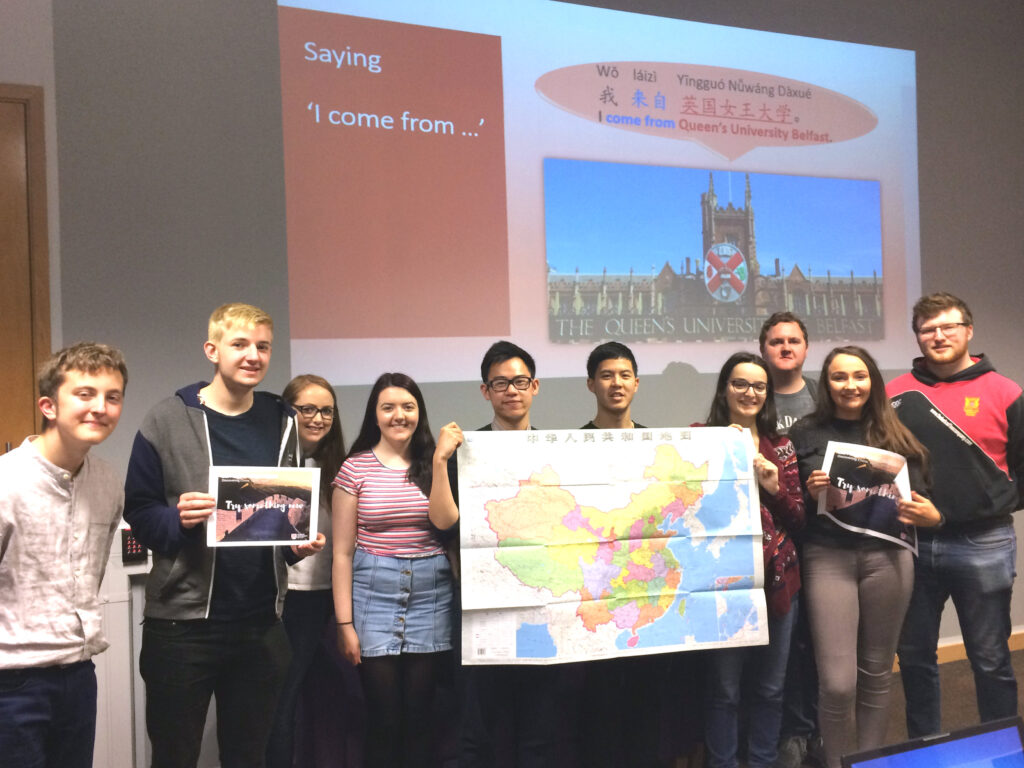
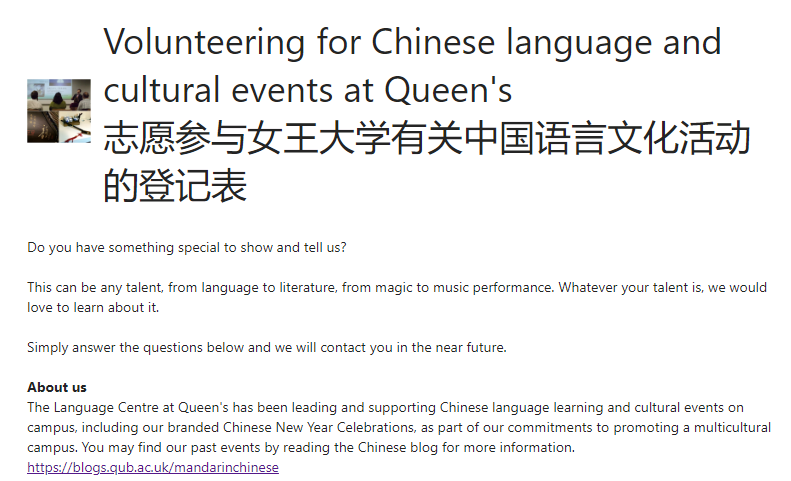
The Language Centre is looking for talented students and staff members to contribute to our Chinese Culture Programme at Queen’s. The engagement could be in the form of a variety of cultural performances, workshops or language/culture-related public talks and panels. The call is open to both Chinese-speaking and non-Chinese speaking volunteers.
We look forward to working with you in our future events.
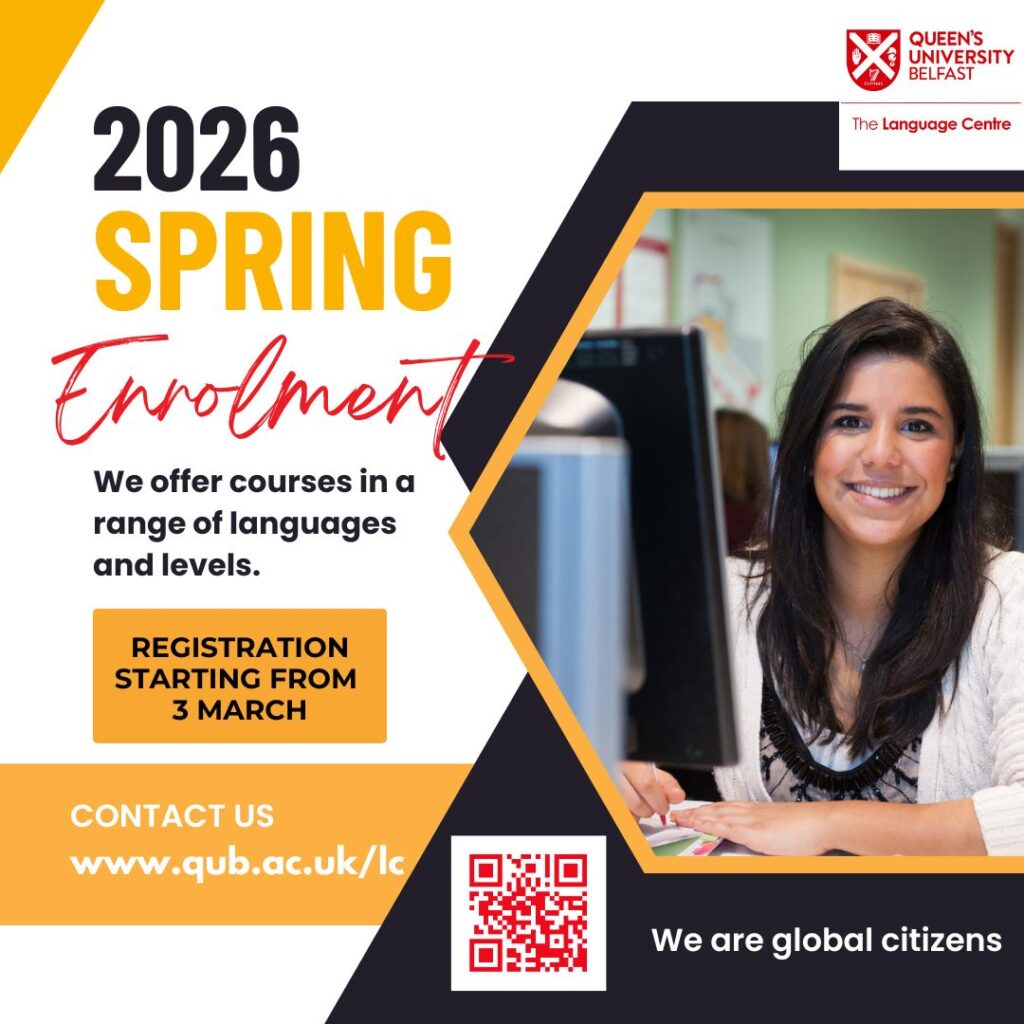
Finally, the third Semester Language Course registration is open and closes promptly at 17:00 on Thursday 16 April 2026. Classes are expected to be extremely popular and fill up quickly, so early registration is strongly recommended.
To register with a Mandarin Chinese course, please follow the course information page for more information with links to registrations.
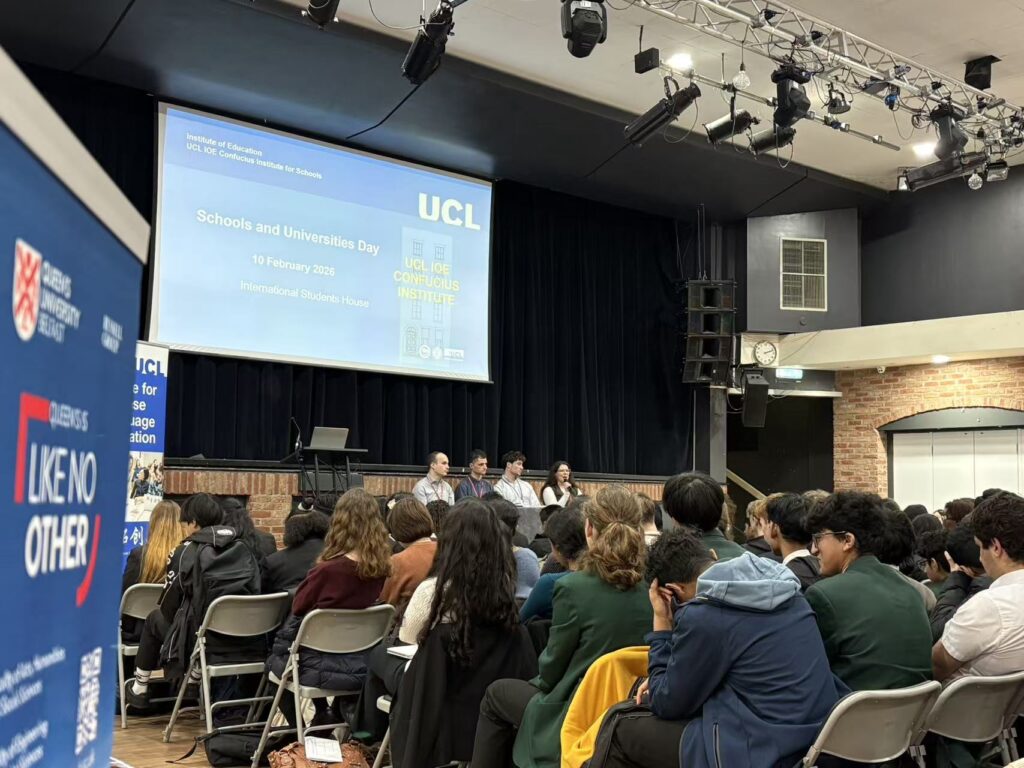
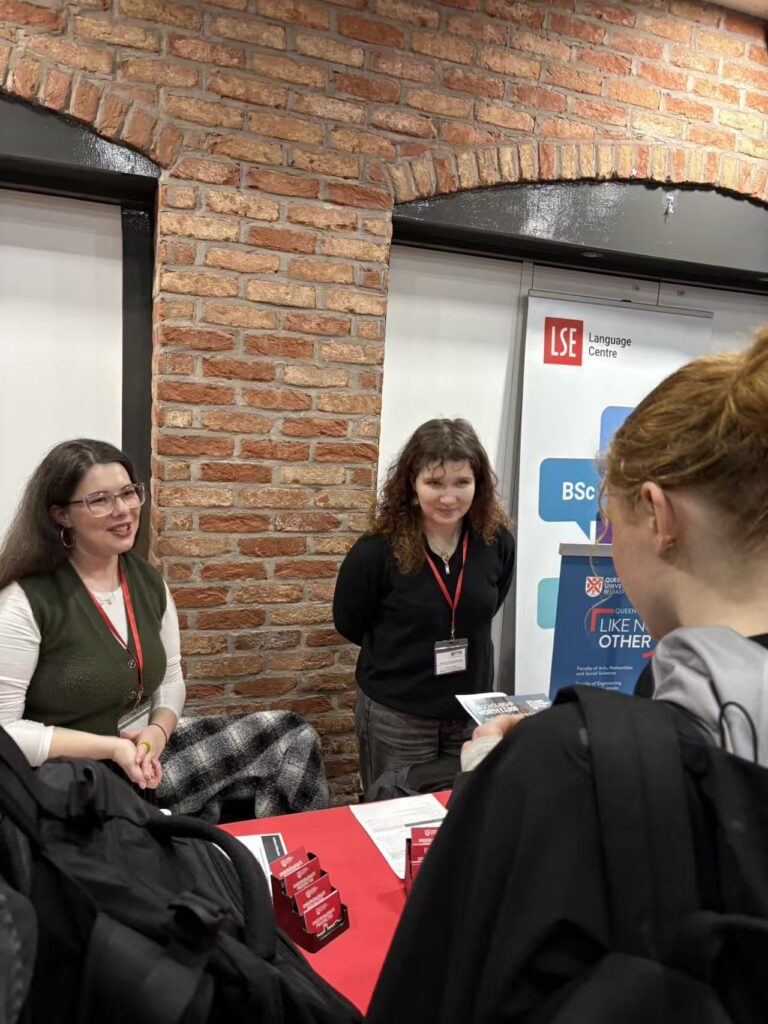
On Tuesday 10 February, Queen’s University Belfast took part in the 8th Schools and Universities Day – Chinese (and related) Learning Pathways, hosted by the UCL IOE Centre for Chinese Language Education. Bringing together 15 universities and over 400 school students and teachers from across England, the event was a vibrant space for sharing ideas, building connections, and inspiring the next generation of Chinese language learners.
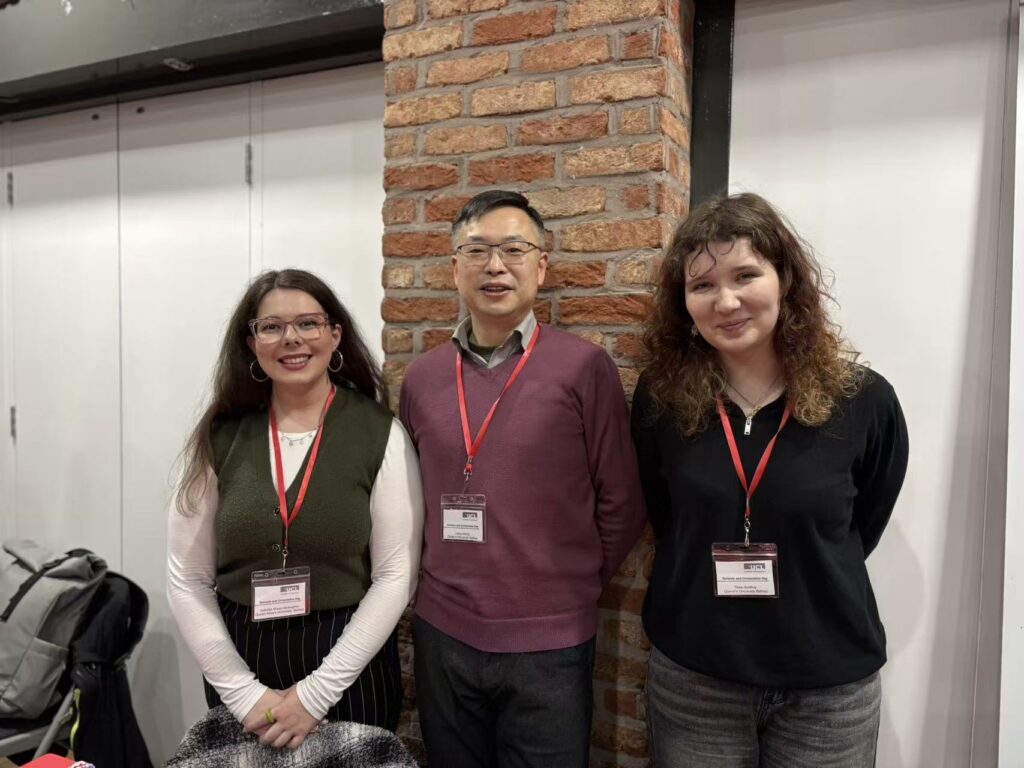
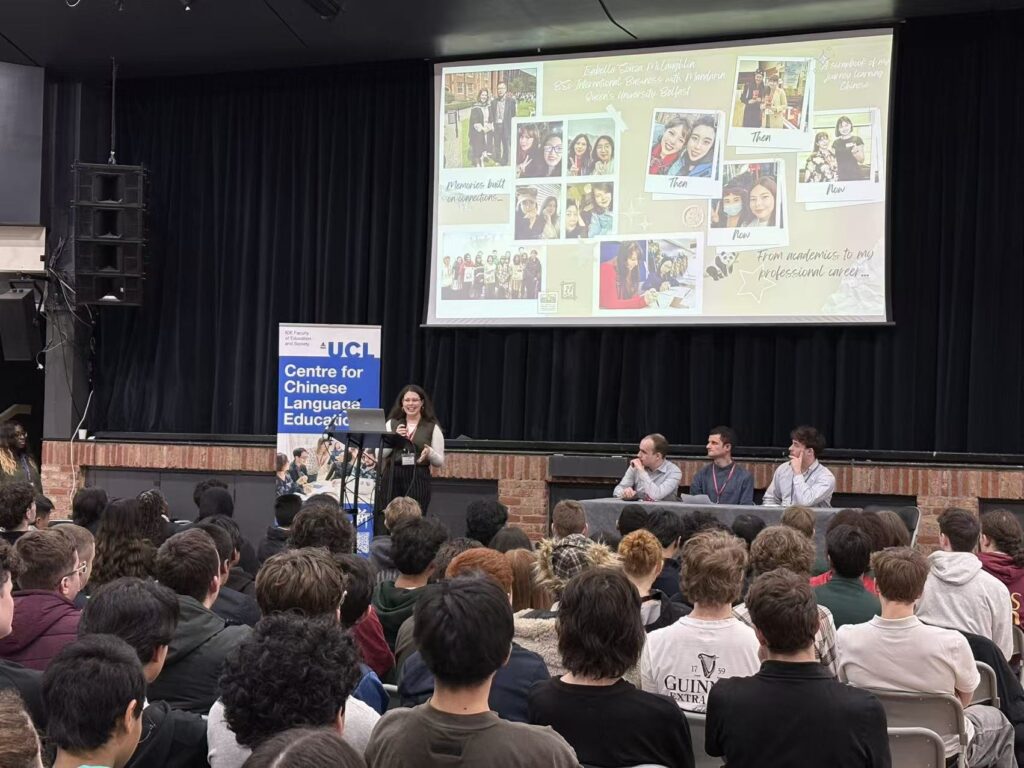
Isabella, Liang and Thea (left to right)
Dr Liang Wang (Queen’s Language Centre) was invited to a round-table discussion on developing “China-literate” talent, exploring how schools and universities can work together to strengthen progression pathways. He showcased Queen’s innovative approach to intercultural learning through communities of practice, including initiatives such as the Chinese Culture Forum and Tandem Language Exchange Programme.
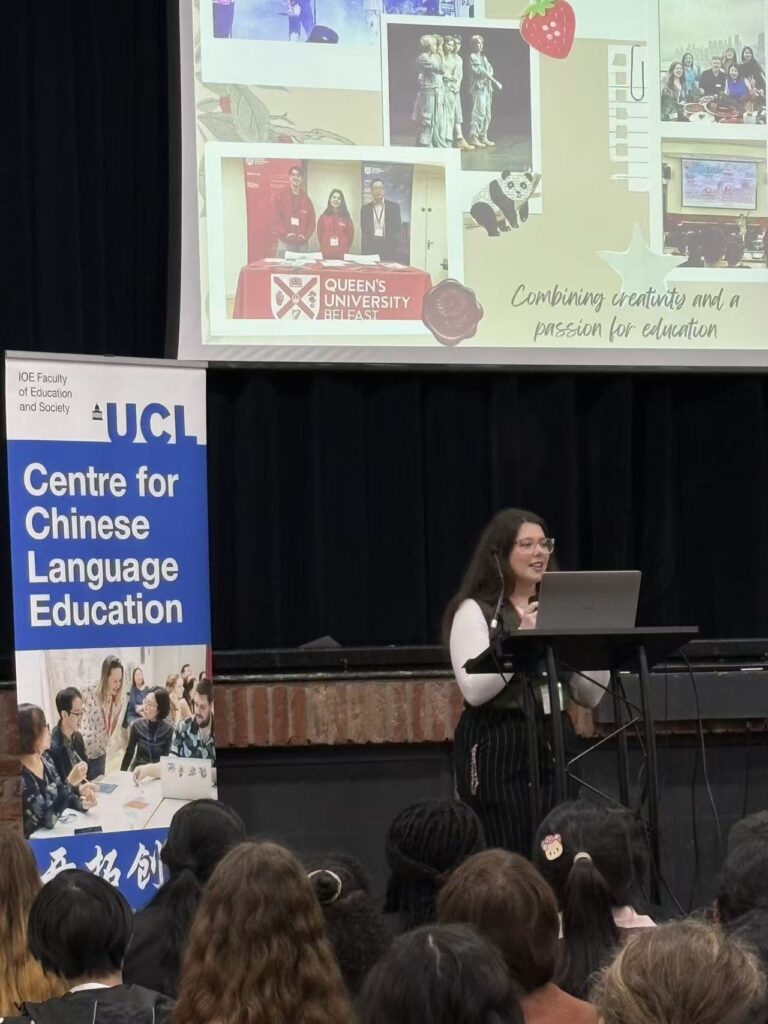
Alumna Isabella Souza McLaughlin (Global Student Recruitment) shared her journey of studying Mandarin Chinese as part of her International Business degree. Speaking on a university student and alumni panel, she emphasised the value of adaptability and openness in intercultural contexts, while reflecting on the challenges of completing her work placement during the pandemic. She also spoke about the rewarding experience of working with Chinese colleagues in both the UK and China in her role at Queen’s today.
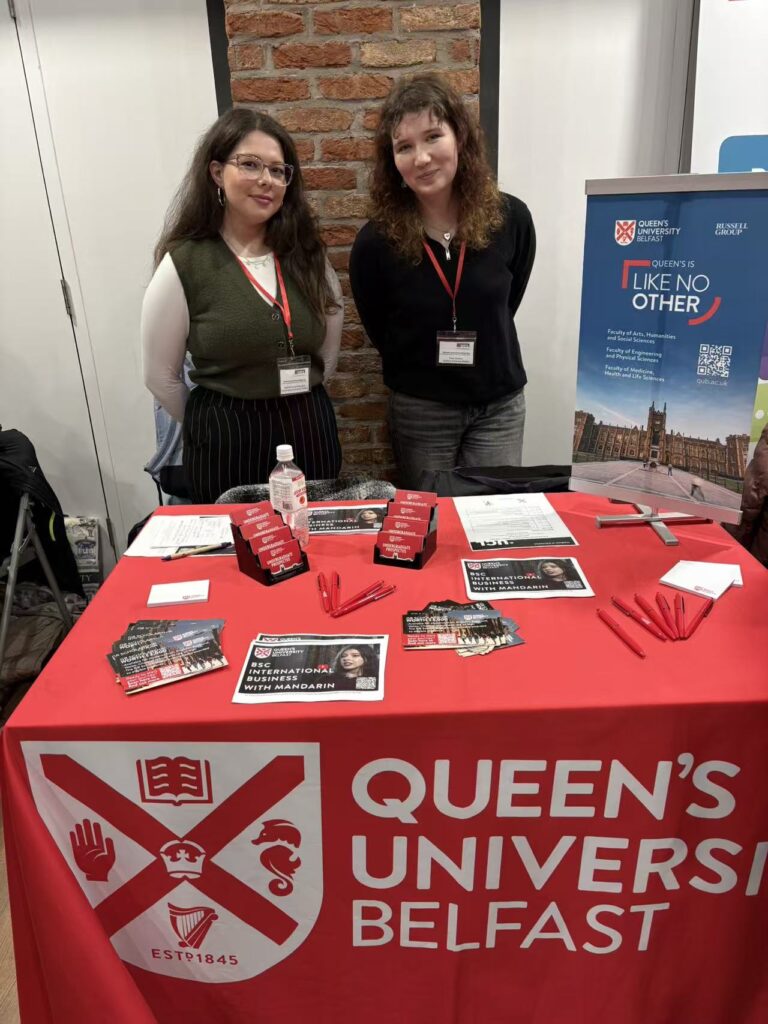
Supported by student ambassador Thea Godfrey, the team also hosted an information stand throughout the day, engaging with prospective students and teachers. From course details and scholarships to life in Belfast, Queen’s showcased the many opportunities available to students interested in combining Chinese with their degree and career ambitions.
The outreach and engagement provided an excellent opportunity to raise the profile of Queen’s and connect with the next generation of globally minded students in the UK.
About Schools and Universities Day (Click to expand)
This free event offers a unique opportunity for school teachers and secondary-school learners of Mandarin to meet departments from universities across the UK. Through these dialogues, learners can explore the range of opportunities and pathways for continuing Mandarin at university.
Since its inception, feedback on the day has been overwhelmingly positive. It creates space for informed discussions between students and university representatives and facilitates connections between teachers and universities.
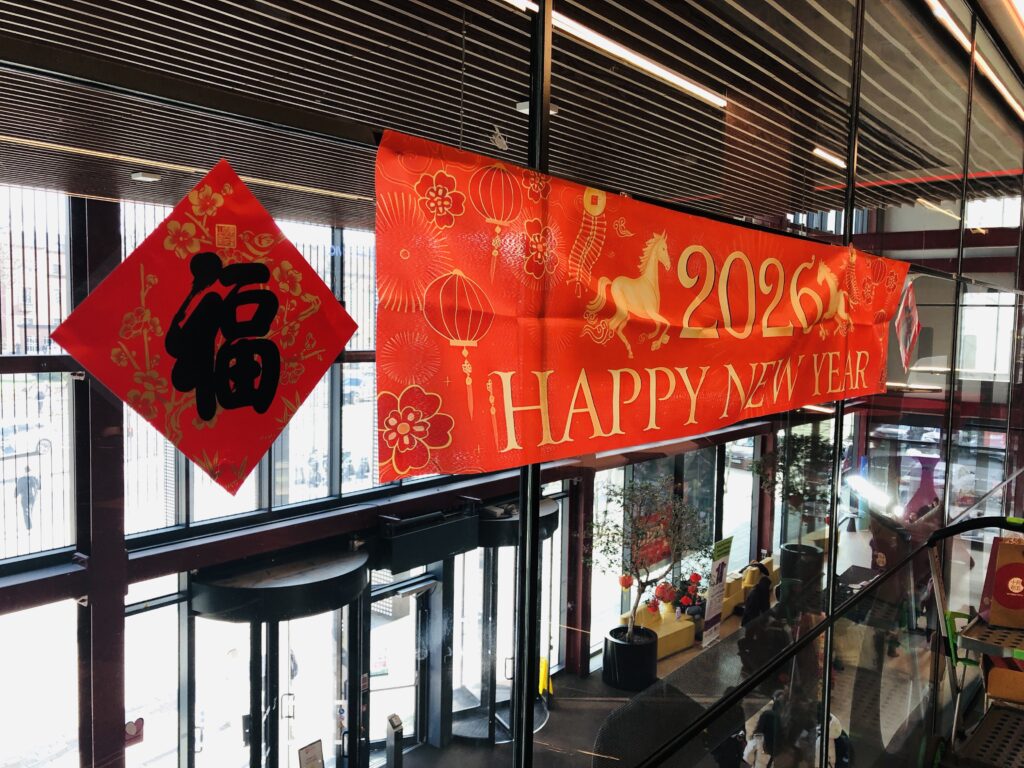
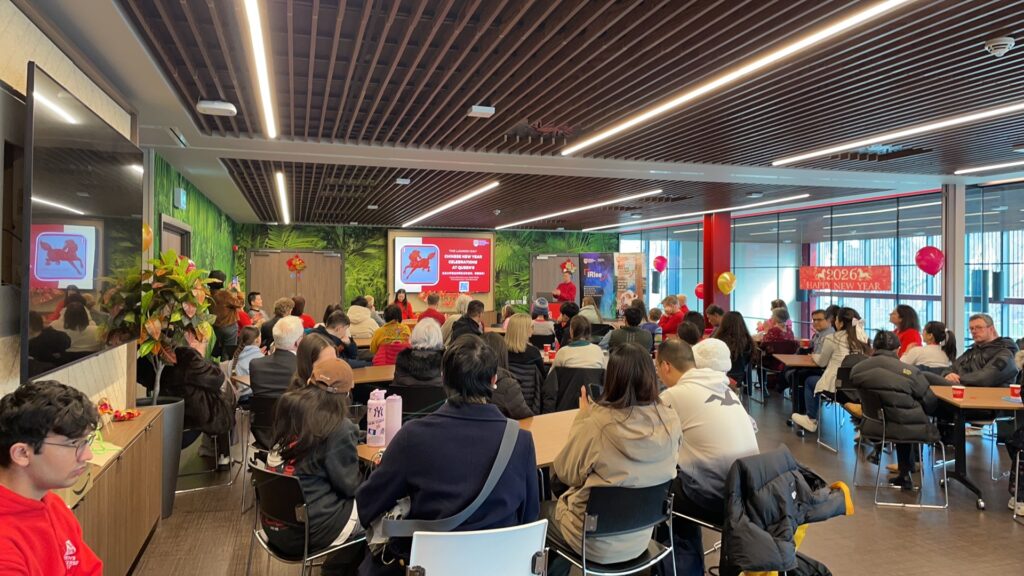
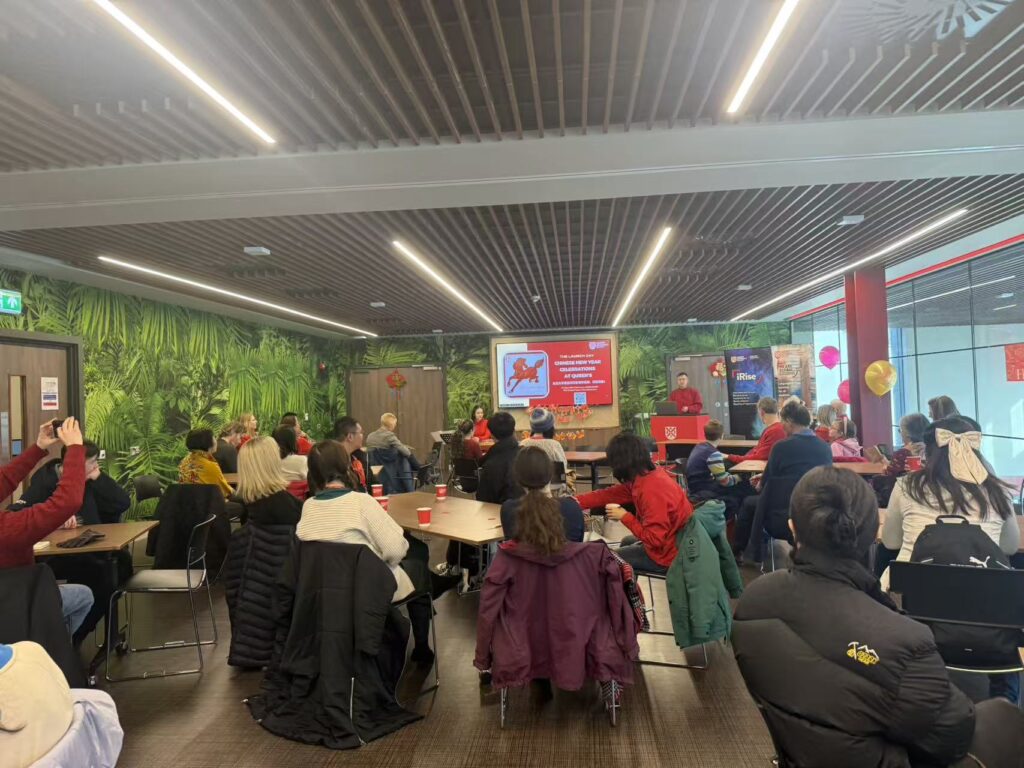
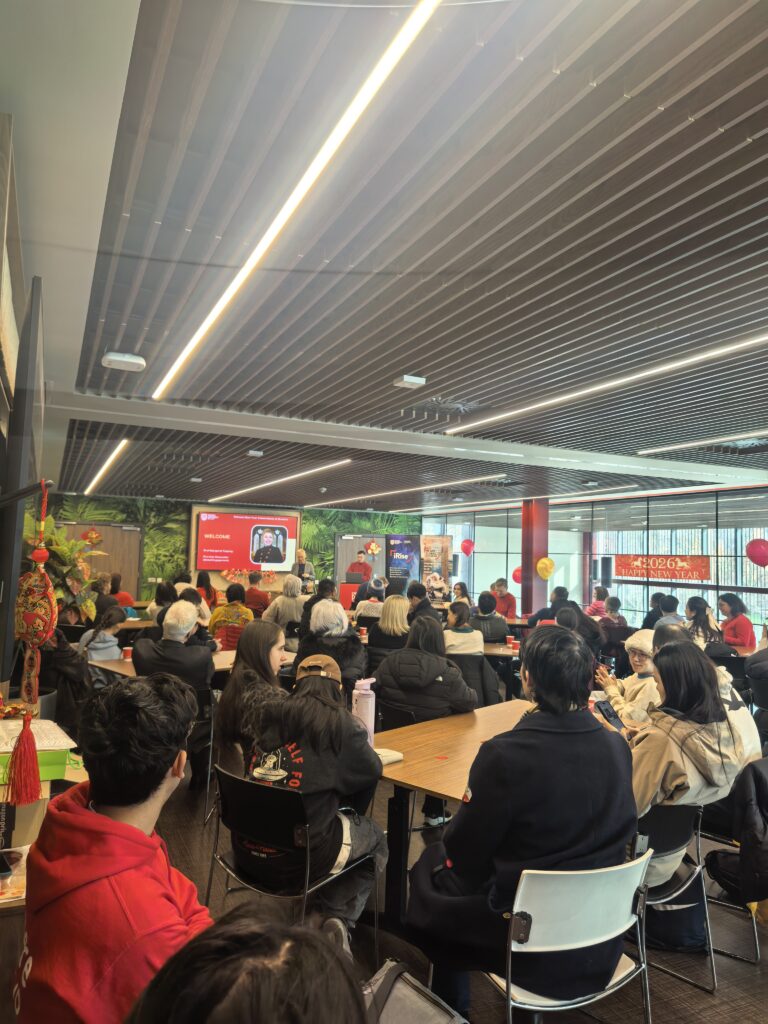
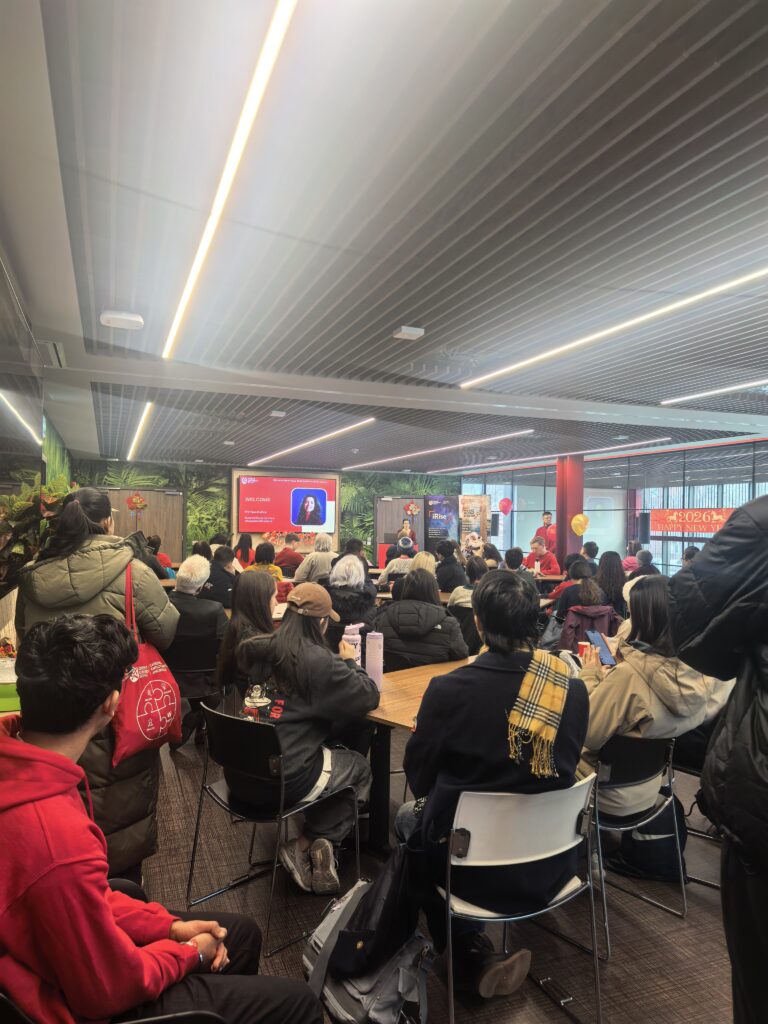
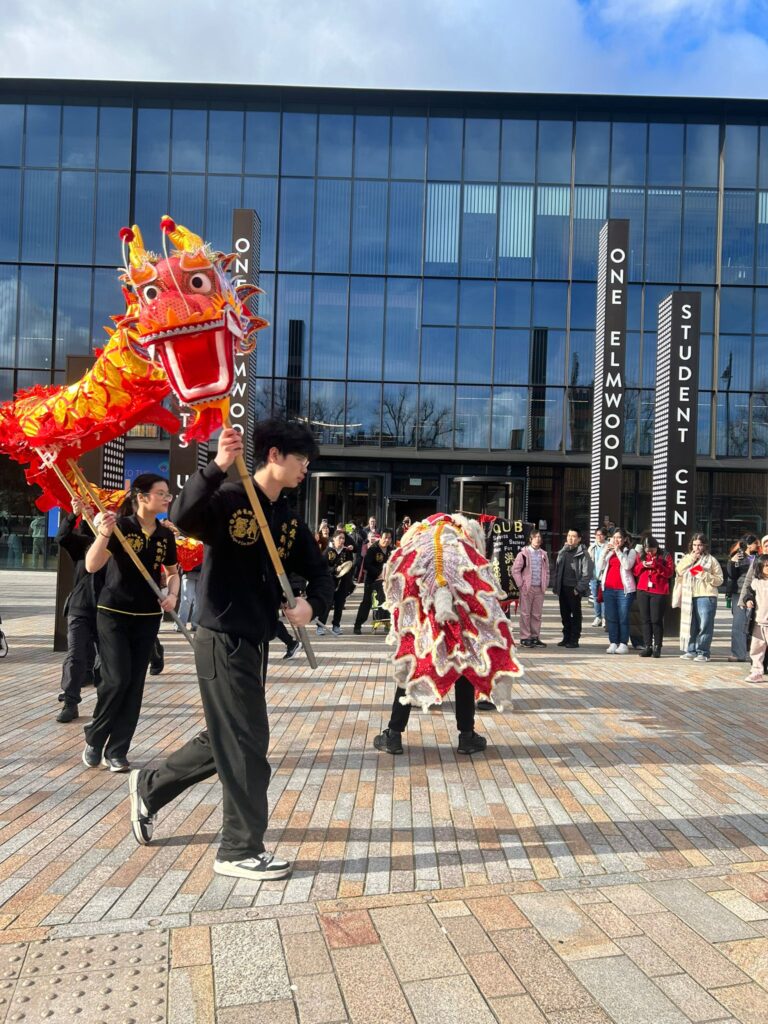
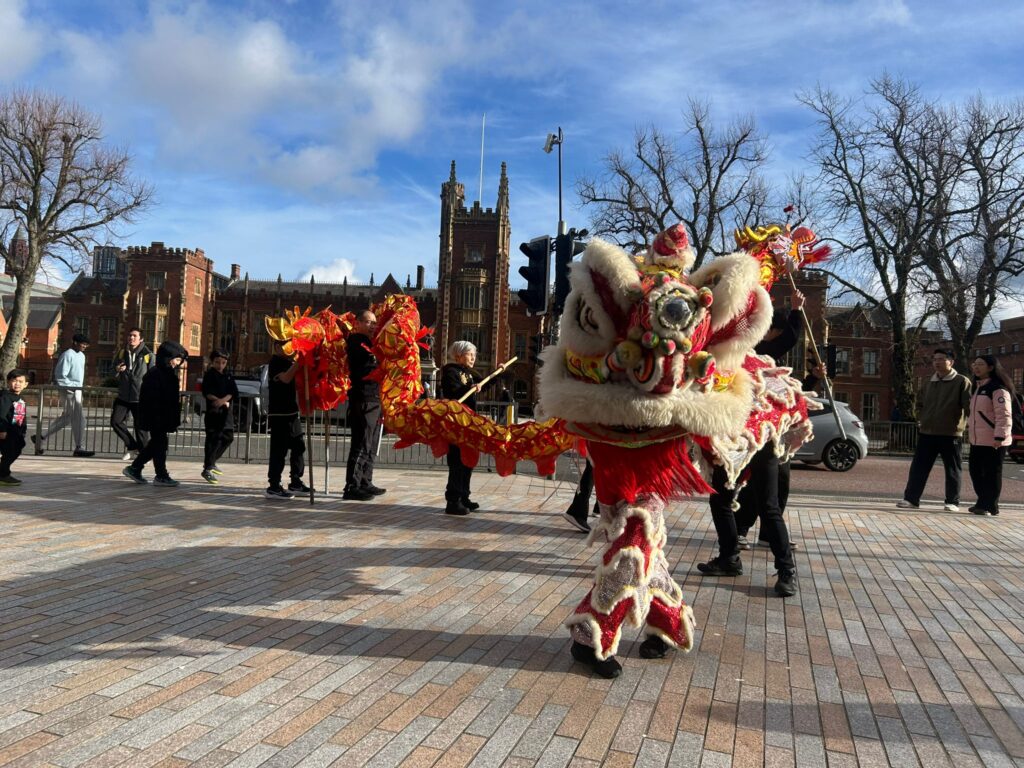
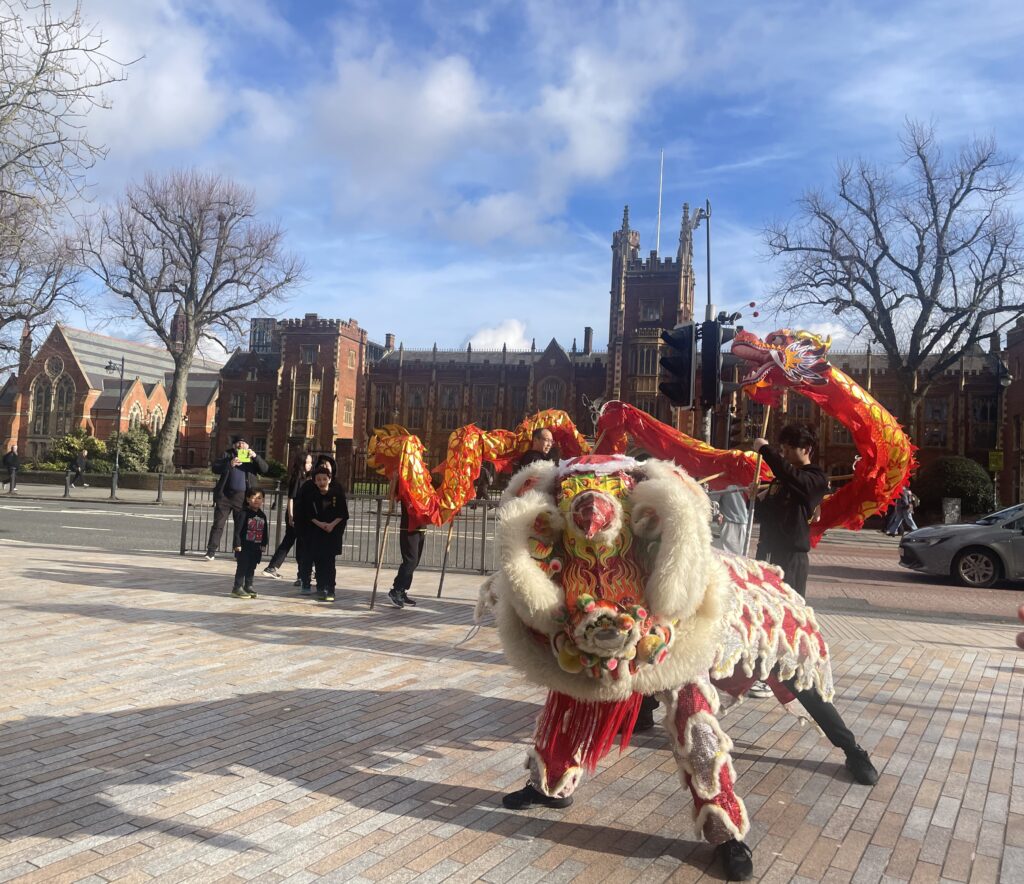
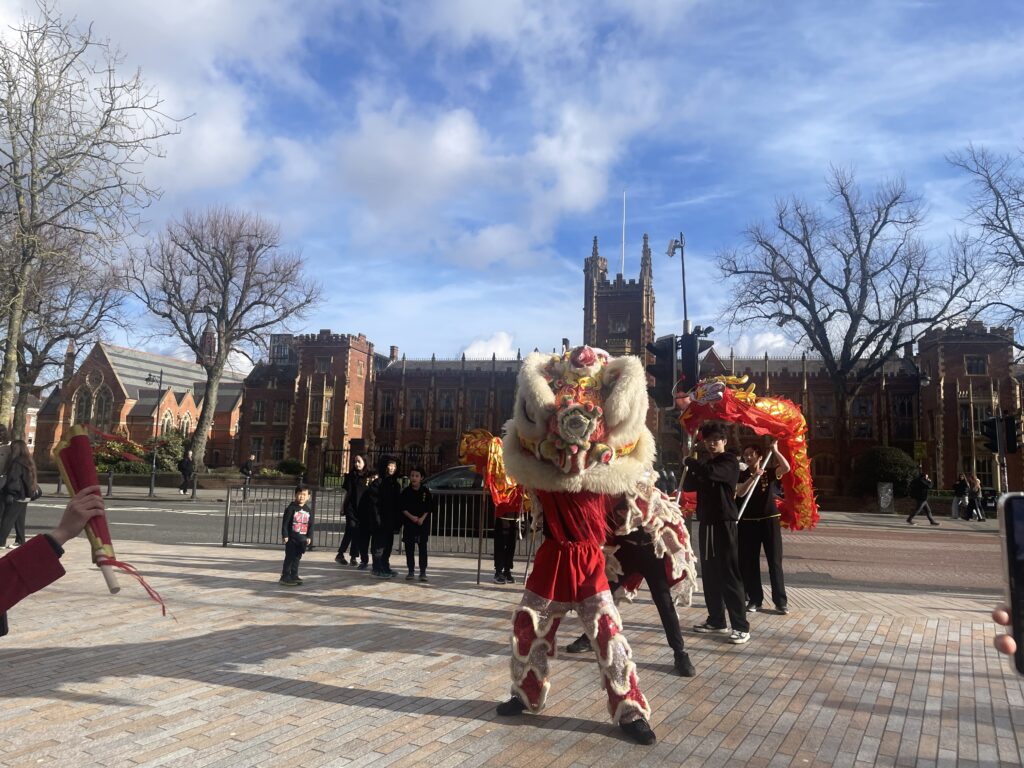
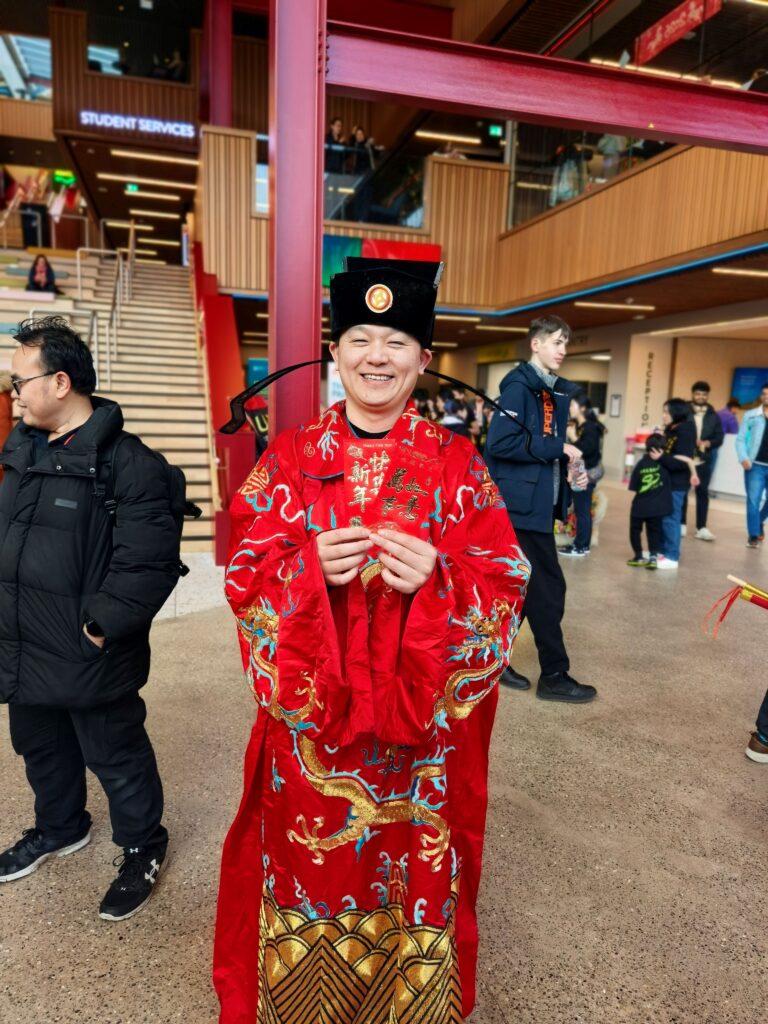
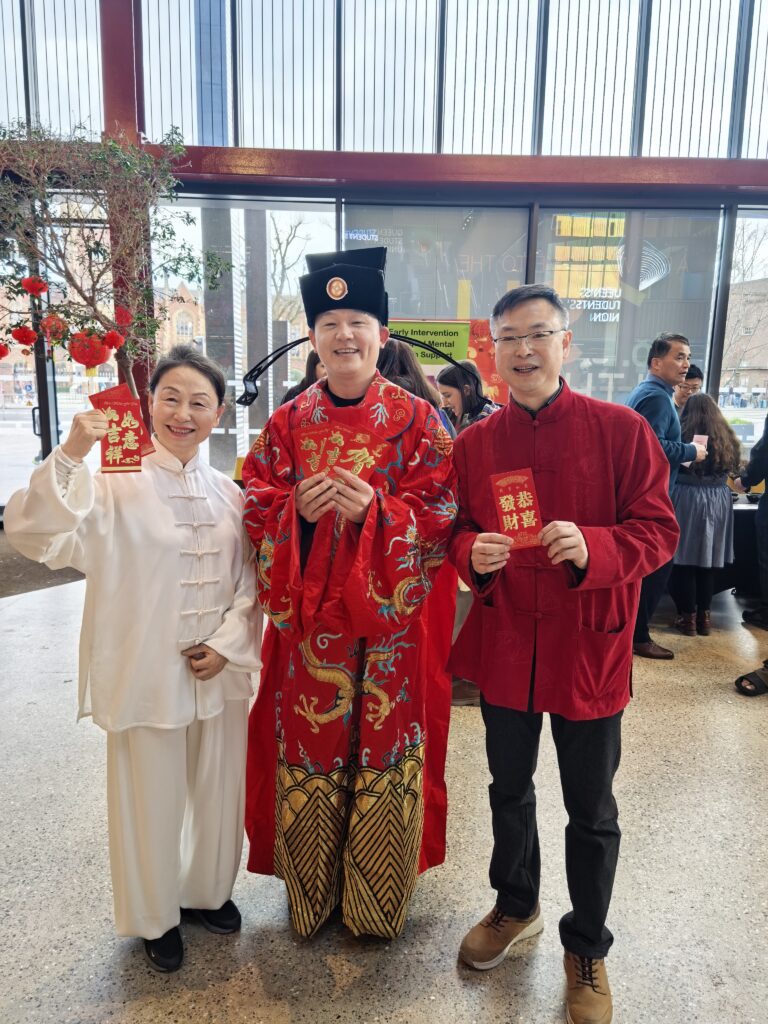
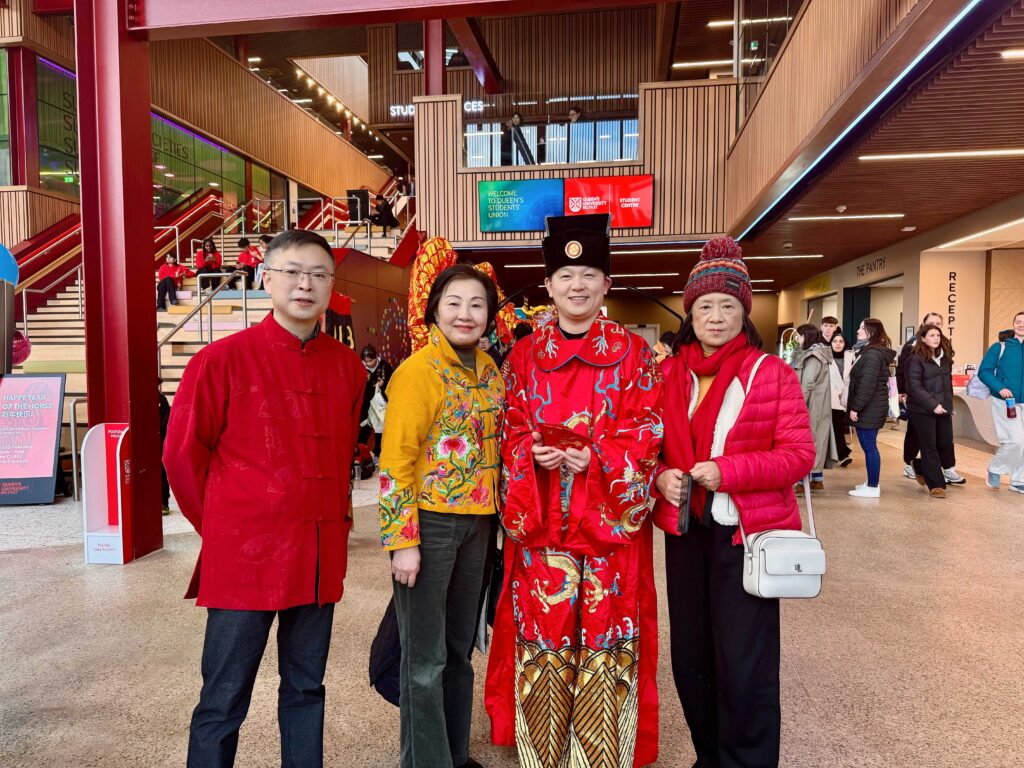
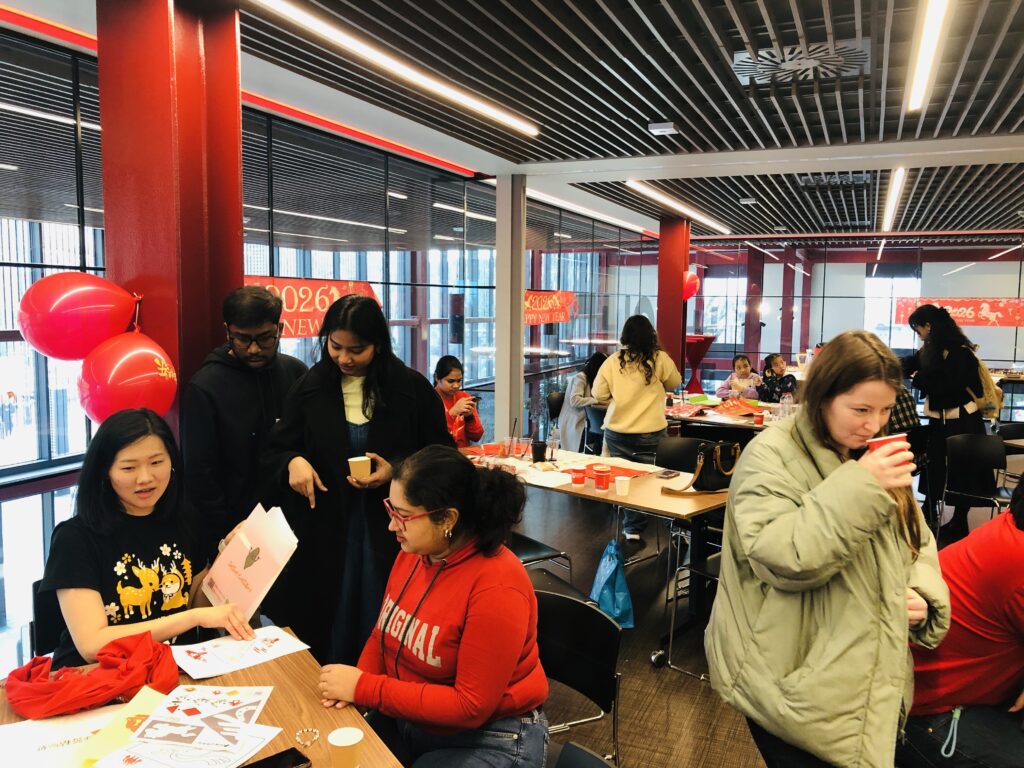
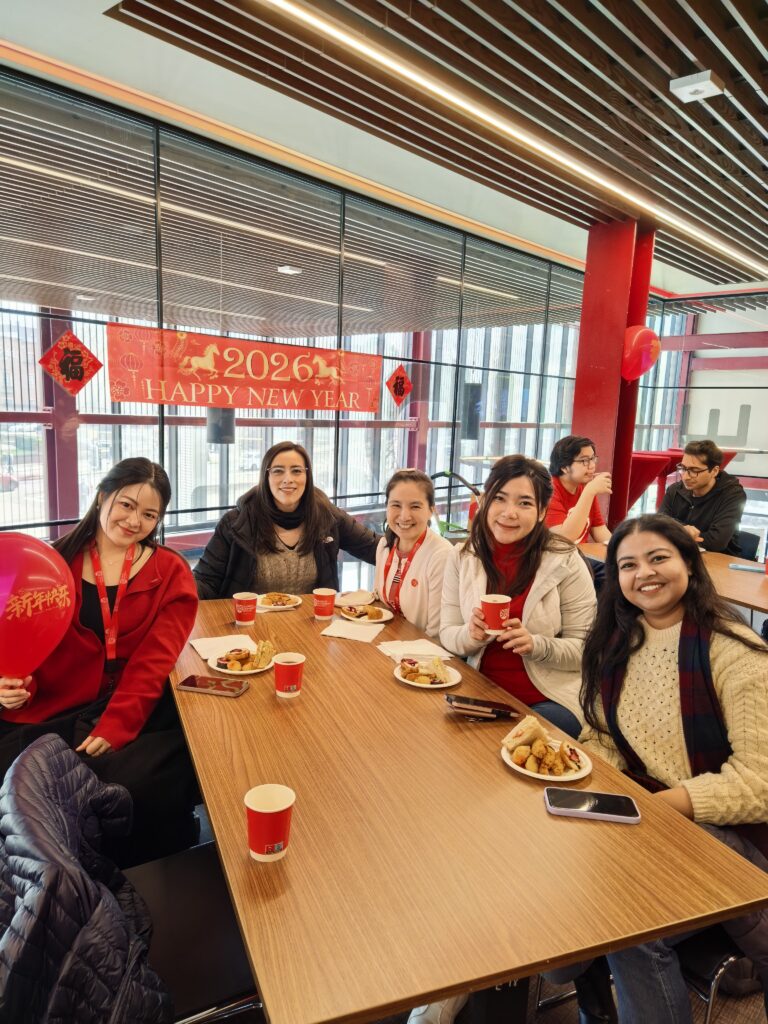
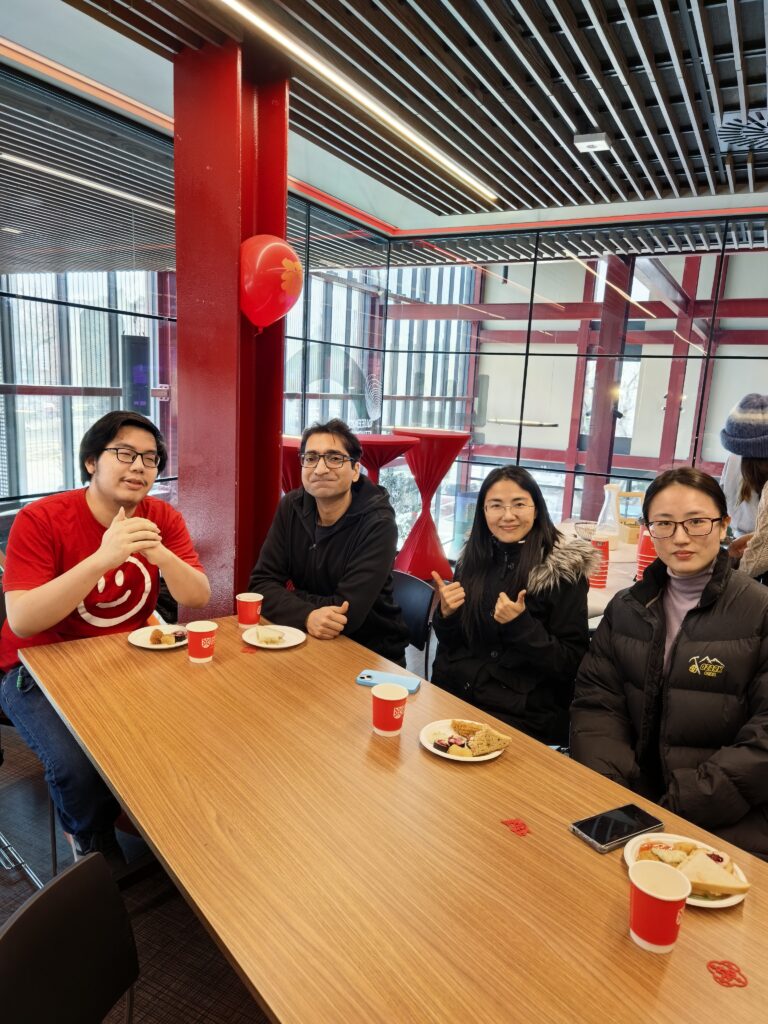
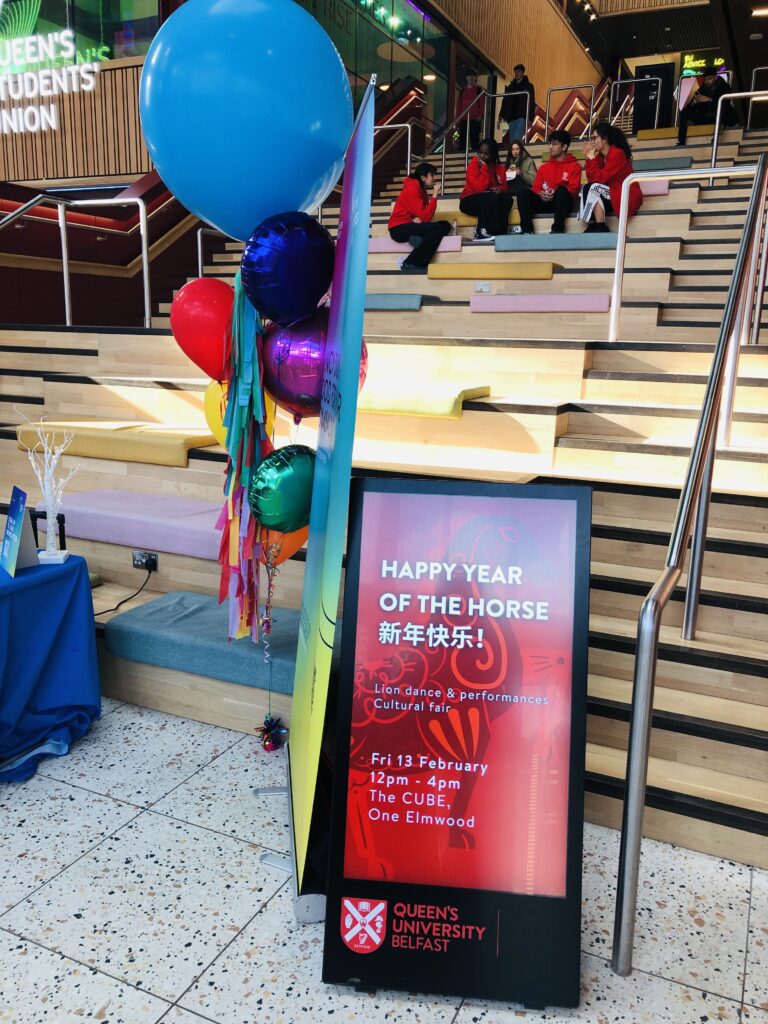
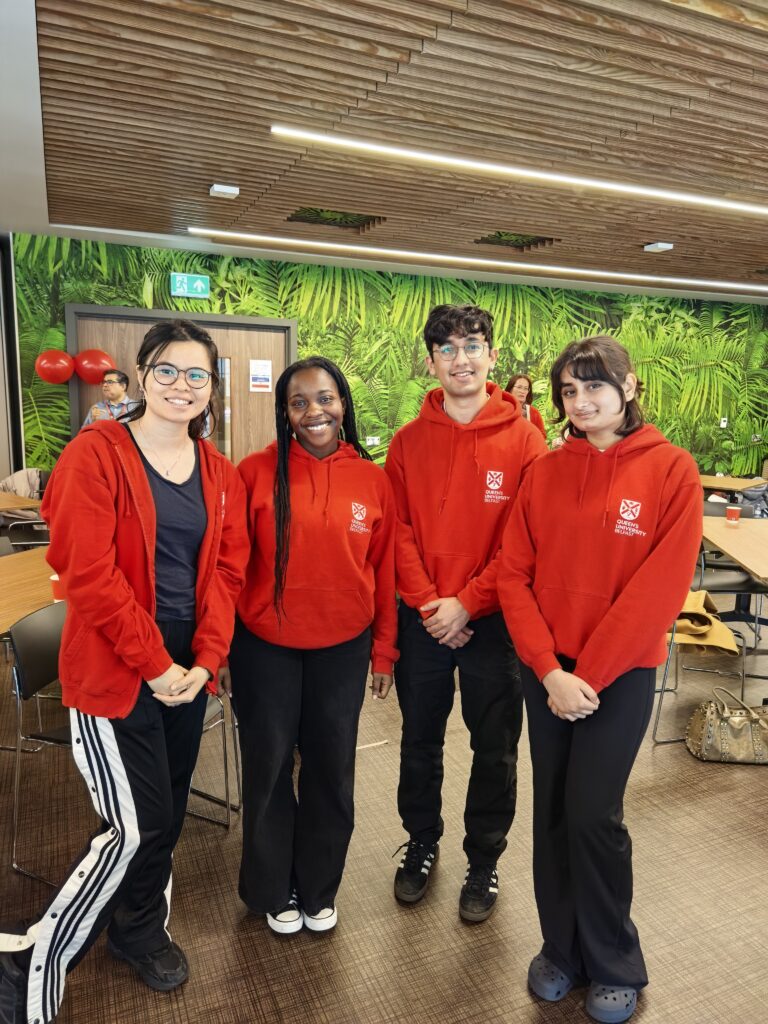
What could be better than a splendid day of sunshine on Friday 13 February, following such a long period of gloomy, rainy weather? On the day, over 60 Queen’s students, staff members, as well as civic partners and guests, joined the Chinese New Year celebration programme at One Elmwood, Queen’s – the hub for intercultural encounters and exchanges.
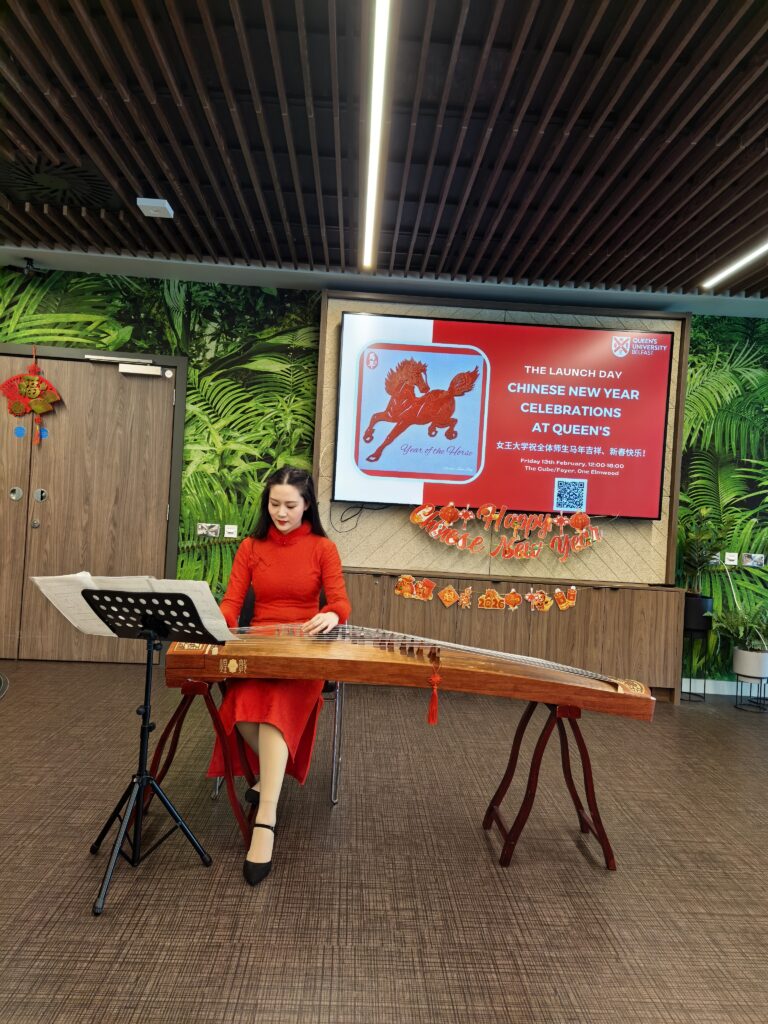
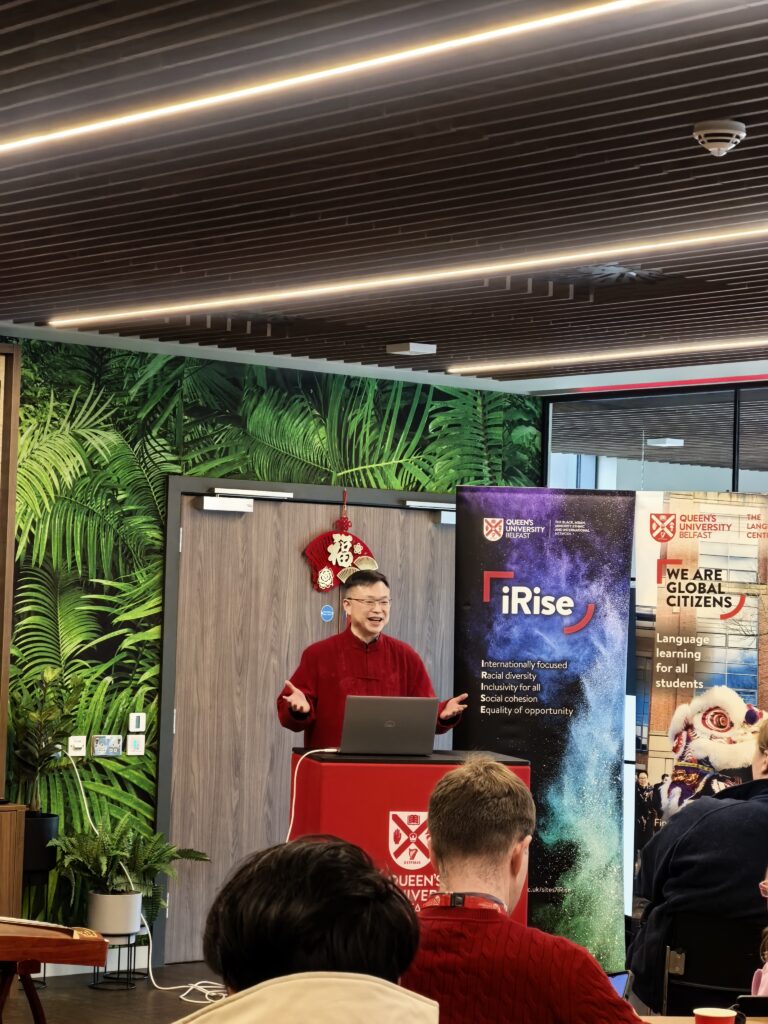
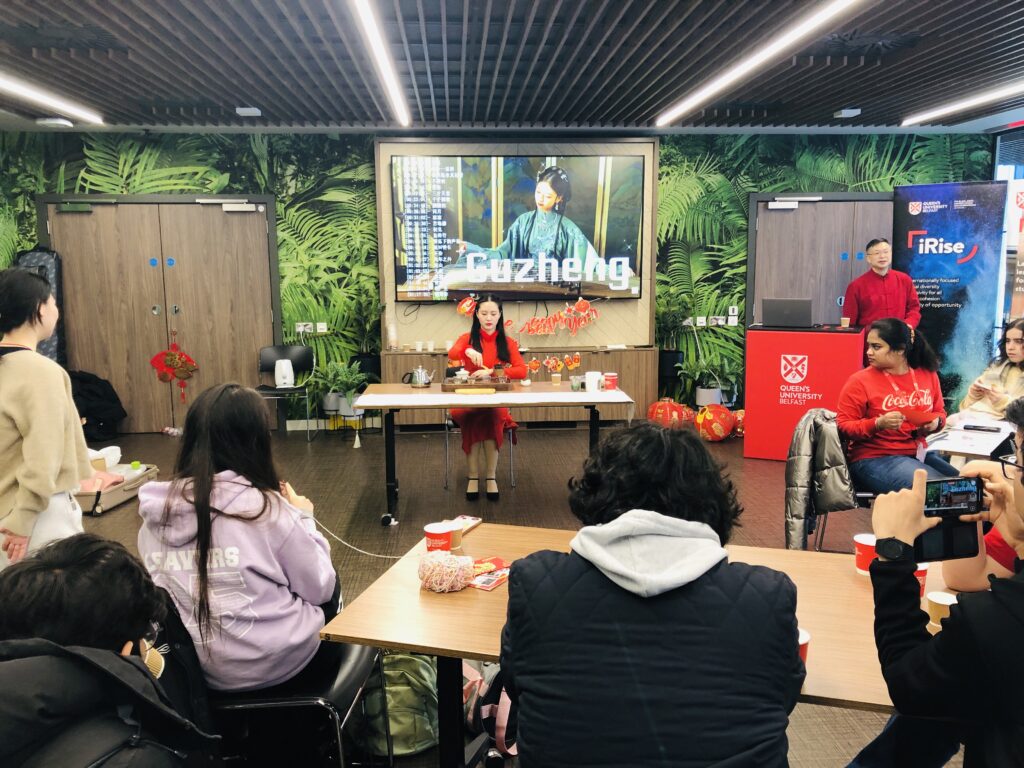
Chaired by Dr Liang Wang, the launch began with a captivating performance of traditional guzheng music by PhD candidate Fei Li from Queen’s Business School. Pro-Vice-Chancellor Professor Margaret Topping delivered the opening remarks on behalf of the University, highlighting Queen’s achievements in global engagement over the past year, particularly with Asian countries such as China and India. Dr Bee-Yen Toh, Co-Chair of the iRise Staff Network, and Thomas Smith, Language Centre Manager, also extended their welcomes to staff, students, and civic partners, emphasising the importance of intercultural understanding through language learning, dialogue and shared activities. Mórrigan McEvoy, Student Officer for Accessible Education, offered her greetings and encouraged students to actively participate in university events and contribute to building a multicultural campus.
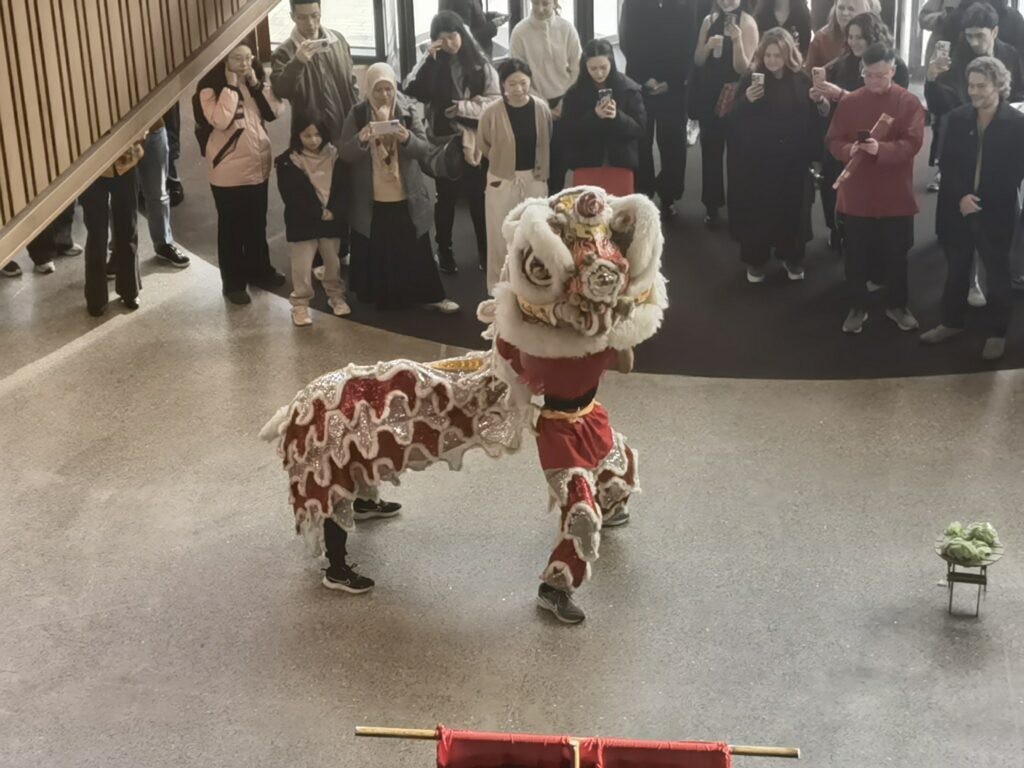
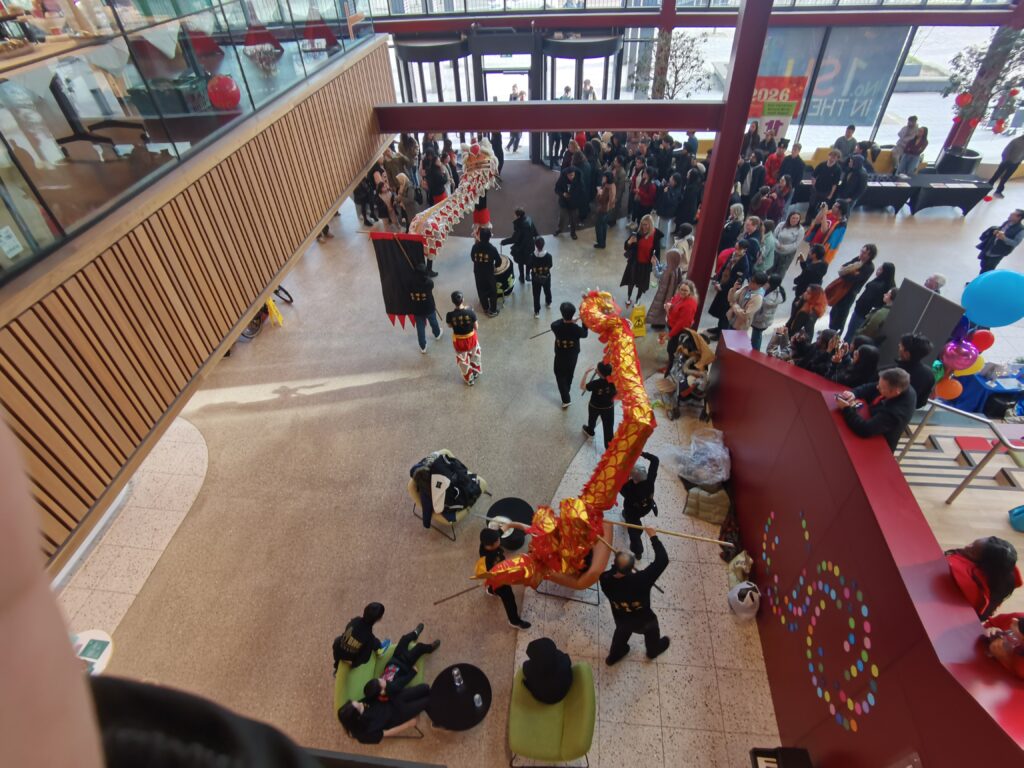
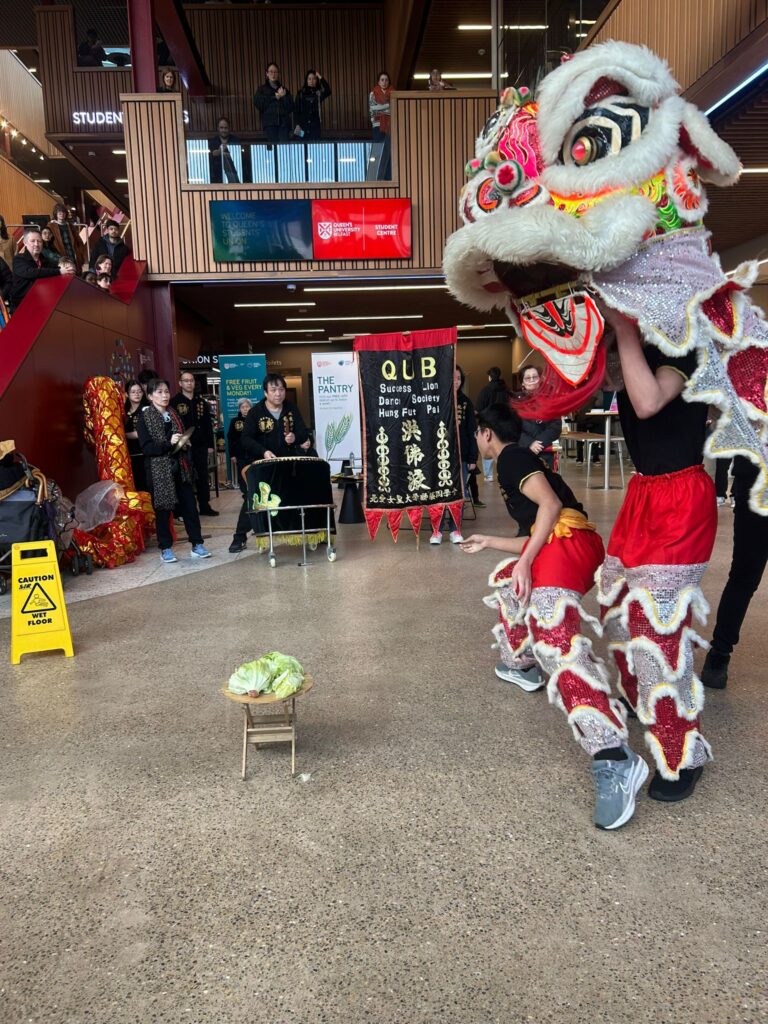
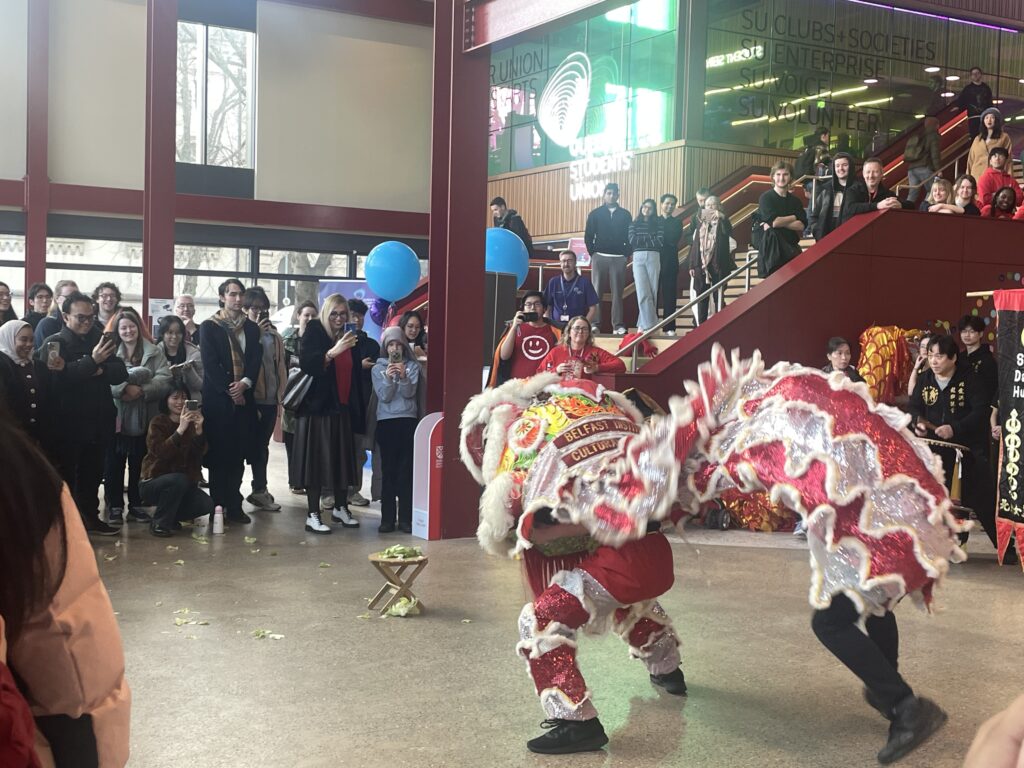
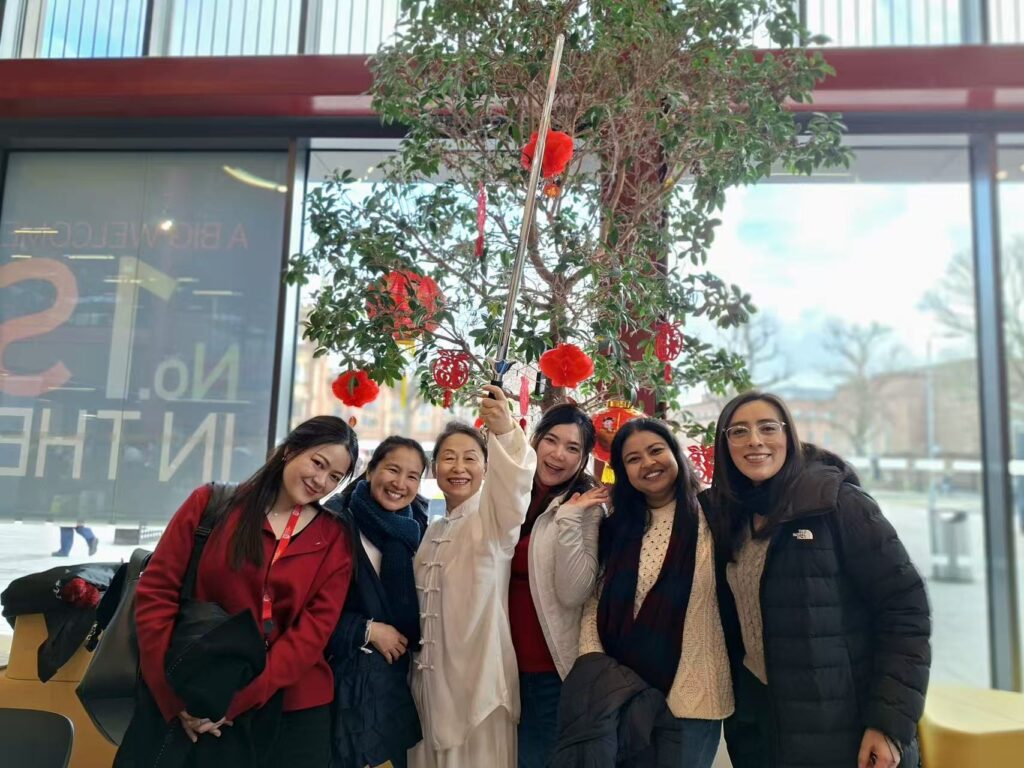
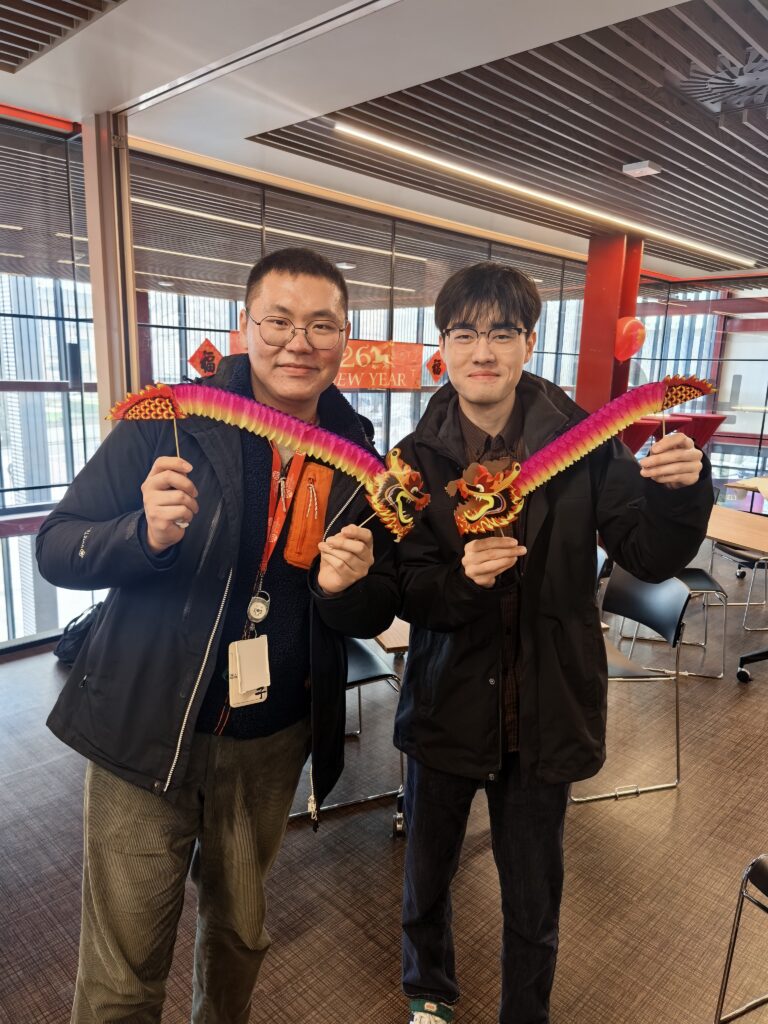
Following the launch, attendees were invited to the ground floor, where the traditional Dragon and Lion dance began in the foyer and continued outside the One Elmwood building. The celebration concluded with a group photo featuring all participants, symbolising the farewell to the Year of the Snake and the welcoming of the Year of the Horse.
_cuva
Another highlight of the celebration was the appearance of the God of Fortune, who generously distributed lucky “money” – chocolate coins and replica ancient Chinese coins – to those wishing to embrace good fortune in the year ahead.
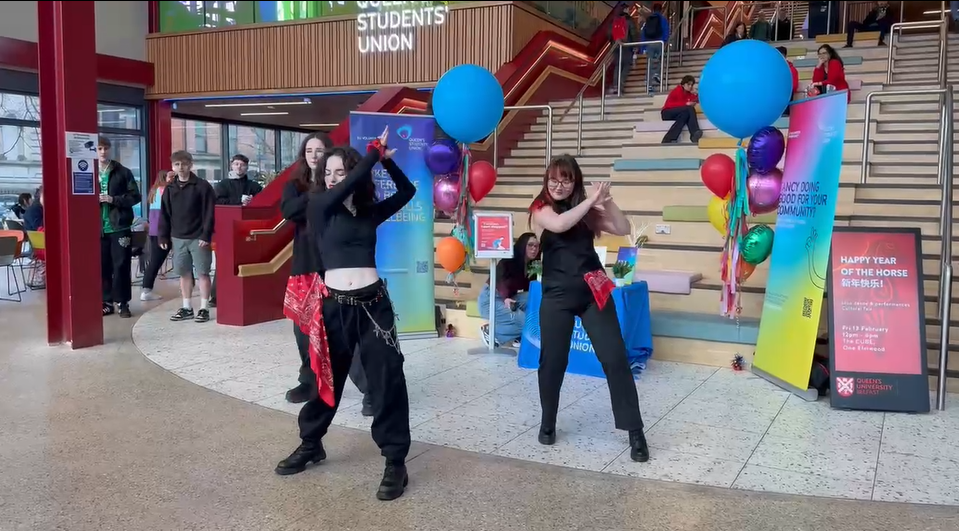
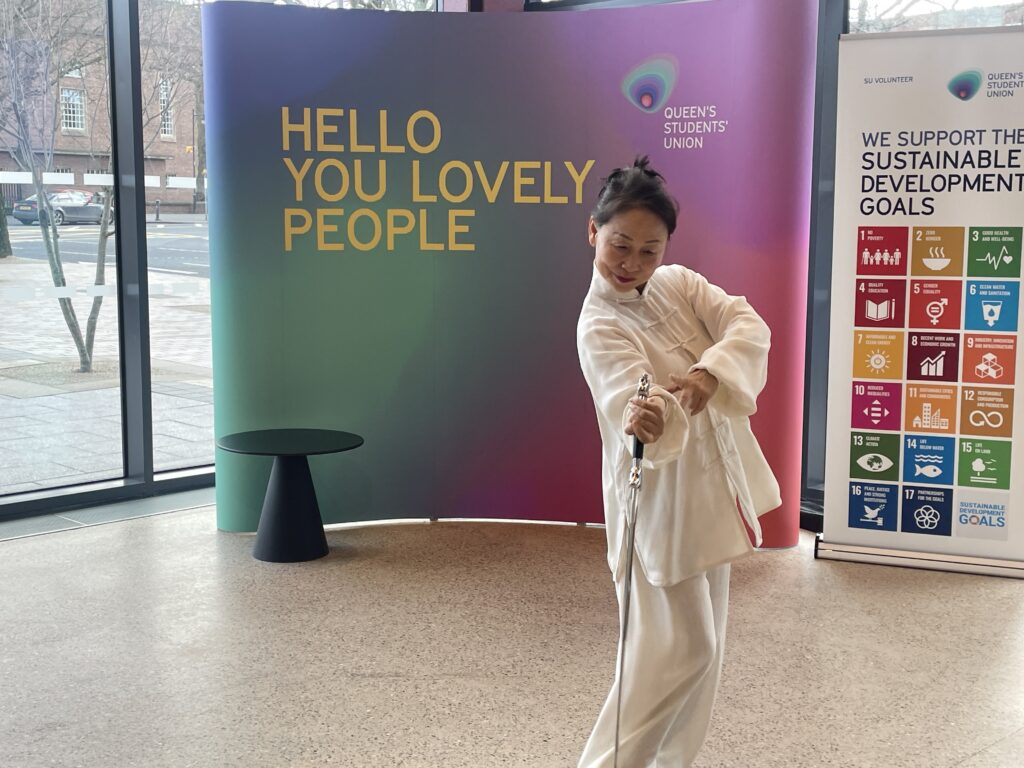
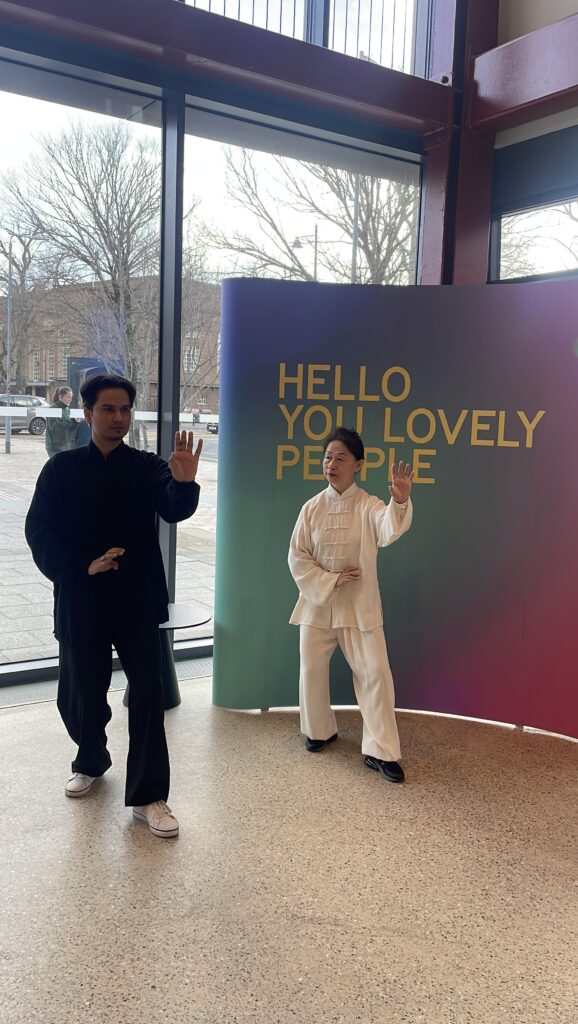
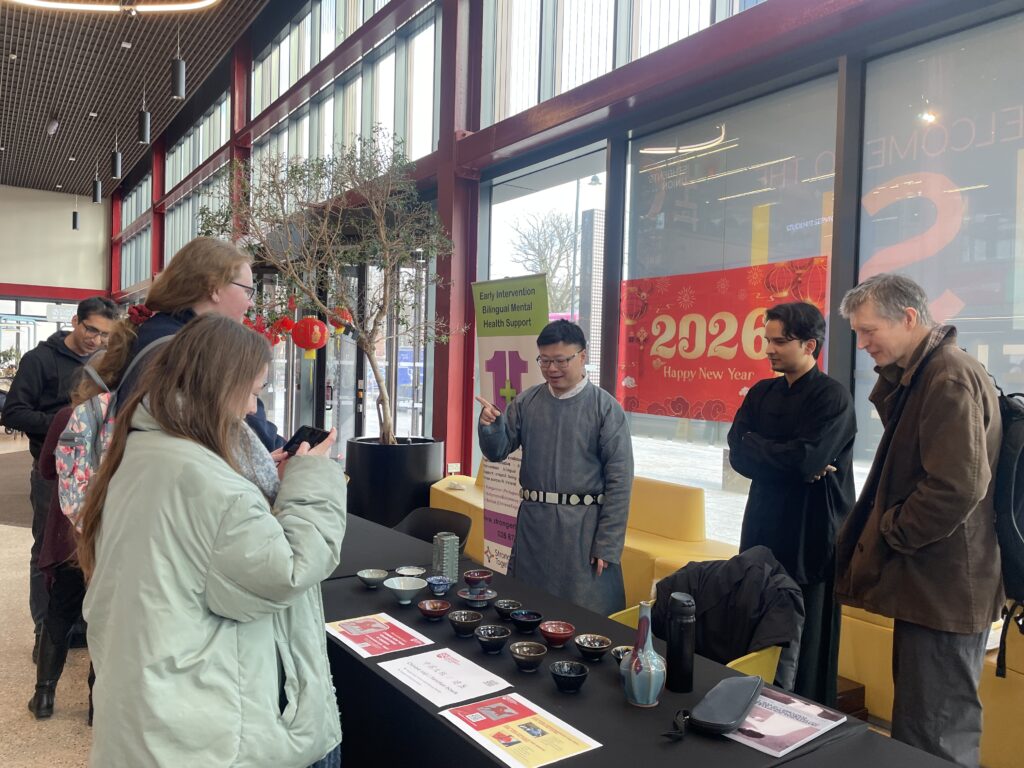
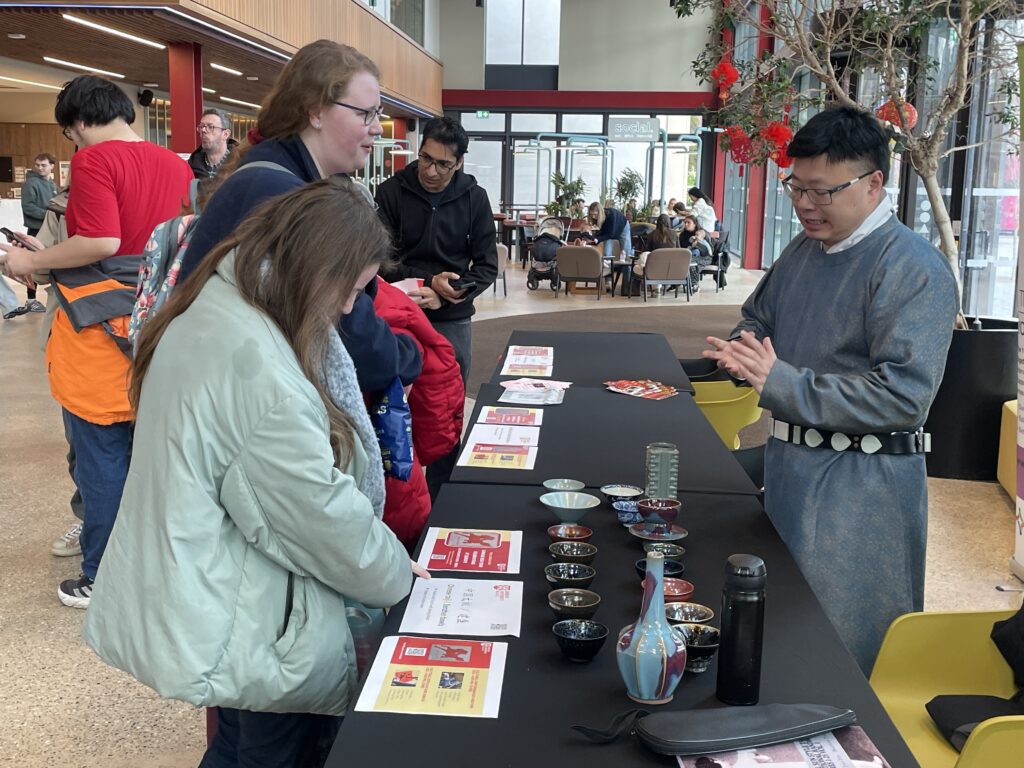
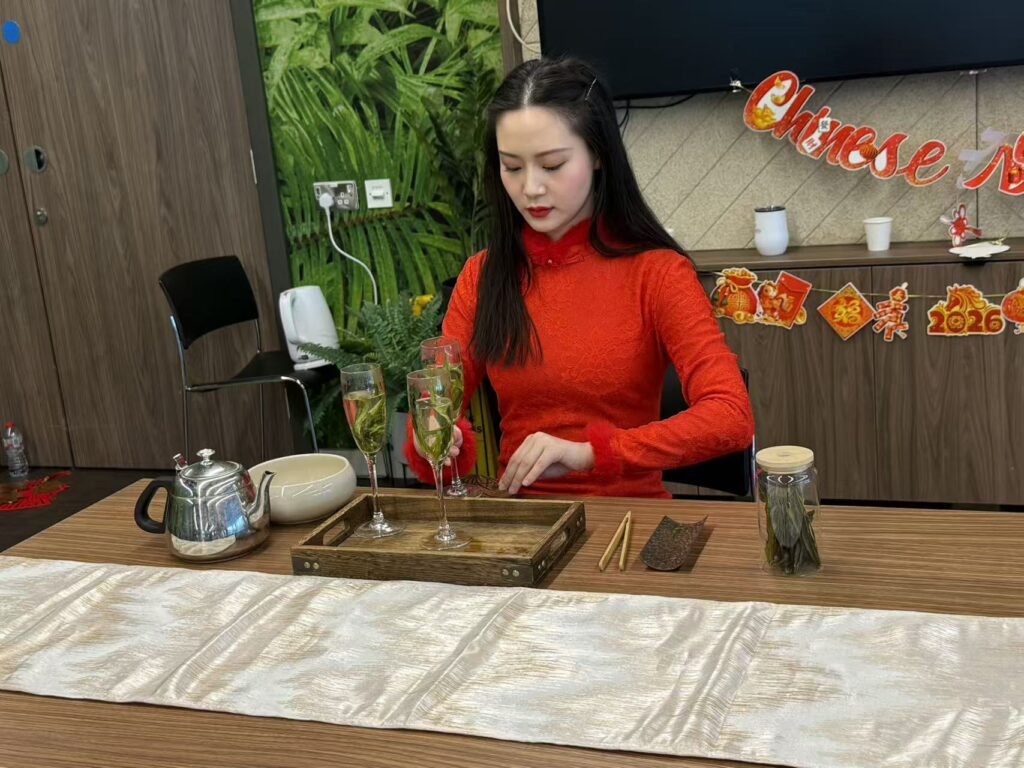
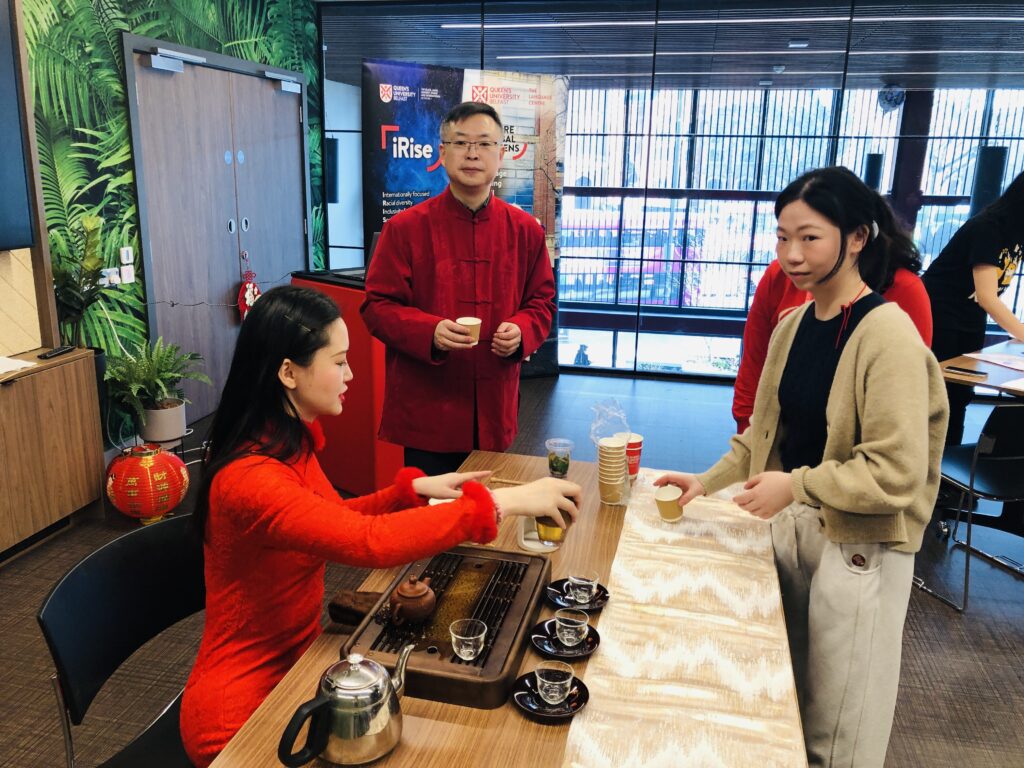
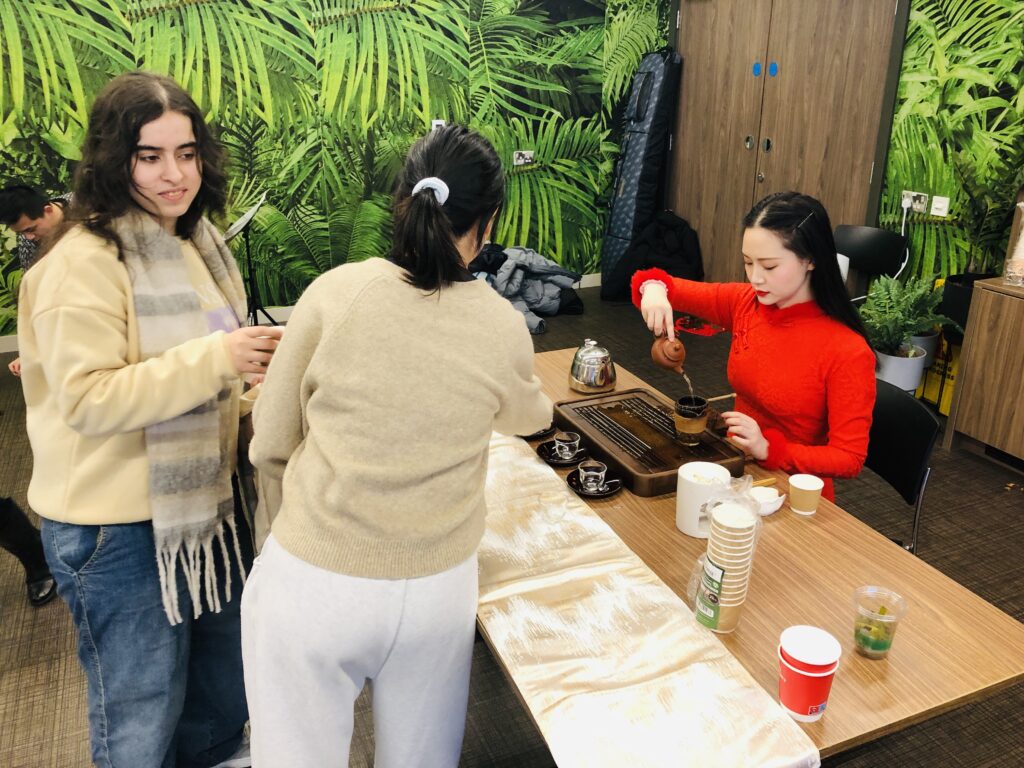
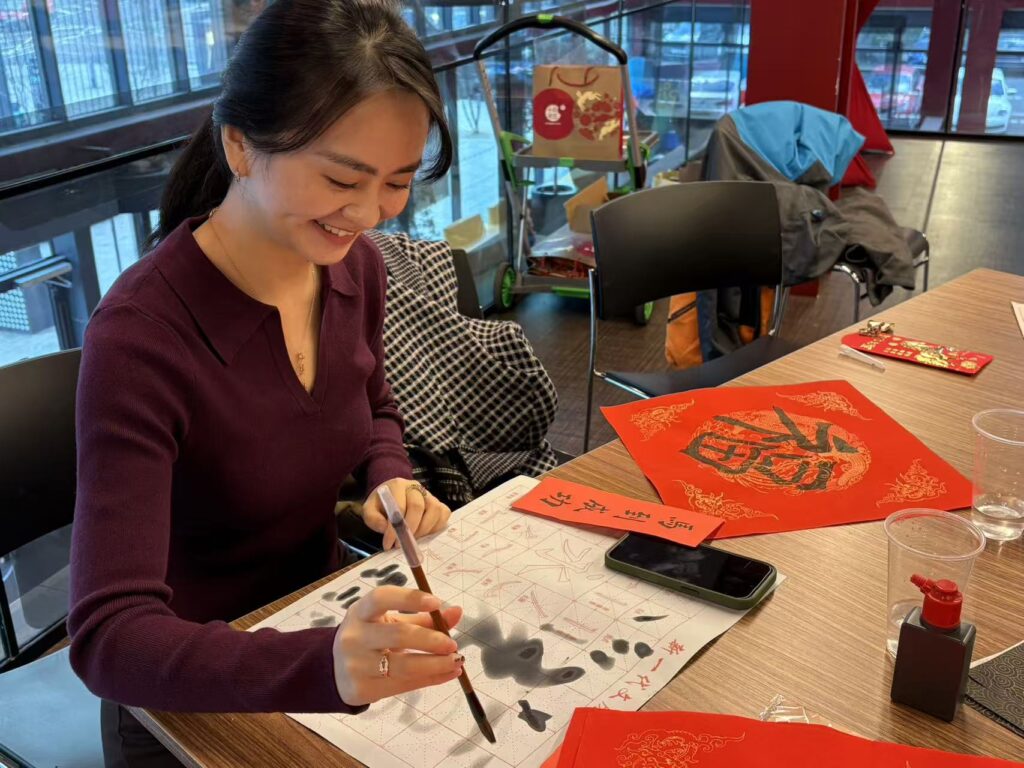
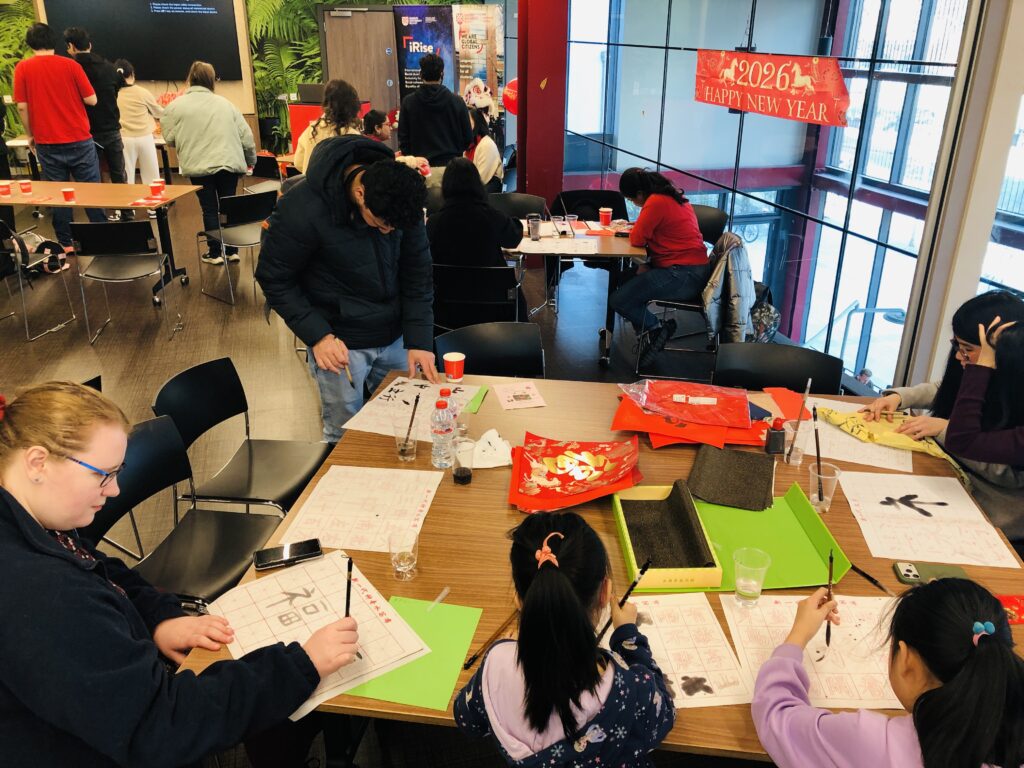
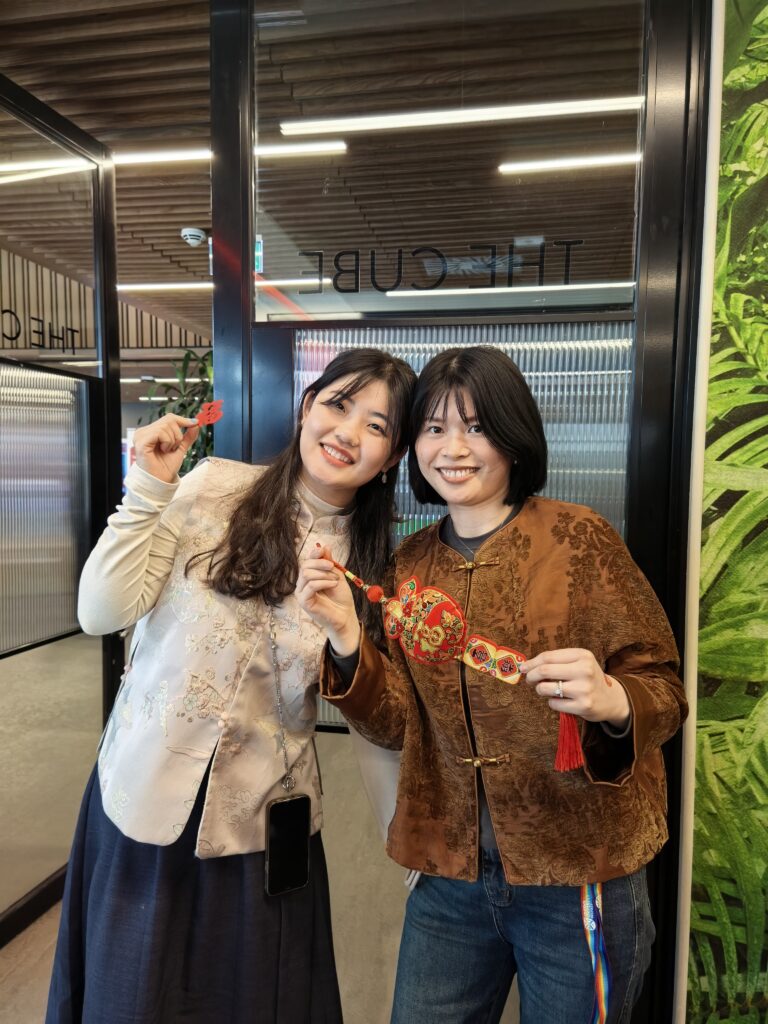
Additional performances included a vibrant K-pop dance, a graceful Tai Chi demonstration, and a Chinese Jianzhan tea cup display in the foyer. Meanwhile, cultural workshops such as calligraphy, paper crafts, tea and incense ceremonies, and guzheng appreciation sessions were held in the Cube, engaging and entertaining participants throughout the afternoon.
_cuva
_cuva
_cuva
_cuva
Blessed by the sunshine and strong support from One Elmwood Student Engagement Team, the event was a great success, with strong attendance and positive social impact. Queen’s is proud of its role as a civic university, promoting diversity, equality, inclusion, and belonging, supported by its vigorous academic and educational innovation.
_cuva
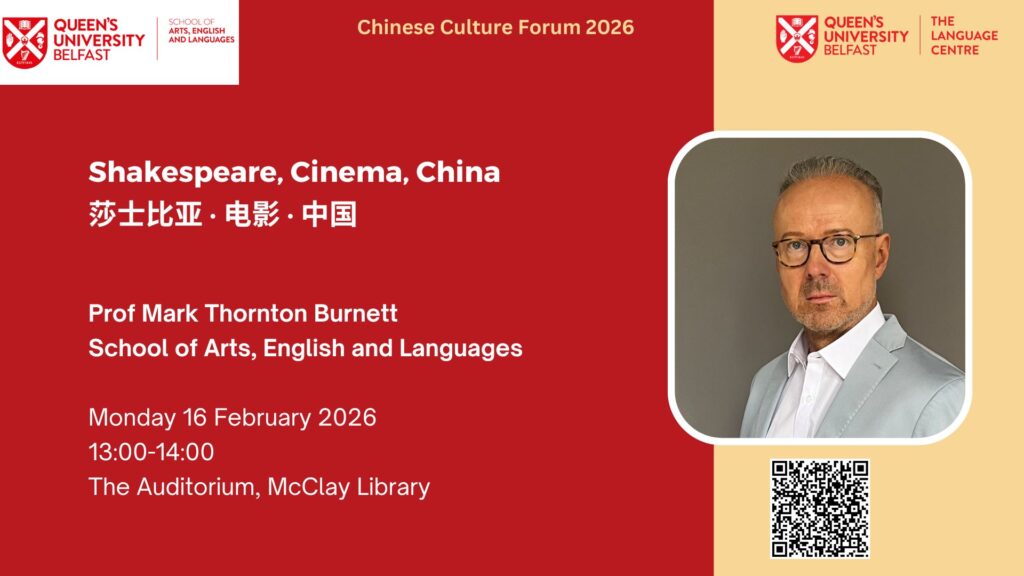
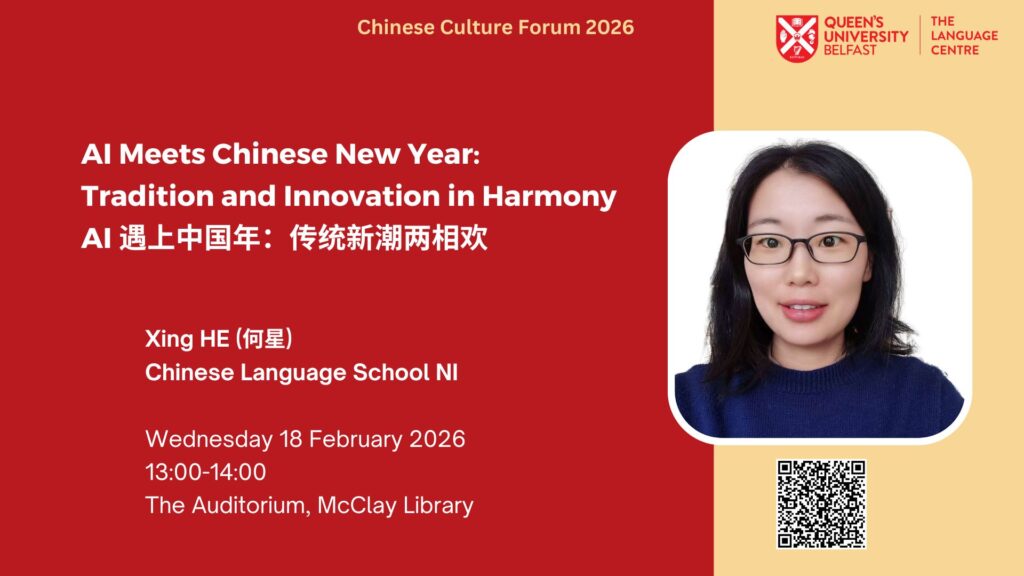
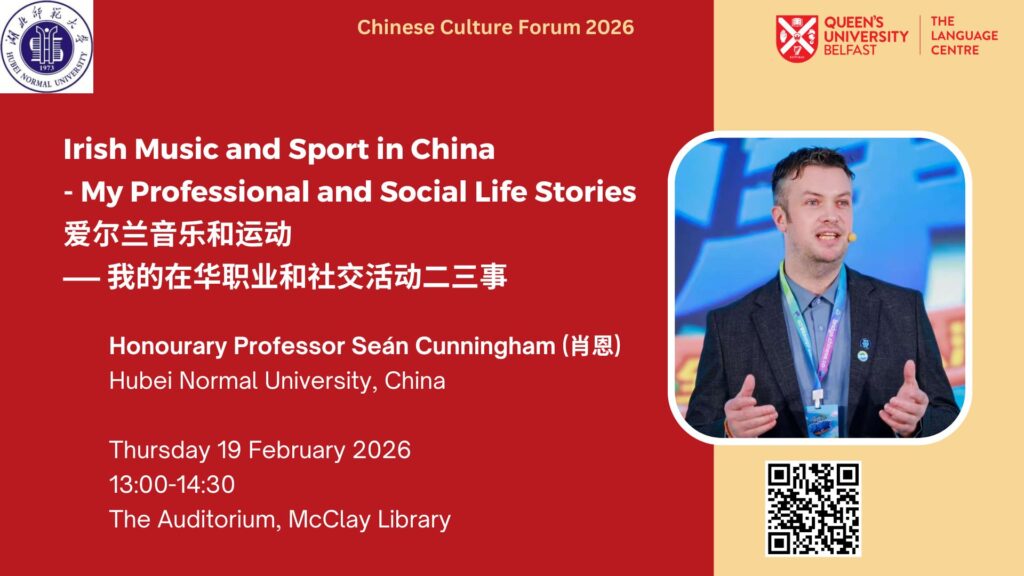
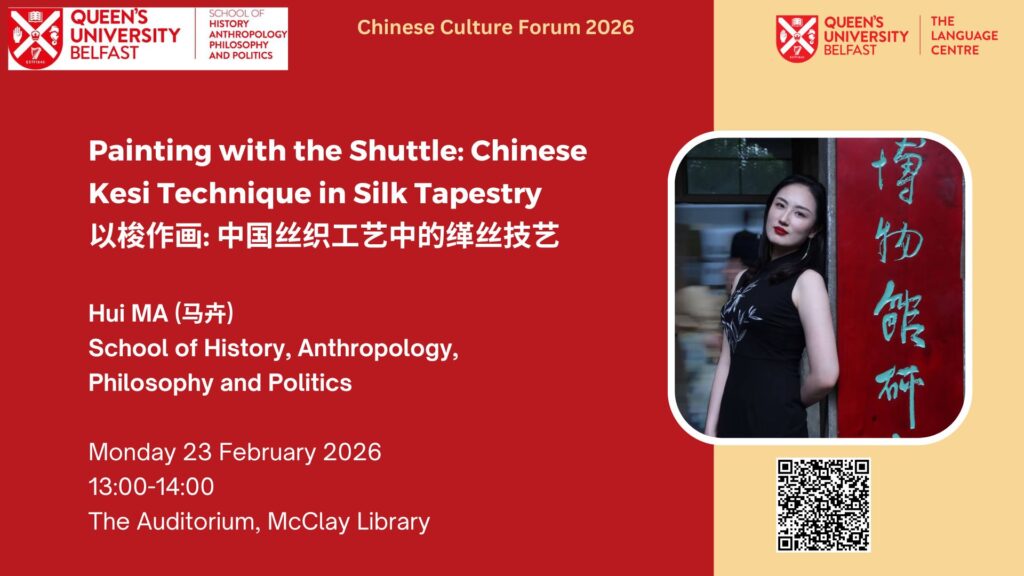
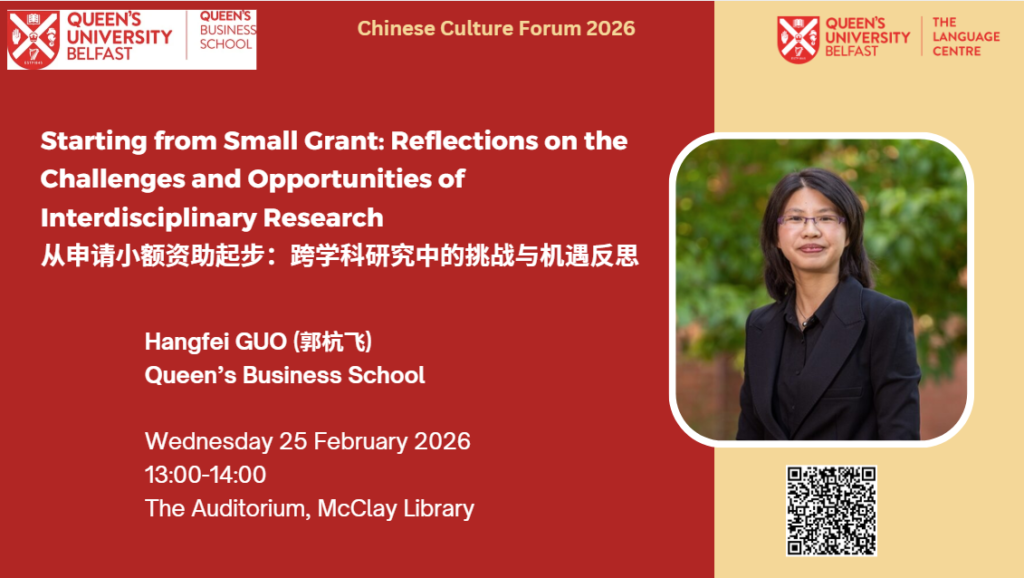
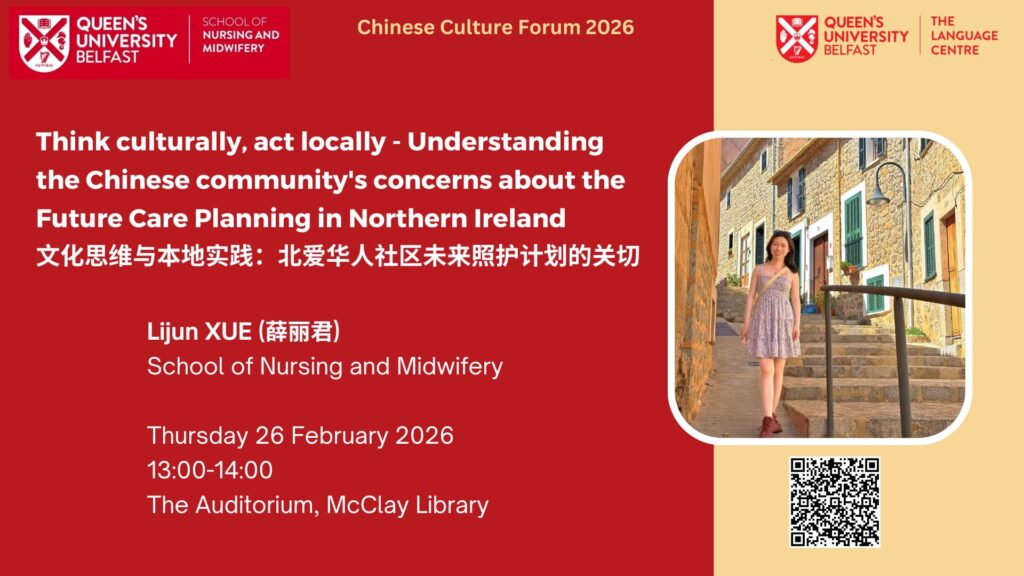
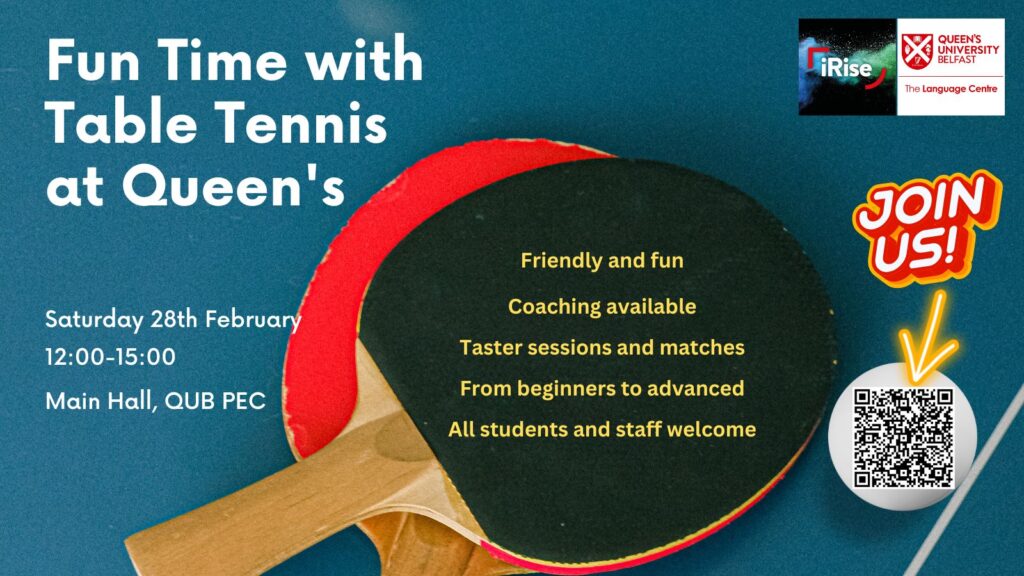
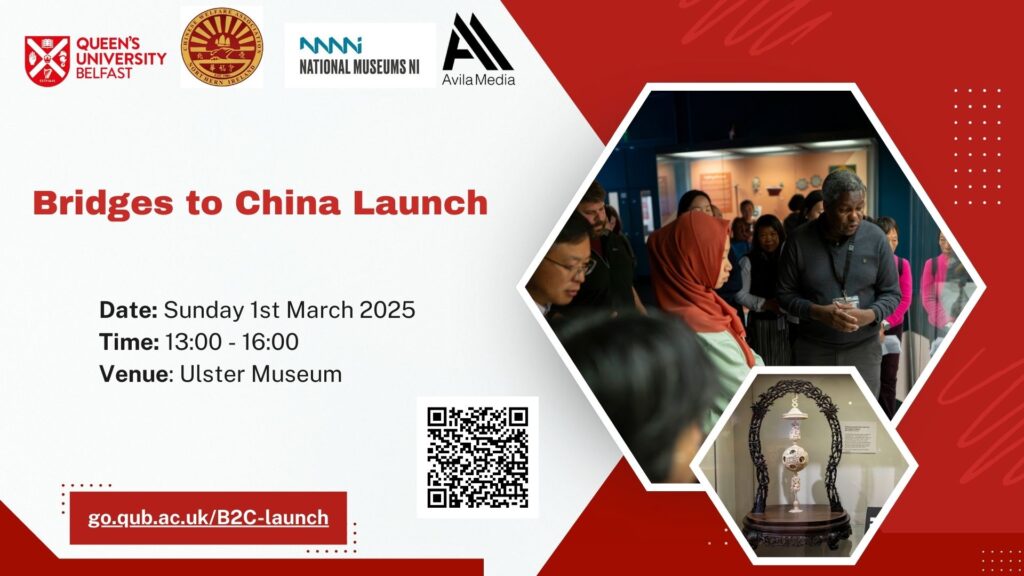
In keeping with Chinese New Year traditions, the celebrations will continue over the next two weeks, featuring six culture talks, a table tennis event, and a QUB-supported collaborative “Bridges to China” launch. All are warmly welcome!
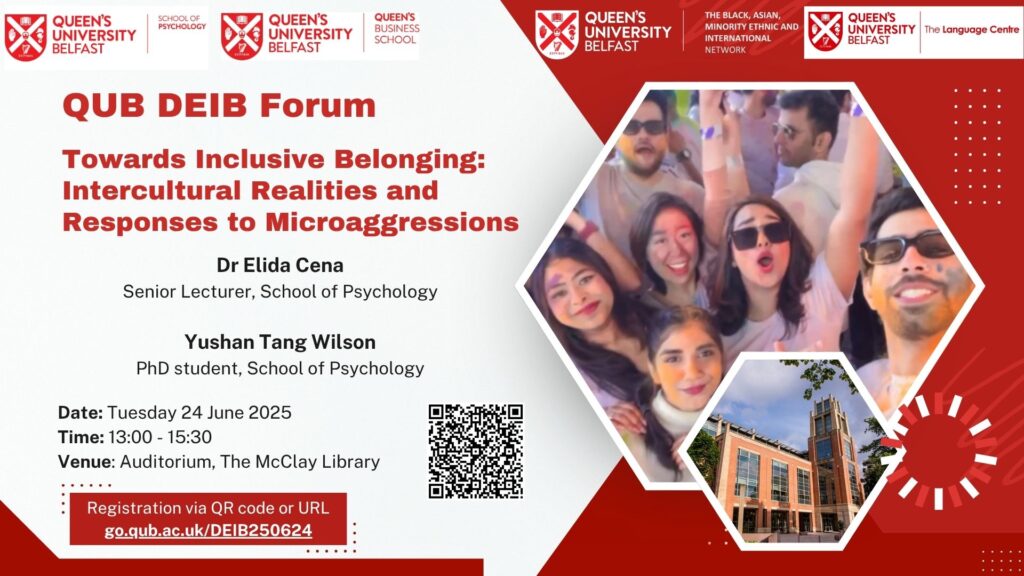
Towards Inclusive Belonging: Intercultural Realities and Responses to Microaggressions
Following the success of the inaugural QUB Diversity, Equality, Inclusion and Belonging (DEIB) Forum in March 2025, the upcoming event will centre on the theme: “Sense of Belonging and Microaggressions among International Students”, with a particular focus on the lived experiences of Chinese and Indian students at Queen’s. Colleagues are warmly welcome to attend this forum, as below:
Date: Tuesday 24 June 2025 Time: 13:00 – 15:30 Venue: The Auditorium, McClay Library
Yushan Tang Wilson, PhD student, School of Psychology
A panel of academic, professional colleagues and student representatives will further explore both the conceptual dimensions and the practical steps needed to enhance inclusion, foster belonging, and address microaggressions within our diverse university community.
Programme:
Welcome Lunch
Introduction
Presentations
Panel discussion
Closing remarks
Places are limited to max. 40 due to room capacity and we have the first-come, first-served policy. The registration form will be closed once places are taken, or by 5 pm, Friday 20th May the latest.
Cena, E., Burns, S., & Wilson, P. (2021). Sense of belonging, intercultural and academic experiences among international students at a University in Northern Ireland. Journal of International Students, 11(4), 812-831. https://doi.org/10.32674/jis.v11i4.2541
Manage Consent
To provide the best experiences, we use technologies like cookies to store and/or access device information. Consenting to these technologies will allow us to process data such as browsing behavior or unique IDs on this site. Not consenting or withdrawing consent, may adversely affect certain features and functions.
Functional
Always active
The technical storage or access is strictly necessary for the legitimate purpose of enabling the use of a specific service explicitly requested by the subscriber or user, or for the sole purpose of carrying out the transmission of a communication over an electronic communications network.
Preferences
The technical storage or access is necessary for the legitimate purpose of storing preferences that are not requested by the subscriber or user.
Statistics
The technical storage or access that is used exclusively for statistical purposes.The technical storage or access that is used exclusively for anonymous statistical purposes. Without a subpoena, voluntary compliance on the part of your Internet Service Provider, or additional records from a third party, information stored or retrieved for this purpose alone cannot usually be used to identify you.
Marketing
The technical storage or access is required to create user profiles to send advertising, or to track the user on a website or across several websites for similar marketing purposes.