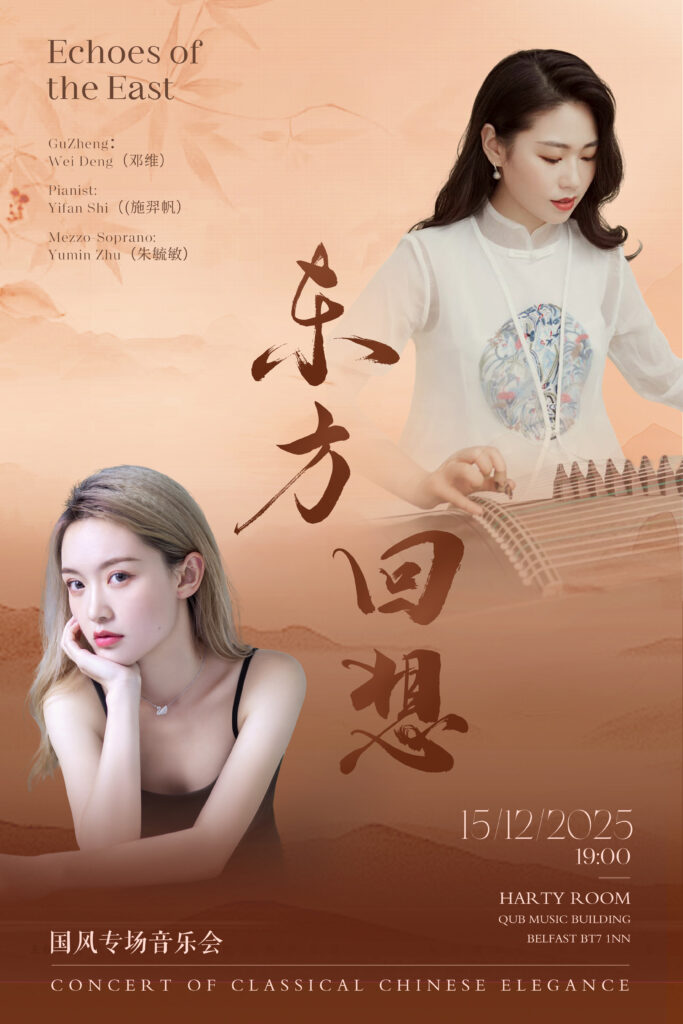
Organised by Queen’s Chinese students and alumni, this concert is a community-oriented cultural initiative designed to foster diversity, inclusion, and intercultural dialogue in Northern Ireland. As the Chinese community represents one of the largest cultural groups in Northern Ireland, the concert also responds to their need for collective expression and connection, particularly for students and residents who may experience isolation or homesickness.
This concert project supports civic engagement by providing an accessible platform where local and international communities can come together to experience Chinese cultural heritage. Aligned with the principle that “music knows no borders”, the concert contributes to cultural exchange, mutual understanding, and the creation of more inclusive civic spaces. It directly supports institutional priorities in widening participation, celebrating cultural diversity, and strengthening community cohesion.
The concert presents Chinese classical poetry through art songs accompanied by piano and guzheng, bringing Eastern and Western musical traditions into conversation.
Queen’s students and staff members, as well as members of the public, are all welcome to sign up for the concert. Places are limited and tickets will be issued on a first-come-first-serve basis. To register, please either click the button below, or scan the QR code above.
What can you do on a rainy and wet winter day? Perhaps visiting a museum for an exhibition or event will be a good choice. In this post, we invite Yang LIANG (梁阳), a Queen’s graduate in TESOL from School of Social Science, Education and Social Work to share with you her recent experience of visiting Henan Museum (河南博物院Hénán Bówùyuàn).
About Henan Museum
Henan Museum, built in 1927, is one of the oldest and largest museums in China. Its site changed for several times and finally lies at Nongye Road, Jinshui District, Zhengzhou, Henan. It is a history and art museum with a collection of more than 130,000 pieces of cultural relics through the ages.
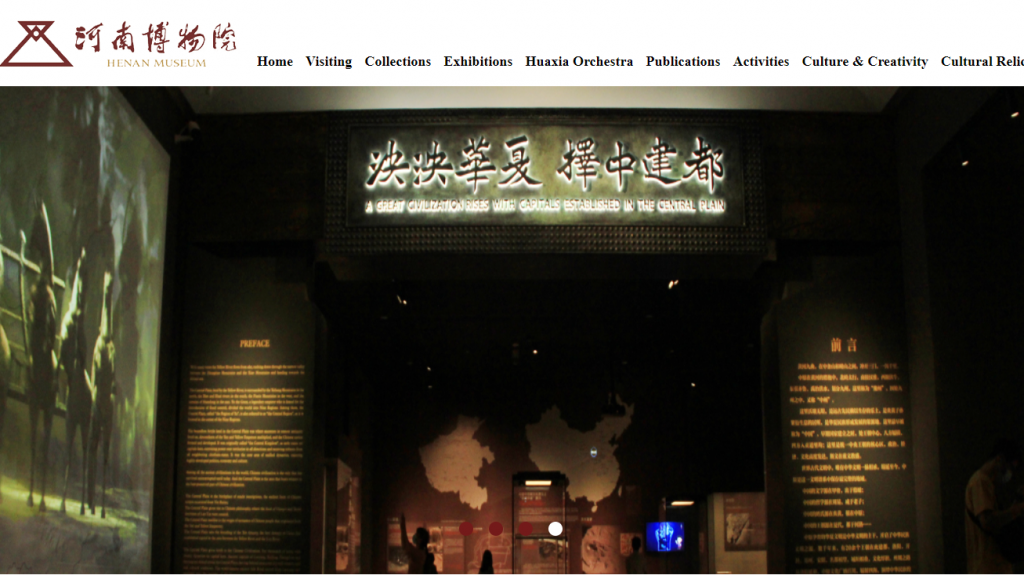
The Homepage of Henan Museum (English version). The light spot on the map of China shows you where Henan Province locates while the shape on the left displays the provincial geographical range.
After some ten years, I went to visit Henan Museum again. This time, I went there mainly for a show on ancient Chinese music performance, as well as re-visiting the relics.
– Yang Liang
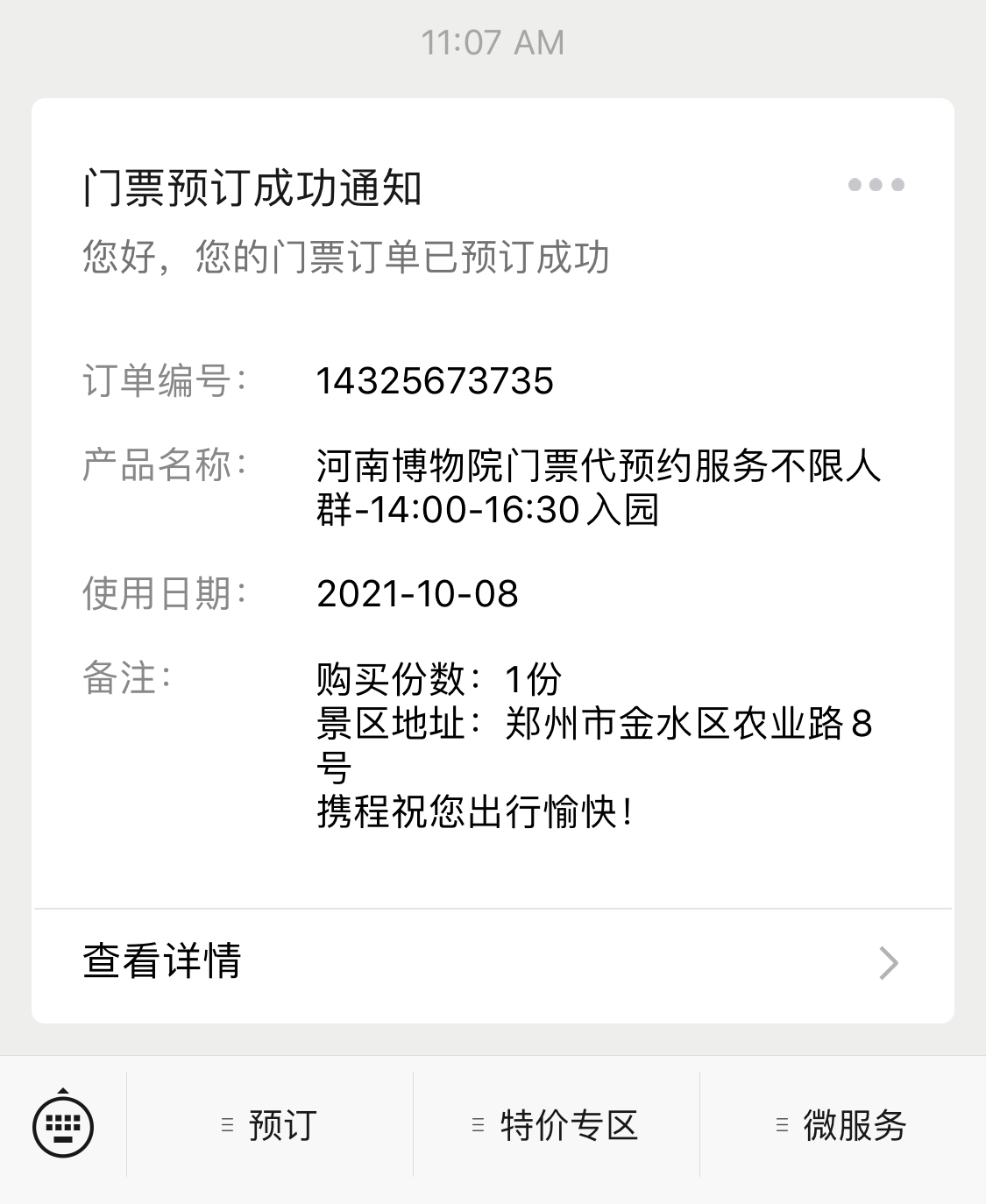
The ticket is free, but one needs to book it, either online or on site. I did it via a mobile app for a slot of admission. Then I took a bus there, as the public transport system is very convenient nowadays and there is a bus station nearby.
E-ticket via a mobile app
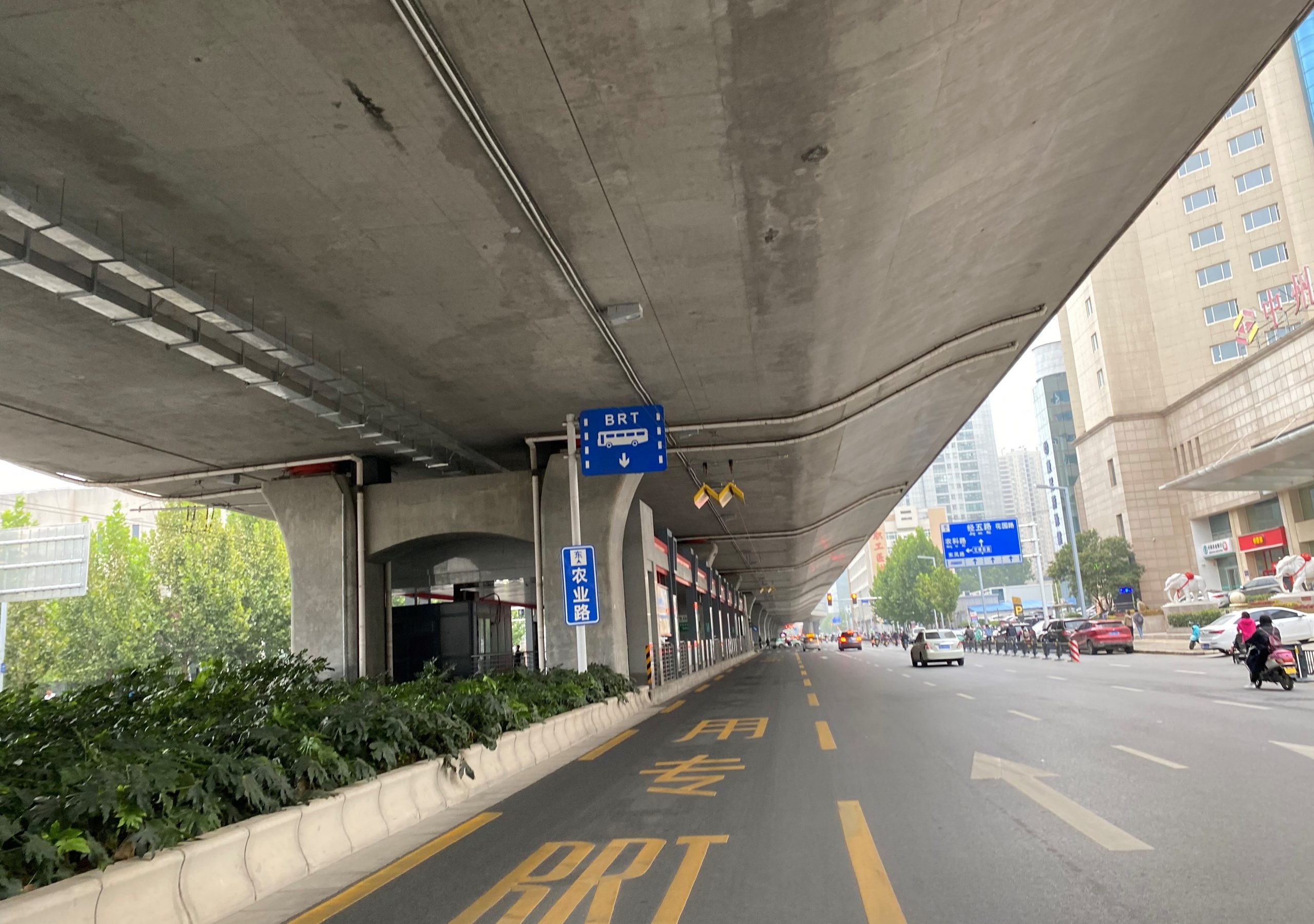
The Nongye Road (农业路) | Image@YangLiang
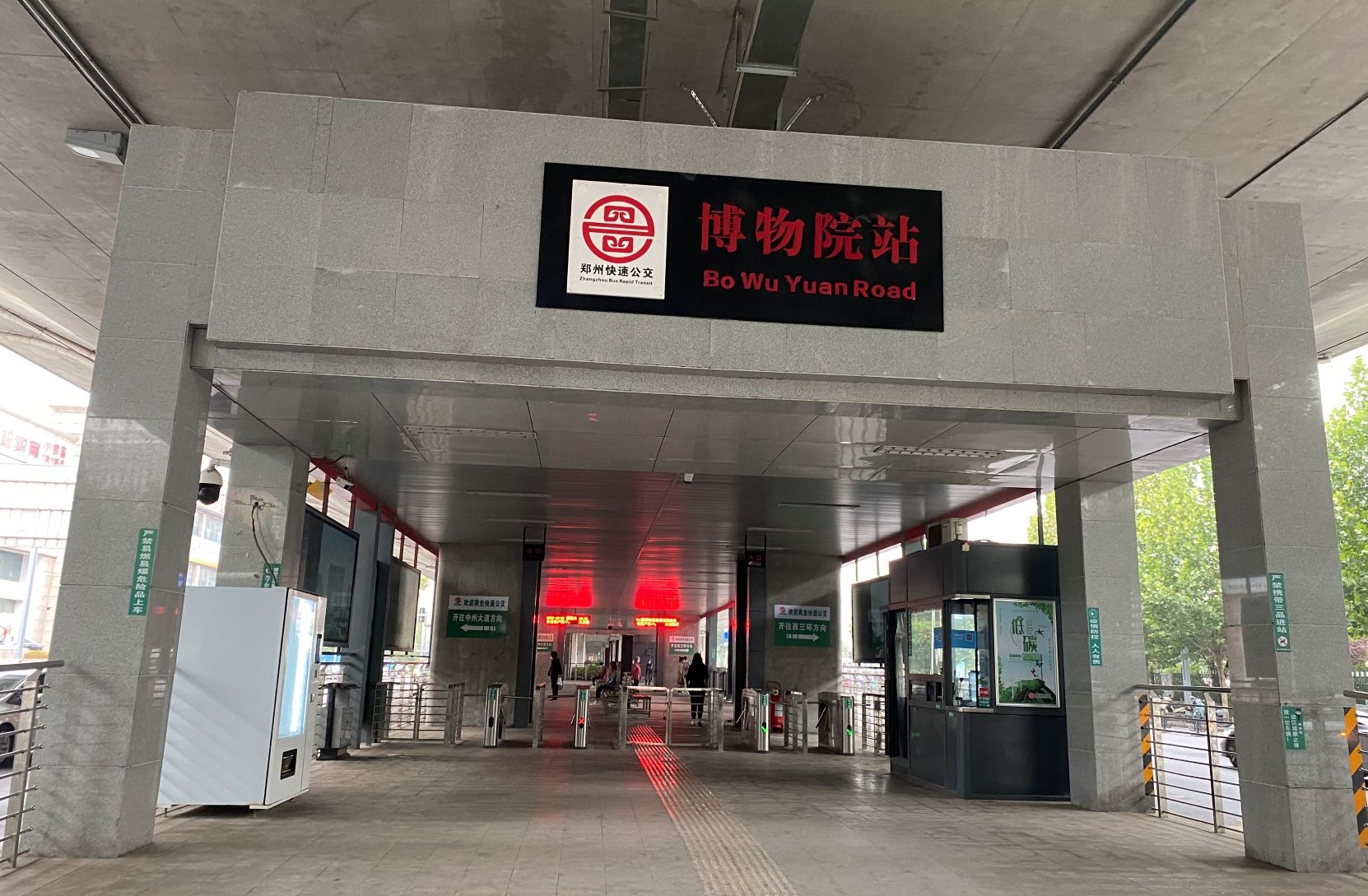
The Bo Wu Yuan Station (The Museum Station) | Image@YangLiang
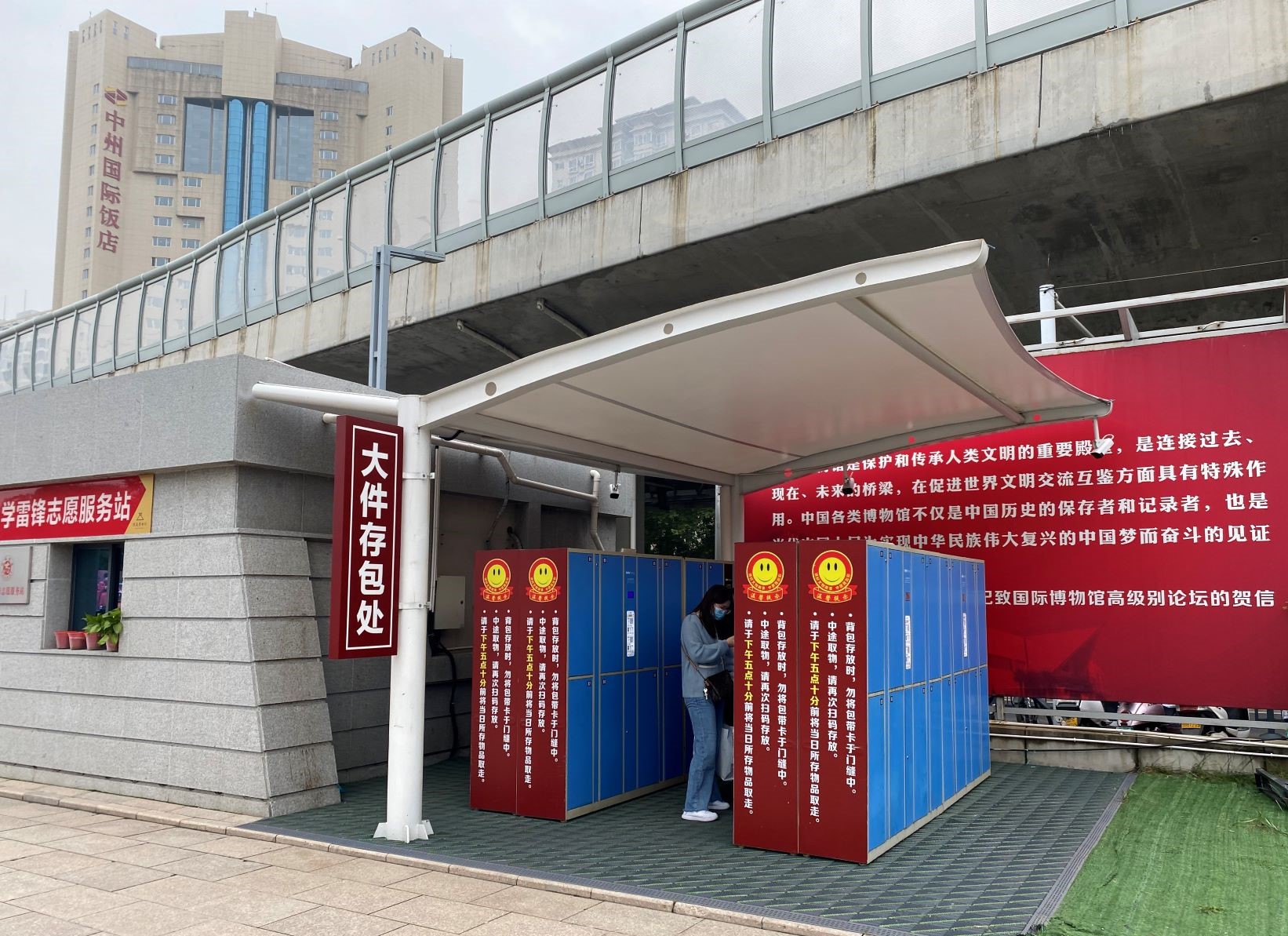
The outdoor self-service storage zone | Image@YangLiang
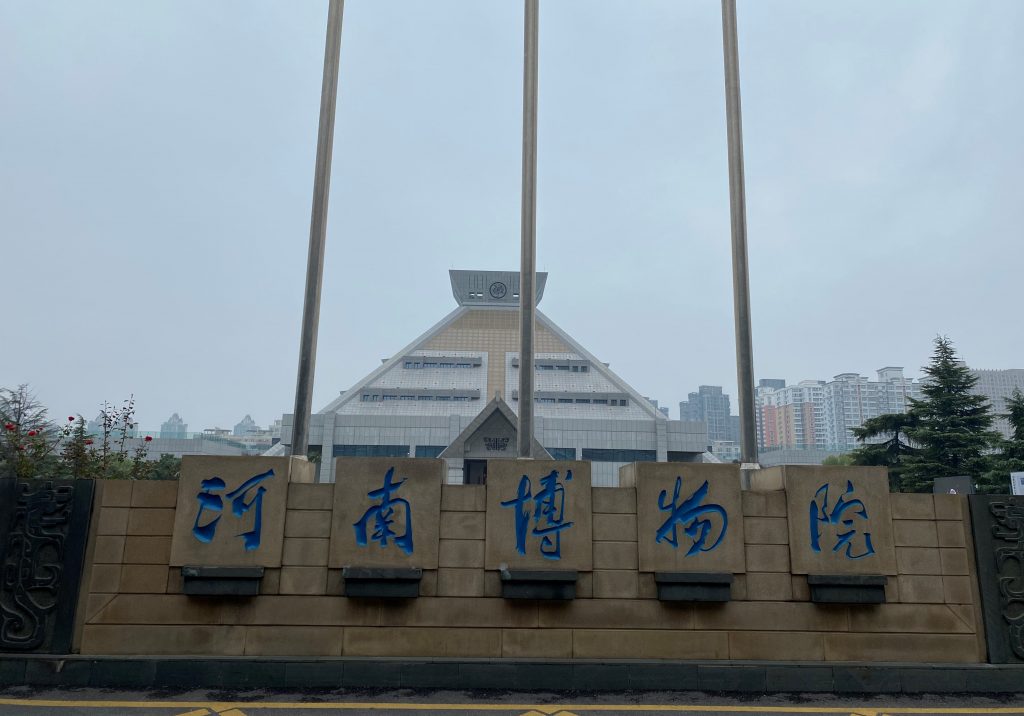
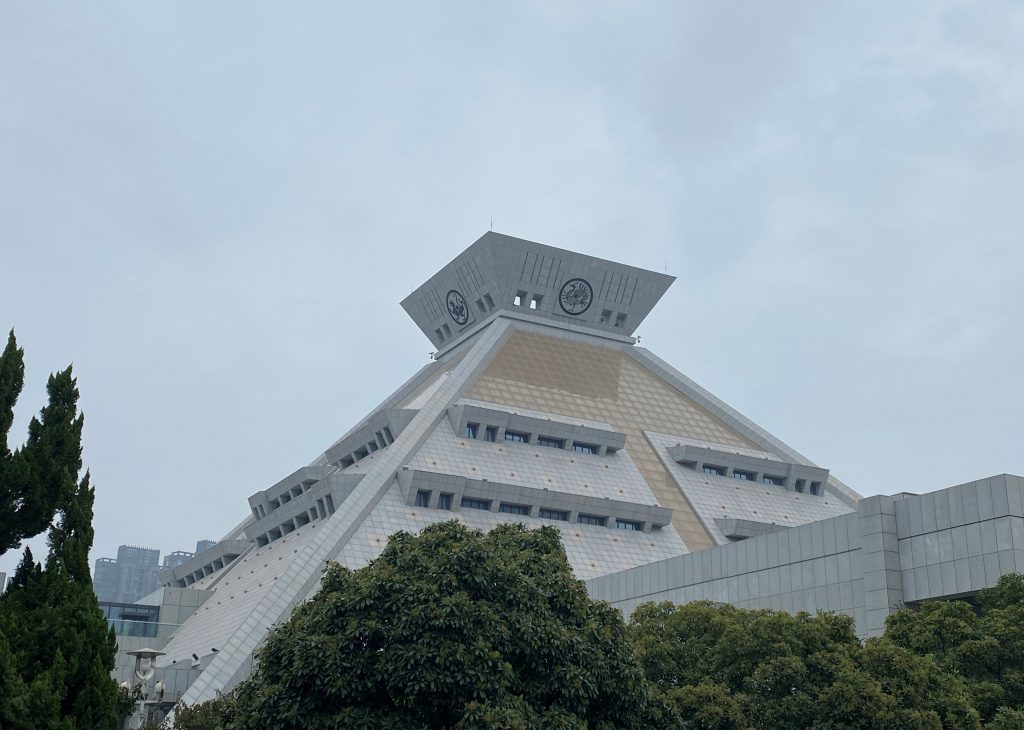
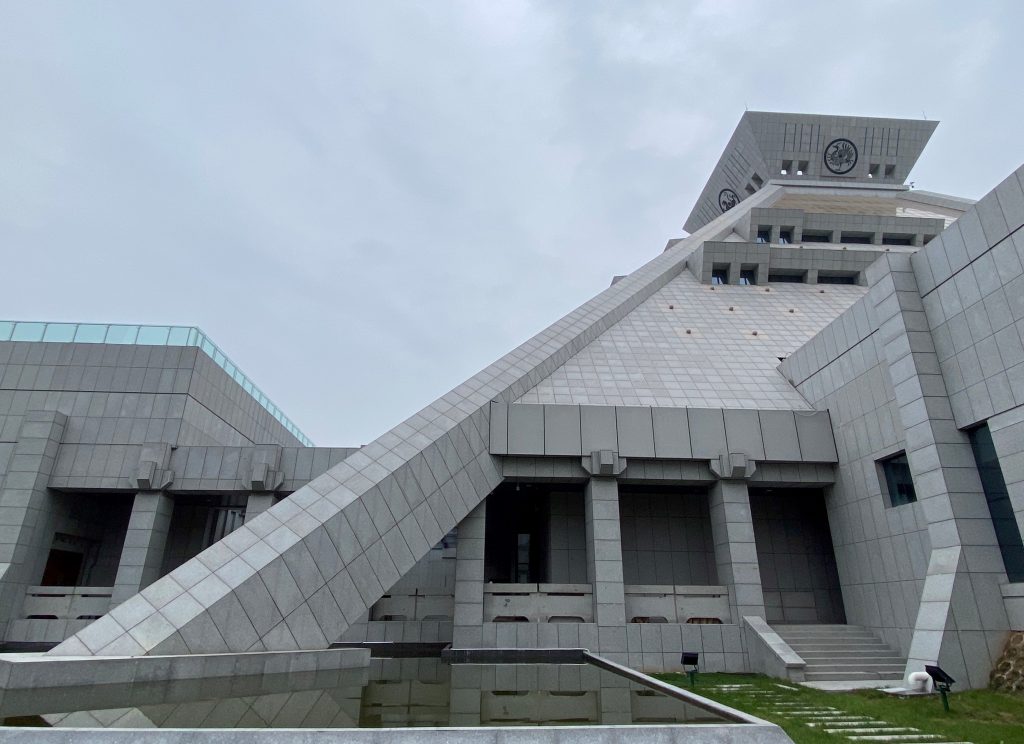
The collection of photos show what the main entrance looks like and the main exhibition halls from different angles.
Henan Museum, front | Image@YangLiang
Henan Museum, side | Image@YangLiang
Henan Museum, side | Image@YangLiang
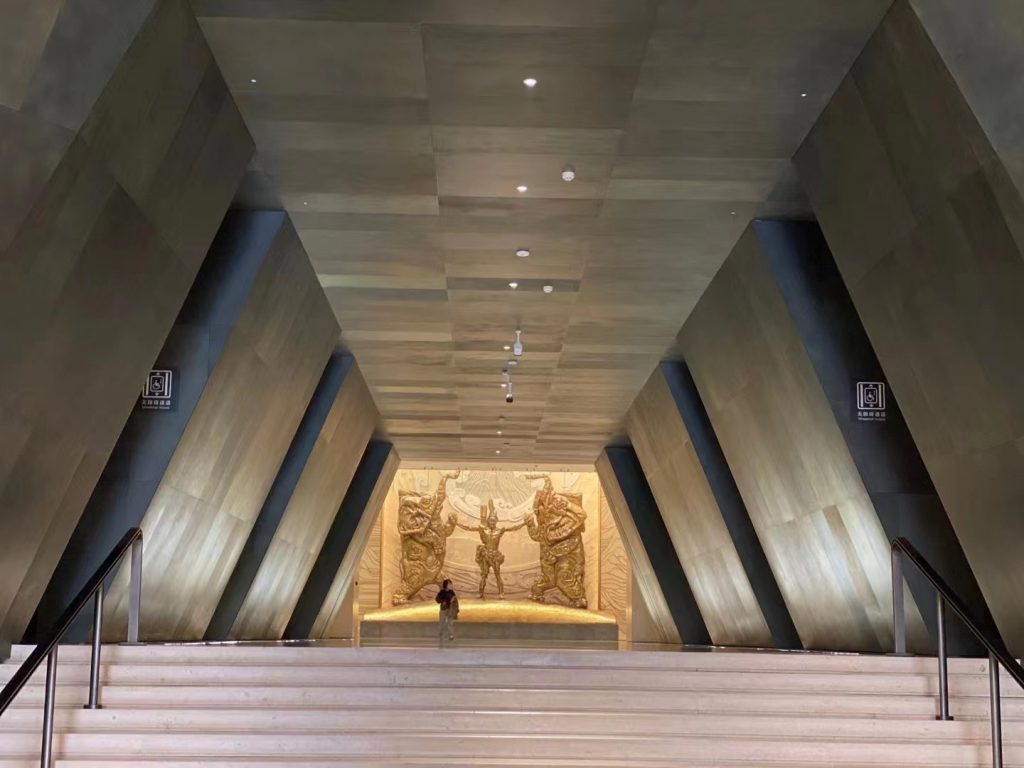
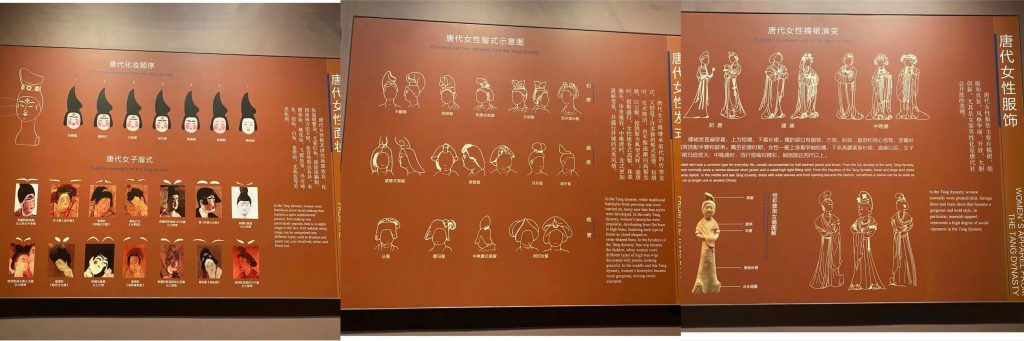
This is what it looks like inside of the museum with some of the exhibits. For a full range of exhibition, you can return to the Museum’s website above.
Henan Museum, inside, the hallway | Image@YangLiang
An introduction to female clothing in Tang Dynasty | Image@YangLiang
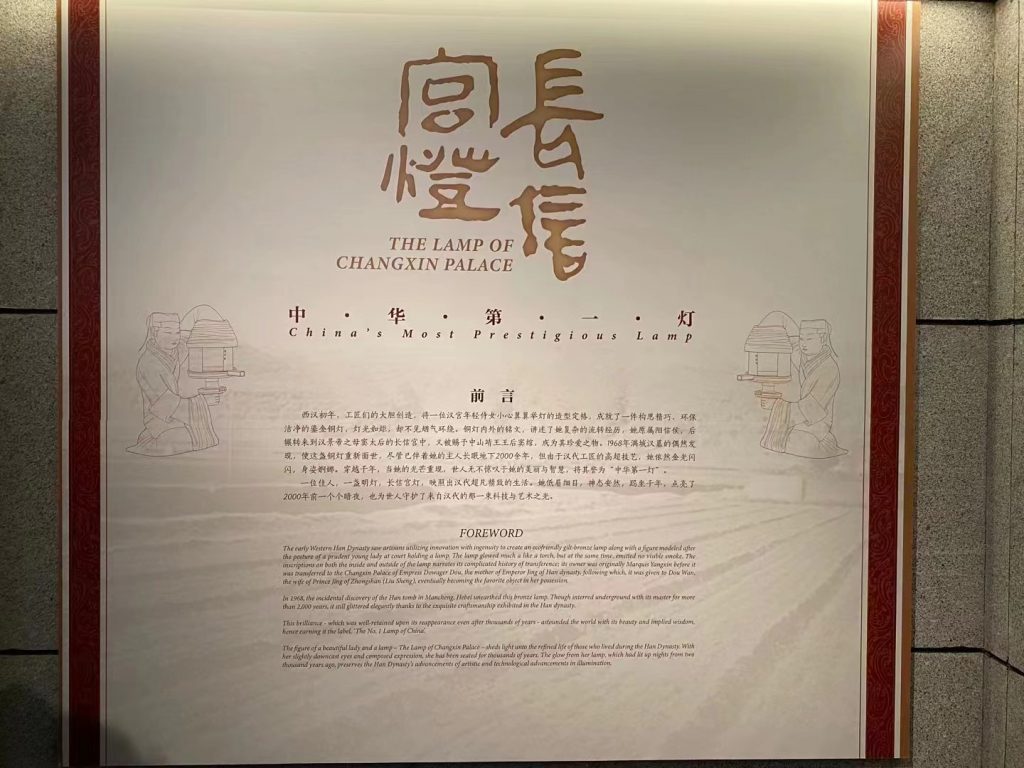
An introduction to the palace lamp in Han Dynasty| Image@YangLiang
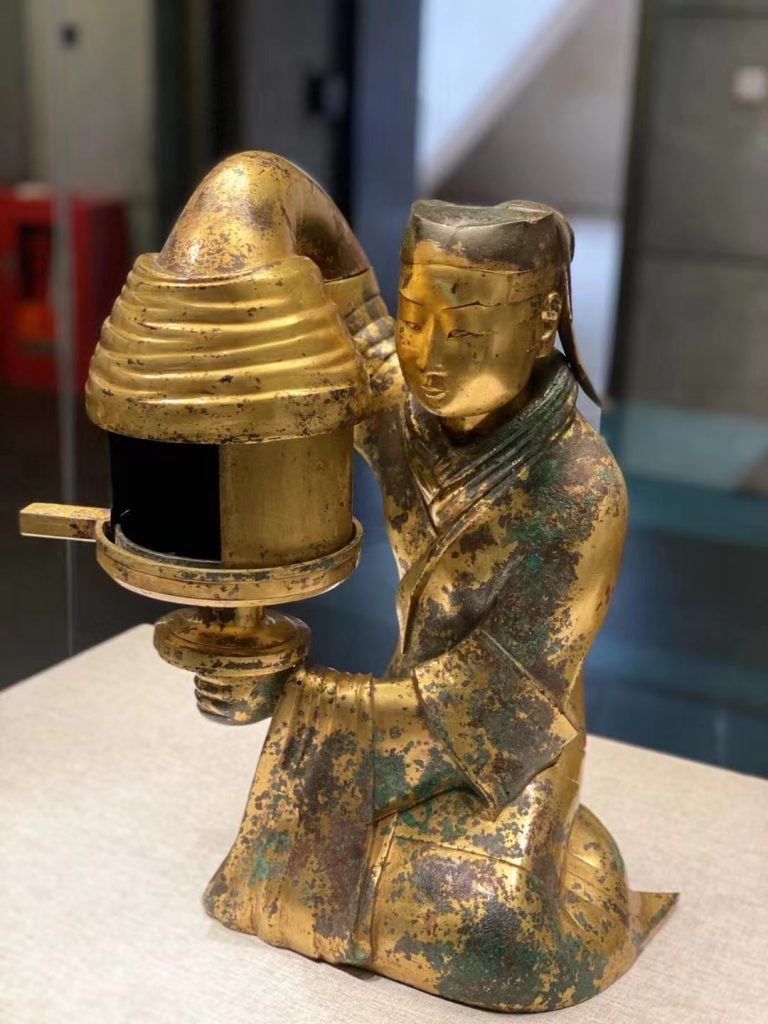
The exhibit of Changxin Palace Lamp | Image@YangLiang
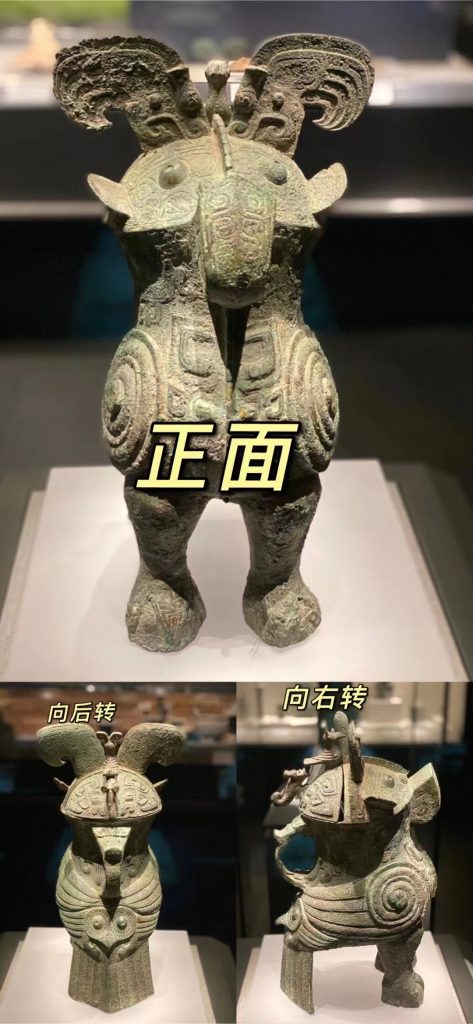
The collage of the exhibit from different angles | Image@YangLiang
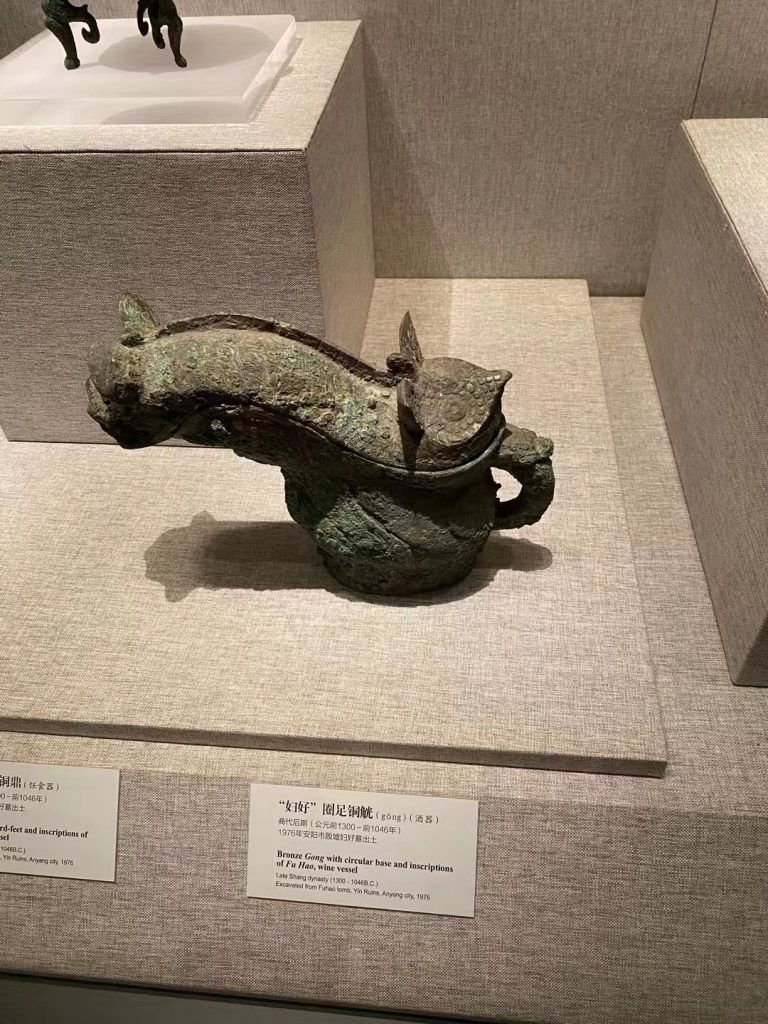
Fu Hao wine vessel exhibit | Image@YangLiang
As a layperson of architecture and archaeology, I’m not going to focus on these constructions and relics. However, I’d like to share with you what I felt about this visit from my personal experience of watching the show performance and some other observation.
I watched the music show before walking to the exhibition halls, as I was more interested in the new forms and functions museum nowadays promote – not only for educational purposes, but also to entertain visitors of all walks of life. I was totally impressed by the quality of ancient music performance, fully immersed in the show and the marvelous acoustic effects which allowed me to travel back to thousands of years ago. Here are a few clips of performances that I recorded:
Nowadays, more and more young people enjoy visiting museums, attending both exhibitions and relevant events like talks and shows which encourage more dynamics and interactive engagement, in contrast to the formulaic stereotypes that visitors just took photos around in museums and left without much understanding and appreciation of such exhibitions. I recall that decades ago I went there seeing the same kinds of lifeless objects without any interest in observing, discovering, and imagining how and why they were relevant to me in history and have impacted on my life, let alone a good level of appreciation. If one has no good knowledge about these exhibits, they would easily feel so bored and want to escape.
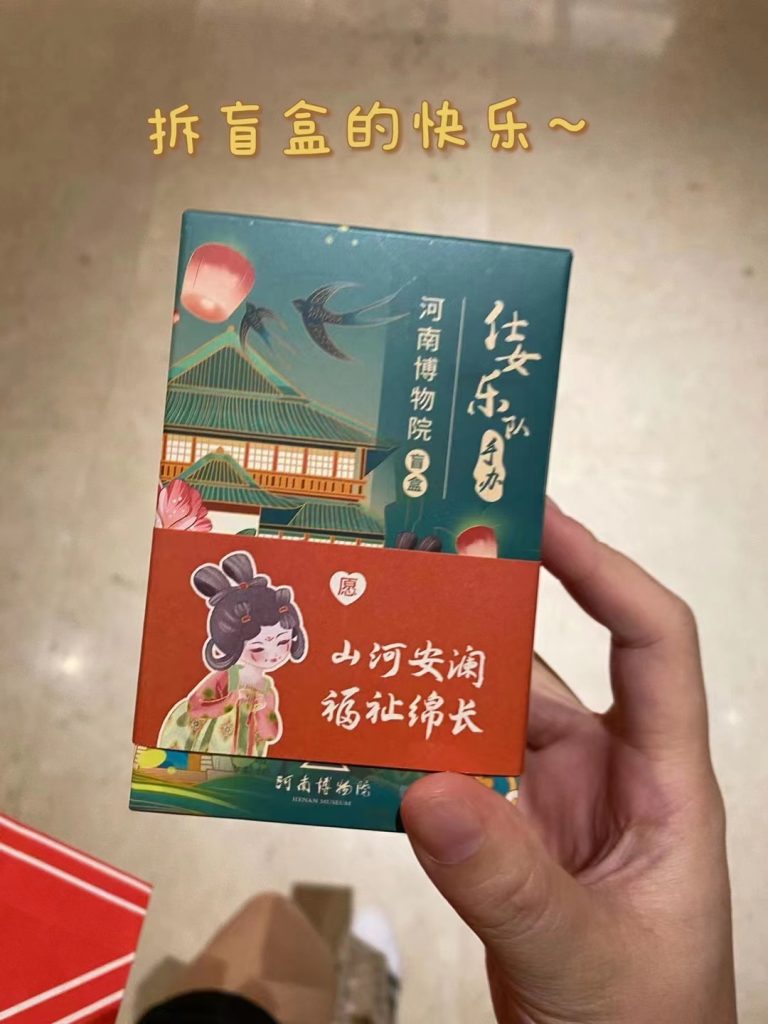
This time, when I got it in hand, I found the idea of blind boxes, or mystery boxes, really appealing as I never could have guessed what kind of things were inside until I opened it with a ‘Wow’.
(The added line of characters read ‘拆盲盒的快乐 ~’, meaning the happiness (快乐 kuàikè) of opening (拆 chāi) the blind box (盲盒 mánghé). The photo shows that there is a set of samples of palace maid band designed by Henan Museum.)
I also came across two boys who were giving a video call to their mum, making a live broadcast while walking around. They told their mum what they saw and how they were impressed, and their mum sounded really excited over the phone.
I would also like to attribute this wonderful experience to the advance of modern technology which makes these old objects alive. For example, the amazing lighting and acoustic effect made me feel as if I stood in a traditional Chinese ink painting, exploring a wonderland when I saw many white cranes fly in the sky and heard the stream flowing pleasantly. Wow! Who wouldn’t enjoy this kind of visiting experience?