Chinese Kung Fu at Queen’s

Whilst May-June is a busy and bustling season with exams and essay deadlines, it is also fleshed out with more exciting events such as the Development Weeks programme and the Chinese Cinema Season.

Today, we are delighted to introduce you to a student-led event from the Queen’s Sport Active Campus programme – Introduction to Chinese Kung Fu – to help relax your body and refresh your mind while combating the heavy workload.

May be an image of 1 person and text that says "QUEEN'S UNIVERSITY BELFAST QUEEN'S SPORT INTRODUCTIONT CHINESE KUNG FU Open to all levels! 4 WEEK COURSE Sunday 15TH May June TIME: 2-3pm LOCATION: Minor Hall Sign up through the Queen's Sport App or MS Forms."
Queen’s Sport FB

Kungfu (功夫 gōngfū), or Wushu (武术 wǔshù), is an ancient form of Chinese martial arts, as well as a full-contact sport. It started off just as a warmup for military exercises and became a military subject in earlier days. In contemporary times it is seen as a way of self-defence and physical fitness, and it has been officially recognised as an international sport.

From 15th May to 5th June, these four Sunday sessions are provided free for QUB staff, students and wider public members to get a taste of the charm of Chinese martial arts and to appreciate its artistic performance with diversified functions that are handy for all to learn to practise. The taster sessions also aim to help people to demystify Chinese martial arts culture through exercising their mental and physical reaction abilities.

Registration is now open and you are required to secure a place due to capacity.

About the coach

  • SHUAI Qi (帅琪), MSc candidate in Management from Queen’s University Management School
  • Born and brought up in a family of Chinese Wushu tradition
  • Champions of Wushu competitions at different levels
  • Registered national athlete
  • Rich experience in coaching at various levels both in China and elsewhere

I took the Chinese Kungfu Champion of Jiangxi province in 2016. Born and brought up in a family of Wushu tradition, I have started practising martial arts under my father’s supervision when I was five years old. I began to teach martial arts in a local kindergarten when I attended a middle school. Then I founded my first martial arts club in my high school. When I went to my university I taught some international students Chinese martial arts.

I enjoy making friends through sharing the culture of martial arts, and I also hope that I can promote Chinese martial arts among my international friends at Queen’s.

Shuai, qi

If you would like to receive updates about this event, you may follow Qi’s Instagram account:

Duanwu Festival

The Duanwu (Dragon Boat) Festival falls on June 14 this year.

Duanwu Festival, 端午节 (Duānwǔ jié) in Chinese, is also widely known as Dragon Boat Festival 龙舟节 (Lóngzhōu jié) in the rest of the world, as one of its celebrative events – dragon boat race – has become so popular in the world. However, like last year due to pandemic lockdown in the UK, we are still unable to watch dragon boat races or to have cultural workshops on campus.

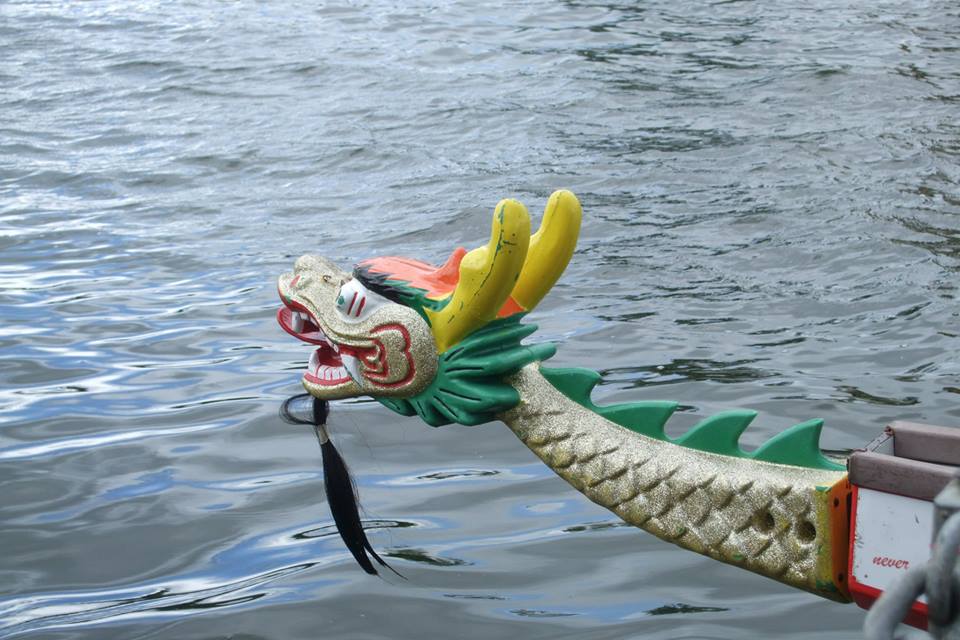
The head of a dragon boat in River Lagan. Image@LiangWANG

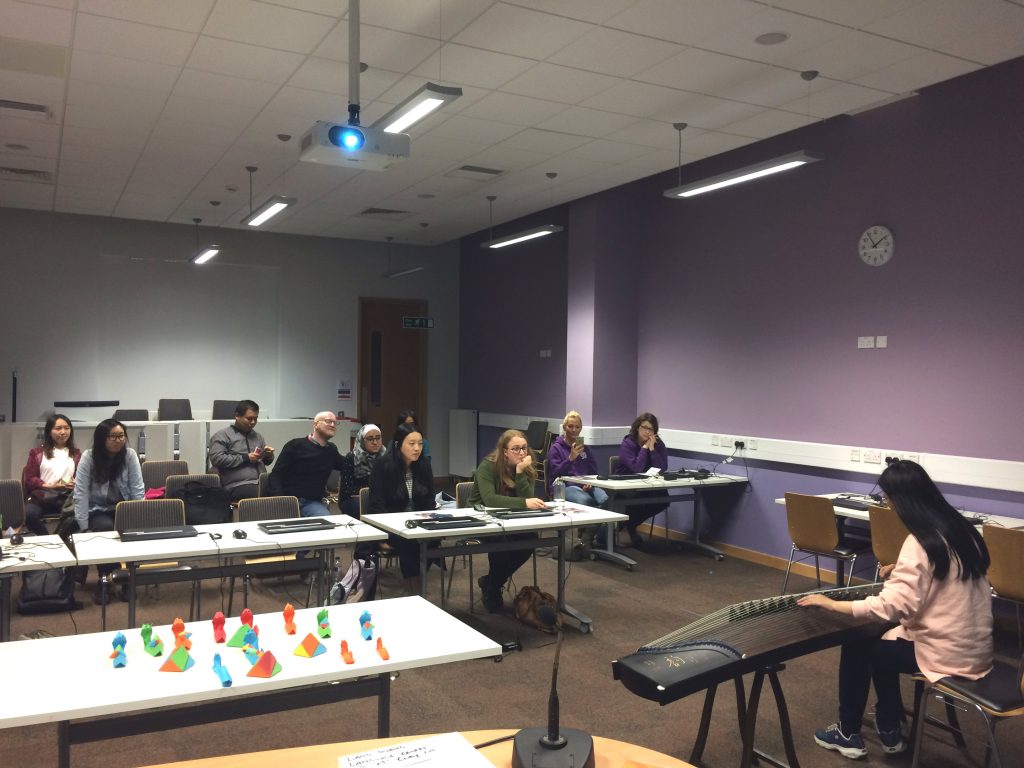
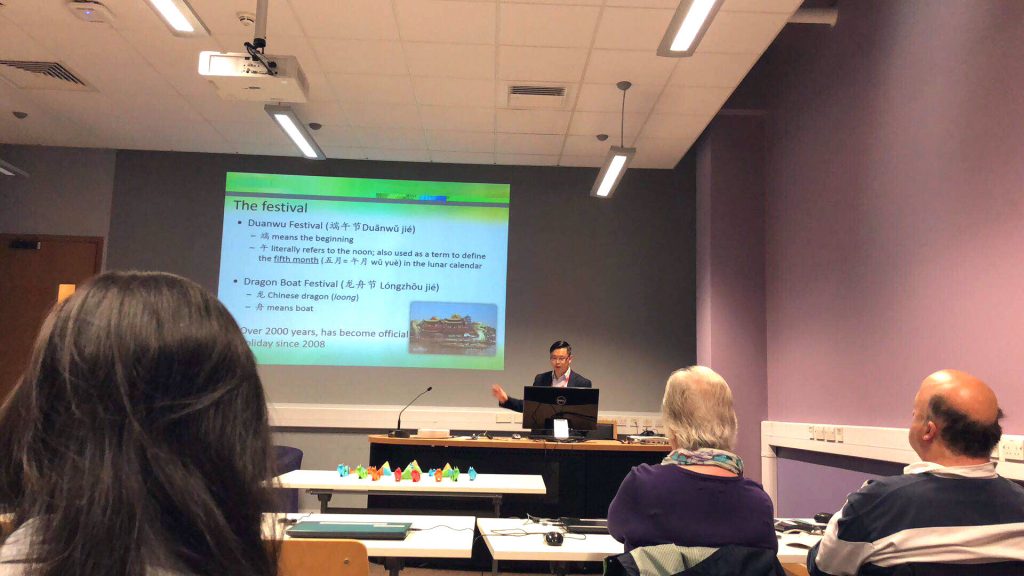
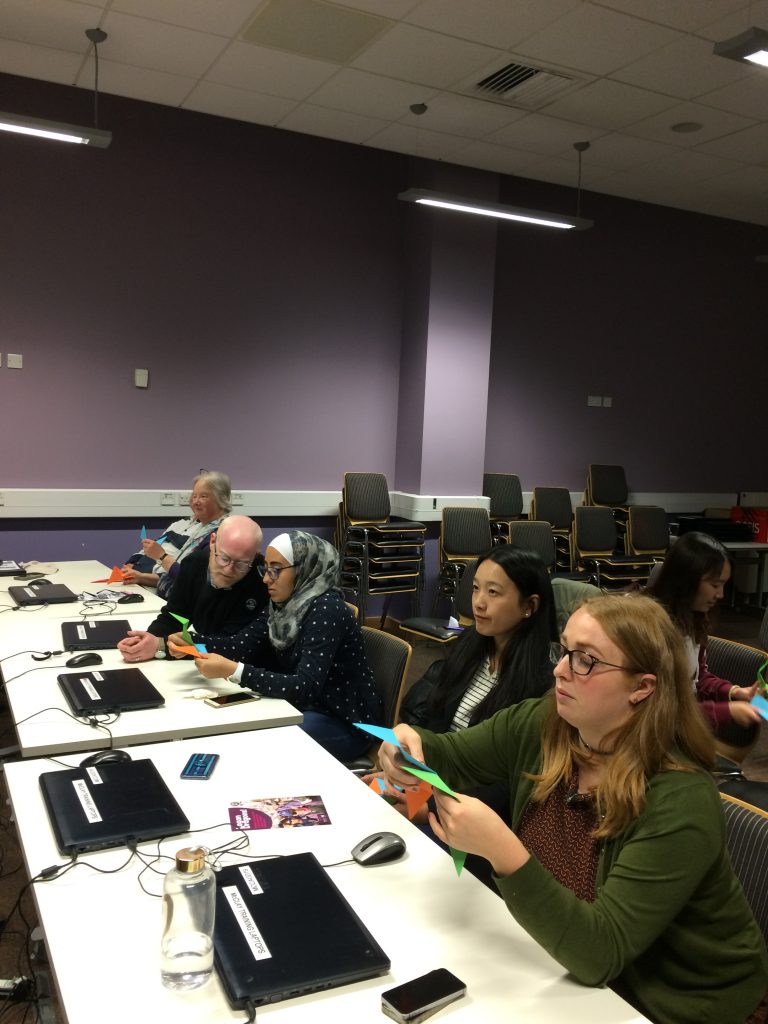
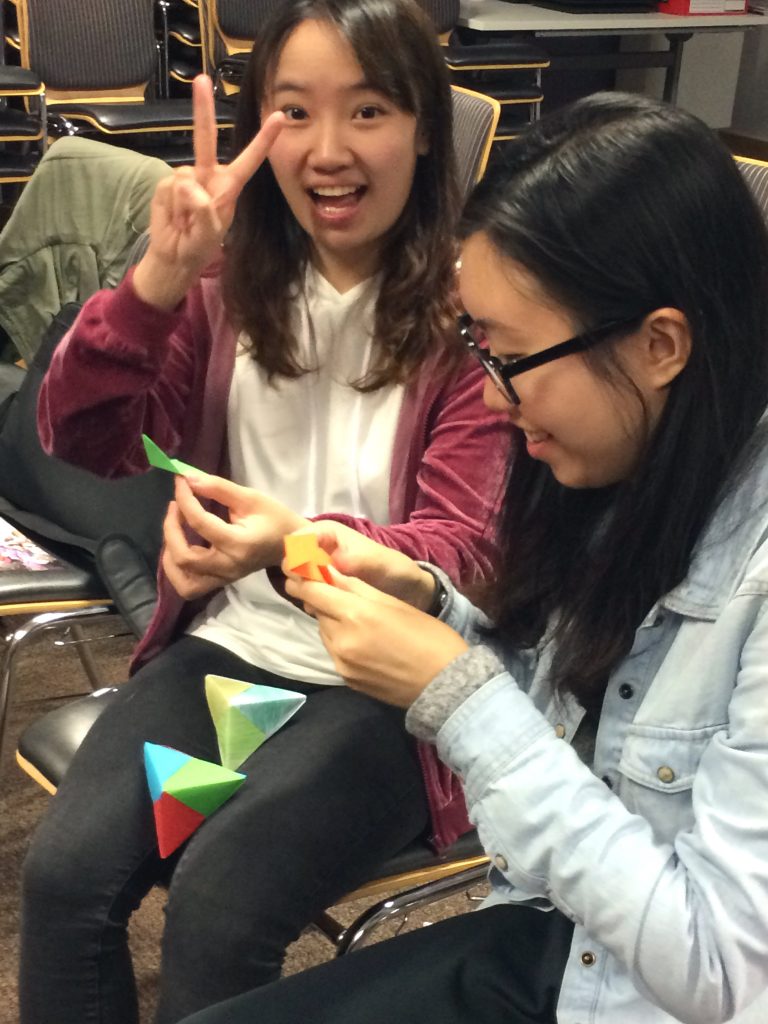
If you would like to review how we celebrated it in the past, here are some snapshots with links to full albums (via the Language Centre Facebook).

2020 Culture Talk

2019 Interactive Culture Display

2018 Culture Talk and Workshop

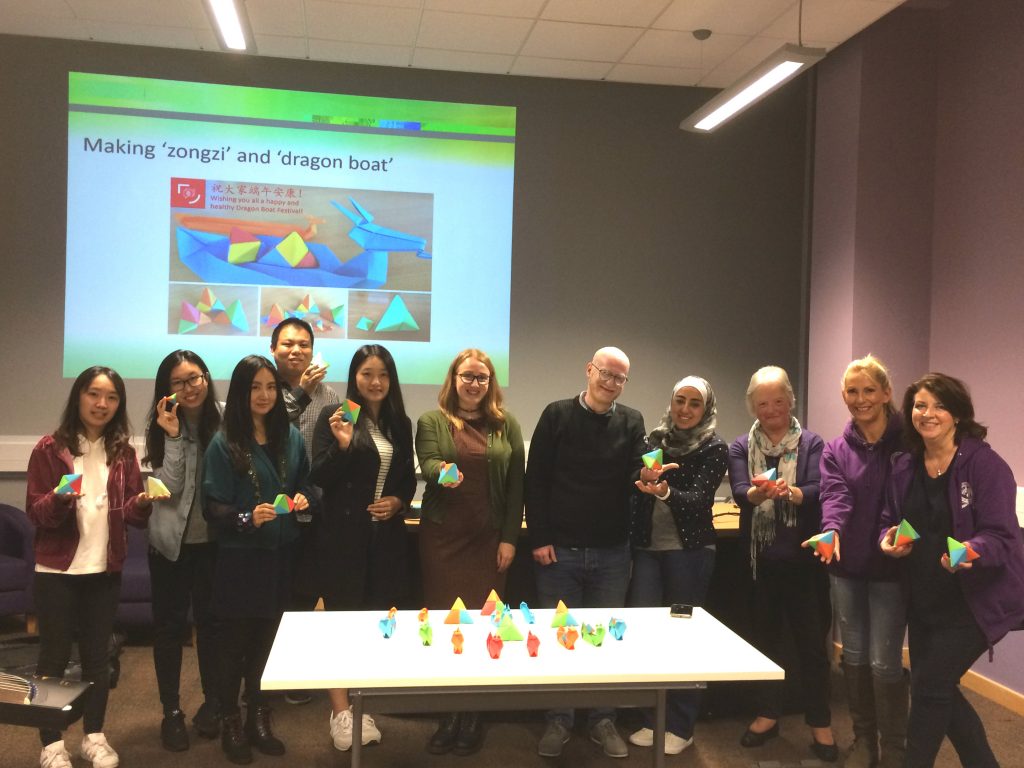
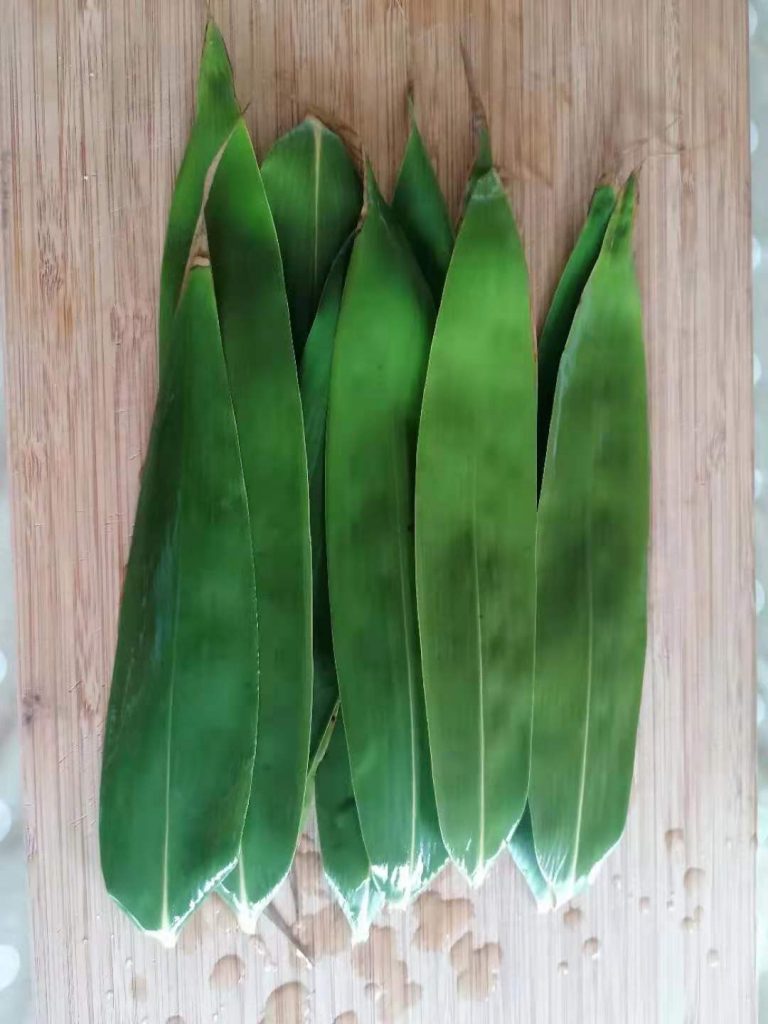
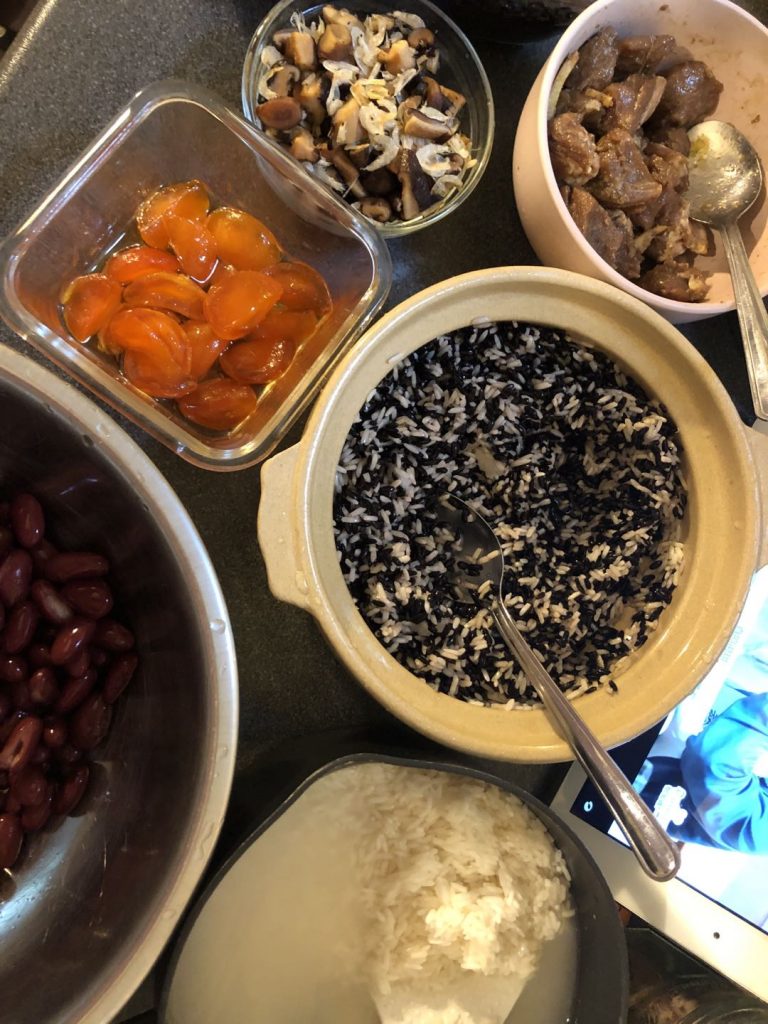
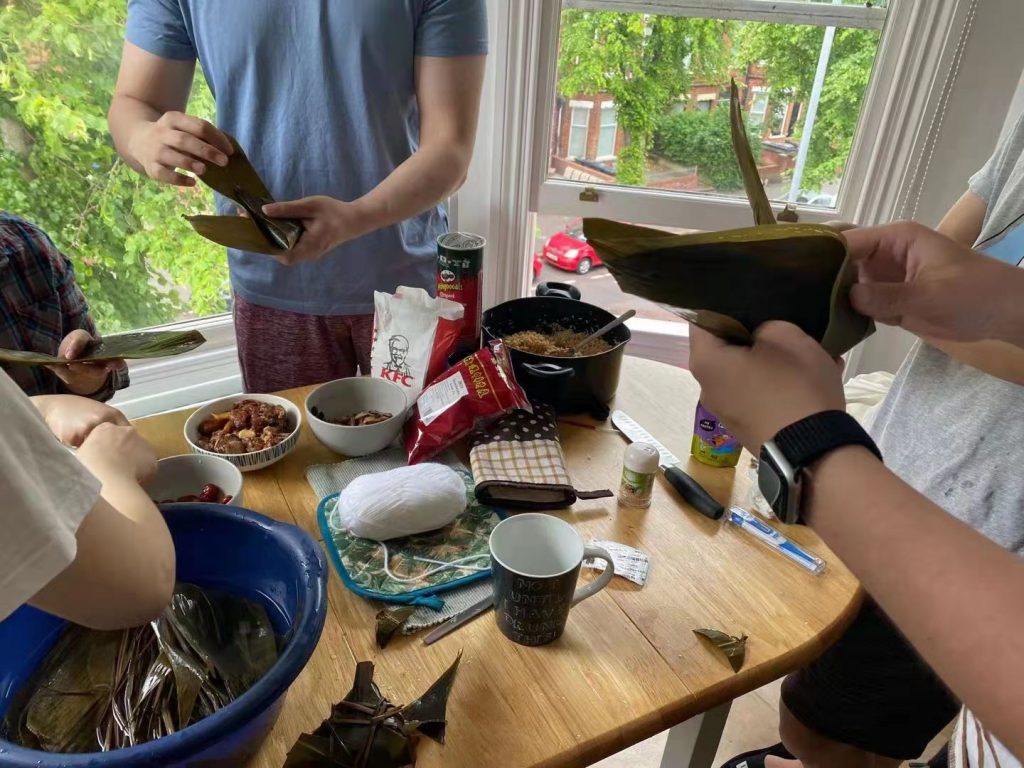
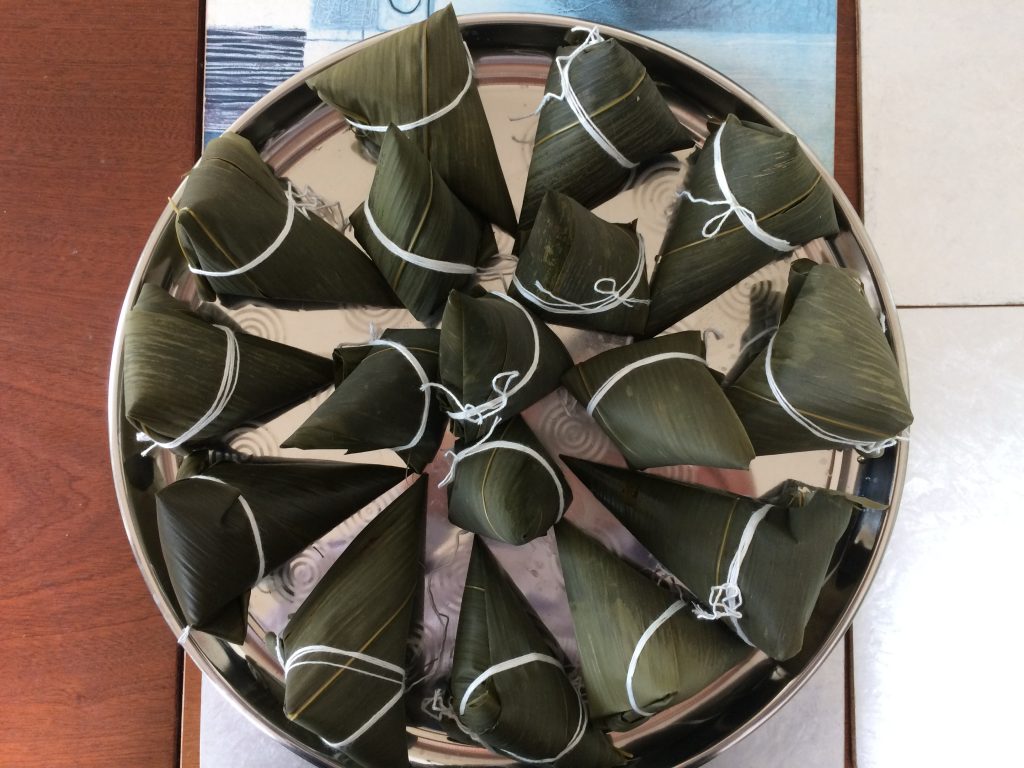
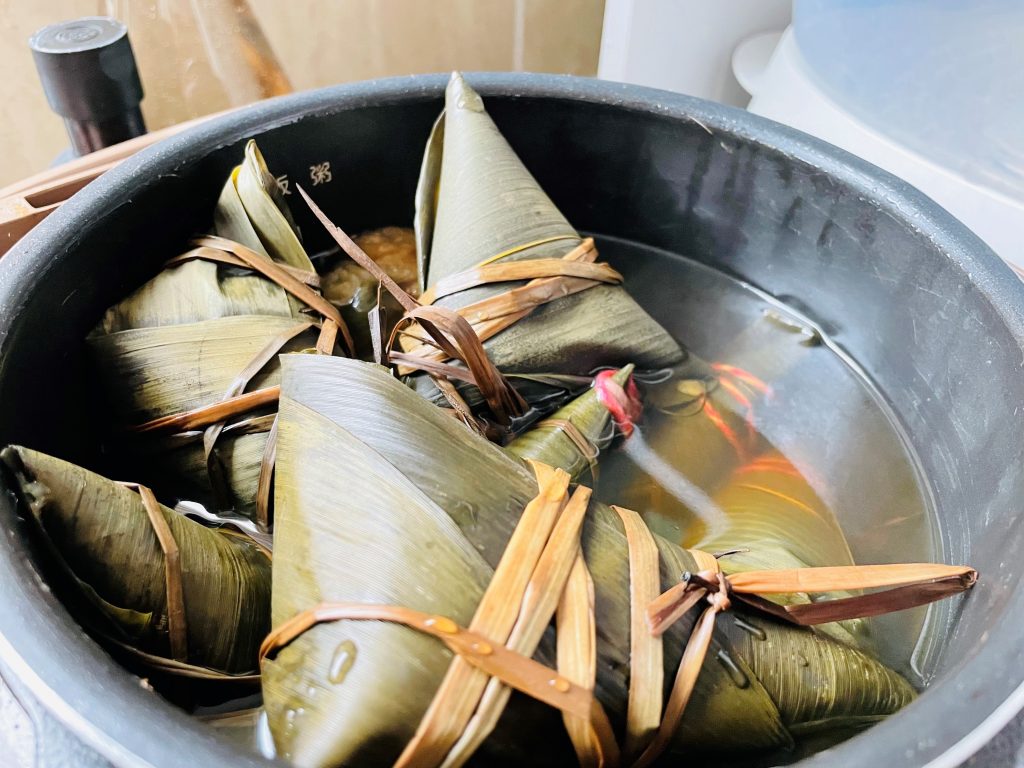
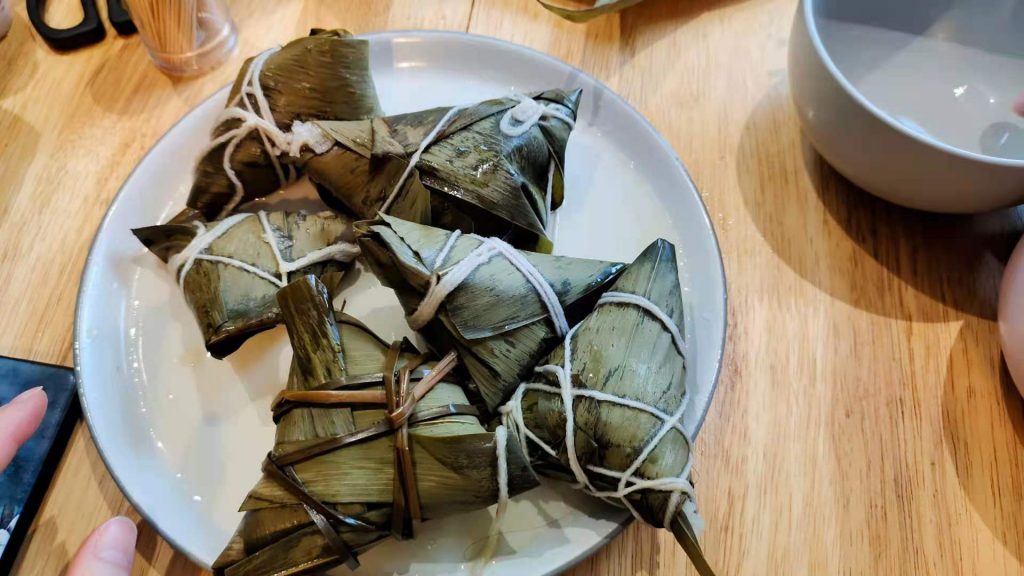
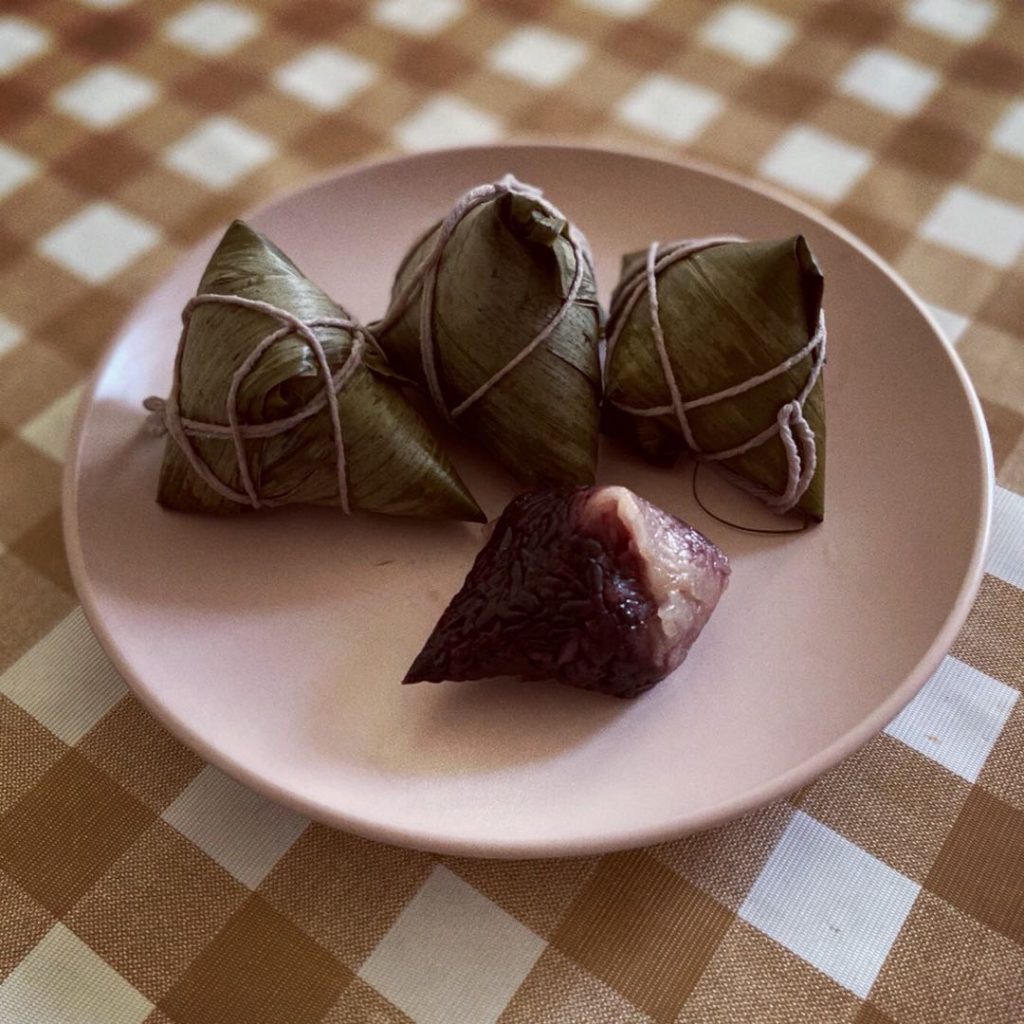
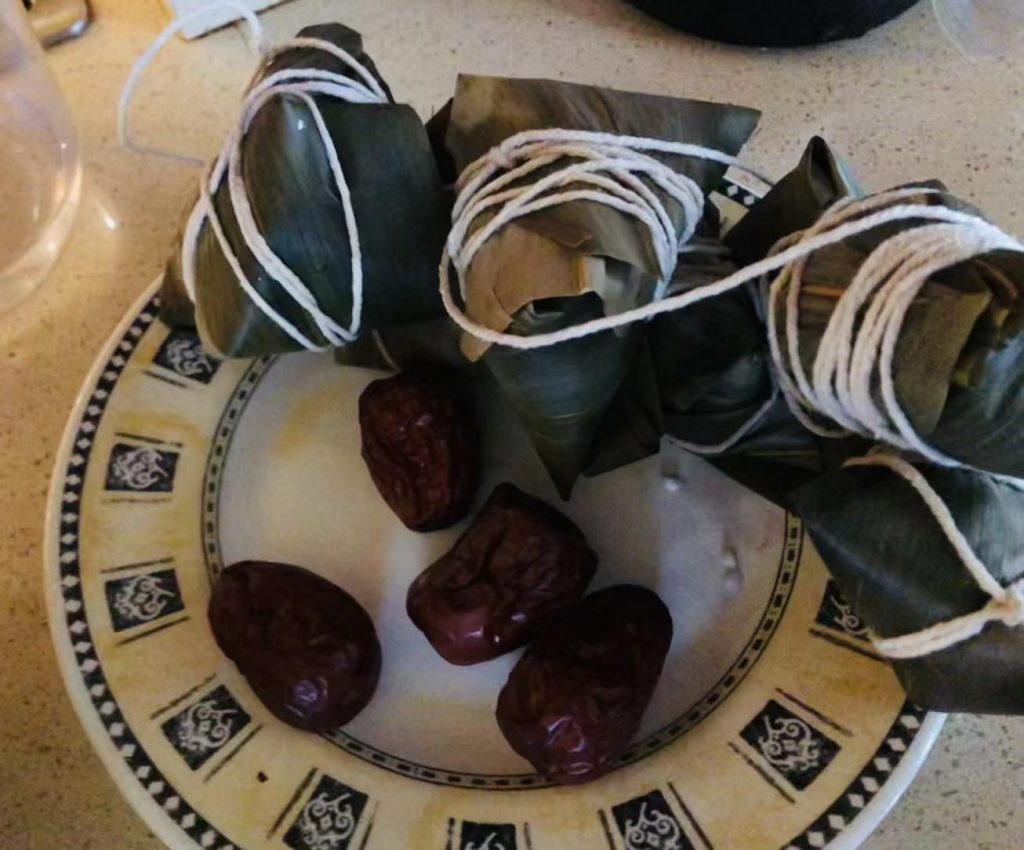
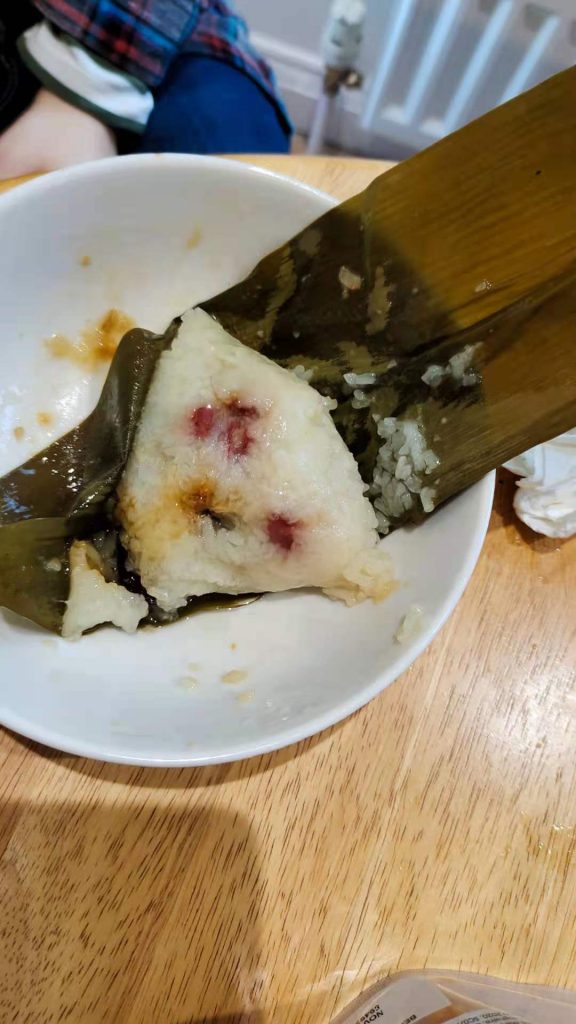
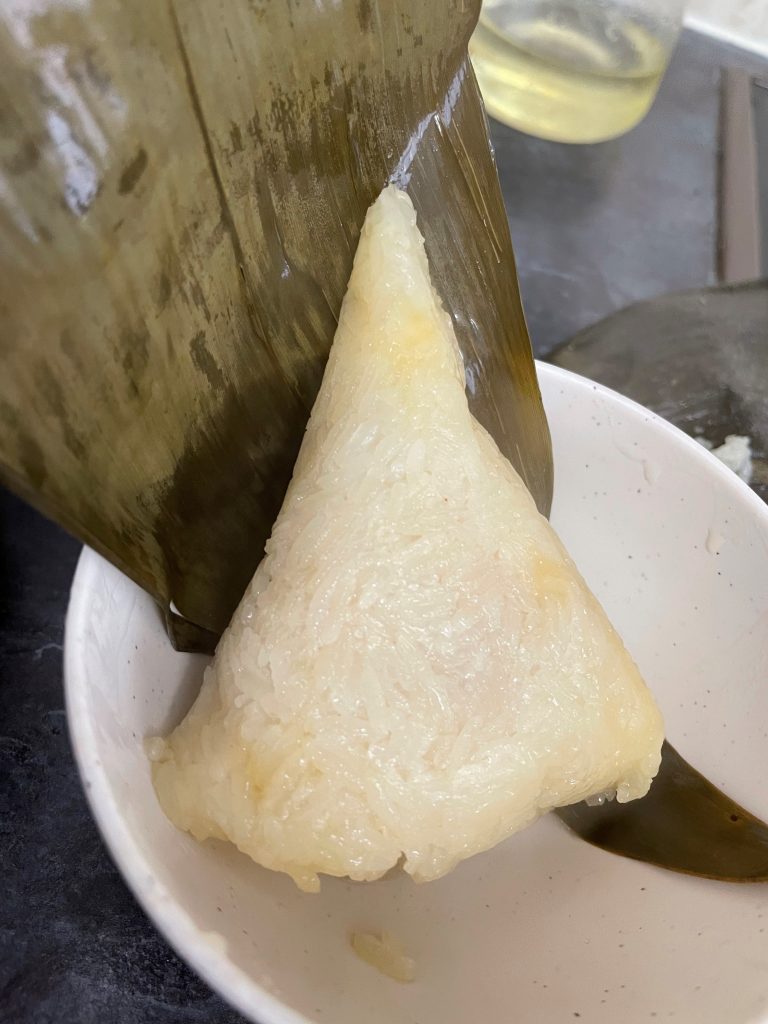
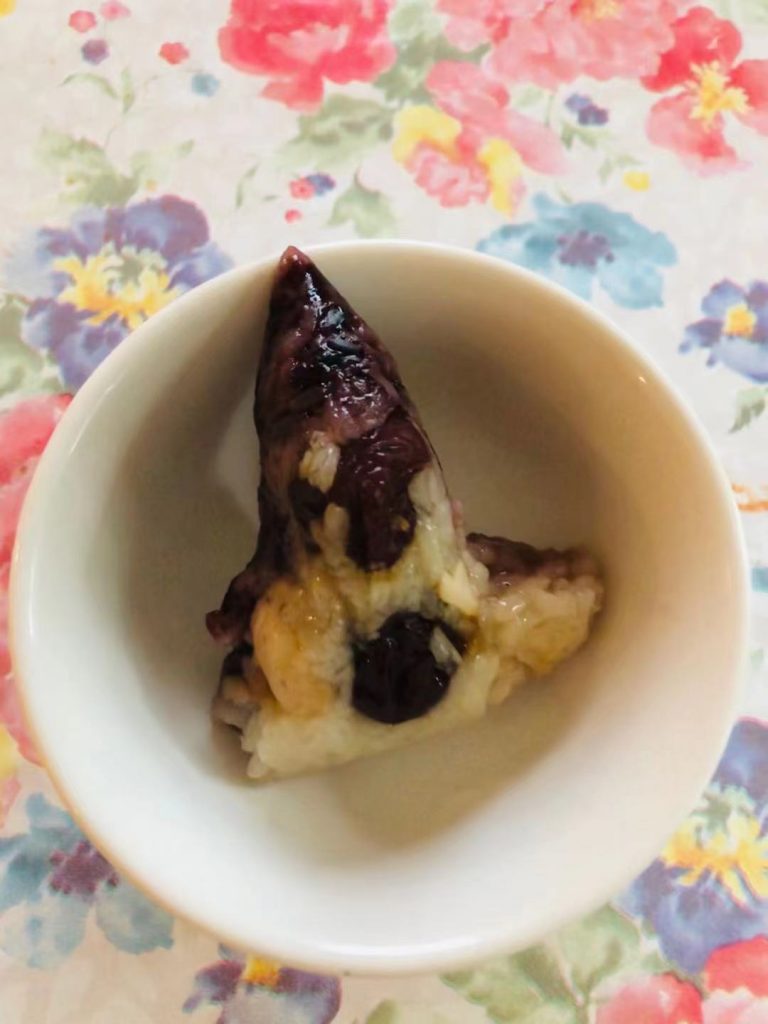
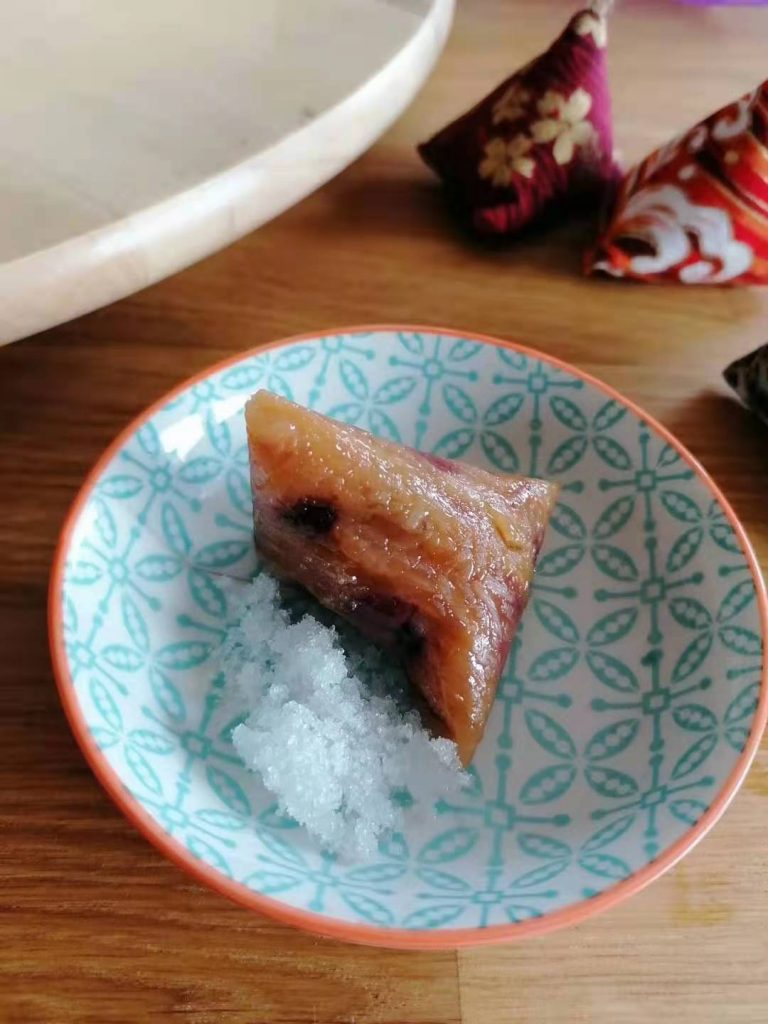
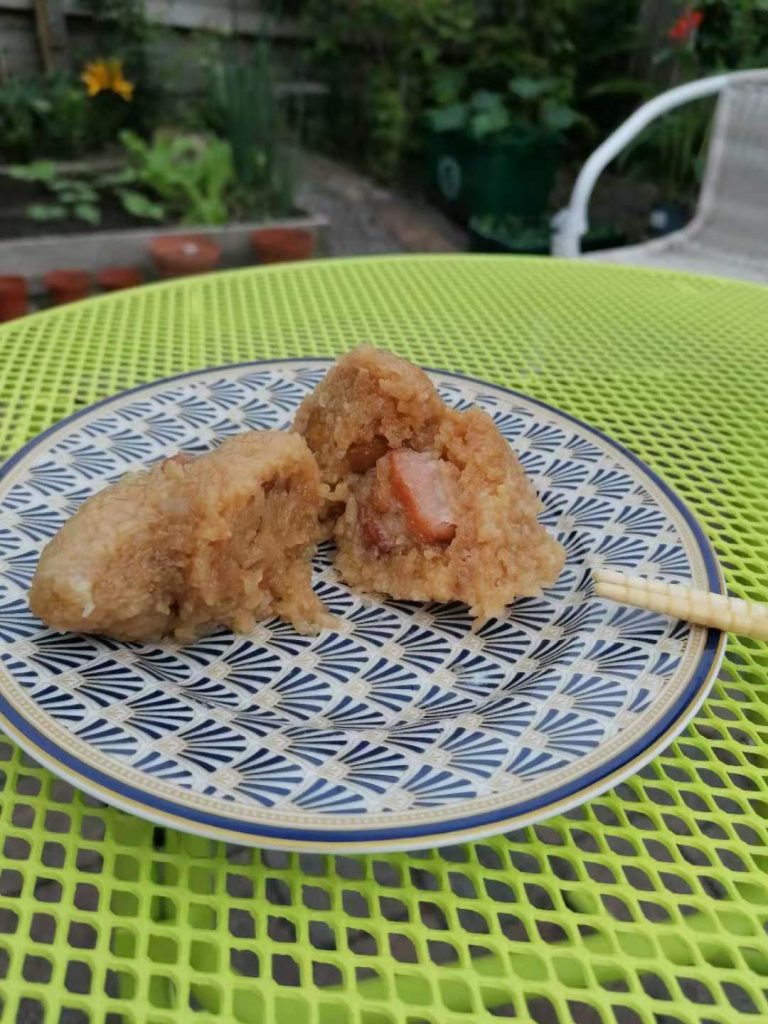
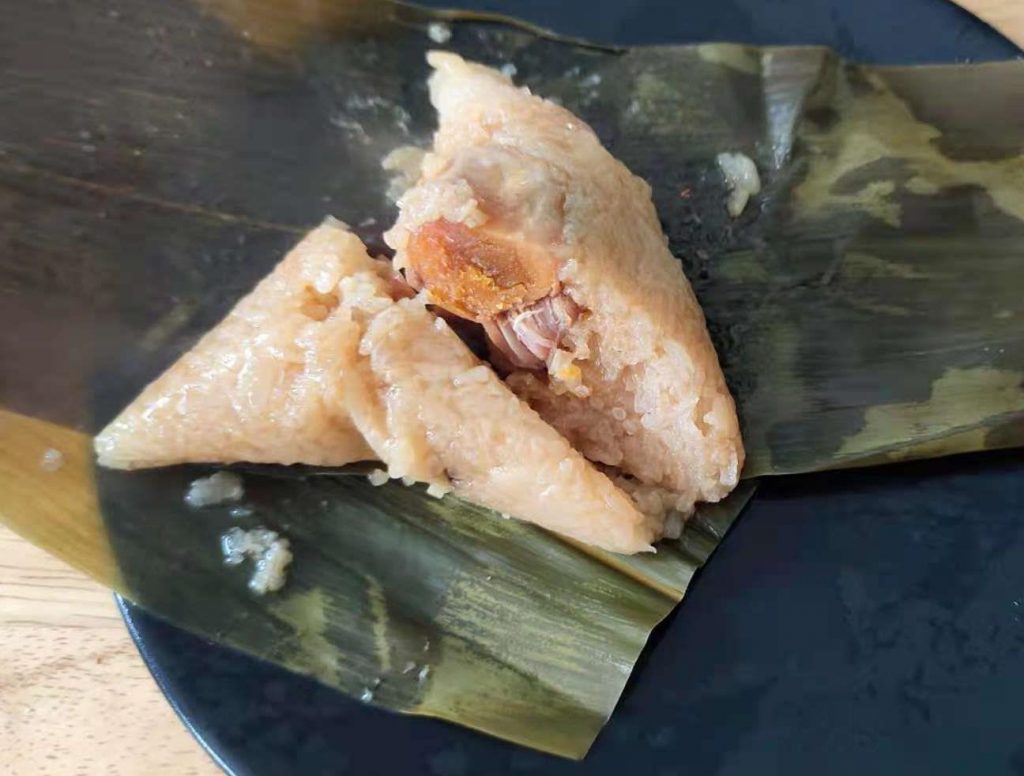
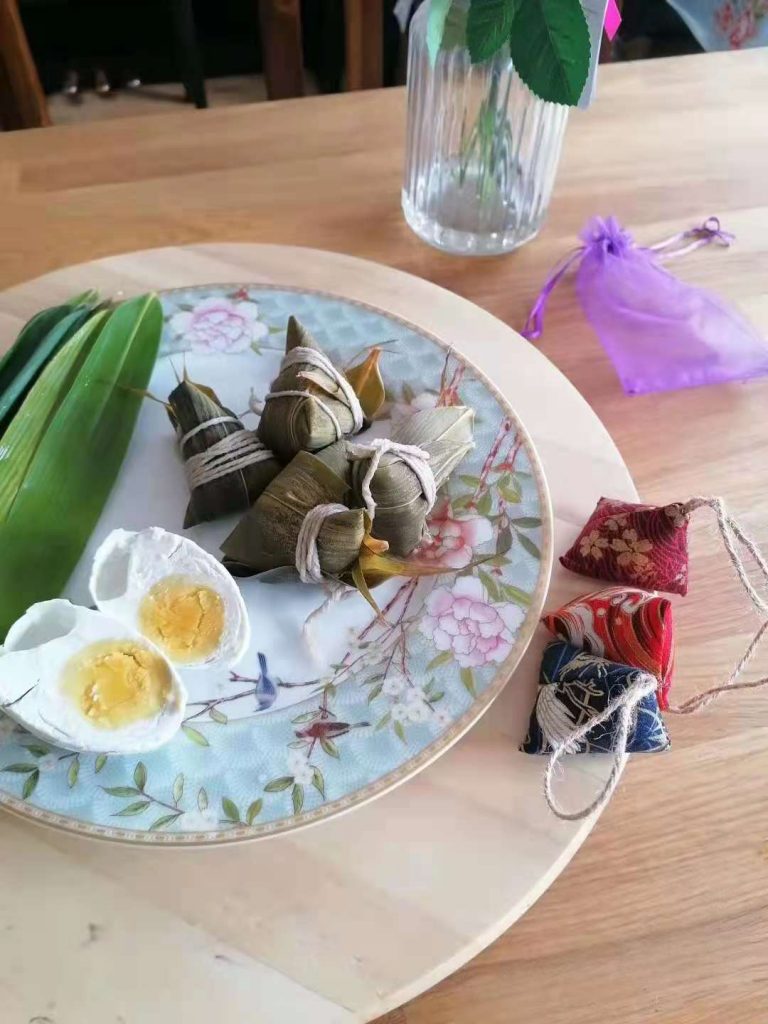
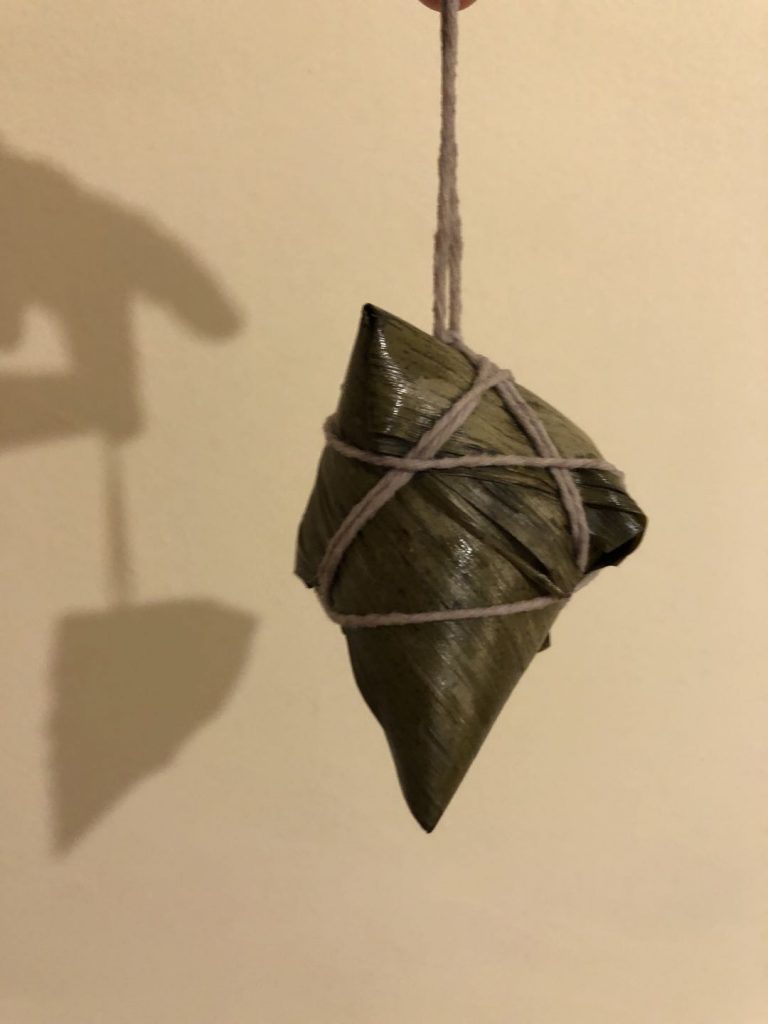
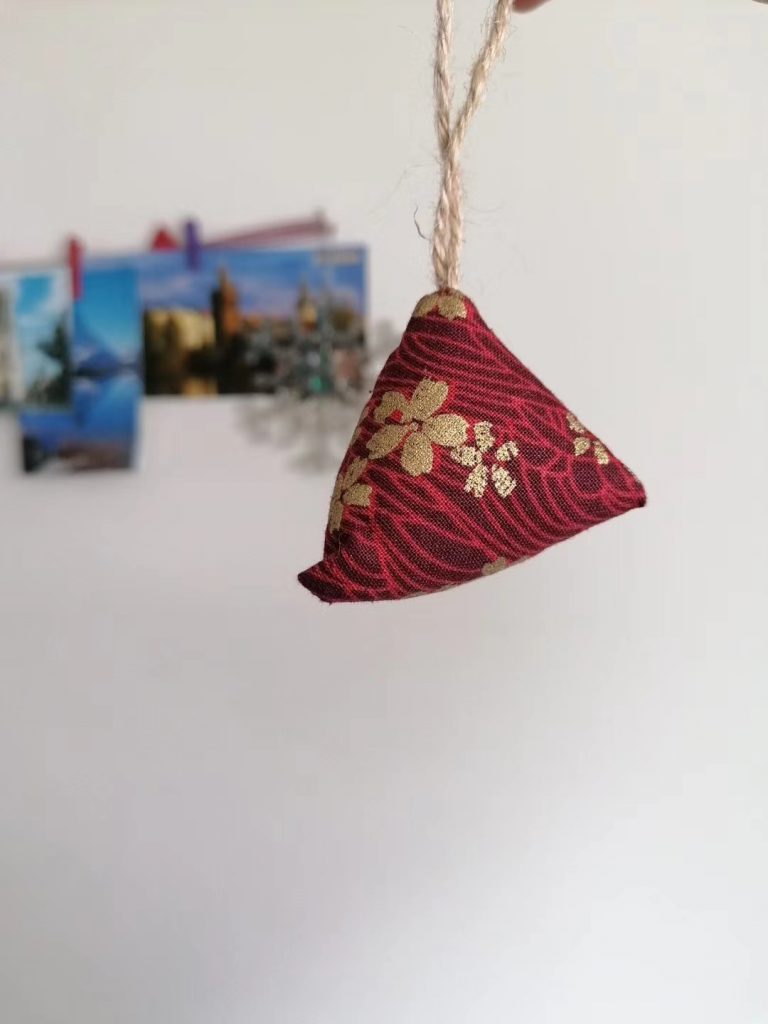
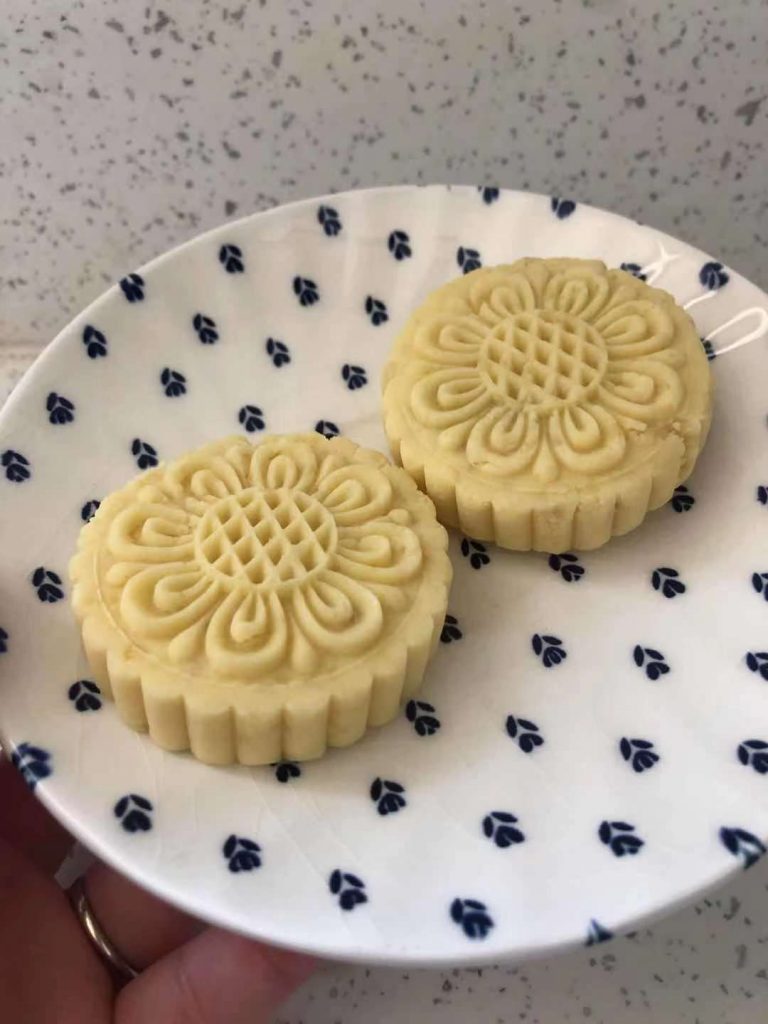
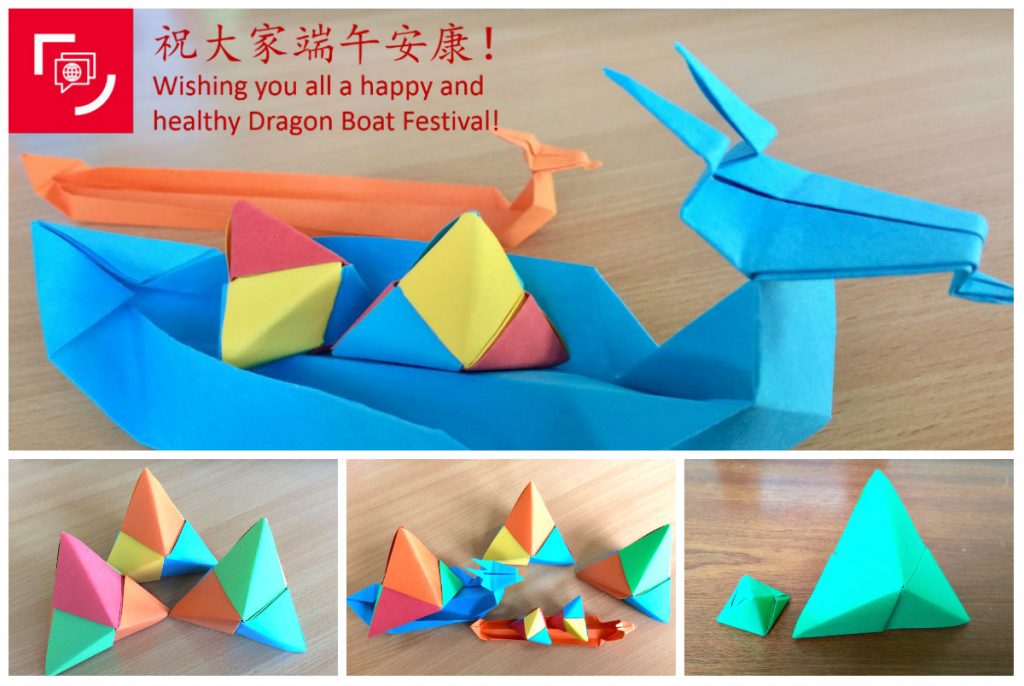
This time, while we cannot get together again, we have invited some staff and students to show and tell what they have done to celebrate the festival – making and eating zongzi 粽子(zòngzi), a typical type of food made of glutinous rice with sweet (e.g. dates, red bean paste) or savoury (e.g. pork, salted egg yolk) fillings wrapped up by bamboo or reed leaves, as the photos shown below.

Vocabulary

  • 粽(子) zòng(zi) – zongzi
  • 糯米 nuò mǐ – glutinous rice; 糯 nuò – sticky and soft; 米 mǐ – rice
  • 粽叶 zòng yè – reed or bamboo leaves; 叶 yè – leaf
  • 竹 zhú – bamboo; 苇 wěi – reed
  • 枣 zǎo – date (fruit)
  • 豆沙 dòushā – red bean paste
  • 咸蛋黄 xián dànhuáng – salted egg yolk
  • 猪肉 zhūròu – pork
  • 绿豆糕 lǜdòu gāo – mung bean cake
  • 装饰 zhuāngshì – ornament, decoration

Greetings

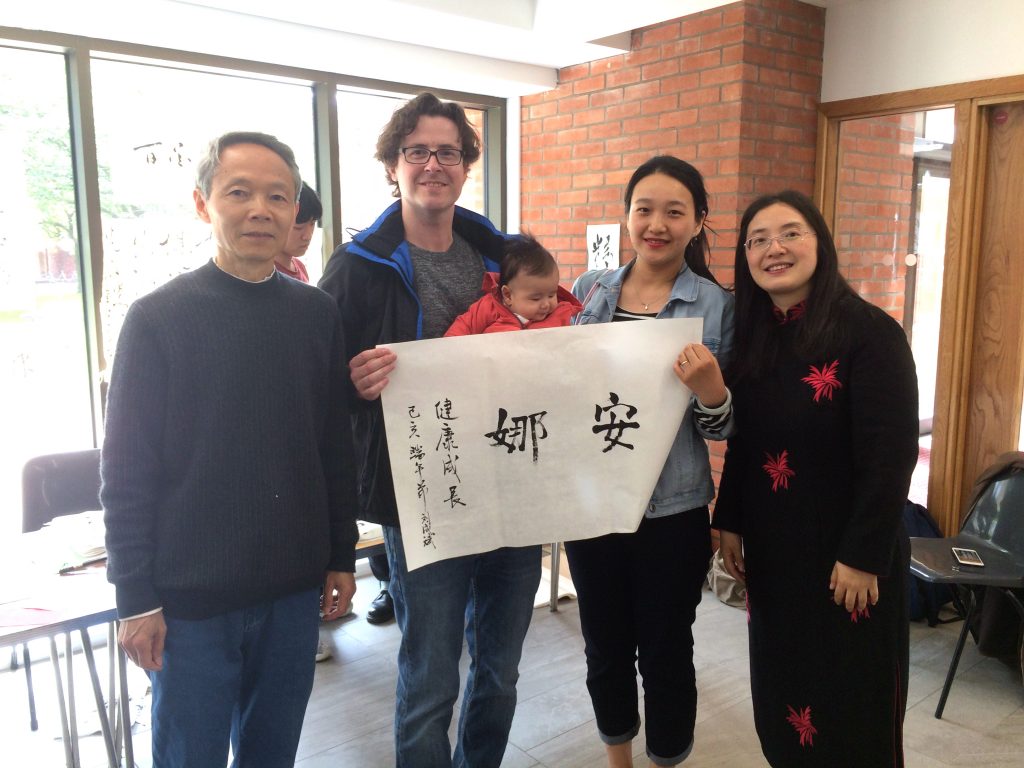
In addition to the common festival greeting that you may say 快乐 kuàilè (happy), many Chinese people also choose to say 安康 ānkāng (peaceful and healthy) or 吉祥 jíxiáng (auspicious). This is because Duanwu Festival is considered having its origin from warding off diseases and illness mostly caused by the rising summer heat and humidity which invited the invasion of poisonous animals such as insects and reptiles. Therefore, you will be able to see people use a varied way of expressions:

  • 端午节快乐!Duānwǔ jié kuàilè! – Happy Duanwu Festival!
  • 端午节安康!Duānwǔ jié ānkāng! – Wish you a peaceful and healthy Duanwu Festival!
  • 端午节吉祥!Duānwǔ jié jíxiáng! – Wish you an auspicious Duanwu Festival!

However, outside overseas Chinese communities, if dragon boat races are the only form of celebrations, i.e. beyond the context of traditional Chinese Duanwu culture, then people would find it normal to just express a happy festive greeting.

  • 龙舟节快乐!Lóngzhōujié kuàilè! – Happy Dragon Boat Festival!

More to explore

A video of QUB students tasting zongzi and other snacks. Video source: QUB Management School Weibo

Have you done something memorable this Dragon Boat Festival? Tell us and share your stories in the comment box below.

World Table Tennis Day

Happy World Table Tennis Day! 国际乒乓球日快乐 (Guójì Pīngpāngqiú Rì Kuàilè)!

Did you know that World Table Tennis Day is celebrated annually on 6th April since 2015, which also marks the International Day of Sport for Development and Peace?

From ITTF

Did you know that table tennis, or 乒乓球 (pīngpāngqiú) in Chinese, is considered the national game in China? And did you know that Chinese has become sort of a common language (unofficially) that many top players of the world are using it, especially at international games? Did you know why table tennis play shouted ‘cho’ at their match?

Actually ‘cho’ is not the Chinese spelling of the pronunciation, instead, it should be ‘ (qiú)‘ which means ball. In its more complete sense it should be ‘好球 (hǎo qiú)’ – lit. good ball (good point, well played) – in Chinese, a typical way of cheering for themselves when scoring. 好 (hǎo) tends to give a weak sound in the syllable and it is often omitted in competitions. So, shouting ‘球 (qiú)’ or ‘cho’ has become a fashion and trend in many international table tennis matches where Chinese players compete.

Then, how to encourage players in a competition, especially when they are in great difficulties, in Chinese? Here are some simple phrases for you to grasp:

  • 加油 (jiāyóu) – lit. add oil; come on, go for it
  • 别放弃 (bié fàngqì) – Don’t give up!
  • 你能行 (nǐ néng xíng) – You can do it!
  • 坚持就是胜利 (jiānchí jiù shì shènglì) – Perseverance leads to victory!

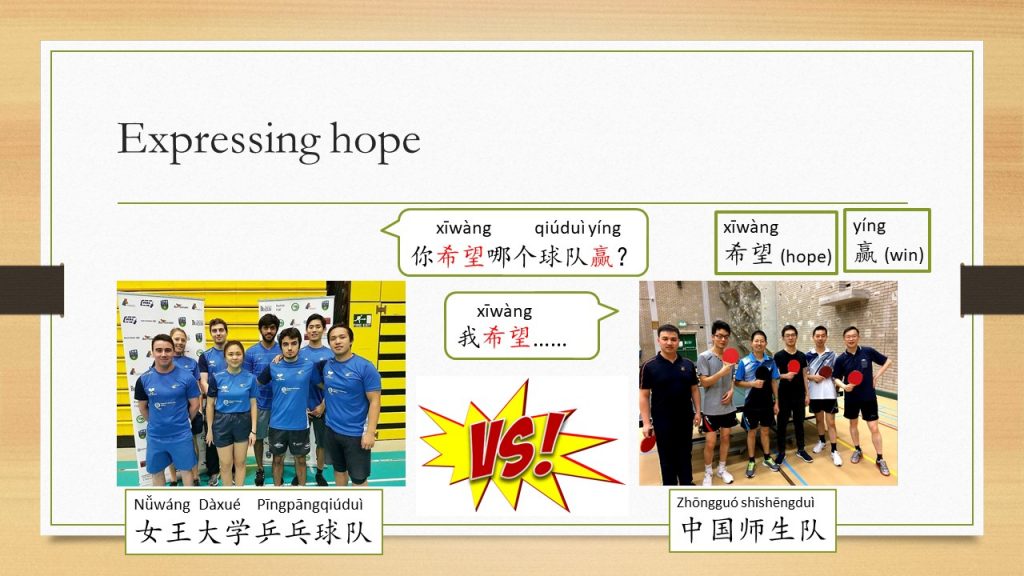
Did you also know that at Queen’s we have a QUB Table Tennis Team (multinational) and there used to be a Chinese team of students and staff members? If they played against each other, which team do you hope to win? Learn how to express hope in Chinese now:

Copyright@LiangWang
  • 女王大学乒乓球队 (Nǚwáng Dàxué Pīngpāngqiúduì) – Queen’s University Table Tennis Team
  • 中国师生队 (Zhōngguó shīshēngduì) – Chinese Student-Staff Team
  • – 你希望哪个球队赢 (nǐ xīwàng nǎ ge qiúduì yíng)?Which team do you hope to win?
  • – 我希望…… (wǒ xīwàng…) I hope …

So, which team do you hope to win? Give your answer by using the structure and phrases above and get some practice.

Of course, in many games, we just want to play for fun and to develop friendship. So in this context, we would say ‘friendship first, competition second’ – 友谊第一,比赛第二 (yǒuyì dì yī, bǐsài dì èr).

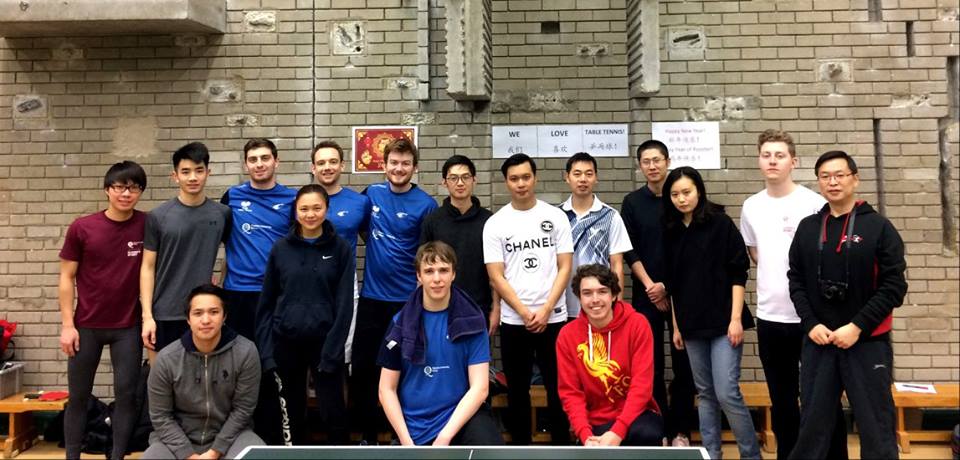
CNY celebration 2017 at Queen’s – Table Tennis Taster Event at PEC

Finally, we hope that you will like table tennis game and join us for fun at some time.

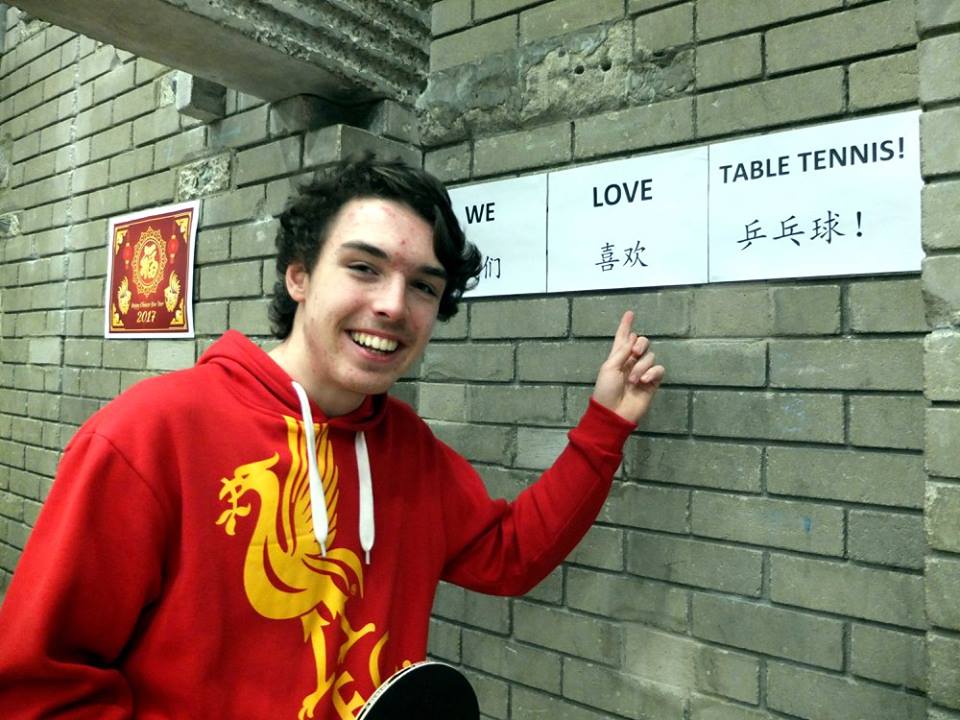
CNY celebration 2017 at Queen’s – Table Tennis Taster Event at PEC
  • 我们喜欢乒乓球 (wǒmen xǐhuan pīngpāngqiú)!

Want to learn more Chinese? Check the Language Centre website for Mandarin Chinese course registration information.

Reminder: Registration will close promptly at 17:00 on Thursday 15 April. Classes are expected to be extremely popular and usually fill up quickly, so early registration is strongly recommended.