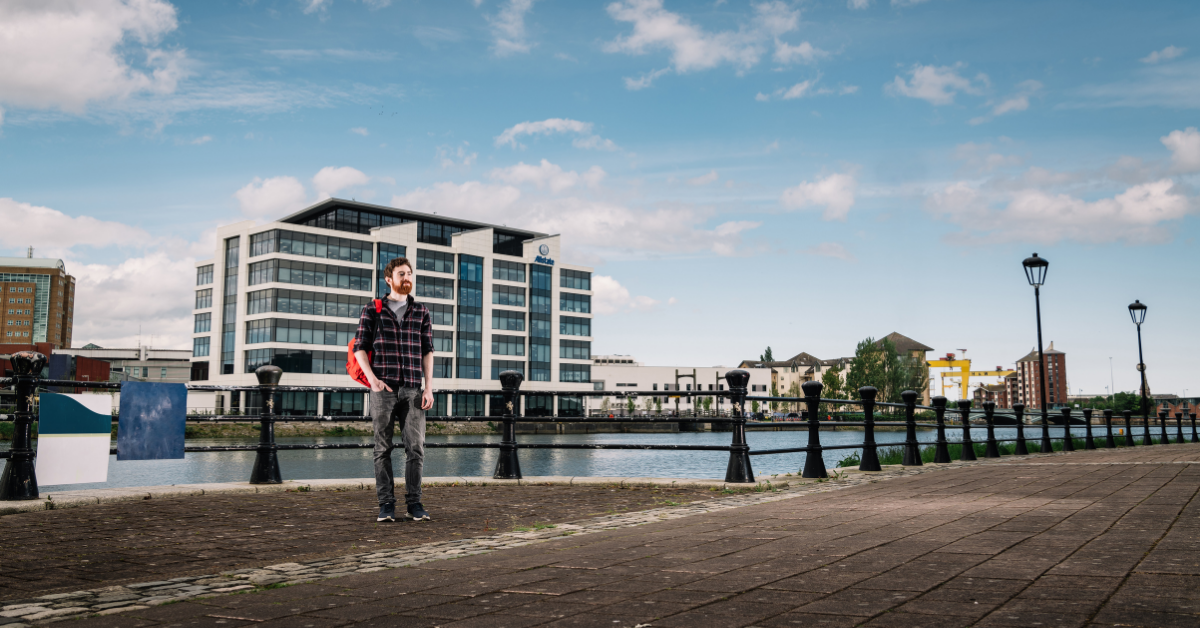
Daniel Tunstall, a Liberal Arts Master’s student completed a four-week summer internship with the British Council, analysing feedback and data from the International Schools Exchange Programme. Here is how he got on.
Did you know that the transferable skills gained on an Arts degree can lend themselves to a career in data analytics? Just ask Daniel Tunstall, an MA Liberal Arts student from Queen’s who recently completed a four-week summer internship with the British Council, analysing feedback and data from the International Schools Exchange Programme. His communication skills and eye for insight helped him visualise the data to uncover the story. Read his blog to find out how he got on:
What did the internship involve?
Over the course of four weeks, I have completed an internship with the British Council where I developed skills in analysing and displaying qualitative data so that it can be effectively used in the future to understand the successes and weaknesses of the programme.
What soft skills did you develop?
This internship introduced me to the processes of working within a team of a global organisation where people are focusing on different tasks and how these teams work together to ensure that all tasks are done efficiently to the required standard. This opportunity provided me with an insight into the specific skills needed to work well in a team and allowed me to develop my understanding of adaptability and resilience in collecting feedback of my work and using it to improve it and fulfil the expectations.
What practical skills did you develop?
This internship has also developed my ability to analyse data due to the requirements for me to look at the feedback for the programme and identify gaps in the data which need to be further explored in the future. Within this process, I conducted thematic analyses of the data and identified the possible improvements that could be made within the programme to ensure success in the future. Through creating two further questionnaires to collect more data, I had to use the knowledge from my analysis to isolate these improvements and allow participants the opportunity to offer recommendations.
How did the experience develop your understanding of workplace culture?
The British Council invited me to attend global events that they were holding such as Windrush Day, a celebration of immigration to Britain. By being invited to these events, I was able to understand how they host global events and the extent to which the organisation runs on an international basis.
How has the experienced influenced your future career plan?
I have thoroughly enjoyed working within this organisation as an intern because I have developed valuable skills in data collection and handling which are specific and difficult skills to develop. Furthermore, this opportunity has provided me with a unique experience into understanding how international organisations operate which will influence and impact my future decisions when it comes to employability considerations.
If you are wondering what you could do with your degree, and where your transferable skills could take you, catch up on our Industry Insight series and explore what industry are growing and how you can ride job market trends.
Queen’s alum Brian O’Rourke was a 2003 scholar and the experience changed his life so much that he is still in Japan to this day working as a senior researcher at the National Institute for Advanced Industrial Science and Technology (AIST), one of Japan’s largest public research organisations. Here is his story.
While I had visited Tokyo several times during the course of my PhD, when I arrived with my fellow scholars in September 2003, I couldn’t have imagined how the next 20 months would shape the rest of my life and career. Apart from the incredible immersion in Japanese language and culture, during that eventful period I both met my future wife and began research collaborations with my present work colleagues.
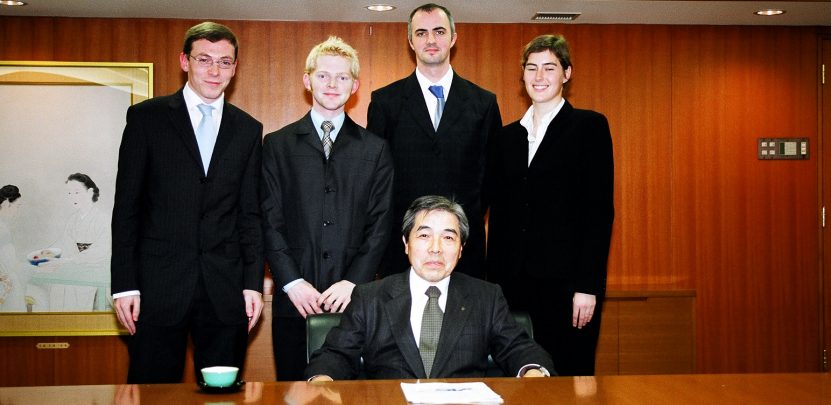
Brian (back row second from left) in 2003.
I am now a senior researcher at the National Institute for Advanced Industrial Science and Technology (AIST), based in Tsukuba, Ibaraki prefecture. AIST is one of Japan’s largest public research organisations and is mostly funded through the Ministry of Economy, Trade and Industry. AIST’s goal is the development of technology useful to Japanese industry and to support commercialisation of research. In my own research group, we use exotic particle beams like positrons (the antimatter particles of electrons) and neutrons to probe and characterise novel materials. Presenting our research at international and domestic meetings has given me plenty of opportunity for interaction with other researchers doing similar work both inside Japan and internationally.
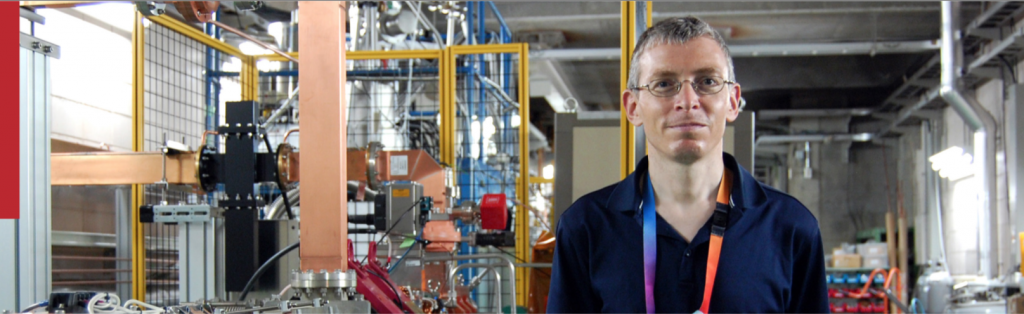
Brian now works as a senior researcher at the National Institute for Advanced Industrial Science and Technology (AIST)
My main passion outside work and family life is cycling, especially cycle touring around Japan. The roots of this hobby can also be traced back to the Daiwa Scholarship when I brought my bike to my homestay in Yamagata and decided to finish my stay by cycling back to Tokyo. Since then, I have taken every opportunity to go touring when I can and just last year, during a short trip to Kyushu, I completed a long-held ambition to cycle in each of Japan’s 47 prefectures.
Brian is a keen cyclist
The Daiwa Scholarship continues to influence my life after all these years and I am extremely grateful for all the opportunities afforded to me through my participation. This appreciation has been made more acute in these times of travel restrictions due to the global pandemic. I hope the barriers imposed by the virus will soon be overcome and the opportunities for cultural exchange will remain strong into the future.
Applications are now open for this unique funded programme of language study, work placement and homestay in Japan. Daiwa Scholarships offer young, talented UK citizens aged between 21 and 35 with strong leadership potential the opportunity to acquire Japanese language skills and to access expertise and knowledge relevant to your career goals. No previous experience of Japan is necessary.
Miriam O’Reilly, 19, a second year BSc Business Management with Placement student at Queen’s joined our ‘Working Globally from NI’ programme, and secured a position as Brand & Marketing Intern with MCS Group, a Specialist Recruitment Consultancy headquartered in Belfast. Here is how she got on and apply here.
The recruitment process
Throughout the academic year amid intense COVID-19 restrictions, the idea of securing a summer internship itself felt like a far-away and unrealistic dream, let alone one which was both in-person and focused on working on a global-scale. In late March, while checking out the Queen’s MyFuture platform, I stumbled across some of the opportunities being advertised by the Queen’s Global Opportunities Team. As a Business Management student and having taken a module in marketing, I was particularly drawn to this position of ‘Brand & Marketing Intern.’ Upon further research on MCS Group, I was even more excited by this opportunity, largely due to its very evident people-focused culture.
After initially sending off my CV and Cover Letter, I was elated when MCS invited me to an interview. The interview itself was enough to convince me that MCS would be great to work for. Louise Smyth, one of the Managing Directors at MCS, took more of a personal approach in the interview, making conversation more about my experience in working in my local corner shop, my past experiences as a musician, what I do as a course rep and what I’d learned in my course so far, rather than the formal ‘professional experience’ as often expected. I was grateful for this, especially as a first-year student, as it allowed me to display the interpersonal skills I have gained through ‘non-professional experience’, which would present my potential and suit to the role. I was so excited to find out that I’d secured the position! This was alongside another Queen’s Business Management student, Ellen, who is going into her final year.
Digital marketing post-Covid
From the first day at MCS, I was guided and coached by the Marketing Executive, Martin. He explained what MCS do and how our role as marketers plays a key role in the success of the company. He emphasised the importance of the digital side of marketing, which has increased significantly within the past 18 months, and this became the primary focus of my duties over the period of the internship. Despite the fact I was fortunately able to work in the modern, sleek MCS office in Belfast City Centre, many of the staff were working from home a few days of the week due to social distancing regulations. In addition, the main communication channel between MCS and potential candidates is via social media and the MCS website. This meant that digital marketing was taking centre stage.
What did the role involve?
At MCS I was given a lot of creative freedom and responsibility, and I feel very honoured that I was trusted with the brand name. Over the course of the internship, alongside the marketing team and fellow intern, I launched a successful company Tik Tok page and helped to revitalise elements of their Instagram page. I also ‘learnt the ropes’ of LinkedIn and was taught how to create engaging and informative content on various digital platforms. This included an element of planning and strategy, as the MCS brand image and mission had to be at the forefront of our minds at all times. This was especially important as the company are continually expanding, with an increasing presence in the US market. The content that was posted had to ensure inclusivity on an international scale and establish MCS as a global-focused company. An example of a global project we were involved in was the creation of a ‘candidate package’, informing potential US candidates on the perks of working for a very prominent UK online fashion company.
Understanding the business
Alongside the content creation itself, Martin and the rest of the marketing team taught me so much about ‘the business side’ of the work we were doing, and how we can use analytics to track our success and present the value of our work. This encouraged me to take a ‘Google Digital Garage’ course called ‘The Fundamentals of Digital Marketing’, which helped to foreground what I’d learned over the course of my internship at MCS. These are transferable and invaluable skills which I hope to use over the course of the rest of my degree and placement year. In addition to all of this, being able to speak to other staff members about their career journey and educational backgrounds was really informative and eye-opening, especially with their vast knowledge on recruitment. The internship reinforced my view on the importance of work experience alongside academic study, as I believe this is just as vital a learning tool.
Becoming part of the team
Outside the office, MCS prioritised including and involving me in company events. On my first week, we had an ‘end of quarter’ gathering at ‘Let’s Go Hydro’, where I got to meet all the staff and feel as though I was a part of the company. Between coffee trips, lunches out and shopping vouchers, it felt as though MCS really valued and encouraged its interns and has proven itself to be a great company to work for. I am so grateful to the Queen’s Global Opportunities Team and MCS Group for this opportunity and I’m excited to see what doors this experience may open as I start to apply for positions in my placement year.
Conor Houston, Queen’s Law graduate is Director of Houston Solutions Limited, and Chairman of several organisations including the Federation of Small Businesses Northern Ireland, One Young World 2023 Belfast, and of Fleming Fulton School. He is also the Governor and Trustee of the Irish Times Media Group.
Conor Houston
What does Queen’s mean to you?
I’m often reminded of Seamus Heaney, his famous line when he talked about the original centre. I think, as I reflected, I’m making this video today, Queen’s University very much is for me, my original centre. It’s where I formed my passion for Law, which was the career I practised in for most 10 years. But it also gave me a number of skills, perspectives and opportunities that continue to this day, and I’m very proud that I have for almost 20 years, I’ve had an association with Queen’s University.
What was your Queen’s experience like?
I graduated in 2004, with my Law degree. I had a fantastic three years at Queen’s, made a lot of friends who are still very much friends today, and I suppose it ignited my passion and interest in in law and the rule of law. I was very fortunate through my times at Queen’s to be involved in a number of summits and conferences, but also to go and study at the European Public Law Group Academy in Greece, in 2004, which was a really fantastic opportunity. It was my first time, I suppose, with young people from right across Europe studying together, all the different languages, cultures coming together and united by European Union law.
That was a very formative and special time. And in fact, a number of the things that I’m continued to be involved in, tend to have that international perspective and lens. After I had completed my Law degree, I went on to study for my Master’s in Human Rights law, and was very fortunate that there was an opportunity to do a cross border element. So I did the first half of my Master’s in Queens, and the second half of my masters at the National University of Ireland in Galway. And again, that was a very special time and experience and a number of the friendships and relationships I enjoy to this day were because of that cross-border experience.
What was your first graduate role?
I graduated from Queen’s with my Master’s and I then went back to Queen’s to study at the Institute of Professional Legal Studies, where I was finally admitted as a solicitor in 2008. I was lucky that I had a firm that I did my apprenticeship with John J. Rice and Company in Belfast, which was a criminal and human rights firm.I worked there for almost 10 years and was fortunate to be involved in many of the pioneering human rights cases of that time. I was dual qualified in that I was qualified both in Northern Ireland and also in the Republic of Ireland. So I practised a lot in Belfast and Dublin. And during my time in practice, I was very involved in the profession. Firstly, through the Young Lawyers Association, the Northern Ireland Young Solicitors Association, which I ended up becoming Chair of, and we had some fantastic conferences and events and a lot of fun with that group. I was then the first lawyer for Northern Ireland to be appointed to the board of the European Young Bar Association, which our relationship continues to this day. And 2010, we actually brought the European Young Bar Association conference to Belfast, so it was fantastic to bring all these international lawyers to our city.
What has been a career highlight?
I suppose a combination of all those roles, as well as being so very fortunate to be representing some leading human rights cases represent journalists, politicians, and many others. I suppose I became very interested in how law can affect change, I was very passionate about making a difference. And that’s what attracted me into law, the power of law to create change in a society.
I was very fortunate that the cases I got to work on, were very much about driving that change. But I suppose I became interested in how could I do even more so in 2014, I was awarded a scholarship by the United States State Department. And I spent a few months, I took a sabbatical and took a few months out to Boston College and then into Washington, and on their rule of law programme, which really started to develop my thinking more around the skills and experiences and perspective I had, and what I could do.
Whilst my mission was very much about helping people and making a difference, trying to refine what I could do with that, I became very interested then around maybe getting involved around politics and trying to create change to help complete our peace process, and to, I suppose, realise the enormous ambition and potential of Northern Ireland.
What are some of your favourite work-related projects?
I was very honoured to be appointed as the programme director at the Centre for Democracy and Peacebuilding. And I worked there for a number of years and worked on some fantastic projects around working with, for example, community organisations, youth groups, loyalists bands. And it was a great privilege to be involved in their work in trying to help to complete the peace process and build capacity within both civic and political society.
One of the amazing projects I got to work on with them was the EU debate programme, which was set up about nine months before the EU referendum. And the idea was to create a space for informed thinking and debate in Northern Ireland, on the issues that the Brexit referendum would have, particularly as it pertains to Northern Ireland.
I was involved with the board in rolling out a very ambitious programme where we engaged with community groups, youth organisations, religious organisations, every political party in Northern Ireland. And we really began a conversation, we weren’t trying to determine the outcome of the debate, we were trying to make sure that there was a debate. So we were neutral in that we weren’t trying to tell people to leave or remain, we were just trying to present all of the arguments and create that space. And that was a very humbling experience.
Queen’s University Belfast were very involved in supporting that project. In fact, we launched a new debate in the Great Hall in Queen’s and academics from the School of Politics, including Professor David Phinnemore were involved in writing a briefing paper for us. So it was very important to us that it would be underpinned by that credible academic expertise, but also the have that support of the reputation of Queen’s.
Why did you set up your own business?
I decided to set up my own consultancy, and I suppose what brings together a number of the clients and projects that I work on, is that one thing to realise the ambition of Northern Ireland. So I work with a number of leaders, all of whom may be coming from very different backgrounds and sectors, but all of whom are very passionate about realising the enormous potential of Northern Ireland, and trying to drive change here.
I suppose that’s what unites the number of projects that I’m privileged to work on now. And as I mentioned, I’m government trustee of the Irish Times Media Group. So the Irish Times is owned by a trust, and there are eight of us appointed to effectively act as the shareholders of the group. So we’re there to sort of look at the long term vision and that’s been particularly interesting, interesting in an age of post truth and thinking about the lines around freedom of speech, etc. So, and a lot of that, of course, goes back to the learnings that I had when I studied both my Law and Master’s degree around the issue of proportionality and competing rights.
What is One Young World?
I’ve been involved in leading a bid to bring One Young World to Belfast in 2023. So in 2017, I was asked to address the one Young World Youth summit in Bogota, Colombia. One Young World is the world’s largest youth summit. It brings over 3000 young people from every country in the world, to a city each year. And it’s one of the only organisations aside from the Olympics that actually gets every country in the world involved.
And this is about identifying the future leaders, both within business but also within NGO sector, just young people that are passionately driving change right across the world. So I was very fortunate to be invited to address this summit in Bogota, Colombia in 2017, and was introduced on stage by the then president of Colombia, President Santos and the late Kofi Annan, the former Secretary General of the United Nations. Both of those men spoke about the impact that Northern Ireland had on their journeys to peace, and this was a very humbling moment for me.
When I addressed the summit, I realised the power of our generation and the generation watching this video, to effect real change, not just within the place we will call home, but also in terms of making an impact in the world. So I then began the process of building a team to put together a bid to bring One Young World to Belfast in 2023, and we were successful in that.
How has your degree from Queen’s helped you?
Queen’s is that passport, not just for your career, but to accessing opportunities, and a fantastic network right around the world. So, you know, I’m extremely proud of the many hats and roles and things I’ve been involved in being a graduate of Queen’s University is really up there, and I look forward to continuing that role with Queen’s.
What challenges have you faced?
When I was a lawyer, and some of the projects I work on, particularly some of the Civic roles that I have, I think one of the challenges your generation is going to face is how we engage with the people we disagree with. So one of the challenges is always when you have very passionate about change, or seeing something happen, and you encountered the resistance to that.
I think that one of the big challenges that I challenge myself every day, I think that we have to all turn on is what can we do to engage with the people that we disagree with, how we, I’ve often said we don’t have to agree but being disagreeable is a choice. So we need to find more places and spaces in which we can find that ability to respectfully engage with each other and actually see that compromise is an art, it’s not a sellout.
I think this is something that I encourage your generation to really challenge I think that the future will belong to those who can build relationships that can be constructive that can respectfully disagree with each other, but can see the common good can work together for the common good, can see the bigger picture that is the challenge of your generation.
What gets your out of bed in the morning?
I don’t feel that there’s an average week. For me, I think that’s probably what I love most about my, my work. In fact, I don’t even feel like I have a job because I’m very fortunate that everything I do, whether it be in my business life or my civic life, they are projects and issues that I’m very passionate about. So I jump out of bed in the morning, passionate about making the change in the area that day, whether it be through being on the border shadows and LGBT youth organisation, whether that be in promoting the role of small businesses through the five and a half 1000 members, and I have the privilege of being Chair of the FSB, and speaking up on their behalf, whatever I can do to to advocate change, to advance those who are trying to make a real impact.
That’s what sparks me on in the morning.
What advice do you have for graduates?
I think that’s one of the most exciting things about this generation, the graduates of today is that you really do have a blank canvas to create the kind of life and career that you want for yourself. And Queen’s University, as I say, is the ideal place to give you that toolkit for you to be able to do that.
It’s for me, it’s that life journey, it’s not just about getting that degree wasn’t really that important that you do, and it’s about the relationships that you build, the skills that you have, and they will sustain you for the not just years but decades ahead. And you know, as I said, it’s 20 years this September since I started Queen’s, and I’m reminded of something my late grandfather said to me, he said 20 years is a long time looking forward, but nothing looking back.
And for the first time, I can tell you, it doesn’t feel like two decades ago I entered Queen’s University, but those two decades, I’ve had that original centre of Queens, which has, as I say, been a constant thread throughout my career both here in Northern Ireland and through the international experiences and opportunities I’ve had.
Maddie Warren, a Queen’s History and English graduate and a newly qualified teacher offers her advice to students and graduates.
Maddie Warren, teacher and Queen’s graduate
You are supported to explore your options at University
When I started at Queens, I thought that I might want to be a teacher. And I did my first year of Queen’s and I kind of like I loved it. I loved getting involved in different things at Queen’s, I became a student ambassador, and did lots of tours for Queen’s, and kind of really, really enjoyed my first year. And towards the end of it. I had a bit of a careers crisis where I thought that maybe I didn’t want to teach. Maybe that wasn’t the right role for me.
I kind of had a bit of a freak out and really, really didn’t know what I wanted to do. So I had a chat with my university professional tutor, which was really helpful. And I also went to a few talks that were run by different businesses at Queen’s and one of them was an organisation which organised things like camp America and stuff like that, and I got in contact with them. And they ended up getting me a placement to go and work in Spain for the summer. So I went over to a lovely place near Marbella, in the south of Spain. And I spent my first university summer kind of working there looking after some children, learning Spanish and teaching English there. And that was amazing.
Education is an experience, not just a route to a career
My summer in Spain was kind of life-changing for me. I realised that I didn’t need to have a career when I finished university like straightaway. I met a lot of different people who were travelling around and I realised that there were kind of like loads of different things I could do and doing an English degree or humanities degree didn’t lump me into doing just the one career. So that was a really, really great opportunity for me. When I came back to Queen’s for my second year, I got really involved with the Widening Participation Unit, and started to do a lot of outreach stuff with the university. So I started to help to run workshops for primary school children, who might be the first in their family to go to university and kind of really work with some of the deprived communities around Northern Ireland.
And I found that so rewarding, probably the most rewarding experience that I ever had. I met some really, really interesting people from all over Queen’s and I met some people who
really kind of motivated me and helped me to think about what I actually wanted and to think of education as, or my education path and my degree as more of an experience than a direct route into a career.
Build up work experience where you can
I ended up going and spending my summer in America where I worked for a camp for young girls, and doing a lot of empowerment work with young girls in America, and sort of building them up to feel like they can, they are equals and have the same opportunities. The camp was a no-technology camp, and fully outdoors, we were living in the woods for the whole duration of it. And that was really, really great for the kids, especially some of the girls who had sort of had no confidence in society without things like makeup, or their phones or things like that. So that was really, really great.
Yeah, I loved it. And kind of ignited that passion, again, to work with young people. And yeah, to work, it was nice to get to work with them sort of outside of an educational setting, and do different kinds of workshops and things with them.
Life experience will benefit your career
The experiences that Queen’s had given me made me feel like I could become a better teacher if I had more life experience. So it was really important for me after graduation that I didn’t just kind of graduate from my degree and become a teacher straight away because I wanted to have experiences that I could bring to the classroom and bring to young people to help them become rounded people. I think that school is so much more than just your kind of academic education. I think it was really important to me that I was able to shape children as citizens. So I really wanted to get some more life experience. So I decided that I wanted to do an International Development Master’s.
Global experience is life-changing
My Master’s degree is in gender violence and conflicts. And when I went into the Master’s, I knew that I wanted to do some work in India. So when I was writing my thesis, I got the opportunity to move out to India and become a research assistant for a charitable organisation called Men against Violence and Abuse.
It was about working with men, especially in deprived communities in Bombay, to prevent abuse against women. It was really, really tricky for me to kind of set that placement up, I had to do it all myself. But luckily, whilst I had been at Queens, I was given the opportunity to kind of sort some placements out. I went to college in America for a while and had a lot of support with that at Queen’s, but had kind of been taught the skills to set things like that up. So I went out to Mumbai, and I didn’t know anybody. And going out there was probably the scariest experience of my life. But I did make some amazing friends and I got to work with this brilliant, brilliant organisation. I got to do some really great research with them, which benefited them and also write my thesis at the same time. So kind of a win-win situation really. I worked a lot with boys who were at college, so between the ages of 16 and 18 running workshops, discussing the treatment of women in their society, especially by sort of the older generation of men and how they wanted to improve it and what they already knew we did a lot of training around sexuality, and around transgender people, which is kind of still a very, can be a very frowned upon thing in some Indian societies.
There are different routes into teaching
I applied to a few different teaching courses. And there are lots and lots of routes into teaching, which I think people kind of don’t really realise. I ended up doing a route called Schools Direct where you are kind of placed with a school and you have a university link. So I worked at a school in West Sussex and had a link with Sussex University and found it so rewarding from kind of day one. It was definitely the most nerve wracking thing I’ve ever done in my life. My interview was to teach a year eight class of 13 year olds, I had never taught before, I had kind of worked with, with young people to do workshops and things like that. But there are a lot more interactive than lessons where I had never kind of led from the front like that. So that was really scary, but it obviously went okay, I got the position.
Life throws your curveballs
I went onto my teacher training in September of 2019. That’s was an absolutely exhausting year. I think a lot of people say that teacher training is one of the hardest years of your career if you become a teacher. I don’t know if I’ve been in the career long enough to confirm or deny that. But I can definitely say that it was exhausting.
Funding for teaching degrees is quite limited. It’s becoming even more limited. So I was having to work at the same time. I would go to school Monday to Thursday, University on a Friday. And then Friday nights, Saturdays and Sundays, I would work at a restaurant. I was lesson planning and marking in the evening, I was still writing University assignments. I was absolutely shattered. And when the pandemic came in the March I was our placement stopped. And I was absolutely crushed.
Honestly,, at first, the pandemic was a bit of a, I was slightly grateful for it, because I don’t know if I would have been able to keep going at the rate that I was. Luckily for me, I had been offered a job just before the pandemic hit. And the job that I had been offered was to start in June. So I had a couple of months between finishing my teacher training and starting my job were kind of nothing was happening. And then I started my job in June and I started teaching online, which is not something I think any teacher had ever planned to do was a massive learning curve as elsewhere a lot of things during the pandemic. But I found it really rewarding, you know, found that I was kind of getting to know some students online, which was really nice. And, and yeah, it was great. And then I went and started in school in September, and have been at the school for just over a year now.
You’re still learning on the job
During the year, I have been involved in a couple of other things. I do some mentoring. So I do mentoring for students who are often economically deprived eor socially deprived in some way. And I also work with the woman’s voice group that we have in school. I do some mentoring there and I help run some some workshop sessions, which is kind of more like the stuff that I had been doing before.
I have found teaching so incredibly rewarding. I absolutely love it. I think that’s the skills that I learned at Queen’s, the things that I was able to do in terms of student ambassador in terms of working for the WP Unit, in terms of the trips abroad, going to college in America, working in Spain… they helped to set up for me all of that really. It gave me a huge amount of confidence. It also allowed me to be independent and kind of gave me guidance on how to do things whilst ensuring that I did them myself, which I think are things that you kind of don’t necessarily learn whilst you’re at school.
The hours are long
In terms of my career now, I think that people massively underestimate the hours that go into teaching. I leave my house by seven o’clock, most mornings, and it is not uncommon for me to get home, you know, half, five, six, I would say. The last week of term has been quite lovely, because I’ve been able to leave nice and early.
There is always extra, your job is never finished, there is always extra things you can do. There are always kind of students that you care about that you want the lesson to be tailored for them in a certain way. There are always more things you can plan. There are always more parents you can contact. It’s a job that is never finished. And it has been really, really important to be able to prioritise tasks in, otherwise I would live at school.
So that has been a thing I underestimated, kind of how never ending the to-do list is and the fact that you just can’t like it’s it is impossible to do at all. I am a person who loves to finish things and you just can’t do it. So I think I definitely underestimated that.
The rewards are huge
Working with young people is just so rewarding – seeing the difference in their progress both academically and as people is phenomenal; having kids come and tell you that they love your subject or they have a great lesson,; having kids email you over Christmas to say Happy Christmas because they have built relationships with you. Back in May, I had a group of students invite me to a birthday party in my classroom for me, where they had baked me cupcakes and decorating my classroom and hid in a cupboard.
Lots of people have said to me that they think they would enjoy teaching, but they think it would get really samey which always shocks me because I have never done anything which has been so varied in my life! I can teach the same lesson four times in a week, and it would never be the same.
And just knowing that you can shape their future. And knowing that, as well as being able to shape their future, you can really make students feel seen and feel represented.
There are no career wrong-turns
To an extent there are no wrong decisions. I think that everything can teach you something. I think the decision, the people that I have met because of the choices I’ve made… I can’t imagine my life without the people that I’ve met at university or my travels in in the different organisations that I’ve worked for. And yeah, I just think that things come around. If you’ve done something and it’s not right for you, then make another decision and find something else. I don’t think that careers these days have to be linear.
I felt a huge amount of pressure coming out of university to know what I wanted to do. I felt that from my family, I think, to kind of know what I wanted to do; to get job; to settle down; to make money for myself. And actually, it’s okay to just take a break to figure things out to try different careers. You don’t have to get it right first time.
You can re-watch Maddie’s recent live stream here:
A degree might be the main reason you go to university, but as Órla Mallon, a third year Liberal Arts student and blogger from our MEDIA programme discovered, there is so much more to gain from the Queen’s experience. Here, she lists 8 things she’s gained on top of her parchment.
New Friends
This might be an obvious one – but maybe the most important! At Queen’s, you’ll get the opportunity to make new friends, and forge a lifelong relationship, at every turn. Although this year has been a little different, Queen’s runs many events (either in person or online) during Freshers week, and more throughout the academic year, giving you a chance to socialise! If you decide to live in Queen’s accommodation, you’re sure to become best friends with your fellow students.
2. Degree Plus
We all have hobbies or activities we love to do – at Queen’s you could get a formal recognition of them! Degree Plus is an award that formally recognises your extracurricular experiences, and is sponsored by employers. With over 100 activities that you can participate in, you’ll be spoiled for choice! From volunteering to peer mentoring and learning sign language (BSL), these skills deserve recognition. You can get an extra accreditation on top of a degree, build networks and gain experience for your future career – what’s not to love? To find out more, click here.
3. You could meet your partner!
We can’t guarantee it, but it does look like love is in the air around the Queen’s campus. Just take a look at some of these Queen’s Love Stories. You never know who you might run into at Queen’s!
4. Career opportunities are endless
Your dream career is never too far away at Queen’s. Our Careers, Employability and Skills Service is always on hand to help you find your way into the world of work. No matter what career path you are interested in, there is always an opportunity to get ahead. They run careers and placement fairs, give you advice when it comes to interviews and CVs, and Queen’s is ranked 11th in the UK for career prospects after 15 months! Students can access virtual 1-2-1 appointments to hear how to make the most of their degree. Check out the Careers page to see all the opportunities.
5. Belfast City
Even though Belfast student life is little different this year, it still has plenty to offer Queen’s students! Our student areas are vibrant and exciting, with endless cafés, restaurants and shops to explore. Or, take a walk through Botanic Gardens, or even Cavehill for a birds’ eye view of the city.
6. Global Opportunities
Queen’s offers so many opportunities to go global – and while travel has been limited this year, there is still the opportunity to discover other cultures through virtual internships, language courses and international clubs and societies.
If you love keeping active, Queen’s is the perfect place! There is world-class sporting facilities at our PEC – where students can join at a discount – and join any of our fitness classes. We also have a wide array of sporting clubs and teams to choose from. From martial arts, rugby, tennis, and gaelic football (all for men and women!), you can keep active, make new friends, and maybe win a nice trophy or two. Find out more about Queen’s Sport here.
8. Clubs and Societies
Queen’s has over 200 clubs and societies for you to join. You can help out in charitable causes, get political, or, get creative with art and photography, you can even improve your language skills from home, and that’s just a few! Not only will you be expressing yourself and making memories, but a club also always looks good on a CV! For a full list of clubs check out the SU Page!
What has made your Queen’s experience special? This year, Development Weeks is themed ‘Celebrate, Reflect, Introduce’ – send in your video to share your experience with the wider Queen’s community.
Daniella Timperley is a 2nd year student at Queen’s and a blogger from our MEDIA programme. She recently completed a virtual internship with Think Pacific – a volunteering organisation working with remote villages in Fiji. Here is how she got on.
The Think Pacific Virtual Internship was the answer to getting my international fix in the midst of the pandemic. My expedition to Fiji was cancelled so I took on a 12-week internship which provided me with the opportunity to still make a difference in Fiji and more importantly learn about the Fijian culture. I was very fortunate to receive a full scholarship for the internship from Think Pacific.
A personal highlight…
Before you even get started on your internship, you are immediately welcomed into the Think Pacific family and immersed into a community of highly motivated change-makers who are ready to make their mark in Fiji. Some stand out moments during my time on the internship was definitely grabbing a virtual tea or coffee with another intern and getting to know all about them and their goals. Other interns aren’t the only people in this online community that are committed to making you feel welcome on the internship, you will also be assigned a Think Pacific mentor that will be available to answer any questions you have and also guide you when you are creating your action project. A personal highlight of mine was my mentor calls with Cam. I loved sharing my ideas for my action project and Cam bounced off of my passion for my project and was extremely encouraging. Also Monday briefings with Cam and Katherine was a personal favourite moment each week on the internship. This feeling of being surrounded with support from the Think Pacific family definitely fuels inspiration and motivation to continue to make a difference.
Learning a new culture…
The discovery phase of the internship is the first of four phases, but it is the most fascinating. In order to be able to make a sustainable impact in Fiji through your action project, you need to understand the people, the culture and their way of life before coming up with a project that can be put into action in Fiji. The discovery phase covers everything from understanding the complex term ‘vanua’, learning some of the Fijian language, getting an idea of the gender roles in Fijian society, getting to grips with the sustainable development goals and so much more. It is really hard to be able to make a difference in a country you know nothing about, but this phase really breaks down everything you need to know to become familiar with the country and help you to feel connected to Fiji. During the discovery phase I set 3 goals that I wanted to achieve throughout the course of my internship; my personal goal, my professional goal and my contribution goal. My goals are as follows:
1. I personally want to enjoy learning about the Fijian culture and in particular Gender Equality and Women’s role in society in Fiji.
2. I want to boost my network by taking part in one virtual coffee every week with other interns in my field.
3. I will learn 7 modules per week during the discovery phase.
Making the most of the experience…
As you go through the different phases of the internship, you can explore as much as you like. If you are an international development intern, you can still learn all about global health or mental health so the possibilities and learning opportunities are endless. I personally loved looking through all the different organisations and action projects available. There are so many sports organisations, NGO’s and businesses in Fiji that you can choose to partner with. I partnered with FemLINK Pacific to create an awareness campaign for violence against women. I have been campaigning against violence against women for over 7 years but doing this in a different country, especially a developing country like Fiji was a challenge. I embraced the challenge and proposed an international campaign that still takes place in many countries across the world that encourages men to never commit, condone or remain silent about abuse against women. I have created a manual about the campaign and how it can be implemented in Fiji as well as social media posts that FemLINK Pacific can use to promote the campaign. So, I would recommend choosing a project you are passionate about but that will challenge you as I can say from experience you will get the most out of the internship and learn a lot about yourself.
Keep an eye on our events page for more virtual internship opportunities or contact our Global Opportunities team for information on work or study abroad opportunities.
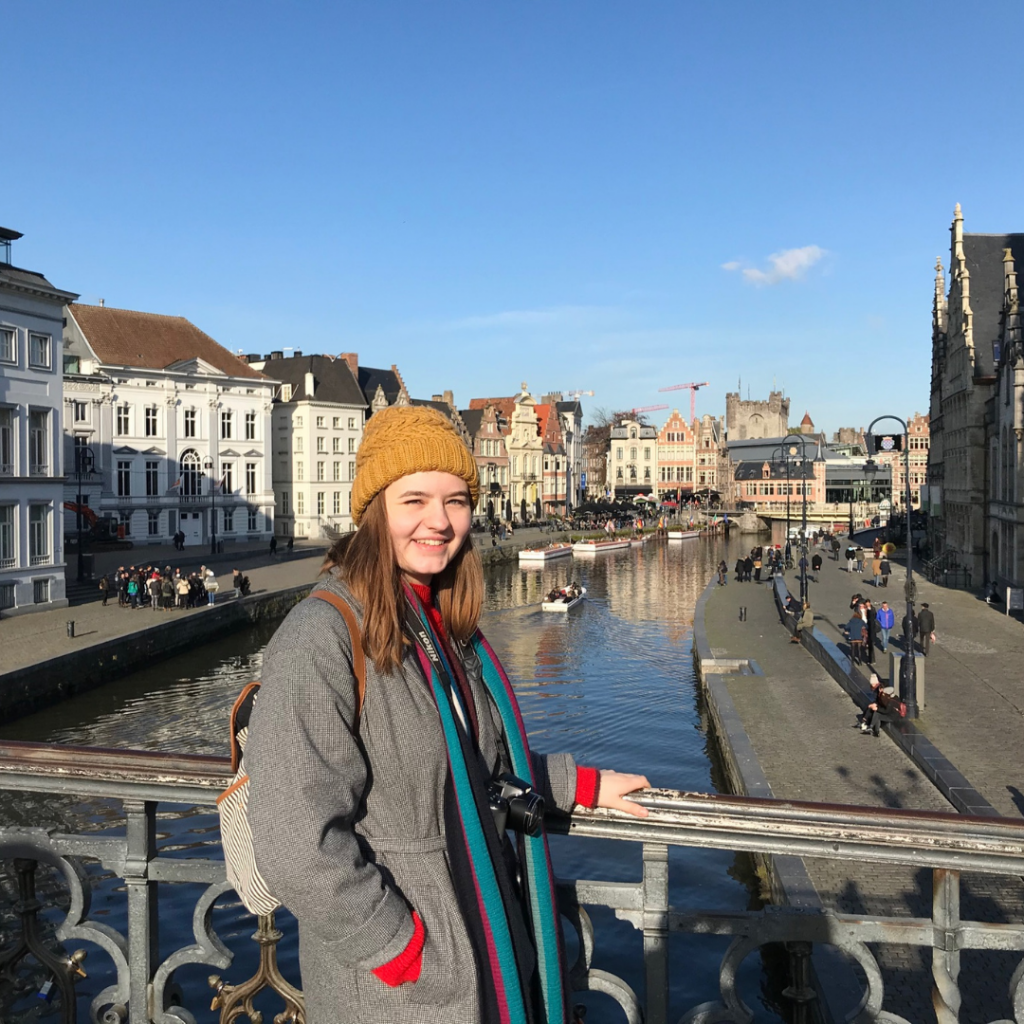
Kirsty King, a blogger from our MEDIA programme, sat down with fellow Erasmus Study alumna Rose Winter to exchange travel stories and memories.
Kirsty in Belgium
This time last year I had just packed my bags and jetted off to Belgium for an Erasmus Study Placement. Now looking back, I can safely say I’m a different person to the one that set off twelve months ago.
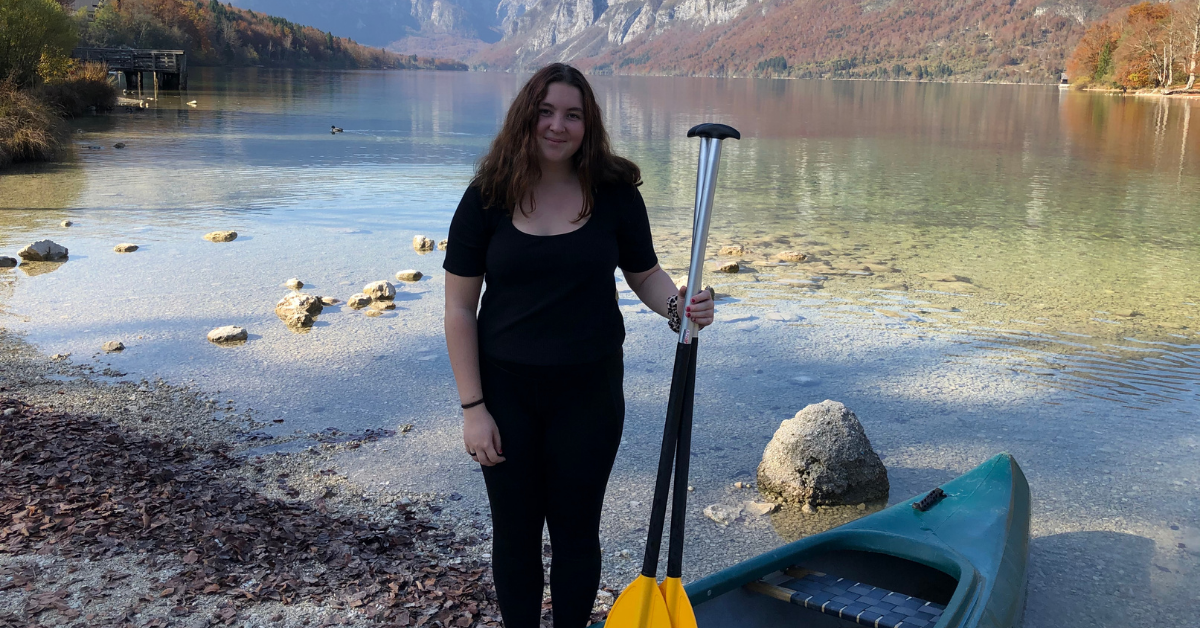
I sat down with fellow Erasmus Alumna (Slovenia), Rose Winter, to chat about our experiences and think about the skills that we developed on our foreign adventures. The good news: we agreed that these skills will help us to stand out to any employer.If you are considering Erasmus, don’t miss the upcoming information session. Register here.
Let’s talk: Organisation
Before you’ve even set off on your adventure, you will be developing your organisation skills, whether that’s by looking for accommodation, planning travel arrangements or doing other paperwork. While this may seem overwhelming at first, your ability to organise will stand you in great stead further down the line, believe me.
Rose says: “On my placement I had to study more modules each semester than I would normally study at Queen’s, and some of these were Master’s courses. This meant I had to have good time-management skills to get all my work done.”
Like Rose, I also had to study more modules than I was used to, which meant I had to organise my time well too! While this may sound difficult, you’ll soon get used to the different size of workload, and what’s more, I’m definitely better at multi-tasking now.
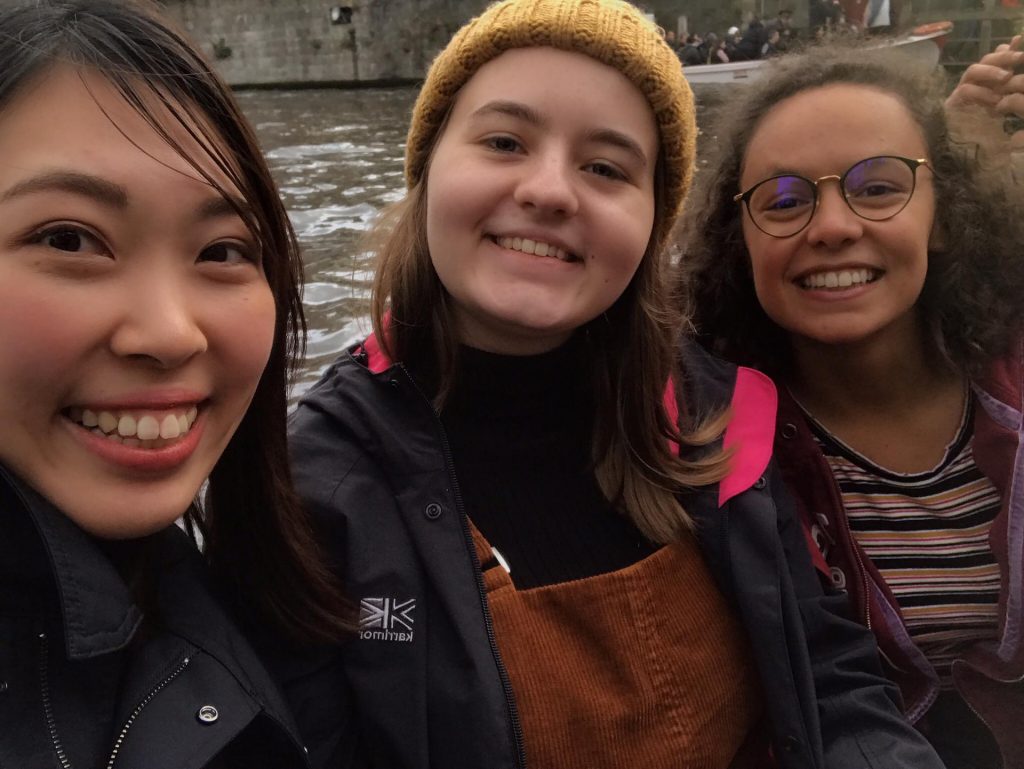
Kirsty (centre) with friends in Belgium
Let’s talk: Resilience
Going abroad doesn’t come without its challenges, and things might not always go to plan. That’s where resilience comes into play.
When I landed in Belgium, one of the first things I had to do was register at the city hall. I didn’t get off to the best start when I turned up at the wrong city hall, but don’t worry, with the help of the Tourist Information Office I soon found the right one. Another new experience was having to open a Belgian bank account, which did take a while to set up but was worth it in the end!
Rose tells me: “When registering my accommodation in Slovenia, the police didn’t think my property existed. It was only when I told them the names of my housemates that they realised where I was staying was a real place!”
What Rose and I have both found is that when we ran into difficulties abroad, we showed resilience and were able to solve the problems we were faced with.
Let’s talk: Independence
Travelling away from home means you have to work things out for yourself. This may seem like a tall order, but you’ll soon discover you’re able to figure out a lot more than you thought.
Rose says: “Going to university in a different country means you have to deal with new situations on your own such as getting used to a different teaching and assessment style – this gives you a lot of independence.”
I definitely agree. Since going abroad, I feel like I now have the confidence to ‘get on with things’ on my own, without having to ask for help every time I try something new!
Rose (right) with friends in Slovenia
Let’s talk: Communication
When you go abroad, you’ll meet A LOT of new people – flatmates, classmates and more. There’ll always be ways to meet others – you just have to find the right way for you!
Rose explains: “There was a social group at my university that organised day trips and events such as beer pong and quizzes – it was a great way to meet other students.”
My host university in Belgium told us about the Erasmus Student Network, a group which organised loads of trips and events for Erasmus students throughout the year. These fun get-togethers were where I made some great pals!
Rose and I both agree that going away by yourself really pushes you out of your comfort zone and forces you to get to know new people. And you never know – these people might become your best friends!
Let’s talk: Confidence
Heading to a new country by yourself for the first time sounds daunting, right? But imagine how you’ll feel when you take this jump – capable of anything, that’s what!
Rose says: “Going away by yourself and being faced with a completely new system gives you the confidence to adapt to new environments more easily.”
Since going abroad, I’ve definitely found it much easier to say ‘yes’ to new opportunities, when in the past I would have been hesitant. Giving new opportunities a go will boost our employability – and we have Erasmus to thank for that!
If you haven’t heard already, all Queen’s students are being given the opportunity to take a course at Queen’s Language Centre for free in Semester 2 – all the details including how to apply can be found here. There are so many benefits to learning a new language. Here are just seven of them.
It Boosts Your CV
Having another language is seen as a major plus by employers, particularly in today’s global job market.
2. It’s Good for the Brain
The cognitive thinking and problem-solving skills required to learn a new language rivals Sudoku when it comes to giving your brain a workout.
3. It develops a global mindset
Learning a new language gives you a greater global understanding of the world and how it works.
4 It allows you to experience other cultures
Learning a new language exposes you to new cultures. You will have the chance to see new things from a different perspective and be able to connect with people across the world. You get to learn what’s fashionable within a culture, including music, style, history and literature. This, in turn, will help you grow as a person and appreciate things that you wouldn’t have noticed before.
5 It helps you multitask
Switching between languages outs extra demands on your brain – those that can manage it are better at multitasking and managing stress.
Forget dreaming of a white Christmas, we’re dreaming of summer adventure. If you are planning ahead for 2021, come along to our USA SUMMER CAMPS – INFORMATION SESSION on 26 November to see where you could be spending a blazing hot season of lake swims, campfires and friendship.
Need some celluloid inspiration to get you in the mood? Check out our pick of the best summer camp movies to watch now. It’s amazing what a group of adventurers can achieve when they bandy together, huh?
The Parent Trap
Tiny Lindsay Lohan squared + hijinks at camp = Disney classic.
https://www.youtube.com/watch?v=GYDaVvjI5kY
Moonrise Kingdom
Wes Anderson + picture perfect Camp Ivanhoe = sweet ode to summer love.
Wet Hot American Summer
Bradley Cooper + Amy Poehler = satirical comedy genius.
Camp Rock
Demi Lovato + Joe Jonas = summer of song.
Addams Family Values
Wednesday + cheery camp = her personal nightmare.
If you want to star in your own real-life summer adventure, register for our USA SUMMER CAMPS – INFORMATION SESSION on 26 November at 12pm via the link below: