COMMERCIAL AWARENESS AND IMPROVING BUSINESS PRACTICES
“We actively encourage our students to research their target industry to develop a commercial understanding and a big-picture focus of the challenges an employer is facing – so they are better placed to communicate how they can actively contribute to improving business performance,” says Sandra Scannell, Head of Employer Engagement at Queen’s.
Courtney Ward, a Quality Team Leader at Randox adds: “Commercial awareness means having a real understanding of all the key companies operating in a specific industry or sector, a knowledge of the different products that those different companies sell, what services they offer. We demand graduates who have done their market research, and know who the key players are in their area.”
EMBRACING WORKPLACE SYSTEMS & TECH
“Even outside the tech sector, employers are demanding graduates who can embrace innovation to maximise performance,” says Sandra. “Queen’s students not only understand, but they ‘live’ technology.”
Dermot Murray, Senior QA Engineer at Version 1 says: “In terms of innovation and bringing a fresh perspective to companies, Queen’s graduates are at the forefront of theoretical thinking. We demand graduates who can apply this knowledge into the real world and be the catalysts for leading change.”
THINKING LATERALLY: PROBLEM SOLVING & CREATIVITY
“Problem-solving abilities are essential in virtually any graduate role,” says Sandra. “Employers want to know graduates can think strategically to tackle challenges and that they can use creative thinking to develop innovative solutions.”
Leona McGirr, a Team Leader at Fusion Antibodies says: “We want graduates who can think ahead and see the bigger picture; see how one little thing can impact another. It’s about having a different viewpoint and a different perspective on a problem. That’s key.”
WORKPLACE CULTURE: EMOTIONAL INTELLIGENCE AND RESILIENCE
“In the global graduate job market, employers value cross-cultural sensitivity and emotional intelligence,” says Sandra.
“Employers want to know that graduates can respond well to change, and that they have the ability to identify and deal with their own emotions and to recognise and understand the feelings of others.”
Rebecca Sinclair, a Student Talent Advisor at EY’s London office says: “Emotional intelligence is particularly valued in professional services, in the roles that you’re working with clients, and you’re building those relationships with clients. We value graduates with that emotional intelligence skill, who are able to collaborate really well with colleagues or with clients and build positive relationships.”
FUTURE LEADERS: INFLUENCING, PERSUADING AND TEAMWORK
“The mark of a leader is getting true buy-in from colleagues, clients and bosses. It involves good communication, persuasion and negotiation – but ultimately, it’s about graduates with the ability to sell their vision for the future,” says Sandra.
Viktorija Mikalauskaite, a Senior Associate in the Legal Department at FinTrU says: “Influencing is a combination of communication and persuasion and negotiation, but it also involves confidence, which is an extremely important factor. We value graduates who can flex their communication style, according to their audience.”
How to overcome environmental and personal barriers to let your creativity flow.
What is creativity? “It’s new and useful ideas in any domain,” says Roisin Macartney, Queen’s Careers Consultant, who adds that there are barriers that limit our own creativity.
“These barriers can be from your own thinking, and from environmental [factors] and the environment that you are in. If you do what you’ve always done, don’t make changes and just accept the status quo, creativity will suffer. Challenge, ask questions, take risks to keep expanding your creative thinking.
So how do we start to open ourselves up to being creative and thinking creatively? Roisin has these top tips:
Give yourself space
“One of the things I would suggest is starting with a blank page. I think you have to give yourself time to be creative,” says Roisin, who add that this doesn’t necessarily mean scrolling through Instagram or Pinterest. “I don’t mean that you can’t be inspired by other people’s creativity, because you certainly can, but you do have to give your brain a time out, basically.”
She adds: “To be able to generate your own creative ideas, it might be that you take a walk, or you lie in a bath, or you basically stare at a blank page and give yourself the room and the time to be creative.”
2. Challenge the norm Another way to channel your creativity is to challenge your assumptions. “Always ask yourself if something must be done this way. If it must be this way, how could it be different? So that could be, you know, an assignment that you’ve been given. It could be a work assignment, it could be just something in your everyday life. Does it always have to be done this way? How could you be creative and think differently about it?”
3. Stay curious. Remember that child that you once were always asking why and driving your parents crazy? It’s time to channel that child and ask why why why! “Try to keep that curiosity alive because it’s not only good for your creativity, it’s also good for your wellbeing. “Don’t lose the art and the joy of playing: rediscover the joy of getting out the Lego, the colouring pencils, or anything else to start playing and getting creative. It’s not about what you create while playing,” says Roisin. Adding, “It’s about letting the mind be creative, so allowing yourself to be open.”
4. Try something new. “It might be trying a new recipe every week. It might be learning how to use a new function on your software package…. Just keep trying new ways of doing things and that’s you being creative as well,” says Roisin.
5. Get inspired. While it can be good to have time out on your own to generate new ideas, it can also be good to work with other people, who also want to create, especially if there are particularly creative people that you can work with. “ You can bounce and generate new ideas from each other,” adds Roisin.
6. Flex your creative muscles. “There are some techniques that can help you to keep stretching that creative muscle. It can be doing something to keep your brain active, like Sudoku or crosswords. Learning a new word every day, perhaps in your own language or in a different language, and what you really want to be doing is helping your brain to make new associations and build those new connections. So, you can encourage your brain to be the sort of brain that makes connections and sees patterns and therefore becomes more creative,” says Roisin.
7. Try mind mapping. “Start with a central focus, whatever your theme is going to be, you start with that focus. You then put down main themes and coming off that central focus as branches from the center. You might sort of get creative using colour and using pictures and things like that, especially if you’re good at artwork and it can be really nice to do it that way. And you keep adding to it. And in terms of creativity, it’s likely to be the things around the outer edges where the creative thinking comes into it.”
8. Get brainstorming. You’ll certainly have used brainstorming in the past and the key thing about brainstorming is that all ideas are equal and valid, and they’re not challenged, explains Roisin. “Brainwriting is when people individually write out their ideas first. So, whatever the question or the problem, rather than everybody shouting it out for somebody to write, you all write it out. And then you share those, so everybody’s ideas all go up, and that can spark other ideas. And that can mean that people are not limited by other people’s ideas or louder characters or challenges.”
9. Scamper. “Scamper is based on the reasoning that everything new is just an addition or a modification of something that already exists. So, this technique gets you thinking about ways that you can build on that idea of change and changing something to create something else,” explains Roisin. “For example, I was writing this last year, but at the time there were some coffee bags being advertised on the TV. And clearly that’s just coffee and tea bags, you know, combined together. And they often sort of do that with things like chocolate bars, you know, Cadbury’s will come out with some new addition to the chocolate, just to make it a little bit more of a novelty to us so that we might want to go and get that and try it out. So, what can we add? Somebody decided to add balm to tissues, for example.” Linked to the Scamper technique is reversal. “Problem reversal is about reversing the problem that you might have. It’s a different way of looking at the challenge. So instead of looking at the challenge in terms of what do you want to do, you reverse it and say what you don’t want to do. For example, say you want your company to sell more pencils. Instead of saying how can we make our pencils better, the reverse thinking might be along the lines of: we want pencils that don’t break as soon as you begin to use them. And of course, that leads you to what you actually want to do to make the pencils better. “
10. The lawbreaker technique. The lawbreaker rule asks: What do we assume or believe to be true? And what if that were not so? “Lawbreakers are all about challenging those assumptions that we all make, says Roisin. “For example, the burger has to be inside the burger roll. What happens if it isn’t? If we can forget about those assumptions, then what changes would we make? Things like putting the cheese into the crust of our pizza, you know that’s challenging the law of pizza; it’s challenging our idea of what we thought pizza was.
11. The great minds technique. This involves: what would [insert person] do? “Generally, it should be somebody that you respect and in this regard someone who is creative. So, what would that creative person do with this problem or issue? It can be an actual person, maybe somebody like Greta Thunberg or Marcus Rashford. You know, it doesn’t even have to be a specific person. For example, you might say, well, what would a 7-year-old boy think about this because again, as we know, the younger people are often very creative. So, what would a child think about this? What would you know, a character or like? What would Superman do?
Businesses Management student Rosie Alexander completed a virtual internship with Mourne Dew Distillery as part of our Working Globally from NI programme. Here is how she got on.
In June, I started a marketing internship with the local spirits company Mourne Dew. I was excited to get started as I knew the experience was going to be insightful and beneficial. As a first-year student, this opportunity has afforded me the ability to discover where my passions lie and gain experience in an area in which I have an interest.
Researching the company
Before beginning my internship, I was impressed to learn about the story of Mourne Dew and the multi-award winning gins, whiskeys, vodkas and poitíns they produce. Based in Warrenpoint, Mourne Dew is inspired by the essence of the Mournes, infusing their drinks with botanical flavours to create a unique taste. I was really interested in this company due to their values of tradition and pride for the island of Ireland, as well as their commitment to quality. Working for an up-and-coming local company interested me greatly and I was excited to be gaining some insight into the marketing side of things.
My first campaign
The majority of my internship has been remote as I live quite far from the distillery. In my first week, I was introduced to the team and learnt about the different projects Mourne Dew have been working on. I got stuck in with tasks such as finding new accounts, working on current campaigns, such as the Fathers’ Day competition and communicating with partners to help promote Mourne Dew’s products. I was especially interested in social media marketing and took charge of the LinkedIn account. This responsibility allowed me to be creative and I really enjoyed thinking up different campaigns and posts. Another task that interested me was looking into the distillery’s international presence, as they are beginning to expand into Europe, the USA and Asia. It was exciting to progress on international plans as I could see the business’ growth.
On the road
A few times I got to go on the road with Neil Fleming, the Sales and Marketing Executive. This allowed me to see how sales and distribution works and I enjoyed meeting Mourne Dew’s contacts. It was great to see the products physically and I learned so much about how a small but growing business is run. I especially enjoyed our sales pitch at the Northern Lights Bar, as I was able to find out a lot about the different types of drinks that Mourne Dew produces and what makes them so unique.
Visiting the distillery
In addition, I was able to visit the distillery itself in Warrenpoint. It was fascinating to watch the distillation process of the gins, vodkas, whiskeys and poitíns, and I loved smelling all the botanical ingredients that infuse the drinks. It was interesting to see that each batch is made by a recipe by hand, and each part of the process, from distilling to bottling and packaging, happens in the one place. It was also lovely to meet all the team, including Donal and Noel (the owners), Lydia (who does social media and photography) and Donal and Tag (who work in the production process). I also met the other intern Claire, who I had been working with remotely for 3 weeks of my internship.
An amazing insight
Working with Neil these past 4 weeks has been invaluable, and I have learned so much about both marketing and how a local distillery is run. I have thoroughly enjoyed every second of this internship and would encourage anyone considering a programme like this to go for it! It has truly solidified my future vision of working in marketing and I have made some friends and connections along the way. I have gained amazing experience and insight and will miss my time at Mourne Dew greatly.
Naren Boddeda, a second year BSc Computer Science student completed a four-week internship with Queen’s International Office as part of our Working Globally from NI Internship Programme. Here is how she got on.
Gaining experience from India After my first year, I wanted some hands-on experience with working for an organization and gaining some experience in my field, so I decided to do a summer internship. But because of the Covid 19 situation and the travel restrictions, I was in India and needed to find an internship that could be done remotely.
The Working Globally from NI- Internship Programme was the ideal choice for me. It is a summer internship that could be completed from anywhere in the world and, I felt, it is a nice opportunity to gain valuable experience in the early stage of my degree. Working online was something new and I was looking forward to it.
Playing to my strengths I got an internship offer from the International Office. During my interview, I mentioned I completed the module on databases and would like to gain some experience in that therefore I was given a project related to it for my internship. Before the internship started, the Global Opportunities team had set up a call with me and they briefed all the important details regarding the internship.
It was four weeks long and each week I was given specific tasks. There was no stringent pressure of deadlines and the international office had wonderful people to work with. I was given two mentors to help me catch up with my work and reach out if I had any queries. I had catch-up calls, in MS Teams, twice a week with my mentors. For the first week, I was given an introduction to my work and, also some time to settle in. I started my data analysis project in the second week. It was nice to work with real-world situations and complete impactful projects. I also had a group project with a few other interns to review new campaigns, which was a nice online collaborative session. Every week I had something new to do and I had a steady amount to workload. I also got an insight into how the international office in Queen’s functions. Overall, it was a great experience and gave a head-start to my career.
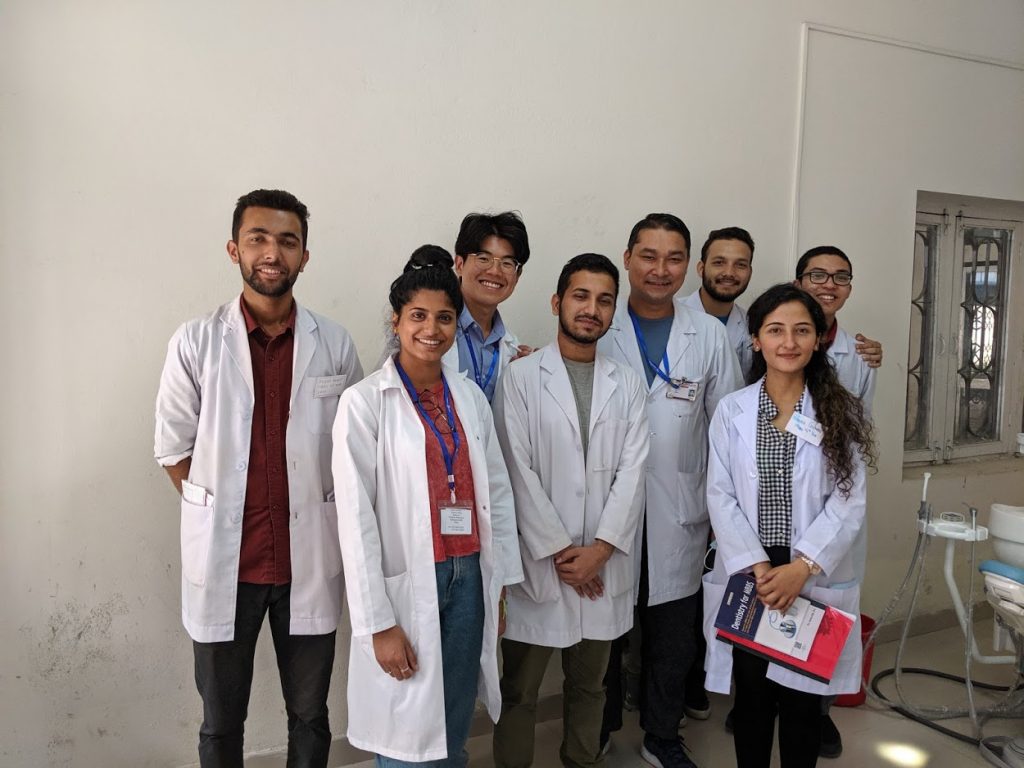
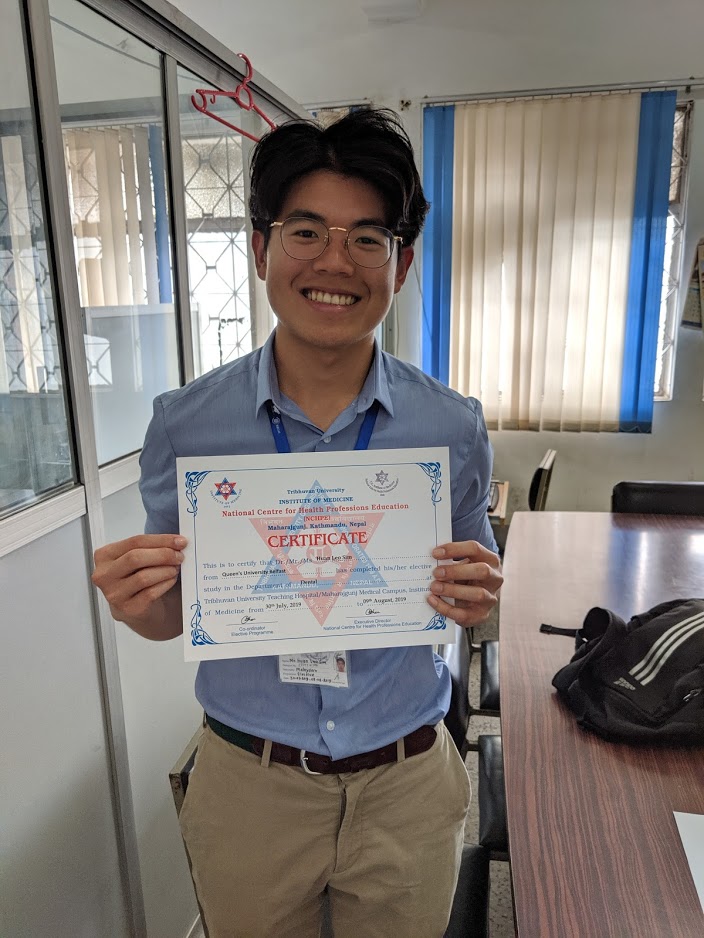
Queen’s Dentistry graduate, Leo Sims travelled to Kathmandu in Nepal on a three-week dentistry elective during his fourth year to see the differences between healthcare in the UK and the developing world.
Why Queen’s?
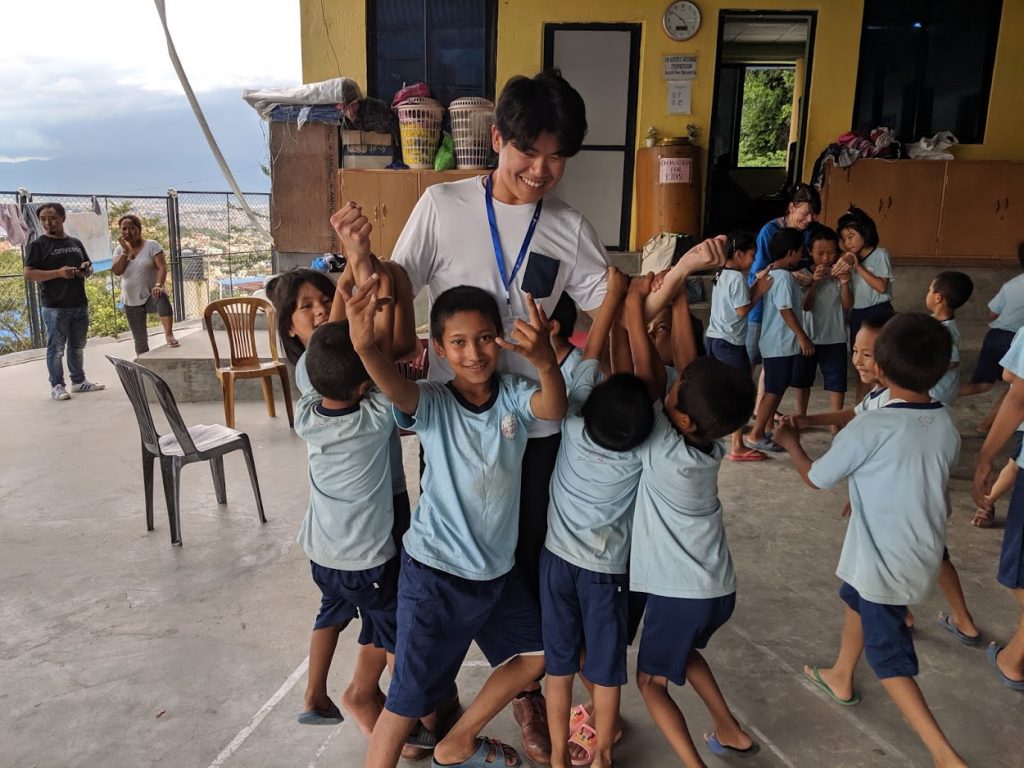
Leo Sim with fellow students in Nepal
I chose to study at Queen’s University Belfast because it’s part of the Russell Group of universities with high research intensity.
Furthermore, they’re also well-known for their dentistry course and they have a large international student community, which adds to the vibrancy of the student life!
Student life at Queen’s
Leo enjoying the sights of Nepal
My five years at QUB were amazing. I had the opportunity to get involved with different roles and responsibilities within clubs and societies – where I made friends for life.
I particularly enjoyed my time when I was President of the International Student’s Society where I worked with people from all walks of life and provided a home away from home for fellow international students in Belfast.
Finding the right placement
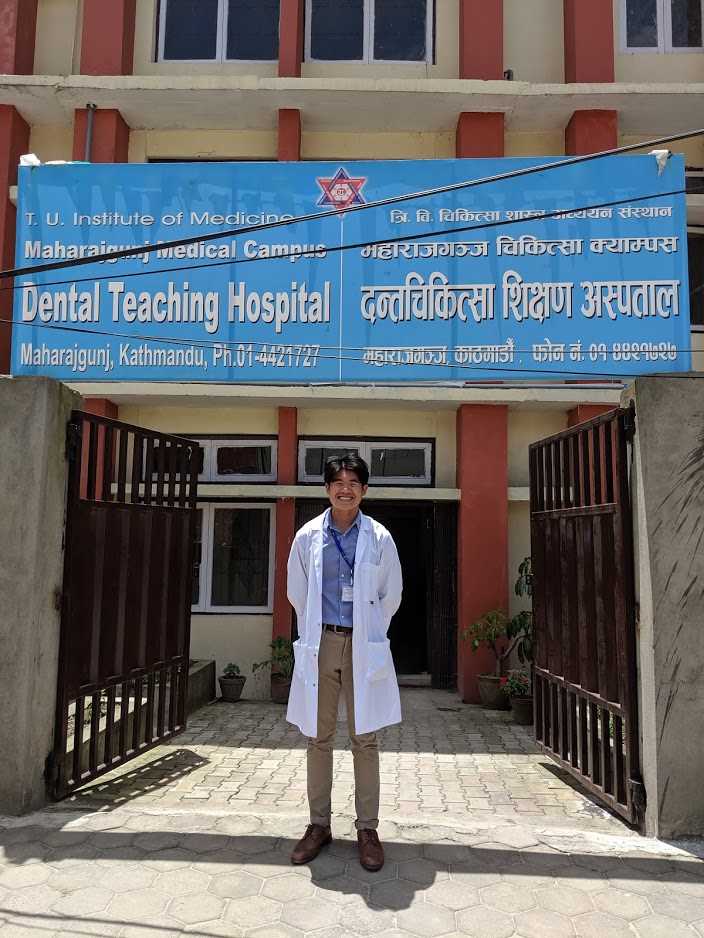
Leo, pictured outside the teaching hospital in Nepal
I undertook my placement during my summer holiday at the end of my fourth year. My international elective was not a compulsory component of my dental course, but my clinical tutors provided me with advice on how to organise it.
I chose Nepal as the destination for my dental elective due to its unique blend of South Asian and East Asian culture, its geographical beauty and the positive feedback I’d received from friends who had been there before. I thought it would be an eye-opening experience and it turned out to be more than that – it was an adventure of a lifetime.
Hands-on experience
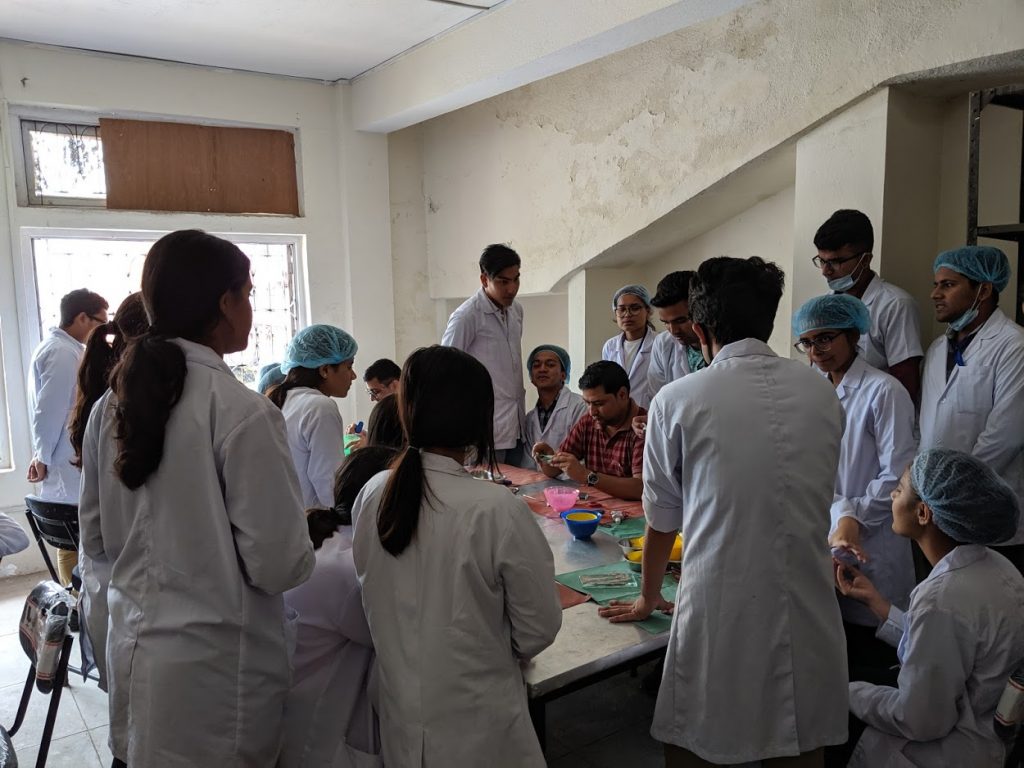
Leo learned a lot from experiencing dentistry in another culture
Over the two weeks, I was given the opportunity to experience different departments (endodontics, restorative, periodontics and orthodontics) in the teaching hospital, as well as the chance to attend some lectures for the Nepali first-year dental students.
There was a walk-in clinic where patients would be assessed and subsequently given immediate treatment or further appointments depending on availability.
Most practitioners were trained in English hence it was not uncommon for them to use a mixture of Nepali and English when explaining procedures and treatments to patients.
To my surprise, for a hospital service, they put a lot of effort into saving a tooth, encouraging patients who have irreversible pulpitis to undergo root canal treatment. I had previously experienced a dental service in a hospital back in Malaysia, where extraction is the norm and the preferred option among patients.
Challenges in the developing world
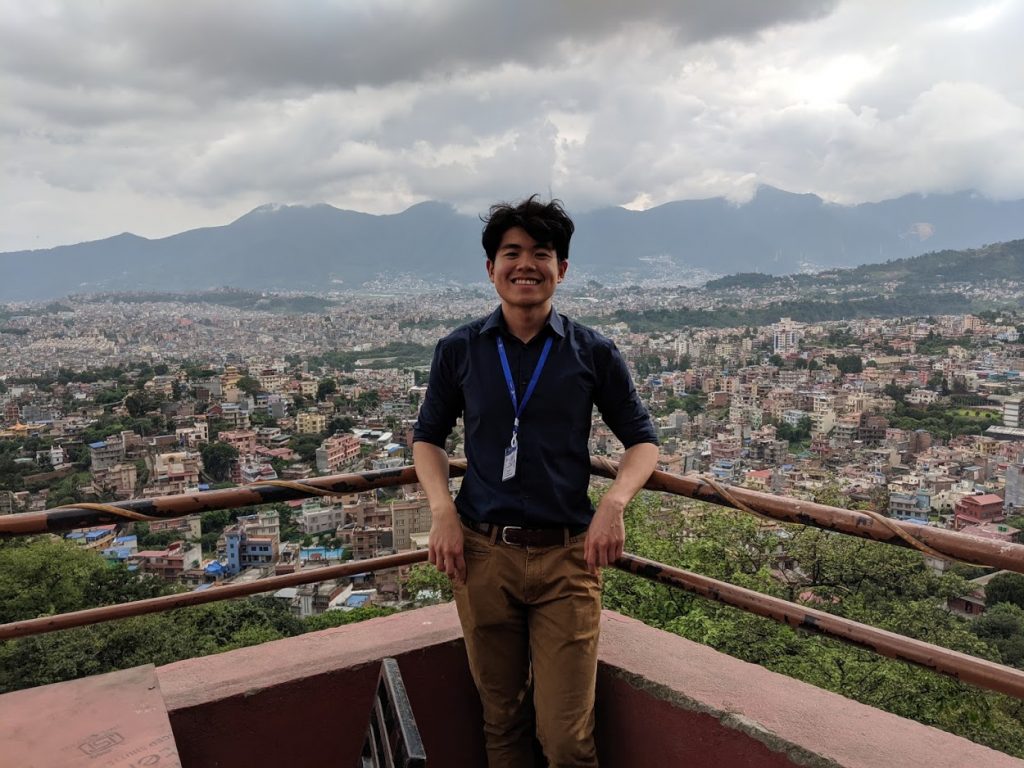
Leo looking over Kathmandu
While we often try to emulate the best clinical practice according to the latest literature, the lack of resources can prove to be a big hurdle in the developing world.
Disposable consumables and equipment are kept to a bare minimum. Burs, dental probes, dental mirrors and forceps were immersed in disinfectant and washed with soap water before being reused.
There was also limited restorative options – selection of composite shade was restricted to whichever was available at the time, a lack of disposable composite capsules meant it had to be scooped out from a common dispenser for all patients, a lack of matrix bands, transparent strips and finishing burs (only diamond burs were available in the clinic).
During my elective, there was a patient who presented with a class II cavity and required composite restoration. ‘Matrix band and wooden wedges in?’, I asked. The dentist whom I was shadowing at that time, told me ‘Yes we would use them, if we had them’, before proceeding to pack the restoration free-hand.
Insights from practicing in another country
Leo will treasure his time in Nepal
I noticed that orthodontics in Nepal was very technical and particular when it came to measurements. Incisal length at smile, vertical and horizontal facial height, and the length between pupil were all measured and noted. Taking orthopantomogram and lateral cephalometric radiograph for angle measurement was part of the protocol for all cases.
For endodontics, due to the lack of resources, rubber dams and rotary instruments were not readily available. Sodium chloride irrigant and stainless steel hand files were used instead.
In Nepal, unlike the increasingly litigious society in the developed world, patient compliance was simply beyond exceptional. Local anaesthetics were not normally given for restorative and endodontic treatment as they were usually reserved for more invasive procedures such as an extraction (and only a minimal volume was given in these cases). Their pain tolerance certainly deserves credit.
Exploring the country
Sim, Leo
I did some exploring around Kathmandu during my free time and visited the main attractions including the Swayambhunath temple, Thamel region, and Durbar square. What’s better than having a pint while enjoying the majestic sight of Boudhanath temple at night?
Over the weekend, myself and the others from the Work the World house went to Pokhara on a 7-hour bus journey which was definitely worthwhile. A highlight of the trip was paragliding over Phewa Lake at an altitude of 2500 meters whilst indulging in the lush greenery of the landscape.
Memories to last a lifetime
Leo recognises how fortunate we are compared to developing nations
My two weeks in Nepal was an opportunity to reflect on how fortunate we are compared to other developing nations – what presents to us as an essential may well be a luxury to others.
My experience made me realize how fortunate we are to have vast amounts of resources available when providing care in a secondary setting compared to a developing country. It was definitely an eye-opening experience to shadow different complex treatments being carried out in Kathmandu.
For a future dental practitioner, it is definitely worth taking an overseas dental elective before graduating, it’s a trip you’ll remember for life.
Landing a graduate role
Since graduation, I’ve worked as a foundation dentist based in Berkshire. Compared to previous years, my cohort had less clinical experience due to Covid-19 forcing my final year of dental school to end prematurely.
It was a very steep learning curve in the beginning but I would say it is the year I’ve progressed the most in dentistry thus far.
My experience overseas with Work the World added a different perspective of how dental care is provided in another country. I learnt a lot of transferable skills from my experience, such as communication and adaptability. It has helped with transitioning into different working environments and making the best out of them.
In the future, I hope to undertake further training in restorative dentistry but life is like a box of chocolates – you never know what you will get!
Work the World specialise in creating overseas dentistry electives in Asia, Africa and Latin America. Their destinations provide eye-opening insight into the challenges associated with delivering healthcare in the developing world.
Olivia Anderson, an International Business with German graduate completed a four-week internship with Queen’s International Office as part of our Working Globally from NI Internship Programme. Here is how she got on.
This summer I had the great opportunity of completing a 4-week internship with the International Office at QUB. I applied for this at the end of my final year as I wanted to gain some experience in this area over the summer before moving on from university. When I saw the opportunities available in this internship programme I wanted to apply as I thought it would be interesting to be able to work on projects with a global perspective right here from Northern Ireland.
The application process involved an application form and then a video call interview which already enabled me to develop my skills in these areas.
Although 4 weeks sounds like a very short time, and I was wondering how I would be able to get involved in projects within this timeframe, there was no need to worry. The internship was very much tailored to my interests and skills and the projects that I was involved in were genuinely interesting. I got to work on some research projects and do some competitor analysis as well as write blogs and think about how QUB is being marketed to students internationally and how this can be improved. It was so valuable to gain these skills and insights into how to carry these out and how the university attracts students from all over the world.
Working in a virtual team
I also got the opportunity to connect with two other interns who were international students from China and India, and we worked on reviewing some of the university’s marketing material together. This was great to understand each other’s perspectives on how Queen’s is perceived.
Before beginning my internship, I was unsure how it would be structured as I was working from home, however there were multiple calls per week with my supervisor with clear guidance on the projects and what they would like to be achieved by the end of the internship. This helped to clear up any questions and give some interaction where it could have been quite isolated.
What I really enjoyed about this internship programme was that the projects that were given to us were challenging enough that I was being pushed and developing new skills while also being given guidance and help and being able to change the scope of the projects along the way to suit my interests and skills.
I am so glad I got accepted to this internship programme and would encourage anyone to apply and gain some great experience over summer which you will be able to carry forward with you into your future studies and career.
Keep an eye on our events website for details of upcoming internship opportunities and funded programmes.
Daniel Tunstall, a Liberal Arts Master’s student completed a four-week summer internship with the British Council, analysing feedback and data from the International Schools Exchange Programme. Here is how he got on.
Did you know that the transferable skills gained on an Arts degree can lend themselves to a career in data analytics? Just ask Daniel Tunstall, an MA Liberal Arts student from Queen’s who recently completed a four-week summer internship with the British Council, analysing feedback and data from the International Schools Exchange Programme. His communication skills and eye for insight helped him visualise the data to uncover the story. Read his blog to find out how he got on:
What did the internship involve?
Over the course of four weeks, I have completed an internship with the British Council where I developed skills in analysing and displaying qualitative data so that it can be effectively used in the future to understand the successes and weaknesses of the programme.
What soft skills did you develop?
This internship introduced me to the processes of working within a team of a global organisation where people are focusing on different tasks and how these teams work together to ensure that all tasks are done efficiently to the required standard. This opportunity provided me with an insight into the specific skills needed to work well in a team and allowed me to develop my understanding of adaptability and resilience in collecting feedback of my work and using it to improve it and fulfil the expectations.
What practical skills did you develop?
This internship has also developed my ability to analyse data due to the requirements for me to look at the feedback for the programme and identify gaps in the data which need to be further explored in the future. Within this process, I conducted thematic analyses of the data and identified the possible improvements that could be made within the programme to ensure success in the future. Through creating two further questionnaires to collect more data, I had to use the knowledge from my analysis to isolate these improvements and allow participants the opportunity to offer recommendations.
How did the experience develop your understanding of workplace culture?
The British Council invited me to attend global events that they were holding such as Windrush Day, a celebration of immigration to Britain. By being invited to these events, I was able to understand how they host global events and the extent to which the organisation runs on an international basis.
How has the experienced influenced your future career plan?
I have thoroughly enjoyed working within this organisation as an intern because I have developed valuable skills in data collection and handling which are specific and difficult skills to develop. Furthermore, this opportunity has provided me with a unique experience into understanding how international organisations operate which will influence and impact my future decisions when it comes to employability considerations.
If you are wondering what you could do with your degree, and where your transferable skills could take you, catch up on our Industry Insight series and explore what industry are growing and how you can ride job market trends.
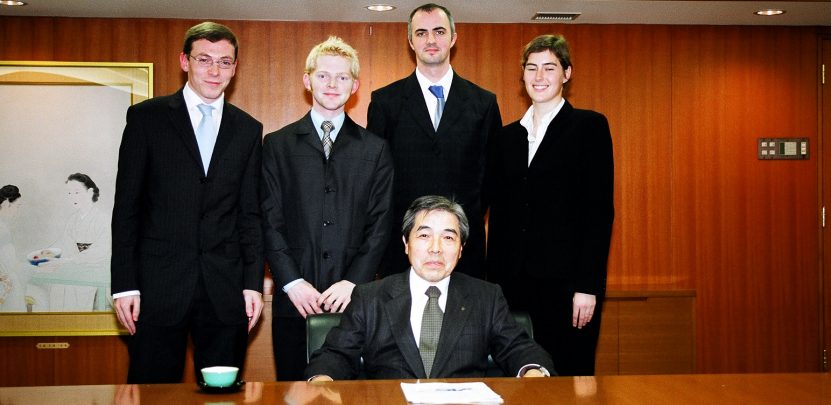
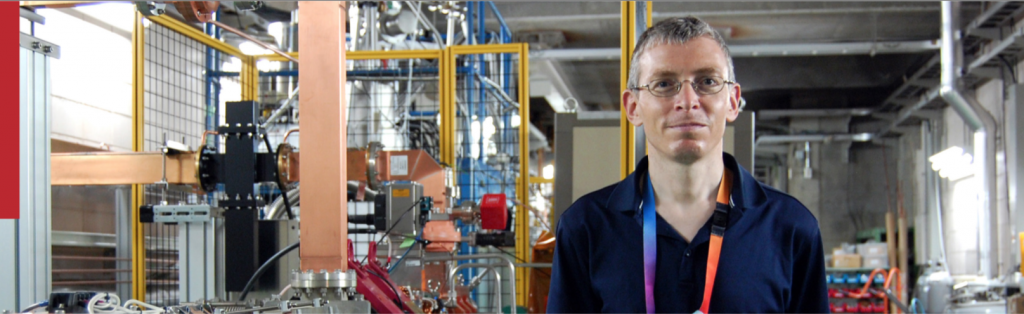
Queen’s alum Brian O’Rourke was a 2003 scholar and the experience changed his life so much that he is still in Japan to this day working as a senior researcher at the National Institute for Advanced Industrial Science and Technology (AIST), one of Japan’s largest public research organisations. Here is his story.
While I had visited Tokyo several times during the course of my PhD, when I arrived with my fellow scholars in September 2003, I couldn’t have imagined how the next 20 months would shape the rest of my life and career. Apart from the incredible immersion in Japanese language and culture, during that eventful period I both met my future wife and began research collaborations with my present work colleagues.
Brian (back row second from left) in 2003.
I am now a senior researcher at the National Institute for Advanced Industrial Science and Technology (AIST), based in Tsukuba, Ibaraki prefecture. AIST is one of Japan’s largest public research organisations and is mostly funded through the Ministry of Economy, Trade and Industry. AIST’s goal is the development of technology useful to Japanese industry and to support commercialisation of research. In my own research group, we use exotic particle beams like positrons (the antimatter particles of electrons) and neutrons to probe and characterise novel materials. Presenting our research at international and domestic meetings has given me plenty of opportunity for interaction with other researchers doing similar work both inside Japan and internationally.
Brian now works as a senior researcher at the National Institute for Advanced Industrial Science and Technology (AIST)
My main passion outside work and family life is cycling, especially cycle touring around Japan. The roots of this hobby can also be traced back to the Daiwa Scholarship when I brought my bike to my homestay in Yamagata and decided to finish my stay by cycling back to Tokyo. Since then, I have taken every opportunity to go touring when I can and just last year, during a short trip to Kyushu, I completed a long-held ambition to cycle in each of Japan’s 47 prefectures.
Brian is a keen cyclist
The Daiwa Scholarship continues to influence my life after all these years and I am extremely grateful for all the opportunities afforded to me through my participation. This appreciation has been made more acute in these times of travel restrictions due to the global pandemic. I hope the barriers imposed by the virus will soon be overcome and the opportunities for cultural exchange will remain strong into the future.
Applications are now open for this unique funded programme of language study, work placement and homestay in Japan. Daiwa Scholarships offer young, talented UK citizens aged between 21 and 35 with strong leadership potential the opportunity to acquire Japanese language skills and to access expertise and knowledge relevant to your career goals. No previous experience of Japan is necessary.
Miriam O’Reilly, 19, a second year BSc Business Management with Placement student at Queen’s joined our ‘Working Globally from NI’ programme, and secured a position as Brand & Marketing Intern with MCS Group, a Specialist Recruitment Consultancy headquartered in Belfast. Here is how she got on and apply here.
The recruitment process
Throughout the academic year amid intense COVID-19 restrictions, the idea of securing a summer internship itself felt like a far-away and unrealistic dream, let alone one which was both in-person and focused on working on a global-scale. In late March, while checking out the Queen’s MyFuture platform, I stumbled across some of the opportunities being advertised by the Queen’s Global Opportunities Team. As a Business Management student and having taken a module in marketing, I was particularly drawn to this position of ‘Brand & Marketing Intern.’ Upon further research on MCS Group, I was even more excited by this opportunity, largely due to its very evident people-focused culture.
After initially sending off my CV and Cover Letter, I was elated when MCS invited me to an interview. The interview itself was enough to convince me that MCS would be great to work for. Louise Smyth, one of the Managing Directors at MCS, took more of a personal approach in the interview, making conversation more about my experience in working in my local corner shop, my past experiences as a musician, what I do as a course rep and what I’d learned in my course so far, rather than the formal ‘professional experience’ as often expected. I was grateful for this, especially as a first-year student, as it allowed me to display the interpersonal skills I have gained through ‘non-professional experience’, which would present my potential and suit to the role. I was so excited to find out that I’d secured the position! This was alongside another Queen’s Business Management student, Ellen, who is going into her final year.
Digital marketing post-Covid
From the first day at MCS, I was guided and coached by the Marketing Executive, Martin. He explained what MCS do and how our role as marketers plays a key role in the success of the company. He emphasised the importance of the digital side of marketing, which has increased significantly within the past 18 months, and this became the primary focus of my duties over the period of the internship. Despite the fact I was fortunately able to work in the modern, sleek MCS office in Belfast City Centre, many of the staff were working from home a few days of the week due to social distancing regulations. In addition, the main communication channel between MCS and potential candidates is via social media and the MCS website. This meant that digital marketing was taking centre stage.
What did the role involve?
At MCS I was given a lot of creative freedom and responsibility, and I feel very honoured that I was trusted with the brand name. Over the course of the internship, alongside the marketing team and fellow intern, I launched a successful company Tik Tok page and helped to revitalise elements of their Instagram page. I also ‘learnt the ropes’ of LinkedIn and was taught how to create engaging and informative content on various digital platforms. This included an element of planning and strategy, as the MCS brand image and mission had to be at the forefront of our minds at all times. This was especially important as the company are continually expanding, with an increasing presence in the US market. The content that was posted had to ensure inclusivity on an international scale and establish MCS as a global-focused company. An example of a global project we were involved in was the creation of a ‘candidate package’, informing potential US candidates on the perks of working for a very prominent UK online fashion company.
Understanding the business
Alongside the content creation itself, Martin and the rest of the marketing team taught me so much about ‘the business side’ of the work we were doing, and how we can use analytics to track our success and present the value of our work. This encouraged me to take a ‘Google Digital Garage’ course called ‘The Fundamentals of Digital Marketing’, which helped to foreground what I’d learned over the course of my internship at MCS. These are transferable and invaluable skills which I hope to use over the course of the rest of my degree and placement year. In addition to all of this, being able to speak to other staff members about their career journey and educational backgrounds was really informative and eye-opening, especially with their vast knowledge on recruitment. The internship reinforced my view on the importance of work experience alongside academic study, as I believe this is just as vital a learning tool.
Becoming part of the team
Outside the office, MCS prioritised including and involving me in company events. On my first week, we had an ‘end of quarter’ gathering at ‘Let’s Go Hydro’, where I got to meet all the staff and feel as though I was a part of the company. Between coffee trips, lunches out and shopping vouchers, it felt as though MCS really valued and encouraged its interns and has proven itself to be a great company to work for. I am so grateful to the Queen’s Global Opportunities Team and MCS Group for this opportunity and I’m excited to see what doors this experience may open as I start to apply for positions in my placement year.
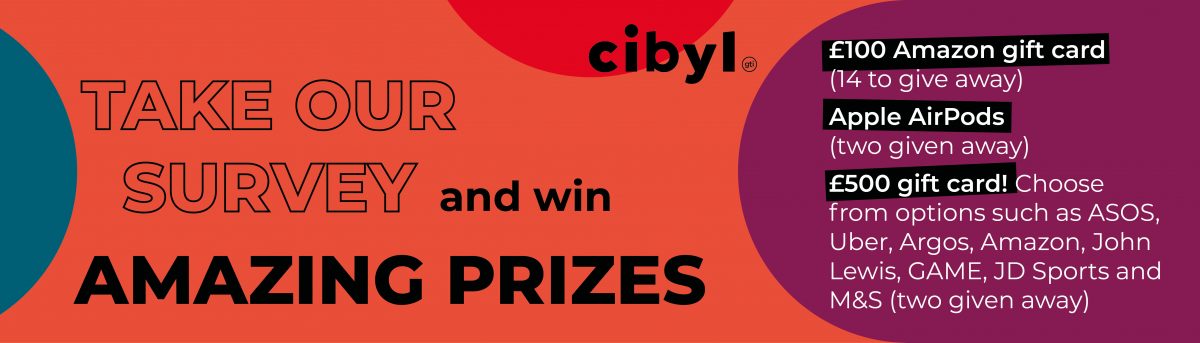
This year we’re taking part in the Cibyl survey, one of the UK’s largest student careers aspiration surveys. Cibyl provide employers and universities across the nation, with unparalleled insights into students’ career thinking. They will use your survey answers to provide us with a detailed feedback report. The reports will tell us how satisfied you are with your careers support and the wider university experience, as well as which employers you aspire to work for. Take the survey and you’ll be giving us valuable feedback.
In return for your help, Cibyl are giving away…
a £100 Amazon gift card (given away every week- 14 to give away!)
a pair of Apple AirPods (two given away at close of survey)
£500 gift card of your choice! Choose from shops such as ASOS, Uber, Argos, Amazon,John Lewis, GAME, JD Sports and M&S (two given away at close of the survey)
Tell us what you think of your university course, which employers you like, and how you’re feeling about life after graduation. Cibyl will use the results to put together research reports to help universities and employers across the UK, so that they know what kind of job you want.
It only takes 15 minutes (and you can take it on your mobile!)
Would you like to know more about Cibyl? Here’s some extra information:
The Cibyl Graduate Research is the UK’s most comprehensive piece of research into students’ views on graduate careers and recruitment: over 67,000 UK students took part last year. Cibyl also powers The UK 300, so ranking your favourite employers is a great way to influence their status in the publication.
Cibyl is an excellent tool for helping students to think about graduate careers: the questions require you to rank employers in a variety of ways, helping you to think laterally about your career options and why you like, or don’t like, certain companies.
Your answers are completely anonymous. You are welcome to read our privacy policy which can be found here. Cibyl abides by all MRS codes, ESOMAR codes and ISO 20252. We are conducting this survey in partnership with your Careers Service.