Queen’s student, Emily Bond talks us through her experiences working abroad during her studies.
After completing a year in industry at RAL Space in Oxfordshire, I entered the final year of my MEng Aerospace Engineering degree at Queen’s with an ambition to try more and embrace the opportunities around me. Throughout my degree much of my work was based in modern, cosmopolitan-type environments with my degree based in Belfast, conferences in Europe, and completing a research internship in Canada. All these experiences focused on developing my technical knowledge in engineering, primarily composite materials. However undertaking other experiences such as InnovateHer, She Leads, and Sustainable Entrepreneurship Bootcamp, inspired me to explore the world of entrepreneurship and consultancy as a career.
The Think Pacific Global Team Internship (GTI) in Bali offered the opportunity to test my skills in consultancy, explore traditional Balinese culture, and work in an international environment. After an application and suitability/ motivations for applying call, I was accepted in November to join the first cohort arriving in June 2024. From acceptance in November to departure in June, preparation involved payment of project fees, visa application, vaccines, organising flights, and purchasing kit. To support my travel to Bali I also completed a fundraising 10km swim which helped fund my visa application.
Despite all preparations complete, I found myself in May doubting whether I wanted to attend or not, a question that lasted a few weeks. Taking some time to reflect, I realised that with my focus having been on exams until May it was natural that I would begin to question my direction with the future sometimes being intimidating with choice. With this feeling, I packed my bags and on the 2nd June began my next adventure.
Receiving the Sir Thomas Dixon travel scholarship allowed me to support the cost of my three flights from Belfast, with stops in Stansted and Dubai. The project started with a two-day briefing that included a brief history of Bali, details of the projects, and language lesson. Learning basic Balinese and Bahasa Indonesian phrases such as Suksma – Thank you, and Nama Saya Emily – My name is Emily, proved helpful when interacting with services and businesses.
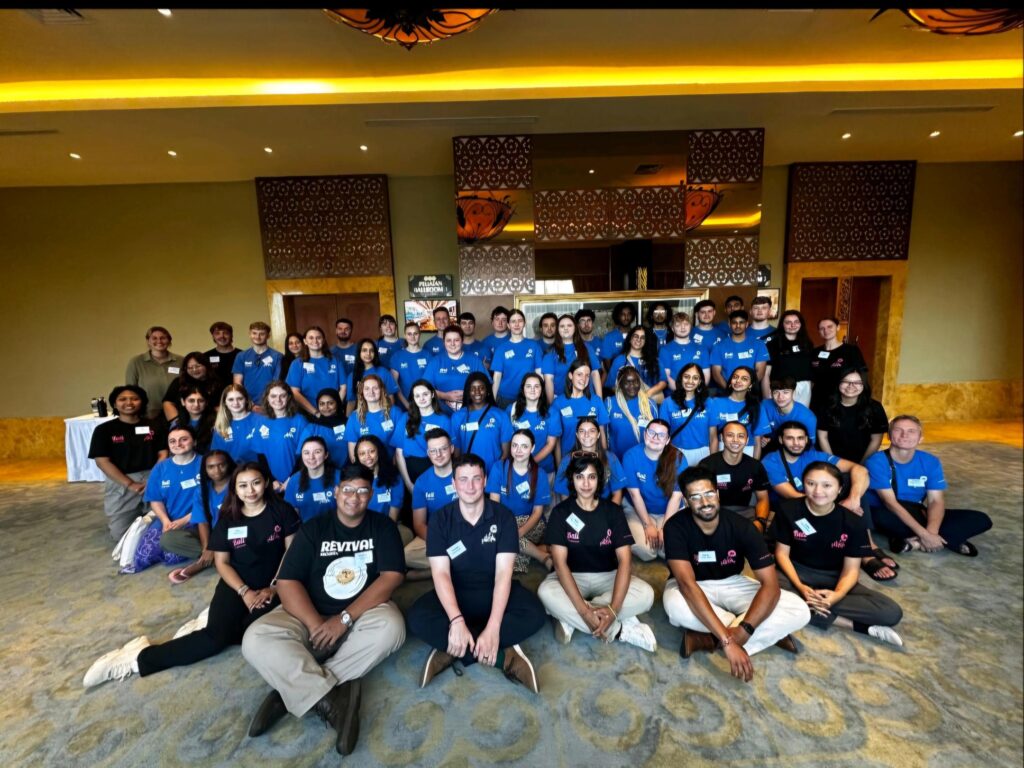
Staying in the hotel also allowed time to meet the other 46 participants including those I would share a room and homestay with as well as members of the same project team. The first few days also allowed adjustment to a new time zone which can be challenging with additional fatigue.
Top tip: adjust your watch to the time zone you’re going to and try to sleep with their night even if it’s in short blocks.
Following the briefing, I travelled to Bali Kuno Tangkup for a dedicated cultural immersion experience led by locals. The camp included sleeping in bamboo and straw buildings with 8 other participants, sharing outdoor rain-water showers, and cooking local Balinese food including Mi Goreng – noodles with vegetables. The time also included further team bonding and developing appreciation for the efforts of rice field workers by completing activities in the muddy rice field and helping to plant rice seeds afterwards. After evening food, we gathered around a fire to sing typical western pop culture songs, giving a sense of home and a feeling of connection. I found the experience at Bali Kuno an opportunity to breath and embrace a more traditional and natural way of living that is a contrast to city life. With stronger group familiarity and time to adjust to the new time zone, we travelled from Bali Kuno to Mas Village where we would spend the remaining project time.
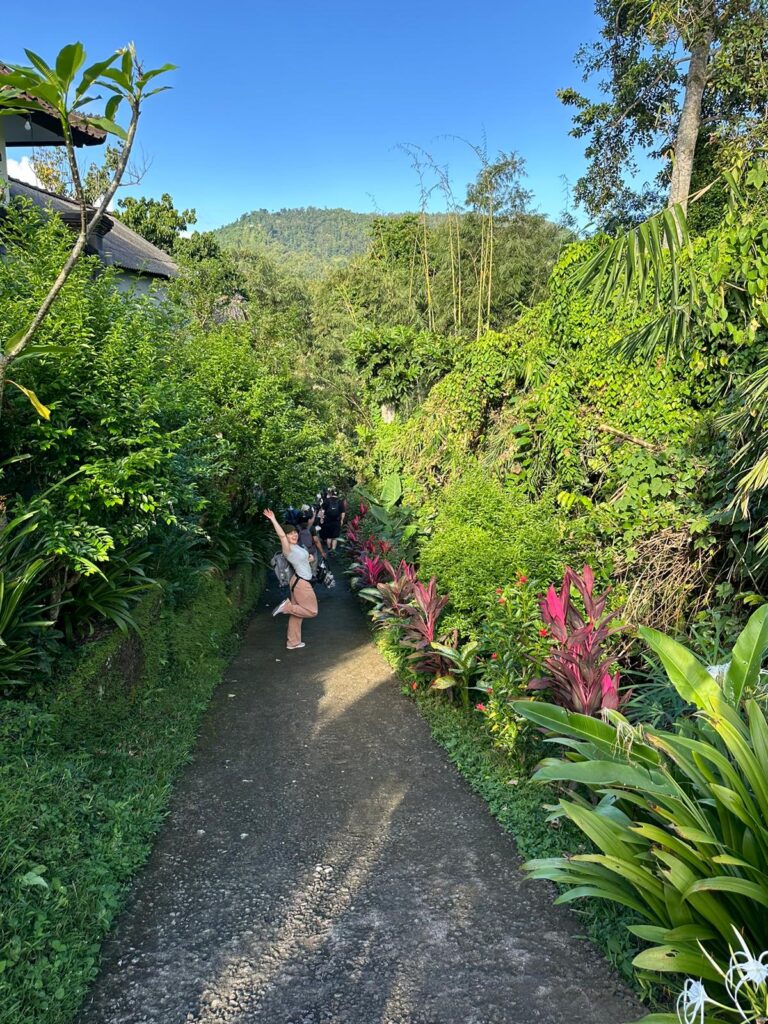
As is traditional for Balinese culture we were greeted with a welcoming ceremony where we presented with a fresh young coconut and Kalung Bunga (Flower necklace). The welcoming ceremony was also an opportunity to meet the homestay family who we would be living with. After the welcoming ceremony we walked to the homestay navigating uneven pavements (common in Bali) and stray dogs, before dinner and an opportunity to rest before the weekend. For the final weekend before project work began, I was fortunate to visit the Tegallalang Rice Terrace where I was able to develop an further appreciation for the work and patience involved in growing rice.
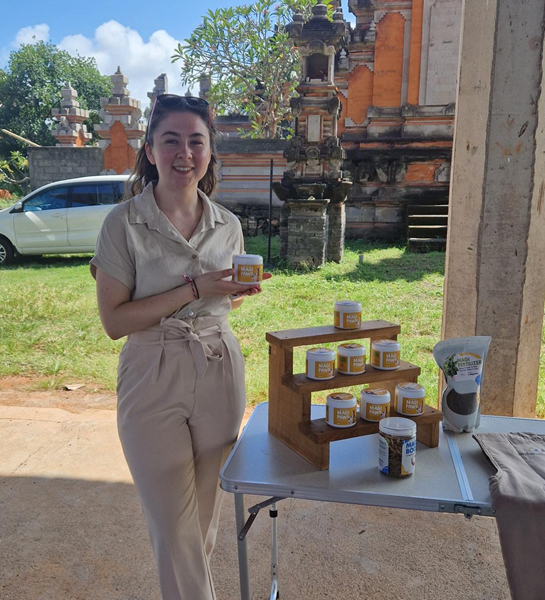
After a week of cultural immersion and education as well as team bonding with fellow participants, I felt an eagerness and curiosity to start the project work. For the first week I was fortunate to work with Magi Farm who utilise the lifecycle of the Black Soldier Fly to tackle food waste and create byproducts including fertiliser, dog food supplement, and fish food to produce a fully circular sustainable waste management system.
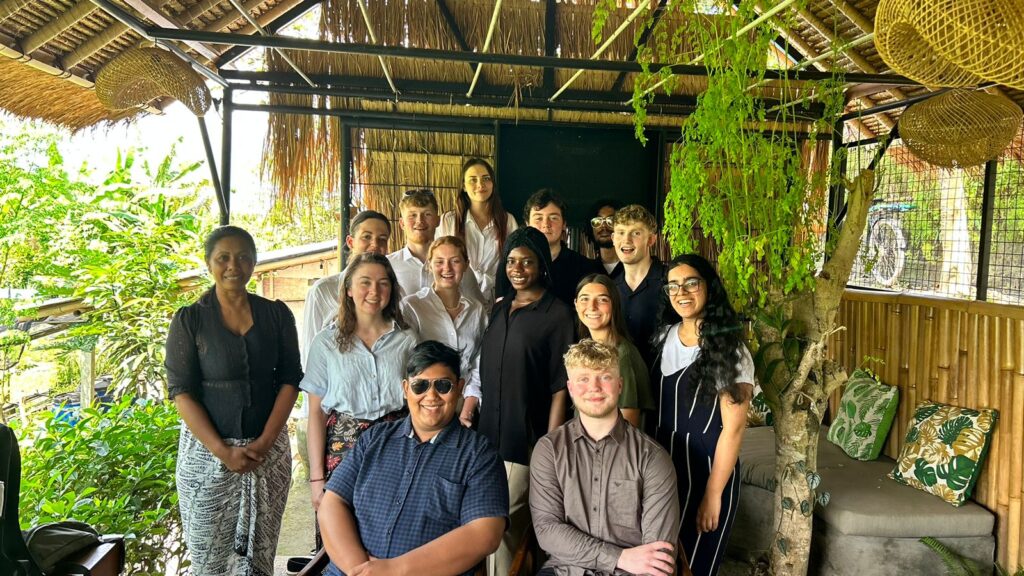
During the first meeting I was able to see how Magi Farm operates and their facilities as well as discuss with the co-founder beneficial outcomes for the week ahead. Throughout the week we worked as a team of 8 to deliver a path forward for Magi Farm, where I focused on developing a strategic plan to foster engagement and partnerships from events and business to business. Presenting the project at the end of the week allowed me to practice my public speaking skills and developing confidence in my ability to.
Following a weekend of reflection and exploration time in Canggu for a free weekend, I returned to Mas Village intrigued by the next project partner. For the second project partner I was grateful to work with Made Tea who utilise organic, sustainable, and all natural herbs and plants to create teas designed to promote wellbeing. Similar to Magi Farm, I was able to gain an insight into how Made Tea is run and operates by a single founder, Roni. It was highlighted early that Roni had a passion for helping those in the community of all including the younger generation.
Throughout the week I used my experience of design and design software to curate a new package design aimed at promoting energy in the younger generation. To support an interest in international partnerships I created a template for a partnership proposal to facilitate discussion. Presentation of the weeks work allowed further development of my presenting and public speaking skills.
To conclude the final week of project work after a weekend of exploring the local Ubud area and seeing a traditional Balinese fire dance, I was honoured to work with HNS Studio Bali, a graphic design and illustration business. HNS Studio Bali was an inspiration business as the founder began his journey while in university and has become an award-winning entrepreneur. However this success posed a challenge for how best to add value during the week. With some brainstorming as a team we identified scope for further more niche partnerships to which I continued on to develop a mock-up visualisation of his artwork as a background for DJ sets or festivals to increase visibility. Creating this visualisation allowed me to use and practice some of my design skills, appreciating transferable skills and the dedication to passion that people have.
Partaking in the Think Pacific GTI in Bali supported by the Sir Thomas Dixon Travel Scholarship and working with local Balinese companies allowed me to realise my passion for problem-solving across specialties as well as appreciate the diversity of culture that exists within our world. I was able to refine skills such as public speaking, generating presentations, and thinking outside the box for unfamiliar challenges; all skills of which will help me foster a successful future as I start my PhD in October with the School or Mechanical and Aerospace Engineering.