Categories
Global Opportunities Go Global ambassadors Study abroad

The Inside Scoop: Culture Differences Between UK and France

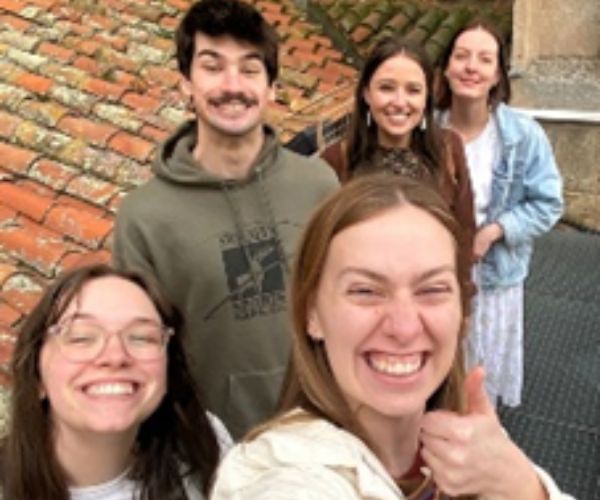
Queen’s student Jadzia Armstrong takes us through the differences she has noticed whilst studying abroad. Take it away Jadzia…

Jadzia Armstrong

“I am currently in Toulouse, France on my year abroad. And already there are so many differences to what it’s like back home! So, here is a blog about all the things friends and I have noticed so far, about the university system and life here in general!”

“So, university first… 

First, from what I have experienced and from what we have been told the system is more lecture focused. It is less about discussion and more about listening. This is in direct contrast to back at Queens, when especially in politics there is an emphasis on tutorials and discussion.”

“Credit conversion means I have 6 modules each semester compared to 3, but they feel less in depth.”

“There is a canteen! French universities have CROUS which is a canteen where you can get a full meal for €3.50 – including starter, main and dessert. Most people eat here at lunch and the lines are always so long…”

“This leads to me onto one of the biggest differences I have noticed here which is food. Not just the type of food but the emphasis on it.”

“The stereotype of France is the baguette, which is widely eaten but of course food extends beyond the baguette – the pastries and café culture of sitting down and eating outside, having a chat with friends while eating a chocolatine and sipping a coffee is one of the aspects I love most about France.”

“There is more of an emphasis on the importance of food and drinks to connect and take time together, with meals being something that brings people together. As well as sitting by the river while music plays and having a drink. (And as you could expect, the wine is cheaper here!)”

“People take the opportunity to sit outside and have drinks which is also something unheard of in the UK because of the weather!”

“The next difference is that in France there seems to be a focus on being together and doing activities.”

“This is highlighted by the fact that on the first Sunday of every month, museums are free in France. Adding to this is the big market culture. To me, there seems to be more of a focus on cultural activities and spending time together doing them. Especially on Sundays, shops are only open for a couple of hours which adds to this idea.”

“I have taken advantage of the free museums and love the markets and affordability of fresh fruit and vegetables. There are so many markets all throughout the week!”

“Another huge difference is the cycle culture here. People cycle more to get to events, university and work. You often see families cycling together too. It is on a completely different volume to back home and there are cycle paths everywhere.”

“As well as this, outside university every day there are so many mopeds. They are a popular mode of transport, and you can even hire them just like a bike. I have recently gone on a moped for the first time!”

“These are some of the big differences I’ve noticed and here are just some random others: 

  • The French eat later – this can be as late as 9pm for dinner 
  • There are less vegetarian and vegan options in the stores and less multi-cultural options in general  
  • Being late is common 
  • Less spicy food  
  • People wear headphones less here”

“Overall, I’m sure there are so many more which I haven’t mentioned and still to find out. I like so many of these things about France, but for me one of the biggest differences is the diversity of food in the supermarkets and in general and that’s what I miss most about home. But I sure do love the pastries!”

Categories
Global Opportunities Go Global ambassadors Study abroad

My Go Global Adventure: Salamanca Spain

Check out this Q&A with Queen’s student Harriet Blair on her study aboard experiences.

Harriett Blair

Tell us about yourself.

Hi, my name is Harriet Blair and I’m from Waringstown. I’m currently studying Law with Spanish at Queen’s University Belfast and as part of my degree I had the opportunity to live abroad in my third year of studying. 

Where did you go and why?

I spent a full academic year in Salamanca, Spain, studying Law at the University of Salamanca. I chose to study there because the university – founded in 1134 – is the third-oldest in Europe and attracts many students from all over the world, so there would be plenty of people to meet and become friends with. The whole city is also filled with beautiful Romanesque, Gothic, Plateresque and Baroque architecture which I really wanted to explore.

Who was the first person you met? 

One of the first people I met in Salamanca turned out to become one of my closest friends. Her name is Tito, and she was also an Erasmus student from Scotland. We were both nervous about spending a year away from home and wanted to make friends, so we quickly became close and helped each other out. Together we met new people, joined different student groups, and supported each other while adjusting to a new city. Since we’re both Christians, we also searched for a church together where we could feel at home during our time in Spain. 

How did you meet people? 

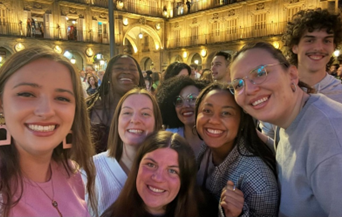
I found that a great way to meet people was to get involved in student groups and Erasmus events. One group in particular, called EnVivo, really helped me to meet people, many of whom became some of my closest friends. We had many fun nights out, as well as games and movie nights, weekend trips away and other fun activities that I always looked forward to. 

I also met wonderful people in the church that I joined, called FreshX. It was full of international people from Germany, France, Portugal, New Zealand, the United States, Colombia, Brazil and many other places. It was a great way to meet people not only from Spain, but also from all over the world. Everyone there was so welcoming and supportive during my year abroad, and they really made me feel at home in Salamanca.  

What was the biggest culture shock?

There were certainly a number of culture shocks living in Spain, from the different food to the later times for shops opening and closing, but perhaps the biggest culture shock was seeing that the people in Salamanca have a relaxed, unhurried approach to life – not out of laziness, but because they value enjoyment and balance over constantly working. They aren’t afraid to pause, savour the moment and be patient. It was quite unlike what I’m used to seeing here in Northern Ireland, where we generally are set on instant gratification and ceaseless productivity. It taught me not to stress so much about things I can’t control and just have to wait for, to take a breather every once in a while, and to simply enjoy myself without feeling guilty for not constantly working on something. 

What was the most exciting part? Most memorable moment? 

There were many highlights while I was in Salamanca, and it’s hard to pick just one; spending time with my friends, travelling on weekend trips, going to the Eras Tour in Madrid, enjoying concerts and events in the Plaza Mayor, seeing the Christmas light exhibition, enjoying the Summer weather at the outdoor pool. There were so many incredible experiences and I loved having the independence to explore and make lasting memories with so many friends! 

What knowledge and insight did you gain to help your career? 

Although I’m still studying, my year abroad has really broadened my horizons in terms of a future career; my outlook and goals for what I want to do after graduating have shifted since I went abroad and I’m also more open to working further afield because of the brilliant experience I had. 

How was the year different than you imagined? 

When the year started, I had planned to share a flat with another friend who was also on my course. However, after a week or so of being in Salamanca, she realised that it simply wasn’t for her and decided to return home to join the final year law course. This unexpected change left me living on my own, which at first was very nerve-wracking, but it also pushed me to put myself out there and step out of my comfort zone. I made more friends, got involved in new activities, and became more independent. Once I settled in, I found that I really enjoyed living on my own and gained so much from challenging myself to embrace the situation.

In what ways has the experience built your confidence? 
My year abroad has taught me to take more opportunities that I might have been hesitant about before. I’ve become more confident in saying ‘yes’ to new experiences, whether it’s trying something outside my comfort zone, meeting new people, or taking on challenges that once seemed intimidating. I’m also more confident dealing with unexpected changes, knowing that I can handle them. 

What advice do you have for fellow students who want to experience a similar time abroad? 

First of all, I would say to do your research before you go so you can be well prepared and remember that however daunting it might feel the experience is so worth it! Once you arrive at wherever you’re going, make sure to put yourself out there, take every opportunity that comes your way, and fully embrace the experience.

I would also recommend finding a way to document your year; I made a scrapbook filled with photos, small mementos, notes, and got it signed by all of the friends I met in Salamanca, which is something I can keep forever. Most importantly, remember to enjoy yourself and don’t get too hung up thinking about when you’ll return home. The year will go by much faster than it seems at the start, so make sure to take full advantage of the opportunity. 

What’s the one thing you’ll never forget about your time abroad? 

I know I’ll never forget the great group of friends I made, through different activities and student groups. We all got so close and really try to stay in touch with each other. It provided a great sense of community between people from all over the world, and I would highly recommend the experience to any student! 

Five Skills I Learnt on My Exchange

  • 1. Develop Personal Resilience and Independence 
  • 2. Build an International Network 
  • 3. Mastering Real-Life Spanish 
  • 4. Appreciating New Cultures 
  • 5. Learning to Say “Yes”