During 2025-26, researchers from Queen’s University Belfast worked with National Museums NI (NMNI), Chinese Welfare Association Northern Ireland (CWA NI) and Avila Media to deliver the Bridges to China project, generating meaningful social impact in Belfast and Dublin. At the beginning of November 2026, the project reached another milestone as the team shared its experiences and outcomes with an audience at the Museums Association’s annual conference in Birmingham.
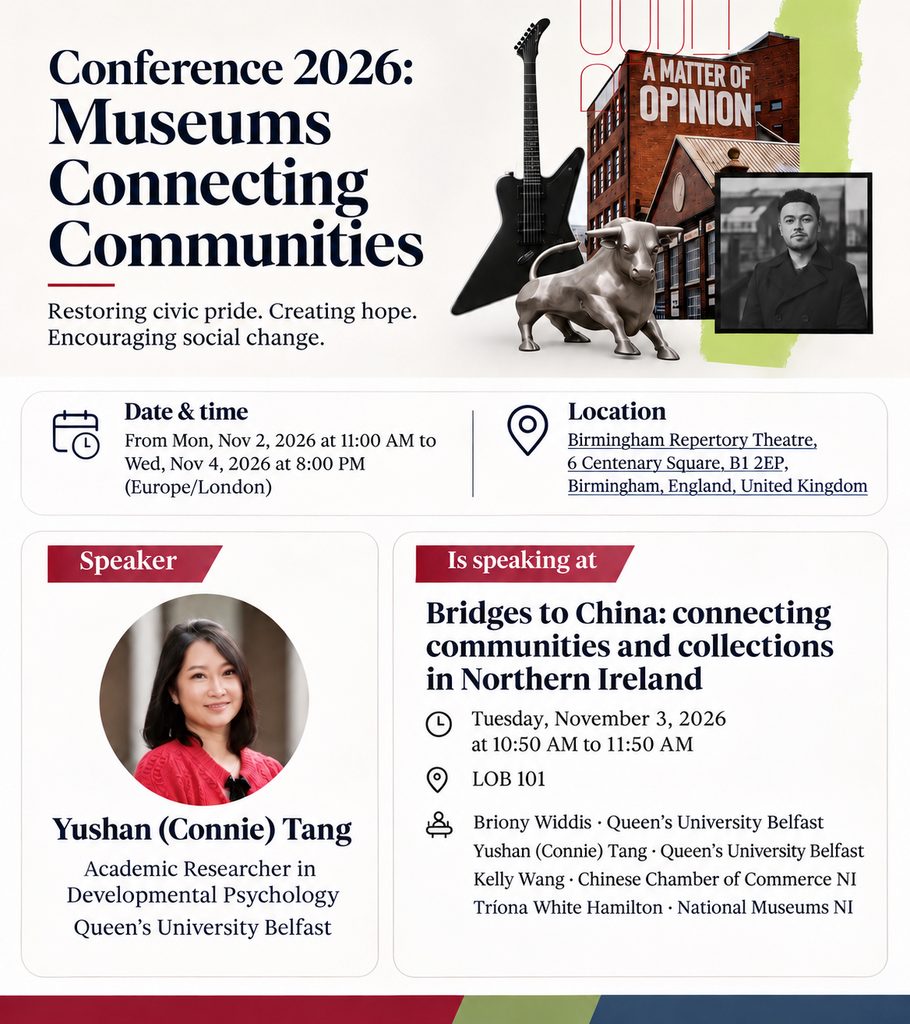
Yushan (Connie) Tang, a PhD researcher in developmental psychology at Queen’s University Belfast, was among the project participants and contributors.
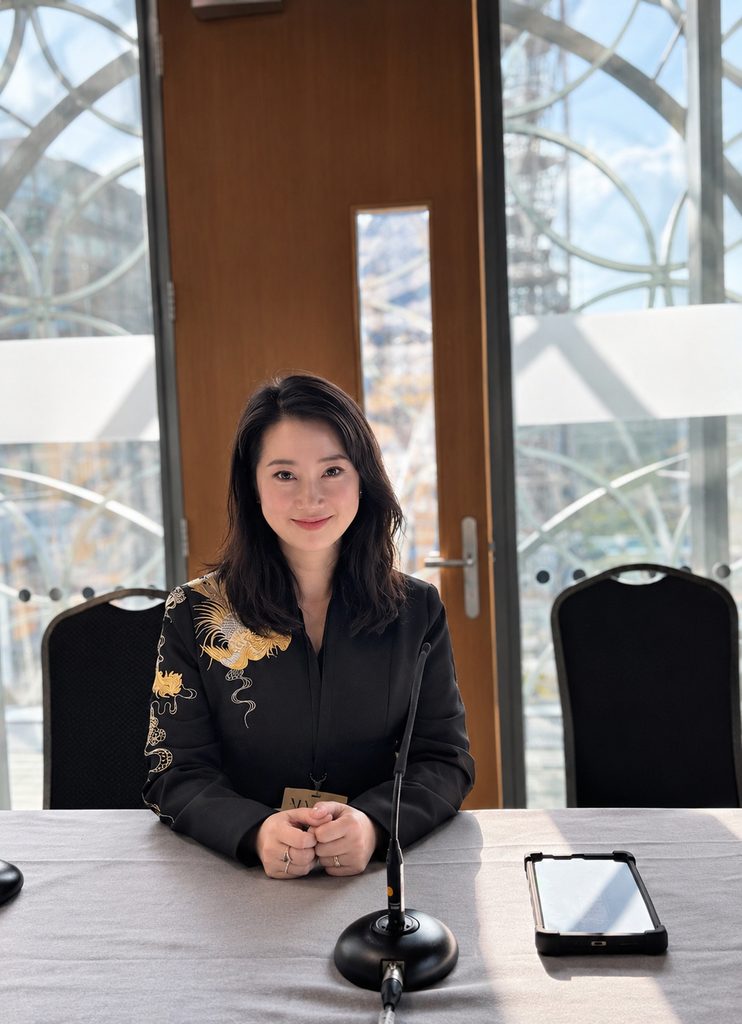
On 3 November, she joined a panel discussion at the conference to share her reflections on the project and her experience as a workshop participant. Yushan kindly shares her post-conference thoughts below.
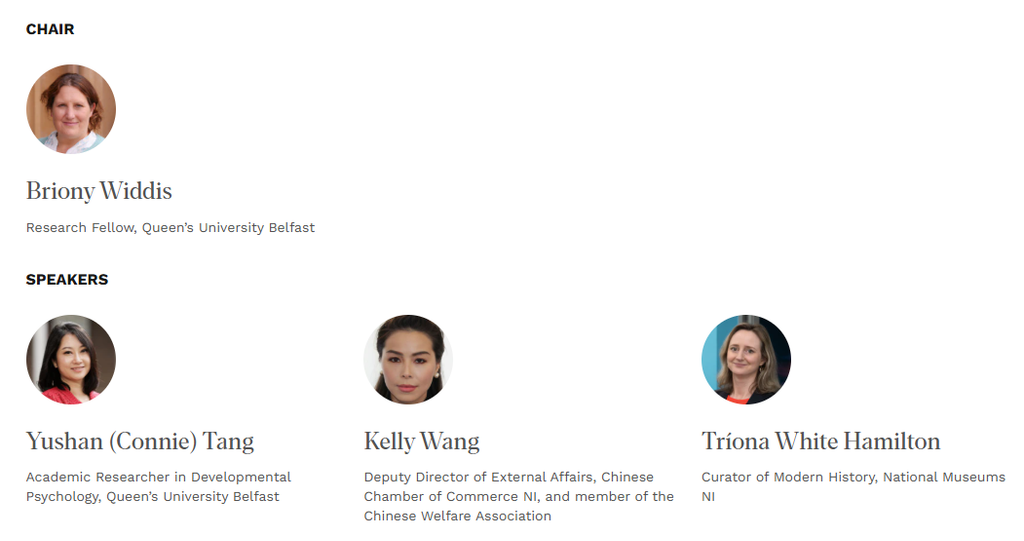
The panel, titled “Bridges to China: connecting communities and collections in Northern Ireland”, was chaired by Dr Briony Widdis (Research Fellow, Queen’s Centre for Public History). Yushan joined Kelly Wang (Board Member, CWA NI) and Tríona White Hamilton (Curator of Modern History, NMNI) to share her experience of the project.
Connecting cultural objects with personal stories
For me, the workshops created space for conversations that rarely happen in everyday life. Participants from different regions and generations brought their own knowledge and memories. Something familiar to one person could be a discovery for another. I enjoyed getting to know people through these exchanges and discovering fresh perspectives on our shared cultural heritage.
One conversation during a workshop exploring the museum collections became especially personal. A pair of lotus shoes reminded me of my grandmother, who cared for me when I was little. A question raised during the workshop prompted me to reconsider the story I had grown up with about why her mother had stopped binding her feet. I began to recognise how my own need for a strong female role model had shaped my understanding of her life. Revisiting those memories helped me appreciate the strength she had shown in the way she lived and cared for our family. I felt closer to her, and more at ease with myself. I shared this reflection in my story for the project. The filming team’s response made me feel heard and understood. That moment stayed with me: an object had opened up a conversation through which people from different backgrounds could connect over a deeply personal experience.
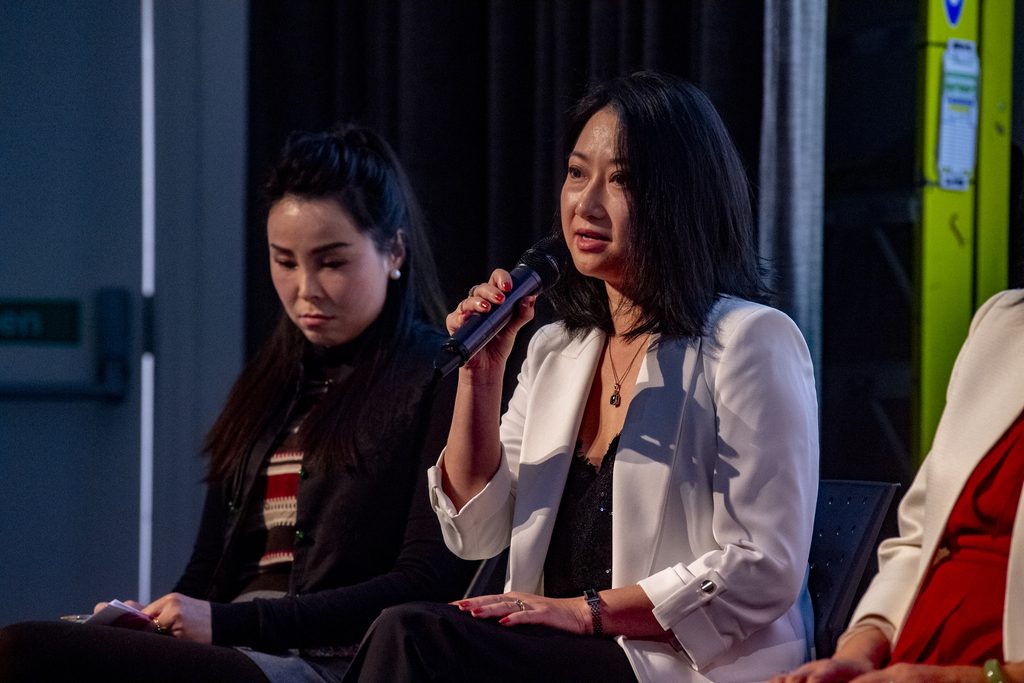
This was the experience I wanted to bring to Birmingham. Listening to the other panellists, I recognised a similar appreciation of the relationships and learning that had developed through the workshops. Museum colleagues were interested in how we had worked together and gathered knowledge from participants, and a few stayed afterwards to continue the conversation.
Making time for community
Balancing doctoral research, family life and running a business means that making time for activities outside my usual responsibilities takes some thought. I’m glad I made room for this project. It kept me connected with the Chinese community and gave me a meaningful way to contribute, while opening up conversations I might otherwise have missed.
The support of Queen’s colleagues, CWA, the museum and the filmmaking team created an opportunity to contribute, learn and build relationships that extended beyond the workshops.
The experience also deepened my appreciation of the people who helped bring the university and community together. Dr Liang Wang (Language Support Officer, Queen’s Language Centre) helped facilitate the project through his connections with CWA and the Ulster Museum. He also took part in person, sharing his own objects and memories alongside other community members. For me, this brought the relationship between the university and its neighbouring communities to life.
I hope fellow students who are curious about community projects will find something encouraging in my experience. I began with questions about what I could offer, but discovered that there was also room for my curiosity, my family memories and the things I was still trying to understand.
Being able to share these experiences in Birmingham felt like a valuable next step.
I’m grateful to everyone who helped make it possible, and pleased that this project has become part of my journey at Queen’s.
Author: Yushan (Connie) Tang (汤毓珊)
Editor: Liang Wang (王亮)