
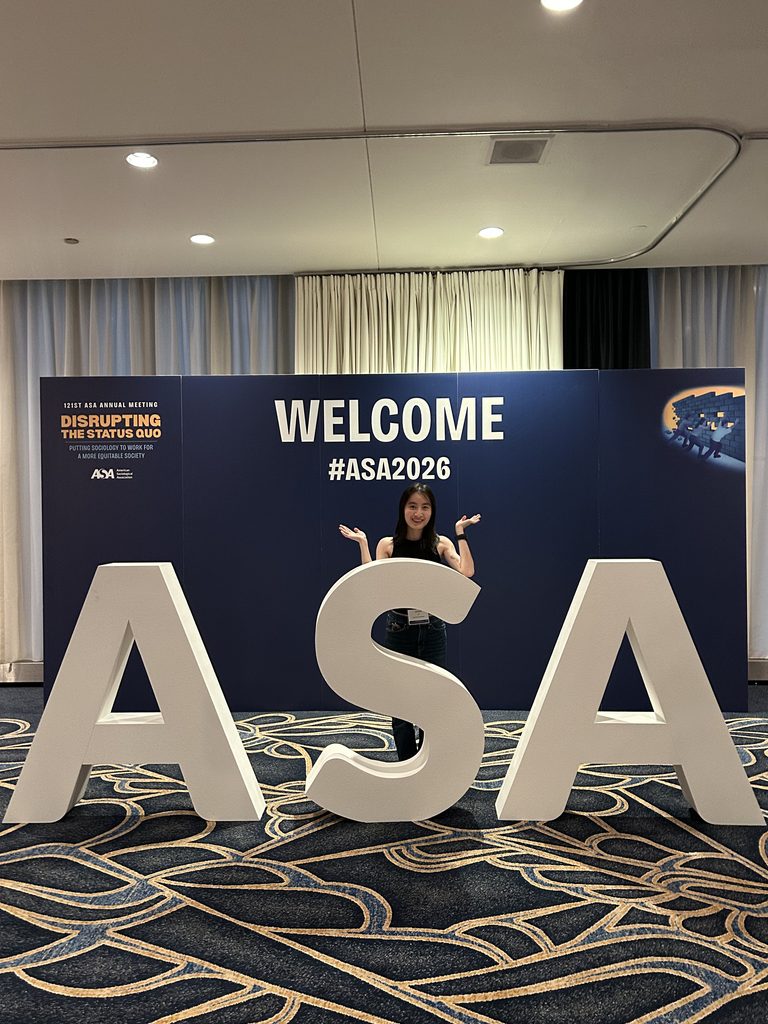
In August 2026, Junyue Li, a first-year PhD student from the School of Social Sciences, Education and Social Work, travelled from Belfast to New York City to attend the American Sociological Association (ASA) 121st Annual Conference. From presenting research and discovering new perspectives to witnessing political protests and exploring one of the world’s most vibrant cities, the experience offered much more than academic growth. We invited Junyue to reflect on the highlights, surprises, and lessons from this memorable trip.

In April 2026, I was delighted to learn that my abstract had been accepted for the ASA Annual Meeting, a major international conference in Sociology. As a first-year PhD student, I saw this as an exciting opportunity to discover what sociologists around the world were researching and to gain an initial understanding of academic networking.
Getting there involved a hectic period of visa applications, funding arrangements, travel bookings, and writing a full paper. Fortunately, I arrived in New York just one day before a severe thunderstorm caused widespread flight cancellations.
Big Conference, Lighter Moments
My first impression of the conference was its sheer scale. More than 4,000 people attended, with sessions starting as early as 8 am and multiple presentations running simultaneously. Over five days, I attended more than 15 sessions covering a wide range of sociological topics, yet I still felt I had missed plenty of interesting discussions, especially those taking place early in the morning. Apparently, I’m not much of a morning person, and I was happy to blame my hotel being a 25-minute walk from the conference venue! So, if your schedule is packed, I’d definitely recommend staying somewhere nearby.
Before attending the conference, I had imagined a more formal and serious atmosphere, but it turned out to be surprisingly relaxed. One plenary session explored how comedy can raise awareness of social issues, and the idea that humour can make a message more effective really stayed with me.
I also noticed presenters making jokes, audience members sharing spontaneous thoughts, and one graduate student using her presentation as an opportunity to showcase herself to established scholars in her field and potential employers in the academic job market. These moments reminded me that academia doesn’t always have to be so serious. We can take our research seriously without putting unnecessary pressure on ourselves.

From Presenting to Conversing
At the regular sessions, I was particularly impressed by the presenters’ storytelling skills. They used interview quotations, empirical examples, and quantitative data to build towards their findings in a natural and engaging way, making their arguments clear and accessible. Reflecting on my own previous presentations, I realised that I had sometimes focused too heavily on theories and findings, which could make my presentations feel rather dry and less engaging.
My paper was assigned to a roundtable session on Gender Roles and Ideologies within the Family. Five researchers, including me, presented our work, with audience members occasionally joining the discussion. We had an hour for presentations and Q&A, without the use of slides.
I found that this format encouraged a more conversational approach. Rather than trying to cover every detail, it was more effective to introduce the research briefly and engage with others’ ideas. I also took away two practical lessons: read other presenters’ papers beforehand whenever possible, and speak loudly enough to be heard in a room where several roundtable discussions are taking place simultaneously.
Across the Atlantic: US and UK Sociology
At the conference sessions, another striking observation concerned qualitative research. Several interview-based PhD projects involved 60-70 interviews, and I even encountered one with more than 160. In the UK, interview-based doctoral projects often involve around 25-35 interviews, as far as I am aware.
There may be several reasons for this difference, including variations in doctoral programme length, research design, and disciplinary expectations. US PhDs often take five to seven years to complete, compared with roughly three to four years in the UK, potentially allowing more time for data collection. Moreover, the strong quantitative orientation of American sociology may encourage qualitative researchers to demonstrate empirical breadth and rigour through larger interview samples.
However, I would be cautious about the assumption that “the bigger, the better” when it comes to qualitative research. When the aim is to understand meanings and experiences in depth, the quality and analytical richness of interviews matter as much as, if not more than, the number collected.
Another difference was the submission requirements. Unlike conferences across the UK and Europe, which usually require only a short abstract, the ASA required either a full paper or an extended abstract at the initial submission stage, followed by a full paper before the conference takes place. Although demanding, this requirement ultimately motivated me to turn my master’s dissertation into a paper and develop new perspectives on my previous research. Sometimes, a deadline is exactly what we need to drive a long-postponed project forward.

When Sociologists Disagree
Although we had been informed by email before the conference about potential protest activities, I was still shocked by the sudden disruption. During a plenary session, just as the ASA president was about to speak, protesters unfurled a banner and shouted, “Free Palestine.” Some also criticised the association for not taking a sufficiently clear position on the issue. The disruption lasted only a few minutes before the event resumed.
What struck me was that many of the protesters were sociologists or former ASA members. This was particularly interesting because it challenged the assumption that sociologists necessarily share similar political positions, even when they broadly share certain values.
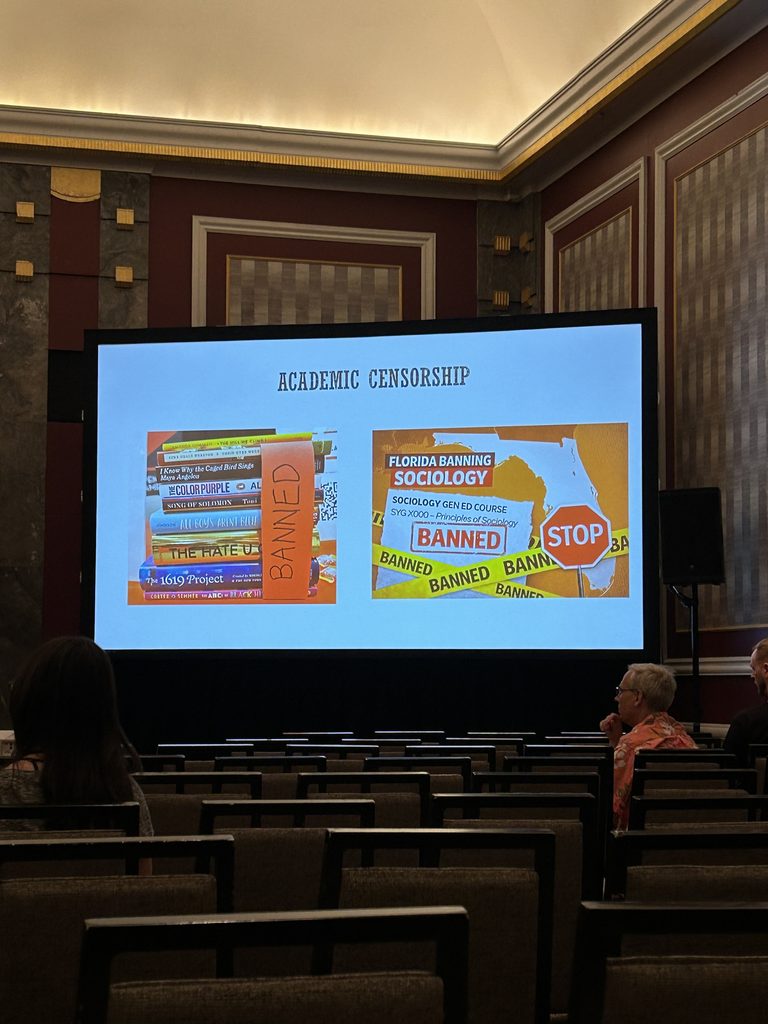
In a sense, the protest brought the conference theme, “Disrupting the Status Quo: Putting Sociology to Work for a More Equitable Society,” into the conference itself. I also learned that some sessions on sensitive topics, including immigration, had been relocated without wider notification.
These experiences reinforced my belief that academia is not an ivory tower detached from reality. Universities, professional associations, and academic conferences are embedded in the same political tensions and social inequalities that sociologists seek to understand.
New York, New Insights
Although I travelled alone from the UK, I experienced warmth, both literally and metaphorically, in New York City. Evening receptions at the conference provided valuable opportunities for networking. I was fortunate to meet two friendly researchers who were also working in Europe (one in the Netherlands and the other from Switzerland), and we explored the city together after the conference.
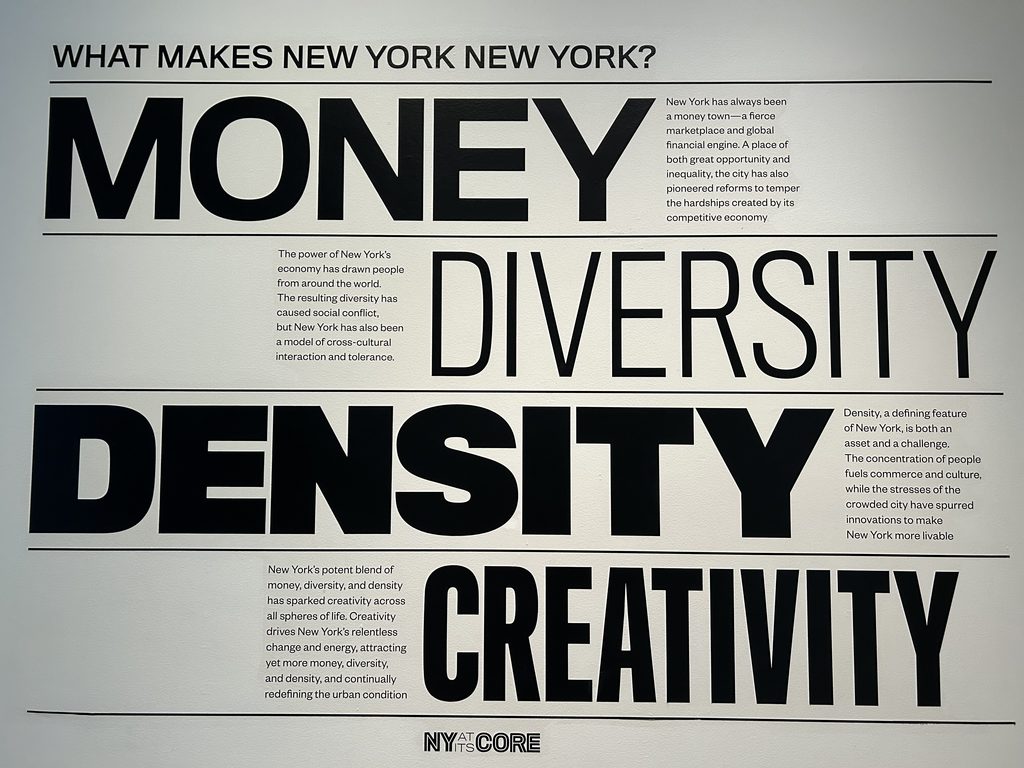
I must admit that one of my main motivations for submitting an abstract to the conference was its location. As a result, alongside immersing myself in the intellectual environment, I also made time to experience New York itself: Times Square, Central Park, the Statue of Liberty, Wall Street, the High Line, museums, and a Broadway musical. I could only scratch the surface of Manhattan, but the city’s energy and diversity left a lasting impression.
One particularly interesting observation concerned Asian American communities. Compared with everyday usage in the UK, where “Asian” often refers primarily to South Asian communities, the term in the US encompasses substantial and diverse East and Southeast Asian populations. I also noticed considerable differences between myself and some of the ethnic Chinese people I encountered, many of whom were second- or third-generation Chinese Americans with their own distinct cultural and national identities.
This made me reflect on the different migration histories and demographic contexts of the two countries. I was also struck by how well established Asian American studies is as an academic field in the US, whereas research on Asian communities in the UK can appear more dispersed. It made me wonder what further opportunities might exist for developing this area of research in the UK.
Overall, it was an incredibly absorbing and rewarding experience. Beyond listening, presenting, and engaging in discussion, I came away with something more: a clearer sense of sociology as a broad, diverse, and sometimes challenging intellectual community. Most importantly, I began to see my own place within this much larger academic world.
For an early-career researcher, a conference is not just a place to present a paper. It is an opportunity to discover new questions, challenge assumptions, build relationships, and better understand the wider world in which our research takes place.
Last but not least, I am grateful to my school, SSESW, and my funder, the DfE, for their financial support, which made my attendance at the conference possible.
Author: Junyue Li (李君悦)
Editor: Liang Wang (王亮)