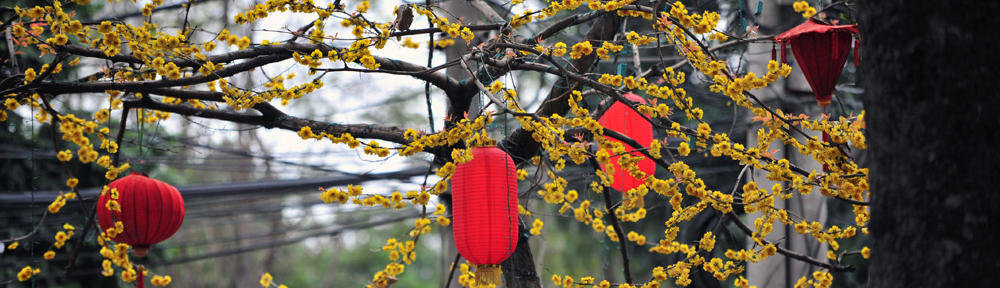

Yang Ni (倪旸) is a photographer from China, currently based between London and Beijing, and a PhD student in History at Queen’s University Belfast. His research explores Chinese contemporary photography through the lens of social change and visual culture. Working primarily in street photography, Yang is drawn to fleeting gestures, uncertain distances, and the rhythms of urban life. The work has been exhibited in Beijing, London, New York, and Munich, and published in China Photo Press, Photo World, and Leica Fotografie International. In 2025, Yang was selected for the National Youth Photography Exhibition.
Theme 1 – Snow and the Turning of the Year
Snow arrives at a moment of transition. It marks a pause between what has passed and what is about to begin.
In these photographs, snow reshapes the world with quiet clarity. It settles on streets, fields, rivers, and open ground, simplifying surfaces and opening space. From the snow-covered walls of the Forbidden City to the open fields at the edge of the land, the photographs move across different spaces without hierarchy. Imperial architecture, urban streets, riverbanks, and rural ground are all briefly held in the same light. Snow quiets each setting in its own way, reducing monument and field alike to surface, trace, and pause. Human figures appear intermittently – walking beside walls, crossing open ground, lingering at the water’s edge – never dominant, yet never absent.
Seen together, the images carry a gentle sense of renewal. Snow covers and clears at once, marking an interval rather than an arrival. In this interval, time slows, attention sharpens, and familiar places are seen again with fresh quietness. What remains is a moment open to change, where the turning of the year is felt not through celebration, but through stillness and looking.
Quarter White
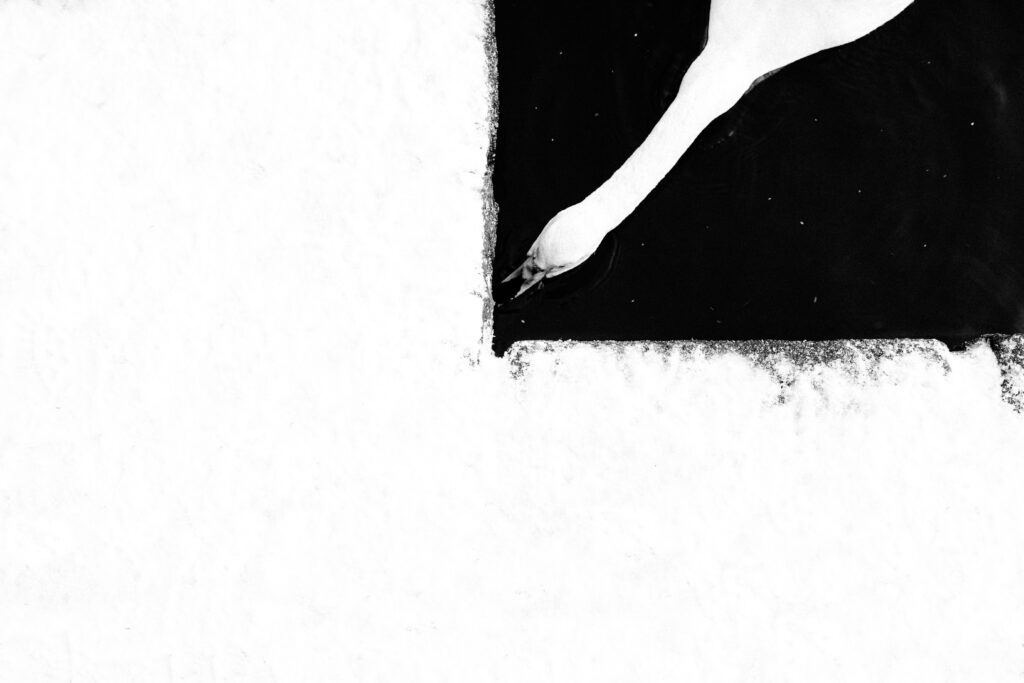
Photographed at the Old Summer Palace (Yuanmingyuan), Beijing, on 2 January 2020. Just after the New Year, the snow-covered bank contrasts sharply with the dark water in the upper right. A swan extends its long neck from the water towards the snowy edge, capturing a quiet, fleeting moment by the winter lake.
Last Glimpse of Snow
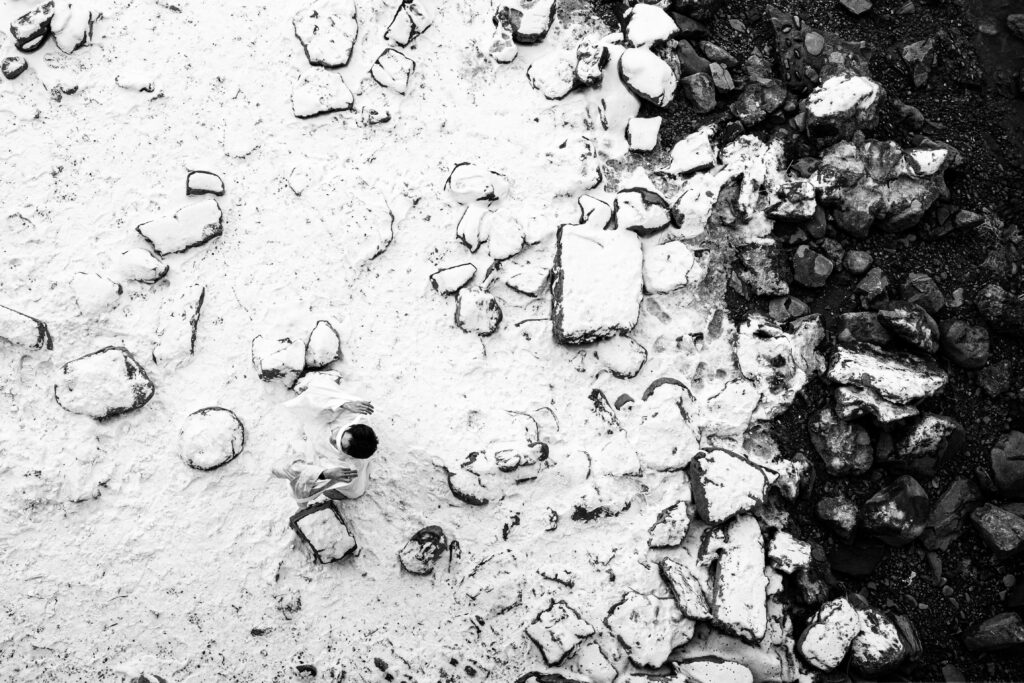
Photographed by the Yellow River in Lanzhou, Gansu Province, in 2022. The winter riverbank is still covered with patches of snow, with broken ice and stones scattered across the ground. Seen from above, a passer-by moves along the edge of the snowy surface, capturing a quiet, rugged winter scene by the river.
The Geometry of Winter
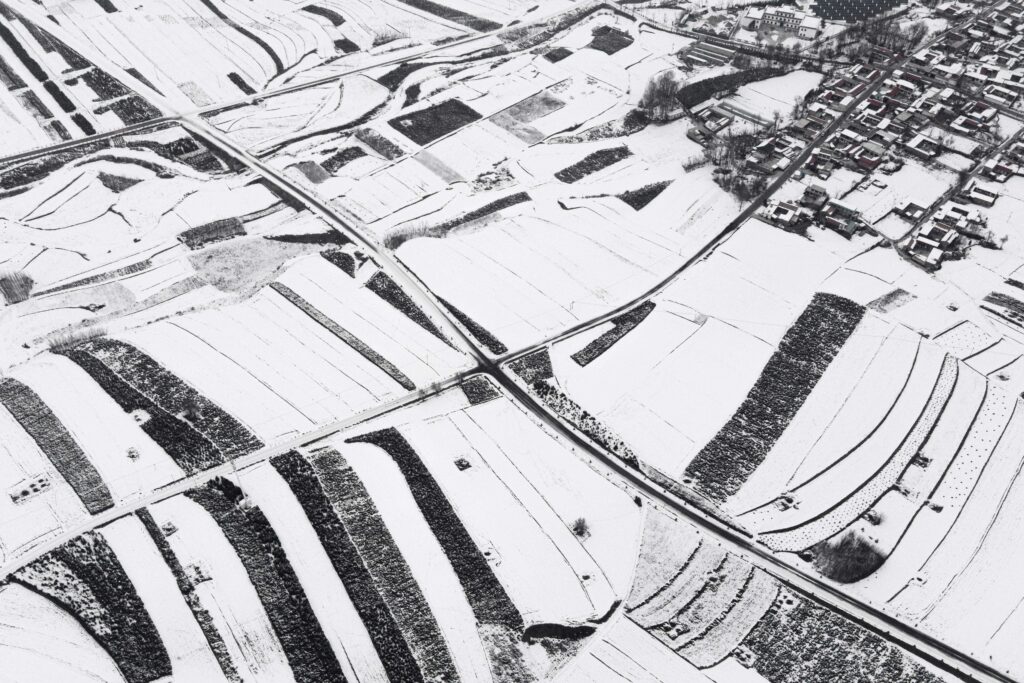
Photographed in a farmland area in Gansu Province, 2022. Snow covers the fields, while roads cut across the landscape and divide the farmland and nearby village into clear geometric sections. The scene highlights the patterns and organisation of rural land in winter.
Fading Rooflines
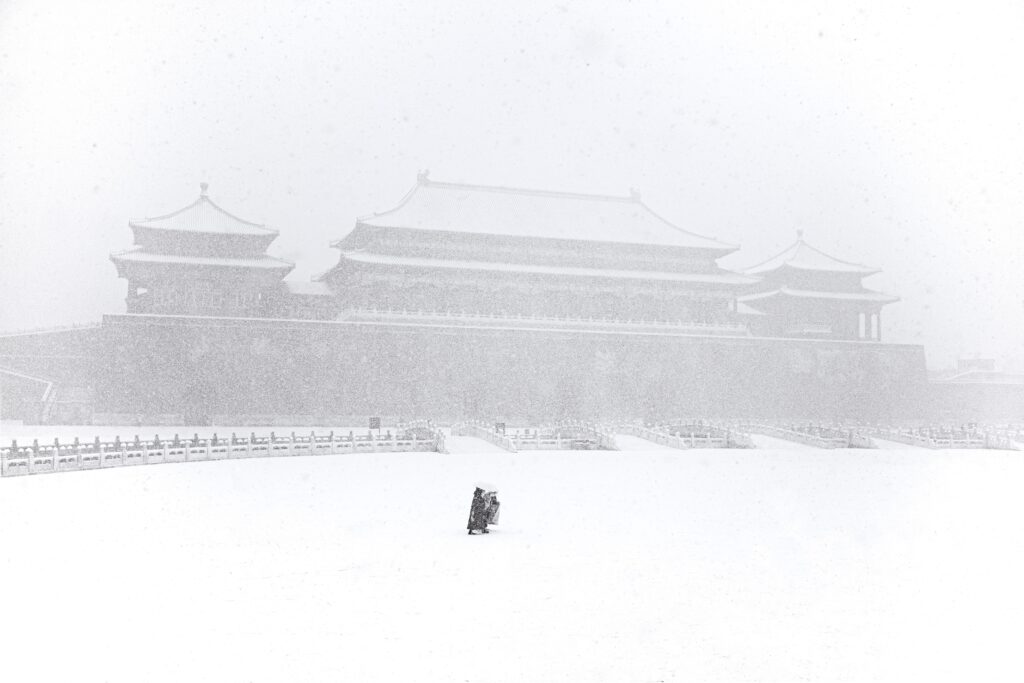
Photographed at the Forbidden City, Beijing, 2025. Heavy snow covers the open square and steps, while the palace structures fade into the snowfall. At the centre, a lone figure crosses the white ground, emphasising the scale and stillness of the scene.
Snowy Trails of The Wanderer
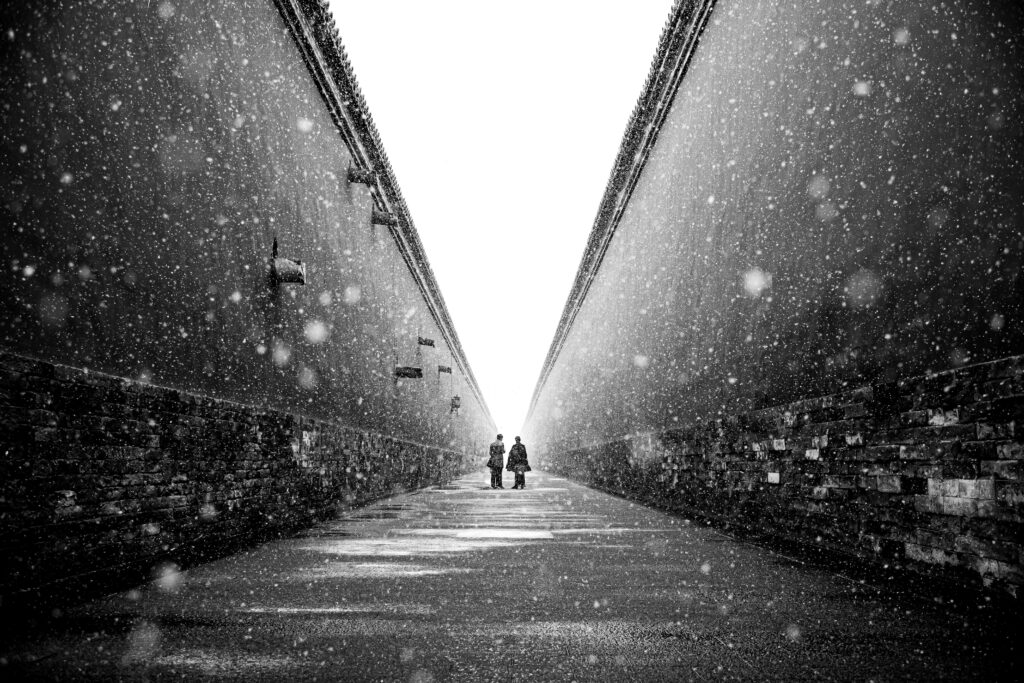
Photographed at the Forbidden City, Beijing, 2025. In heavy snowfall, the palace walls create a long, narrow passage, with snow and footprints breaking up the ground. Two visitors walk side by side in the distance, appearing small against the scale of the walls and the storm.
Theme 2 – Mountains and the Continuity of the Land
Across China, mountains shape both the land and the imagination. They define distance, rhythm, and the movement of water, people, and time.
This group of photographs moves through high plateaus, river valleys, forests, and open grasslands, tracing a quiet continuity of landscape. From the vast slopes near Mount Everest to the winding valleys of Xinjiang, from the layered hills of Gansu to the dense mountains of Sichuan, each scene unfolds with its own scale and tempo. Peaks rise, rivers curve, forests gather, and plains open, not as isolated views but as connected formations.
Human presence appears lightly within these landscapes. A path follows the bend of a valley; figures rest in open grass; settlements remain small against the terrain. The photographs do not centre on conquest or distance overcome, but on coexistence – how life settles into the contours of land shaped over time.
Seen together, the images suggest a sense of renewal grounded in continuity. Mountains do not change quickly, yet every season reshapes how they are seen. As the year turns, these landscapes offer a measure beyond the immediate – where scale widens, movement slows, and attention shifts from arrival to passage. What emerges is not a single view of China, but a shared terrain of endurance, flow, and quiet beginning.
Everest in Snow
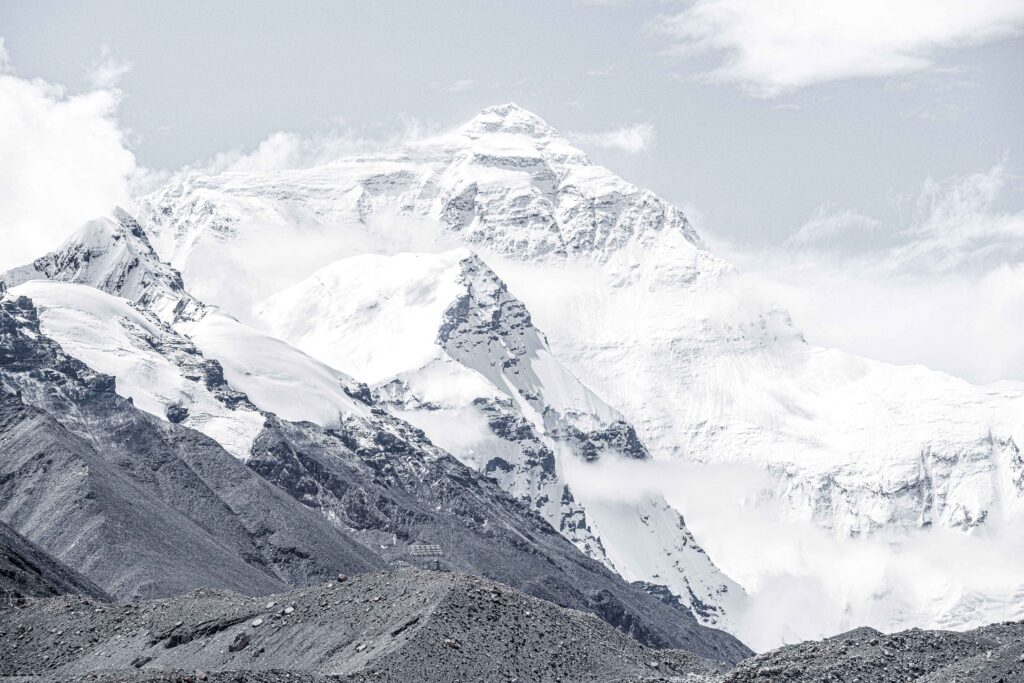
Photographed at Mount Everest in Tibet, 2018. Under high-altitude light, the snowline and rock faces appear in sharp layers, while clouds drift slowly across the slopes. The image records the mountain’s terrain and scale in shifting winter conditions.
Snow and Stone
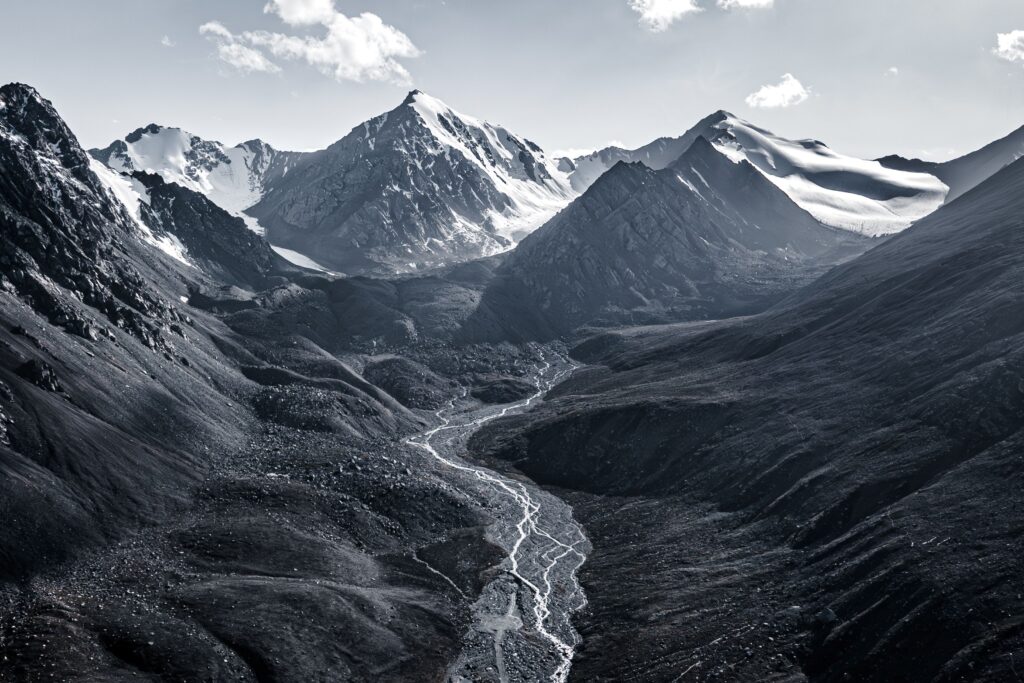
Photographed at Baersi Mountain in Zhangye, Gansu Province, 2020. Snow remains along the ridgelines, while the darker slopes reveal the mountain’s exposed surface. Meltwater runs downhill and threads through the valley floor, tracing the shift between winter and the coming thaw.
Edge of the Lake
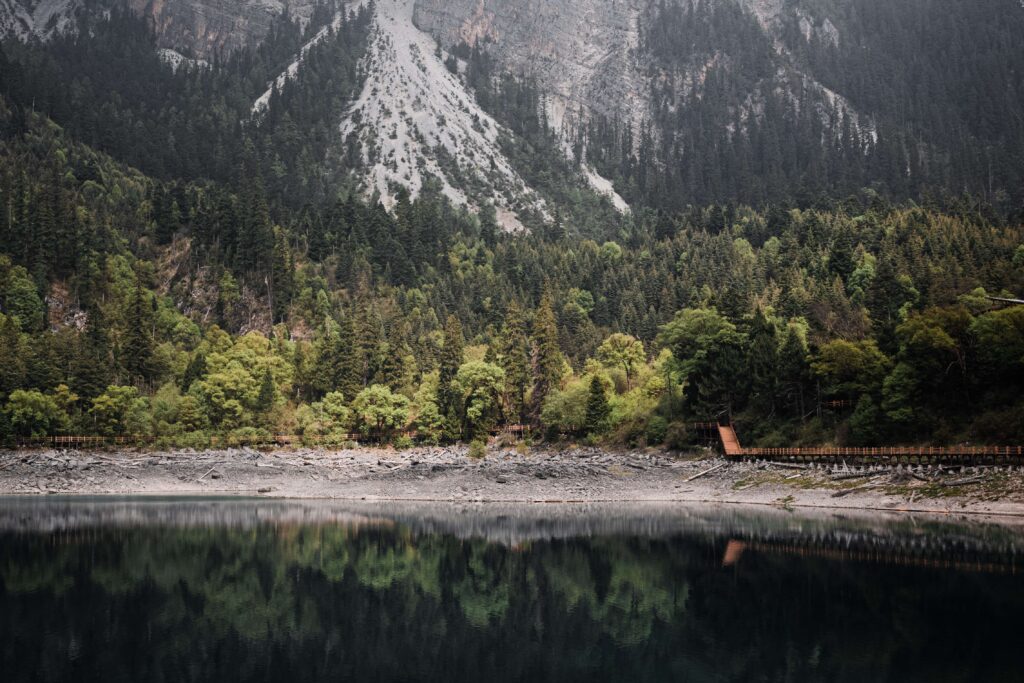
Photographed in Jiuzhaigou, Sichuan, 2022. A still lake reflects the forested slope and rock face above, while a wooden walkway runs along the shoreline. The image captures the coexistence of protected landscape and built access, along with the damp, quiet atmosphere after rain.
Between Forest and Field
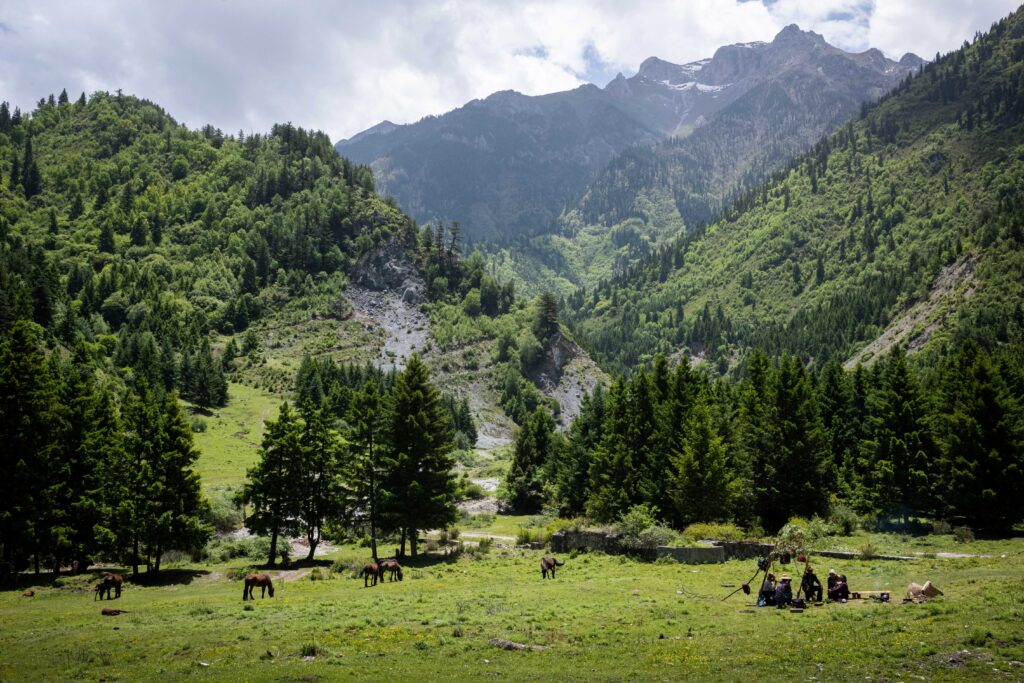
Photographed in Gansu, 2023. On a valley meadow, Tibetan herders rest in the shade while horses graze nearby. The image documents an everyday scene in which people and animals share the same space, set within the seasonal rhythm of highland pastureland.
Layers of the Land
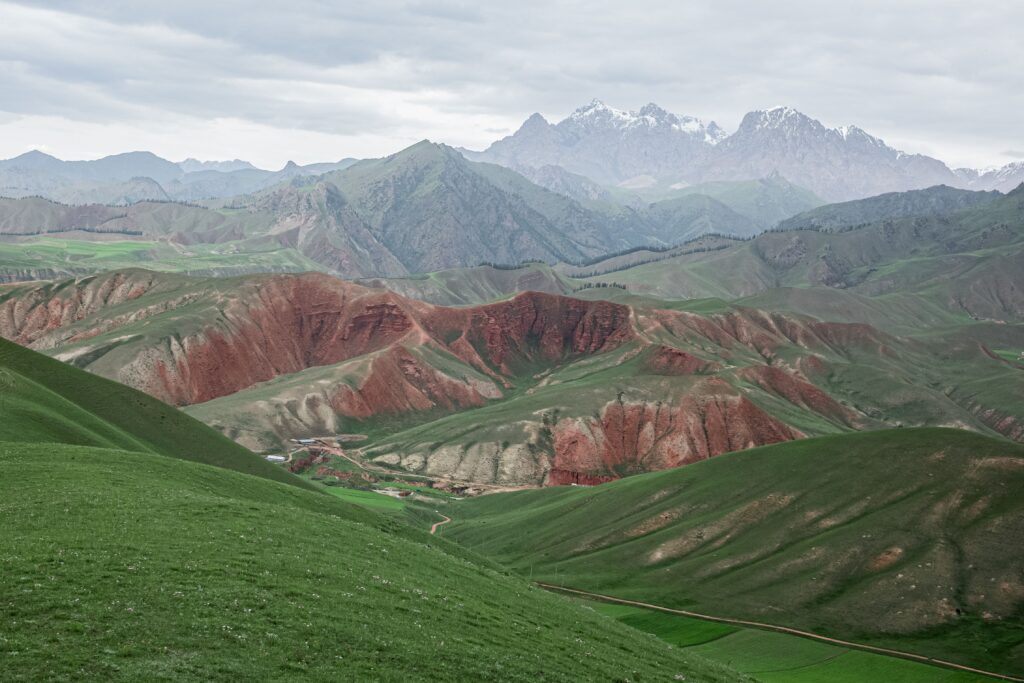
Photographed in Gansu, 2022. Rolling grass slopes lead towards red ridges in the distance, while snow-capped peaks appear beneath a low cloud cover. The image records the meeting of contrasting landforms within a single landscape, highlighting the depth and openness of China’s north-western highlands.
Wetland Patterns
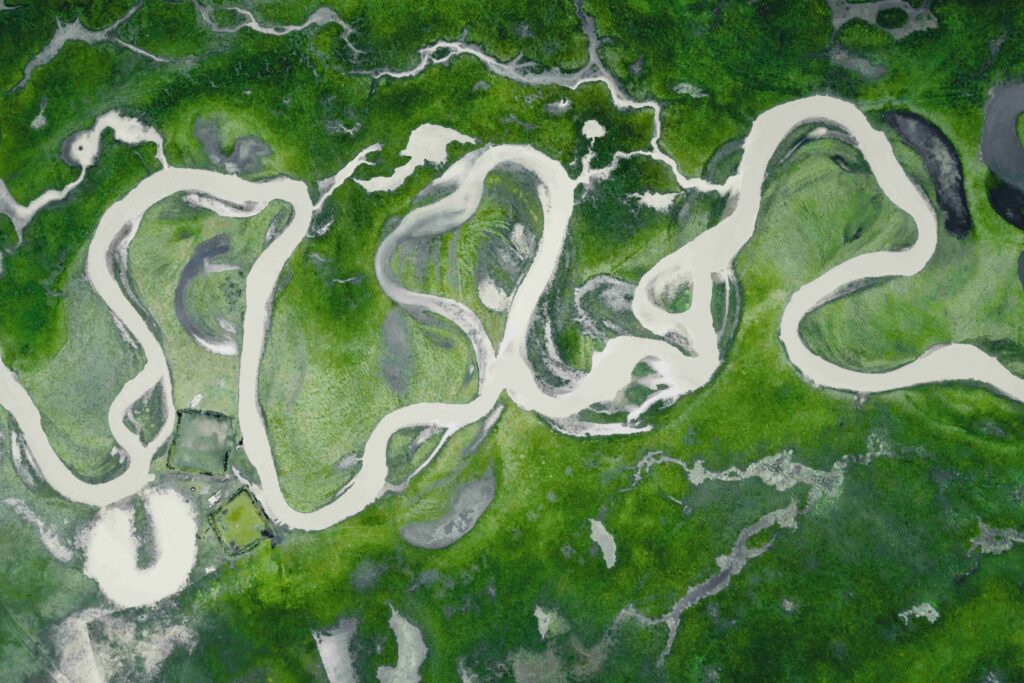
Photographed at Awancang Wetland, Gansu, 2022. The river winds repeatedly through the marshland, with pale water channels cutting across dense green vegetation. Seen from the air, the image highlights the wetland’s water system and the textures shaped by seasonal water levels.
Rugged Surface
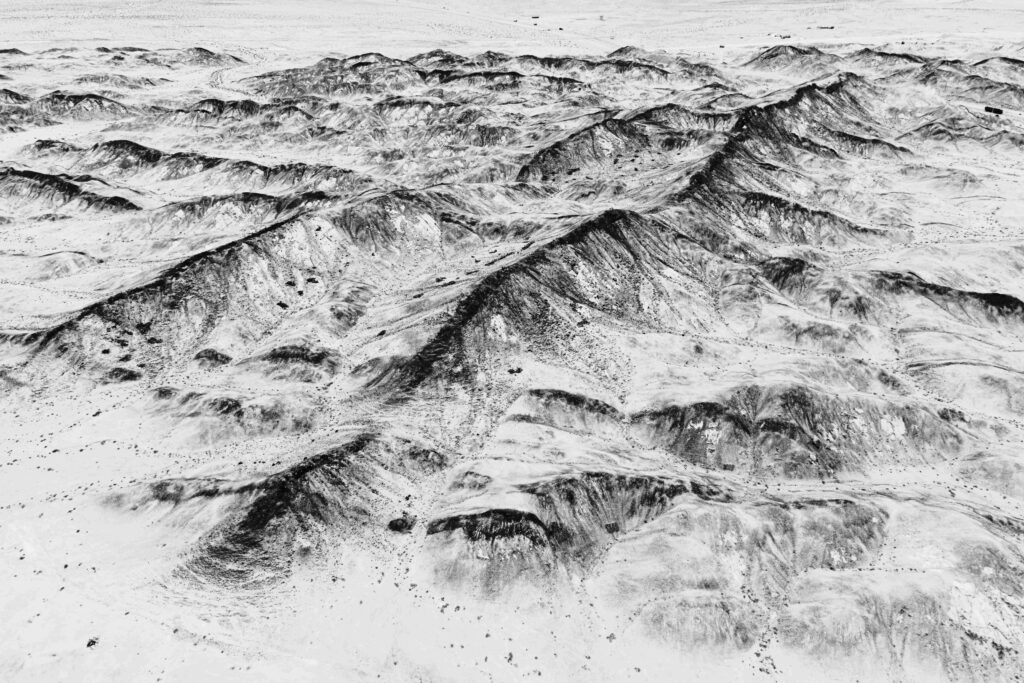
Photographed in Qinghai, 2023. The plateau surface forms a continuous pattern of ridges and folds shaped by wind, snow, and arid conditions, with light and shadow revealing the rhythm of the terrain. Viewed from the air, the vast landscape becomes almost abstract, emphasising scale and structure.
Still Water, Red Walls
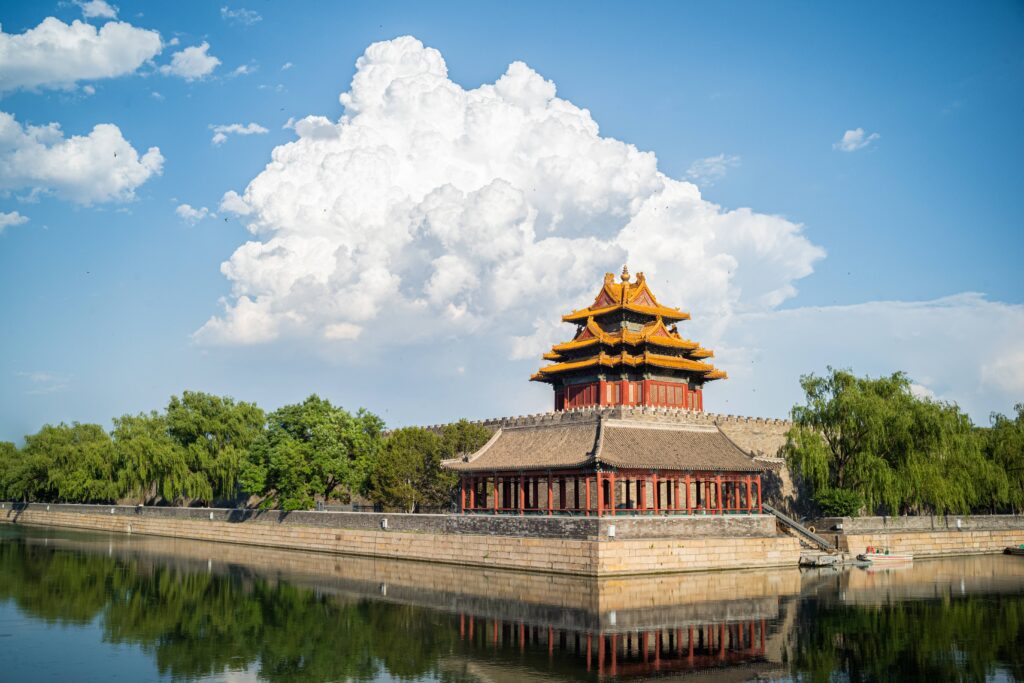
Photographed at the corner tower of the Forbidden City, Beijing, 2023. The moat is still, reflecting the tower and the city wall, while large cumulus clouds fill the sky above. The image captures the light and structure of the Forbidden City’s outer landscape on a summer afternoon.