Tag Archives: literature

Postgraduate student interviews: Zoe Coyle (MRes)

This post is part of our Research Initiation Scheme for 2024-2025 

The MRes project
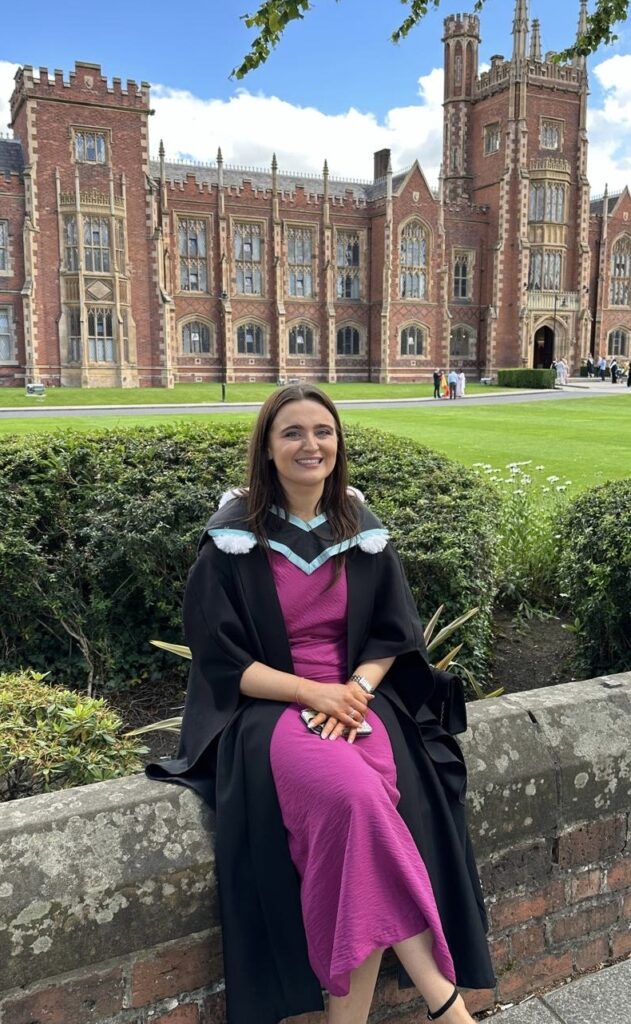
Zoe Coyle, personal archive

Zoe’s research project is focusing on the ways in which violent resistance to France has been represented, and repressed, in Martinique and Guadeloupe since they became French départements (rather than colonies) in 1946. She detailed how although these islands are often seen as dependent on France, or even passive, there has been a long history of resistance. Her project will use literature to explore how this resistant relationship with La Métropole [‘mainland’ France] has been represented at key moments of public uprising. This project will challenge the assumption and idea that these islands are simply reliant on France. Zoe will also consider the two islands in a wider context of protest across the postcolonial francophone world, as seen most recently in New Caledonia and Mayotte.

Academic background

Zoe studied French, Spanish and History at A Level, and suggested that it was her interest in history that first sparked her interest into départementalisation [the process by which certain French colonies were made into official departments of France in 1946] and the effects that residual colonialism has left on the outre-mer territories [French overseas territories]. After A Level, Zoe went on to study French and Spanish at QUB at undergraduate level.

Genesis of the project

As Zoe mentioned before, her interest in history and historical events greatly influenced her decision to research this topic. At university level, there were certain modules that also piqued her interest into this chosen pathway. In final year, she first got a taste for independent research after taking the ‘2666 by Roberto Bolaño’ module in Spanish [taught by Professor Sarah Bowskill]. This module gave her the opportunity to explore her own avenues of research and develop her own areas of interest. Similarly, it gave her the tools to navigate independent research – tools which have served her well over her undergraduate degree and into her postgraduate studies.

The module that steered her towards her interest in postcolonial studies was the final year ‘Caribbean Cultures’ module with Professor Maeve McCusker. It was Zoe’s first time studying the topic during this module, and she described how it was fundamental in her decision about her research topic. She discussed how this module demonstrated the importance and relevance of the breadth of francophone cultures, and how there is a much richer tapestry of la francophonie [the global community of French-speaking people and countries] than just France.

Continue reading
“A Carnivalesque Encyclopedia: Máirtín Ó Cadhain’s Cré na Cille in an International Context”, 29 January 2025 / 29 Eanáir 2025 – Emerging Voices in Modern Languages Lecture write-up / Tuairisc: An Léacht do Ghuthanna Nua sna Nuatheangacha  

Tá an phostáil seo mar chuid dár Scéim Tionscnaimh Taighde do 2024-2025. 

This post is part of our Research Initiation Scheme for 2024-2025. 

[ENGLISH TEXT PROVIDED BELOW] 

Ar Dé Céadaoin 29 Márta, thug an Dr Radvan Markus caint faoina chuid taighde ar an úrscéal Gaelach is cáiliúla, Cré na Cille, a scríobh Máirtín Ó Cadhain in 1949. Is léachtóir sinsearach sa Ghaeilge é an Dr Markus in Ollscoil Shéarlas i bPrág. Saineolaí i litríocht nua-aoiseach na Gaeilge is ea é agus d’aistrigh sé Cré na Cille ó Gaeilge go Seicis.  

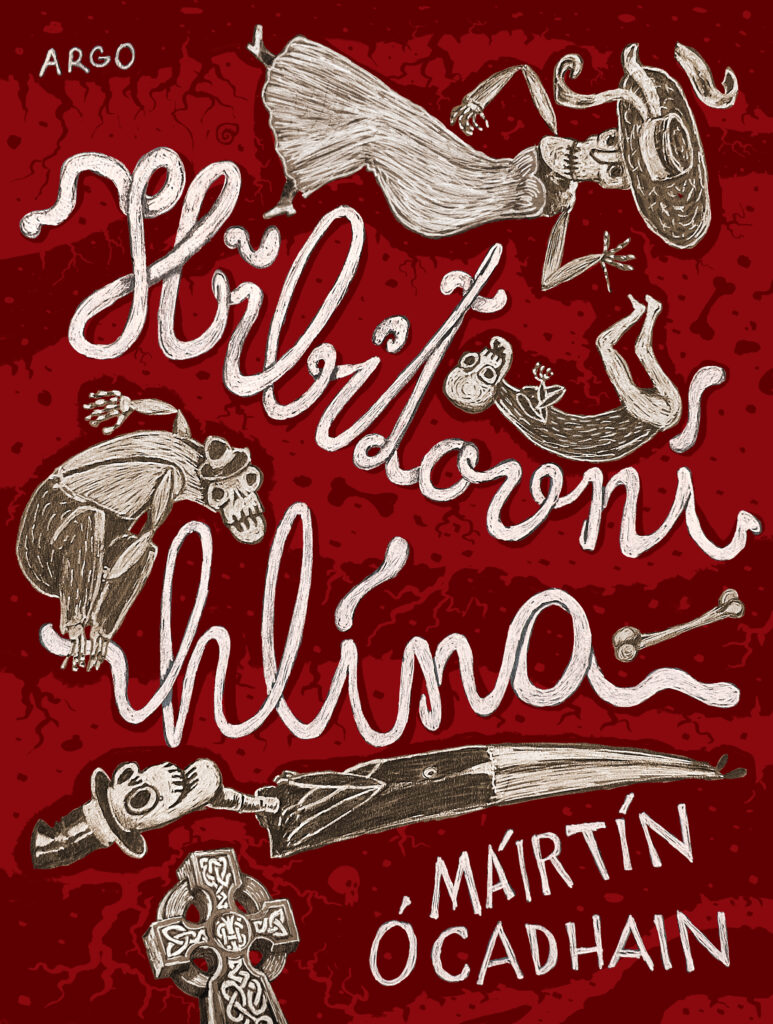
Clúdach an leagain Sheicise de Cré na Cille.
Dearadh: Jan Augusta

Ag tús an léachta, mhínigh an Dr Markus gur dá phobal féin a bhí an Cadhnach ag scríobh ach gur aistríodh Cré na Cille go trí theanga dhéag. Dar le Markus go bhfaightear téamaí uilíocha sa scéal agus gur sin an fáth go bhfuil an scéal so-aistrithe go teangacha eile agus go cultúir eile. Níor foilsíodh leagan Béarla de Chré na Cille le linn bheatha an Chadhnaigh de bharr na ndeacrachtaí a bhí ag an bhfoilsitheoir teacht ar aistritheoir, ach rinneadh dhá aistriúchán Béarla air i ndiaidh a bháis: The Dirty Dust (2015) le hAlan Titley agus The Graveyard Clay (2016) le Liam Mac Con Iomaire agus Tim Robinson. Dúirt Markus go mbunaítear cuid de na haistriúcháin go teangacha eile ar leaganacha Titley agus Mhic Con Iomaire agus Robinson agus n’fheadar cé chomh cruinn is atá na nathanna cainte sna leaganacha sin.  

De réir an Dr Markus is scéal ciclipéideach anordúil é Cré na Cille a léiríonn scéal Chonamara, scéal na hÉireann agus scéal na nÉireannach. Ach is scéal sothuighte do léitheoirí ar fud na hEorpa é freisin. Cuireann an scéal dearcadh na dtuathánach in iúl go soiléir don léitheoir: an chúlchaint, an tsíorsáraíocht, agus an t-éad. D’áitigh sé gur carachtar uilíoch í an príomhcharachtar Caitríona Pháidín ar féidir a macasamhla a aimsiú i gcultúir dhomhanda éagsúla, cuir i gcás cultúr na Seice.  

Continue reading

Agallaimh le mic léinn iarchéime: Katie McNamee (PhD, Gaeilge) / Postgraduate student interviews: Katie McNamee (PhD, Irish) 

Tá an phostáil seo mar chuid dár Scéim Tionscnaimh Taighde do 2024-2025. 

This post is part of our Research Initiation Scheme for 2024-2025. 

[ENGLISH TEXT ALTERNATES WITH IRISH TEXT BELOW]

Inis dom faoi d’aistear leis an Ghaeilge go dtí seo, conas a d’fhoghlaim tú í den chéad uair agus cén fáth gur phioc tú an Ghaeilge mar ábhar ollscoile? 

Katie McNamee, personal archive

D’fhreastail mé ar mo bhunscoil áitiúil, mar sin thosaigh mé ag foghlaim na Gaeilge nuair a bhí mé ceithre bliana d’aois. Is dócha go bhfuil sé níos fusa teanga a fhoghlaim ar an bhealach sin, nuair a bhíonn tú óg bíonn tú in ann teanga a phiocadh suas go gasta agus ní bhíonn ort dua a chaitheamh lena foghlaim. D’fhreastail mé ar shruth na Gaeilge i gColáiste Chaitríona, Ard Mhacha ina dhiaidh sin, bhí mé in ann staidéar a dhéanamh ar ábhair trí mheán na Gaeilge agus chuidigh sin go mór liom mo chuid scileanna scríbhneoireachta a fhorbairt. Bhí mé iontach paiseanta faoin teanga agus d’éirigh go maith liom sa Ghaeilge ar scoil ach nuair a chríochnaigh mé ar an scoil ní raibh mé cinnte cén sórt post a ba mhaith liom.  

Tell me about your journey with the Irish language so far. How you first learned the language and why you chose Irish as a university subject? 

I attended my local Irish-medium primary school, which meant that I started learning Irish when I was four years old. I was the first in my family to learn Irish and it was seen as a bit of a risk sending me there as the school had just been established a year earlier, in 2003. But my mother is a teacher and she was very aware of the benefits of bilingualism and the effectiveness of immersive education. I think it was a lot easier for us to learn Irish as children as we were able to pick it up very quickly simply by interacting with our teachers.  

I then attended an Irish-medium stream in my secondary school and I was able to do most of my subjects in Irish. I think that writing essays in subjects like history in Irish really helped develop my writing skills. I have always loved the Irish language and it was definitely my favourite subject in school, especially when we started to study poetry. When I finished secondary school, I didn’t know what sort of job I wanted but I knew I wanted to do something with Irish. 

Cén t-ábhar dochtúireachta atá idir lámha agat agus cén fáth ar roghnaigh tú an t-ábhar sin? 

Tá mé ag caitheamh súil ar an dóigh a dtéann scríbhneoirí na Gaeilge i ngleic le ceisteanna a bhfuil stiogma agus náire ag baint leo. Bím ag plé leis na teicnící éagsúla a bhíonn in úsáid ag scríbhneoirí chun dul i ngleic le ceisteanna cigilteacha ar nós na gnéasachta agus an mheabhairghalar, mar shampla. Díríonn mo chuid taighde ar na straitéisí cosanta éagsúla a mbaintear úsáid astu chun dul i ngleic le hábhair a bheadh róchigilteach aghaidh a thabhairt go díreach orthu. 

Bhí suim agam i gcónaí san fhilíocht agus scríobh mé mo thráchtas bunchéime ar fhilíocht Greagóir Uí Dhúill agus thaitin an taighde go mór liom. Nuair a scríobh mé mo thráchtas máistreachta ar shaothar Dhairena Ní Chinnéide, d’éirigh mé níos muiníní mar thaighdeoir agus bhí a fhios agam go raibh mé ag iarraidh dochtúireacht a dhéanamh. Le linn na máistreachta, chuir mé suim sa smaoineamh go mbíonn feidhm theiripeach i gceist leis an fhilíocht in amanna, agus bhí mé ag iarraidh an cheist sin a chíoradh.  

What PhD topic are you working on and why did you choose this topic? 

My research looks at how Irish-language writers approach sensitive issues in their work that involve stigma and shame. I focus on the various strategies these writers employ in their work to deal with issues such as mental illness or sexuality, for example. This involves analysing works that use distancing strategies to tackle issues that would be too sensitive to discuss head on. 

I was always interested in poetry and I decided to write my undergraduate dissertation on the poetry of Gréagóir Ó Dúill. I really enjoyed the research and when I wrote my Masters dissertation on the poetry of Dairena Ní Chinnéide, I gained a lot of confidence as a researcher and I knew that I wanted to do a PhD. During that masters, I became interested in the therapeutic aspect of poetry and I wanted to do further research on that topic. 

Continue reading

Postgraduate student interviews: Erin McCombe (PhD, Spanish and Portuguese) 

This post is part of our Research Initiation Scheme for 2024-2025 

In the 21st century, postcolonial literature has progressively shifted from the cultural periphery to the mainstream. It offers a path to understanding the ever-present effect of colonialism within contemporary society, in particular by giving a voice to those who were historically silenced. On the 21st of March 2025, I discussed this topic with Erin McCombe, a Spanish and Portuguese PhD student whose thesis examines the topic of conviviality within literature by women of African descent in Spain and Portugal [1]

When did you first develop an interest in postcolonial literature? 

I suppose as an undergraduate, on the Portuguese side [of my degree]. I remember reading [the short story] ‘O embondeiro que sonhava pássaros’ by [Mozambican author] Mia Couto and that still sticks out in my mind as my initial contact with postcolonial literature. I then went on to study Lusophone African cinema and that developed my interest even more. In final year I started looking into postcolonial Africa within a Spanish context and come across some research on authors from Equatorial Guinea.  

Erin McCombe, personal archive
Continue reading

Modern Languages CDRG Showcase 2024 / Crossing Borders With Only Our Words: (Translating) Prose and Poetry in the Americas – Keynote write-up

This post is part of our Research Initiation Scheme for 2023-2024.

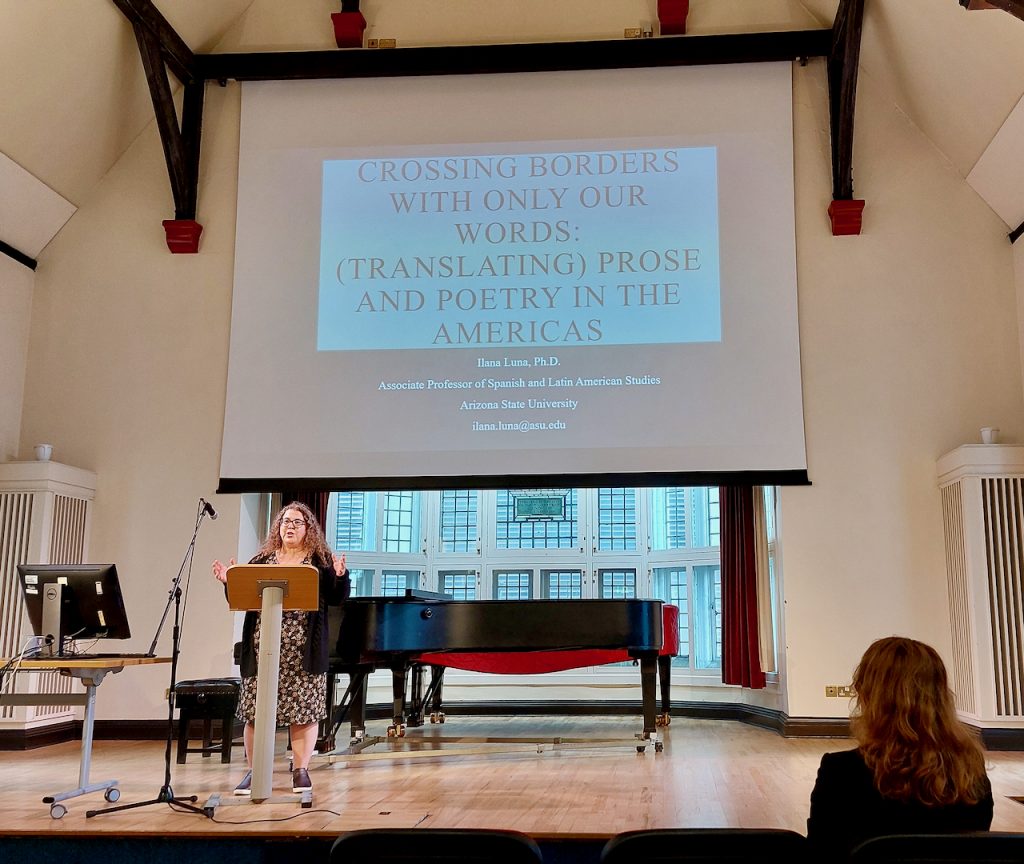
Ilana Luna (photo by Modern Languages CDRG)

On Friday 24th May 2024, Dr Ilana Luna, Associate Professor of Spanish and Latin American Studies at Arizona State University, delivered the keynote speech at the 2024 Modern Languages Core Disciplinary Research Group Showcase on the importance of translation in human understanding of our global neighbours. Her interdisciplinary approach brought together her interest in Latin American studies, feminist writing, poetry and translation. In her paper Dr Luna drew on her extensive experience as a translator (she was shortlisted for the inaugural Sarah Maguire Prize for Poetry in Translation in 2021 for her edition of Judith Santopietro’s Tiawanaku) and her work as an Associate Editor for Cardboard House Press in Phoenix, Arizona. She noted the importance of small presses to the literary landscape of today especially when it comes to the role they play in supporting texts in translation.

In her paper, as in her book Adapting Gender: Mexican Feminisms from Literature to Film (SUNY Press, 2018), which looks at the historical role of women in the Mexican film industry and how this ruptures stereotypes in the broader socio-political context of Mexico, Dr Luna sought to build bridges by creating conversations among people and texts prompting them to think about what it means to cross borders with only our words.

In her keynote speech, Dr Luna rejected the idea of a pristine, pure translation which as linguists we all grapple with. She described the process of translation as being simultaneously in oneself and outside oneself as it is a radical act of listening and interpretation. Throughout her presentation she drew on many examples of her translation of poetry, including Una vez que la leña se hubiera terminado [Once the firewood had finally burned out] by Cristián Gómez Olivares and Independencia del apátrida [Independence for the stateless] by Mauricio Espinoza. These poems reflect the touching reality of thousands of people who struggle to feel a sense of belonging to a nation because of their borderland experience.

Continue reading

Postgraduate student interviews: Isabel Buckley (MRes)

This post is part of our Research Initiation Scheme for 2023-2024.

Isabel Buckley, personal archive

What has your university journey been like so far?

During my A-level studies I au-paired in Spain and I really enjoyed using the language there. I did History and Spanish for my undergraduate degree [at Queen’s] because I didn’t want to lose my Spanish and I found the Spanish side more interesting for me and that’s how I have come to do an MRes [Master of Research] now.

So, tell me about your current research project: ‘Genre and gender in female authored narco-novelas’.

It looks at female narco-novelas which are women-authored books about drug trafficking. I’m looking at Perra Brava by Orfa Alarcón, who is a Mexican author, El Leopardo al Sol by Laura Restrepo, who is a Colombian author, and Pistoleros by Paula Castiglioni, who is an Argentinian author. So, my scope is across Latin America. From what I have seen, most of the productions on drug trafficking, like TV series, focus on male figures so I thought it would be interesting to look at a female-narrated point of view and the portrayal of women and see how that is different.

Where did your interest in this topic come from?

I enjoyed Sarah Bowskill’s module on US/Mexican border issues during second year and then in final year I did Sarah’s other module, on Roberto Bolaño’s 2666, which touched on the issue of drug trafficking. I really enjoyed the further readings that were set within these two modules and believe the good grades I achieved were down to how much I enjoyed the content. Then when I heard about the MRes and how flexible it was, I decided to do that, and I also got funding which has helped.

Continue reading

Postgraduate Research in Progress Showcase, Friday 24 March 2023 – Seminar Write-up

This post is part of our Research Initiation Scheme for 2022-2023.

On 24 March 2023, the Queen’s University Belfast Modern Languages Core Disciplinary Research Group hosted the Postgraduate Research in Progress session as part of their ongoing seminar series. The seminar was chaired by PhD candidate Ciara Gorman, with fellow PhD researchers Sijie Mou (Linguistics), Rebecca Gosling (French), and Laura Kennedy (French) presenting their work. The main theme of the seminar was addressing the challenges that arise when trying to complete a piece of work as substantial as a doctoral thesis.

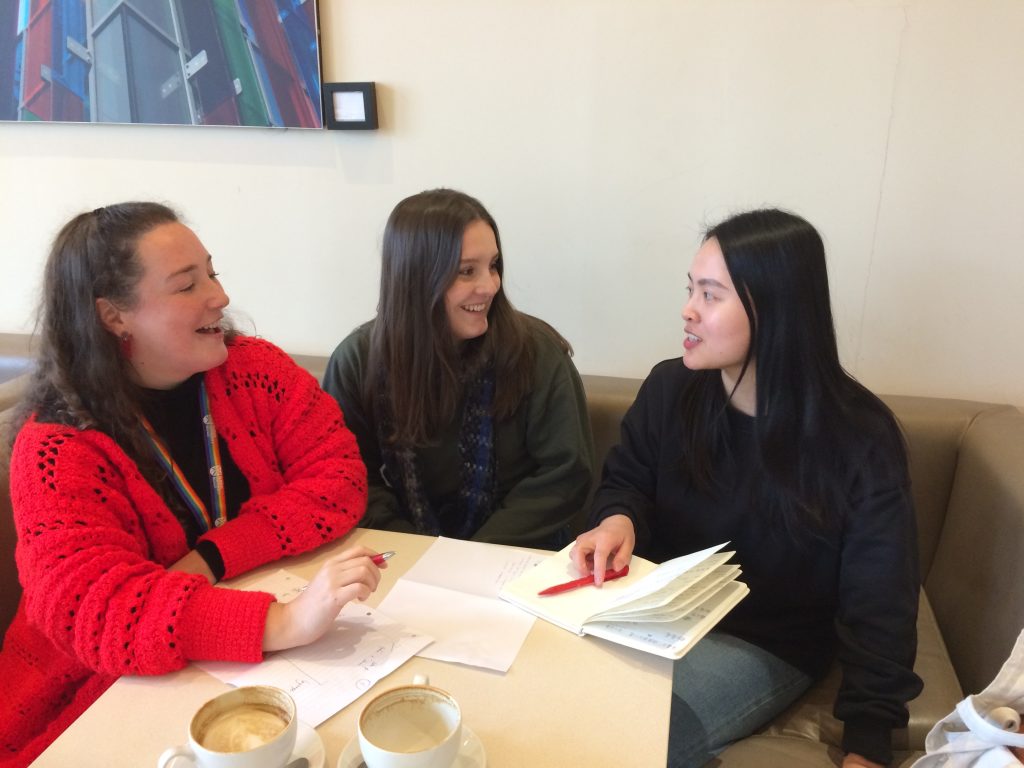
Laura, Rebecca, and Sijie at one of their preparatory meetings for the seminar
Continue reading

The Metropole, the Diaspora, their Books, their Circuits: Reading English Drama in Spain 1640-1808, Friday 10 March 2023 – Seminar write-up

This post is part of our Research Initiation Scheme for 2022-2023.

On Friday 10th March 2023, Dr John Stone (Serra Hunter Fellow in English Literature, Universitat de Barcelona) delivered a seminar about his latest research on diasporic populations in Spain between 1640 and 1808 and their libraries, particularly English language dramas and poetry.

Dr Stone opened the seminar by introducing us to the diasporic populations he would be focusing on in the paper. A diaspora refers to a network of ethnically and linguistically related peoples who are often geographically separated from one another. Dr Stone referred primarily to the communities of British and Irish immigrants, mainly Catholics, who were forced from the newly Protestant Great Britain following the reign of Queen Elizabeth I and moved to Spain. They became “islands of English culture”, in Dr Stone’s words. Books and other literary works in their native tongue acted as tools to preserve and further their cultural heritage in a foreign nation.

These communities were incredibly close-knit, and the solidarity between their members was evidenced in the work of the Royal Scots College, a seminary founded in Madrid in 1627. As Dr Stone explained, ordinary families could not import books into Spain. The Scots College, however, had a licence to import almost any text they wanted, and so would take requests from British and Irish diasporic communities to provide them with this connection to their natal land.

Continue reading

Modern Languages CDRG Research Showcase 2022: A Celebration of Recent Publications in Modern Languages panel

This post is part of our Research Initiation Scheme for 2021-2022.

On Friday 20 May 2022, Queen’s University Belfast hosted the annual Modern Languages CDRG Research Showcase. The event emphasised the wealth of research recently undertaken by the Core Disciplinary Research Group at Queen’s. The Celebration of Recent Publications in Modern Languages panel session in particular highlighted some recently published work from three Queen’s lecturers, Dr Dominique Jeannerod (French), Dr Síobhra Aiken (Irish) and Professor Maeve McCusker (French). The panel was chaired by Laura Kennedy, a current PhD student in French.

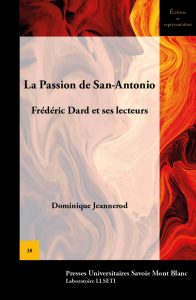
Image: cover of Dominique Jeannerod’s monograph

Dr Dominique Jeannerod, interviewed by Mark O’Rawe, a PhD student in French, provided an overview of his monograph entitled La Passion de San-Antonio: Frédéric Dard et ses lecteurs (Presses universitaires Savoie Mont Blanc, 2021). La Passion de San-Antonio considers the readers of San-Antonio book series by French crime writer, Frédéric Dard. Dr Jeannerod explained how he, like millions of others, grew up in France reading the San-Antonio books. However, these novels were perceived as anti-literature due to a variety of socio-cultural factors, ranging from their aggressive market orientation to Dard’s grotesque humour and idiosyncratic use of French slang. As a result, the San-Antonio books were to be read outside of the classroom. Despite or indeed because of this lack of institutional recognition, the collection of novels has enjoyed a very diverse readership. Dr Jeannerod’s research work on this topic focuses on the relationship between the reader and the author, asking questions about who the readers of San-Antonio are, how they read, and what their assumptions or prejudices might be. In the interview, Dr Jeannerod discussed the varying trends in the San-Antonio readership across generations, which saw the novel’s popularity decrease around the 1990s. The conversation with Dr Jeannerod concluded by looking forward to the return of San-Antonio in multimedia form, with the anticipated release of a TV series, based on the book series.

Continue reading

Postgraduate student interviews:  Rochelle Marsh (MRes)

This post is part of our Research Initiation Scheme for 2021-2022.

Hi Rochelle, what has your university journey been like?  

Its’s been a very long one! I studied French and Spanish at A-Level and carried on with those two languages here at Queen’s [in my undergraduate degree]. In my third year, I went to Asturias and took the risky decision to stay there during the Covid pandemic to complete my year abroad. I later returned to Queen’s to complete my final year and started thinking about my next steps. Initially, I wanted to do a PGCE [Postgraduate Certificate in Education] but after speaking to my lecturers I learned about the Master of Research [MRes]. Intrigued, I submitted a proposal, then I was awarded a scholarship to help with funding, and now I am at the end of my Masters with a dissertation deadline this September.

Your dissertation is entitled ‘Female Voices and Testimonies From the España vacía/vaciada’, can you tell me more about this?

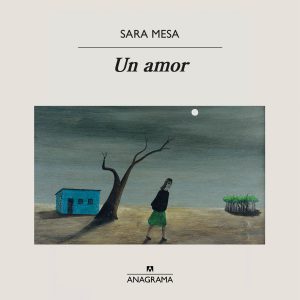
Image: cover of Un amor by Sara Mesa

The female voices refer to these texts written by contemporary female Spanish authors: Tierra de mujeres, by Maria Sánchez, Feria by Ana Iris Simón and Un amor by Sara Mesa. They each focus on a unique aspect of the countryside, a motif that has long been discussed in Spanish literature but was recently brought into conversation after Sergio del Molino’s book La España vacía. The title means ‘empty Spain’ but critics challenged that La España ‘vaciada’, meaning ‘Spain emptied’, would have been a more accurate title to describe the changing countryside. His book explored the portrayal of the Spanish countryside and rural to urban migration trends in literature, film and press articles. My dissertation therefore analyses how these three texts dialogue with the concept of ‘España vacía’ and how these texts challenge the mistreatment of the countryside and rural women. I also look at the extent to which these texts can be a form of provocation or activism and if there is a correlation between the success of these texts and the fact there is a wide female readership in Spain.

Continue reading