Tag Archives: translation

“A Carnivalesque Encyclopedia: Máirtín Ó Cadhain’s Cré na Cille in an International Context”, 29 January 2025 / 29 Eanáir 2025 – Emerging Voices in Modern Languages Lecture write-up / Tuairisc: An Léacht do Ghuthanna Nua sna Nuatheangacha  

Tá an phostáil seo mar chuid dár Scéim Tionscnaimh Taighde do 2024-2025. 

This post is part of our Research Initiation Scheme for 2024-2025. 

[ENGLISH TEXT PROVIDED BELOW] 

Ar Dé Céadaoin 29 Márta, thug an Dr Radvan Markus caint faoina chuid taighde ar an úrscéal Gaelach is cáiliúla, Cré na Cille, a scríobh Máirtín Ó Cadhain in 1949. Is léachtóir sinsearach sa Ghaeilge é an Dr Markus in Ollscoil Shéarlas i bPrág. Saineolaí i litríocht nua-aoiseach na Gaeilge is ea é agus d’aistrigh sé Cré na Cille ó Gaeilge go Seicis.  
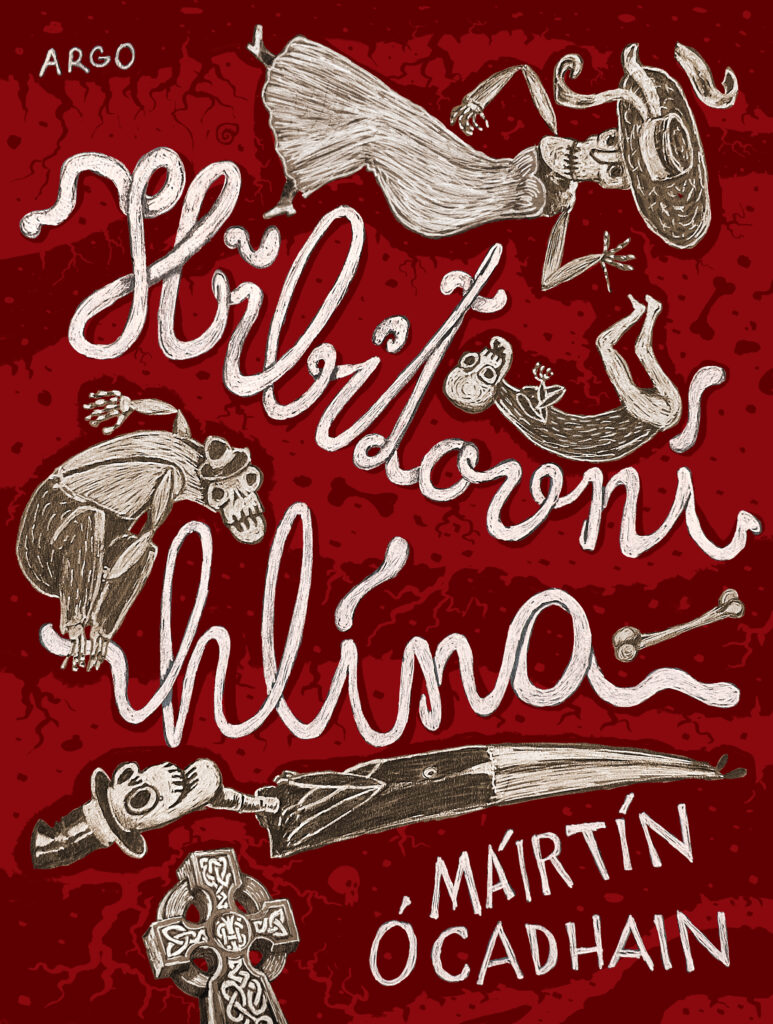
Clúdach an leagain Sheicise de Cré na Cille.
Dearadh: Jan Augusta

Ag tús an léachta, mhínigh an Dr Markus gur dá phobal féin a bhí an Cadhnach ag scríobh ach gur aistríodh Cré na Cille go trí theanga dhéag. Dar le Markus go bhfaightear téamaí uilíocha sa scéal agus gur sin an fáth go bhfuil an scéal so-aistrithe go teangacha eile agus go cultúir eile. Níor foilsíodh leagan Béarla de Chré na Cille le linn bheatha an Chadhnaigh de bharr na ndeacrachtaí a bhí ag an bhfoilsitheoir teacht ar aistritheoir, ach rinneadh dhá aistriúchán Béarla air i ndiaidh a bháis: The Dirty Dust (2015) le hAlan Titley agus The Graveyard Clay (2016) le Liam Mac Con Iomaire agus Tim Robinson. Dúirt Markus go mbunaítear cuid de na haistriúcháin go teangacha eile ar leaganacha Titley agus Mhic Con Iomaire agus Robinson agus n’fheadar cé chomh cruinn is atá na nathanna cainte sna leaganacha sin.  

De réir an Dr Markus is scéal ciclipéideach anordúil é Cré na Cille a léiríonn scéal Chonamara, scéal na hÉireann agus scéal na nÉireannach. Ach is scéal sothuighte do léitheoirí ar fud na hEorpa é freisin. Cuireann an scéal dearcadh na dtuathánach in iúl go soiléir don léitheoir: an chúlchaint, an tsíorsáraíocht, agus an t-éad. D’áitigh sé gur carachtar uilíoch í an príomhcharachtar Caitríona Pháidín ar féidir a macasamhla a aimsiú i gcultúir dhomhanda éagsúla, cuir i gcás cultúr na Seice.  

Continue reading
Modern Languages CDRG Showcase 2024 / Crossing Borders With Only Our Words: (Translating) Prose and Poetry in the Americas – Keynote write-up

This post is part of our Research Initiation Scheme for 2023-2024.

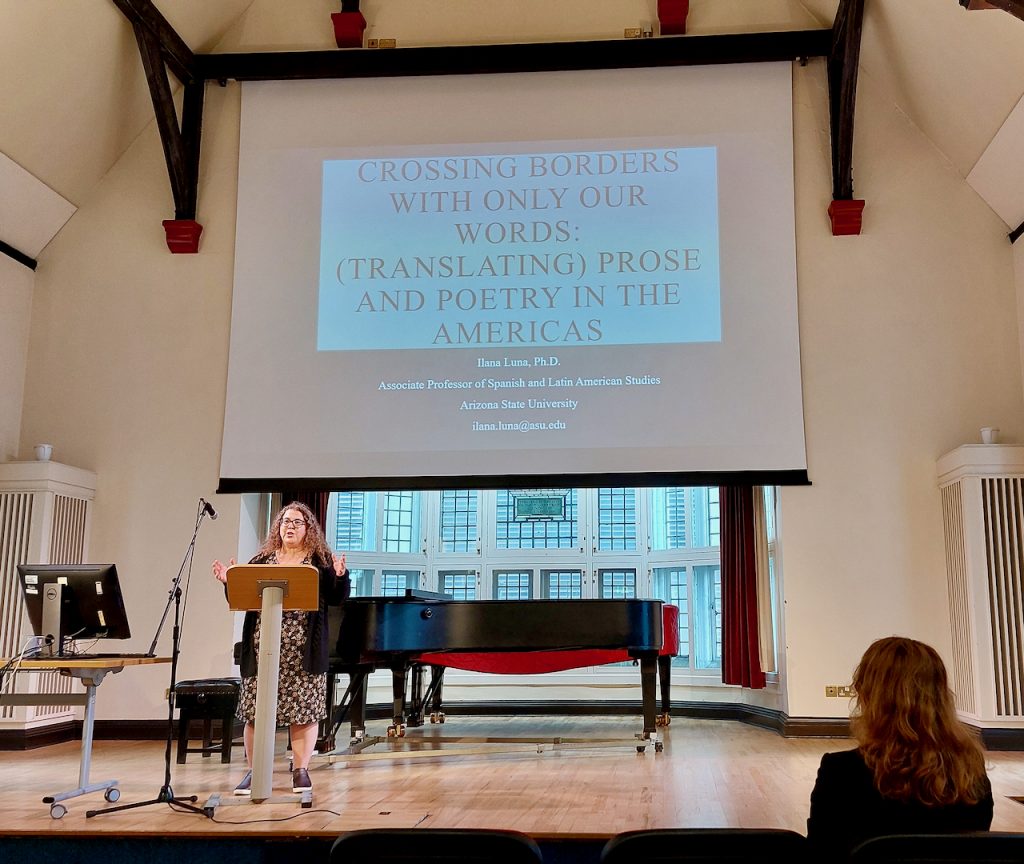
Ilana Luna (photo by Modern Languages CDRG)

On Friday 24th May 2024, Dr Ilana Luna, Associate Professor of Spanish and Latin American Studies at Arizona State University, delivered the keynote speech at the 2024 Modern Languages Core Disciplinary Research Group Showcase on the importance of translation in human understanding of our global neighbours. Her interdisciplinary approach brought together her interest in Latin American studies, feminist writing, poetry and translation. In her paper Dr Luna drew on her extensive experience as a translator (she was shortlisted for the inaugural Sarah Maguire Prize for Poetry in Translation in 2021 for her edition of Judith Santopietro’s Tiawanaku) and her work as an Associate Editor for Cardboard House Press in Phoenix, Arizona. She noted the importance of small presses to the literary landscape of today especially when it comes to the role they play in supporting texts in translation.

In her paper, as in her book Adapting Gender: Mexican Feminisms from Literature to Film (SUNY Press, 2018), which looks at the historical role of women in the Mexican film industry and how this ruptures stereotypes in the broader socio-political context of Mexico, Dr Luna sought to build bridges by creating conversations among people and texts prompting them to think about what it means to cross borders with only our words.

In her keynote speech, Dr Luna rejected the idea of a pristine, pure translation which as linguists we all grapple with. She described the process of translation as being simultaneously in oneself and outside oneself as it is a radical act of listening and interpretation. Throughout her presentation she drew on many examples of her translation of poetry, including Una vez que la leña se hubiera terminado [Once the firewood had finally burned out] by Cristián Gómez Olivares and Independencia del apátrida [Independence for the stateless] by Mauricio Espinoza. These poems reflect the touching reality of thousands of people who struggle to feel a sense of belonging to a nation because of their borderland experience.

Continue reading