Tag Archives: Ireland

“A Carnivalesque Encyclopedia: Máirtín Ó Cadhain’s Cré na Cille in an International Context”, 29 January 2025 / 29 Eanáir 2025 – Emerging Voices in Modern Languages Lecture write-up / Tuairisc: An Léacht do Ghuthanna Nua sna Nuatheangacha  

Tá an phostáil seo mar chuid dár Scéim Tionscnaimh Taighde do 2024-2025. 

This post is part of our Research Initiation Scheme for 2024-2025. 

[ENGLISH TEXT PROVIDED BELOW] 

Ar Dé Céadaoin 29 Márta, thug an Dr Radvan Markus caint faoina chuid taighde ar an úrscéal Gaelach is cáiliúla, Cré na Cille, a scríobh Máirtín Ó Cadhain in 1949. Is léachtóir sinsearach sa Ghaeilge é an Dr Markus in Ollscoil Shéarlas i bPrág. Saineolaí i litríocht nua-aoiseach na Gaeilge is ea é agus d’aistrigh sé Cré na Cille ó Gaeilge go Seicis.  
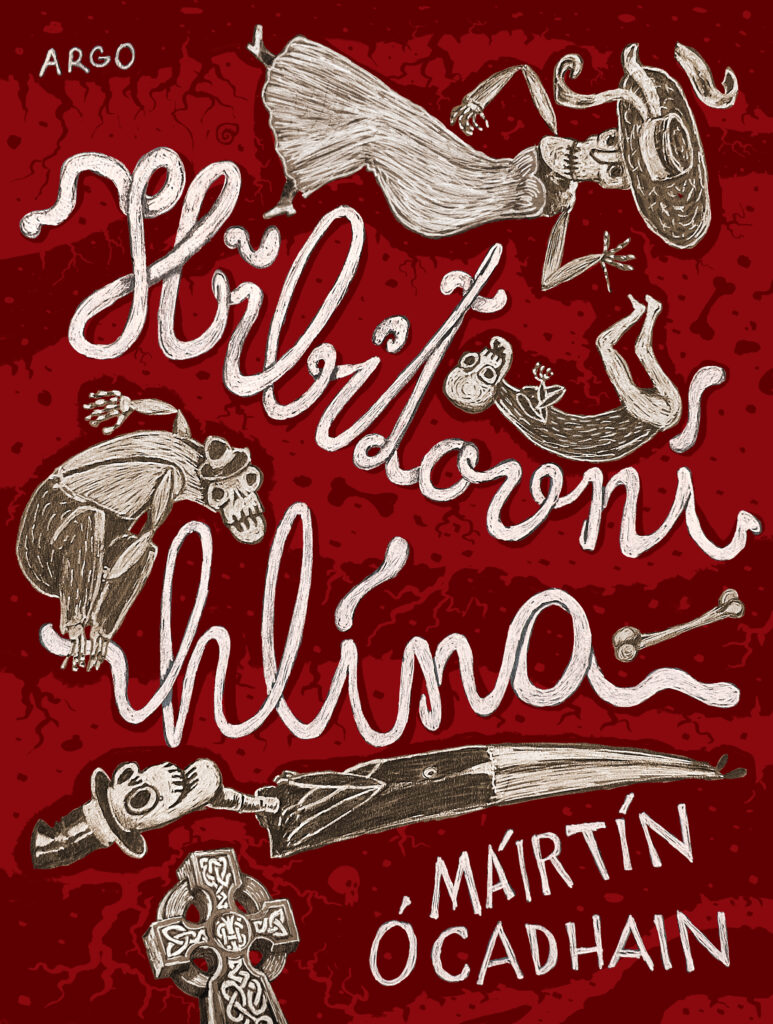
Clúdach an leagain Sheicise de Cré na Cille.
Dearadh: Jan Augusta

Ag tús an léachta, mhínigh an Dr Markus gur dá phobal féin a bhí an Cadhnach ag scríobh ach gur aistríodh Cré na Cille go trí theanga dhéag. Dar le Markus go bhfaightear téamaí uilíocha sa scéal agus gur sin an fáth go bhfuil an scéal so-aistrithe go teangacha eile agus go cultúir eile. Níor foilsíodh leagan Béarla de Chré na Cille le linn bheatha an Chadhnaigh de bharr na ndeacrachtaí a bhí ag an bhfoilsitheoir teacht ar aistritheoir, ach rinneadh dhá aistriúchán Béarla air i ndiaidh a bháis: The Dirty Dust (2015) le hAlan Titley agus The Graveyard Clay (2016) le Liam Mac Con Iomaire agus Tim Robinson. Dúirt Markus go mbunaítear cuid de na haistriúcháin go teangacha eile ar leaganacha Titley agus Mhic Con Iomaire agus Robinson agus n’fheadar cé chomh cruinn is atá na nathanna cainte sna leaganacha sin.  

De réir an Dr Markus is scéal ciclipéideach anordúil é Cré na Cille a léiríonn scéal Chonamara, scéal na hÉireann agus scéal na nÉireannach. Ach is scéal sothuighte do léitheoirí ar fud na hEorpa é freisin. Cuireann an scéal dearcadh na dtuathánach in iúl go soiléir don léitheoir: an chúlchaint, an tsíorsáraíocht, agus an t-éad. D’áitigh sé gur carachtar uilíoch í an príomhcharachtar Caitríona Pháidín ar féidir a macasamhla a aimsiú i gcultúir dhomhanda éagsúla, cuir i gcás cultúr na Seice.  

Continue reading
The Metropole, the Diaspora, their Books, their Circuits: Reading English Drama in Spain 1640-1808, Friday 10 March 2023 – Seminar write-up

This post is part of our Research Initiation Scheme for 2022-2023.

On Friday 10th March 2023, Dr John Stone (Serra Hunter Fellow in English Literature, Universitat de Barcelona) delivered a seminar about his latest research on diasporic populations in Spain between 1640 and 1808 and their libraries, particularly English language dramas and poetry.

Dr Stone opened the seminar by introducing us to the diasporic populations he would be focusing on in the paper. A diaspora refers to a network of ethnically and linguistically related peoples who are often geographically separated from one another. Dr Stone referred primarily to the communities of British and Irish immigrants, mainly Catholics, who were forced from the newly Protestant Great Britain following the reign of Queen Elizabeth I and moved to Spain. They became “islands of English culture”, in Dr Stone’s words. Books and other literary works in their native tongue acted as tools to preserve and further their cultural heritage in a foreign nation.

These communities were incredibly close-knit, and the solidarity between their members was evidenced in the work of the Royal Scots College, a seminary founded in Madrid in 1627. As Dr Stone explained, ordinary families could not import books into Spain. The Scots College, however, had a licence to import almost any text they wanted, and so would take requests from British and Irish diasporic communities to provide them with this connection to their natal land.

Continue reading

Modern Languages CDRG Research Showcase 2022: A Celebration of Recent Publications in Modern Languages panel

This post is part of our Research Initiation Scheme for 2021-2022.

On Friday 20 May 2022, Queen’s University Belfast hosted the annual Modern Languages CDRG Research Showcase. The event emphasised the wealth of research recently undertaken by the Core Disciplinary Research Group at Queen’s. The Celebration of Recent Publications in Modern Languages panel session in particular highlighted some recently published work from three Queen’s lecturers, Dr Dominique Jeannerod (French), Dr Síobhra Aiken (Irish) and Professor Maeve McCusker (French). The panel was chaired by Laura Kennedy, a current PhD student in French.

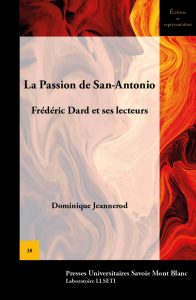
Image: cover of Dominique Jeannerod’s monograph

Dr Dominique Jeannerod, interviewed by Mark O’Rawe, a PhD student in French, provided an overview of his monograph entitled La Passion de San-Antonio: Frédéric Dard et ses lecteurs (Presses universitaires Savoie Mont Blanc, 2021). La Passion de San-Antonio considers the readers of San-Antonio book series by French crime writer, Frédéric Dard. Dr Jeannerod explained how he, like millions of others, grew up in France reading the San-Antonio books. However, these novels were perceived as anti-literature due to a variety of socio-cultural factors, ranging from their aggressive market orientation to Dard’s grotesque humour and idiosyncratic use of French slang. As a result, the San-Antonio books were to be read outside of the classroom. Despite or indeed because of this lack of institutional recognition, the collection of novels has enjoyed a very diverse readership. Dr Jeannerod’s research work on this topic focuses on the relationship between the reader and the author, asking questions about who the readers of San-Antonio are, how they read, and what their assumptions or prejudices might be. In the interview, Dr Jeannerod discussed the varying trends in the San-Antonio readership across generations, which saw the novel’s popularity decrease around the 1990s. The conversation with Dr Jeannerod concluded by looking forward to the return of San-Antonio in multimedia form, with the anticipated release of a TV series, based on the book series.

Continue reading