Tag Archives: French Caribbean

Postgraduate student interviews: Zoe Coyle (MRes)

This post is part of our Research Initiation Scheme for 2024-2025 

The MRes project
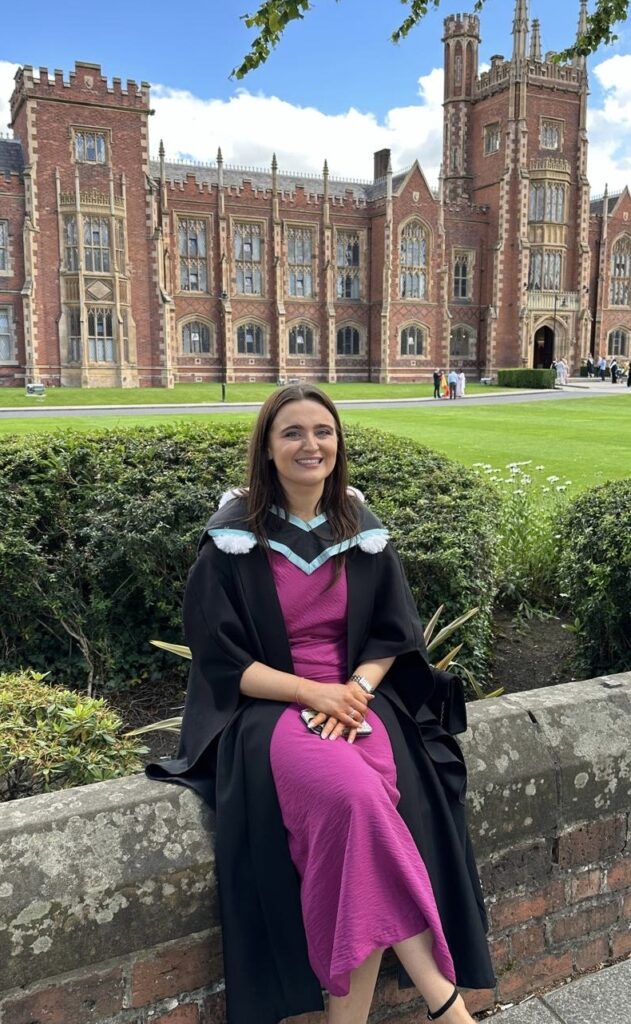
Zoe Coyle, personal archive

Zoe’s research project is focusing on the ways in which violent resistance to France has been represented, and repressed, in Martinique and Guadeloupe since they became French départements (rather than colonies) in 1946. She detailed how although these islands are often seen as dependent on France, or even passive, there has been a long history of resistance. Her project will use literature to explore how this resistant relationship with La Métropole [‘mainland’ France] has been represented at key moments of public uprising. This project will challenge the assumption and idea that these islands are simply reliant on France. Zoe will also consider the two islands in a wider context of protest across the postcolonial francophone world, as seen most recently in New Caledonia and Mayotte.

Academic background

Zoe studied French, Spanish and History at A Level, and suggested that it was her interest in history that first sparked her interest into départementalisation [the process by which certain French colonies were made into official departments of France in 1946] and the effects that residual colonialism has left on the outre-mer territories [French overseas territories]. After A Level, Zoe went on to study French and Spanish at QUB at undergraduate level.

Genesis of the project

As Zoe mentioned before, her interest in history and historical events greatly influenced her decision to research this topic. At university level, there were certain modules that also piqued her interest into this chosen pathway. In final year, she first got a taste for independent research after taking the ‘2666 by Roberto Bolaño’ module in Spanish [taught by Professor Sarah Bowskill]. This module gave her the opportunity to explore her own avenues of research and develop her own areas of interest. Similarly, it gave her the tools to navigate independent research – tools which have served her well over her undergraduate degree and into her postgraduate studies.

The module that steered her towards her interest in postcolonial studies was the final year ‘Caribbean Cultures’ module with Professor Maeve McCusker. It was Zoe’s first time studying the topic during this module, and she described how it was fundamental in her decision about her research topic. She discussed how this module demonstrated the importance and relevance of the breadth of francophone cultures, and how there is a much richer tapestry of la francophonie [the global community of French-speaking people and countries] than just France.

Continue reading
Modern Languages CDRG Research Showcase 2022: A Celebration of Recent Publications in Modern Languages panel

This post is part of our Research Initiation Scheme for 2021-2022.

On Friday 20 May 2022, Queen’s University Belfast hosted the annual Modern Languages CDRG Research Showcase. The event emphasised the wealth of research recently undertaken by the Core Disciplinary Research Group at Queen’s. The Celebration of Recent Publications in Modern Languages panel session in particular highlighted some recently published work from three Queen’s lecturers, Dr Dominique Jeannerod (French), Dr Síobhra Aiken (Irish) and Professor Maeve McCusker (French). The panel was chaired by Laura Kennedy, a current PhD student in French.

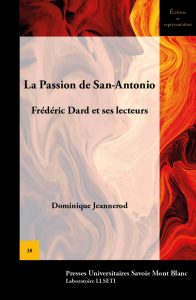
Image: cover of Dominique Jeannerod’s monograph

Dr Dominique Jeannerod, interviewed by Mark O’Rawe, a PhD student in French, provided an overview of his monograph entitled La Passion de San-Antonio: Frédéric Dard et ses lecteurs (Presses universitaires Savoie Mont Blanc, 2021). La Passion de San-Antonio considers the readers of San-Antonio book series by French crime writer, Frédéric Dard. Dr Jeannerod explained how he, like millions of others, grew up in France reading the San-Antonio books. However, these novels were perceived as anti-literature due to a variety of socio-cultural factors, ranging from their aggressive market orientation to Dard’s grotesque humour and idiosyncratic use of French slang. As a result, the San-Antonio books were to be read outside of the classroom. Despite or indeed because of this lack of institutional recognition, the collection of novels has enjoyed a very diverse readership. Dr Jeannerod’s research work on this topic focuses on the relationship between the reader and the author, asking questions about who the readers of San-Antonio are, how they read, and what their assumptions or prejudices might be. In the interview, Dr Jeannerod discussed the varying trends in the San-Antonio readership across generations, which saw the novel’s popularity decrease around the 1990s. The conversation with Dr Jeannerod concluded by looking forward to the return of San-Antonio in multimedia form, with the anticipated release of a TV series, based on the book series.

Continue reading

Narrations of Suffering and Recovery, PGR Research in Progress Workshop, 26 February 2021 – Seminar write-up

This post is part of our Research Initiation Scheme for 2020-2021. It brings together write-ups, by three different undergraduate students, of presentations given as part of a Research in Progress Workshop by Postgraduate Research Students in Modern Languages on 26 February 2021. The talks covered were by Margaret Cunningham, Jordan McCullough, and Bushra Kalakh, and the workshop was chaired by Dr Ricki O’Rawe.

Margaret Cunningham, French

Anyone who has read a historical novel will know that fictional writing can recover and reinvent the past in ways which rejuvenate long forgotten narratives and perspectives. This quality of historical fiction is particularly important in post-colonial contexts where indigenous and local stories are too easily overlooked and silenced. In her talk on the 26th February, Margaret Cunningham (PhD student in French at QUB) gave a fascinating insight into this topic.

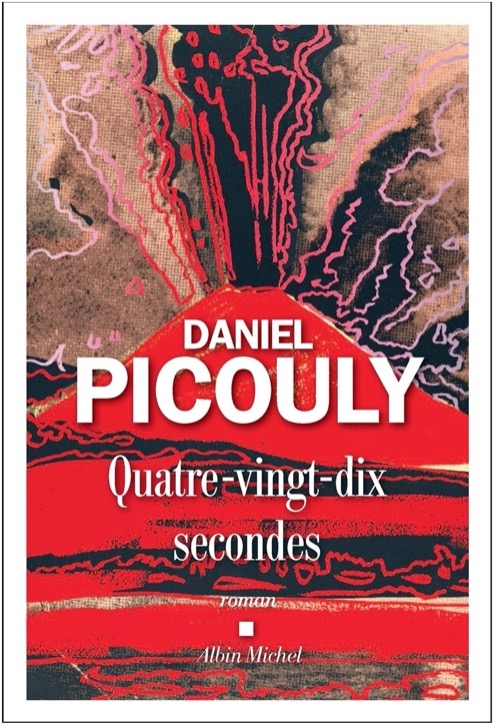
In a presentation entitled ‘Multiperspectivity and Memory: Rewriting Disaster in the French Caribbean’, Margaret addressed disaster literature in the French Caribbean, with particular focus on fictional accounts of the 1902 eruption of Mount Pelée on the island of Martinique. In this presentation, Margaret examined the ways in which Martinican author Daniel Picouly bears witness to and measures the cultural effects of this disaster in his book Quatre-vingt-dix secondes (90 Seconds).

The French Caribbean, Margaret explained, has a long history of suffering. Not only is it vulnerable to natural disaster, but French colonization meant that the islands have a turbulent history, rife with tyranny and social unrest. Because of this, there is a contentious social climate in Martinique, with controversy surrounding memories and intense debate over which anniversaries should be celebrated. Margaret argued that literature plays a crucial role in navigating debate surrounding Martinique’s troubled past and becomes a vehicle to produce new cultural memory. Through the fictional rewriting of real historical events, authors can recover and reinvent the past, repressing trauma and prioritizing certain perspectives and narratives.

Continue reading