This post is part of our Research Initiation Scheme for 2024-2025.
I recently enjoyed attending a seminar led by Dr Doyle Calhoun, University Assistant Professor of Francophone Postcolonial Studies at the University of Cambridge. This seminar sought to explore a long-overlooked consequence of the violence of French colonialism: suicide. Often uttered in whispered tones, suicide to this day remains a taboo subject, the elephant in the room that people wish to avoid discussing.
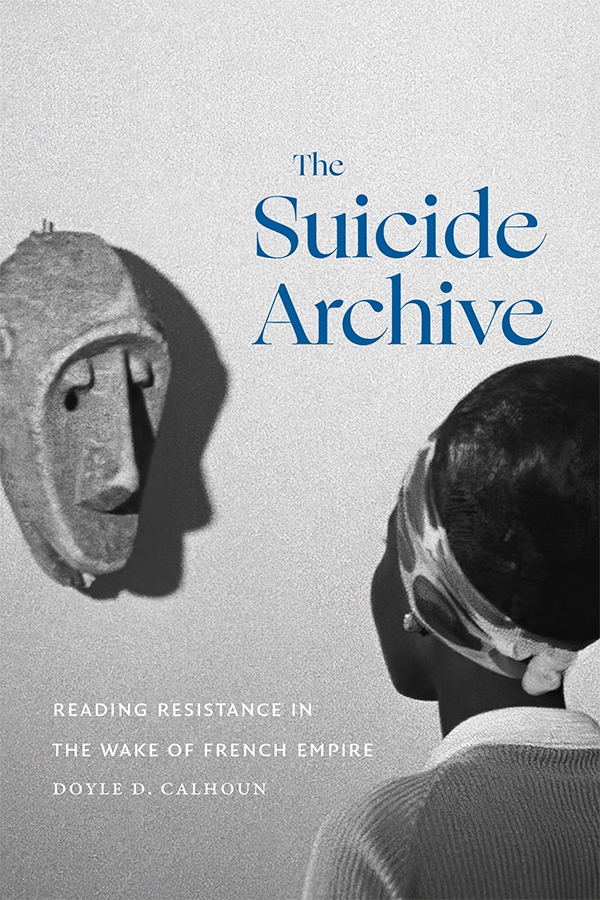
However, through his work Dr Calhoun has shone a light on the historical occurrence of suicide as an act of resistance to colonial violence, with specific reference to the time of slavery in the French-speaking Caribbean. Dr Calhoun discussed colonial records as well as contemporary African and Afro-Caribbean media and Senegalese oral history in order to reconstruct a history of the experiences of suicide among enslaved populations and their ancestors. The genesis of Dr Calhoun’s work lies in his finding that suicide was either obscured or omitted entirely in French colonial documents. Given that suicide had not previously been considered in the context of colonial violence, Dr Calhoun’s work offers a groundbreaking historical analysis, demonstrating the sombre paradoxical idea that accounts of suicide offer a fleeting glimpse into the lives of enslaved people.
Dr Calhoun began by unpacking the notion of a ‘suicide archive’; the function it performs and the questions that arise as a result. The suicide archive reflects a scholarly desire to recover stories lost or untold. However, what authority do modern scholars possess to ‘rewrite’ such a contentious part of history? How can scholars elevate the identities of those enslaved peoples lost to suicide whilst maintaining a respectful and reverent attitude regarding their humanity? Is the very act of analysing and elevating these lost identities disrespectful in itself? What if these people did not want to be remembered? Whilst the intention to bring to light these historic injustices is noble, Dr Calhoun crucially emphasised that this work must be carried out in a respectful and delicate manner.
Continue reading