This post is part of our Research Initiation Scheme for 2024-2025
The MRes project
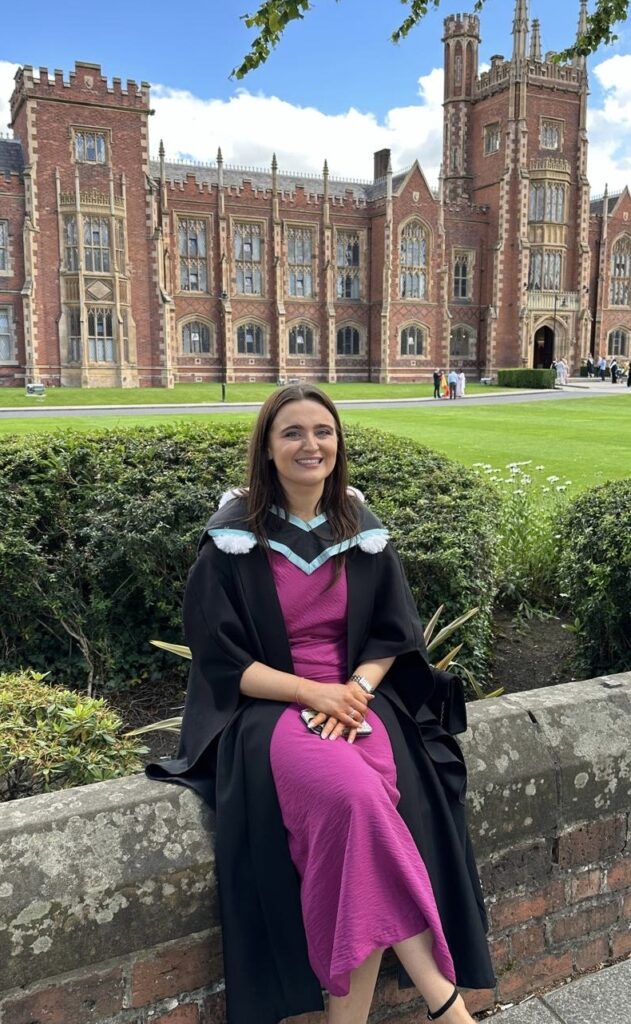
Zoe’s research project is focusing on the ways in which violent resistance to France has been represented, and repressed, in Martinique and Guadeloupe since they became French départements (rather than colonies) in 1946. She detailed how although these islands are often seen as dependent on France, or even passive, there has been a long history of resistance. Her project will use literature to explore how this resistant relationship with La Métropole [‘mainland’ France] has been represented at key moments of public uprising. This project will challenge the assumption and idea that these islands are simply reliant on France. Zoe will also consider the two islands in a wider context of protest across the postcolonial francophone world, as seen most recently in New Caledonia and Mayotte.
Academic background
Zoe studied French, Spanish and History at A Level, and suggested that it was her interest in history that first sparked her interest into départementalisation [the process by which certain French colonies were made into official departments of France in 1946] and the effects that residual colonialism has left on the outre-mer territories [French overseas territories]. After A Level, Zoe went on to study French and Spanish at QUB at undergraduate level.
Genesis of the project
As Zoe mentioned before, her interest in history and historical events greatly influenced her decision to research this topic. At university level, there were certain modules that also piqued her interest into this chosen pathway. In final year, she first got a taste for independent research after taking the ‘2666 by Roberto Bolaño’ module in Spanish [taught by Professor Sarah Bowskill]. This module gave her the opportunity to explore her own avenues of research and develop her own areas of interest. Similarly, it gave her the tools to navigate independent research – tools which have served her well over her undergraduate degree and into her postgraduate studies.
The module that steered her towards her interest in postcolonial studies was the final year ‘Caribbean Cultures’ module with Professor Maeve McCusker. It was Zoe’s first time studying the topic during this module, and she described how it was fundamental in her decision about her research topic. She discussed how this module demonstrated the importance and relevance of the breadth of francophone cultures, and how there is a much richer tapestry of la francophonie [the global community of French-speaking people and countries] than just France.
Adapting to the MRes
Zoe highlighted the abundance of support available from academic advisors and supervisors within the Modern Languages department. She referred to the previously mentioned ‘2666 by Roberto Bolaño’ research module which gave her a head start with the research skills she would need for this course. She also mentioned that in the first semester of the MRes programme there were a series of research methods classes delivered by members of the Modern Languages department which introduced MRes students to theories which would help inform their research and invite them to think about their projects in different and new ways. Also, she highlighted that at the beginning of the MRes programme there is plenty of time to read around your research topic and get a feel for it before putting it into an essay.
An average day in the life of an MRes student
The library! Zoe said she likes to get to the library early in the day and starts off by doing some reading of articles and the current novel she is focusing on. In terms of her methods, she likes to both read and research simultaneously as this creates a better understanding and balance for her. Whilst some people may read a novel first and then turn to research, she does both alongside each other as she finds it works better for her.
Advice
Zoe stressed the importance of the freedom you have with this type of programme, and she outlined how you do not need a clearly defined plan straight away when you start this programme – you just need to know what you’re interested in. She repeated that there is extensive guidance available, meaning that you have plenty of time to find a niche that you want to research.
Future plans
Zoe has applied for her PhD at Queen’s researching and delving deeper into postcolonial Martinique and Guadeloupe.
Interview by Ailish Williams, final-year undergraduate in English and French.