This post is part of our Research Initiation Scheme for 2024-2025.
I recently enjoyed attending a seminar led by Dr Doyle Calhoun, University Assistant Professor of Francophone Postcolonial Studies at the University of Cambridge. This seminar sought to explore a long-overlooked consequence of the violence of French colonialism: suicide. Often uttered in whispered tones, suicide to this day remains a taboo subject, the elephant in the room that people wish to avoid discussing.
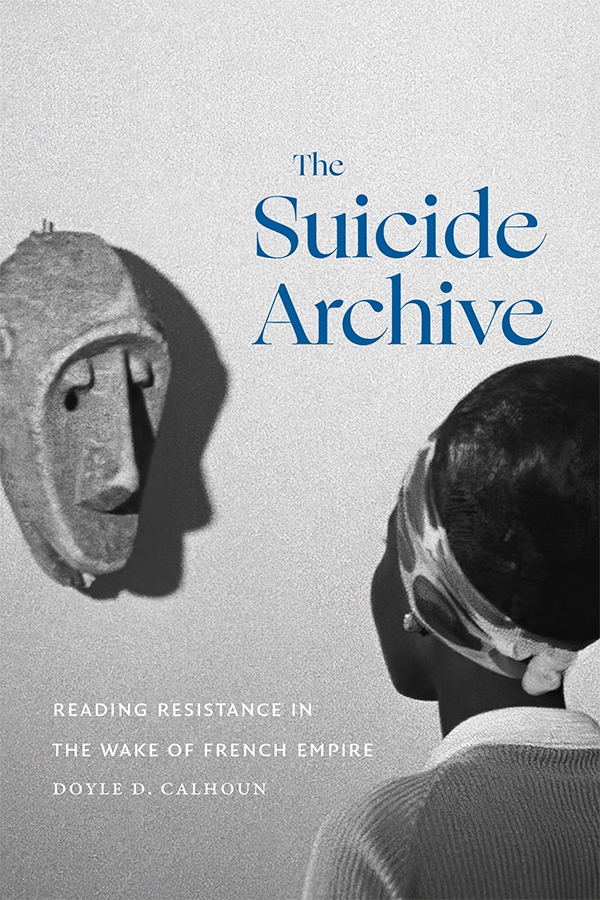
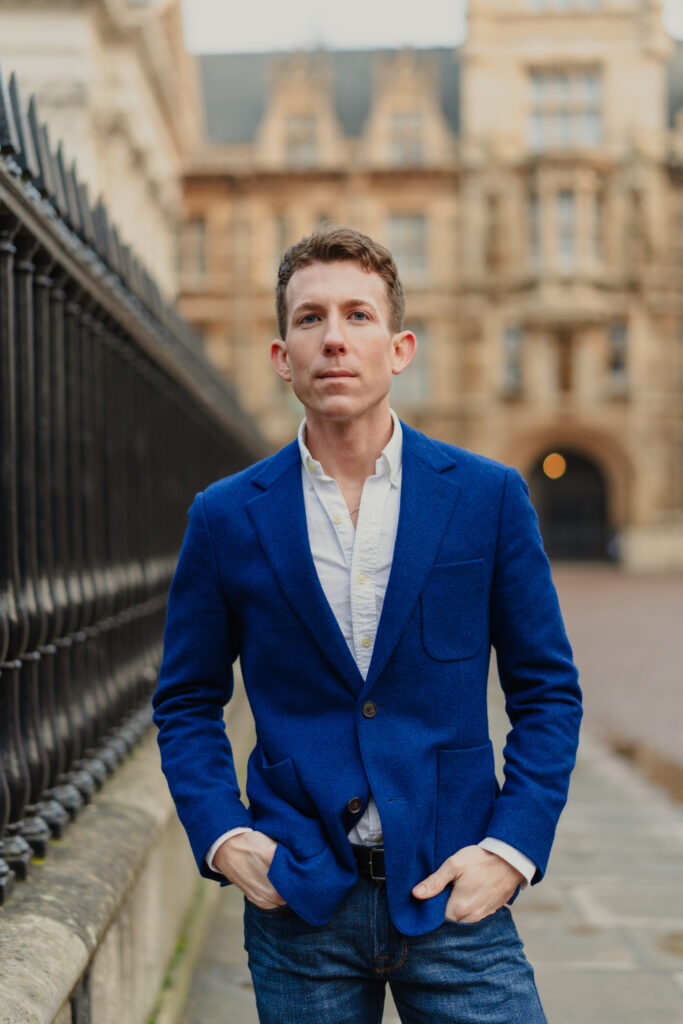
However, through his work Dr Calhoun has shone a light on the historical occurrence of suicide as an act of resistance to colonial violence, with specific reference to the time of slavery in the French-speaking Caribbean. Dr Calhoun discussed colonial records as well as contemporary African and Afro-Caribbean media and Senegalese oral history in order to reconstruct a history of the experiences of suicide among enslaved populations and their ancestors. The genesis of Dr Calhoun’s work lies in his finding that suicide was either obscured or omitted entirely in French colonial documents. Given that suicide had not previously been considered in the context of colonial violence, Dr Calhoun’s work offers a groundbreaking historical analysis, demonstrating the sombre paradoxical idea that accounts of suicide offer a fleeting glimpse into the lives of enslaved people.
Dr Calhoun began by unpacking the notion of a ‘suicide archive’; the function it performs and the questions that arise as a result. The suicide archive reflects a scholarly desire to recover stories lost or untold. However, what authority do modern scholars possess to ‘rewrite’ such a contentious part of history? How can scholars elevate the identities of those enslaved peoples lost to suicide whilst maintaining a respectful and reverent attitude regarding their humanity? Is the very act of analysing and elevating these lost identities disrespectful in itself? What if these people did not want to be remembered? Whilst the intention to bring to light these historic injustices is noble, Dr Calhoun crucially emphasised that this work must be carried out in a respectful and delicate manner.
Referring to a range of historical documents, Calhoun guided us through the social and legal implications of suicide in the Ancien Régime. For example, in 1804, the trial of Azor took place in Basse-Terre, Guadeloupe. Unlike other trials, the accused who ‘stood’ trial was in fact a cadaver, and their ‘memory’. How was this possible? Legal precedent at this time criminalised ‘self-killing’, therefore, to commit suicide was to commit a crime. When an enslaved individual committed suicide, a relative (or ‘memory’) was interrogated on behalf of the deceased. Furthermore, the deceased was tried posthumously as a person, not as property. This is an important aspect given that enslaved individuals were legally regarded as property in life.
Dr Calhoun further highlighted that suicide was a disruptor to the French economy, given that slaveholders could not be legally reimbursed for this loss of ‘property’. Therefore, many suicide prevention strategies were put in place around this time, not out of compassion for the victims, but for the necropolitical function of prolonging the lives of slaves for economic profit. Suicide in this context therefore rewrites the meaning of resistance, as unlike the more common imagery of resistance such as freedom fighters, these people simply wished to escape a lifetime of suffering. This contradicts the positivist notion that ‘no one wants to be erased from history’, as victims never left behind a note/final message.
Dr Calhoun warned against the risk of overdetermining the occurrence of suicide at this time. On some level, suicide is always political. However, in its most basic sense, suicide is a refusal of the horrid world as it is. Above all, Dr Calhoun stressed that despite the sombre nature of this research, his book The Suicide Archive: Reading Resistance in the Wake of French Empire, on which the talk was based, remains very much a hopeful book.
Write-up by Máire Cáit Ní Mhathúna, final-year undergraduate in French and Spanish