Feed on
Posts
Comments

All seminars will be held at 4pm in 16 University Square, rm.101, unless stated otherwise. For Information, contact Dr Sinead O’Sullivan: s.osullivan@qub.ac.uk. All welcome.

Friday 24th February

Dr. Marilina Cesario (English), ‘Ovidian influences in Aldhelm’s Enigmata

Friday 2nd March

Professor John Thompson (English), ‘Imagining the British History in an Irish and Welsh setting: chapters in the lives and careers of James Ussher and a Welsh deputy herald’

Friday 9th March

Duncan Berryman (GAP), ‘How many buildings make a farmstead? A study of fourteenth-century manorial agricultural buildings’

Ciaran Arthur (English), ‘Ploughing Through Cotton Caligula A VII: Establishing Connections between the Heliand and the Æcerbot through Incantation’

Friday 16th March

Professor Mariken Teeuwen (Utrecht), ‘The Margin in Carolingian Manuscripts – A Place for Debate and Dissent’

20-22 April 2012 

Borderlines XVI: Site and Sound

Humanities PG Centre

Guest speaker: Prof Paul Strohm (Columbia)

Friday 27th April

Eamon Byers (English), ‘“Come all ye rolling minstrels” – The Medievalism of Modern Folkmusic’

Friday 4th May

Dr. Alice Jorgensen (Trinity College Dublin), ‘Translating Emotion in the Paris Psalter’

Friday 11th May

Dr. Malte Urban (English), Title TBC

Friday 18th May
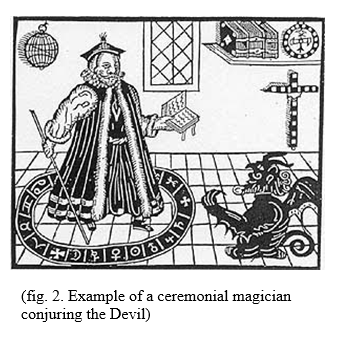
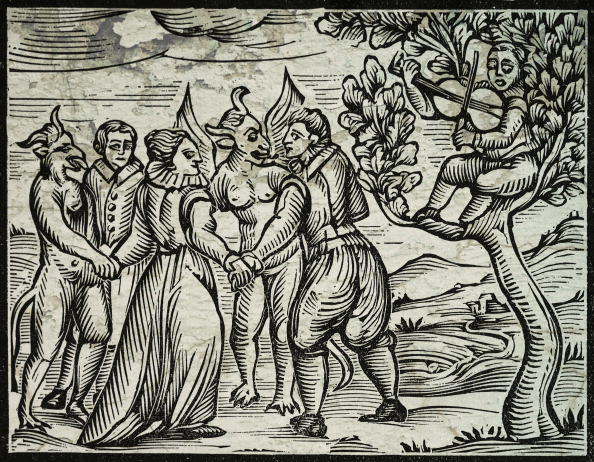
Dr. Stuart McWilliams (Edinburgh), “The Inscription of Enchantment: Magical Books in Theory and Practice”

Friday 25th May
Dr Paul Oldfield (Manchester Metropolitan University), ‘A Bridge to Salvation and Entrance to the Underworld: medieval southern Italy and international pilgrimage’

Here is the Medieval Cultures seminar list for semester one, 2011-12. All seminars take place every Friday at 4pm in Room 101, 16 University Square, unless otherwise stated, and all are welcome.

Friday 7th October

Stephen Kelly (QUB), ‘God’s Insomniacs: relics and the religious (re-)turn in medieval studies’

Friday 14th October

Mark Gardiner (QUB), ‘The politics and domestic life of Sir John Scott, Yorkist courtier’

Tuesday 18th October at 5.00pm

Theresa O’Byrne (Notre-Dame), ‘’A Tale of Two Scribes: Scribal Education and Careers in Fifteenth-Century Dublin’

Friday 21st October

Sandor Chardonnens (Radboud University Nijmegen), ‘Mantic alphabets: Where dreams and letters meet’

Friday 4th November

James Davis (QUB), ‘Common Foundations: Local and Retail Trade in the Medieval World’

Wednesday 9nd November, 3pm, 01-009 Elmwood Building (nb. *not* ELTC!).

Joint Seminar with SSC (GAP) – Michele Campopiano (University of York), ‘Space representation and measurability in the 12th century: the works of Guido da Pisa’

Friday 18th November

Gregory Toner (QUB), ‘The dead testifies against the living: telling the past in early medieval Ireland’.

Friday 25th November

Daniel Brown (QUB), ‘Hugh de Lacy in exile, 1210-21′

Friday 2nd December

Sinead O’Sullivan (QUB), ‘Perspicuity and Obscurity in early medieval glosses on Martianus’s De nuptiiis’

Friday 9th December

David Falls (QUB), ‘Power and Patronage: Fifteenth-Century Textual Cultures and the ‘Lancastrian Spiritual Aristocracy’

Friday 16th December

Christmas Quiz

For information, contact Dr James Davis: james.davis@qub.ac.uk

All welcome.


As part of the ongoing “Textual Afterlives” project, co-organised by Jeremy Smith (University of Glasgow), Ian Johnson (University of St Andrews), Crawford Gribben (Trinity College Dublin), and John Thompson (QUB), a two-day event is being held in Belfast on the 8-9th April, 2011.

A workshop will be held on Friday 8th, including a “sandpit” event at which participants will offer a brief response (no more than five minutes) to the symposium theme, “Textual Afterlives”, an open lecture by Mimi Godfrey, from the Folger Library, Washington DC, and a graduate masterclass. On Saturday 9th, there will be a day-trip to the Robinson Library in Armagh.

Throughout the event, there will be contributions from the symposium’s visiting scholars, Richard Beadle, Rolf Bremmer, Joel Fredell, Vincent Gillespie, Mimi Godfrey (keynote speaker), Rich McCoy, Cathy Shrank, Andrew Prescott, Beth Robertson, Sebastiaan Verweij and Liz Elliott.

The event is due to take place in the McClay library, and those interested in attending (either the workshop, day-trip or both) should express their interest to John Thompson: j.thompson@qub.ac.uk

This year’s Borderlines is being held in University College Cork on April 15th-17th and welcomes paper proposals from early-stage researchers from all areas of Renaissance and Medieval studies.

View the  call for papers here.

Here is the provisional Medieval Cultures programme for semester two, 2010-11. As before, all seminars take place every Friday at 4pm in House 4, Rm 105 unless otherwise stated, and all are welcome.

Please note: the location for the ‘Medieval places, streets, and crowds’ workshop is to be confirmed.  Please declare your interest for that workshop by January 24th as catering arrangements need to be made.

There are openings in February and April – volunteers for the empty slots are very welcome!

Congratulations to Dr Kathrin Prietzel, Dr Daniel McCann, Paul Murphy and Ericka Lynch on the occasion of their graduations today.  Daniel and Kathrin graduate with PhDs; Paul and Ericka with MAs in English (Medieval Studies).  While Paul is proceeding to read for his doctorate, we wish Daniel, Kathrin and Ericka all the very best for the future!

We’ll miss you!

A Medieval Christmas!

The Chorus of Spark Opera Company and Queen’s Medieval Forum present “A Medieval Christmas”. Featuring choral and solo repertoire from the 12th to 16th centuries, this is a rare, seasonal arts event not to be missed!

Free mulled wine and mince pies at the interval.

Date: Friday the 17th of December
Time: 7:30pm
Venue: St Thomas’ Parish Church, Lisburn Road
Tickets: £6, £3.50 concession, on the door.

I took a twelve-hour trip by ferry and bus from Belfast to London. Why did I do this? I don’t like demonstrations, I consider myself a realist and I don’t believe a demonstration can influence or alter anything. No, I even think they’re a bit useless. There are far more useful measures. I went because I wanted to see and hear for myself what other students think of the situation, how things look in other institutions. I also wanted to see what ideas people have come up with to actually do something more substantial than a demonstration.

Let me tell you from the start, I was disappointed by what I found.

Admittedly, the atmosphere was vibrant, it felt almost like a festival. Busloads of students from every corner of the country were there. I found myself absorbed by the spirit of it all, well, for at least 20 minutes. I was sceptical. The young people there all looked very young which might not be an issue because the future students are the ones affected by the raise in fees. What struck me was that they seemed to see this as a big party. I talked to some people and couldn’t help but marvel at the statements I heard. Nobody seemed to know what the funding cuts really meant besides ‘I have to pay more money’ (which is rather vague if not untrue for current students). Few seemed to have actually read the Browne report. Unfortunately I missed the opportunity to take a picture of a young lad, barely the legal drinking age, holding a sign that said “I still hate Thatcher”. I pictured him as a toddler, roaming the streets in a pram with a raised fist, cursing the Tories while trying to smash windows with his dummy!

I also noticed a large group of people waving red flags, Communist flags and the well-known banners of the far-left. Their hoodies and covered faces would play an important role in the afternoon riots.

The march itself was rather unspectacular, at least during the period of my participation. Chants of ‘No ‘if’s, no ‘but’s education cuts’, ‘Tory scum’ and so on accompanied the march. I did not sense any of the anger and rage that led to the events reported in the news, but that might have been due to the fact that the QUB people walked among the Scottish delegations and they had a bagpipe player with them and were jollily chanting along to ‘Scotland the Brave’ and ‘Flower of Scotland’.

My enthusiasm quickly declined so I decided to use the beautiful day for something I thought more appropriate. I left, after about one and a half hours, met with a friend, took a stroll through the V&A, said ‘Hello’ to the manuscripts in the British Library and finally went to an exhibition at the British Museum. I had a lovely day. I also missed all the rioting and violence that happened later and that (in my opinion) should have been expected. I felt that my attitude towards demonstrations was vindicated, however, and was happy to have spent the rest of my day in company of Egyptian artefacts, ancient sculptures and medieval manuscripts.

So, what have I taken back from this day?
There seems to be a hazy and vague fear about the future of tuition fees but nobody really knows what’s going to happen. Things are changing and changes are often difficult to adapt to. I am sure there are a number of students honestly concerned about not just the funding cuts but also the declining image of UK Higher Education and in particular of the Arts and Humanities as a valuable and necessary contribution to society and the economy. I share these views. I also believe that politicians, students and universities will come up with more useful ideas in the next two years.

Apart from that I felt that the most I had helped Arts and Humanities that day was by becoming a member of the Friends of the British Museum.*

*Oh, and FYI, Beowulf and Gawain and the Green Knight are no longer on display in the public galleries of the British Library! There are now a Canterbury Tales manuscript, Harley MS 1758, and Piers Plowman, Harley 2376 on display.

Please be advised of the updated programme for the weekly Medieval Cultures Seminar, semester one 2010-11. The seminar usually takes place every Friday at 4pm in 4 University Square, Room 105, and all are welcome!

To view the updated programme, please click here.

This year’s Quadrivium symposium will be held at Queen’s University, Belfast, on November 4th-5th. For those of you new or not so new to PhD work, the Quadrivium programme offers a range of seminars, interactive discussions and networking opportunities over a two-day period.Initiated with support from the AHRC collaborative PhD training fund 2004-06, Quadrivium is a doctoral research training event which takes place each November at a different university and is designed for both new and established students of Medieval English.

This year’s symposium is entitled ‘Medieval Futures’ and includes sessions covering all aspects of PhD life from conference attendance and getting published to post-PhD careers. To view the programme for this years event click here.

Numbers for Quadrivium are limited, so if you are interested in attending the event please complete the Registration Form and return it by email to Amy Kieran at akieran02@qub.ac.uk no later than Friday 22nd October. The registration fee for the two-day event is £5 per person (QUB students exempt), payable at registration on Thursday 5th, and this includes a symposium dinner in Dukes at Queen’s on Thursday night.

For those interested in attending the symposium, please consult the Travel Information and list of  local accommodation which may be helpful when planning your stay.

Looking forward to seeing you there!

Older Posts »