
Copyright, Attribution and Citation in Recorded Teaching

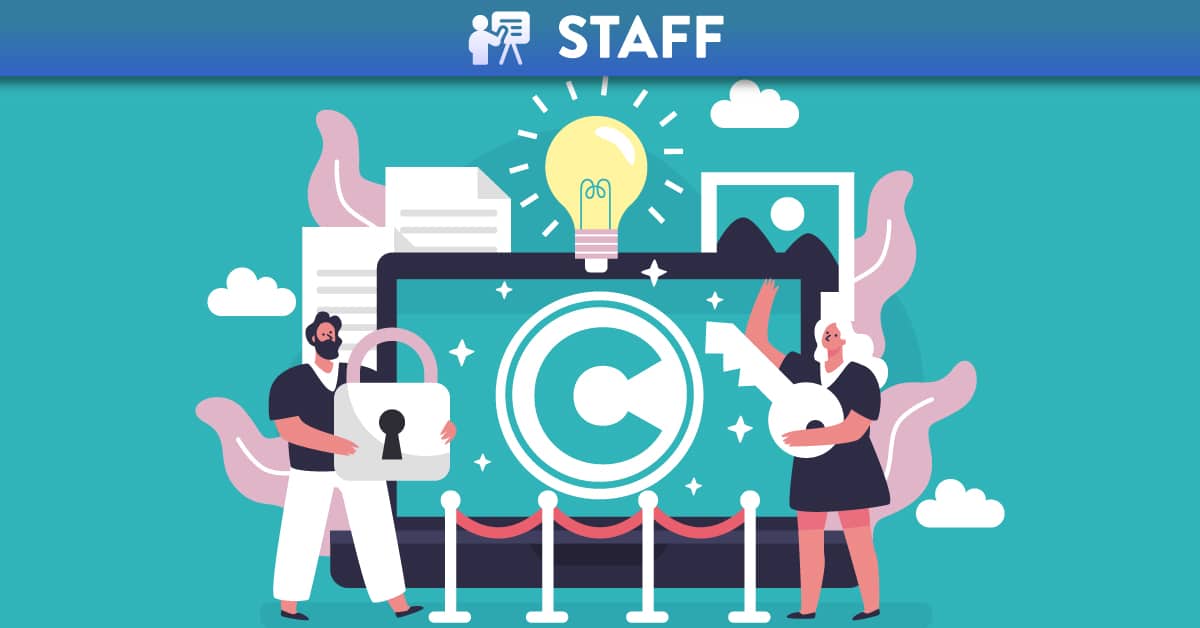
Recorded teaching can involve content created by others, such as images, diagrams, quotations, articles, video clips and other published materials. These are often protected by copyright. As outlined in the QUB Recording of Teaching Policy, staff presenting third-party content within a recording must ensure they do not infringe copyright and provide appropriate citations where required. This supports the University’s obligations under the Copyright, Designs and Patents Act 1988.
This guide outlines key considerations when using third-party content in recorded teaching and provides practical advice on attribution and citation.
Key Terms
- Third-Party Content: Content that you did not create yourself, including images, diagrams, quotations, articles, videos and other published materials.
- Copyright: Legal protection given to original works such as books, articles, images, videos, music and other creative content.
- Attribution: Acknowledging the creator or source of content used within your teaching materials.
- ‘Illustration for Instruction’: A copyright exception that may permit limited use of third-party content to support teaching and learning, provided the use is fair, proportionate and appropriately acknowledged.
- ‘Criticism, Review or Quotation’: A copyright exception that may permit the use of a fair and proportionate extract from a published work for purposes such as criticism, review, commentary or quotation, provided the source is appropriately acknowledged and only the amount needed is used. Read more here: Quotation Exception.
Using Third-Party Copyright in Recorded Teaching
In many cases, limited use of third-party content may be permitted in teaching where it supports learning, is used fairly and the source is acknowledged. This may fall within the copyright exception known as ‘illustration for instruction’.
Recorded teaching differs from live teaching because it creates a copy that may be stored, shared and viewed after the teaching session has ended. Care should therefore be taken when using third-party content in recordings. Any material included should be necessary for the teaching purpose, limited to what is needed, and appropriately acknowledged.
Before including third-party content in your recorded teaching, consider:
✅ Is it necessary to support teaching and learning?
Only include third-party content where it adds value to the learning experience and supports the intended teaching purpose.
✅ Am I only using the amount needed?
Use only the portion of content required to illustrate your teaching point. Avoid reproducing more of a work than is necessary.
✅ Have I acknowledged the source?
The creator or source of third-party content should be clearly acknowledged on slides and within recorded teaching materials where appropriate.
✅ Could I link to the original source rather than copying the content?
Where possible, link to original sources rather than reproducing content in full within recordings.
✅ Is the material publicly available and not confidential?
Do not include confidential information, unpublished research findings, commercially sensitive material, or content that is not in the public domain where doing so could breach confidentiality obligations or affect future publication or patent applications.
✅ Is there an openly licensed alternative available?
Consider using content that has been licensed for reuse, such as material shared under a Creative Commons licence.
Common Scenarios
| Content | What Should I do? |
|---|---|
| I want to use an image from a website | Ensure the image is appropriate for use in recorded teaching and acknowledge the source |
| I want to use a diagram or figure | Acknowledge the source and clearly state if the figure has been adapted |
| I want to use a quotation | Use only the amount needed and acknowledge the original source |
| I want to refer students to, or use extracts from, a book, journal article or other Library-licenced materials | Link to the original source where possible. If copying extracts, check that the use is permitted under the relevant licence or seek advice from the Open Research Team |
| I want to use a video | Link to the original video where possible. If including a clip, use only what is necessary for the teaching purpose and acknowledge the source |
| I want to use Creative Commons content | Follow the licence terms and acknowledge the creator where required |
| I want to use QUB-created content | Content created as part of employment at QUB is generally permitted for use in recorded teaching. Where appropriate, acknowledge the original creator |
How to Acknowledge a Source
The Recording of Teaching Policy requires appropriate citations on slides and within recorded teaching materials. This means ensuring that the source of third-party content is clearly acknowledged. Where possible, acknowledgements should be provided alongside the content being used (for example, on the slide containing the image, figure, quotation or video clip). This helps ensure the source remains visible within both live and recorded teaching.
Important: Simply acknowledging the source does not automatically mean the content can be used in a recording. If you are unsure whether you have permission to use it, seek advice.
The examples below illustrate simple ways of acknowledging commonly used content. The format used may vary across disciplines, but the source should be clearly identifiable.
- Images – Source: National Cancer Institute (2024)
- Diagram or Figure – Adapted from Biggs and Tang (2011)
- Quote – “Assessment drives learning.” (Brown, 2023)
- Video Clip – Source: BBC News (2025)
- Creative Commons Image – “Learning in the Digital Age” by Jane Smith, available at example.com, licensed under CC BY 4.0.
Tip: When attributing Creative Commons content, consider using the TASL approach (Title, Author, Source, Licence). Where possible, link to the Creative Commons licence deed to provide clear and complete attribution.
Frequently Asked Questions
If a lecture includes an invited speaker or external contributor, additional permissions may be required before the recording can be shared or reused. Visiting lecturers are subject to the Recording of Teaching Policy and must complete the University’s consent process. Ensure the appropriate permissions are in place before making the recording available to students.
If unsuitable content is likely to be captured during a live lecture recording, consider pausing the recording temporarily. Where unsuitable content has already been recorded, edit or remove it before making the recording available to students.
Not necessarily. Images that appear in search results are often protected by copyright. Before using an image in recorded teaching, consider whether it is necessary for the teaching purpose, ensure the source is acknowledged, and where possible use openly licensed alternatives. If you find an image through a search engine, tools such as TinEye can help identify the original source. You can also use the Google Images Usage Rights filter to locate Creative Commons licensed content.
Yes, but staff are responsible for checking the accuracy, legality (including copyright), and appropriateness of any AI-generated content before use in recorded teaching. They should clearly indicate when content has been generated using AI.
Not necessarily. Recorded teaching creates a copy that may be stored, shared and viewed after the teaching session has ended. Content that is appropriate for use in a live class may not always be appropriate to include in a recording.
Further Support
- For advice on copyright or the use of third-party content, contact QUB’s Open Research Team.
- Sector-based guidance is available from Jisc: Legal considerations for recording lectures.
- For wider requirements relating to recording, consent, data protection, accessibility, retention and reuse of recordings, refer to QUB’s Recording of Teaching Policy.