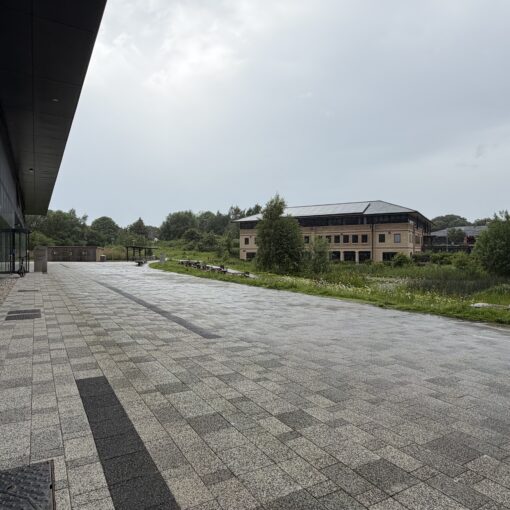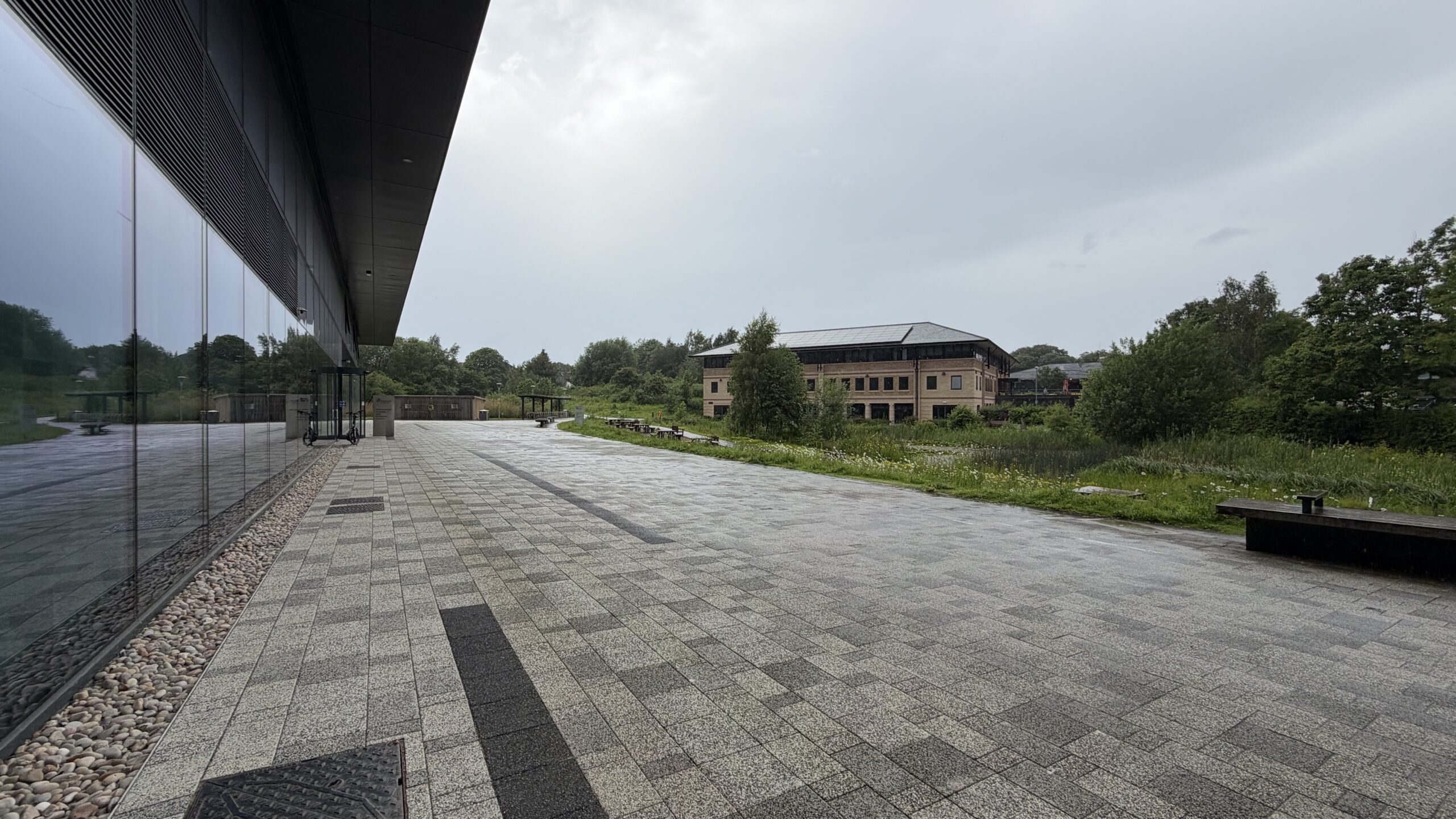
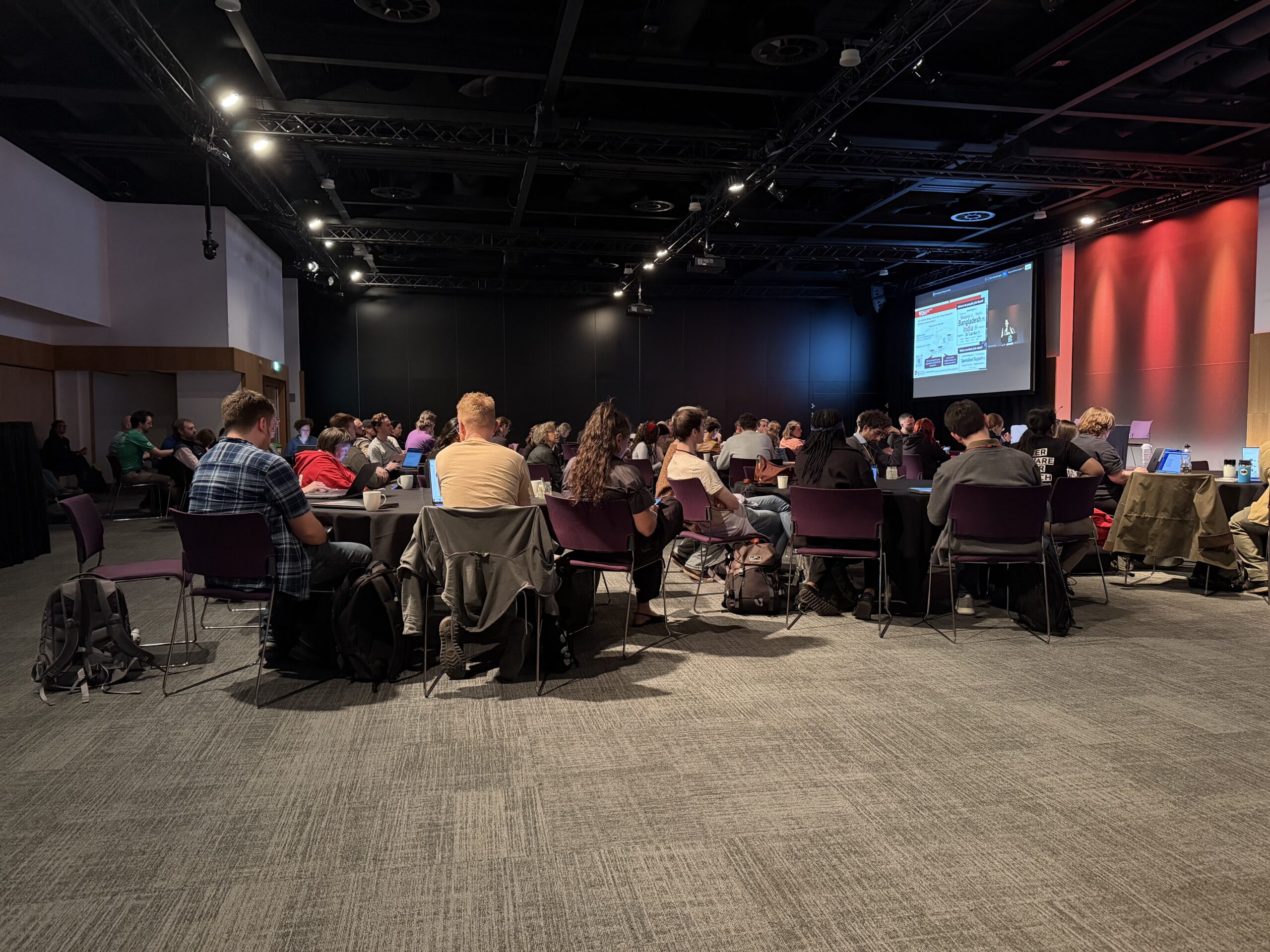
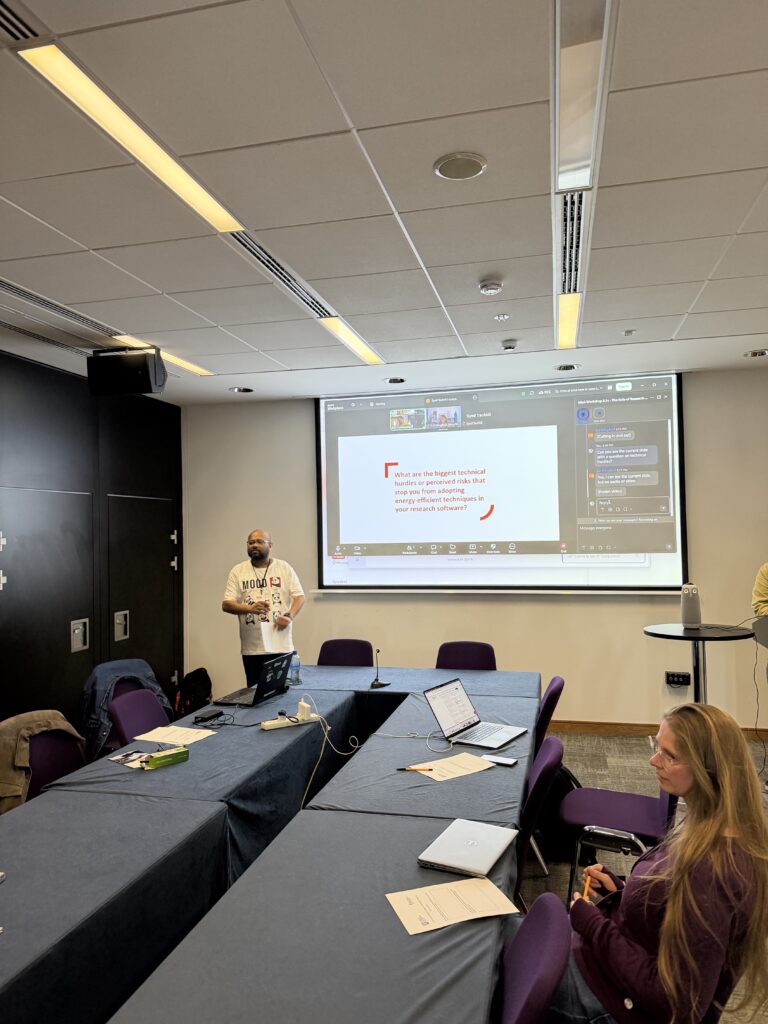
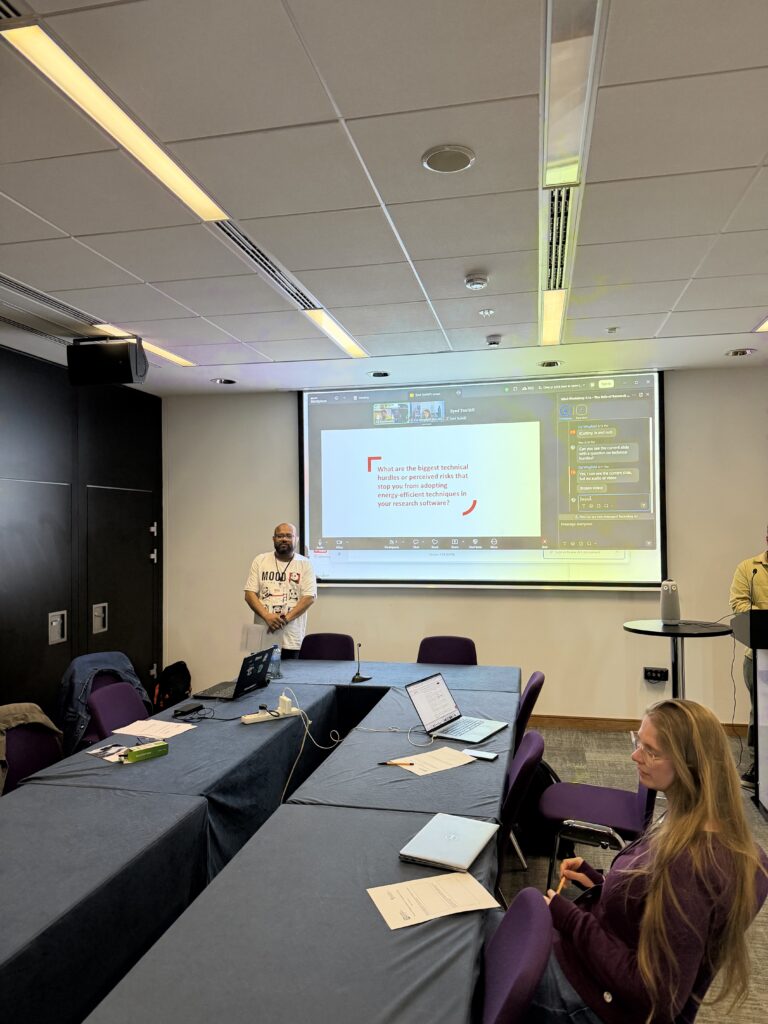
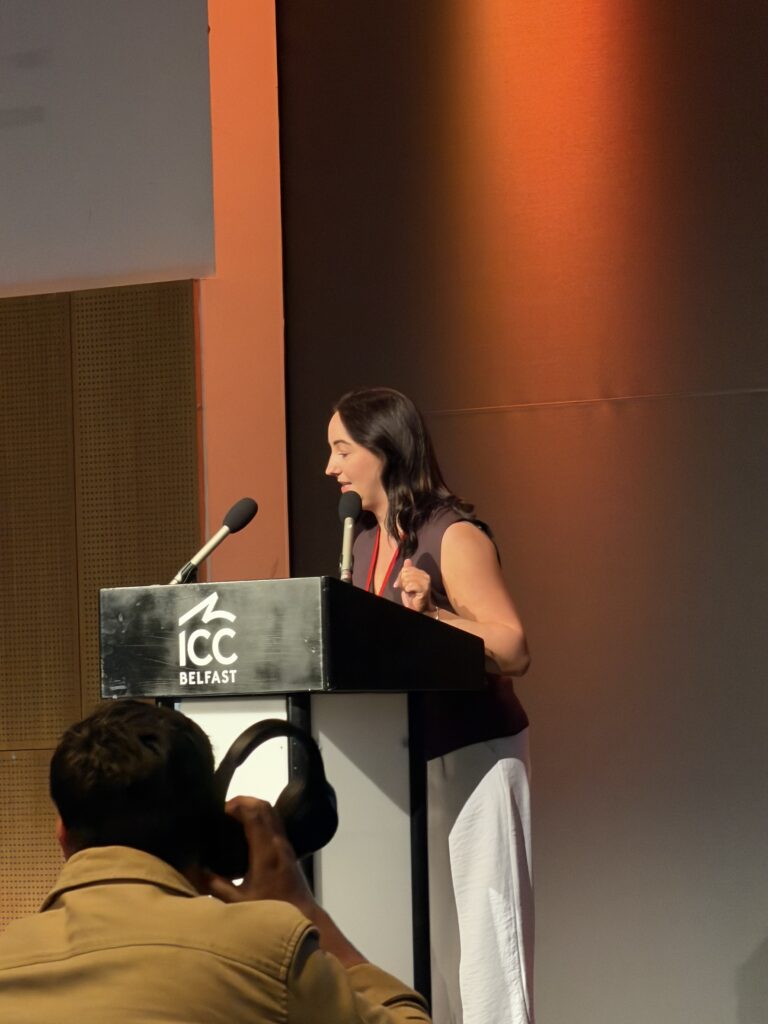
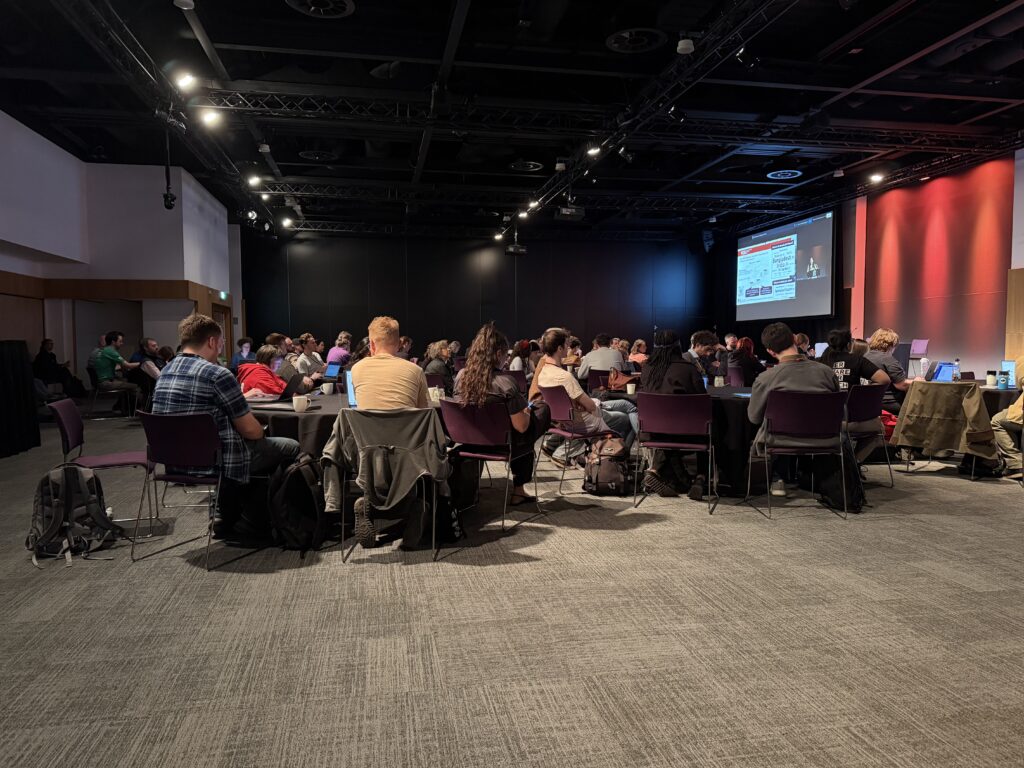
On 29 April 2026, during the Software Sustainability Institute’s (SSI) Collaborations Workshop 2026 (CW26) organised at ICC, Belfast, Syed Tauhidi and Hans Vandierendonck organised a workshop exploring the role of research software in sustainable computing. High-performance computing (HPC) carries a massive environmental footprint, driving up both capital and operational costs. In response to computing infrastructures consuming significant energy and natural resources, research funding expectations are rapidly shifting. UKRI is aligning with the UK’s 2050 Net Zero target, aiming for a 50% operational emissions reduction by 2030, and plans to mandate environmental sustainability measures for all investments by 2029.
To navigate these changes, the research community must take ownership of its environmental impact and understand the perspectives of researchers and Research Software Engineers (RSEs). Attendees were challenged to identify the technical hurdles to adopting energy-efficient research software and the tools required to estimate an accurate energy budget. The discussions also explored where the primary responsibility for sustainable HPC lies, debating whether it is the RSE’s job to write greener code, the researcher’s job to run smarter jobs, or the HPC centre’s job to provide efficient hardware.
When asked about the biggest technical hurdles preventing the adoption of energy-efficient coding practices, participants pointed to a lack of training, the difficulty of optimising legacy code, and the inherent trade-off between easy-to-optimise low-level code and the complexity of writing it. Furthermore, attendees were polarised on the issue of runtime slowdowns; some projects can tolerate delays to save energy, while others are constrained by strict deadlines. When questioned about who bears primary responsibility for sustainable High-Performance Computing (HPC), responses pointed toward the HPC centres themselves, with the observation that the issue largely resolves itself if the facility’s purchased energy is green.
The session also addressed what resources would be needed if researchers were required to include an accurate “energy budget” alongside their financial budgets. Attendees stated they would need step-by-step walkthroughs, further training, and specialised tools like carbon calculators (e.g., Green Algorithms). Finally, they requested better utilisation metrics, such as carbon-aware task schedules (CATS) and SLURM add-ons designed to highlight wasted job resources, while warning against the trap of premature optimisation.