

Celebrating the Centenary of the Musgrave Chair in Spanish at Queen’s (1926-2026)
Guest blog by Dr Fiona Clark. Dr Clark is Senior Lecturer in Latin American Studies at Queen’s University Belfast.
The histories, languages, and cultures of Spain, Latin America, and the island of Ireland have been intertwined for hundreds of years through migration, and military, political, and commercial links. Both Queen’s University Belfast and Trinity College Dublin established individual Chairs for Spanish in 1926, the former looking towards the modernisation of the university curriculum and to meet the needs of a changing society.
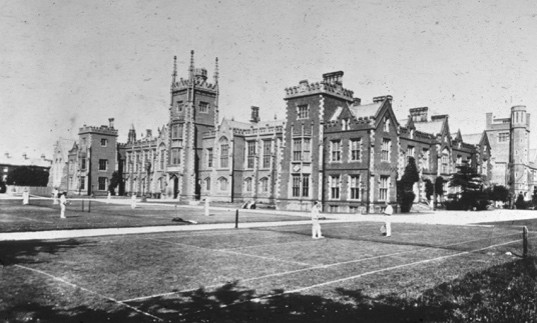
A brush through the newspapers in Ireland in the nineteenth century demonstrates the connectedness of interests, political and commercial, between Ireland, the Iberian peninsula, and Latin America, particularly the linen and flax industries. Discussions around the need to promote the study of Spanish language and cultures are visible across the commercial community in Ireland and continued to develop into the twentieth century within the University environment. In a meeting of Senate, 11 April 1917, Sir John Milne Barbour submitted a report from the Committee of Commerce and Industry, arguing for the ‘great desirability of providing for the teaching of Spanish’ due to ‘the large export of goods from Belfast to South America, Cuba, and other Spanish-speaking countries’. His proposal was supported by Prof. Lindsay, who
‘pressed the matter upon the attention of the Senate from a literary point of view, and called the attention of the Senate very strongly to the fact that other universities were at present actively moving in this direction, including Oxford, Cambridge, Dublin, Liverpool, London, etc.’
(Northern Whig, April 1917)
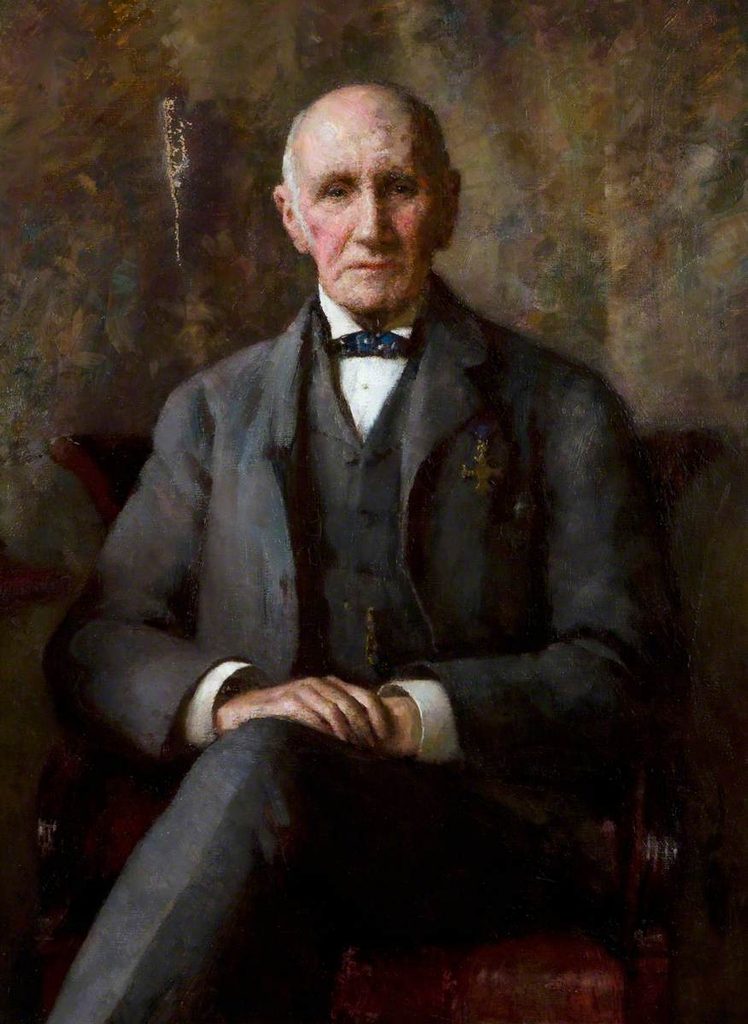
The impact of war and revolution across Europe was influential in all the decision making. A bequest in 1917 from local businessman and entrepreneur, Henry Musgrave, to the sum of £10,000, originally aimed at establishing a Chair in Russian, was re-directed by 1919 in light of the ‘altered conditions’ brought about by the Russian revolution, and used for the broader purposes of supporting Modern Languages (Belfast Telegraph, reporting on the death of Musgrave in January 1922).
As a result, in his July 1920 address, the Vice-Chancellor confirmed that
‘a lectureship in Spanish language and literature, long desired for, was by means of a splendid munificence of that prince of benefactors, Mr Henry Musgrave, also to begin next session.’
(Northern Whig and Belfast Post)
By December 1920, the Belfast News-letter was able to announce:
‘Dr. I González Llubera, who has been appointed as lecturer, has now arrived in Belfast so as to take up his duties in the University, and is now making appointments with students who wish to join classes to be formed.’
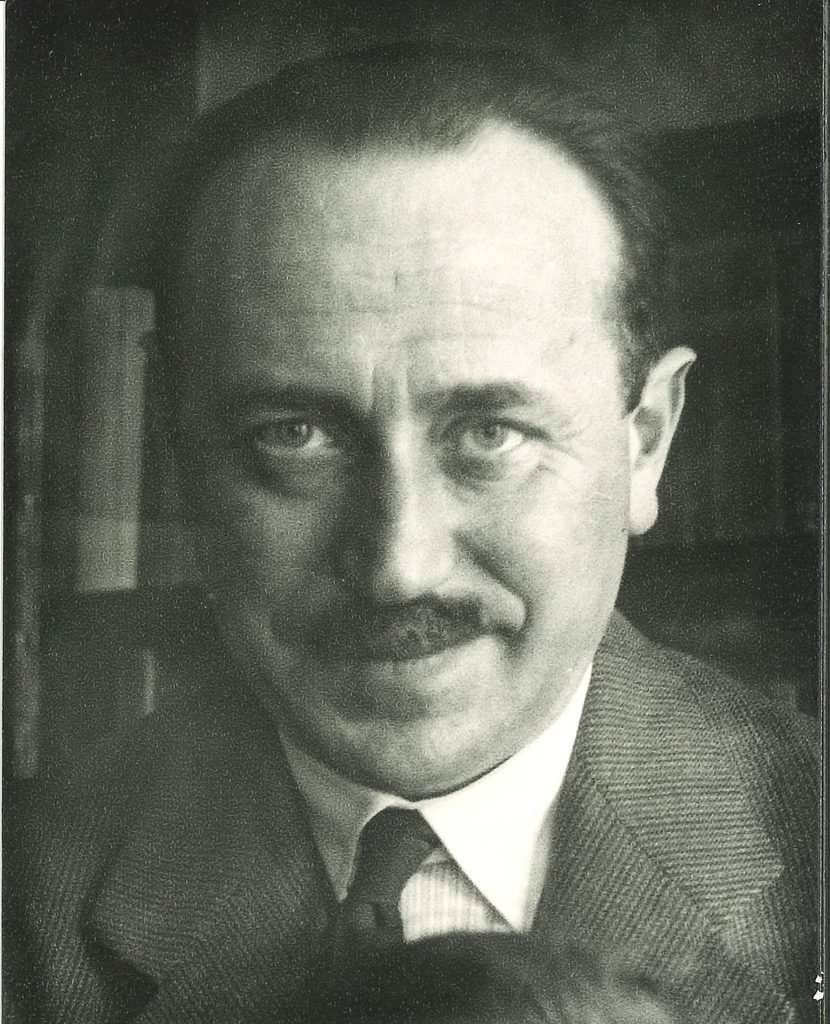
Image Courtesy of QUB Special Collections and Archives
The degree in Spanish filled a ‘long-felt need in Belfast’ (Belfast News-letter, June 1921). The activities initiated under Llubera demonstrated a wish to connect the language and culture with wider local society. In addition to the curriculum of studies, a Hispanic Society was established in 1923 for the students that was also designed to appeal to the business community. Outside of academic life, Llubera promoted a wide array of activities fostering knowledge of Spanish cultures. These ranged from public lectures (including extension lectures) on Spanish art, architecture, literature, and music, to radio broadcasts.
During World War 2, as part of a scheme initiated by the Council for Education under Vice Chancellor D. Lindsay Keir, Llubera provided lectures to the troops across Northern Ireland on Spanish art. These outward-looking connections have been maintained over the years. In fact, when Luis del Sol, Juventus midfielder, found himself stranded at Aldergrove airport in 1963, it was two QUB Spanish students who were on hand to help as interpreters! (Belfast News Letter, Oct. 1963)
As the current holder of the Musgrave Chair in Spanish, Prof. Isabel Torres, reminds us,
A centenary inevitably invites us to look backwards. But anniversaries matter not because they encourage nostalgia. They matter because they help us understand what is worth carrying forward. When Spanish was first established here, its advocates believed that languages could connect Belfast to the wider world. They believed that international understanding mattered. They believed that education should cultivate both practical skills and richer, fuller forms of human flourishing.
One hundred years later, those convictions seem no less important. Indeed, in a world often marked by division, uncertainty and misunderstanding, they may be more important than ever. Today then we celebrate those who built this tradition: our benefactors, teachers, students, alumni and partners. We honour their achievements. We thank them for the foundations they laid. But we also celebrate those who will carry this story forward: our current students and the generations to come. They are, after all, the reason anniversaries matter.
The exhibition currently running at the McClay Library One hundred years of Spanish: Celebrating the past and shaping the future, is a glimpse into the variety of experiences in Spanish at Queen’s. It celebrates the academic excellence of the holders of the Musgrave Chair in Spanish, the creativity and adventure of doing a degree in Spanish as experienced by students, and highlights some unique holdings in Spanish and Portuguese held in the Special Collections.

Our sincere thanks to the Instituto Cervantes for their generous funding for the exhibition and the help of the staff in Special Collections and the University Archive in making it possible. And many thanks to the Faculty of Arts, Humanities, and Social Sciences and the School of Arts, English and Languages for their support for the wider events around the Centenary. Finally, our thanks to the staff of Special Collections and Archives in Queen’s, without whom none of the display would have been possible.
