

Queen’s Policy Engagement is the ‘front door’ for public policy engagement at Queen’s University Belfast
Supporting academics and policymakers in sharing evidence-based research and ideas on the major social, cultural and economic challenges facing society regionally, nationally and beyond. Our over-arching vision is to share the University’s independent expertise with policymakers so they can make informed decisions about the most effective and sustainable ways to tackle these challenges, now and in the future.

Latest news and views…
-

What next for climate politics in NI?
Following the passing of Northern Ireland’s first Climate Change Bill and the recent Assembly elections, Dr Amanda Slevin, Seán Fearon and Anurag Deb look at the implications for climate politics in NI.
-

Much more than meh: The 2022 Northern Ireland Assembly Elections
The Northern Ireland Assembly election of May 2022 was transformational, despite small shifts in the magnitudes of seats won by the two dominant blocs. John Garry, Brendan O’Leary and James Pow discuss the results.
-

Why Learning Matters in Preventing Violent Conflict
Professor David Connolly is Practitioner Chair in the Senator George J. Mitchell Institute for Global Peace, Security and Justice at Queen’s University Belfast.
-
Queen’s Policy Engagement Post-Brexit Clinic May 2022
The presentations and the recording of the 17 May 2022 Post-Brexit Clinic are now available.
-

How a Fun Game is Transforming Attitudes towards Dementia
Professor Christine Brown Wilson looks at a novel new way developed at Queen’s of transforming people’s attitudes to, and knowledge of, dementia.
-

Northern Ireland’s political future: challenges after the Assembly elections
The Constitution Unit has published a new discussion paper entitled Northern Ireland’s political future: Challenges after the Assembly elections written by Alan Whysall, Honorary Senior Research Associate at the Unit. A further paper on longer-term prospects for Northern Ireland will be published later this year.
-
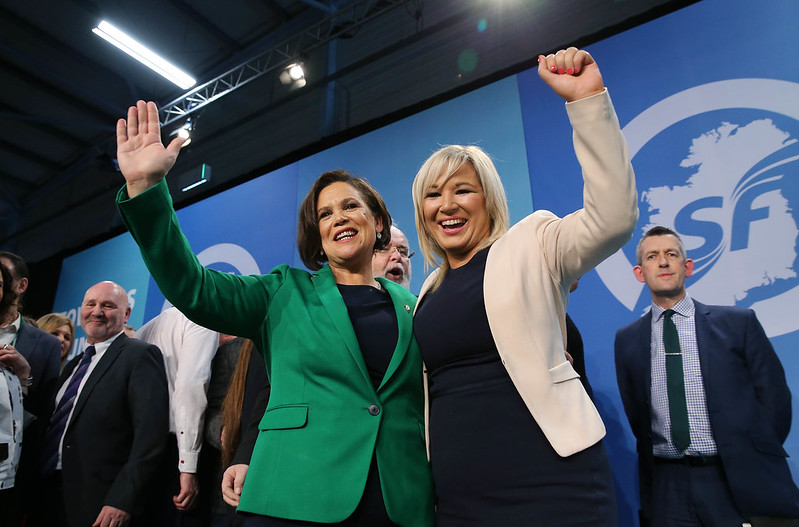
Northern Ireland election: despite Sinn Féin’s historic win over unionists, things may not be as they seem
Dr Peter McLoughlin casts his eye over the results from the recent Northern Ireland Assembly elections which saw Sinn Féin emerge with the most seats.
-

Northern Ireland’s New Stalking Legislation
In the latest of a series of articles, Dr Ronagh McQuigg looks at the legal protections that are now in place to protect victims of stalking.
-

The Long Shadow of Propaganda
A partisan press has been an important part of the US political process throughout the country’s history says Paul Winfree.
-

Is it time to rename QUB’s buildings?
In recent years Queen’s University has done much to redress the balance of visibility of women and other minorities in the university’s history but is there more that could be done asks Professor Marie Coleman.