
By Dr Emma Reisz and Lisa Rea Currie.
How can the historic environment contribute to a sense of local belonging? And can community creativity be part of the answer?
These are the questions which the BeHere project at the Centre of Public History of Queen’s University Belfast is setting out to answer. The project is intended to contribute to the development of policy around the historic environment in Northern Ireland and beyond.
The Heritage, Culture and Creativity Framework, published by the Department for Communities in July 2025, calls for research to identify how heritage, culture and creativity contribute to:
“social value and economic impact; tangible health and other impacts of participation in HCC activity; and the benefits of strategic and partnership approach to research across interested sectors“.
The project Belonging, Heritage and Ecology in Ards and North Down: Community Co-Creation with Mount Stewart (BeHere) is running from September 2025 until August 2026. By foregrounding community voices, BeHere aims to inform policy on inclusive heritage practices, equitable access, and the role of creativity in place-making.
BeHere is a community-led project using Participatory Action Research (PAR) to explore how – and whether – the Mount Stewart estate near Newtownards, managed by the National Trust, can contribute to a positive sense of place and belonging. Community members will act as co-researchers, using creative methodologies and developing their heritage-related skills to produce a public creative output based on their research.
BeHere aims to generate robust understandings of how heritage linked to a complex and contested past can contribute to an inclusive sense of belonging today.
One of six projects funded by the AHRC’s Creative Communities programme across the UK’s devolved regions, BeHere places collaboration, creativity and co-design at its core. It’s a partnership between the Centre for Public History at Queen’s University Belfast, the National Trust, ArtsEkta, Kilcooley Women’s Centre (Bangor), and The Link Family and Community Centre (Newtownards), and it arises from the Historic Houses, Global Crossroads (HHGC) research project led by University of Birmingham.
Participatory Action Research means “engaging knowledge and expertise beyond the ‘ivory tower’ by involving those who are most intimately affected by the research in shaping the research questions, framing interpretations, and designing meaningful research products and actions”. PAR is invaluable in heritage research – though rarely used – since local experience and knowledge are essential to understanding how historic spaces are perceived and used.
In BeHere, the community in Ards and North Down are thinking about how Mount Stewart can serve them better. In particular, the participants will be exploring:
- The value heritage has for them, and how everyone can find value in heritage
- How heritage, even when linked to complex and contested histories, can be inclusive and promote belonging
- How to make access to heritage more equitable
- How heritage can enhance communities, wellbeing and people’s lives
- Whether community creativity can make heritage more meaningful
- How heritage can support economic, societal and environmental sustainability
Alison Blayney of the Kilcooley Women’s Centre explains:
“Women are the backbone of community storytelling, resilience, and connection—and we look forward to engaging local women and their voices, which are essential in shaping a sense of place that reflects our shared history and future. KWC works to ensure heritage is not just preserved, but lived, empowering local women to lead in celebrating and sustaining the identity of this special place.”
As Mark Houston of The Link Family and Community Centre puts it:
“The services and programmes we offer are designed to enable people to not just survive life but to have the opportunity to flourish. The BeHere programme aims to provide opportunities for creativity and a sense of connection to place and to heritage. We believe these things are essential in building flourishing, sustainable communities.”
This QPol blog post marks the beginning of BeHere’s engagement with policy. Further outputs will include a policy paper in October 2026, accompanied by a case study and podcast.
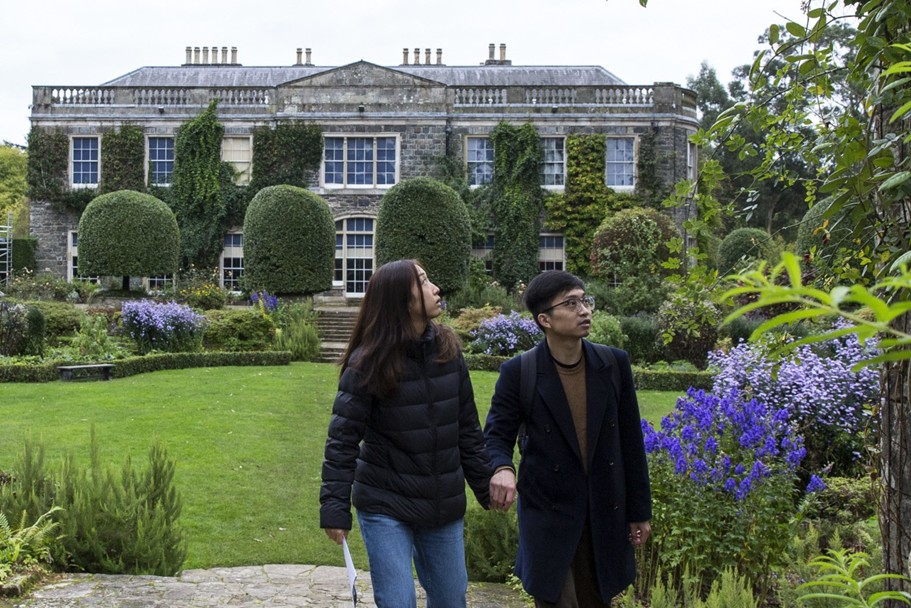
Image courtesy of ©National Trust Images/Annapurna Mellor
About the Authors
Dr Emma Reisz is a lecturer in the School of History, Anthropology, Philosophy and Politics at Queen’s University Belfast. Her current research focuses on empire and transnational links in Asia, mapping imperialism and interconnection across space, ideas and social networks.
Lisa Rea Currie is a heritage practitioner with nearly two decades of experience using participatory approaches to engage communities with heritage, and she will bring this expertise to the BeHere project at Mount Stewart to explore together creativity, belonging, and place.
Leave a Reply