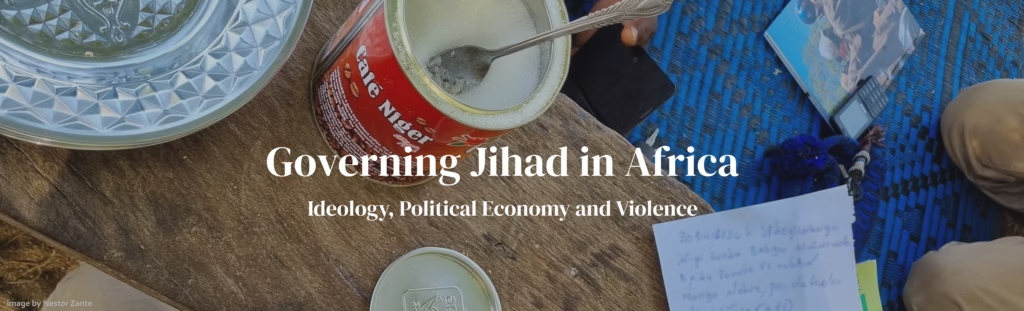
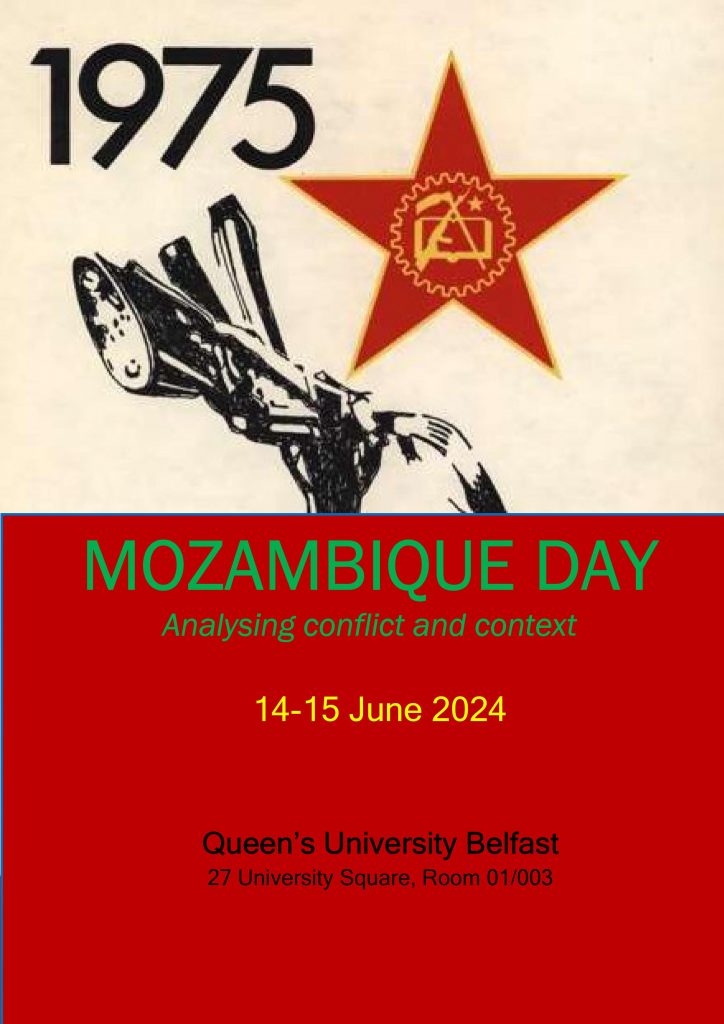
KEYNOTE Prof. Zachariah Mampilly (CUNY), “On Rebel Taxation: Violence, Ideology and the Construction of Wartime Economic Order: “.
Thursday 16
DAY TWO
9am at 27 University Square/01.003
Opening of Conference
9,15am–10,45am at 27 UQ/01.003
ROUNTABLE ONE “Ideology & Norms“ Dr Fathima Azmiya Badurdeen (T.U.Mombasa), Dr Abdulnakim Nsobya (QUB), Prof. Emilio Zeca (CEEI, Maputo), and Dr Ibrahim Yahaya Ibrahim (ICG, Mali). Moderator: Prof. Eric Morier-Genoud (QUB)
11,00-12,30 at 27 UQ/01.003
ROUNDTABLE TWO “Political Economy“ Dr Baba Coulibaly (U. Bamako), Flore Berger (GITOC), Dr Marte Beldé (CNRS), and Peter Bofin (ACLED). Moderator: Dr Yvan Guichaoua (Biic)
Lunch
13,30-3,00pm at PFC/03/017
ROUNDTABLE THREE “Violence & Counter-violence“ with Prof. Salvador Forquilha (IESE, Maputo), Dr Nestor Zante (CNRS), James Barnett (Oxford), and Prof. Kristof Titeca (Anwerp), Moderator: Prof. Corinna Jentzsch (Leiden)
Cafe
3,30-5,00pm at PFC/03/017
ROUNDTABLE FOUR “Humanitarian Perspectives” With Hamadoun Dicko (MSF), Alexander Liebeskind (HD), and Dr Matthew Bamber-Zry (ICRC). Moderator: Dr Vincent Foucher (CNRS)
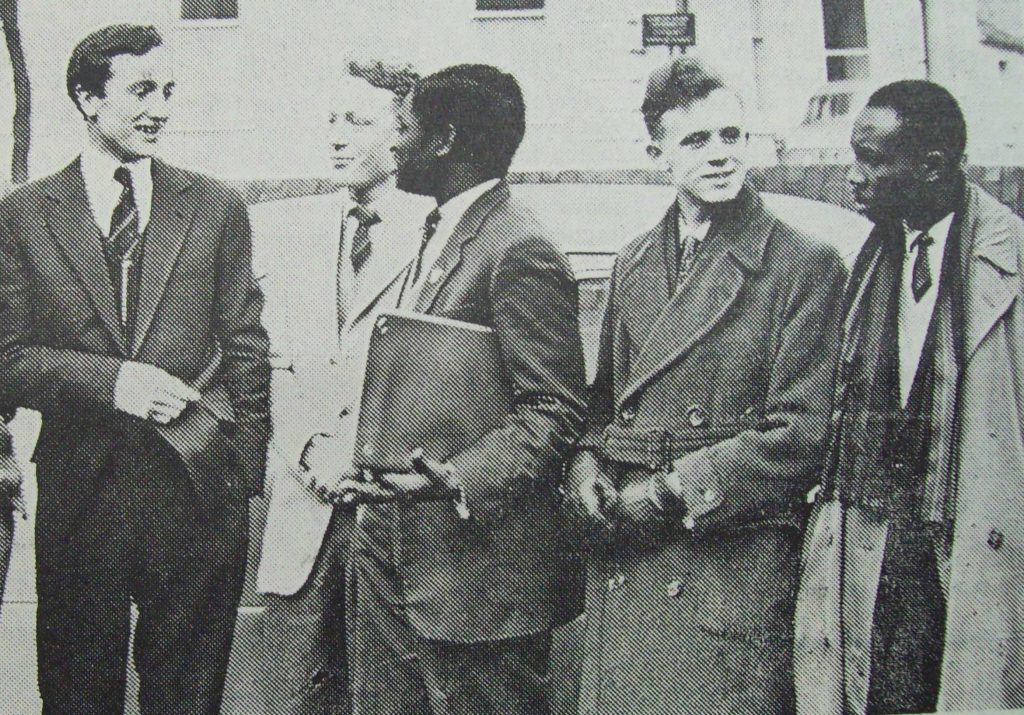
All month Library display on Floor 1 “Commemorating Black Histories of Intellectual Resistance(BHM 2025)” by Dina Zoe Belluigi (SSESW, AfSRN), financially supported by SSESW Athena Swann Committee, with blog discussion here and “Africans at Queen’s University” by Eric Morier-Genoud (HAPP)
3 October 2025 Projection of the film “Sinners” (2025), by director Ryan Coogler At Queen’s Film Theatre Presented by the Queen’s University’s African & Caribbean Society Book tickers here
05 October 2025 Projection of the film “Nawi” + “Küi” (Short) Cinemagic At Queen’s Film Theatre More information and Tickets here
06 October 2025 Cinema Rediscovered: “Killer of Sheep” Queen’s Film Theatre Information and Tickets here
10 October 2025 4pm at 22 University Square, room 01.005 History seminar “‘Roving return’: Decolonizing the Masters’ Tool and Black American Queer Military Voice” By Jamie-Lukas Campbell (HAPP)
17 October 2025 Film “The Color Purple” Queen’s Film Theatre Details and Tickets here
17 October 2025 10:30 – 12:00 at 6 College Green 0G/003 ‘The Journey of Black Feminism: Routes, Roots and Reckonings’ by Dami Osekita (Uulster University, AfSRN) and LeAnne Zarroug (SSESW, AfSRN, QUB) with refreshments supported by SSESW Athena Swann Committee
19 October 2025 FIlm “Souleymane’s Story” Queen’s Film Theatre Details and Tickets here
21 October 2025 Cinema Rediscovered: Nationalité: Immigré Queen’s Film Theatre Details and Tickets here
23 October 2025 Anthropology/CFCE Seminar Dr Njabulo CHIPANGURA (Maynooth University) “Whose Stories are told by museums with African collections from colonial contexts?” 13 UNIVERSITY SQUARE/0G/010, 3pm Details here
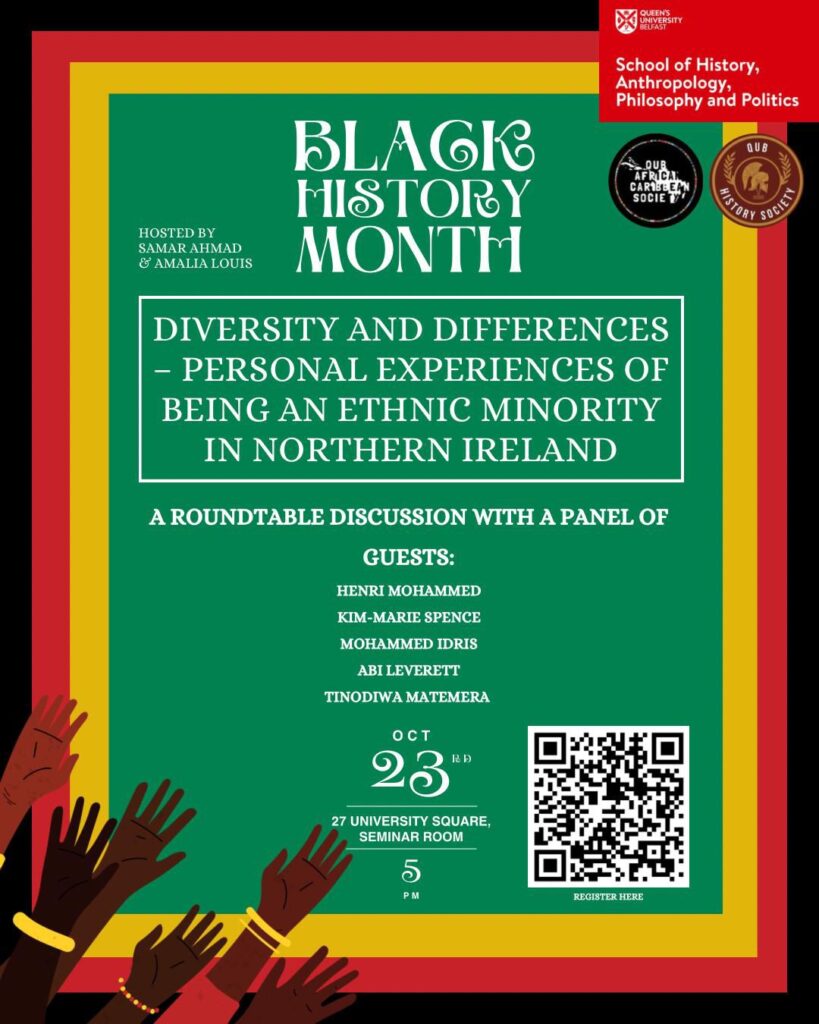
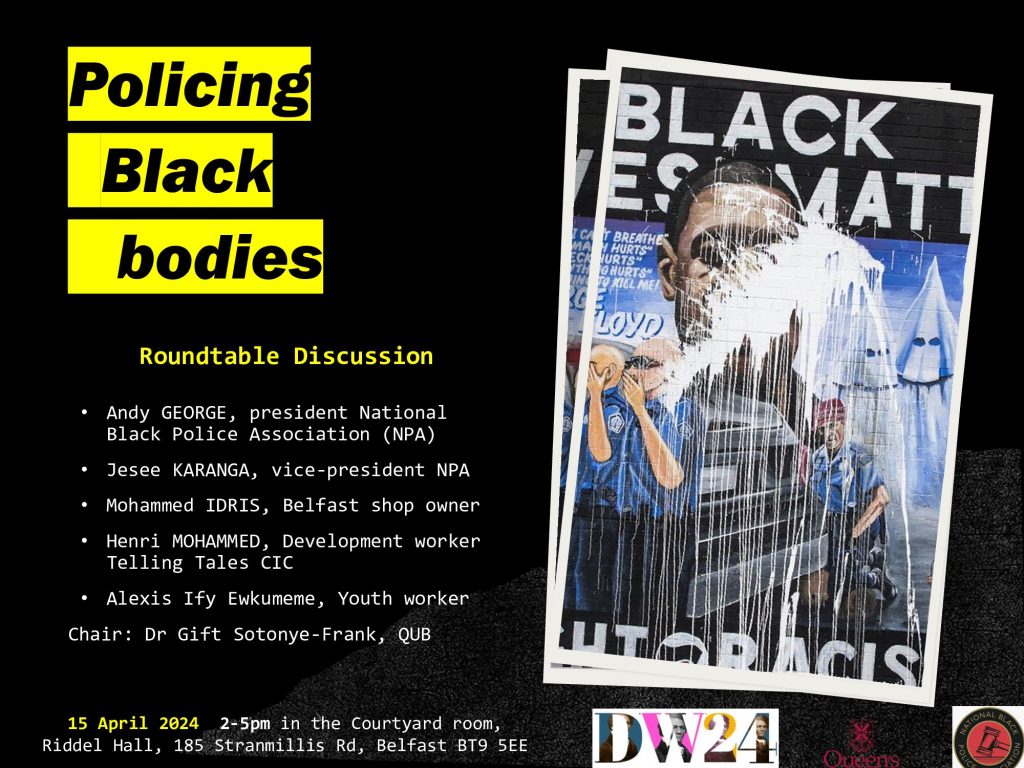
23 October 2025 Roundtable ‘Diversity and Difference. Personal experiences of being an ethnic minority in Belfast’ With Dr Kim Marie-Spence, Abi Leverett, Tinodiwa Matemera, Henri Mohamed and Mohammed Idriss 27 University Square, room 01/001, 5pm
Here is the program across the university, staff and student-led:
3 October 2023 – Black History Month Launch, 12:45pm on Teams
3 October 2023 – Black History Month Trivia Night, African Caribbean Society event, 8,30pm (details here)
10 October 2023 – Public Talk and Book Launch DIE STANDING with Elmer Dixon, Black Panther and Consultant, Senate Room, Lanyon Building, 5:30pm
12 October 2023 – Networking for Underrepresented Groups in STEM. African Caribbean Society with the Women in STEM Society (see ACS Instagram for more details)
19 October 2023, Belfast Film Premiere: “On Resistance Street”Queen’s Film Theatre, 6:15pm
25 October – Mock United Nations and BHM night, with Africa House NI (see ACS Instagram for more details).
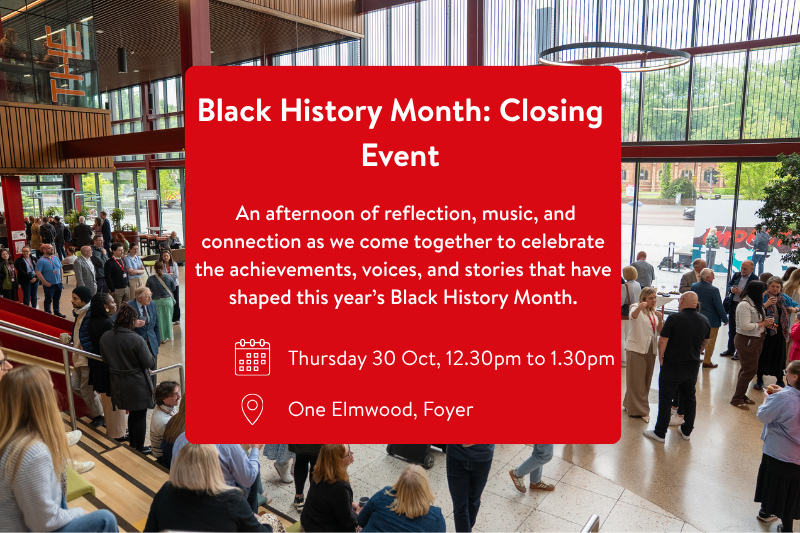
27 October – Closing BHM event (sponsored by iRISE)
Queen’s Film TheatreBHM program ’23:
9 Oct, 8.30pm, “Queen & Slim” Daniel Kaluuya and Jodie Turner-Smith star as a couple on their first date who become fugitives after an altercation with the police. Free posters designed by Brazilian illustrator Daniel Batista for each attendee. https://queensfilmtheatre.com/Whats-On/Queen-and-Slim 12 Oct, 8.45pm, “Omen” A deserving winner of Cannes’ Un Certain Regard New Vision Award, rapper-turned-filmmaker Baloji’s magical realist drama is a dazzling debut. https://queensfilmtheatre.com/Whats-On/Omen
13-15 Oct, “Bobi Wine: The People’s President“ From the slums of Kampala to the national political arena, this gripping film charts the rise of Robert Kyagulanyi, better known as Bobi Wine – the pop star-turned-politician seeking to end Uganda’s brutal dictatorship. https://queensfilmtheatre.com/Whats-On/Bobi-Wine
14 Oct, 3.15pm, “Claudine” In an attempt to counter the far-fetched excesses of the blaxploitation films at the time, Claudine focuses on the day to day struggles of a single black mother and her working class family. https://queensfilmtheatre.com/Whats-On/Claudine
17-19 Oct, “Once Upon a Time in Uganda” Set in the heart of Uganda, Once Upon a Time in Uganda celebrates a universal love and passion for movies through the story of the world-famous Wakaliwood studios. https://queensfilmtheatre.com/Whats-On/Once-Upon-a-Time-in-Uganda
19 Oct, 6.15pm, “On Resistance Street + Q&A” With contributions from a host of renowned musicians, bands and commentators, On Resistance Street is an in-depth examination of the role music plays in the fight against fascism, racism and bigotry. https://queensfilmtheatre.com/Whats-On/On-Resistance-Street
The library is offering a trial of ProQuest Black Studies during the whole month (here)
Some other events are still being organised and will be listed as they are confirmed.
The International Consortium for the Study of Africans in Ireland(ICSAI) invites submissions of papers for an interdisciplinary conference on Africa in Ireland: Historical and Theoretical Perspectives
This conference aims to address the historical presence of Africans and the Black diaspora in the past, present, and future on the island of Ireland. It will critically engage with this presence and the convergences of Irish-African cultural, political and religious relationships and connections. How does the presence of African-descended people in Ireland disrupt the notion of Irish monoraciality? How should we theoretically address issues of race in the defining of Irish national identity in light of historical and contemporary Black Irish identities? What is the nature of the relationship between Africa and the African Diaspora in Ireland? What remains of Ireland’s soft religious colonialism and the mission project? How did Ireland’s postcoloniality align with pre- and post-independence subjugated African nations?
Post-Celtic Tiger Ireland, North and South, offers great possibilities to study the “complex, variegated, transitional nature of contemporary Irish experience.” [1] However, whiteness is still the vector through which Irishness is determined. In Ireland, which Luke Gibbons so memorably called “a First World country, but with a Third World memory,” [2] the African and Black diaspora are confronted by an essentialist discourse of impassable racial demarcation. Though Ireland has never been monocultural, its predominant monoraciality ensures that Irishness is interpellated as white. The existence of whiteness is, as Connolly & Khaoury have argued, the “constitutive and founding elements [3] of Irishness, and this Irishness is “ethno-racially rigid” [4].
An additional way to explore and explode the monoraciality of Irish society is through history. Very few studies have looked at the presence of Africans and people of mixed heritage in Ireland, the common street view being that this is a phenomenon connected to the Celtic Tiger and/or post-conflict Northern Ireland, and in good part linked to the refugee question. There is little awareness that Ireland was never wholly white. While a few studies have looked at that past, much work remains to be done, a diachronic understanding and chronology need to be established, and implications need to be explored.
It is important to hear African and African-descent voices in this critical examination. In the study of Ireland’s Black identities and diaspora, as is the case in the rest of Europe, it is necessary to make explicit the authentic and historical specificities of their experiences since they serve to elucidate “global entanglements and trends by tracing the ways in which they are worked out at the personal and local level.” [5]
We are particularly interested in papers that interrogate the following topics within, or in relation to, the framework of the conference theme:
Black Irish Studies
Africa in Ireland
The relationship between Africa and the African Diaspora in Ireland
Ireland’s soft religious colonialism and the mission project
Ireland’s postcoloniality and alignment with pre- and post-colonial African nations
Notions of Blackness and Africanness
Irishness and Afro-Europeanism
History of African migrations to Ireland pre- and post- Celtic Tiger
The interaction of categories like nation, gender, class, and religion within the category of Africans in Ireland
How Black Irish have conceived themselves historically
Africans in Irish Studies within the larger field of Black Diasporic Culture/Diaspora Studies
Negotiating Black Consciousness in Ireland
Black Cultural Production on the island of Ireland
The relationships of the Black Irish to other ethnic minorities on the island
African students in Ireland
Centring Africa as a decolonised subject for investigation in the Irish curriculum
Please send your abstract of 300 words and a short biographical note to Dr Mark Doyle (mdoyle@mtsu.edu ) by 1 February 2023.
Conference Committee: Dr. Mark Doyle, Middle Tennessee State University Dr. Eric Morier-Genoud, Queen’s University Belfast Dr. Phil Mullen, Trinity College Dublin Dr. Nik Ribianszky, Queen’s University Belfast Dr. Jonathan Wright, Maynooth University
[1] Brown, Terence. 1985. Ireland. A social and cultural history 1922-1985. London: Fontana Press, p. 322.[2] Gibbons, Luke. 1996. Transformations in Irish Culture. Cork: Cork University Press, p. 3.[3] Connolly, P., & Khaoury, R. 2008. Whiteness, Racism and Exclusion: A Critical Race Perspective. In C. Coulter & M. Murray (Eds.), Northern Ireland After the Troubles: A Society in Transition. Manchester: Manchester University Press, p. 208.[4] Lentin, R, & Moreo, E. 2015. Migrant deportability: Israel and Ireland as case studies. Ethnic and Racial Studies, 386, 884–910.[5] Aitken, Robbie, & Rosenhaft, Eve. 2013. Black Germany: The Making and Unmaking of a Diaspora Community, 1884-1960. Liverpool: Liverpool University Press, p. 3This conference is supported by the School of HAPP, the Institute of Irish Studies, iRISE and the Diversity and Inclusion Unit at Queen’s University Belfast.
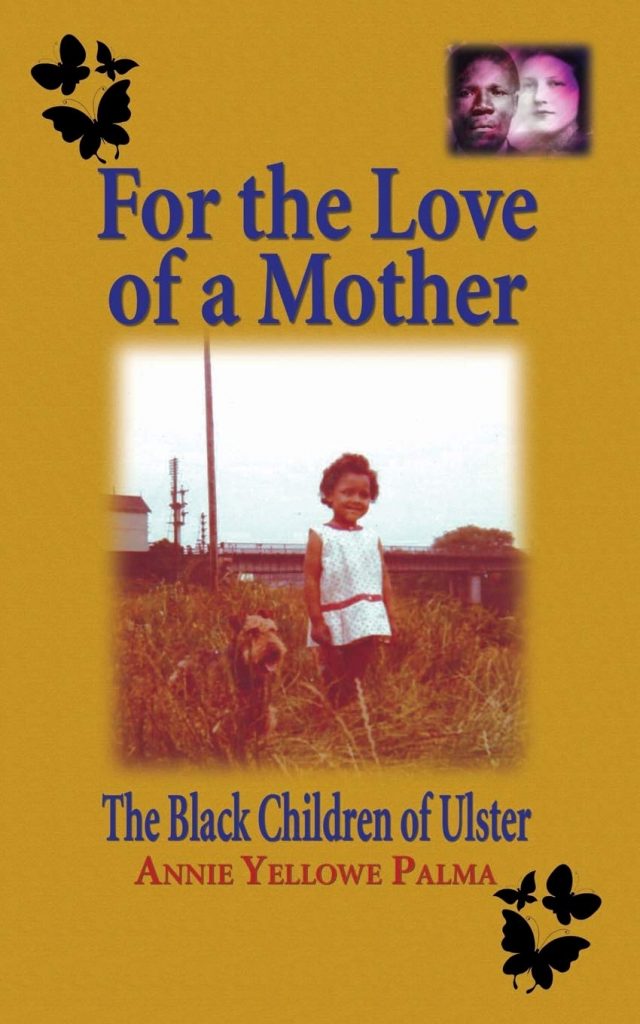
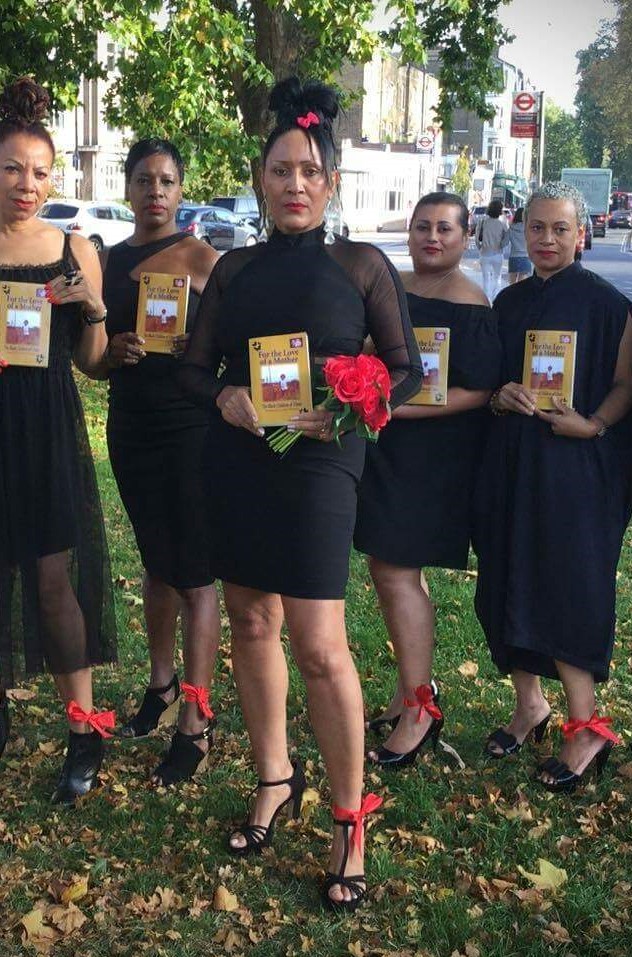
Annie YELLOWE passed away on 3 December 2022. Author of the memoirs For the love of a Mother. The Black Children of Ulster, Annie took part in the 2017 in the workshop organised at Queen’s University about “The History of Africans in NI“.
Alongisde Tim Brannigan, Annie contributed to a Rountable about Black Children of Ulster (panel named after her book). A rich and stimulating discussion, followed by a nice dinner at Molly’s Yard.
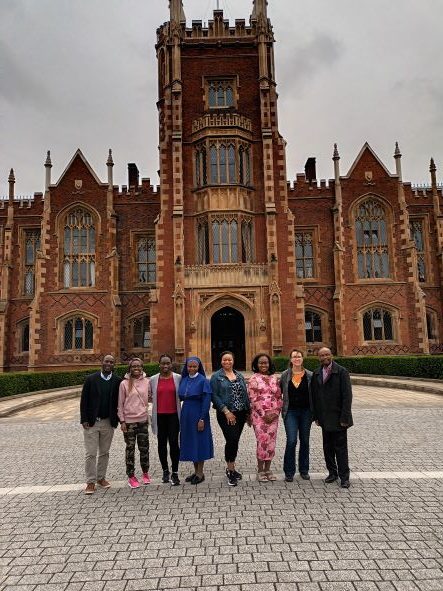
Left to right: Dr David Nyaluke (Fellow, UCDublin); Dami Osekita (PhD student, SSESW), Gift Sotonye-Frank (PhD student, Law), Dr Felicity Kalu (Lecturer, Nursing & Midwifery, Nkem Itanyi (PhD student, Law), Dr Linda Oyama (Lecturer, Biological Sciences), Dr Dina Zoe Belluigi (Reader, SSESW), Dr Chirangano Mangwandi (Lecturer, Chemistry & Chemical Engineering) — all members of the QUB African Scholars Research Network.