When did the people of the UK lose trust in the political parties?
It is difficult to say when the public lost its trust for the political parties in charge even though there is a number of reasons why it could be, from major scandals, broken promises, the disconnected feeling from the parties and arguably the most important one Brexit. Trust holds political parties accountable for their actions. When parties are trusted by the public, they are under pressure to act in the best interests of society and fulfil their promises. If they betray the trust of voters through dishonesty or scandals, they risk losing support and in turn seats in parliament.
Political parties have had their fair share of major scandals. The expense scandal of 2009 is quite memorable as it occurred a year before a general election and required a number of MPs to stand down. It also occurred at the time of the 2008 financial crisis were the majority of people in the UK were struggling massively. The scandal consisted of a number of MPs claiming expenditures for things like luxury products, house improvements, and mortgage payments. One of the most memorable moments from the scandal was by Tory MP Sir Peter Viggers who claimed expense for an island to house his ducks in his pond costing £1,645 (Association, 2009). People rightfully saw this as out of touch and Viggers later had to step down due to the attention.
Another notable scandal was the renewable heat incentive scandal here in the North. An energy initiative called the Renewable Heat Incentive (RHI) was created to entice companies in Northern Ireland to switch from using fossil fuels to renewable energy sources. The project, however, ran the risk of running far over budget due to serious shortcomings in its setup and execution; it was feared that the overrun might total up to £700 million over a 20-year period. The programme was closed in 2016, however it was brought back under budget in 2017 and 2019 thanks to significant subsidy reductions (BBC, 2019). Following a public inquiry into the scandal that toppled Northern Ireland’s power-sharing government, it was determined that the programme had been characterised as incompetent, negligent, and a lack of attention to basic principles of public finance.
Arlene Foster resigned as the First Minister of Northern Ireland in January 2017 as a result of the Scandal. Martin McGuinness, the Deputy First Minister at the time, also quit in disapproval of Foster’s and her party’s handling of the incident (DUP). This led to a snap election in March 2017, which saw strong wins for Sinn Féin and a further division of the political system. Additionally, the scandal significantly reduced the public’s trust in the political system and government of Northern Ireland. Accountability, transparency, and governance concerns were brought to light, which prompted demands for more extensive political change and tighter control over public spending.
One of the most recent scandals to hit the UK was the “Partygate” scandal that that saw Boris Johnson and other Conservative MPs partying during the 2020 and 2021 COVID-19 pandemic lockdowns. This scandal resulted in major pollical fallout, public outrage and resignations. (Smith, 2022) reported that after the scandal had come to light that seventy-five percent of British people now believe that the prime minister is untrustworthy, up six points from the December poll. Compared to 15% at the end of the previous year, only one in nine people (11%) think he is trustworthy. The percentage of Britons who believe the PM is incompetent has increased from 64% in the previous poll to 68% now. Compared to 22% in December, only 19% now think he is capable. The Partygate controversy remained a subject of debate and investigation in the UK in recent times, especially in political and media circles. There were still concerns regarding accountability, transparency, and the moral behaviour of individuals in positions of authority.
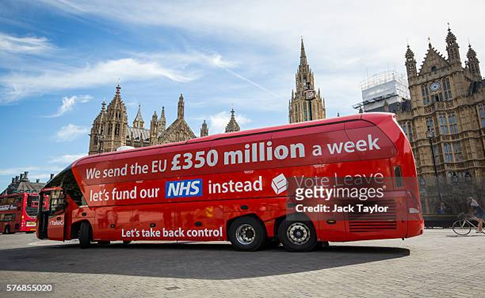
Arguably the most notable reason why the public are losing trust in UK political parties is the campaign and outcome of Brexit. During the campaign for Brexit the pro-leavers stated that the country would save over £350 Million every week and that the money could be redirected towards the National Health Service (Harold D. Clarke, 2017). However, this was not the case, the NHS is currently on the brink of collapsing and the lies about receiving the money caused outrage amongst the public and NHS staff.
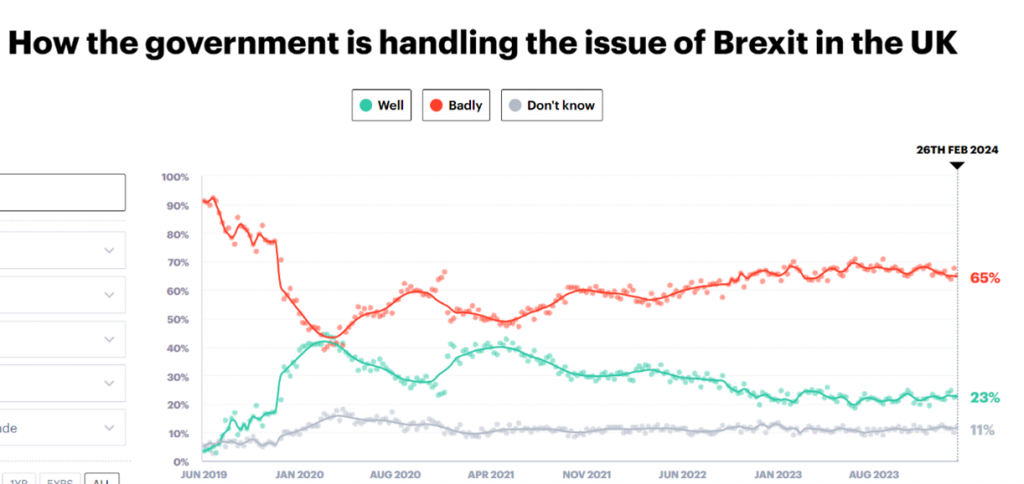
The graph above shows us public opinion on the handling of Brexit clearly it shows that the majority will say that it was handled badly with a slight decrease in early 2020 (YouGov, 2024).
According to a survey conducted by Opinium to mark the third anniversary of the UK’s exit from the EU single market and customs union, a resounding majority of British citizens now feel that Brexit has hurt the country’s economy, increased retail prices, and hindered efforts by the government to control immigration. Additionally, few respondents to the poll of over 2,000 UK voters think that Brexit has been good for them or the nation. Only 9% of respondents think leaving the EU has improved the NHS, compared to 47% who think it has had a negative impact, and only 1% think it has improved their personal financial condition (Helm, 2023).
References
Association, P. (2009, May 23). Humiliated’ Tory MP Peter Viggers quits over duck island expense claim. Retrieved from The Guaridan : https://www.theguardian.com/politics/2009/may/23/mps-expenses-conservatives
BBC. (2019, October 23). Timeline: Renewable Heat Incentive scandal. Retrieved from BBC: https://www.bbc.co.uk/news/uk-northern-ireland-38301428
Harold D. Clarke, M. G. (2017). Why Britain Voted for Brexit: An Individual-Level Analysis of the 2016 Referendum Vote. Parliamentary Affairs, 439-464.
Helm, T. (2023, December 30). Brexit has completely failed for UK, say clear majority of Britons – poll. Retrieved from The Guardian: https://www.theguardian.com/politics/2023/dec/30/britons-brexit-bad-uk-poll-eu-finances-nhs
Smith, M. (2022, February 22). Public opinion of Boris Johnson’s competence and trustworthiness reach new lows. Retrieved from YouGov: https://yougov.co.uk/politics/articles/41170-public-opinion-boris-johnsons-competence-and-trust
YouGov. (2024, February). How the government is handling the issue of Brexit in the UK. Retrieved from YouGov: https://yougov.co.uk/topics/politics/trackers/how-the-government-is-handling-the-issue-of-brexit-in-the-uk