
Just imagine: you walk into a history classroom today — you’ll see the contradiction: syllabi bursting with Black thinkers and Black voices, yet classrooms still governed by white logics of learning.
True decolonization is the only way forward for the academy. This is the time; now or never. The sharp advent of artificial intelligence has outpaced the humanities. Social and political figures have waged war with the humanities, citing poor engagement and poor ROI. (Although how we measure that is a whole other story…) Funders press humanities departments to focus on transversal skills, community-based learning, and social impact activity. Universities are demanding more interactivity between the humanities and the community. The response? How about some more essays and book talks?
That is neither effective practice nor is it emblematic of the values behind decolonization. What does it mean to authentically decolonize? Since 2020, there has been a rise in racial justice and social justice oriented learning. These are admirable and righteous initiatives that are very much needed to reform higher education and deliver on the promises for a better and more equitable society for all of us. Unfortunately, however, current efforts, such as highlighting the few academy legitimized Black, brown, and indigenous voices to the syllabus fails to deliver material change to the shape of the classroom or realistically grant those voices to be heard in order to actually influence knowledge production and what counts as knowledge production.
How can we invoke Kimberlé Crenshaw in the classroom without acknowledging that representation is key, but that it isn’t power? How can we introduce bell hooks’ teachings into students’ reading lists without offering them space for genuine mentorship, opportunities to express themselves, and champion radical debate in the lecture halls? Crenshaw, the organizer behind the Critical Race Theory Summer School, invokes intersectionality and calls out the racial inadequacies of social justice movements and feminist theories throughout her work.
Why do we champion radical scholarship and then compel our scholars to read, write, conceptualize and engage in and with the world following the same dominant, Eurocentric and rigid frameworks that that same radical scholarship seeks to challenge and dismantle? How do we discuss concepts like othering, representation, respectability, feminism, post-slavery, and more if we do not acknowledge how those shape the learning environment and societal landscape that we find ourselves in today?
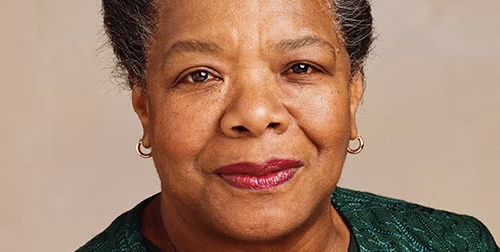
How do we praise the enlightened words of Toni Morrison and Maya Angelou without echoing their pleas for racial equity and justice? We devalue their voices and their scholarship by treating Black voices as commentary, Black pain as spectacle – continuing the concept of othering through pedagogy, and centering whiteness as dominance. When Maya Angelou wrote, “We must be warriors in the struggle against ignorance,” she was not referring to simply adding Black and brown voices to the archive. No, instead she was referencing the reform that is required to fundamentally reshape the way in which we see and talk about the world.
Personally, through my engagement with history, I find that it introduces very broad and abstract – albeit meaningful – concepts without actioning a plan to address these issues from the root nor offer (experimental) remedies that society might strive to practice. What use is it to teach our students about racism, slavery, discrimination, patriarchal and heteronormative norms if we share no meaningful plan to address it? If we do not acknowledge that the classroom was built on those foundations – does that not also mean that we must confront the problem of the troubled classroom?

I call this a form of academic gaslighting and what Charles Mills refers to as “epistemology of ignorance” in the highest-degree. There must be scope to experiment and engage with our ideas; scholars deserve better, communities deserve better, and society deserves better. Ethics are paramount importance to any researcher’s scholarship (and, ideally their moral responsibility). Is it ethical to study grief, pain, trauma, and make observations on a distant or not-so-distant past without delivering some form of remedy or restitution that readers/community members/scholars might further engage and chart a path to action? Otherwise, especially in relation to Black issues, does that not render Black trauma and death as some form of academic voyeurism? As I conduct my own research and craft my own scholarship, I read the frustration and the pain from Black academics – namely, Black historians – who situate themselves in Black studies and anthropology because of the confines of history, the faux-neutrality, and academic voyeurism that it implies through its dominant voices. I look at the scholarship of legends like Saidiya Hartman and Christina Sharpe, whose scholarship challenge dominant Eurocentric approaches to history.
What will it take to cease the practice of this “epistemology of ignorance”? What will it take to liberate the non-white and non-Eurocentric voices in the classroom? What will it take to make the academy truly a partner and in service to the community and society; not an opponent of it or a relic of colonial power? It is important that we ask the ‘why’ and ‘how’ in relation to our understandings of the world. It is not enough to say that ‘this is how we are trained to do it, so this must make sense.’ We must ask why we are trained to do it that way in the first place; and, if that training actually supports and empowers the subjects, environments, and events that we research.