In this interview, Xiaoxiang Ma speaks with Northern Irish filmmaker Tristan Crowe about The Witch of Glentow, a short film drawing on Ulster Scots poetry, local folklore and rural traditions. Crowe discusses the origins of the project, working with local communities, the use of Ulster Scots, the film’s visual influences, and the ambiguity surrounding its witch figure.
This interview has been lightly edited for length and clarity. Repetition and conversational fillers have been removed, while the interviewee’s wording and meaning have been retained as closely as possible.
Could you begin by briefly introducing yourself and your background as a filmmaker?
Tristan Crowe: I guess I’m a filmmaker. I’ve been working for about 24 years now. I’m originally from the north coast of Northern Ireland, from a small town called Portrush.
I originally wanted to go into sound engineering, and then I did a degree in Bristol and came back here and went to work for a small community TV station. I ended up doing camera as well as sound, doing a lot of community-based documentaries on a very varied amount of subject matter and in all sorts of different communities, which was great.
We were filming every other day, so I think that gave us a good base. Because you’re filming so much, you get to know all your equipment so well.
During that time, because I’m so interested in music and sound, I started doing a lot of music videos as well. One of the first music videos I did was based up on the north coast and was around something not dissimilar to The Witch of Glentow. A band I was friendly with did a song about the Spanish Armada. There was a galleon that had crashed hundreds of years ago off the north coast, and the song was about people who had survived the shipwreck and come onto the land.
We did a music video that was based around The Wicker Man. There were people running about with animal masks on and fire torches and things like that.
I ended up doing a lot of music videos during that time, and then over the past five or six years I started moving more towards cinematic short-film and drama-type things.
What first drew you to The Witch of Glentow, and how did the project begin?
Tristan Crowe: We had started doing some Ulster Scots-based films. Northern Ireland Screen has the Ulster-Scots Broadcast Fund, which funds different Ulster Scots projects.
As part of that scheme, we had been doing a series of poetry films. They’re almost like wee music videos, but they’re poems. Some Ulster Scots-based poets who are working today would read their poems, and then we would make a short film around them.
A lot of them are about rural traditions, a lot about loneliness around being farmers and living with the land, and also the contrast between that and modern society. There are a lot of small villages that still live in a similar way to how they might have lived a hundred years ago. Maybe the farming machinery has changed, but the way of life hasn’t changed that drastically compared to the city.
We wanted to look towards some older poems from that area. Glentow is an actual area up towards the north coast of Northern Ireland, and The Witch of Glentow was one of the poems we came across.
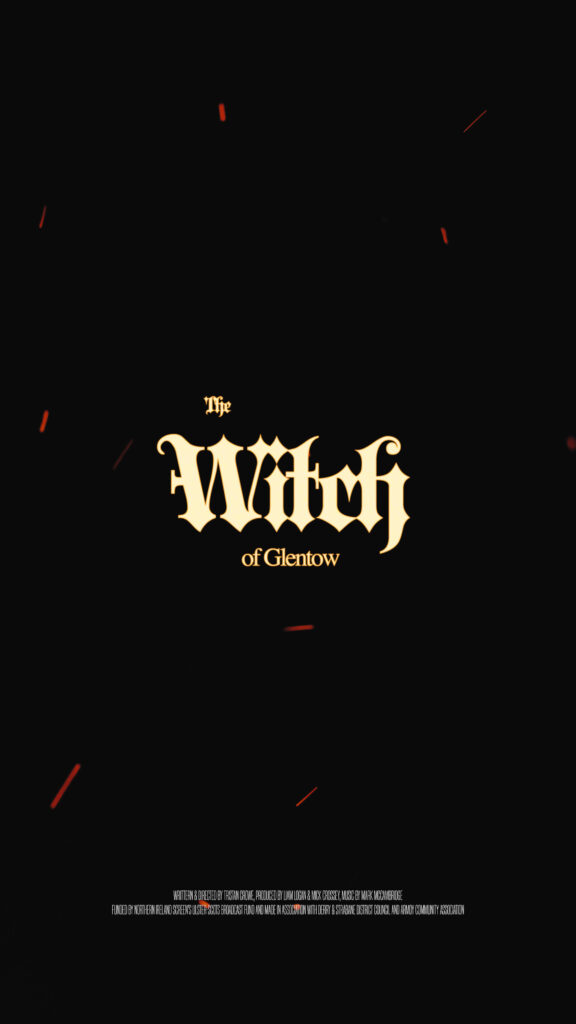
We thought maybe there was something a little bit more that we could do with it, so we started exploring a longer piece. It was a natural progression for us from doing a short four-minute music-video-type thing to, I think, about eighteen minutes for The Witch of Glentow.
Charlie Gillen, the guy at the start of the film, is an Ulster Scots poet that we’d worked with in the past. He had done some translation work for the poem itself.
It was also about building on relationships, because we had worked a lot with the community up in Armoy on the north coast. The kids are from the community centre, and a lot of the actors are amateur actors from that community.
There are a few more experienced actors throughout it, but the bulk of them are amateur actors. For some of them, it was maybe their first role in any sort of film.
That part of it was lovely as well. You take the film back to them and show them it, and they’re all excited about watching themselves on screen, especially the kids. Hopefully it gives them some sort of interest, and who knows where their careers might go.
You also mentioned that the small church in the film has an unusual history. How did you find it?
Tristan Crowe: That church was somewhere we had filmed before. It’s in somebody’s back garden.
An old farmer built it himself. He built this big yard, almost like a farm where he could bring kids around to meet the animals. But he built the church himself in his back garden.
It’s not an old church — it might be about fifty years old — but he built it and filled it with things that he had found or collected over the years. It was lovely for him to let us film in it. It’s amazing in its own right, that wee church just for him and his family.
I first came across it years ago when I was working for the community TV station. We were going around doing different little films and interviewed him there.
I usually have a wee note in my phone of interesting locations that might be useful someday.
It’s funny: just by being in those areas and getting to know everybody, you come across these places. None of them have a website. You can’t Google them. Having those community contacts, and having the community involved in the project and bought into the project, is invaluable.
What were the main challenges in translating the poem and its oral storytelling tradition into a cinematic narrative?
Tristan Crowe: I think there’s some leeway with it.
The idea of the short film is that Charlie Gillen, the poet at the start, translated the poem into an Ulster Scots version. He tells the kids the poem, he reads the poem to the kids, and then the idea is that the poem is in the back of everybody’s minds, just like oral traditions are in the back of everybody’s mind.
If you hear that there’s a story of a ghost in the house next door, it’s always in the back of your mind.
Normally, if you hear a noise, you might think it’s just kids messing about. But if you hear a noise and you know that story, then maybe your mind jumps to, “Maybe there is something.”
Having those traditions in your subconscious was the idea.
Then after that it’s like: has the witch from that poem returned to this area? Loosely, things happen that are similar to the poem, like the drowning and things like that.
So there’s a bit of artistic leeway in that.
One of the ways the idea came about as well was through Robert Eggers’s The Witch. It used this older form of English, and I thought something could be done in a local language here around that, and around local traditions.
There’s lots of language in The Witch of Glentow that people outside that region wouldn’t understand. People in Belfast wouldn’t understand a lot of the language that’s spoken there.
But you get the meaning behind that language. You understand that something’s going wrong.
That was always a balance we were trying to get: you understand what’s going on, but you don’t necessarily have to understand every word that’s being spoken.
I’m okay if the audience is confused and doesn’t understand everything. I’d rather that than it being too clear or too by-the-numbers.
I’d rather it was a little bit too strange than too standard. It’s always about striking that balance.
Does that mean the atmosphere created by the language can be more important than understanding every individual word?
Tristan Crowe: Yeah. And I guess that’s the same across the globe as well. There are lots of different dialects and different languages.
Especially here, we find that rural languages are looked down upon. People don’t respect rural languages and rural words as much as words that are spoken in the cities.
There’s also a challenge in these communities with the importance of American culture. All the kids watch Netflix. A lot of them even develop wee American accents because they’re watching that much American culture.
So it’s battling against that, giving people something that is in their own language and that the people next door speak, and having it in a short film as well.
Not a lot of people are doing that, so I thought there was a wee niche for me to do something interesting in there.
Some images in the film particularly stayed with me: the butterflies, the animal-headed figures, the landscape, and the use of extreme slow motion. How did you develop those images, and what influenced them?
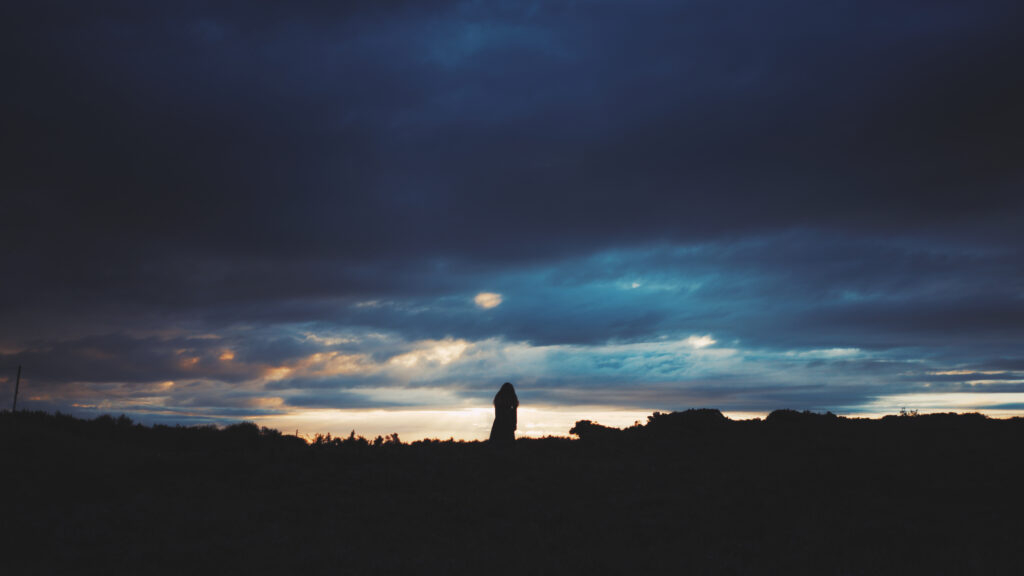
Tristan Crowe: The super-slow-motion stuff was shot on a camera called the Chronos camera, which shoots at about a thousand frames a second.
Because it shoots at a thousand frames a second, it needs tons and tons of light. It’s quite awkward to use because it only records about eleven seconds at a time, and then after you record those eleven seconds, you have to wait before doing the next shot.
So it’s a whole process, which is quite awkward, but it was something that I was interested in experimenting with.
The first time I really came across that sort of thing was many years ago in Amsterdam. I was walking through the main plaza and saw a big sign that said “Tristan” above a door — Tristan’s Ascension by Bill Viola.
I had no idea what it was, so I walked in. It was a visual installation. There was a guy lying on a kind of plinth, and this massive amount of slow-motion water came down on top of him, and then the body rises up.
It was amazing. It was on a massive screen in a church, with this big soundscape.
That piece really hit home with me, and then I looked into more of Bill Viola’s films and installations. He did a lot of slow-motion work with water.
I was also influenced by Lars von Trier. Some of the slow-motion work in Antichrist was lovely, and Melancholia had that kind of slow-motion, almost Ophelia-type, painterly imagery as well.
Then there are the local traditions.
There are obviously traditions in a lot of rural areas around ghosts and fairies and things like that.
There’s also a reference in the film to homemade alcohol — poitín-type alcohol. In these regions they would have made their own alcohol at one time. You can imagine the varying strengths of the alcohol, or something being in the alcohol, and the effect that might have on people’s minds.
There are also traditions around that area connected with the Christmas Rhymers.
The Christmas Rhymers would have been a collection of people who visited houses around Christmas. They would knock on the door, be invited in, and do this little mini-play with a very strange story.
They would be dressed up in strange homemade outfits. Some of the masks were wicker or straw. Then they would tell these stories and be pushed out again.
So there’s a mix of all those different influences in some of the imagery, and also something like The Wicker Man.
With the witch, the thought behind it — though it’s not very clear in the film — is that she’s drawing her strength from nature.
She might be drawing her strength from the butterflies, and then the butterflies die. She’s having this effect on nature and drawing strength from it.
There are lots of different bits and pieces thrown in there.
And a lot of the time I think as well: what’s going to look good? What would make a nice image to put on the screen?
Sometimes that’s as important to me as anything else.
At the end of the film, is the woman really the witch returning, or could she represent other women who were persecuted as witches?
Tristan Crowe: I leave it open to interpretation.
Even those images that are put through the film — are they hallucinations? Are they real things?
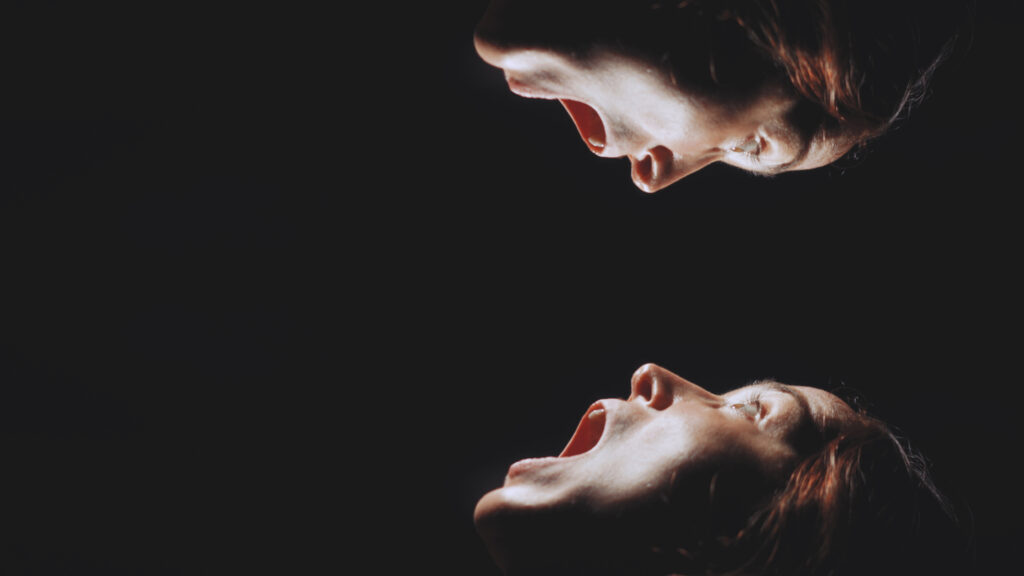
At the end, what she’s doing isn’t particularly supernatural. She’s just hitting somebody with a peat spade. So I don’t know, to be honest. I leave it open to interpretation.
But whenever you’re talking about women in general around that time, one of the reasons why people were persecuted as witches was that, whenever a woman’s husband died, she might have been thrown off her land.
Then she might go around other houses begging. If somebody said no, she might put a hex on them or curse the house or say something.
Then if something bad happened in that house, coincidentally, people could say: “That person’s done that. She’s a witch.”
Then she gets persecuted.
So I think there are little bits of that through the film: the persecution of women and women being blamed for things that aren’t their fault.
I guess that’s part of the basis of the witch trials in general.
There’s also a book written by King James called Daemonologie. He explained what witches were, and it was one of the influences around the witch trials.
There are references to that in the film.
The minister in the film is coming from Scotland, where King James was from, and he is bringing that information over to these local people.
The idea is that he has read this book and is saying, essentially, “This isn’t just a tradition. I’ve got this information. This is fact and you need to do something about it. It’s not just a ghost story; it’s something real.”
So he’s bringing that information into a small village that hasn’t heard that kind of information before.
But it’s not meant to be too on the nose. It isn’t explained too much. He’s simply from Scotland and bringing information across, while that book and the existence of that real book sit behind the character.
In many folk-horror films, an outsider enters an isolated community and is overwhelmed by its traditions. In your film, the conflict seems to come from within the community itself. Was that an important idea?
Tristan Crowe: I guess so.
You wonder where that poem originally came from. What was the influence on that poem? Was it based on some sort of oral tradition that was passed down? Was it based on any sort of fact?
A lot of that stuff would have been undocumented in these areas.
And with rural traditions, especially in those times, you’re so reliant on harvests, on the crops doing well. You’re reliant on the sun coming out at the right time. You’re reliant on storms and insects not destroying the crop, or some sort of disease not going through the crops.
So religion and hope and nature are ingrained in your thinking, because if nature isn’t kind to you, then you’re doomed in a way.
I guess I’m drawn to that: working with nature and rural, isolated communities.
You’re at the mercy of nature, really.
Is there anything about the film that you feel audiences often misunderstand or overlook?
Tristan Crowe: I don’t particularly mind the plot. I don’t really worry if people understand it. I think most people get that there’s a witch and there’s particular imagery throughout.
But one thing people do misunderstand is Ulster Scots.
Ulster Scots has a certain connotation here. Like I said earlier, rural languages across the globe can be looked down upon, especially in urban areas.
It’s also seen as more of a Protestant culture, which it’s totally not. There are a lot of misconceptions around the language.
Whenever people see “an Ulster Scots horror” in the description, sometimes it’s discounted.
I’ve had discussions with people who would say they’re very left-wing and open to new ideas, and surprisingly those are sometimes the type of people who come to me and say, “Why are you doing that? That’s all nonsense and made up.”
So it’s strange seeing that side of things.
That’s always one of the issues doing stuff in Ulster Scots, alongside trying to make something that is authentic to the area.
But then people see the film and say, “My granny used to say that word and I haven’t heard it in years and years,” or, “I’ve never seen those words in a short film before.”
I find that great.
Even films like Trainspotting use very broad Scottish language and working-class Scottish accents. I don’t think that was seen too much on the big screen before Trainspotting.
I think there’s scope to do that for us as well: to have more local things.
There’s an importance in having that, so it’s not just American accents and we’re all watching Netflix. There can be local films that people watch for entertainment, as well as giving them some sort of context for where they’re from.
Finally, what are you working on at the moment, and where can people follow your work?
Tristan Crowe: At the minute I’ve got a couple of music videos on the way.
I released one recently that was a kind of Wes Anderson-inspired music video by a band called Good Swim. There’s another one I’m working on which is more of a retro dance-performance thing.
I also do a lot of sports work. I make wee inserts or small pieces that go onto BBC broadcasts as part of the GAA matches.
I’m working on a number of longer-term projects as well. We’ve got a project doing a kind of audio trail of Divis Mountain, which has a little bit of Ulster Scots and Irish involved in it as well.
I’m also doing a couple of installation pieces, and I’m hoping to do more of that kind of art-installation work. One is around nature and the body, with quite abstract ideas around that.
And obviously we’re looking at more short films in the future as well. We’ll be writing up a few scripts and seeing if we can get any interest in getting them made.
My company is called Negative Waves https://www.negativewaves.co.uk/. Instagram is mainly where I put things these days, but there’s Facebook and a website as well.
Interview conducted and edited by Xiaoxiang Ma