In this interview, Xiaoxiang Ma speaks with Northern Irish musician, producer and composer Nick Carlisle about Häxan With Live Score By Nick Carlisle, commissioned by Queen’s Film Theatre in 2022 for the centenary of Benjamin Christensen’s 1922 film Häxan. Carlisle discusses his attachment to analogue instruments, nostalgia and AI, the physical experience of live performance, composing scene by scene for silent cinema, the influence of 1970s folk horror, and the ways music can reshape a film’s narrative and emotional meaning. He also reflects on his recent solo work, future performances, and the planned inclusion of Häxan – A Soundtrack in Queen’s Special Collections and Archives.
This interview has been lightly edited for length and clarity. Repetition, conversational fillers and interruptions caused by the online connection have been removed, while the interviewee’s wording and meaning have been retained as closely as possible.
Could you begin by briefly introducing yourself and your musical background?
Nick Carlisle: I taught myself piano as a kid and got very into music when I was young. I went to Queen’s University Belfast, and I basically used to spend my university grants on synthesisers rather than what I was supposed to be spending them on. I started playing in bands while I was at university.
It was the early 1990s, and the sound of music had changed a lot, moving from analogue to digital during the previous decade. I was very much into the older analogue sound. At that point you could walk into a shop and buy an old second-hand analogue synthesiser from the 1970s for maybe £200, whereas nowadays it might be £8,000. I was able to put together a little rig of old synthesisers, and I have loved that sound ever since.
I moved to Brighton in 2001 and later became involved in the DIY electronic and punk scenes in Brighton and London. I played in projects including Peepholes and Bamboo, both of which released music through Upset the Rhythm. We would play with acts such as Future Islands and John Maus. It was experimental DIY music, and we did not want it to sound commercial. I used to say we were trying to make music that could never be used in an advert.
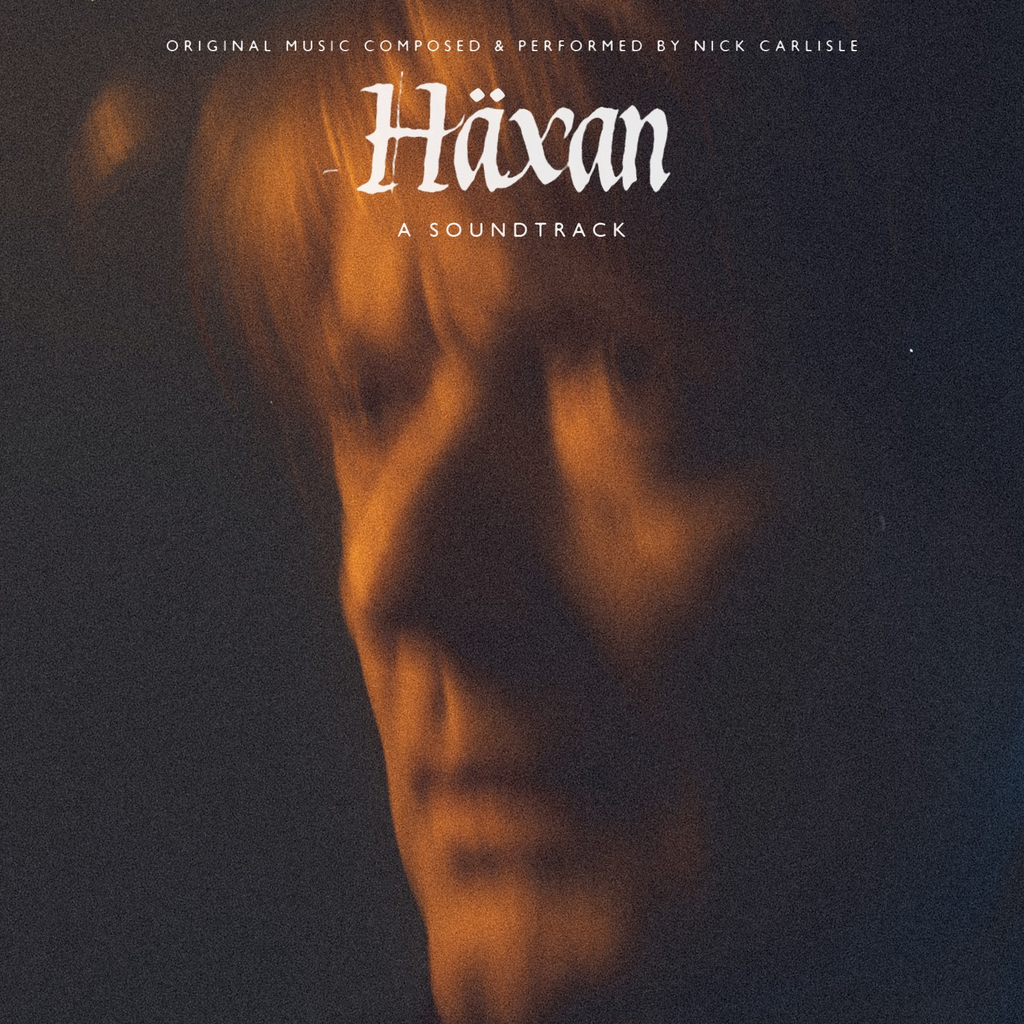
In the 2010s I started working on a project called Katy and Nick. It was around then that I chanced upon a particular sound palette that eventually carried over into Häxan. A couple of pieces that ended up in the score had originally been intended for a later Katy and Nick project, which never happened, so, having been commissioned by Queen’s Film Theatre in 2022 to create the new live score for Häxan, I adapted them for the film. I released an album of highlights from the soundtrack under my own name, and that gave me the momentum to continue making solo albums.
You have remained very attached to older analogue sounds. Where do you think that comes from?
Nick Carlisle: I have an older brother, and when we were children our family lived in a house in the countryside outside Hillsborough. We moved away in 1977, when I was still very young. I only had a few memories of that house, and we never went back, so in my memory it became almost magical.
For my whole life, that has made me very interested in the period around 1973 to 1977. I do not think it is a coincidence that so many of my favourite albums are from that time – the sound of the instruments, the production, all of it. It was a mysterious period of my life that I can barely remember, but it seems magical in retrospect. There was a stream and a little meadow down the back garden. It was all very picture-book, almost fairy-tale. I think that personal memory has a lot to do with my attraction to those older sounds.
That nostalgia seems to sit alongside your use of contemporary technology. How do analogue instruments and AI fit into your practice?
Nick Carlisle: I do think music became much more commercialised from the 1980s onwards. Instruments became more mass-produced and everything went digital. I use a MacBook myself, of course, but I am very interested in old instruments – how they sound, the tactile interaction, turning the dials and actually playing them.
When I make my solo albums now, I often put together demos using software instruments and then replace them with their real counterparts: a real Hammond organ, real piano, real drums and so on. The further we move into the future, the more nostalgic I seem to get. The direction of things can be frightening, whether that is the climate crisis or AI, so I think there is an argument for holding on to the past a little.
But I would not call myself a Luddite. I use digital effects, and I have used something as basic as an AI drummer for demo purposes. I do not use AI for songwriting or the actual composition and recording of my music. One thing I think is missing from a lot of the debate about AI and music is the relationship between the musician and the music. The discussion is often framed entirely around the audience: if the audience cannot tell the difference, does it matter how it was made? But that leaves out the experience of the person making the music. There is such joy in playing an instrument. Typing in a few prompts cannot replace that.
If you remove the musician from that relationship, what you are left with is product. I am sure AI will be used for a huge range of things in the arts and culture, but some of it will inevitably become commercial background material – something that can be put on in a cafe without paying musicians or PRS. That leaves the musician out altogether, which is a shame.
That seems closely connected to live performance. What is different about experiencing Häxan live rather than listening to the soundtrack at home?
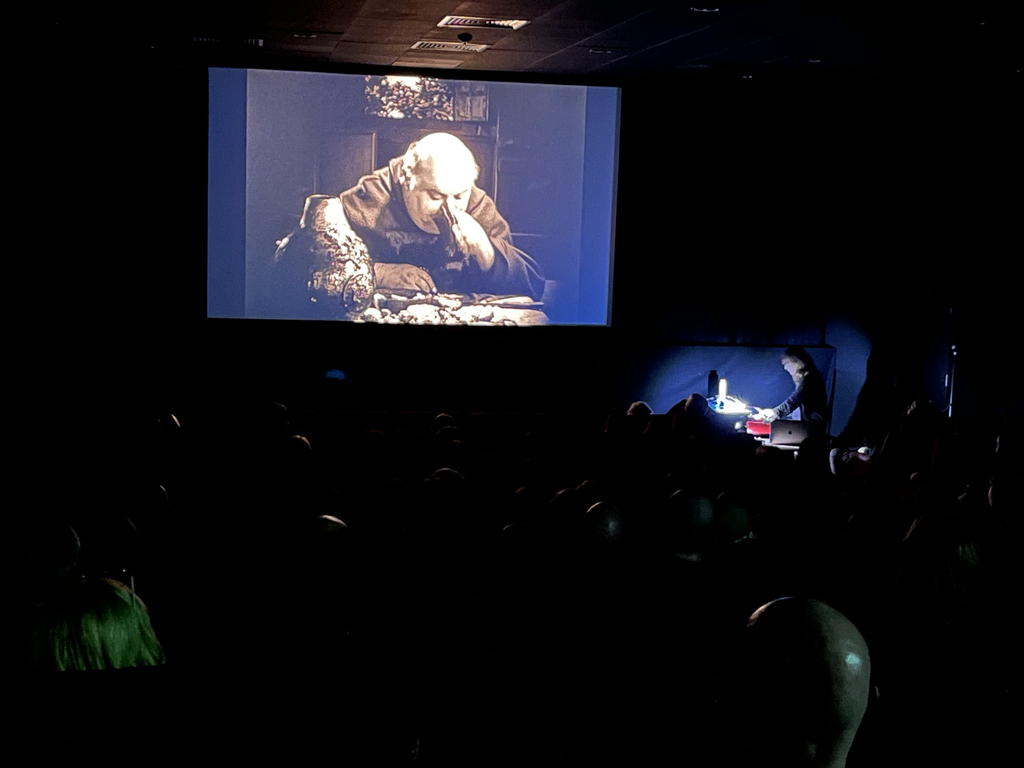
Nick Carlisle: Nothing beats bass reverberating in your chest when you are standing in front of a proper PA system and hearing music at that volume. Live music is very different from listening through headphones or on a laptop.
With the Häxan show there is also some scope to do things a little differently each time. Not dramatically differently, but there are places where I am genuinely improvising, particularly in some of the noisier sections. That means it is still alive, in a way. It is not completely committed to tape, to use the old expression. It is still changing in performance. There is definitely something to be said for that live experience.
Häxan is more than a century old. How did you approach creating a new score for a contemporary audience?
Nick Carlisle: I did a little research, but only a little. For example, I researched Sámi drums and bought something similar to use in the score. But mostly I did not want to approach it as a historical reconstruction.
One of the instruments I use most is the Mellotron. I am using a modern digital version, but the original Mellotron from the 1960s was effectively a tape player built into a keyboard. Each key would play a strip of tape containing a recorded note – perhaps a cello, for example. It was an early sampler. One of the cello sounds has a particularly strange quality in the lowest notes because, when the original recordings were made, the cellist would not tune his instrument any lower for fear of damaging it, so a double bass was bowed instead. It produces this very scrapey, strange sound, and I use that a lot in the soundtrack.
I listened to some scores that were supposedly closer to what might have accompanied Häxan in the 1920s, and some of them were very jolly and jaunty throughout. For me, that did not fit the moods and atmospheres of the film. At the same time, I did not want to sit down with a modular synth or laptop and simply improvise strange sounds for the whole film. That approach can work, but it was not what I wanted.
Instead, I worked through the film scene by scene. Häxan is made up of a series of vignettes, and because it is silent, I found that almost song-like instrumentals could work very well. There is one piece with a vocal, but most of them are instrumental songs. We are watching people who are meant to be speaking and interacting, even though we cannot hear them, and I wanted the music to acknowledge that human presence.
The palette moves between things like Baroque harpsichord, nursery-rhyme elements and darker cello textures. In the final part of the film, when the setting moves into the 1920s rather than the medieval period, I introduce the piano. There is a small shift in the palette to suggest that we have entered the twentieth century.
The score uses synthesisers and digital technology, but it rarely feels tied to the present day. How did you think about that sound palette?
Nick Carlisle: I do use synthesisers and Mellotron, so you are not wrong to call it electronic, but I do not really think of the score as simply electronic music. The synthesisers are being used in a scary, unhinged, medieval-ish or Baroque way, depending on the section of the film.
The palette is not historically accurate to either the 1400s or the 1920s – there are analogue synthesisers in there – but there is harpsichord, and sometimes the synthesisers are effectively trying to become little flutes or other older sounds. I think I was also subconsciously thinking about 1970s folk horror. Maybe I was trying to get some of that feeling: a kind of ‘1970s medieval’, if you like.
One scene that particularly stayed with me was the section around the thieving daughter. Some other scores make that moment feel almost comic, while yours made me sympathise with her. How consciously were you using music to shape our response to the character?
Nick Carlisle: That is a really pivotal point. The piece is actually called ‘The Thieving Daughter’. As a film viewer, you know that music can change a scene quite substantially. I definitely wanted to bring out sympathy for the girl and a sadness about her predicament. I was very much on her side with the music, and I wanted the audience to be on her side too.
I have watched other scores for Häxan where the music did not always seem to be trying to synchronise emotionally with what was happening on screen. For me, that scene was an opportunity to reflect one of the things Häxan does so well: it touches a wide range of emotions as it goes along. That range needed to be reflected in the music as well.
After spending so much time composing and performing the score, did the project change the way you think about film music?
Nick Carlisle: I had to watch Häxan many times in order to compose for it, so I obviously came to know the film very well. It is also an intense project to play live. This is a slight aside, but sometimes I almost feel a connection between the cast and myself. When the performance finishes, it feels as though we all heave a sigh of relief together, even though the actors have been dead for decades.
The project changed the way I think about other people scoring old silent films more than it changed the way I think about film in general. I now notice more clearly what feels genuinely engaged with the film and what feels like treading water. That applies to the sound palette as well. There is a particular kind of digital string sound that is sometimes used because people think, ‘We are watching a silent film, so this should sound like the stock music that was later associated with silent movies.’ It has become a trope, and it was something I wanted to avoid.
I learned a great deal about how music relates to an individual scene, how it can alter the mood, and how themes can be introduced and then reintroduced. At the same time, Häxan is a very unusual film. It is part lecture, part theatrical performance, part history and part psychology; it is not even a horror film in a conventional sense. It was an outlier in its own time. So in some ways it remains an isolated project for me – it is the only feature film I have scored.
Häxan moves between very different tones and forms – horror, comedy, historical reconstruction and something close to documentary. Yet your score gives the film a strong sense of coherence. How did you build that?
Nick Carlisle: Because it is silent, and because certain characters appear, disappear and then return, I was able to use recurring themes. That is particularly useful in a film that is around an hour and forty-five minutes long. By the time the audience reaches the end, there is a sense of familiarity: ‘I have heard this before.’ Several pieces recur, which gives the film coherence.
There is also coherence in the sound palette itself. Until the film shifts into the 1920s near the end, the timbre remains broadly consistent. Even when I introduce the piano to suggest a little twentieth-century modernity, some of those later pieces are piano versions of the strange medieval, scrapey cello material heard earlier. So the palette changes, but the musical memory remains.
It was intentional, but it was also practical. I did not have to write one hour and forty-five minutes of completely new music. A piece might appear early on, then return an hour later, and then appear again twenty minutes from the end. It makes sense structurally and it works for the audience as well.
At one point you joked that, during the witches’ Sabbath, you are almost trying to ‘torture the audience’. What are you trying to achieve in that section?
Nick Carlisle: It is certainly not there just to make people comfortable. The witches’ Sabbath goes on for around seven minutes, with all this debauchery, devils and chaos. I am playing very noisy, discordant material over a drum, and it is meant to feel relentless.
Obviously I do not literally want to torture the audience, but I want them to feel something of the fear they might experience if they had come through the woods and suddenly witnessed what is happening on screen. You hear the drum and these huge, deep sounds that make the ground shake. The aim is to draw those emotions out of the audience, not simply to provide pleasant accompaniment.
What are you most excited about in the next stage of your work?
Nick Carlisle: I am writing the next album now, which will come out in 2027. The Mad Decades came out in May this year, and ‘Jester Quantised’ received a good amount of radio play, which was satisfying because it is quite an unusual song.
I am also beginning to play live with my solo material. Since Häxan, I have released three solo song albums: Bloody Saturnalia in 2023, Sailors On The Roiling Sea in 2024, and The Mad Decades in 2026. I have put together a band with drums, bass, guitar and myself, and we are playing material from those albums, as well as hopefully a new song from the next record.
That is exciting because, apart from the Häxan performances, my previous live work has always been as part of bands. This is the first time I am playing live around the solo albums under my own name. I have wanted to reach the point where there is enough of a back catalogue to build a set and perhaps surprise people with an older song if they know the records.
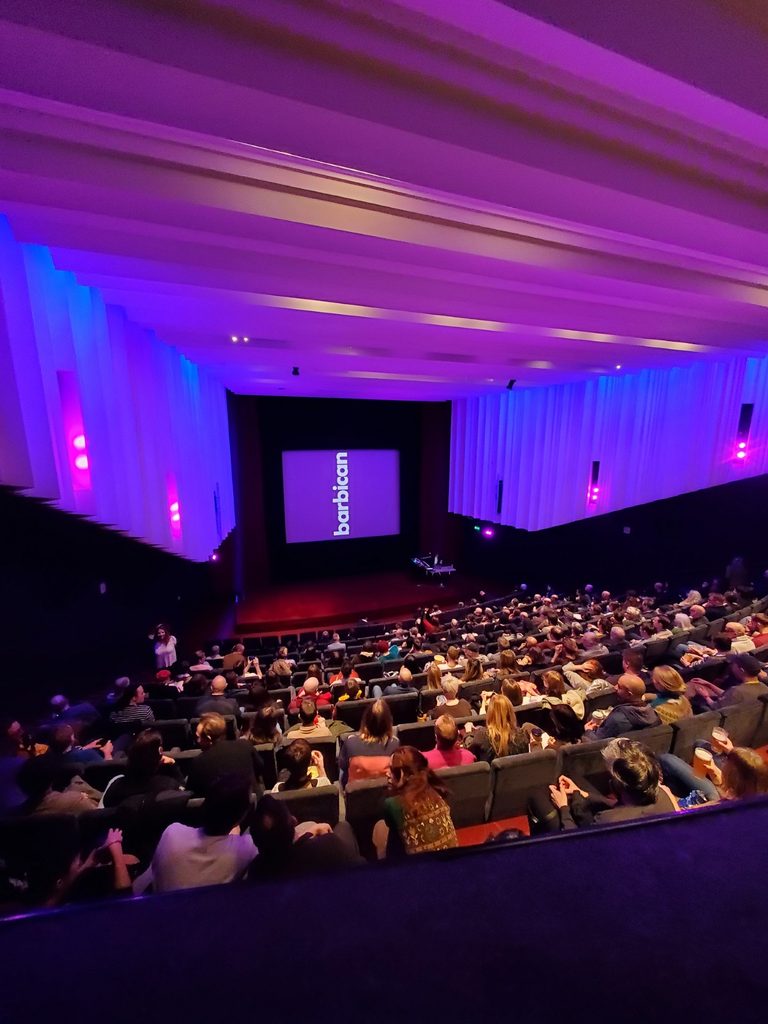
I also hope there will be more Häxan performances. I usually do around two a year. The Barbican shows in 2024 sold out, and they said they would like to have me back, so hopefully that happens again. I would love to play in Belfast again as well. I live in Brighton, so I am not around Belfast all the time, but my mum still lives in Northern Ireland, which at least makes it easy to come over if someone asks me to play.
Before we finish, is there anything about Häxan or the project that you would particularly like to add?
Nick Carlisle: There is one thing that was a great honour for me. After the QFT performance, someone from Queen’s Special Collections and Archives spoke to me. They are putting Häxan – A Soundtrack into the archive, alongside material ranging from medieval manuscripts to figures such as Seamus Heaney.
It is really the soundtrack album that is entering the archive, because the complete live score does not quite exist outside the performance itself – it is an hour and forty-five minutes long and changes a little when I play it. But the album will be there for people to hear long after I am gone.
That meant a lot to me. It felt like the soundtrack had received recognition from a place that matters, and I was very honoured by that.
Interview conducted and edited by Xiaoxiang Ma