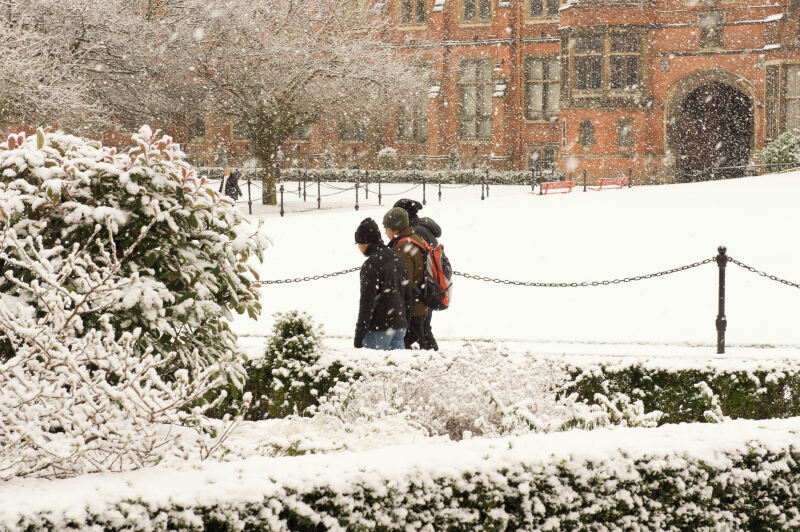
As we move into the darker nights and temperature change of the winter months, students regularly talk about a noticeable impact on mood. This is especially true for international students who are unfamiliar with the damp and darkness of a Belfast winter. On the shortest day of the winter solstice, this part of the world will experience 7 hours and 20 minutes of daylight. This is a sharp contrast to the summer months where the longest day is just over 10 hours.
It is not unusual to feel the effects of change of temperature and daylight hours. Students tell us that at this time of year, mood can be lower, there is an increased feeling of isolation and a tendency to want to hibernate. If energy and motivation are lower, this can pose a problem for attendance and winter assessments, starting a whole cycle of stress if falling behind.
Being active can be more of a challenge in the winter months as outdoor activities are affected by weather and the unwillingness to travel in the dark and cold prove to be an additional barrier. The darkness can bring safety concerns for many, not just due to travel conditions but in increasing the perception of vulnerability.
Our circadian rhythms telling us that darkness equals time for sleep can change our nighttime behaviours. More people head home to pyjamas rather than arranging social activities after completing daytime routine. This too increases isolation. Low energy or low mood can further reduce motivation to connect with others and increase the draw to the bed or the couch.
Things that can help:
- Routine- plan out your week to consider the change in daylight hours. If you don’t want to go out in the evening, find other times to schedule in things that boost your mood and energy.
- If safety after dark is your concern, plan your way to and from social activities- lift shares, groups to walk with, accessible locations, etc. Having things to look forward to can be very helpful at this time of year.
- Stay connected! Even if you are not seeing people face to face, you can still speak to friends and family on the phone, What’s App, etc. If your communication involves exchanging memes about your day, it shows that someone is thinking of you.
- Exercise. This might not be what people want to hear, but it is the main coping strategy for life’s stressors for many people. And it works! Find a way to incorporate it into your week. If it can be done socially, all the better!
- Maintain your sleep routine- napping on a cold winter’s day might seem attractive (and the odd Duvet Day can be beneficial for self-care) but if this is something that is happening regularly and affecting your nighttime routine, it can lead to other sleep issues and lower energy.
- Diet- having a diet rich in vitamins and protein will help with energy levels and mood.
- Listen to your body. It is ok to take the rest if you need it. Be aware that there are 7 types of rest and it not always about needing sleep to feel restored.
There is a difference between feeling impacted by the onset of winter and experiencing debilitating symptoms. Seasonal Affective Disorder is a type of Depression that follows patterns by season. It is characterised by persistent low mood, loss of interest in activities, feelings of guilt or worthlessness and feeling lethargic during the day. If you are experiencing these symptoms, it is best to speak to a GP for advice. There is more information on the NHS link in the resources section below.
Resources
Overview – Seasonal affective disorder (SAD) – NHS
Stress Control NI- HSCNI Stress Control online classes/webinars- Home – Stress Control
Move More Feel Good | Action for Happiness
Rest and Restore: Rest and Restore | Action for Happiness
The 7 types of rest that every person needs |
Safety:
Information for Students | Public engagement | Queen’s University Belfast
Activity:
Clubs and Societies | Study | Queen’s University Belfast (qub.ac.uk)