


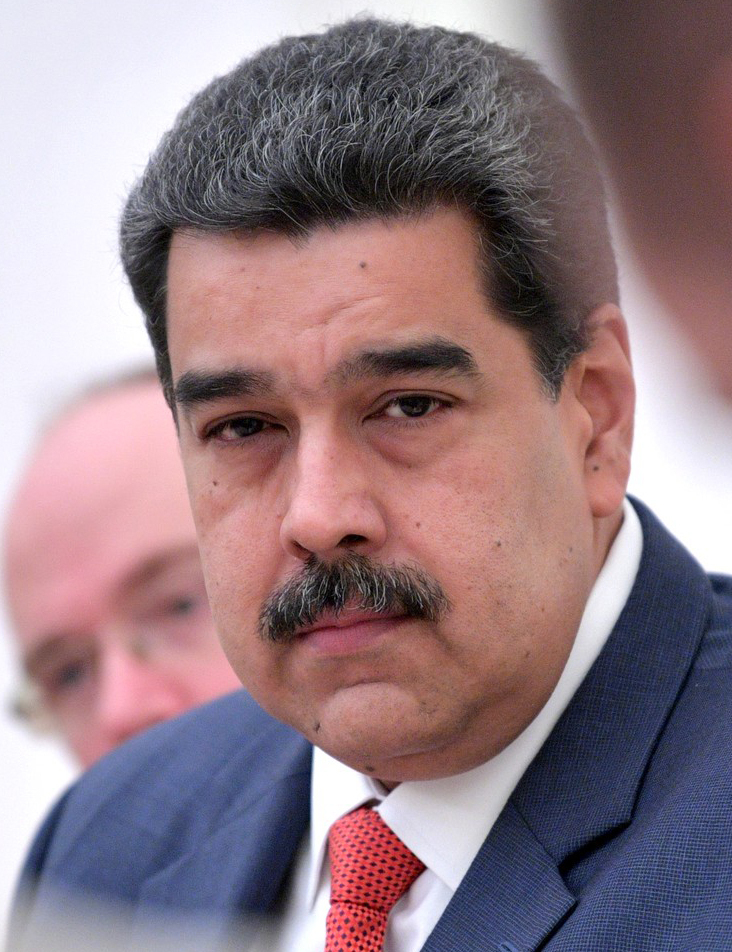
During the Venezuelan Crisis of 1902-1903 President Theodore Roosevelt regarded the Venezuelan dictator of his day, Cipriano Castro, as “an unspeakable villainous little monkey.” Fast forward one hundred and twenty years later, the current White House incumbent similarly decried Venezuelan President Nicolás Maduro as an “outlaw.” Yet it didn’t just stop at trading insults, Trump invaded the Venezuelan capital and captured Maduro and his wife.
It was in November last year that President Trump made explicit his administration’s key national security and strategic interests. His new National Security Strategy speaks of enforcing a “Trump corollary” to the Monroe Doctrine ‘to restore American preeminence in the Western Hemisphere.’ It is characteristically and unapologetically direct – it is his “Donroe” doctrine.
The Monroe Doctrine, declared in 1823, was arguably one of the first definitive statements on foreign policy by the United States which was then in its relative infancy. By 1823, the United States had 24 States, before the rapid movement towards Westward expansion. It was a largely defensive declaration warning European colonial powers against further interference in the Western Hemisphere, particularly its old British adversary.
Yet Trump’s corollary to a two-century-old political statement of intent aligns with the United States’ long history of involvement in Latin America. The shadow of that history has been cast into sharp focus with Maduro’s deposition. It is hard not to be drawn back more than a century, to the presidency of Theodore Roosevelt and his recasting of the Monroe Doctrine, and to the United States’ view of the Western Hemisphere as its own backyard. Theodore Roosevelt’s presidency was regarded as radical and unorthodox. He infused the office of President with a ‘boundless energy’ to which it had not been accustomed. Roosevelt challenged the status quo in both domestic and foreign arenas. The circumstances of the shift regarding Monroe in his day followed Venezuela’s defaulting on debts owed to Germany and Britain which resulted in both nations blockading its coastline. Roosevelt viewed any European action in the Americas with scepticism, if not outright hostility.
In his December 1904 annual address to Congress, Roosevelt announced what became his own corollary to the Monroe Doctrine. He declared:
‘Chronic wrongdoing, or an impotence which results in a general loosening of the ties of civilized society, may in America, as elsewhere, ultimately require intervention by some civilized nation, and in the Western Hemisphere the adherence of the United States to the Monroe Doctrine may force the United States, however reluctantly, in flagrant cases of such wrongdoing or impotence, to the exercise of an international police power.’
This was not merely theoretical it too was direct, infused with the dominant personality of Roosevelt. As the eminent historian of the United States Presidency, William Leuchtenburg, observed, the 1904 Corollary ‘converted the Monroe Doctrine from a warning to European powers against intervention in the Western Hemisphere into an announcement that the United States reserved to itself the right to intervene.’
In 1903, Roosevelt sent the US Navy to prevent Colombian forces from suppressing a separatist uprising in Panama. Within days of Panama declaring independence, the United States recognised the new country and secured control of the Canal Zone, which gave way for the eventual construction of the Panama Canal. The move provoked fierce criticism at home. Democrats accused Roosevelt of making war without Congress, violating international law, and pushing the republic towards empire. Some even called for his impeachment. Roosevelt was ultimately exonerated, and the episode became a lasting precedent for unbridled presidential power in foreign affairs. Does this sound familiar?
Over one hundred and twenty years later, similar and predictable arguments and accusations are once again being heard following Donald Trump’s military strikes on Venezuelan military bases and the capture of its leader, Nicolás Maduro. Supporters argue that Trump did not start a war but enforced order in America’s own hemisphere and oversaw the culmination of a policy which began with a $50 million bounty on Maduro’s head. His core base within his administration declare that instability, drug trafficking (“narco-terrorism” being the new buzzword) and mass migration are real domestic threats, as outlined within the recent National Security Strategy. His national and international detractors counter that the President acted without proper authorisation, crossed constitutional and, increasingly meaningless international lines and flagrantly promoted an American exceptionalism, just as Roosevelt’s opponents claimed in 1903 and 1904.
It is understandable why many would think President Trump’s action is unprecedented, if this history is unknown. However, the existence of the rules-based international order, to which we have become accustomed, is now questioned like never before. Yet anyone familiar with the fundamentals of the Monroe Doctrine and its subsequent iterations, will know that the United States does not necessarily equate military action in Latin America as engaging in foreign wars. These were the “forever wars” which Trump railed against in 2024 and to which he pledged America under his watch would never again become entangled.
The US, and especially Trump’s US, sees involvement in countries such as Venezuela, strategically though the lens of regional housekeeping and law enforcement. As Katy Balls wrote in The Sunday Times, Trump. views drugs, migration and organised crime beyond the United States’ southern border ‘not as foreign policy problems but as domestic ones with a foreign address.’
Trump has framed his reorientation away from the Middle East in his signature style as the “Donroe Doctrine.” He wants to show that the United States will not tolerate rival powers, hostile regimes or criminal networks turning parts of the hemisphere into staging grounds for drugs, migration pressure or foreign influence. All things he charges Maduro of facilitating.
What is clear is that the so-called “Donroe Doctrine” was not devised overnight, but is instead the product of a carefully constructed set of strategic aims that have realigned United States policy and ensured that the language of American military might is not just kept in reserve but actively engaged when the circumstances arise. Figures such as Marco Rubio, JD Vance, and Pete Hegseth have no doubt been centrally involved in shaping this approach.
In his second inaugural address in January 2025, Donald Trump praised earlier presidents such as William McKinley, spoke approvingly of America’s past assertiveness, and even proposed renaming the Gulf of Mexico as the “Gulf of America”. Theodore Roosevelt famously admired the West African proverb about speaking softly while carrying a big stick. Trump, by contrast, prefers to brandish the stick loudly. Power comes first, explanation second. Subtlety, nor speaking softly is not part of the performance.
History does not repeat itself exactly, but American history comes close. The debate now unfolding over Trump’s actions in Venezuela follows a familiar American pattern. As in Theodore Roosevelt’s time, the question is not simply whether the United States has acted forcefully, but whether such action can be squared with its long-standing claim to be a stabilising presence in the Western Hemisphere. The capture of a Latin American leader and his indictment on federal charges, on everything from narco-terrorism to cocaine importation, may be a first for America’s history in the strict sense, yet at its core it reflects an enduring belief that disorder in America’s ‘backyard’ ultimately demands American intervention. It will be one which Donald Trump will use to the fullest effect, courtesy of “Donroe.”
About the Author
Peter Donnelly is a tutor at the Law School at Queen’s University Belfast and completed his LLB and LLM degrees there from 2018 and 2022.
Image appears courtesy of Kremlin.ru, CC BY 4.0, via Wikimedia Commons
_02.jpg)