
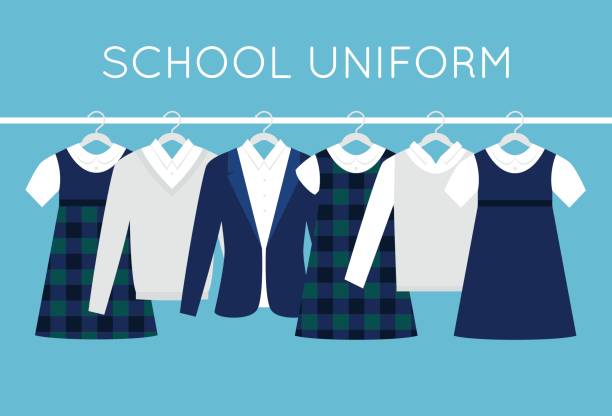
James Kane responds to the post by young person, Brooke, Mental Health Officer of the Secondary Students’ Union of Northern Ireland (SSUNI). In doing so, he discusses the School Uniforms (Guidelines and Allowances) Act (Northern Ireland) 2026. He places the Act in the context of ongoing campaigns by children and young people for the right for girls to wear trousers, instead of skirts, in school. He analyses whether the Act is sufficient to meet the demands of these campaigns for equality, functionality, privacy, and agency.
What is the School Uniforms Act?
On 18 February 2025, the Minister for Education, Paul Givan MLA, introduced the School Uniforms Bill to the Northern Ireland Assembly. Its aim was to reduce the cost of school uniforms. Speaking in the Assembly, the Minister stated he “wanted to make a difference to hard-working families and to ensure that no child’s choice of school was determined by the affordability of its uniform”. The issue was that schools in Northern Ireland are able determine their own uniform policies. While the Department previously issued guidance on these policies, this was non-statutory and the Department, therefore, had no power to enforce it. The Bill would place the Department’s guidance onto a statutory footing. On 19 February 2026, exactly a year since its introduction, the Bill received Royal Assent to become the School Uniforms (Guidelines and Allowances) Act (Northern Ireland) 2026.
The Act introduces two interrelated duties. Firstly, it places a duty on the Department to issue guidelines about uniform policies applying at schools (section 1(1)(a)(i)). Secondly, it places a duty on the manager of a school to adhere to the guidelines when devising or reviewing the uniform policy (section 7(1)(a)) and in the implementation and enforcement of that policy (section 7(1)(b)). The manager must ensure that school staff adhere as well.
As for the content of the guidelines, the Act provides that the guidelines must address a range of matters, including: any unfair costs in school uniform policies (section 2(1)); the affordability, accessibility, and value for money of uniforms (section 2(2)(c)(i)); clothing banks (section 2(2)(c)(ii)); supplier agreements (section 3(1)); who should be consulted (section 1(3)); the comfort and practicality of clothing for pupils (section 2(2)(a)); and, the nature and adequacy of clothing for engaging in the curriculum, including in recreational and outdoor activities (section 2(2)(b)). They may also address whether it is reasonable to require pupils to wear clothing from a particular supplier/manufacturer (section 2(3)); restrictions on the number of items of clothing or sets of clothing that can be required, by reference to specific styles (section 4); fixing monetary amounts of uniforms (section 5). These are not exclusive. Nothing in the Act limits what may be included (section 1(5)).
If a school is not adhering to the guidelines, the Act sets out an enforcement process. The Department is empowered to give directions to the manager of a school if satisfied the manager or staff are failing to adhere “in one or more material respects” to the guidelines (section 8(1)) or if pupils are liable to disciplinary measures or participatory disadvantage for breaching the uniform policy (section 8(2)). The Department may be satisfied on the basis of their own assessment of the uniform policy, or if prompted by a complaint, report under Article 102(6A) of the Education and Libraries (NI) Order 1986, or a report under section 43 of the Public Services Ombudsman Act (Northern Ireland) 2016 (section 8(3)). This creates a route for pupils to complain to the Department about their uniform policy, however, note the Department is not obliged to act unless the pupil has exhausted their school’s own complaints procedure (section 8(4)). When the Department gives direction, if the school does not comply, the direction may be enforced by court order (section 8(8)).
“Right to Wear Trousers” Campaigns
In regulating the disparate uniform policies throughout Northern Ireland, the Act was an opportunity for the Department to deal with a whole range of issues, such as restrictions on girls wearing trousers. The Act sits in the context of campaigning by children and young people in favour of an option for all to wear trousers. However, the Act makes no reference to the issue. Nevertheless, it is worth assessing how the Act measures up to the demands of these campaigns, if only to assess what the position is and what change is still needed.
Equality
At the core of the campaigns for the right of all to wear trousers is the demand for equality.
In relation to the Act, campaigners and stakeholders emphasised the need for a principle of equality and/or inclusivity. In both their response to the initial consultation behind the Bill and their submission to the Education Committee, the Northern Ireland Commission for Children and Young People (NICCY) emphasised the need for a principle of inclusivity, with direct reference to girls wearing trousers. This position was informed by their Youth Panel, members of which had campaigned to wear trousers in their school. It was echoed by the Children’s Law Centre and Northern Ireland Human Rights Commission (NIHRC).
In resisting this suggestion, however, the Department relied on three arguments.
First, the purpose of the Act is to reduce the cost of uniforms. It is not intended to resolve other issues with uniform policies. Second, there is no need to protect equality in the Act as the protections exist elsewhere. According to the Human Rights Act (HRA) 1998, section 6(1), it is unlawful for a public authority, in this case a school, to act in a way which is incompatible with the European Convention on Human Rights and Protocols. Protocol 1, Article 2, establishes a right to education. Article 14, of the Convention, establishes that enjoyment of this right shall be secured without discrimination on the ground of sex. In the Sex Discrimination (Northern Ireland) Order 1976, Article 24(1)(c), it is unlawful for a school manager, to discriminate against a woman where she is a pupil: (i) in the way it affords her access to any benefits, facilities, or services, or by refusing or deliberately omitting to afford her access to them, or (ii) by excluding her from the establishment or subjecting her to any other detriment. In Article 26(1), there is also a general duty for the school manager to secure education without sex discrimination. Third, there is no need for the Act to be prescriptive, issues of equality will be included in the guidelines, anyway.
In the end, the current guidelines prescribe “school uniform policies must comply with relevant human rights and equality legislation”. At paragraph 23, the guidelines state:
“schools must be aware of the laws which protect individuals from unlawful discrimination including human rights, race, sex, and disability. These legal obligations form the foundations of these guidelines and must inform how schools implement the requirements of the Act”.
Annex 1 cites the HRA 1998, UNCRC, Sex Discrimination (Northern Ireland) Order 1978, and Convention on the Elimination of All Forms of Discrimination Against Women 1979.
However, on the right of all to wear trousers, the Act and its guidelines are not prescriptive enough. As NICCY stated in their evidence before the Education Committee, the existing protections leave room for interpretation, “wiggle room”. Unfortunately, the guidelines as they stand now make no effort to narrow the wiggle room. They only note the protections exist. They do not spell out what the protections mean for a girl’s right to wear trousers. Also, in both the Human Rights Act 1998 (section 7) and the Sex Discrimination (Northern Ireland) Order (Article 66), the onus is on the child to bring a claim. As children are unlikely to have the practical ability to do so, this creates a gap in enforcement. Therefore, what is needed is for the Act and corresponding guidelines to make it explicit that uniform policies must provide all pupils with the option to wear trousers. The Department should take responsibility for enforcement with section 8(3)(a), assessment of uniform policies. As the NIHRC told the Education Committee, this would “copper-fasten” the protections. This is needed in the Act itself, scope of which could easily have been expanded by the Department. Otherwise, we are left only to take it on trust the Department will include it.
Note, a principle of equality would extend beyond the narrow issue of providing an option for all to wear trousers at school. It would, for example, address whether all students have the option to wear skirts. “Boys wearing skirts” was a key source of debate during the Bill’s legislative journey, and in many ways formed the sticking point to the principle’s inclusion in the Act. However, it raises slightly different questions. As such, it will not be addressed any further in the analysis.
Functionality
Calls for a girl’s right to wear trousers also centre functionality. As one NICCY Youth Panel member stated, “I just want to be able to dance and do cartwheels at lunch time and be able to dance and play freely. You can’t do that in a skirt”. Another stated, “It’s harder for girls to bike to school. It’s not easy in a skirt”. To Brooke, it is “even just for cold weather!”.
As provided in the Act, the guidelines must include reference to comfort, practicality, and the nature and adequacy of clothing for engaging in play-based learning, recreational, sporting or outdoor activities (section (2(2)). As such, the current guidelines provide that “school uniform policies must ensure that uniforms are comfortable, practical, easy to maintain, and suitable for all seasons”. At paragraph 27, the guidelines state that this includes how uniform supports pupils to be active travelling to and from school or in playing at break or lunch times. According to paragraph 28, it includes “seasonal considerations”. Again, on the specific point of a girl’s right to wear trousers, there is wiggle room for interpretation. What is practicality? Why are skirts not adequate for play, recreational, and outdoor activities? Moreover, the guidelines themselves appear to suggest these considerations favour skirts, or rather “summer dresses”.
Agency
Finally, a girl’s right to wear trousers is a demand for agency. As Brooke said in her post, it is an “issue of control”. Adults “want to control what young girls can and cannot wear”.
On this, the Act is reasonably receptive. It provides that the guidelines must address who should be consulted when uniform policies are devised or reviewed (section 1(3)(a)). This includes pupils. In the guidelines themselves, it states that the manager of a school must consult pupils. At paragraph 33, it highlights:
“Considering the pupil voice is a key part of developing school uniform policies. This approach reflects the principles of the UNCRC, which emphasises the importance of considering children’s voice in decisions that affect them”.
Certainly, Article 12 of the UNCRC provides that a child has the right to express their views freely in all matters affecting them, the views being given due weight in accordance with age and maturity. It is hoped any consultation with pupils is conducted with the Lundy Model in mind to ensure Article 12’s full realisation. Sadly, neither the Act nor guidelines make this clear. At the very least, the guidelines do suggest that the Department intends to take the need for consultation seriously. At paragraph 35, they encourage schools to keep record of the process as evidence the uniform policy adheres to the Act. However, on the specific point of a girl’s right to wear trousers, there remains wiggle room. This is because a response to a consultation is not final, and it can be disregarded by the school.
Privacy
Privacy is another demand of campaigns for a girl’s right to wear trousers. This was raised again by the NICCY Youth Panel’s submission to the Education Committee, in which they described incidents of male staff measuring skirt length, being the subject of catcalls or upskirting, or taking time off school during periods due to feeling uncomfortable in their uniform. Claire Sugden MLA therefore introduced an amendment to the Bill, in which all pupils would have the option to wear trousers. Speaking in the Assembly, she stated that the amendment was inspired by an eight-year-old child in her constituency, who was so concerned with upskirting that she asked to be allowed to wear trousers and was refused.
Unfortunately, the Act makes no mention of privacy as a matter that should be addressed by the guidelines. At a stretch, at paragraph 29, the guidelines themselves mention safety as relevant to the design of a uniform policy. However, it does not appear to be envisaging the issue at hand. Rather, it provides the example of putting “reflective strips” on uniform.
Conclusion
The School Uniforms (Guidelines and Allowances) Act 2026 goes only a small way toward ensuring girls throughout Northern Ireland are able to wear trousers at school. It makes progress in that it institutes a statutory regime to regulate the content of uniform policies. However, meagre references in the guidelines, not the Act, of existing equality legislation and international standards are not sufficient. Neither is the room for manoeuvre it leaves around functionality and agency. Even worse, is the silence on privacy. In the end, the Act was a missed opportunity by the Department to address an issue impacting children and young people across Northern Ireland. What was needed was a prescriptive clause, such as Claire Sugden MLA’s amendment:
“Guidelines… must include provision requiring all schools to offer every pupil the option of wearing shorts of a specific style or styles as part of school uniform for all sporting or leisure activities or occasions, and trousers of a specific style or styles as part of school uniform on all other occasions”
It is a shame the amendment was not debated in the Assembly. Campaigning continues.
About the Author

James is the Editor-in-Chief of the Children’s Rights Blog and Visiting Scholar at the Centre for Children’s Rights, Queen’s University Belfast.
Discover more from The Children's Rights Blog
Subscribe to get the latest posts sent to your email.