
Written by Koulla Yiasouma. Posted on 09 March 2026.
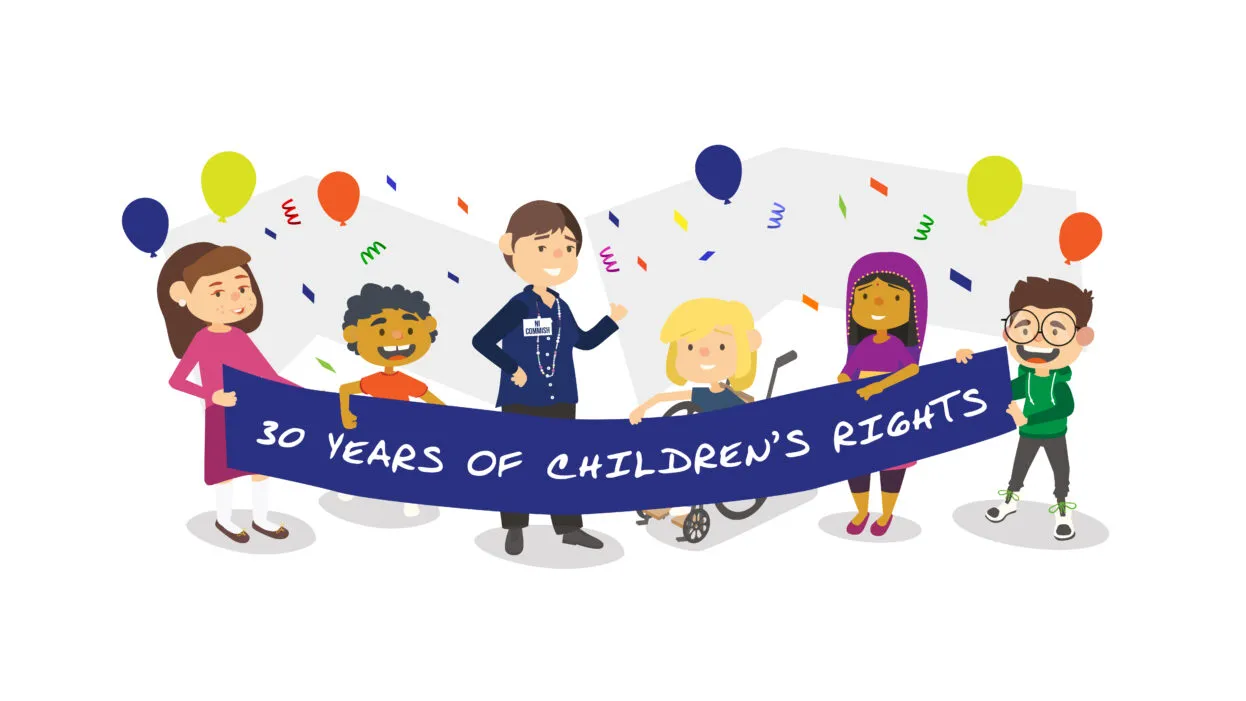
(Credit: NICCY, here)
I have been a children’s rights defender in various guises for over 30 years, although I only discovered the United Nations Convention on the Rights of the Child (UNCRC) in 1998. This came as a revelation to me; it provided a framework to measure the extent by which we realise the rights of children. I still have the copy of the UNCRC I was given then.
I worked as a Probation Officer and I am, therefore, a social worker. I am very proud of my profession but my training in the 1980s was very paternalistic, “doing to” rather than “doing with”. It was only when I joined the charity sector, firstly Northern Ireland Women’s Aid and then Include Youth, that I began to appreciate the importance of working with service users and being proud to name it – I am a feminist working in children’s rights.
The youth workers I met at Include Youth and other organisations made me appreciate that rights can be put into practice. Together we worked hard to make sure that decision makers heard what young people had to say – their experiences and opinions about the way forward. I watched amazing youth workers patiently work with young people firstly to convince them that what they had to say was important and to help them understand the processes that they would be engaging with. This was 20 years ago, when young people had to adapt to adult processes. Those youth workers also worked with adults to make sure that they understood who they were meeting and engaging with but regardless many adults were often ill-prepared. I’ll never forget being shouted by a decision maker as they felt “set up” having received an honest account of young people’s experiences. Several lessons learnt by both of us.
I also discovered the importance of working with young people in the running of the organisation beginning with small steps. For example, our conversations regarding how we dealt with poor behaviour from the young people often focussed on the need for them to raise their tolerance levels – the adults were far more forgiving and willing to give second, third and fourth chances. I learnt a lot in those early days
After Include Youth, I joined the Northern Ireland Commissioner for Children and Young People – NICCY. Three years into being Commissioner for Children I met James Kane and his colleagues from the South Down possé – following an extensive NI-wide recruitment process for the NICCY Youth Panel (NYP). The NYP were a determined group who wanted to make a difference, and we had vibrant and, for me, occasionally frustrating (why didn’t they just agree with me) discussions about the NICCY priorities and other ones they wanted to take on. Yes, I did adapt my view… once or twice.
The 30th Anniversary of the UNCRC was fast approaching and it was agreed that NICCY wanted to host a party for children and young people. Who better to organise it then young people themselves. So, a group from the NYP, took it on working with the NICCY Participation Officers. Of course, decisions were agreed with the adults as NICCY had processes it had to adhere to – you can’t imagine how many risk assessments are needed for an event that has hundreds of children from age 5 to 21!
There is a flippant example that I want to share. The planning group were meeting in the NICCY Offices and one of my colleagues asked me to join them saying that the young people had a proposal to put to me that I may not like. For context – I pretend that I am not competitive, but I really am – especially with colleagues who do a similar job. Another Commissioner/Ombudsman developed a phenomenal Child Rights Defender campaign with huge shields each individually designed by young people from across their country. So, I was aghast when the NYP wanted to present every young person at the 30th event with badges in the shape of shields. My initial reaction to the shield idea was not a positive one, but my colleague instructed me to hear they young people out – it’s the child rights way. Of course, I would… but there would be no shields. I got into the room determined, as were James and his colleagues. They calmly and factually laid out their rationale – young people love badges and they would wear them on their school uniforms; after all they were defending children’s rights. They were right, of course, and thousands were ordered and distributed at the event, and subsequently. I did visit several schools where young people were wearing their badges and, as I type this, I am looking at one of those badges which sits permanently on my desk. The NYP knew the adult that they were meeting and were prepared. This adult (following a stern warning from a colleague) allowed for the possibility that they would change their mind and did. A trivial example but one that demonstrates partnership approaches do work and that young people do know what they are about.
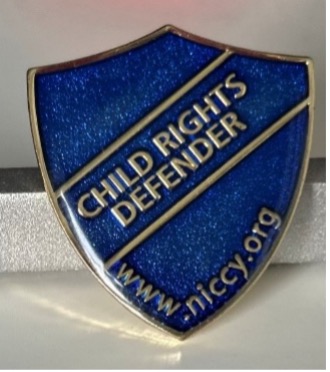
The Child Rights Defender Badge
Our move online during the Covid 19 pandemic meant that young people were able to advocate for their rights without the adults mediating. We saw a number of young people-led groups and campaigns grabbing the spotlight during that time. One of the most prominent groups was SSUNI (Secondary Students’ Union of Northern Ireland) led by the formidable Cormac Savage and supported by a phenomenal committee which included James Kane.
During the pandemic I popped on to a NYP online meeting during one of the mid-term breaks. I just wanted to touch base with them and see how they were. Well, those in the exam years were extremely stressed. There was confusion in schools as to whether exams would actually go ahead. If they didn’t, it was felt that course work would be used. As a result, there was a lot of pressure on young people and teachers to have perfect course work alongside getting ready for exams. It was apparent that, for everyone’s well-being, a decision had to be made, sooner rather than later, to cancel exams and put in place teacher assessment. We at NICCY undertook a series of engagements with other school bodies to test whether there was support for such a measure. There was. At the same time, SSUNI was coming to a similar conclusion. When I met with Cormac and James, it was clear that we had to make the call. Who should take the first step? Whilst I believed this should be a young people-led issue, I appreciated SSUNI’s point that it might be better for NICCY to make the first call, thereby avoiding any claim of “lazy young people”. We did, and all the other bodies then made their own calls. Of course, the most prominent was the #TrustOurTeachers campaign run by SSUNI. Cormac, James, and colleagues became much more prominent than any other adults in the campaign to cancel exams and abandon algorithms. Adults began the public discussion, and young people continued it and won.
In recent years, I have continued work in the children’s rights sector and have seen evidence of the change that children’s voices can bring to a service as well as to individuals – adults and children. We all continue to glimpse of what is possible.
I do like a framework and the Lundy model (here) works for me as a straightforward way to implement change with babies, children and young people. I have, in recent years, developed my own practice and learnt so much more about the participation of children. I have come to learn that defending children’s rights can never be a solely adult endeavour. I have seen changes in myself particularly when I am the “audience” as I become better prepared, ready to actively listen and have a meaningful conversation with young people.
It’s been a joy to watch a number of young people, James included, make rights defending their career and I know that my career success has been attributable to working with adults and young people who have been so generous with their time and patience.
I hope that I will continue to develop my understanding and improve my practice and being involved in this blog series is a way of doing that. Children and young people setting the agenda in a way that straddles academia and direct practice. I hope that these blogs will be able to progress the rights of children embedding their role as rights defenders and active participants in the decisions that affect the world around them.
About the Author
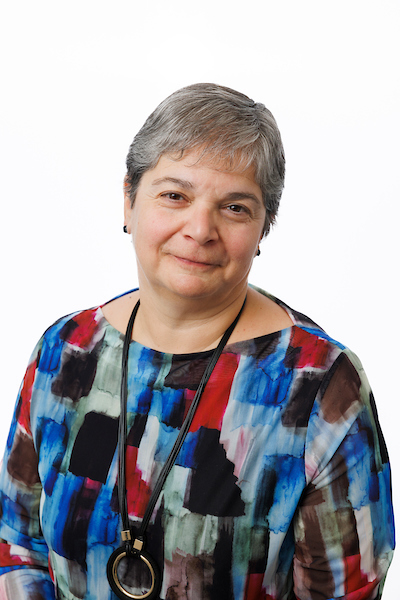
Koulla is Honorary Professor of Practice at the Centre for Children’s Rights, Queen’s University Belfast. She has been a children’s rights activist for nearly 30 years